Cat Folklore and Symbolic Meanings, by Color and Coat
I definitely grew up with the superstition that a black cat crossing your path was bad luck. I also remember when I told my grandma that we were thinking of getting cats, she said, “Oh, you know, cats are bad luck, though. They’ll steal babies from a crib.” So I feel like that was always sort of in the back of my mind with cats, but I never put any weight onto any of it.
People have been reading meaning into a cat’s color for a very long time: orange for good fortune, gray for calm, black for bad luck. You’ll see those meanings repeated everywhere, and they’re fun to think about. But a lot of what gets passed around as “ancient cat symbolism” isn’t actually old. A lot of it is made up fairly recently and likely came from someone’s basement!
The actual history, the church edicts and sailors’ superstitions and temple legends each color actually carries, is stranger and IMO, a lot more interesting. So, lets get into the folklore behind each cat and where it came from, and talk about which claims have some truth behind them, and which ones don’t.
Black cats: the one reputation that is all over the place
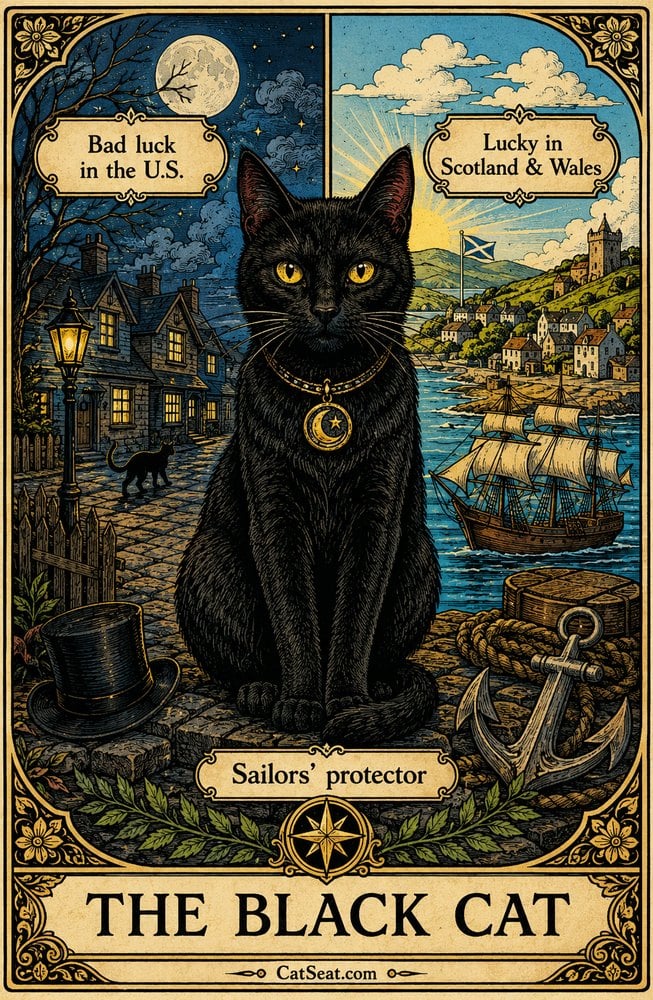
In the U.S., a black cat crossing your path is considered bad luck, and we can actually trace exactly where that came from. In 1233, Pope Gregory IX issued a decree called Vox in Rama that tied black cats to devil worship. It was one of the first church documents to do that, and it seemingly forged the link between cats and evil. Over the next few centuries the idea of the witch’s “familiar” (a small animal, usually a black cat, that a witch was believed to keep as a magical helper) grew, and it crossed the ocean with the Puritans.
There’s also the idea that this decree (that cats were evil and therefore you shouldn’t have one) caused the Black Death. The story goes that Europe killed off its cats, rats then took over, and the plague spread. Thankfully, it’s not true. The decree never told anyone to kill cats, and in reality the plague didn’t hit until more than a hundred years later. Even then, historians don’t really buy the no cats=plague idea.
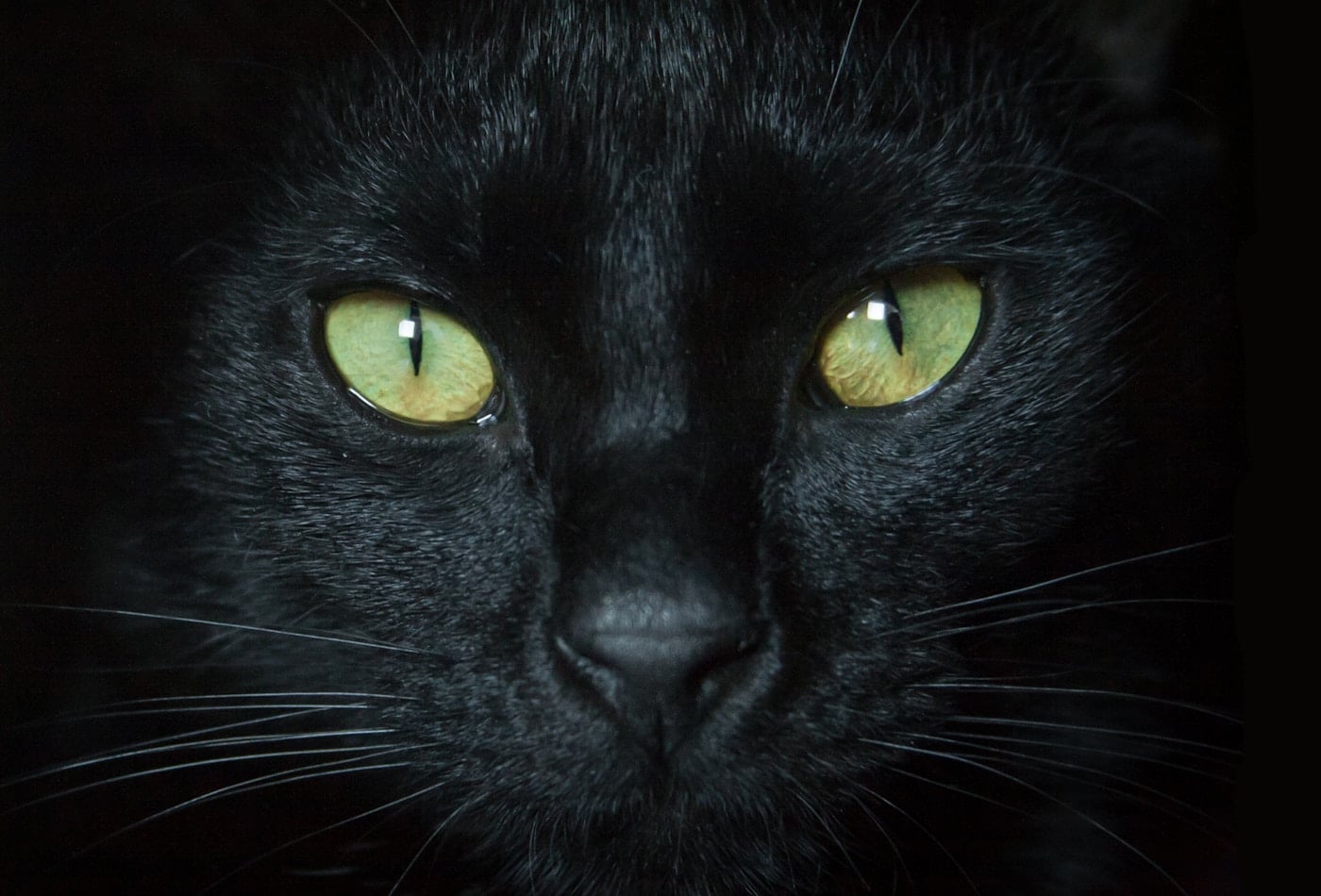
The crazy thing is that in other cultures, black cats got the opposite reputation. In British and Celtic tradition, the black cat is actually seen as GOOD LUCK. In Scotland, one of them showing up at your door meant prosperity was on the way; in Wales, it was a harbinger of health. Some in Germany even made a point to notice which way the cat was walking (left to right was the preferred form of luck). Then there were the sailors, who made sure to have a black cat on board, while their wives left one at home to help protect their husband.
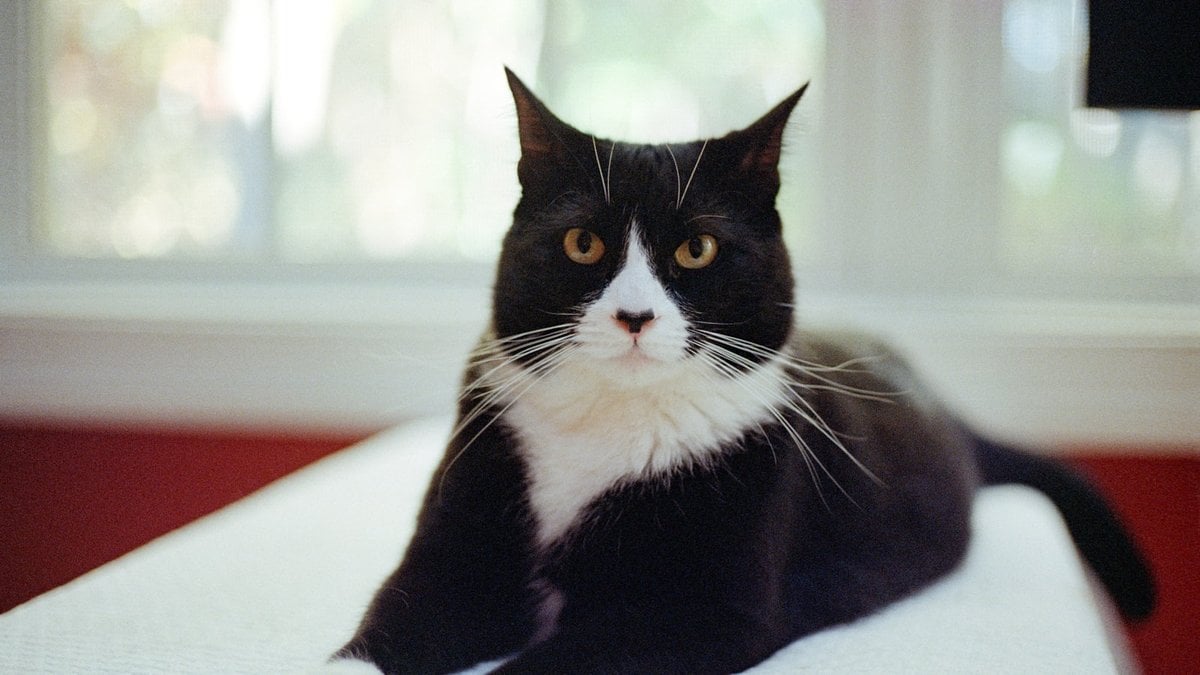
In the Scottish Highlands, however, the black cat gets a much darker story. Highland folklore created the idea of the Cat-sìth, a “fairy” cat the size of a dog that was black with a white patch on its chest. It was said to steal a dead person’s soul before the body could be buried, which is said to be why families sat up with a loved one’s body until the funeral and kept lively with music, riddles, and games: all of it was meant to distract the cat and keep it away. Some think the legend started with the Kellas cat, a part black cat/wildcat, that still lives in Scotland today. And if your own black cat came with a white bib and socks instead, that’s its own whole story: we got into tuxedo cats separately.
Calico and tortoiseshell: the lucky ones
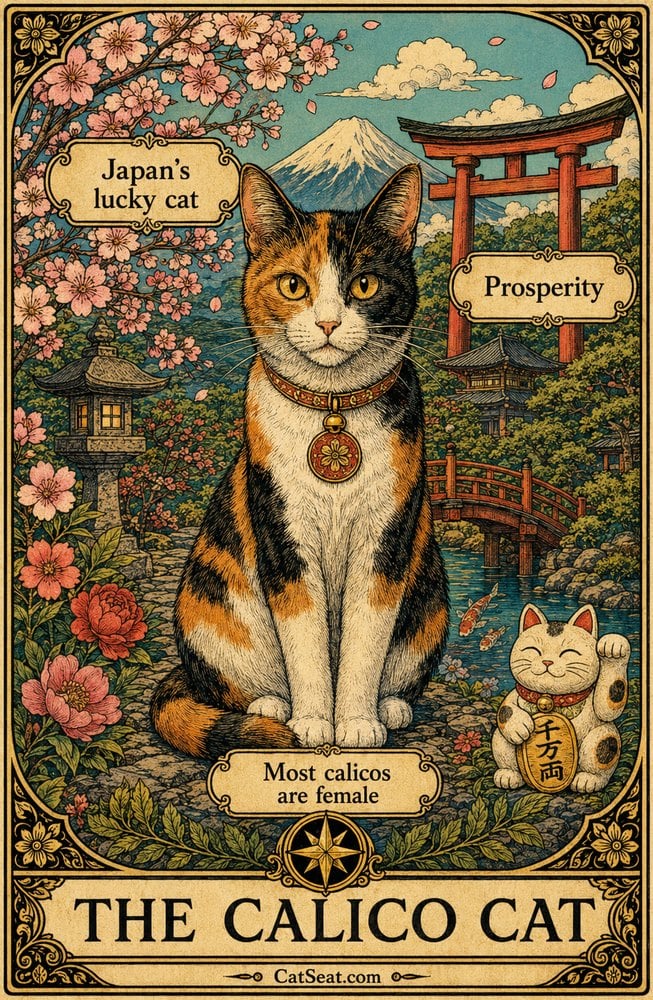
You don’t have to be a cat person to recognize one of the world’s most ubiquitous feline symbols. It’s the maneki-neko you see in the window of some Asian businesses with a paw in the air. The maneki-neko’s are modeled after the calico Japanese Bobtail, and come in multiple colors to represent different meanings. For instance white means purity and happiness, while green is academic success and safe travel. Placing this cat inside a business actually goes back to Japan’s Edo period…there’s even an 1852 print showing them for sale.
So, where did the idea of the maneki-neko come from, with its left paw positioned to beckon customers, while the right beckons money. As the tale goes, a 17th-century feudal lord was riding past a run-down temple when a cat at the gate raised its paw and waved him in. He stopped, and while he was under the roof a sudden storm broke out. In gratitude for being spared, he and clan funded the temple for generations. That temple is Gotokuji, and it’s still standing in Tokyo today. It has become a destination for the beckoning cat, and one more reason Japan is worth the trip if you like cats: visitors buy a small maneki-neko at the temple, make a wish, and leave the figurine behind. They’ve accumulated for decades, so the grounds now hold thousands of little white cats lined up on shelves, every one with a paw in the air.
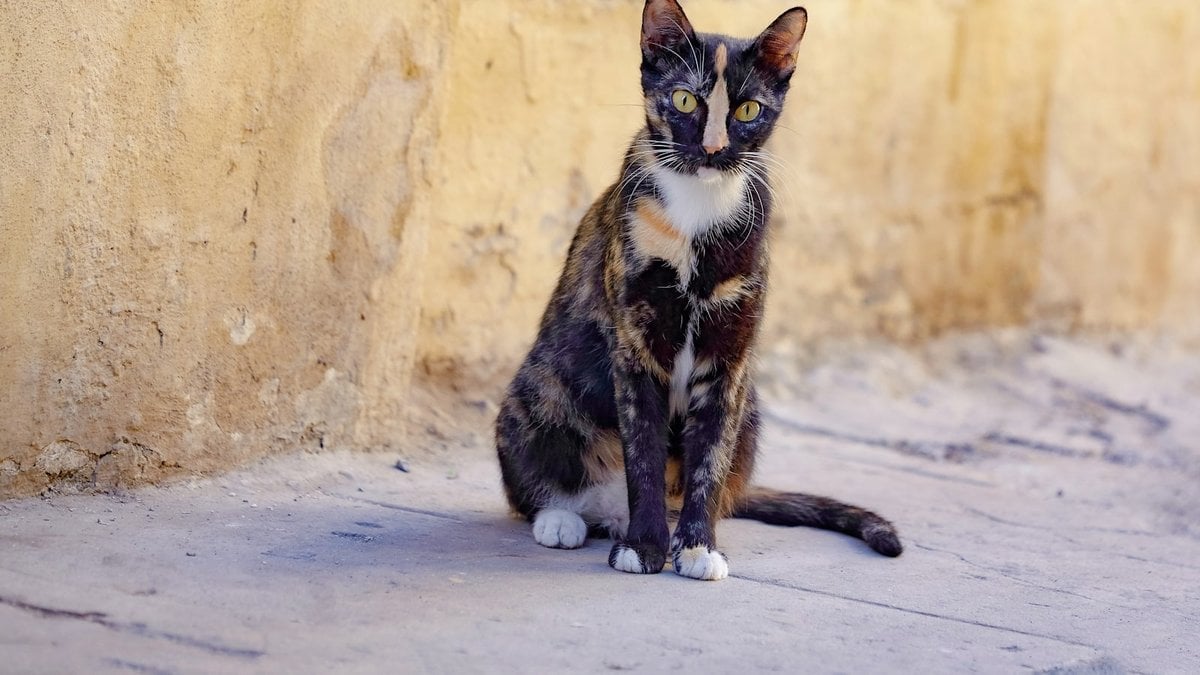

In the U.S., a calico is sometimes called a “money cat,” a term you’ll hear in Maine and New England, on the idea that they’re lucky or valuable, especially the males.
why almost every calico is female
This isn’t folklore, it’s genetics, and it explains the “lucky male calico” belief. The gene for orange coloring rides on the X chromosome. In May 2025, two independent research teams, one at Stanford and one at Kyushu University, pinned down the exact mutation, a deletion at a gene called ARHGAP36. Because a cat generally needs two X chromosomes to show both orange and black patches, calicos and tortoiseshells are almost always female. A male calico turns up roughly once in every 3,000, which is precisely why folk tradition treated finding one as a stroke of luck worth money.
White cats: the gem cats
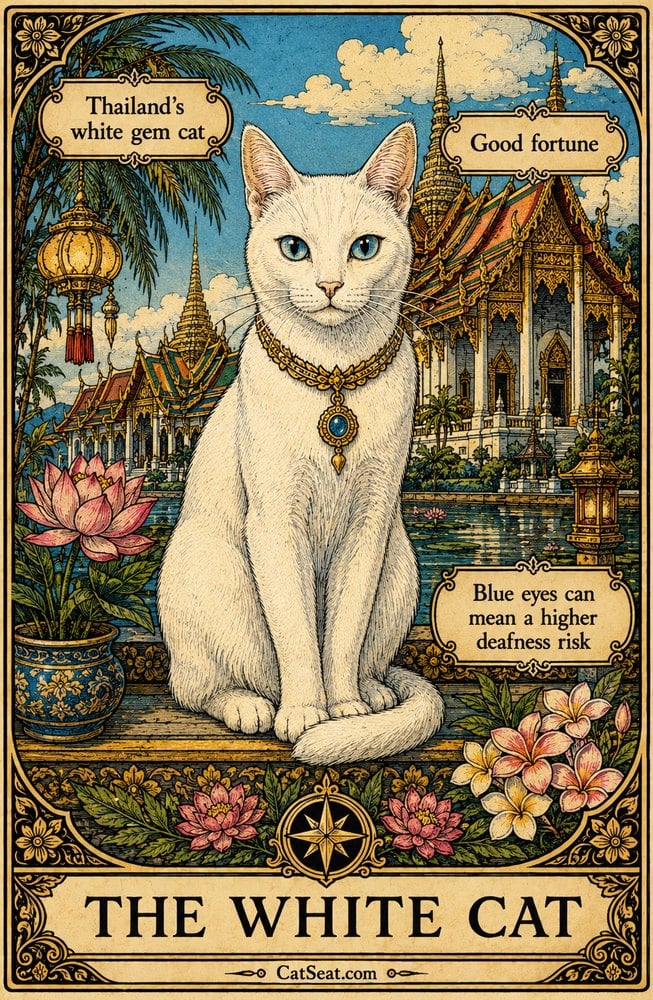
The best white-cat lore comes from Thailand. The Khao Manee is a pure white breed known as the “white gem,” or the diamond-eyed cat, and it turns up in the Tamra Maew, a set of illustrated Thai manuscripts about which cats bring good fortune.
Some believe that tradition goes back as far as the Ayutthaya kingdom, which ran from 1351 to 1767. Owning one of these cats was said to promise you everything from wealth to good health.
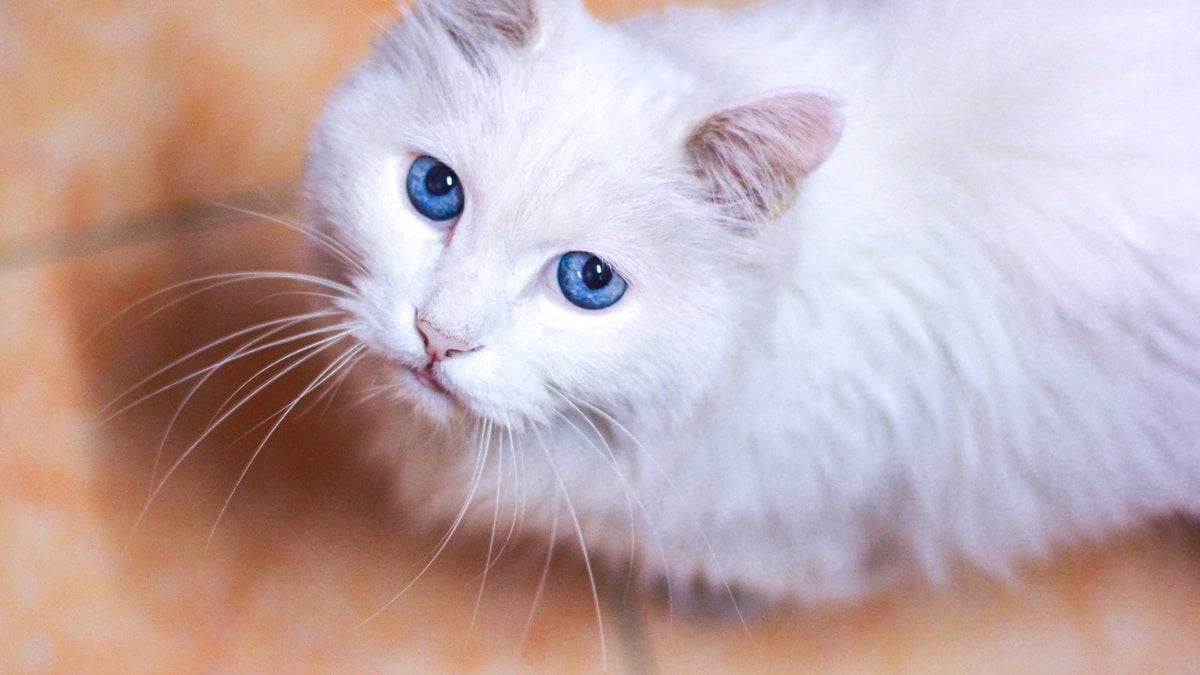
And as we mentioned above, Japan has its own version. The maneki-neko started out white, a straightforward invitation for good luck, long before the color-coded feng shui variations came along.
the deafness link is real
One bit of white-cat lore is actual science. White coat plus blue eyes really does correlate with congenital deafness. According to Cornell’s Feline Health Center, roughly 17 to 22 percent of white cats with non-blue eyes are born deaf, around 40 percent with a single blue eye, and 65 to 85 percent of all-white cats with two blue eyes. The white gene affects the same pigment cells the inner ear needs to work effectively, so the cochlea starts to break down in the first days of life. If you have a white, blue-eyed cat, it might be worth testing their hearing. And of course remember that while a hearing-impaired cat can lead a long and happy life, they should be indoor-only.
Orange cats: less myth, more marmalade
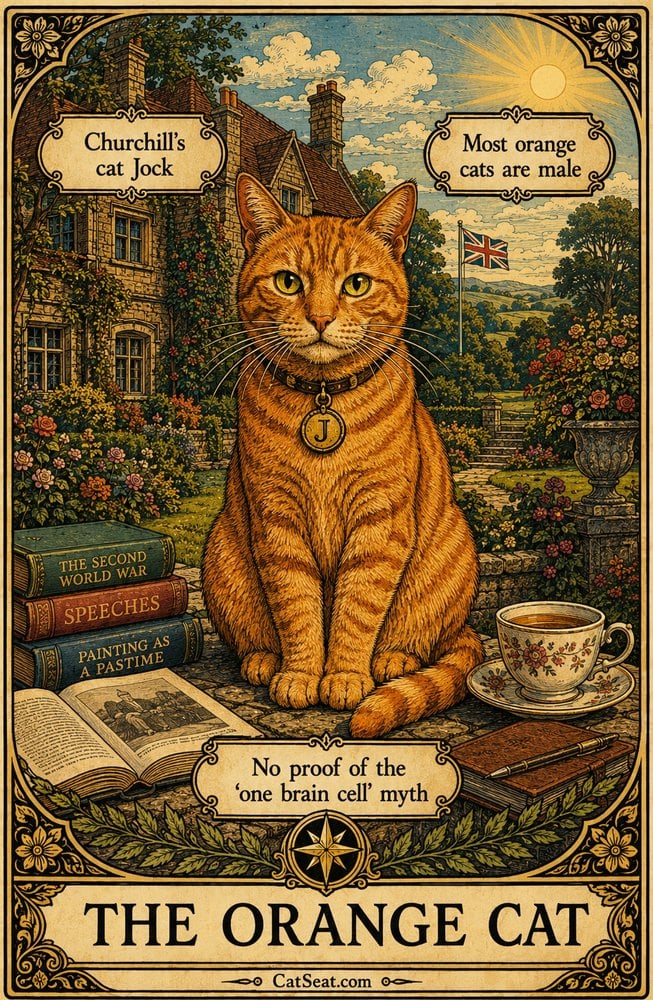
There isn’t much firm folklore for ginger cats, so instead of inventing symbolism, here’s a fun fact: Winston Churchill’s pet Jock was a marmalade cat and a regular at the dinner table at Chartwell, Churchill’s country house in Kent. When the house was handed over to the National Trust, the charity that looks after historic British homes, the Churchills attached an unusual condition: it must always keep a marmalade cat named Jock, with a white bib and four white socks. We’re on Jock VII now. A ginger has held the post ever since, which is about as close to tradition as cats get.
Then there’s what the internet has decided about orange cats: that they’re running on a single brain cell and aren’t as smart as other cats.
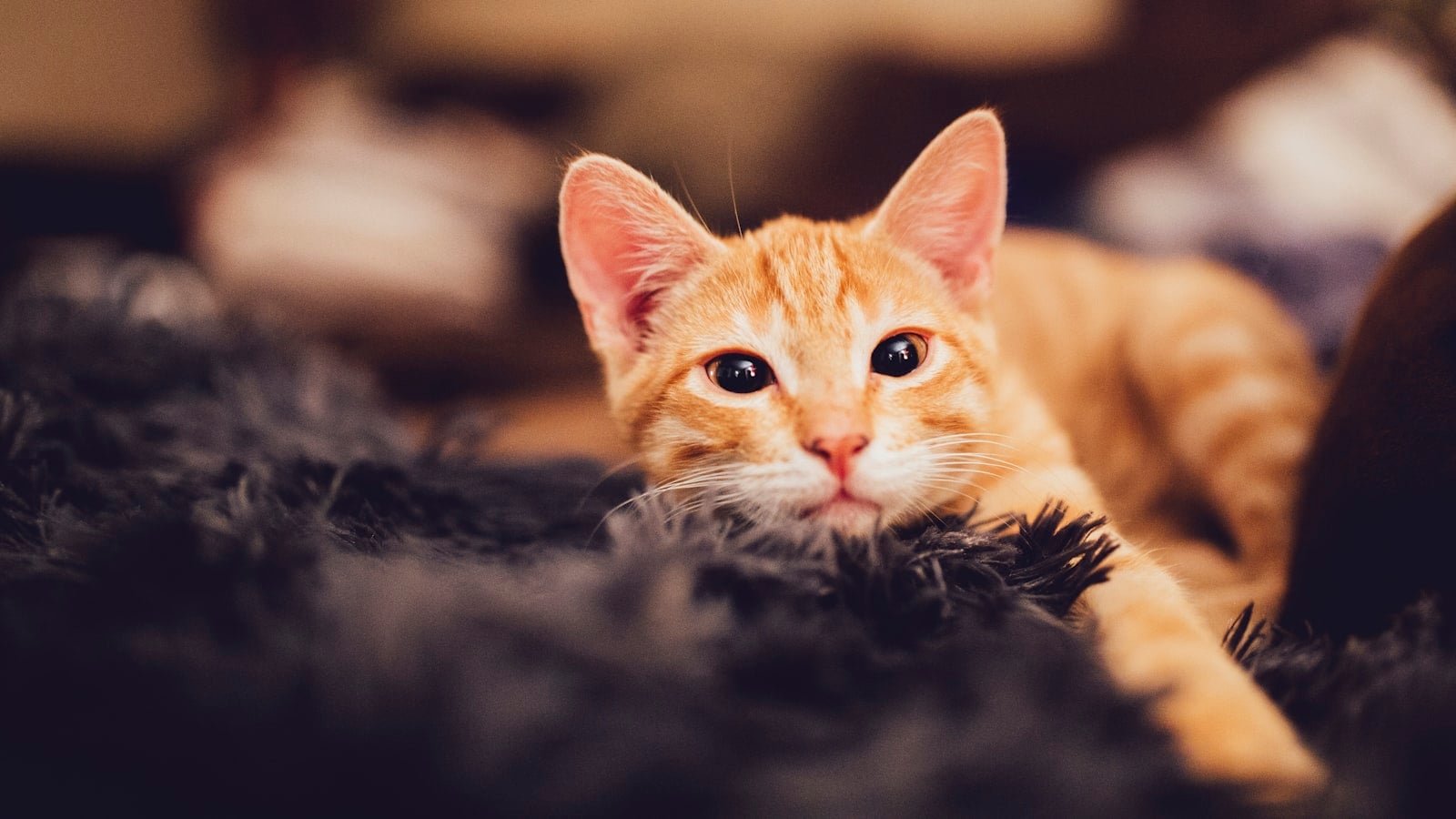
For the record, there’s no evidence orange cats are any less intelligent, and the roughly 80 percent of them that are male trace back to that same X-linked orange gene. The single-brain-cell bit is confirmation bias with a good sense of humor, though the orange cats might not appreciate the reputation very much!
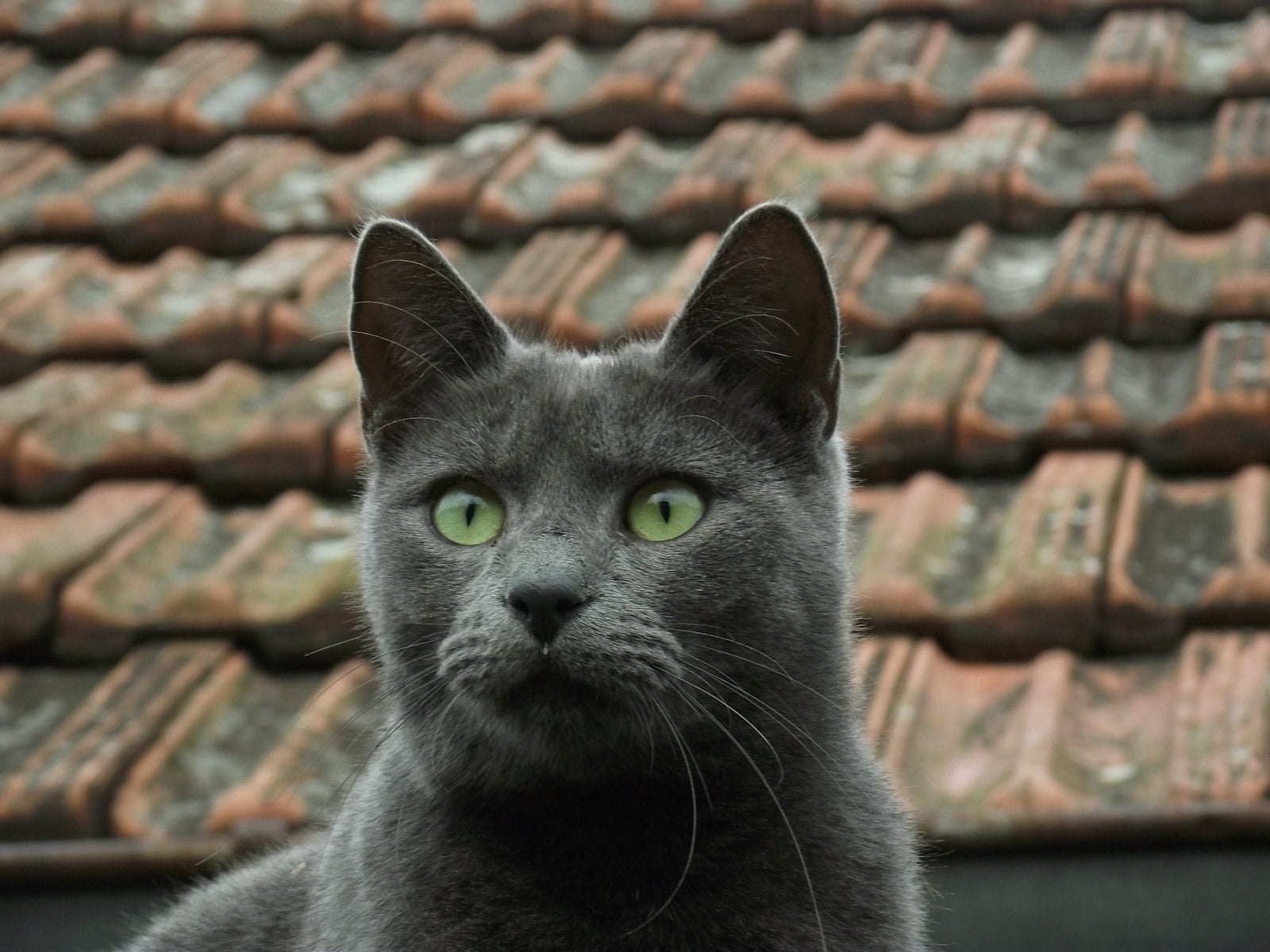
Gray and blue cats: the Archangel cat
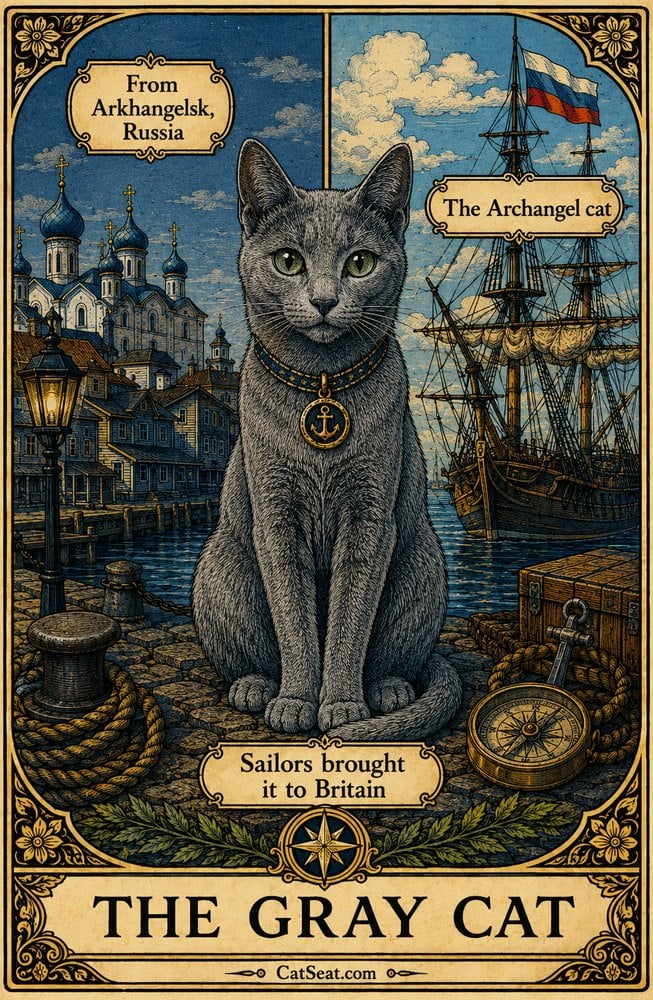
The Russian Blue comes with a real, if modest, origin story. It’s a naturally occurring breed associated with the port city of Arkhangelsk in northern Russia, whose name means “Archangel,” and in Victorian England it was actually referred to as the “Archangel Cat.” Sailors are credited with bringing them to Britain in the 1860s, and the breed made its first recorded appearance at a show at London’s Crystal Palace in 1875.
You’ll also read that Russian tsars kept Blue cats in their newborns’ nurseries to ward off evil spirits. I looked, and that one only lives on breed-fan blogs with no source behind it, so treat it as a “maybe,” not necessarily reality.
Tabby cats: the mark of the M
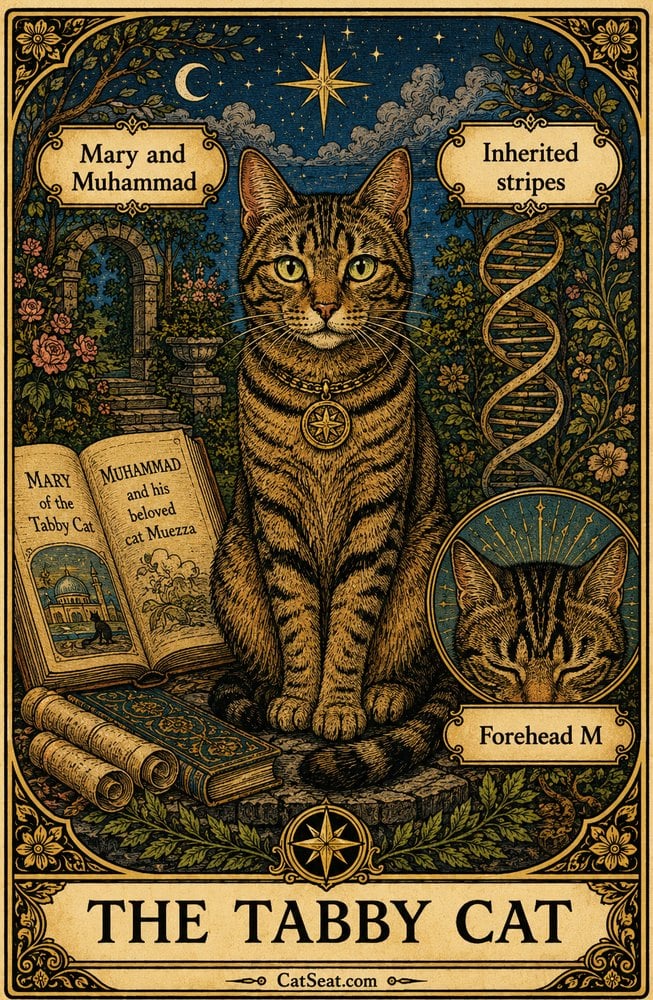
Look at the forehead of nearly any tabby and you can spot an M. Two good legends explain it, but again, these are stories, not fact.
The Islamic version credits the M to the Prophet Muhammad, who was rumored to be fond of cats. The story goes he once cut off his own sleeve rather than wake Muezza, a cat sleeping on it. (Any cat owner can relate to this, really.) In fairness, the Mufti Office in Malaysia has pored over the hadith and come up empty on any hard evidence for a cat by that name; it’s more of a myth at this point. But Islam’s respect for cats isn’t in question, and the Prophet’s companion Abu Hurayrah got his name because it means “father of the kitten.”
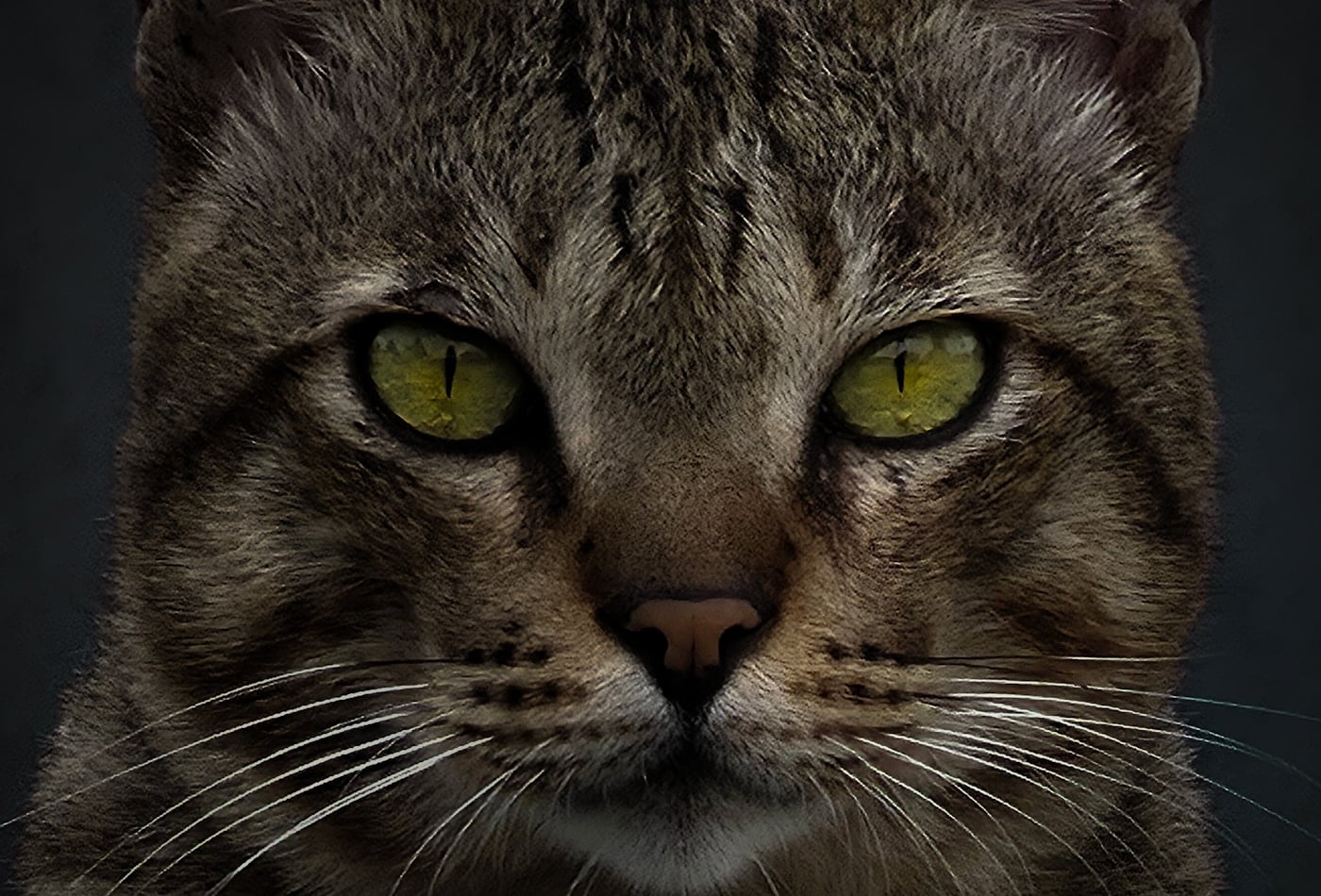
Then there’s the Christian tale. A tabby is said to have curled up in the manger to keep the infant Jesus warm, and Mary marked an M on its forehead in thanks. It’s charming folklore with nothing in the Bible behind it, but it’s one of those stories people have shared for a long time.
Really, of course, the M is just genetics, a stripe pattern inherited from the tabby’s wildcat ancestors for camouflage. But don’t let that ruin a good legend!
Siamese cats: diplomatic gifts and White House arrivals
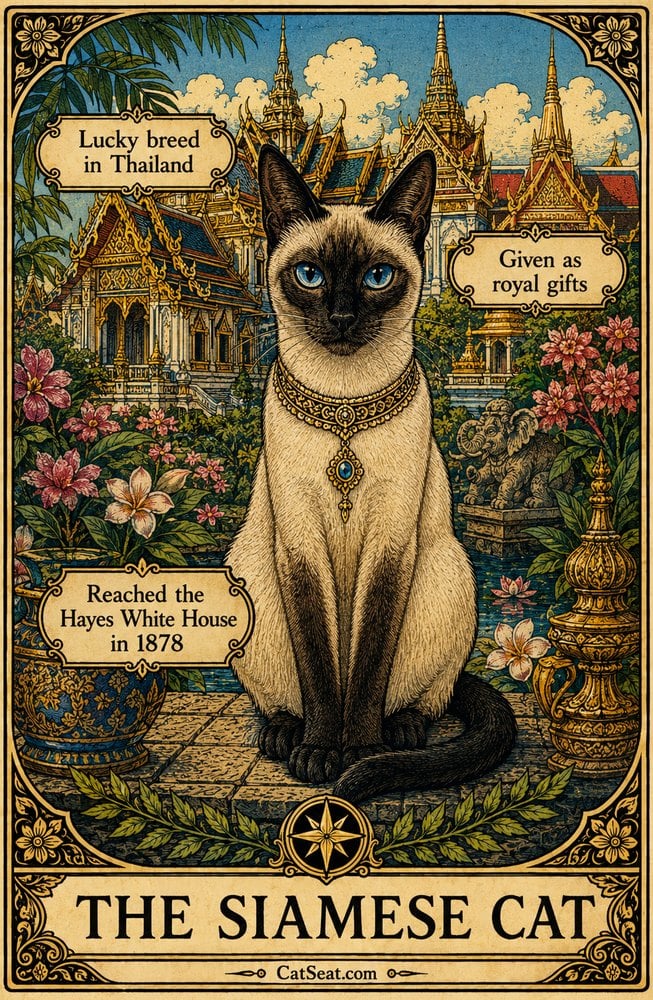
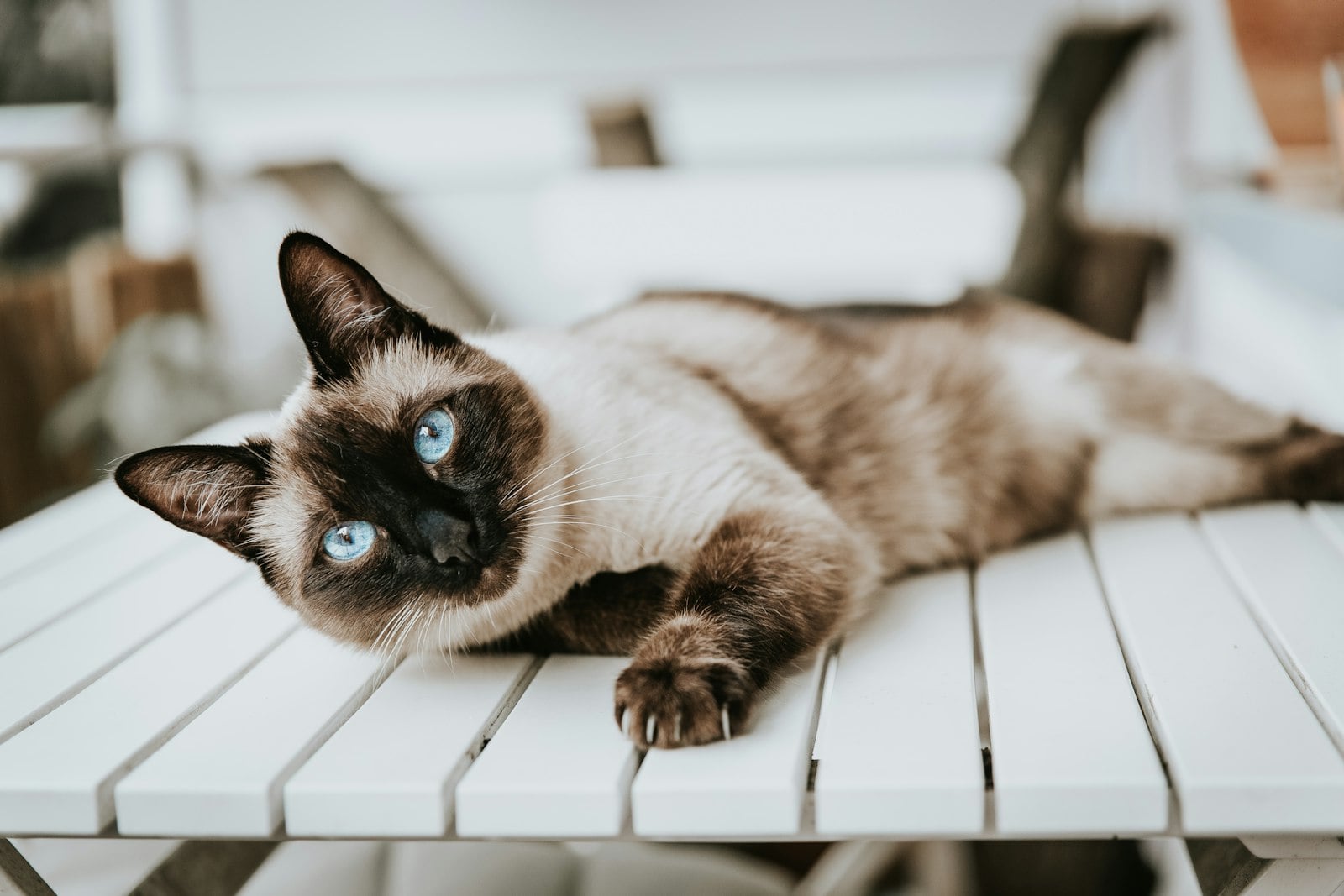
Then there is the Siamese, or the Wichien Maat, “moon diamond” to the Thai. It’s one of the lucky breeds put on record in the Tamra Maew, with roots in the old Ayutthaya kingdom. The Thais have long prized them; they were given as royal gifts to foreign dignitaries, and a Siamese still figures in the coronation ritual, as it did at the 2019 coronation of King Maha Vajiralongkorn (Rama X).
The story of one such gift actually has an American side to it. In 1878, the U.S. consul in Bangkok shipped a Siamese named Siam to the Hayes White House. She was among the first of her kind in the States, and the consul’s letter about it survives.
The cats behind all of it: Egypt, and a Norse goddess with a cat chariot
You can trace the origin of any cat lore back to Egpyt. In the Nile delta, at the center of Bubastis, the ancient Egyptians worshipped Bastet, an Egyptian goddess that was part lioness, part cat. Herodotus recorded it in the 5th century BCE: her festival was among the largest in Egypt, and when a household cat died, the family shaved their eyebrows in mourning. This is where the whole idea of the cat as something sacred begins.
Then there is the Norse side of things. Almost everything we know about the Norse gods comes from the Prose Edda, a collection of the old myths written down in Iceland in the 1200s, and it has my favorite cat image of them all: Freyja, the goddess of love, riding in a chariot pulled by cats. (You’ll read that the cats had names; don’t believe it, the original texts leave them unnamed.)
In medieval Wales the bond was more practical. The 10th-century Laws of Hywel Dda set an exact price on a cat: a penny at birth, two once its eyes opened, four after its first mouse. At that point it was worth as much as a sheep, provided it met the standard.
If there’s one thread through all of it, it’s here. Long before we decided that white cats meant good luck and black cats bad, we were already idolizing cats in our laws, homes, and temples. Because who else can be our lap companion and chase the mice away?

Founder and editor of Cat Seat and cat mom to Thelma and Louis. She’s been writing online since 2000.

Nonsense on color of cats meaning anything!
I agree!
You are wrong about orange cats …they are highly intelligent…..mine says on a made up bed on top of my potty chair that is right beside me …..when I say I have to pee …he gets up comes in behind me in my chair and after I’m done he gets back up on his bed which I move back as soon as I’m done….what would you call that….and it happens every time…and the wild part is…I never taught him….he just does it. He is orange and white and a Turkish angorrah……he probably spells better than me too…lol……orange cats are intelligent
I definitely think they are smart!! I just think it’s funny all the memes out there about them haha. I think all cats are highly intelligent and all colors/breeds are just the best!
May have had all the above and they live up to their reputations and names
Ha that sounds like a dream!
My little Orange “Rocket” was just a crazy, hilarious cat with no ego! All the cats loved him! Whenever he heard my voice he flew in the air towards me like a rocket, hence the name!
Rocket sounds like he was pure fun!