The Four Tabby Patterns, and Why Every Tabby Has an M
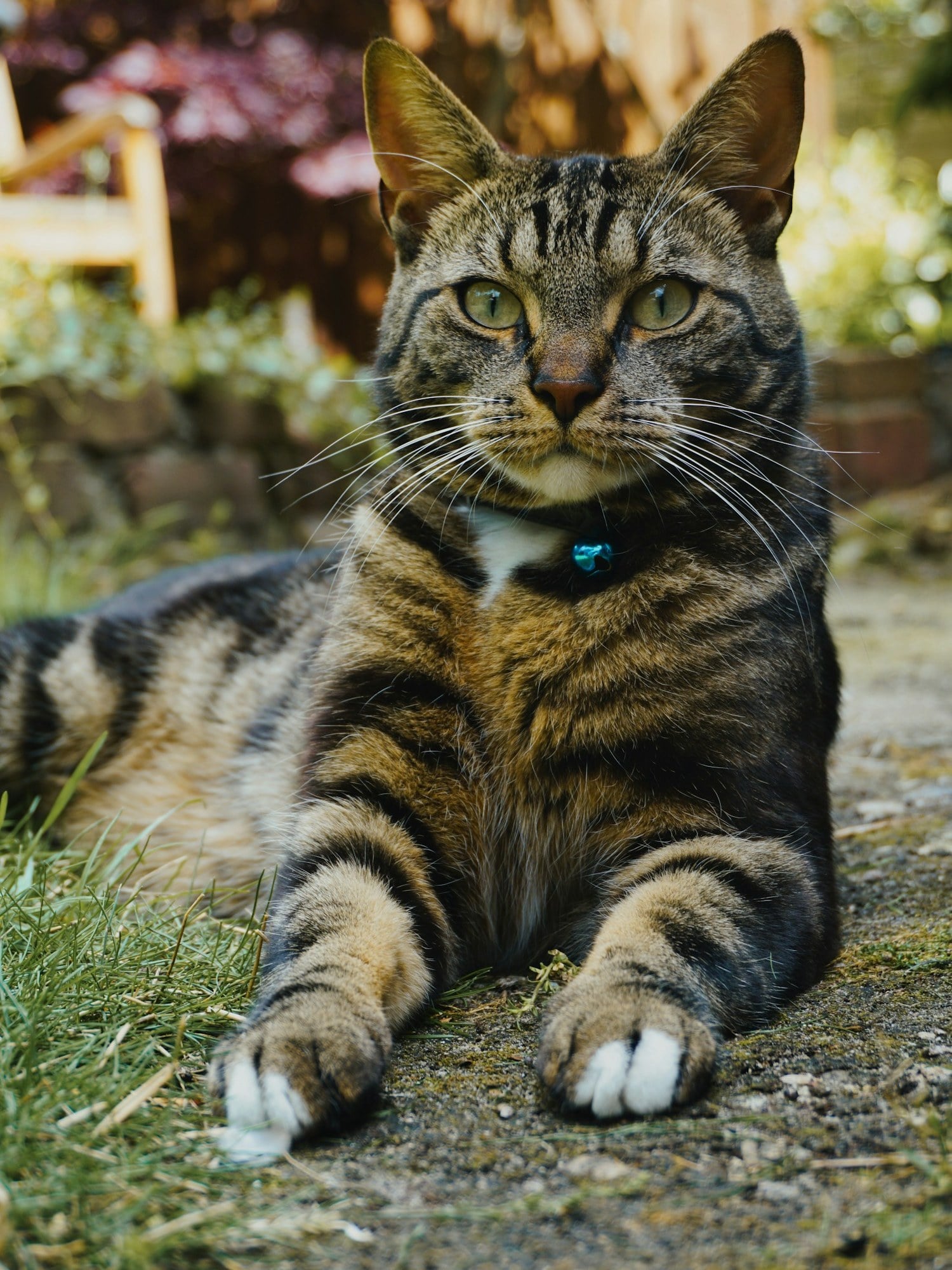
Tabby isn’t a breed, or even a color, according to the Cat Fanciers’ Association, the largest registry of pedigreed cats in the world. It’s a pattern. According to Teresa Keiger of the Cat Fanciers’ Association, only five percent of domestic cats belong to any recognized breed. That means that, chances are, that beloved striped cat you grew up with was nothing more (or other!) than a perfectly ordinary house cat.
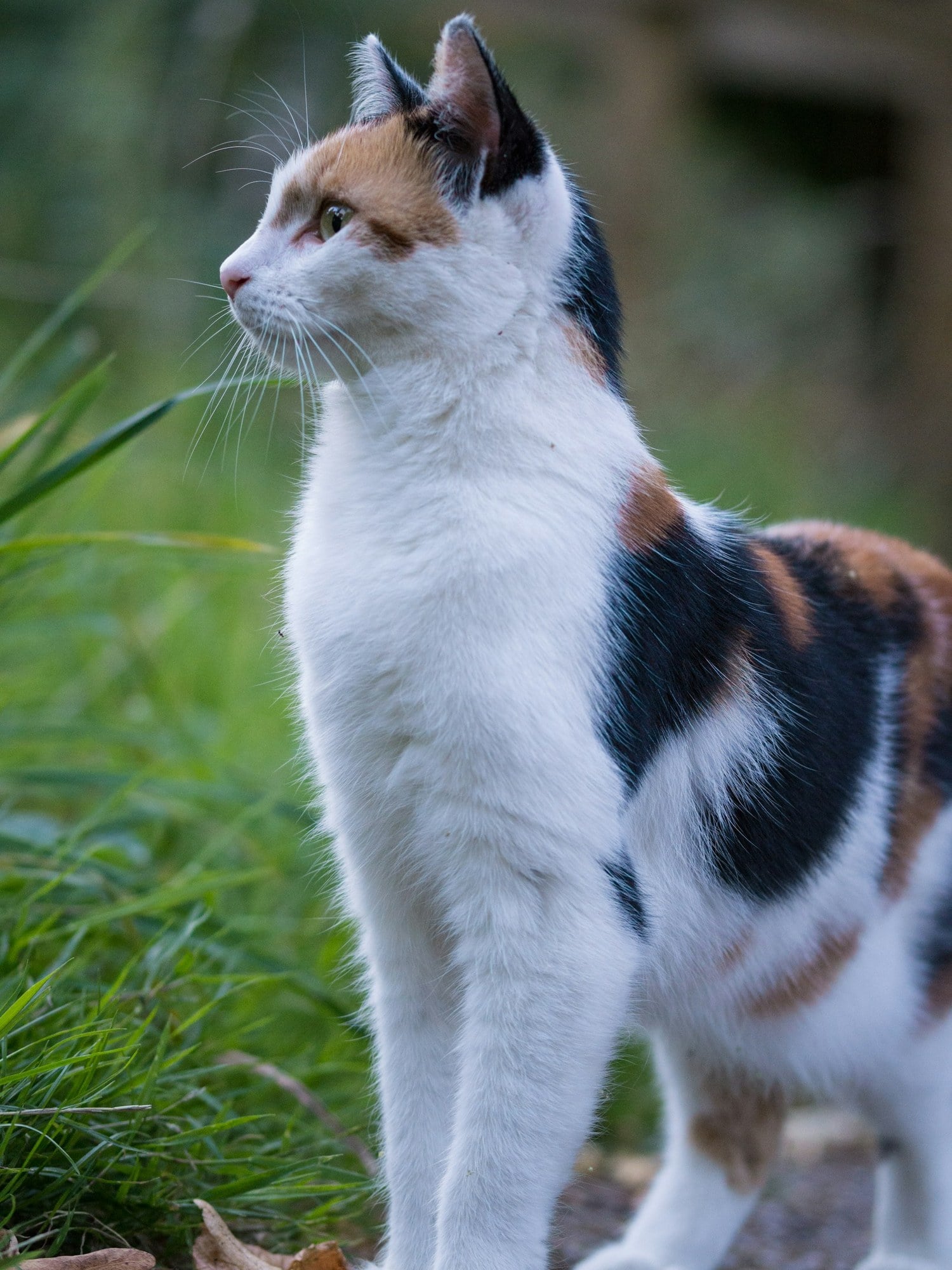
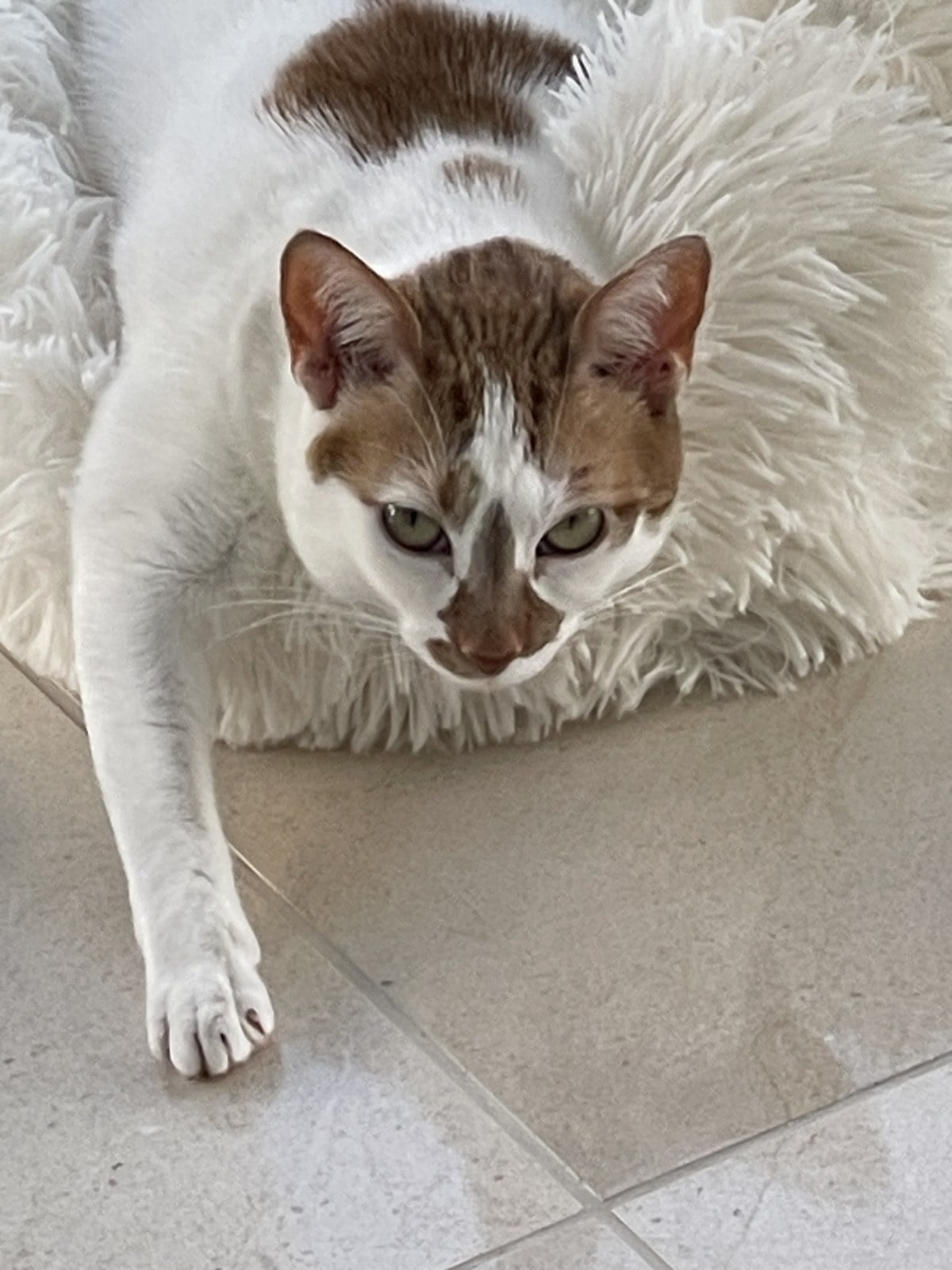
You’ve probably guessed this already, but our cats Louis (white with black patches) and Thelma (white with orange patches; rescue siblings who were found as kittens in a car) are not tabbies. Or are they? Look closer at Thelma’s orange patches. See the rings on her tail and the hint of stripes on her fur? When it comes to color, all orange cats are tabbies. So yes, Thelma is technically a tabby. Her orange patches are orange tabby, which makes her an orange tabby and white. Her white blaze runs right through where the M would be, so you only see the stripes on either side. On other colors the tabby pattern can be hidden, but it’s still there underneath. (More on that below.)
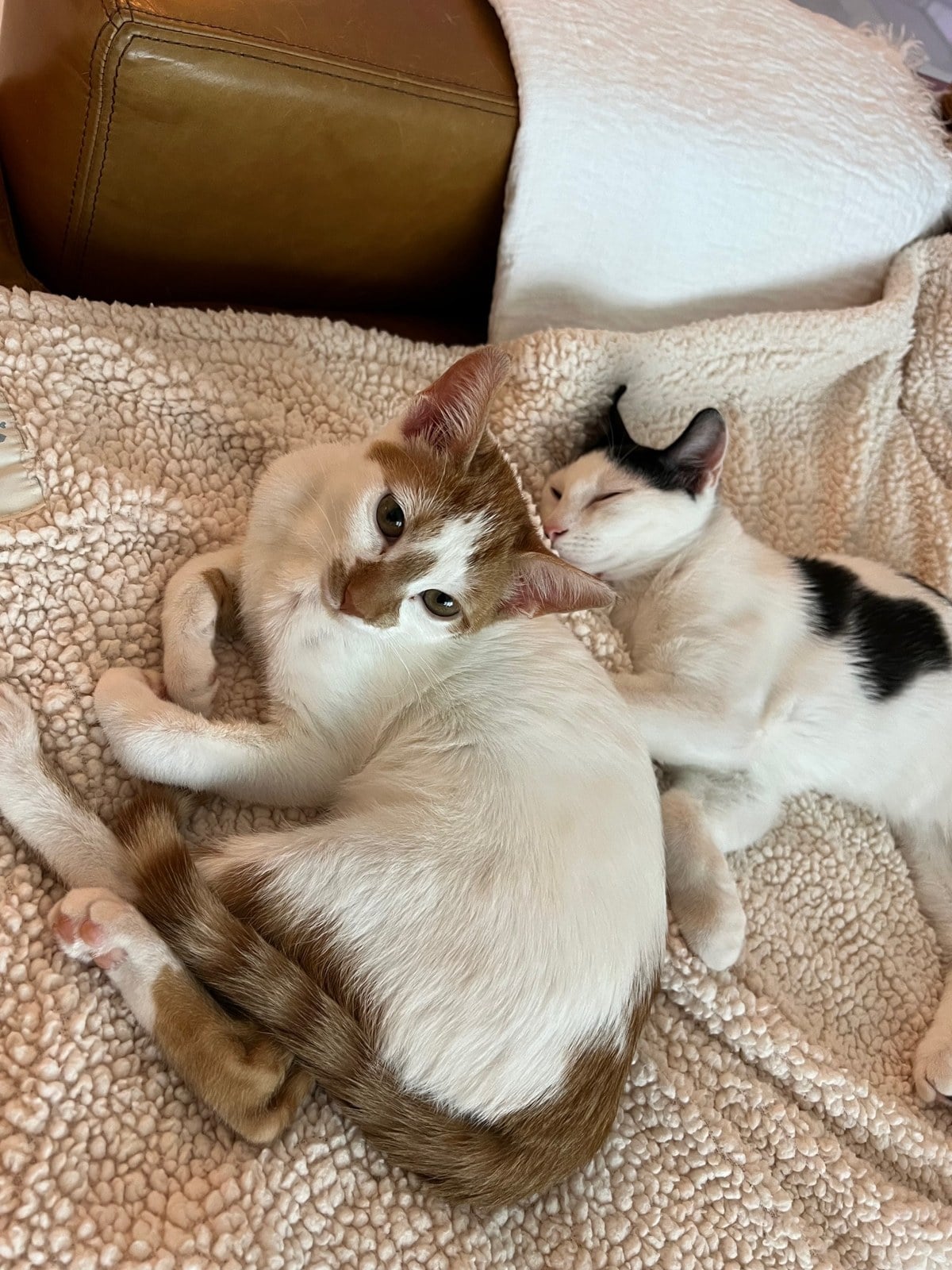
So this is my guide to tabbies: the M on their foreheads and other markings that all tabbies have in common, the four tabby patterns (mackerel, classic, spotted and ticked) and how to tell them apart, why there’s a tabby hiding inside almost every cat, the colors a tabby can be, where the tabby stripes and the very word “tabby” came from, and whether or not a tabby’s coat can predict anything about its personality.
The M, and the other markings every tabby shares
The Cat Fanciers’ Association notes that all tabby cats have an M on their forehead, a necklace around their neck, rings around their tail, bars on their legs and usually spots on their tummies. In the case of the American Shorthair, the CFA breed standard adds that there should be an unbroken line running back from the outer corner of the eye and swirls on the cheeks. Cat Fanciers’ Association judge Pat Jacobberger has a name for the spots on tabby bellies: buttons. The stripes around a tabby’s legs? Bracelets.
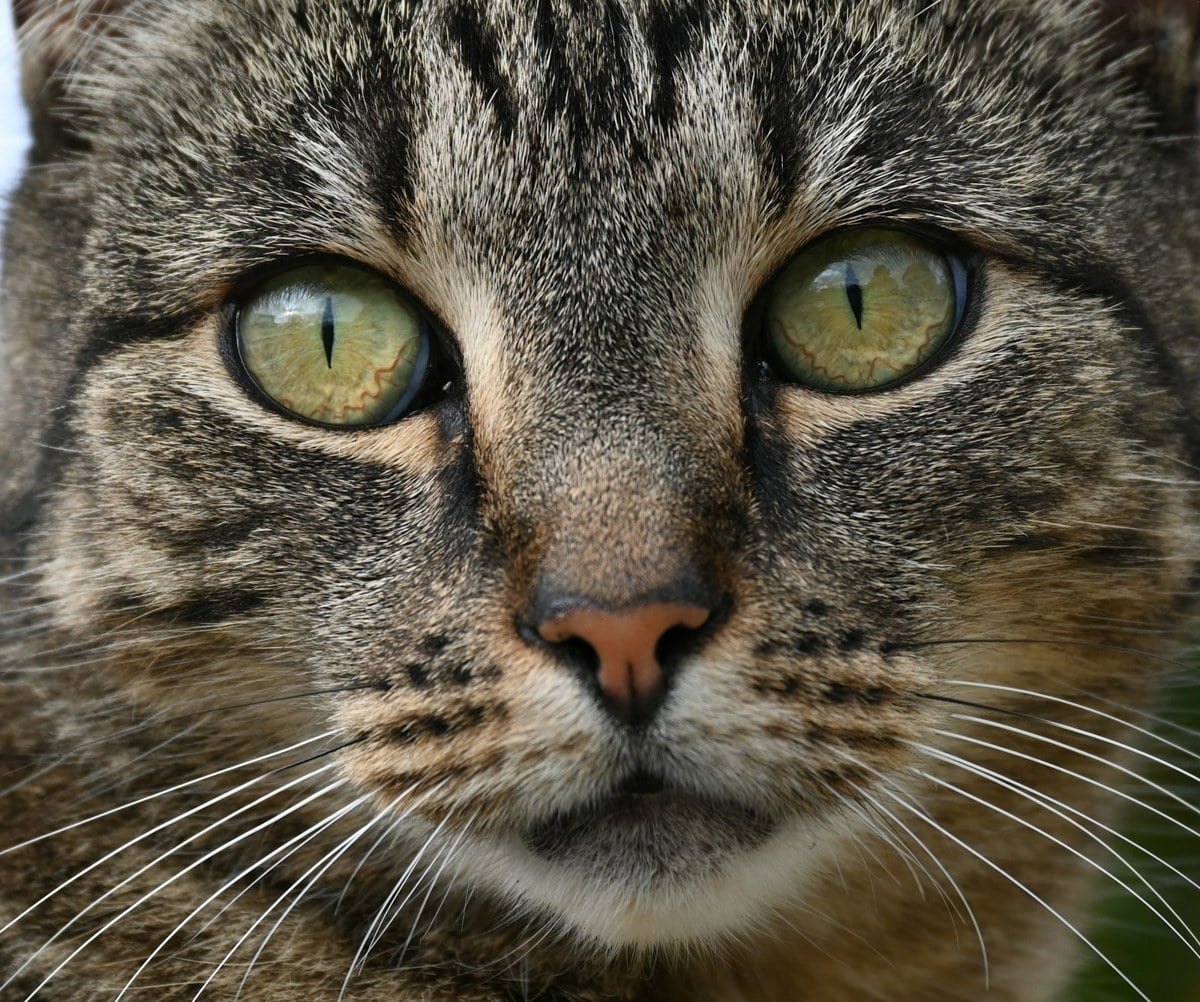
There are many legends as to the origin of the M (I went through them in my post on cat folklore by coat color), but the truth is that it’s genetics. The M is simply part of the striped pattern that domestic cats inherited from their wild ancestors. The four different patterns are distinguished by markings on the body.
Mackerel tabby: the original stripes
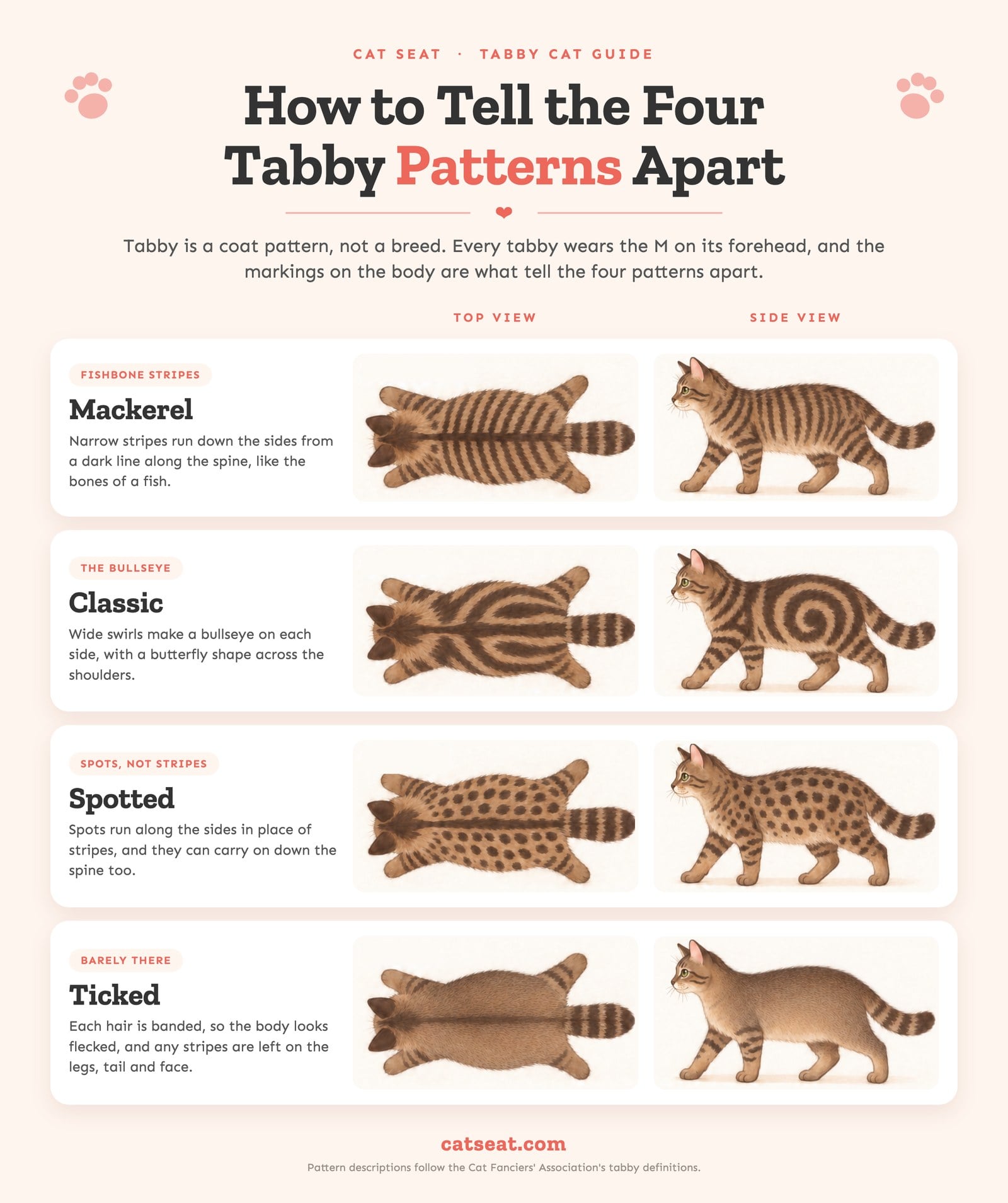
Named for the similarly striped mackerel fish, the mackerel pattern is described in the American Shorthair standard as having necklaces that are “distinct, like so many chains.” The lines down its back meet to form a narrow saddle and its body has narrow stripes. Pat Jacobberger of the Cat Fanciers’ Association describes the mackerel pattern as the wild-type tabby pattern, and says it’s considered the genetically dominant pattern.
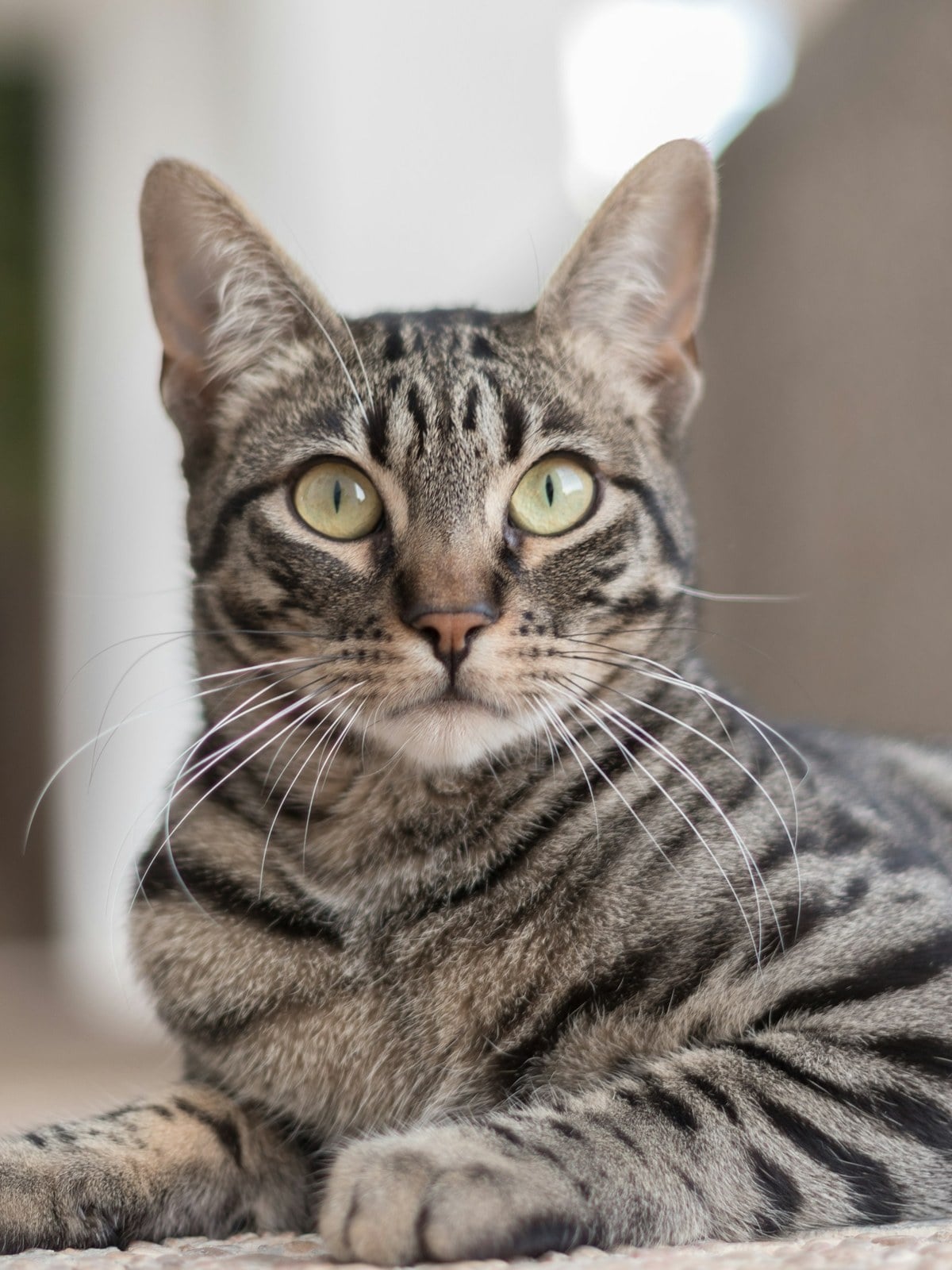
According to a 2012 paper in the journal Science from a team led by Chris Kaelin and Greg Barsh, mackerel tabbies are characterized by “narrow vertical stripes with a constant and regular spacing.” Since the ancestors of domestic cats, the Old World wild cats, had mackerel-like patterns, it’s also the closest thing to a cat’s original coat. It’s such a common look that one person on Reddit had a name for it:
Mackerel Tabby, also know as the Standard Issue Cat, and we even have a subreddit dedicated to standard issue cats. Meow.
— via Reddit.com
Classic tabby: the bullseye and the butterfly
The classic tabby, also called a blotched tabby, has swirls and a bullseye instead of stripes. The Cat Fanciers’ Association describes classic tabbies as having a butterfly pattern on their shoulders that leads into a thick line down their spine, swirls instead of stripes, and a circle on its side. According to the American Shorthair standard, the circle should be “a large solid blotch on each side encircled by one or more unbroken rings.”
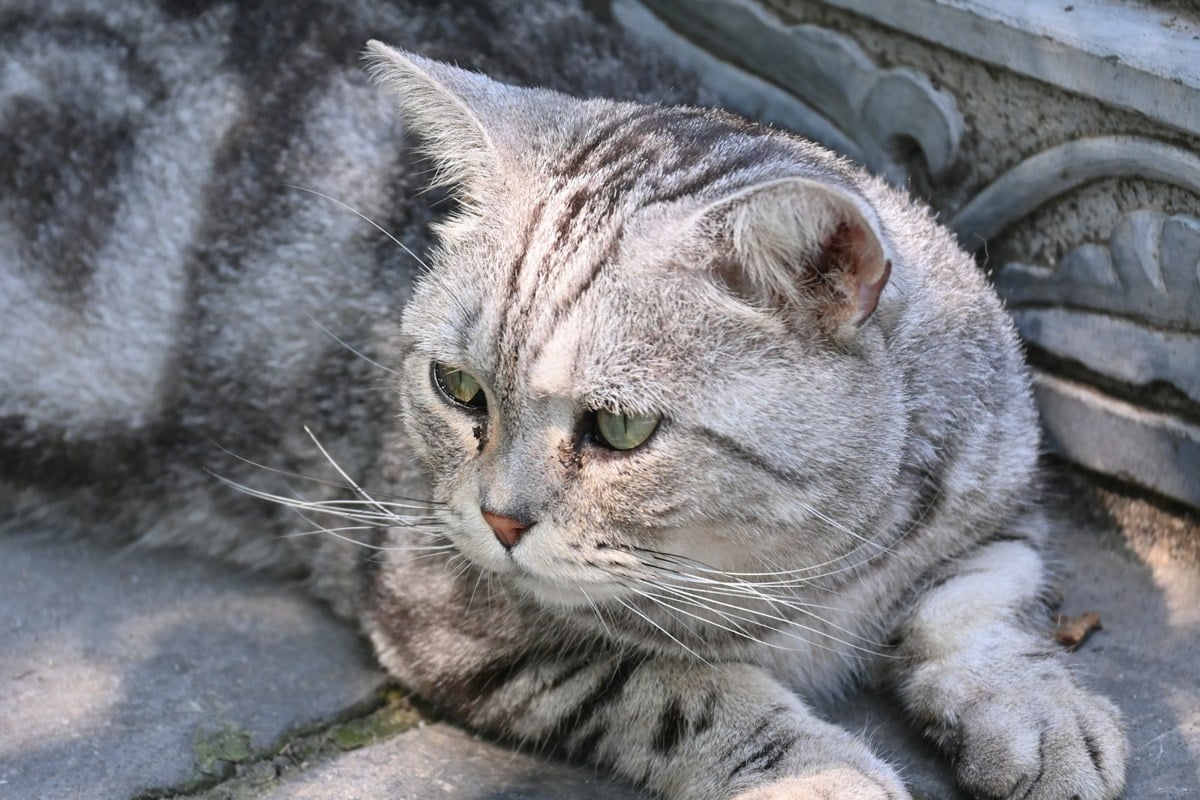
Whether a tabby gets stripes or swirls is controlled by a gene called Taqpep, which was identified in the 2012 Science study. It’s the same gene that gives king cheetahs their unusual coat pattern (spots that are connected together in stripes and blotches instead of spots like regular cheetahs).
The classic pattern is recessive, so your cat only has swirls instead of stripes if they inherited two copies of the classic mutation. As National Geographic explained when the study came out, all blotched tabbies have one of two critical mutations in both copies of the gene.
Not sure if your tabby is mackerel or classic? Focus on the sides. If you see stripes, it’s a mackerel; if you see swirls, it’s a classic. One person on Reddit worked out which one their cat was:
I think cream on buff classic (blotched) tabby, after more research and some comments leading me in the right direction. I used to think mackerel too, but he doesn’t have the linear lines on his back, tail, or sides; they’re more circular.
— via Reddit.com
Spotted tabby: stripes broken into spots
According to the CFA, a spotted tabby has spots instead of lines, and even a cat’s spine will feature spots if the rest of its coat has the spotted tabby pattern. Pat Jacobberger notes that spots vary in size, shape and arrangement, and that sometimes they run together and look like a broken mackerel pattern.
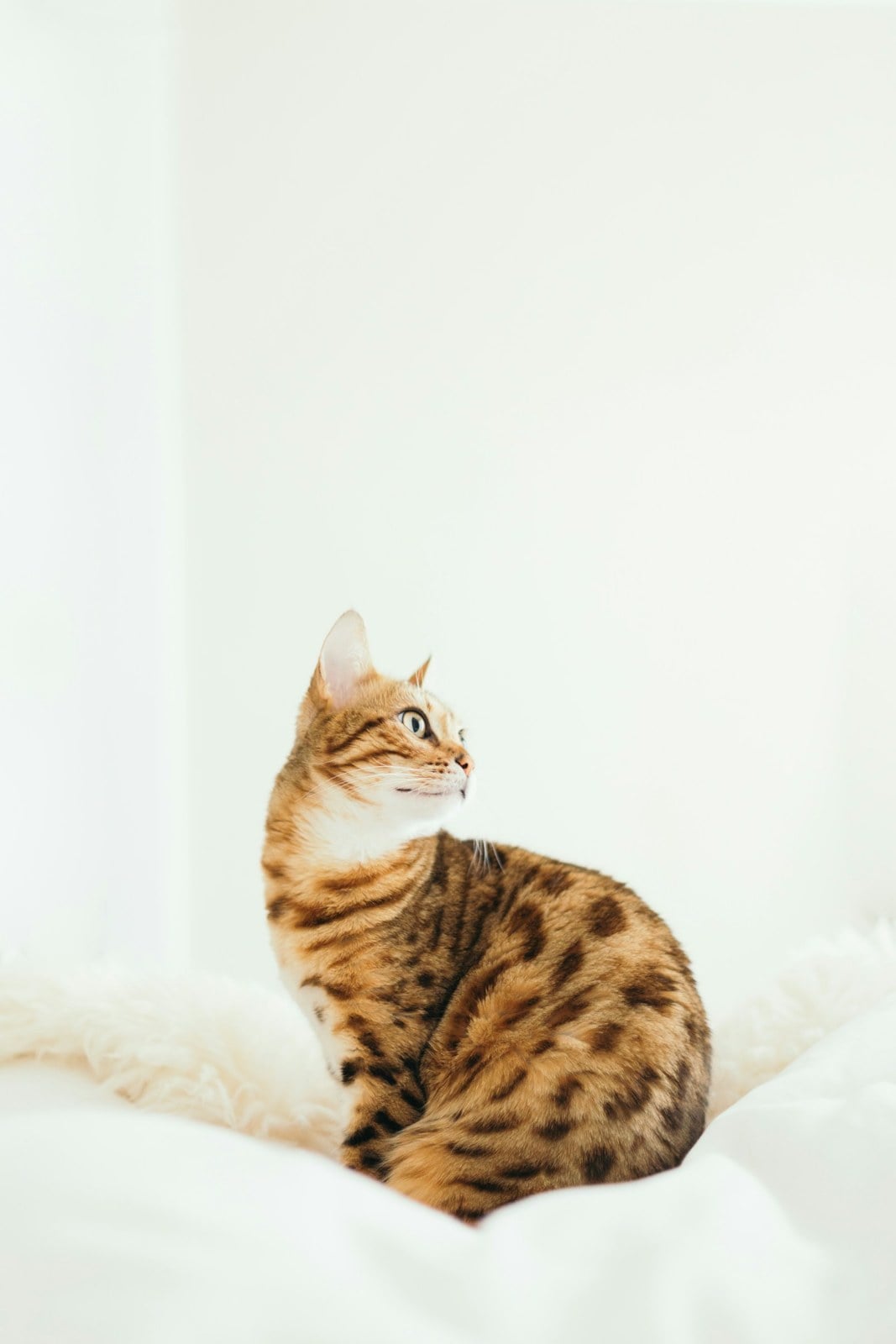
Although not completely figured out yet, a team including researchers Chris Kaelin, Greg Barsh and others published a paper in 2021 in Nature Communications that discovered that spotted tabby cats always have the mackerel version of the Taqpep gene. What causes the difference between mackerel and spotted tabbies is still unknown, but according to Barsh, as reported by Stanford Medicine, there are likely to be other genes involved as well.
The Cat Fanciers’ Association notes that the Egyptian Mau is the only natural domesticated breed of spotted cat, and that cats similar to Maus appear in papyri and frescoes as far back as 1550 B.C. The Ocicat, with its thumbprint-shaped spots, first occurred in 1964 with Tonga, a kitten born from an attempt to cross an Abyssinian with a Siamese. And the Bengal, descended from the Asian leopard cat, most commonly features a spotted or rosetted brown coat.
Ticked tabby: the one that doesn’t look like a tabby
In ticked tabbies, every hair has bands of light and dark color, says the Cat Fanciers’ Association. Ticked tabbies appear to be flecked, rather than striped, and often don’t have the usual tabby look. Still, most ticked tabbies will have at least one of the other markings, such as the necklace around the neck, according to Jacobberger.
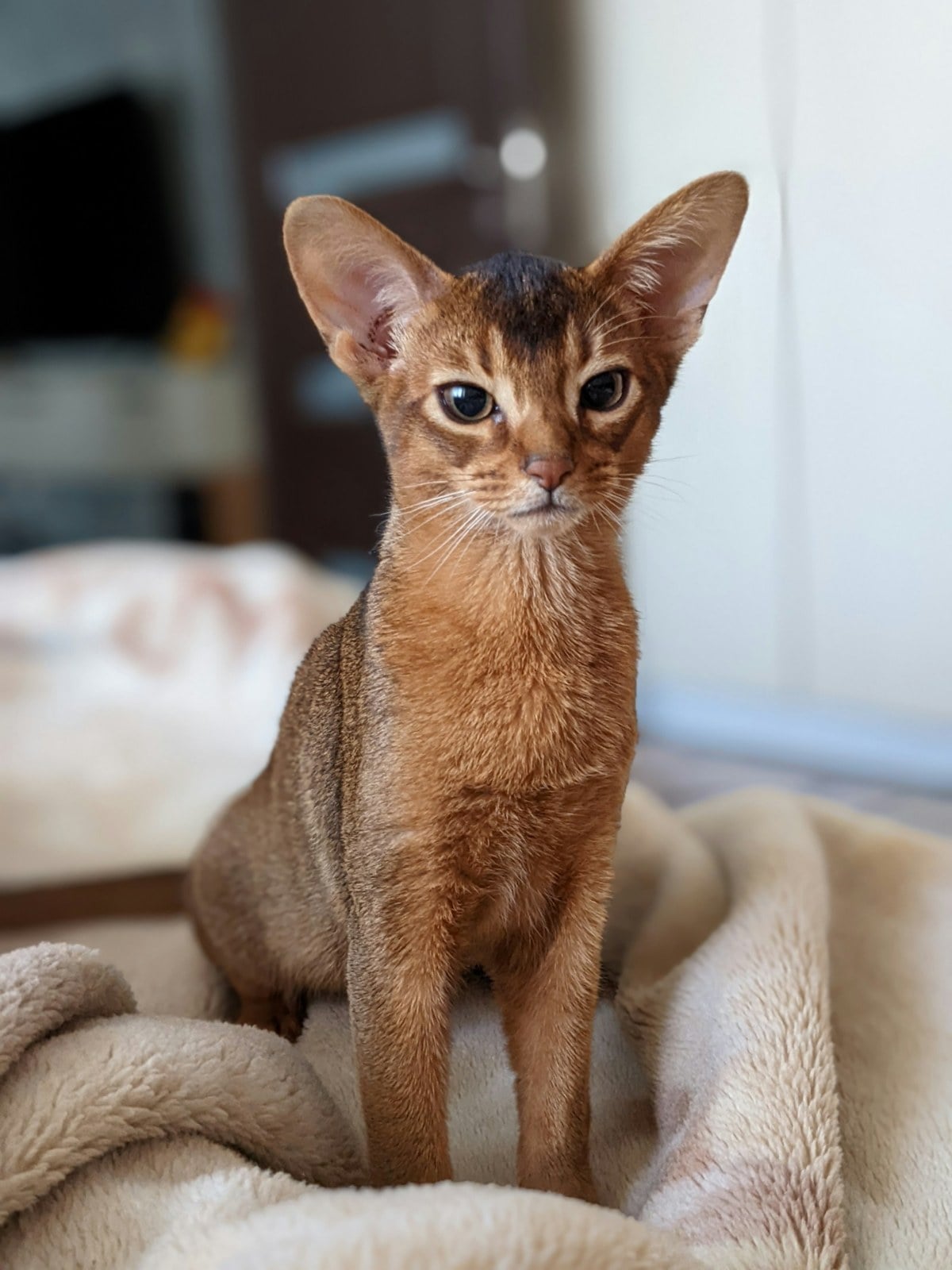
The Abyssinian is the best-known ticked breed. While ticked tabbies can come in a range of colors, the Cat Fanciers’ Association says the Abyssinian is most popular in ruddy, which is a burnished red-brown.
In 2021, scientists identified a gene responsible for ticking, called Dkk4. Having one copy of the ticked version of this gene masks tabby markings everywhere but the tail and legs, while having two copies masks tabby markings entirely. All of the Singapuras and Abyssinians studied had a ticked version of this gene, while none of the Bengals, Ocicats or Egyptian Maus did. Ticked patterns also mask other tabby patterns, so it would be impossible to tell if a ticked cat carried the mackerel or classic pattern. One person on Reddit who had a ticked tabby described it this way:
I had a ticked tabby boy. The coat makes them look like wild cats, I love it.
— via Reddit.com
There’s a tabby inside almost every cat
Ever wondered why orange cats always have tabby patterns? Tabby cat coat patterns are controlled by multiple genes. Lightly colored hairs on a tabby cat are actually banded hairs, and these colors are produced by a gene called agouti (according to the UC Davis Veterinary Genetics Laboratory), which works with another gene to control the banding pattern of black or red (orange) pigment. Another gene controls the tabby pattern (stripes, blotches and so on), where the hairs in these regions are a uniform darker color.
A cat that appears to be a solid color (such as black) has two copies of a gene that turns the agouti banding “off.” According to UC Davis, those solid cats still have a tabby pattern, it just isn’t visible, and some cats that appear to be a solid color may show some of their tabby pattern under certain lighting conditions (especially kittens). The pattern itself is laid down in a kitten’s skin before the kitten is born (according to a 2021 report from Stanford Medicine), long before any color appears.
What the gene studies found
Most of what’s known about tabby genetics comes from two papers by a Stanford-led team, in Science in 2012 and Nature Communications in 2021, plus a 2017 study of ancient cat DNA.
- The main classic-tabby mutation is common in most Western breeds but rare or absent in Eastern breeds.
- In the ancient DNA, the classic-tabby mutation showed up in 3 percent of medieval southwest Asian samples, and in about half of the later samples.
- The stripes are mapped out before the fur grows. The 2021 team found thickened patches in fetal skin that mark where the dark areas will be.
- On ticking, Greg Barsh told Stanford Medicine: “If you remove DKK4, the dark areas don’t go away entirely, but they become smaller and more packed together.”
Orange tabby patterns can’t be hidden! According to UC Davis, red (orange) cats will express their tabby pattern even if they have the gene to make other colors solid. This means there is no such thing as a solid orange cat! (Which explains the faint patterns you see in Thelma’s orange color patches!)
The colors tabbies come in
Tabby is a pattern, not a color, so tabby cats can be lots of different colors. The American Shorthair standard lists blue tabby, red tabby, brown tabby (a brilliant coppery brown with dense black markings), silver tabby (a pale, clear silver with dense black markings), cream tabby and cameo tabby (off-white with red markings).
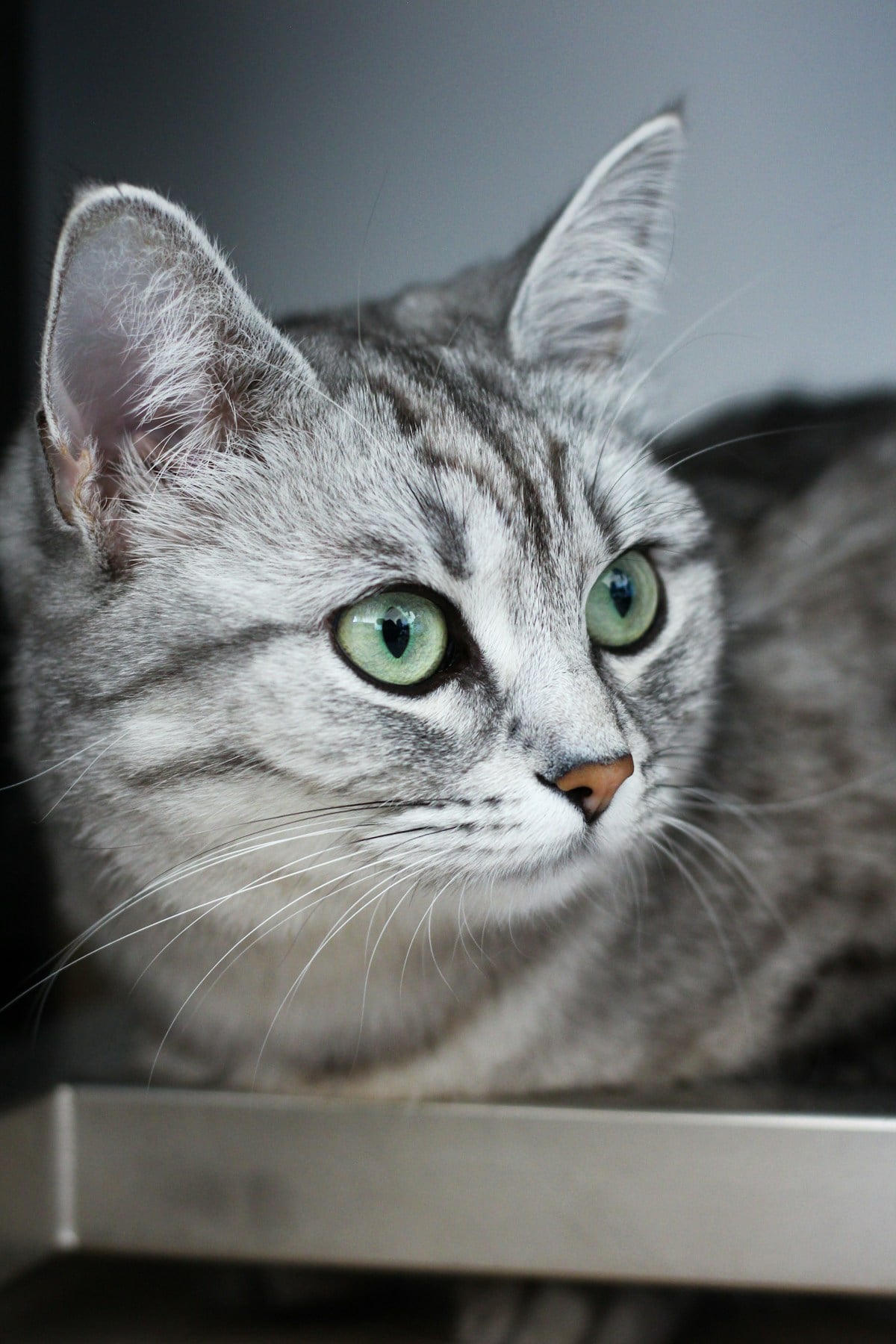
Torbie is a shortened version of patched tabby, which refers to a cat that has a tabby pattern plus patches of cream or red. Over 90 percent of patched tabbies are female, according to Pat Jacobberger. (I explain why in my calico cat guide.)
It’s a similar deal with red (AKA orange) cats, which are disproportionately male. As I explained in my post on orange cat names, the gene for orange is carried on the X chromosome, so any male cat with the orange gene will be orange whereas a female cat needs to have the gene on both of her X chromosomes to be orange, which is less common. (Stanford Medicine has the full explanation from 2025.)
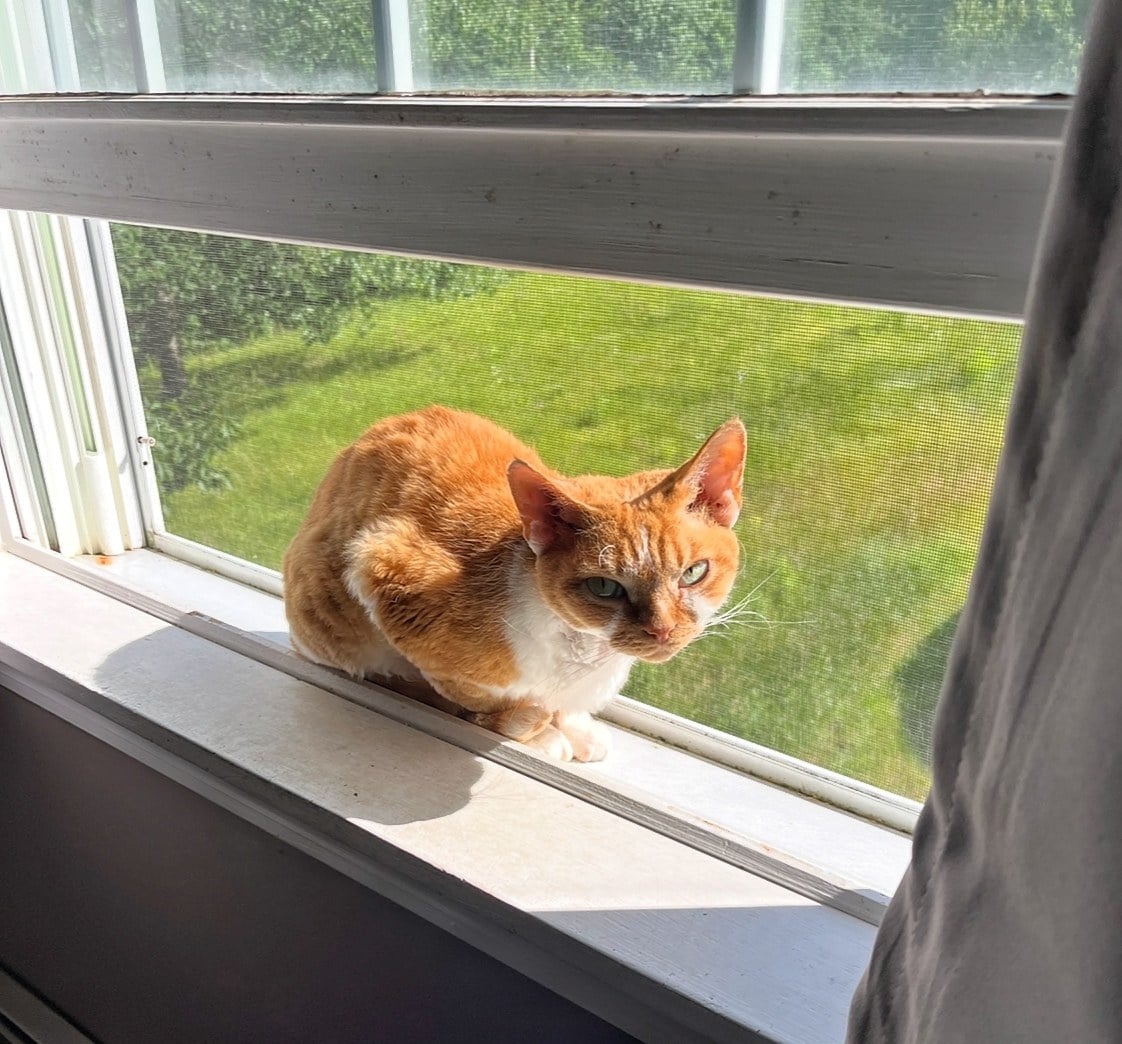
You’ve probably heard of the orange tabby known as Garfield. “I’ve always considered Garfield to be an orange tabby cat,” creator Jim Davis has said. And if your orange tabby has white on it like Thelma, one person on Reddit has the technical term, with a little humor thrown in:
I think the technical term is “red tabby with white.” However, the white doesn’t seem to give more access to the brain cell.
— via Reddit.com
Where the stripes, and the word, came from
Claudio Ottoni led a team that studied ancient cat DNA for a 2017 study published in the journal Nature Ecology and Evolution. Ottoni and his team note that wildcats have a mackerel-like coat, and art from Egypt’s New Kingdom to the European Middle Ages typically depicted cats with striped fur.
The classic tabby, or blotchy, pattern came later. The earliest sign of the classic tabby mutation in their ancient DNA turned up in southwest Asia during the Ottoman era, and later cats with blotchy patterns became common throughout Africa, Europe and southwest Asia. By 1758, blotchy cats were so common that scientist Carl Linnaeus referred to the blotchy pattern as the standard pattern for house cats, according to the 2012 Science paper.
As for the name, “tabby” was a term for silk taffeta with a wavy or striped design as far back as 1638, according to Merriam-Webster. People noticed the resemblance between this pattern and certain cats’ fur and started calling those cats tabbies. The word came into English through French and Arabic from Al-Attabiya, the name of the section of Baghdad where the striped silk was produced. Dictionary.com also lists tabby as a name for a female cat, and as an old insult for a spinster.
Does the pattern change the personality?
According to Teresa Keiger of the Cat Fanciers’ Association, there’s no real evidence that a cat’s color or pattern says much, if anything, about their personality. Her guess about why orange tabbies have a friendly reputation is that a larger share of red cats are male, and males, especially neutered males, are often friendlier and less dominant.
One study published in 2012 by UC Berkeley found that people expect orange cats to be friendly. In the study, 189 people responded to questions about cats of various colors (although tabby wasn’t included as an option), and respondents rated orange cats the friendliest. However, lead author Mikel Delgado said that there’s little evidence to suggest that these perceived differences actually exist. In other words, the research didn’t examine cats’ actual personalities, only people’s perceptions of cats’ personalities.
Stanford geneticist Chris Kaelin, whose research group discovered the orange gene, thinks this reputation is probably due to the fact that there are more male orange cats than female, and he said there are not many scientific studies of the personality of orange cats. His group studied the orange mutation in pigment cells and found no differences in gene activity in the kidney, heart, brain or adrenal tissue they checked, which is why he expects the gene only affects the fur.
So there’s nothing scientific behind the idea that orange cats are friendlier. At least, not yet. That doesn’t stop owners from having opinions, like one person on Reddit:
My mackerel tabby never, in his entire life, hissed or scratched at anyone. No exaggeration. He was incredibly calm and loving.
— via Reddit.com
Famous tabbies, and finding your own
Another well-known tabby is Larry, who is the Chief Mouser at 10 Downing Street in London. According to the Associated Press, Larry is a tabby, and according to the UK government, Larry came from the Battersea Dogs and Cats Home and has resided at 10 Downing Street since February 15, 2011. He is also the first cat to hold the official title of Chief Mouser.
The tabby pattern is a coat trait, so any health problems your tabby runs into will come down to the individual cat, her breed (if she has one) and general care, not her coat. Also, only about five percent of domestic cats are a recognized breed, so by far your best bet to find a tabby cat is at the shelter. Both of my cats are rescues (they were found together in a car!) so I’m obviously biased, but if you’re looking for a cat that’s the very definition of classic, adopt a tabby from the shelter!

Founder and editor of Cat Seat and cat mom to Thelma and Louis. She’s been writing online since 2000.
Hi! I’m Lindsay. I run this site alongside my hubs Cory and our very opinionated cats, Thelma and Louis. We’re so happy you’re here!