Is Cat Grass Actually Worth Buying?
 By Lindsay Jones
 ✓Medically reviewed by Dr. Lindsey Mortlock
Some links are affiliate, so we may earn a small commission at no cost to you. As an Amazon Associate, we earn from qualifying purchases. Every purr-chase keeps two very demanding cats in treats. Our policy →
Cat grass is something you mostly buy because your cat just seems like they should want it. It’s green, it’s fresh, and setting it down makes you feel like you’ve provided a tiny indoor pasture for an animal who otherwise spends the bulk of their day staring at a wall, sleeping in a deeply concerning position, or acting personally victimized by a closed door. And then one of exactly two things happens: your cat either treats it like the single most exciting thing that has ever entered your home, or they sniff it once and walk away like you’ve insulted them and their whole family. Both of those, for the record, are very cat.
So is cat grass actually worth buying? For a lot of indoor cats, yes, but not because it’s some miracle digestive cure or essential supplement that every cat secretly needs. It’s more of a small enrichment item that gives your cat a safe place to chew, nibble, and act out whatever tiny jungle instincts are still running in the background, which, based on what regularly goes down near our houseplants, are very much still running.
What is cat grass?
First things first, cat grass is not the same thing as catnip, even though people mix them up constantly. Catnip is an herb that can make some cats playful, dreamy, floppy, dramatic, or completely unbothered, whereas cat grass is usually just a small tray of young cereal grasses grown from seeds like wheat, oat, barley, or rye. It looks a lot like the grass you’d see in a yard, but it’s grown indoors in a container and meant for cats to nibble on safely, which is the whole point.
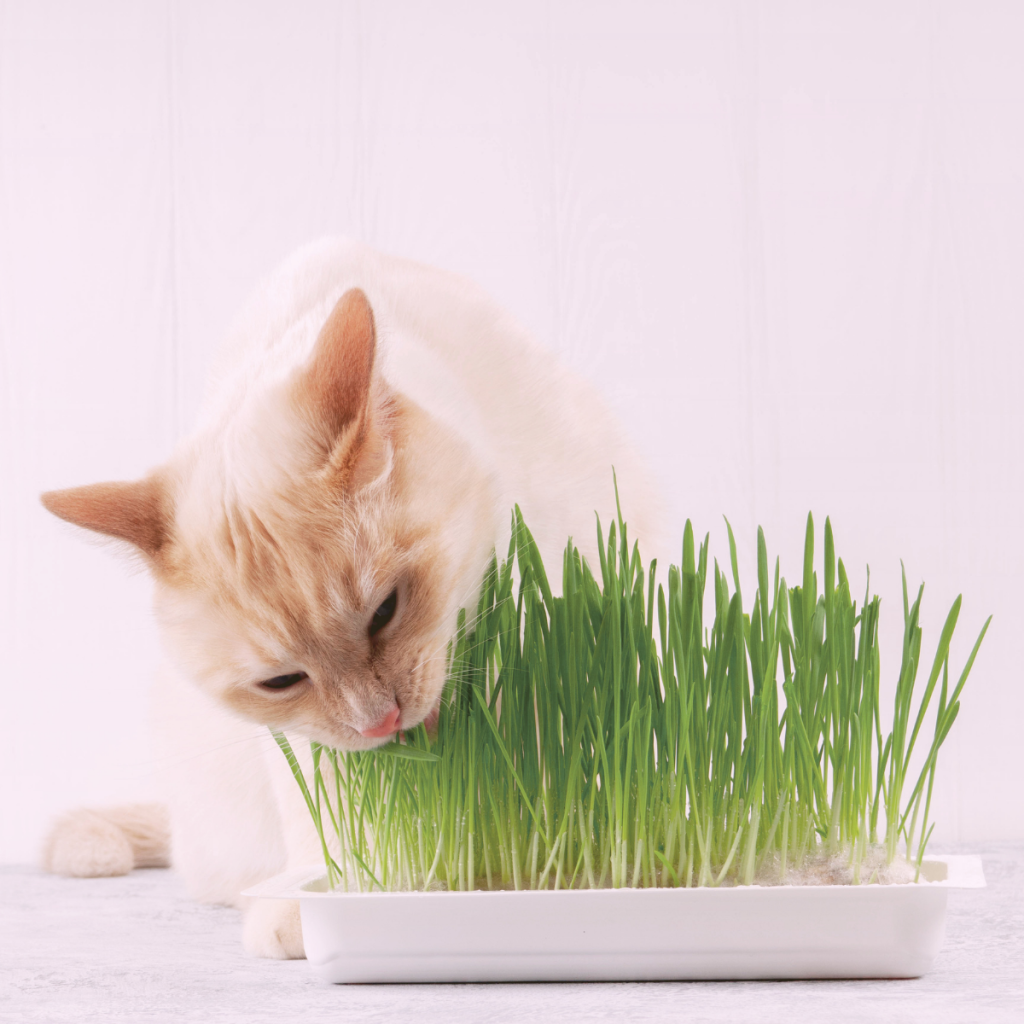
Most cat grass kits come with seeds, some soil or a growing medium, and a little tray, and the routine is about as simple as it gets: you water it, you wait a few days, and eventually you’ve got a patch of bright green grass that makes your windowsill look healthier than the rest of your life. Some cats chew the tops, some yank the whole thing out by the roots, and some just sit next to it and stare at you like they’re waiting for the actual gift to arrive.
Why do cats like cat grass?
Cats are obligate carnivores, which means they need meat-based nutrition to actually thrive, so right off the bat, cat grass isn’t replacing their regular food and shouldn’t be treated like a meaningful part of their diet. But cats still chew grass for a handful of possible reasons: they might like the texture, they might just enjoy the act of chewing, they might be drawn to the movement and the smell, some cats may use it as roughage, and some may simply find it fun. That last one sounds too simple to be real, but it’s probably a bigger factor than we give it credit for, because cats spend an enormous amount of time making small decisions that feel deeply important to them and completely mysterious to us. Should I chew this? Should I knock this pen off the table? Should I sit directly on the clean, warm, just-folded laundry? The answer, more often than not, is yes. Cat grass just gives that chewing impulse somewhere safer to go.
Why cats are wired to eat grass at all
Researchers at UC Davis, led by veterinary behaviorist Dr. Benjamin Hart, surveyed more than 1,000 cat owners about grass-eating and turned up a few things worth knowing. Nibbling on grass is extremely common, the vast majority of cats seemed perfectly fine right before they did it (so it’s usually not a sign of an upset stomach), and most cats didn’t throw up afterward either. Their leading theory is that it’s an instinct left over from cats’ wild ancestors, a built-in habit that may help clear intestinal parasites. In other words, the urge predates your windowsill by a few thousand years.
Is cat grass good for cats?
Cat grass can be good for cats, but I want to be honest with you: the benefits are pretty modest. The biggest reason to buy it is that it gives indoor cats something safe and appropriate to chew, which can be especially helpful if your cat is the type to take a personal interest in your houseplants, your floral arrangements, or anything leafy that is very much not for them. A small tray of it can also be a nice enrichment item, because indoor cats benefit from variety, and cat grass adds a new smell, a new texture, and a new little activity to their space. It’s not as thrilling as a bird outside the window or a cardboard box they’ve decided is now prime real estate, but it’s something, and with indoor cats, something counts for a lot.
Cat grass may also provide a bit of roughage, and some veterinary sources note that grass can support digestion and elimination, which is why plenty of cat owners reach for it because they feel like it helps with hairballs or constipation. That said, that doesn’t make cat grass a treatment for digestive problems, so please don’t think of it that way. It’s much more of a low-stakes add-on than a remedy.
Quick read: what cat grass can do
Cat grass can:
- Give your cat a safer plant to chew.
- Add a little enrichment to an indoor routine.
- Offer some roughage.
- Help redirect attention away from houseplants.
- Give cats who like nibbling something that is actually meant for them.
Cat grass cannot:
- Replace a balanced cat food.
- Fix ongoing vomiting.
- Treat constipation, diarrhea, or hairball problems.
- Make a cat who hates plants suddenly become a windowsill gardener.
- Keep every cat away from every other plant in your home.
That last one would be amazing, truly, but it’s not a legally binding agreement, unfortunately.
Will cat grass make my cat throw up?
It can, and I won’t pretend otherwise. Some cats eat grass and vomit right afterward, some nibble it and are totally fine, and some seem to enjoy the entire process in a way that doesn’t feel emotionally healthy for anyone involved. A little occasional grass-chewing is usually not a big deal at all, but frequent vomiting is a different story, so if your cat eats cat grass and throws up every single time, or if the vomiting is new, repeated, or showing up alongside other symptoms, it’s worth checking with your vet. The same goes for a cat who suddenly becomes obsessed with eating grass or plants out of nowhere, because some interest is completely normal, but a big, sudden change in behavior is worth a closer look.
Pay attention if you notice:
- Frequent vomiting after eating grass.
- Diarrhea or constipation.
- Loss of appetite.
- Lethargy.
- Weight loss.
- A sudden increase in plant eating.
- Your cat trying to eat soil, roots, or large amounts at once.
Some of this is completely normal cat business, and some of it is worth paying real attention to, and the trick is just knowing your own cat well enough to tell the difference.
Is cat grass safe?
Cat grass is generally considered safe as long as it’s grown from cat-safe seeds and kept clean, and the main thing is just to buy grass that’s actually intended for pets, or to grow it yourself from seeds you know are safe, like the usual wheat, oat, barley, and rye varieties. What you really don’t want is your cat chewing on random outdoor grass or some mystery plant, because outdoor grass can come loaded with pesticides, fertilizers, lawn treatments, and other contaminants, and a lot of common indoor plants are toxic to cats on top of that. That’s really the whole appeal of cat grass, when you think about it: it hands you back some control. You know exactly what it is, you know where it’s been, and you know it wasn’t sprayed by the building landscaper five minutes before your cat decided to become a salad person.
Safe to chew vs. absolutely not
The ASPCA keeps a big, searchable database of plants that are toxic and non-toxic to cats, and the good news is that the cereal grasses cat grass is grown from, wheat, oat, barley, and rye, all land firmly on the non-toxic side. The trouble is everything else competing for your cat’s attention: the ASPCA flags a long list of popular houseplants (lilies are the big one, but also plants like pothos, aloe, and sago palm) as dangerous. So part of what cat grass quietly does is give a determined chewer a legal target, which beats negotiating with them over the fiddle leaf fig.
The downside of cat grass
Cat grass is cheap compared to a lot of cat products, but it’s not completely effortless either, and it’s only fair to warn you. It can get messy, the soil can spill, the tray can tip, and some cats pull the whole clump out like they’re personally harvesting crops, plus the grass can get moldy if it stays too wet or just sits around too long. That’s exactly why I’d start small and not go buy a whole indoor cat garden system before you have any idea whether your cat even cares, because a basic tray or a simple little kit is more than enough to find out. And on top of all that, cat grass just doesn’t last forever, since it usually looks cute for a short window of time and then starts looking tired, until you hit the point where you glance over and think, “Is this still enrichment, or have I accidentally created a sad windowsill swamp?” That, my friend, is your sign to toss it and start over.
Cat grass vs. catnip: which one should you buy?
They do different things, so it’s not really an either/or. Catnip is more of a mood item, and it can make some cats playful or relaxed, though plenty of cats don’t respond to it at all. Cat grass, on the other hand, is more of a chewing and enrichment item, giving cats a safe, plant-like thing to nibble on. So if your cat likes chewing on plants, start with cat grass, and if your cat could use more encouragement to play, catnip might be the more exciting pick. If your cat is Thelma, she may decide both are interesting, but only at a time of her own choosing, and if your cat is Louis, he may just look mildly concerned that the grass is even there in the first place. Both reactions, I promise, are valid.
How to introduce cat grass
Put it somewhere your cat already likes to hang out, ideally a sunny spot that’s easy to clean, whether that’s a windowsill, a low shelf, or a little mat near a favorite lounging area. Then let your cat discover it on their own instead of presenting it with a ton of enthusiasm, because cats are deeply suspicious of our enthusiasm and it rarely, if ever, helps the cause. Keep an eye on them the first few times too, since you want to see whether they nibble normally, rip out huge chunks, dig around in the soil, or go straight for the roots. And if your cat eats too much at once, just offer it in shorter windows: put it down for some supervised nibbling and then move it back out of reach, which is especially handy for cats who approach a tray of grass like it’s an all-you-can-eat buffet and they’re determined to get their money’s worth.
How to keep cat grass from getting gross
Cat grass is simple, but it does ask for a tiny bit of maintenance, so keep it lightly watered but never soaked, set it somewhere with decent light, trim it if it gets too long, and toss it the moment it smells odd, develops mold, or starts looking slimy. A shallow, heavier container helps a lot if your cat likes to tip things over, and you can also set the pot inside a wider dish or tray to catch the stray soil and water before it ends up on your floor. None of this is a design tragedy, by the way. It’s just life with cats, where at some point everything you own becomes either decor or a cleanup project, and often both.
Is cat grass worth it for indoor cats?
For a lot of indoor cats, yes, it is. Cat grass is worth buying if your cat likes chewing on plants, could use more indoor enrichment, or seems curious about grass whenever they spot it outside, and it’s also worth a shot if you just want a safer alternative to your houseplants. But it’s not something every single cat needs, so if your cat takes one look and ignores it completely, that doesn’t mean you failed at enrichment, it means your cat has made a decision, and they may very well reverse that decision in three weeks with absolutely no explanation. I’d treat the whole thing as a low-cost experiment: buy one small kit, see what your cat actually does with it, and go from there.
Who should skip it?
You may want to skip cat grass, or at least talk to your vet first, if your cat deals with ongoing vomiting, chronic digestive issues, or a real history of eating things they absolutely should not, and you’ll want to be extra careful if your cat tends to inhale food, chew aggressively, or go after soil and roots. The thing to remember is that cat grass should be a small nibbling activity, not a medical plan, so if your cat is already vomiting often, constipated, losing weight, or just generally acting off, cat grass is not the thing to troubleshoot with. That’s a vet conversation, plain and simple.
What to look for when buying cat grass
Look for a simple cat grass kit made for pets, because the best ones aren’t complicated in the slightest.
A good cat grass kit should have:
- Cat-safe seeds such as wheat, oat, barley, or rye.
- Clear growing instructions.
- A stable container.
- No added chemicals or mystery treatments.
- A setup that is easy to toss and regrow.
I’d steer clear of anything that feels overly gimmicky or looks impossible to clean, because cats do not need a luxury lawn. What they need is a safe little patch they can chew on without sending you into a full panic about your houseplants.
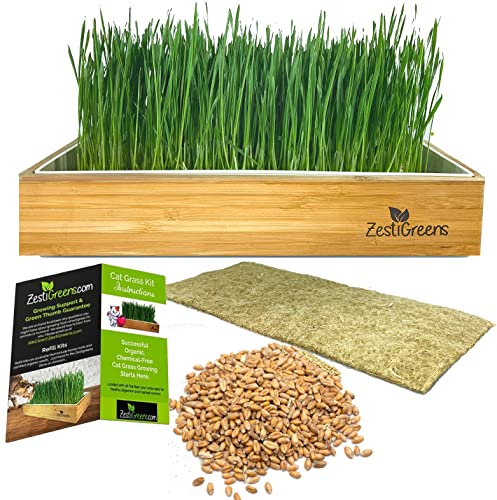
Self-Watering Cat Grass Kit (Organic Wheatgrass, No Soil)
The simplest kit if you don’t want to deal with soil and replanting. Self-watering tray, organic wheatgrass seeds, ready to eat in 5-7 days. We’ve gone through several rounds with Thelma and Louis.
So, should you buy cat grass?
Yes, if your cat seems interested in chewing on plants, or if you just want a simple enrichment item that costs less than most of the cat toys they’re going to ignore anyway. And no, if you’re expecting it to solve hairballs, vomiting, constipation, boredom, or your cat’s ongoing personal campaign against your fiddle leaf fig, because that’s a lot to ask of a tray of grass. Cat grass isn’t essential and it isn’t magic, but it’s also not a waste if your cat actually uses it, and that’s really the whole math of it.
It’s a rare cat purchase that’s both practical and a little charming, a cheap tray of grass your cat might actually use. Then they knock soil all over the floor, and the moment passes. Still probably worth trying.
Founder and editor of Cat Seat and cat mom to Thelma and Louis. She’s been writing online since 2000.

An emergency veterinarian with a special interest in feline medicine — and a self-proclaimed cat lady with six cats of her own.
Hi! I’m Lindsay. I run this site alongside my hubs Cory and our very opinionated cats, Thelma and Louis. We’re so happy you’re here!