
The Ultimate Cat Health Checklist
 By Lindsay Jones
 ✓Medically reviewed by Dr. Lindsey Mortlock
My husband and I watch our two cats like protective parents, always checking to see if anything’s off. Cats tend to hide it well when they don’t feel good, so the signs can be easy to miss. Being home with them all day means we’re usually the ones who catch something as soon as it feels “off.”
Over time that’s turned into a head-to-tail checklist of what looks healthy and what means a call to the vet. This is a great list to keep a running tally of, and you can (and should) try to do it weekly. That means looking in your cats ears, inspecting their eyes, fur, nails, and teeth (and when you look in the ears, look but don’t poke — skip the Q-tips, which can push debris deeper or hurt the ear) on top of monitoring all their other habits. For a list of what we check for, read on! And for tips on how to safely check your cat while still making sure they (and you) feel comfortable, check out this cat-friendly handling video.
| Area | Looks healthy | Call the vet |
|---|---|---|
| Eyes | Clear, bright, no squinting or discharge. | Ongoing squinting, a weepy or goopy eye, or the third eyelid showing. |
| Ears | Clean and pale pink inside, no real smell. | Dark coffee-ground debris, redness, a bad odor, or constant scratching and head-shaking. |
| Nose | Clear, easy breathing. | Thick or colored discharge, sneezing fits, or any open-mouthed breathing at rest (urgent). |
| Mouth & gums | Gums pink and moist, teeth fairly clean. | Bad breath, drooling, red or bleeding gums, or heavy yellow-brown tartar. |
| Coat & skin | Smooth and fairly glossy, no bald spots. | Scabs or sores, a suddenly greasy or matted coat, or any new lump. |
| Weight | Ribs you can feel under a thin layer of fat. Not sure? Compare them to a visual body condition chart. | Ribs you have to dig for, or any unplanned weight loss. |
| Paws & claws | Pads intact, nothing stuck between the toes, claws not overgrown. | Limping, a torn claw, swelling, or constant licking of one paw. |
| Litter box | Regular daily stool and normal urine output. | Straining to pee with little coming out (an emergency), blood, diarrhea, or no stool for more than about two days. |
| Vomiting | The occasional hairball, about once every week or two. | More than about once a week, vomiting plus not eating, or blood. |
| Mood & energy | Acting like themselves. | New hiding, a hunched posture, low energy, or seeming off for more than a day. |
While the list above is a great starting point, we’ve included some real-world experiences we’ve had with our cats Thelma and Louis, as well as other cat owners who’ve been through it.
When their weight sneaks up on you
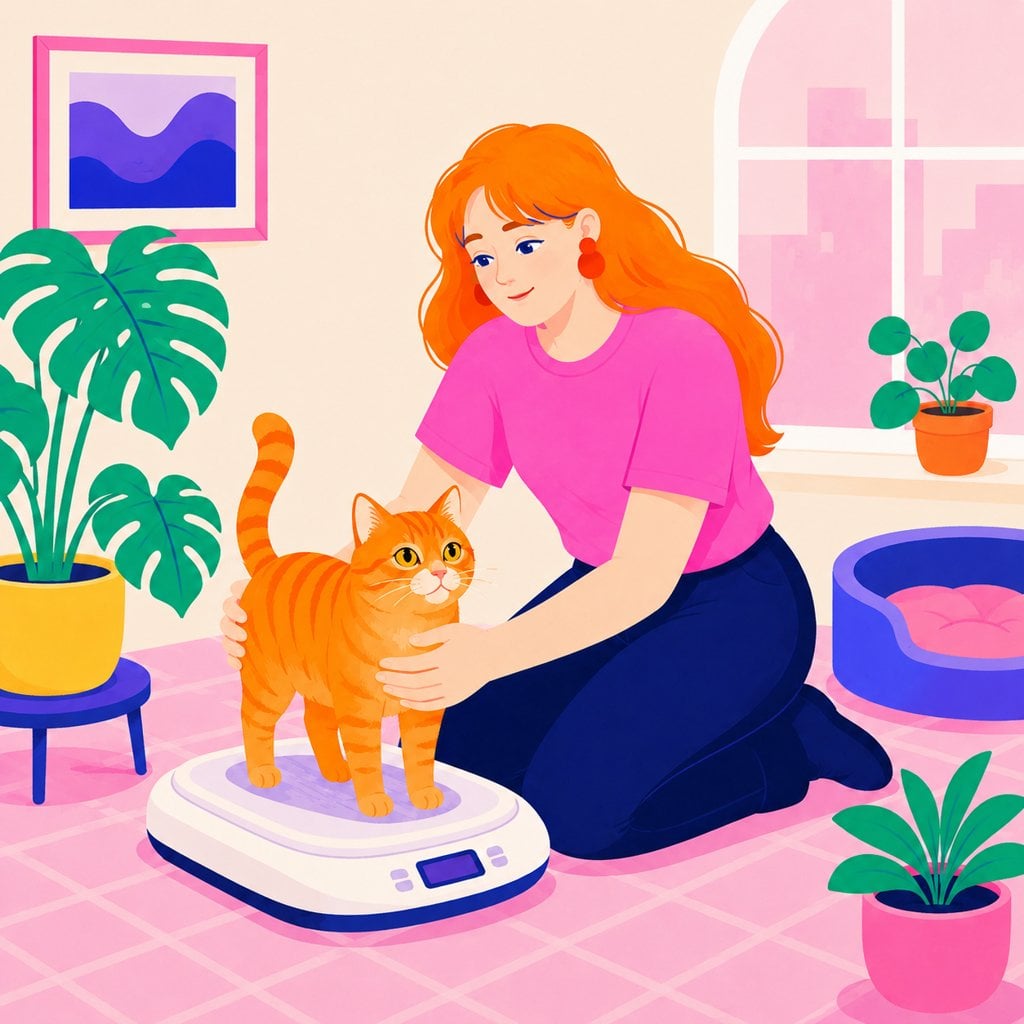
Weight change is easy to miss, whether it’s going up OR down. At home you can check by running your hands across their ribs. If you can actually feel them under a thin layer of fat, that’s ideal. If have you can barely feel them, your cat is probably carrying extra. Unplanned weight loss matters just as much, since it can be an early sign of something like diabetes or thyroid disease.
Most cats are carrying extra weight
The Association for Pet Obesity Prevention’s 2022 survey classified 61% of cats as overweight or obese, and found that 28% of owners thought their cat’s body was normal when a vet had scored it as overweight. If you’re not sure which side of the line yours is on, it’s a good thing to ask about at the next visit.
A recent example: Louis seemed a bit more lethargic than usual. It started right after we’d switched his lunchtime kibble to a snack at around 2 a.m., hoping he’d stop waking us up so early. (Lol.) Between that and some extra kibble we’d been handing him during the day, two things were happening. He was getting too many calories and had gained a little weight. He was also more tired during the day, probably because he was now getting up at 2 a.m. to eat. None of it was dramatic, but small changes like that are easy to miss if you’re not paying attention.
The not-noticing differences in appearance is common, especially for those of us home with our cats all day. One owner put it almost exactly the way I would have about Louis:
“I’ve had him since he was 4 months old (stray) – he was healthy and very lean and scrawny like up until I got him [neutered] around a few months ago, he is now 11 months and everyone commented on how fat my cat is but I completely did not notice how huge he has gotten recently because I’m with him all day..”
— via Reddit.com
Weight loss is the scarier direction, and it usually shows up with other small changes, such as a cat eating less food, a litter box accident, or lower energy. The weight itself is often the last thing you notice. One owner described how those small things piled up before they caught the bigger problem:
“I got back from being out of town and noticed he had gone back to being picky again (he used to literally eat any cat food put in front of him – he was never picky). Well right at Christmastime (between Christmas and New Years) he seemed to get worse and I caught him pooping outside the litterbox so I knew something was wrong (he had never done that). I figured I’d get him in after New Years but that weekend he stopped eating altogether and I finally noticed how much weight he had lost.”
— via Reddit.com
Throwing up
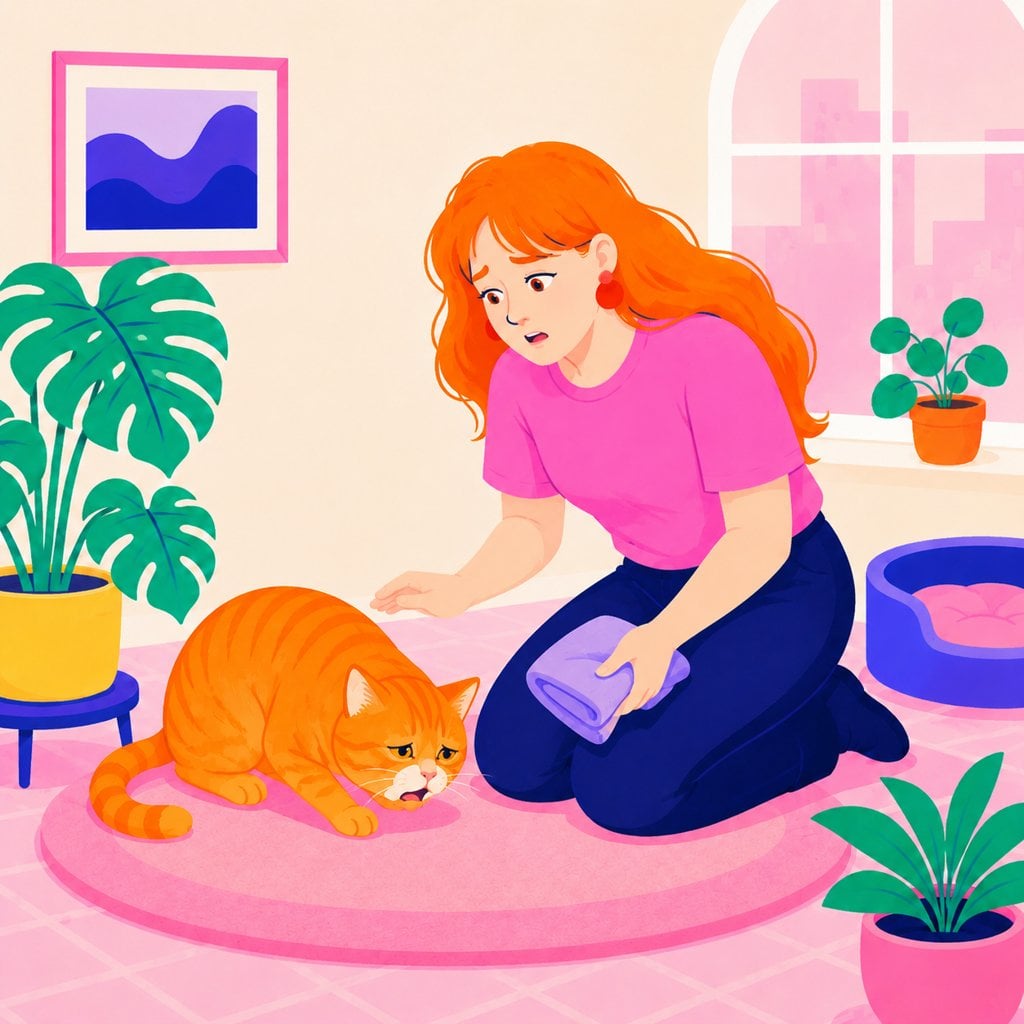
A little vomiting is normal in plenty of cats. Cornell’s Feline Health Center notes that a hairball every week or two is usually fine, while throwing up more than about once a week, or vomiting alongside not eating, is a reason to call the vet. (Don’t confuse that with a cat vomiting up his food from eating too fast. That happens to ours all the time.)
Recently Thelma threw up three times in a row and it was definitely unusual. The first one seemed like a bit of liquid, followed by a second episode that this time had a big hairball in it. The third instance looked more like stomach acid. We promptly took photos of each and texted them to the vet. She said that is normal and to watch her. We did and when she checked in with us the next day, Thelma was back to normal.
If it’s happening a lot, it can be more of an issue and they might need a hairball supplement.
“When my cat was having them, the vet said since she’s long-haired every once in a while makes sense but if it was happening often it would be worrisome. I put her on a hairball supplement (which really is just a fiber supplement, helps them digest it) and she rarely ever has them anymore!”
— via Reddit.com
The litter box

The litter box tells you a lot about how a cat is doing, including one problem that can’t wait until morning.
Straining to pee is the one true emergency here. The American Veterinary Medical Association warns that “urethral obstruction is an emergency and requires immediate veterinary care,” and adds the part people often miss: “although it may seem like they’re constipated and trying to pass stool, straining in the litter box is more often a sign that the urethra is blocked.” A cat, more often a male cat, who is in and out of the box straining with little or no urine needs a vet right away, even in the middle of the night, and blood in the urine warrants a prompt call too.
One owner’s story shows how fast that can turn, and how easily it gets mistaken for constipation:
“We took [our cat] to the vet a few days ago because of him having straining issues in the litter box and CONSTANT licking his private parts. We thought he was just constipated but it turned out to be him blocked and struggling to urinate. We took him in after a phone call with the emergency vet. He was hospitalized for about 24 hours and had an exam and catheter placed to help unblock him.”
— via Reddit.com
Short of that emergency, we just keep a casual eye on the basics. We keep mental track of whether each of them has had a bowel movement every day, and if it went longer than two days, which it never has, we’d call the vet. We also have a general awareness of whether they’ve peed, but it’s not an exact science, since we don’t use a clumping litter, which is one of the negatives of the litter we use.
Eyes, ears, and teeth
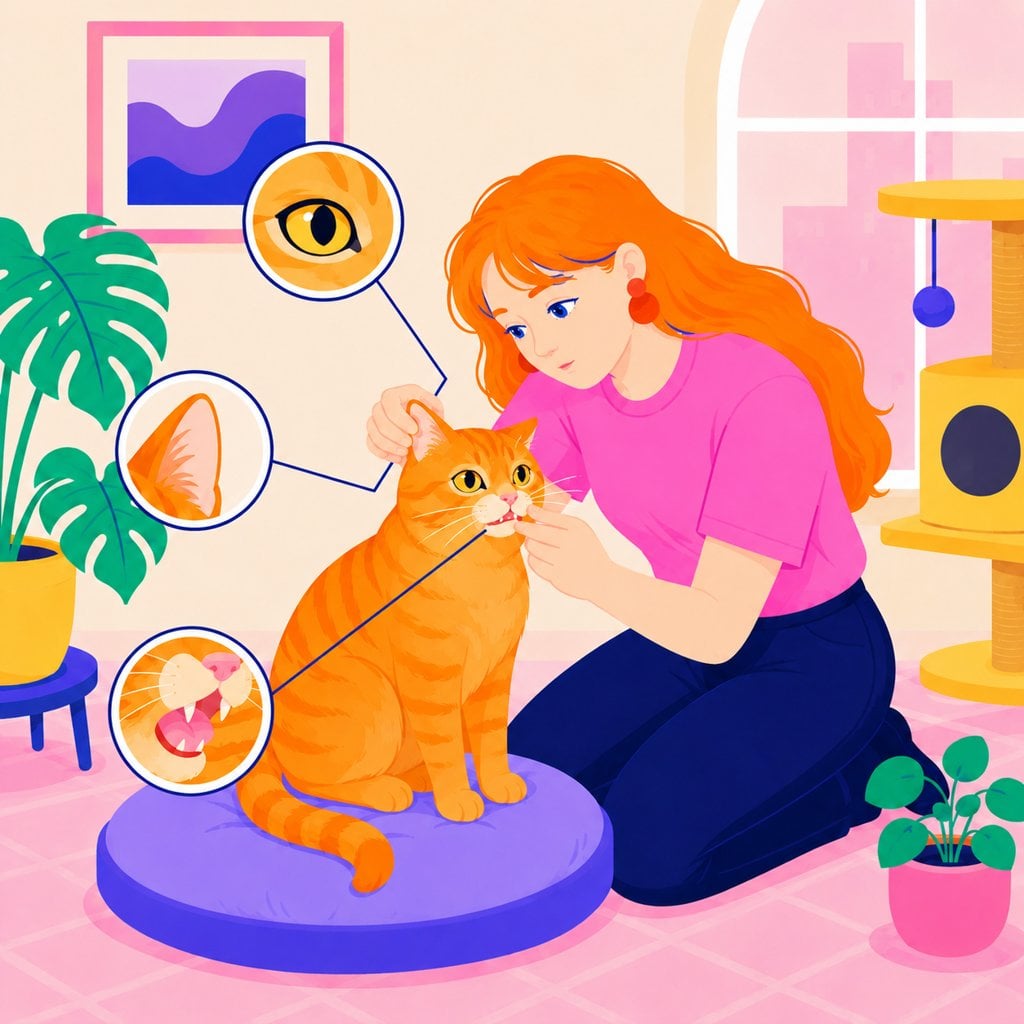
The eyes, ears, and mouth are quick to check while you’ve got your cat in your lap. The mouth is the easiest to overlook: Cornell’s Feline Health Center reports that 50 to 90% of cats over four have some form of dental disease, so clean teeth and pink gums are worth a regular check, along with clear eyes and clean ears.
Louis’s teeth have always seemed to have some plaque, which looks like a brownish color at the top near the gums, ever since he was little. Sadly, like a lot of cat parents, we’re not great about brushing their teeth. (Trust me, I already feel super guilty about it and I’m working on it!) But we’ve had the vet keep an eye on them at every visit.
We actually started seeing a new mobile vet, and on the last visit he thought we should get Louis’s teeth cleaned, so we made an appointment for a month later. Louis was sedated for the entire cleaning, and the vet said it turned out well, though he’ll likely need another one in a year or two. I hate that he has to be sedated, but the vet told us it’s very safe these days, which always makes me feel better.
We watch their eyes, too. When we adopted Thelma and Louis they came to us with such goopy eyes and they each needed prescription eye drops. So we now know what that bothered, half-closed, weepy eye looks like and will call the vet if we ever see it again.
We also keep special ear wipes on hand, though they look identical to the special eye wipes we bought, so I’m sure that’s a bit of a marketing thing. If we notice any gunk in their ears, we’ll do a quick clean, but we haven’t found anything major, thankfully.
Nails
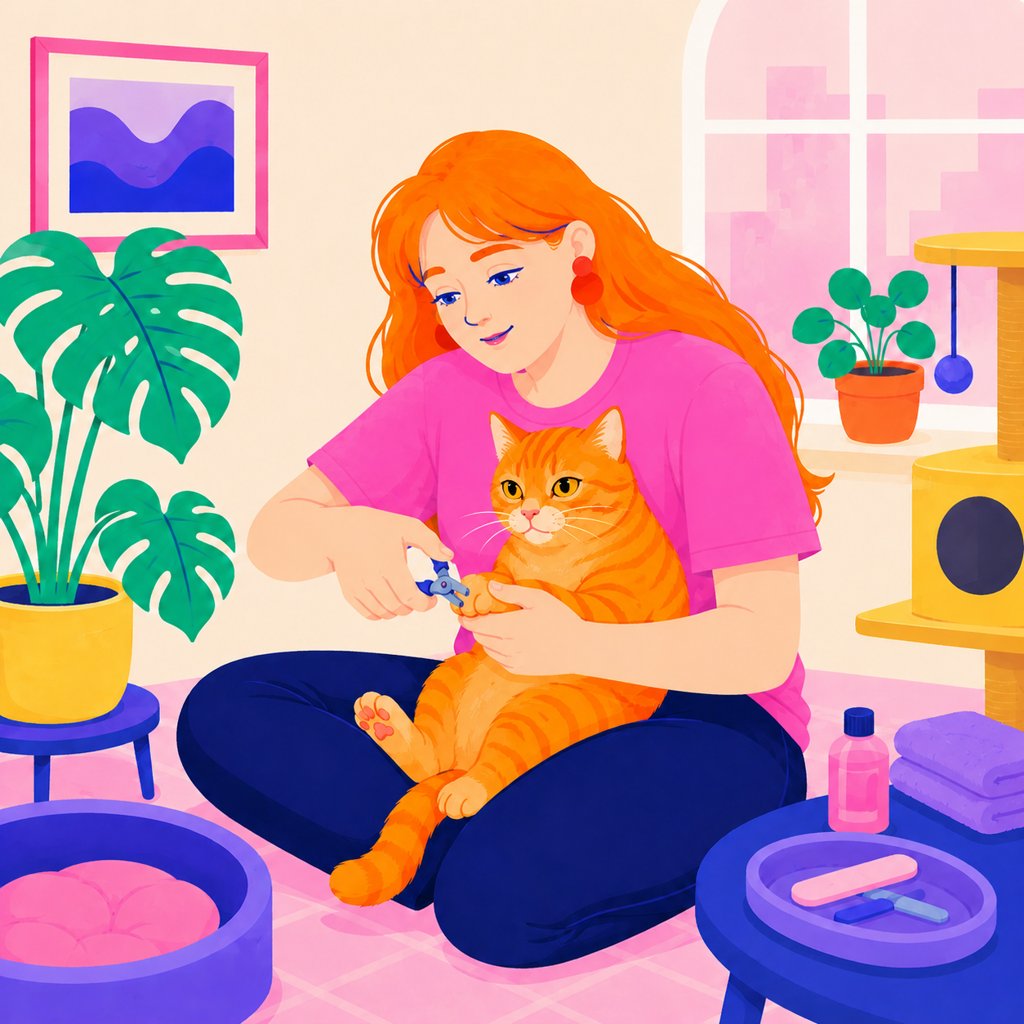
Claws that grow too long can curl into the paw pad, and sharp ones cause scratches that can reach the eyes, so keeping them trimmed is extremely important.
Louis has scratched his eye before, and Thelma has scratched his eye before too. Siblings! So we make sure both of their nails are trimmed weekly or every other week.
Watch out for skin allergies
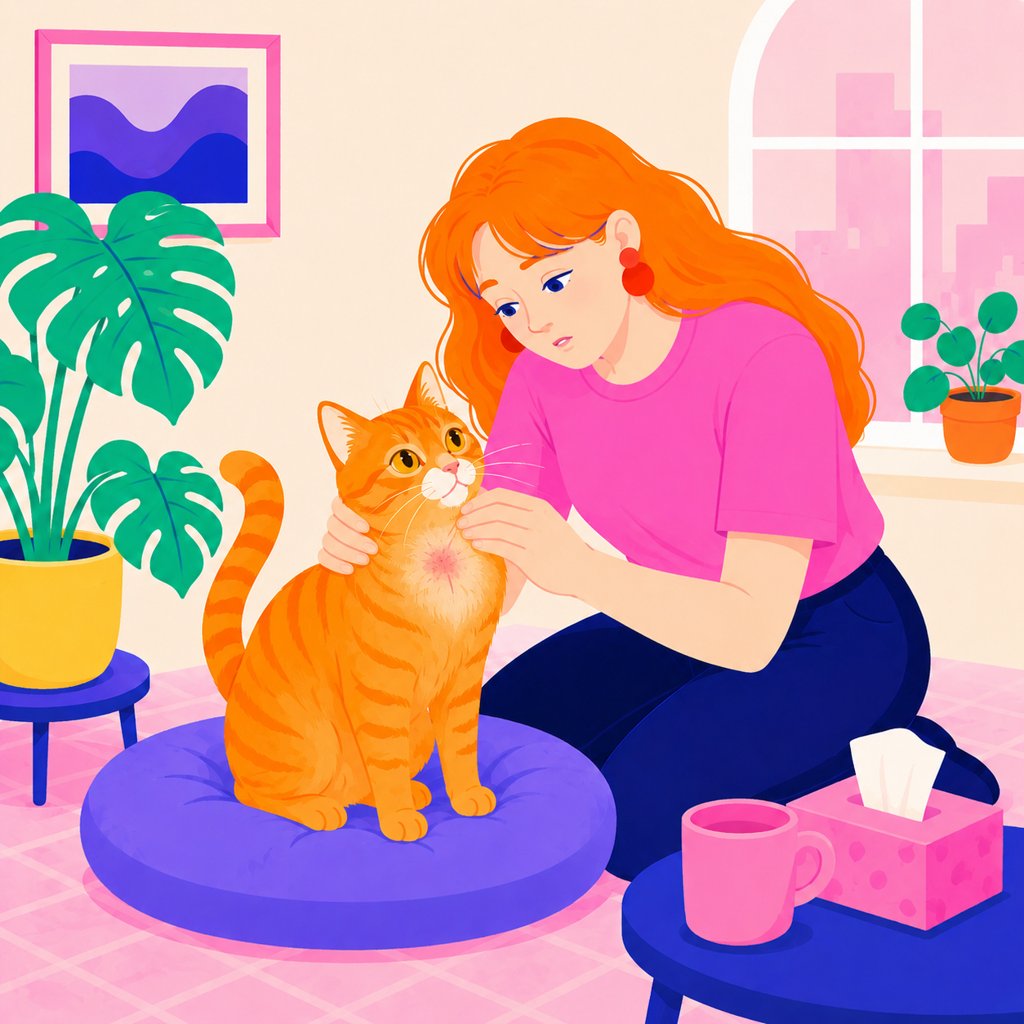
Recurring, itchy skin sores are often an allergy, and food is a common trigger, though it usually takes a vet to figure out which ingredient is behind it.
The scariest issue we ever noticed was with Thelma. When we first brought the cats home and took them to the vet, both were tested for and diagnosed with ringworm, which the rescue hadn’t caught. They’d thought Louis had a burn on his leg from being found in a car engine(!), but it turned out to be ringworm, which is a whole other story. Both cats’ ringworm cleared up, but Thelma kept getting a weird breakout, which basically looked like a very large sore that she would scratch like crazy. Sometimes it showed up on her neck, or sometimes on her hind leg. Our vet was worried enough to send us to a veterinary dermatologist, who scheduled Thelma for a biopsy, one she had to be put under for. Thankfully it came back negative for anything scary. The dermatologist also ran a food allergy test called Liquid Gold, and it came back LIT UP with allergies, the biggest ones being brown rice and yeast. Of course Thelma’s food had brown rice in it, and had since she was a kitten, the way many foods do. As soon as we switched her to one without it, she hasn’t broken out since.
Seeing the vet
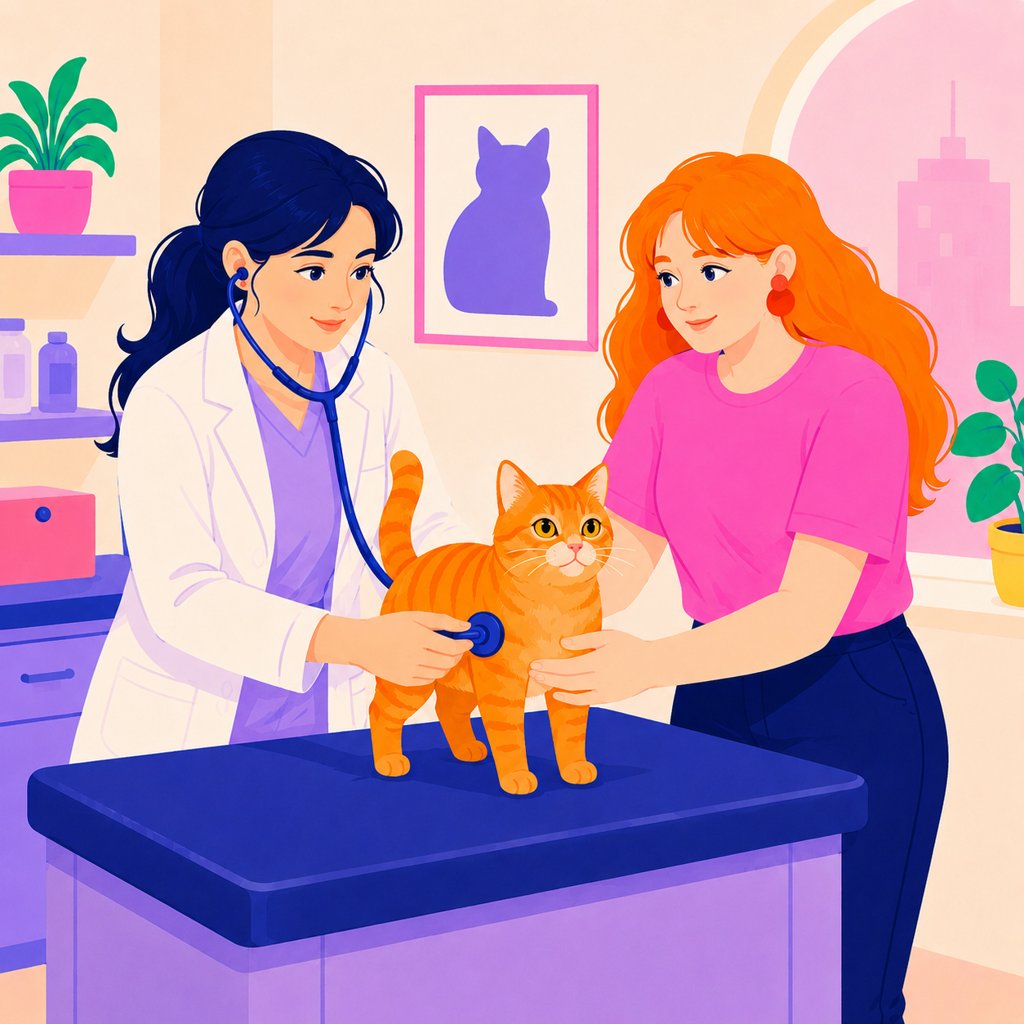
Healthy adult cats need at least an annual exam, and older cats need more. The AAFP’s 2021 senior care guidance calls for more than one exam a year for senior cats, and sometimes seniors should be seen about every six months. A full exam covers the things that build up slowly, like weight and teeth, and it usually includes bloodwork, since problems like kidney disease, thyroid trouble, and diabetes can stay quiet for a long time. There’s no real substitute for a hands-on, in-person examination, even though a check at home helps you watch for changes between visits.
Why older cats need bloodwork
Cornell’s Feline Health Center notes that chronic kidney disease affects “up to 40% of cats over the age of 10 and 80% of cats over the age of 15,” and that early on it’s “very common for cats to show no obvious clinical signs.” A yearly blood panel can catch problems like that before they’d ever show up at home.
The best thing I feel like we can do for our cats is take them in for yearly physicals, plus any follow-up testing they might need. They’re our babies after all!
Founder and editor of Cat Seat and cat mom to Thelma and Louis. She’s been writing online since 2000.
An emergency veterinarian with a special interest in feline medicine — and a self-proclaimed cat lady with six cats of her own.
Hi! I’m Lindsay. I run this site alongside my hubs Cory and our very opinionated cats, Thelma and Louis. We’re so happy you’re here!

I cannot tell you how much you have helped me with my cat that I have now and how stupid I feel for not educating myself with my previous cats. I honestly did not know that cats can get diseases and other issues just like we do from their teeth to their skin to needing blood work for things that aren’t noticeable.. just like us.. we need to have blood work done and test done and so do they. I just feel so stupid for not paying more attention to these things with my other cats.. now that I know that cats can get diseases just like we do I will definitely be taking her to the vet for an annual visit .I wish I had done in the past with my other cats but I guess I always thought if I didn’t see a physical issue then there wasn’t anything to really worry about and boy was I wrong! so I can’t thank you enough and from the sounds of it I know your cats are living their best life and now mine will too. Had I been smarter and done research and proper educated myself I would have known that Maine Coons have 30 to 40% heart problems and that’s why both of mine died. I will never be able to forgive myself for this. I will forever feel guilty and I cry about it all the time..as I am doing right now again. I absolutely love Maine Coons. actually I love all cats but I won’t get a main coon again because of this reason😭 my heart is broken forever😿 again.. thank you thank you thank you!! The cat I have now is not long-haired she’s just a lovely black cat her name is Luna she’s only about 2 years old and I adopted her and I love her she is so lovely. Here’s an interesting fact about her.. she has an extra toe on both front paws so she doesn’t walk like other cats do because if she did she might trip over herself🤔 when most cats walk their paws kind of go one in front of the other she just walks straight forward she doesn’t have that flight crossover with her paws that’s kind of funny to watch her when she walk but her vet says it’s okay. Here’s another little tidbit did you know that orange tabby cats 90% of them are male? I saw that on YouTube the other day and I thought it was very interesting I just wanted to pass that along to you😊 I hope you’re having a great day cuz I am now after reading your articles.😻