
10 Ways to Make Your Cat Want to Cuddle
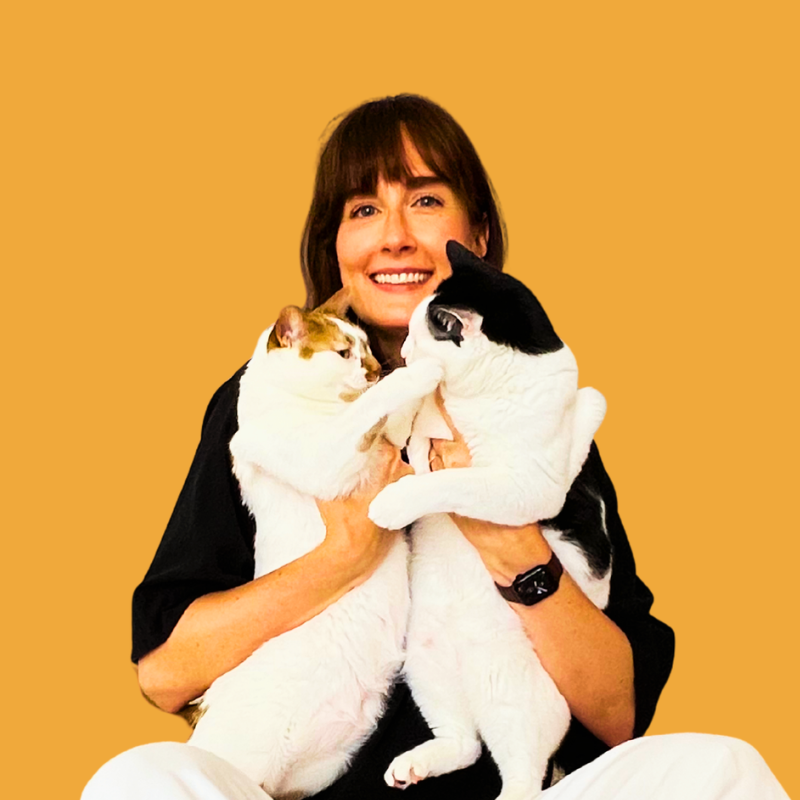 By Lindsay Jones
 ✓Medically reviewed by Dr. Lindsey Mortlock
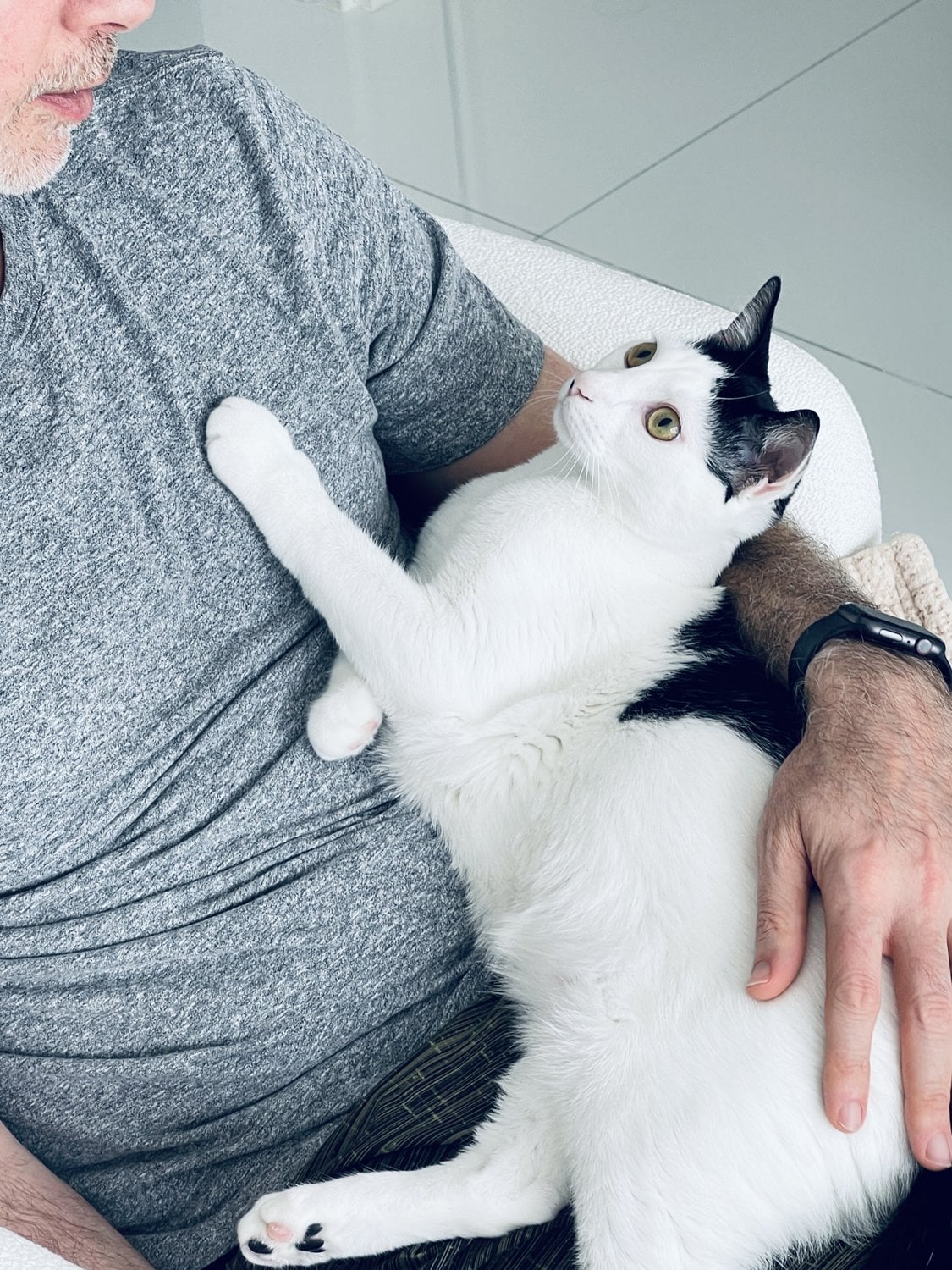
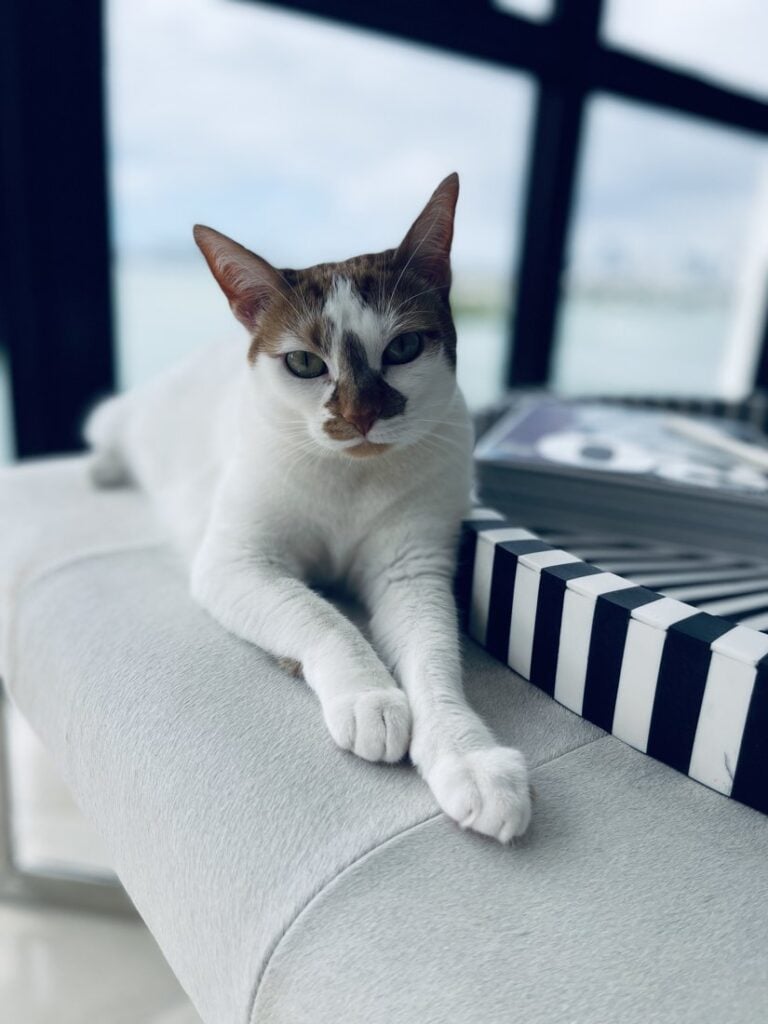
Ever since Thelma and Louis were little, my goal was to make sure they were really affectionate with us. You can’t force a cat to cuddle, but there’s a lot you can do to get them there. I’ll say this up front, though: Louis is definitely more affectionate than Thelma. She’s affectionate too, she’s just not as outward with it, so you have to go and get it a little bit more. I think some cats are just like that, and a lot of it comes down to reading their body language. Everything we did is below.
1. Hold them constantly while they’re little
When Thelma and Louis were little, I really wanted to hold them as much as possible, to kind of bug them as much as possible, like when they were eating or if they were doing something. I just wanted them to really get familiar with us. It turns out the timing matters: VCA Animal Hospitals notes that “the most sensitive period for socialization in kittens occurs when kittens are between two and seven weeks of age,” and that what happens then can “have a greater long-term effect than at other times in development.” If you have a new kitten, that’s exactly what I’d do, get them comfortable with you in all kinds of scenarios. And if your cat is already grown, don’t worry, it just takes more time and patience.
Yes, cats really do bond with you
The affection goes both ways, and there’s solid research behind it. A 2019 Oregon State study in Current Biology found that most cats form a real, secure attachment to their person, the same kind of bond seen in dogs and even human babies. About 65% of the cats tested were “securely attached” and leaned on their owner “as a source of security in a novel environment” (research-speak for a new or stressful situation), the same rate found in human infants. So the bond you’re building is the real thing, and the experiences you give your cat help shape it.
2. Let them guide how they want to be treated
If you feel like your cat doesn’t like you, I’d try to figure out why. One thing I’ve read a lot about is going up to a cat with your hand outstretched and letting them guide how they want to be treated. If they want a snuggle, they’ll lean into it. The experts say the same. Jackson Galaxy puts it this way: “resist the temptation to assert yourself. To put the cat on your lap, to cart them around from place to place. They’re creatures of self-determination.” Cat behavior consultant Dr. Mikel Delgado keeps it just as simple: “I always leave that up to the cat.” Thelma is the one who taught me this. She’s affectionate, but you have to go and get it, so I never reach for her, I just wait for her to come to me.
3. Get them used to being touched
When they were young, I didn’t want them to be nervous about being touched while they were eating, so I’d go and rub their backs a little bit during meals. I also ran the vacuum a lot around them, sort of on purpose, so they wouldn’t get so scared of it, and I played music and TV and spent that cuddly time with them. There’s one more I did that sounds weird: I’d get Louis comfortable with our feet, where sometimes I’d pet him with my feet a little so he wouldn’t get nervous of feet. Now it’s funny, because Louis actually has more of a foot fetish.
4. Learn where each cat likes to be petted
It’s rare that I’ll walk past one of them and not pet them, so we do that a lot. But they each like totally different things. Thelma really loves getting her head pet, and chin scritches. Louis loves to sprawl on the floor and get his belly rubbed. That tracks with what Dr. Hannah Hart, a veterinarian, says: cats “typically enjoy being pet on the cheeks, chin, forehead, and base of the tail,” while “most cats do not like being pet on their stomach, chest, legs, paws, or tail.” Louis is just our happy exception on the belly. The only way to find your own cat’s spots is to watch what they lean into and what they don’t.
5. Trade slow blinks
Thelma is really good at the slow blink, so we’ll do that with her, back and forth. Louis does them sometimes, but not as much. If you’ve never tried it, you just catch your cat’s eye and close your eyes slowly, like a sleepy, relaxed blink.
The slow blink, backed by science
Slow blinking really does register as friendly to cats. A 2020 University of Sussex and Portsmouth study (published in Scientific Reports) found that cats were more likely to slow blink back at owners who slow blinked first, and more likely to approach a stranger who had slow blinked at them. As Professor Karen McComb, who led the research, put it: “it’s a great way of enhancing the bond you have with cats.” Her how-to: “try narrowing your eyes at them as you would in a relaxed smile, followed by closing your eyes for a couple of seconds.”
6. Be the one the good stuff comes from
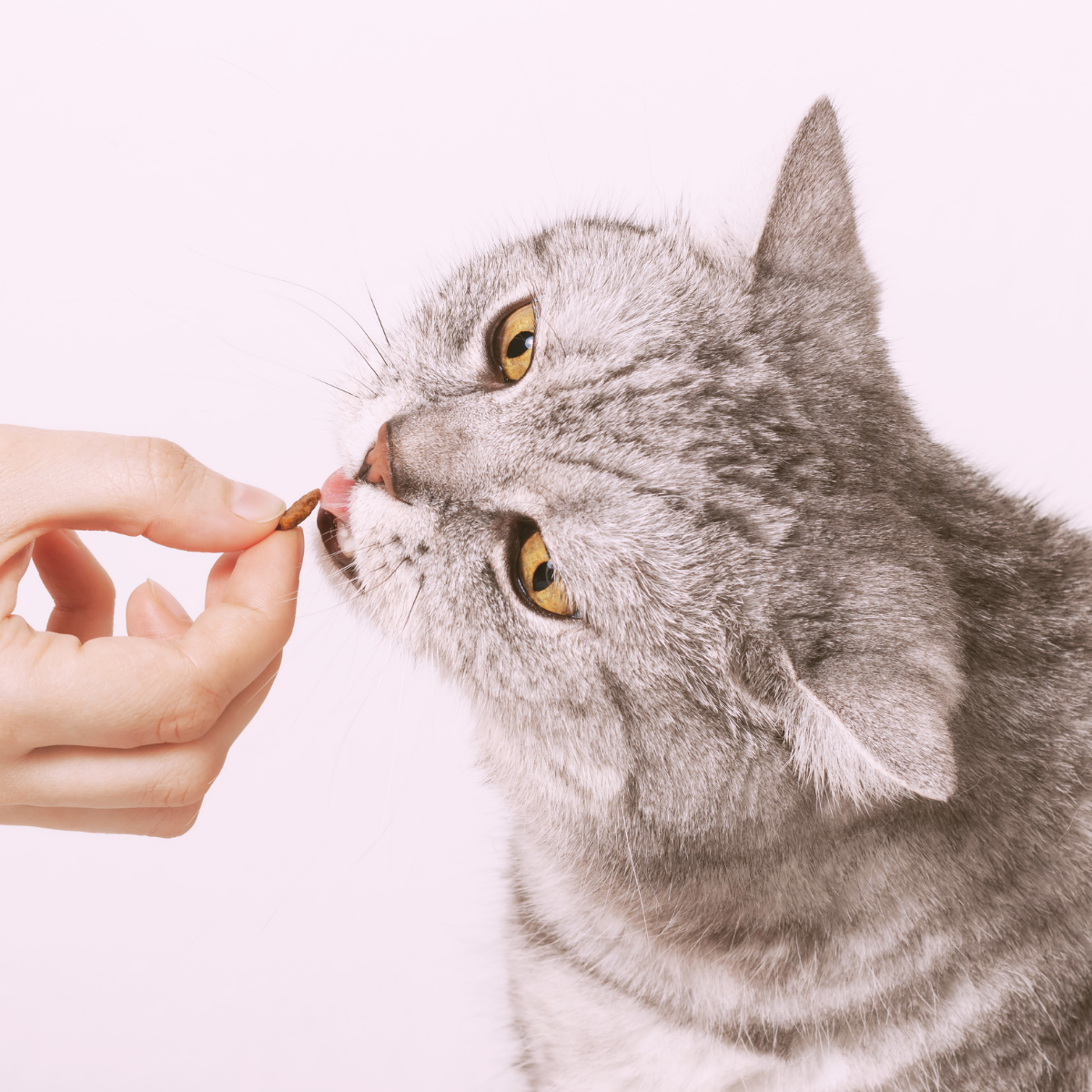
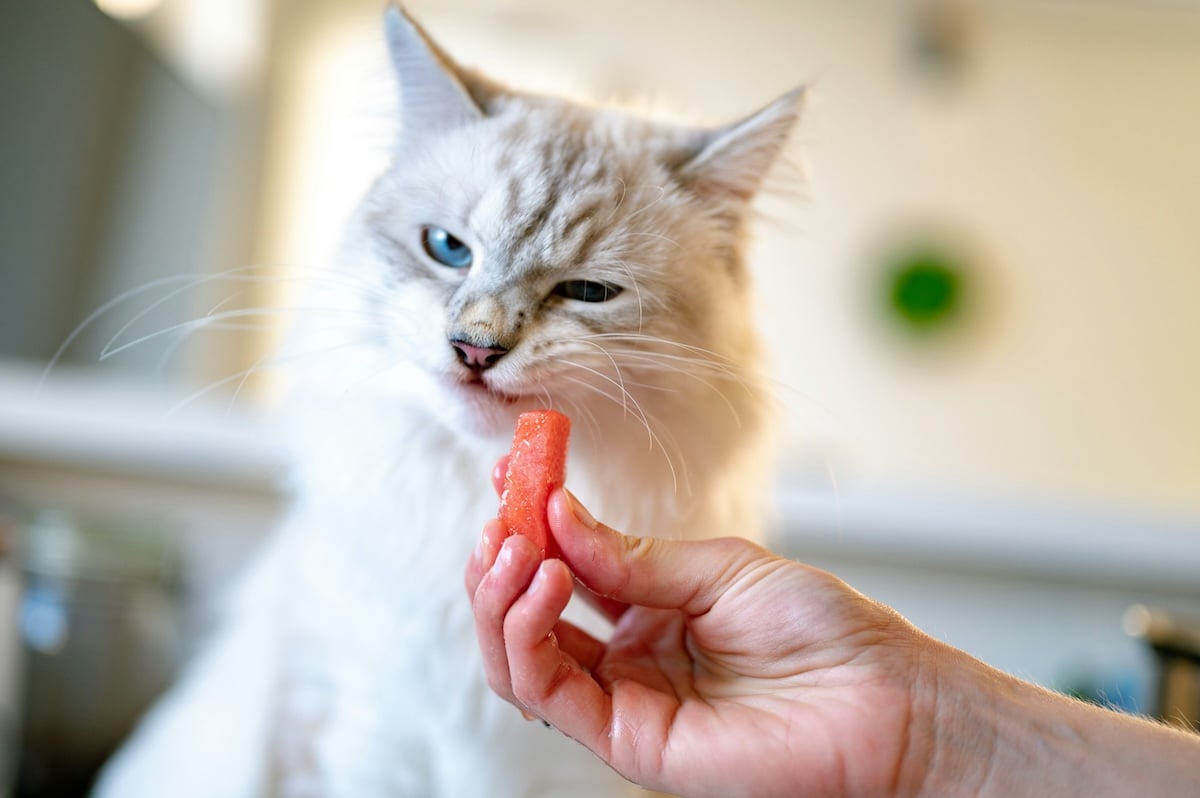
I’m definitely a sucker when they come into the kitchen looking at me for treats. So I’ll give them a liver treat or some dried chicken, probably more often than I should. But it works in your favor: it ties you to the good things in their day. The Feline Veterinary Medical Association notes that for this to work, “the reward needs to be delivered immediately after the behavior,” and that “the best reward to use in training is one that is appealing to the specific cat.” So reward your cat for coming over, sitting with you, or hopping in your lap, and you’ll get more of it.
7. Make a cuddle ritual they come running for
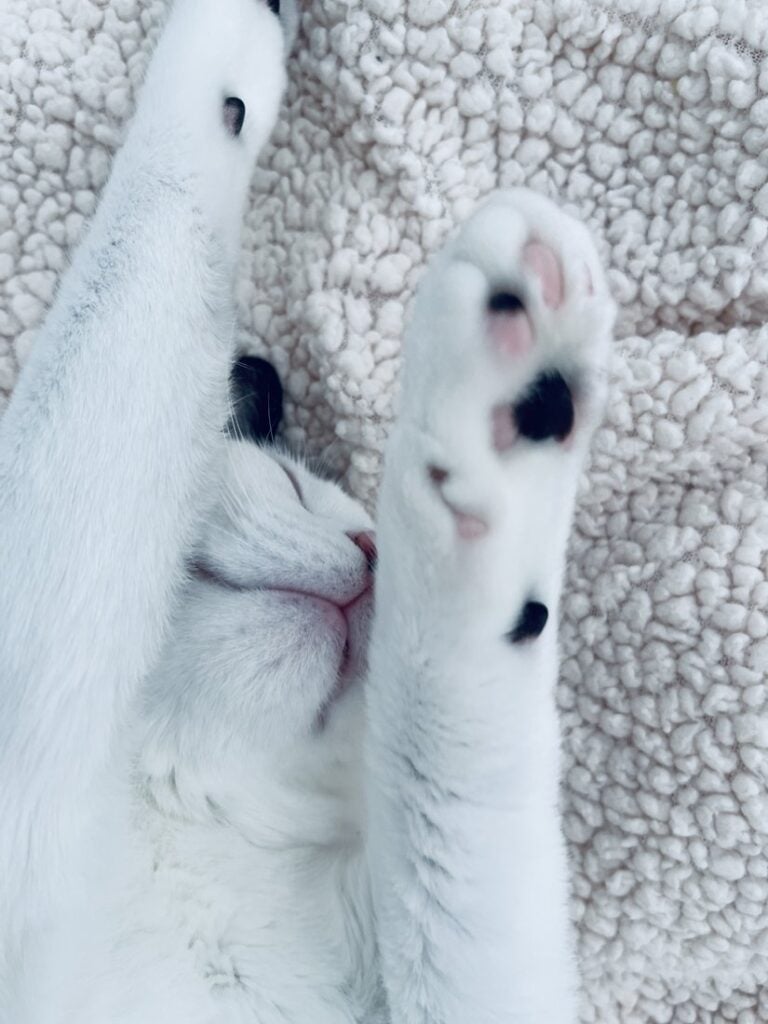
A normal morning for us is waking up and snuggling with the cats. We give them what we call squeamies, which are basically butt taps. If you’ve never given your cat a butt tap, they go crazy for it. We started singing a song when we gave them, so now if we sing the song, they come running for their squeamies. It’s the best. That’s really the whole idea: a cue your cat learns to connect with affection. Yours can be anything, as long as you do it enough that they start coming when they hear it.
8. Play first, snuggle after
After dinner my husband does a big play with them, around thirty minutes. It’s no accident that the calm, snuggly part of the night comes right after. A good play session burns off their energy and builds the bond at the same time, and a worn-out, happy cat is a much cuddlier one. Louis especially loves it, he plays hide and seek with my husband, and it’s part of why he winds down so well at the end of the day.
9. Respect it when they’re done
Not every cat wants to be held, and pushing it just costs you trust. We held Thelma and Louis equally as kittens, and Louis still really doesn’t want to be held, he’s fine for about a minute and then he’s done. So we don’t force it. The same goes for petting. As Dr. Hannah Hart puts it, “only pet a cat where he enjoys it, and only for as long as he enjoys being pet there.” When one of them is done, we let them go.
10. Work with their personality, not against it
We held both of them exactly the same as kittens, and they still turned out completely different, which just goes to show you, sometimes it’s their personality. Louis is the big snuggler and headbutter. In the morning, or even at midnight, he’ll come up and snuggle on his blanket between us and bake biscuits, and if I’m at the dining room table he’ll jump up and headbutt my hand. That’s their way of showing hugs. Thelma shows it differently, you have to go and get it, and when she doesn’t want to be held, my husband takes her on what he calls a “papa walk” around the apartment instead. None of it means one cat loves you less. As Dr. Wailani Sung, a board-certified veterinary behaviorist, explains, “sociability in cats varies a lot, meaning there are some cats that are aloof, but others love to show affection to their family members.” Figure out how your cat shows love, and meet them there.
Founder and editor of Cat Seat and cat mom to Thelma and Louis. She’s been writing online since 2000.
An emergency veterinarian with a special interest in feline medicine — and a self-proclaimed cat lady with six cats of her own.
Hi! I’m Lindsay. I run this site alongside my hubs Cory and our very opinionated cats, Thelma and Louis. We’re so happy you’re here!
Thank you so much.. this is really helped me a lot with my cat and understanding her. she is a rescue cat so I was not able to bond with her as a kitten and she’s not as affectionate as I would like her to be as all the cats I’ve had in the past were more affectionate and I’m trying to understand it and I’m often wondering why ?is it me? is it something I’m doing or not doing? thank you so much for explaining this because sometimes I can get frustrated when she doesn’t get as affectionate as I wanted her to be.. now I understand that all cats are different. I do know they all have different personalities and want and need different things so I don’t push myself either but it’s so interesting because sometimes she’s more affectionate than other times and I like it when she sleeps with me but she always sleeps on the end of my bed. she doesn’t come up and cuddle with me which I wish she would do more of but now I understand it’s just her ways.😊
Hi Patricia! I’m so glad this was helpful and you are so right! I also find it interesting that female cats tend to be a bit more reserved, but still cuddly in their own ways!! It sounds like she loves being with you!
I just love reading your post they are so helpful to me and gives me so much inspiration. I still haven’t tried the cute little butt pats because I’m afraid she might think I’m scolding her for something she didn’t do?