These Are the Healthiest Cat Treats We’ve Found
 By Lindsay Jones
 ✓Medically reviewed by Dr. Lindsey Mortlock
Some links are affiliate, so we may earn a small commission at no cost to you. As an Amazon Associate, we earn from qualifying purchases. Every purr-chase keeps two very demanding cats in treats. Our policy →
One of our favorite Sunday jaunts is heading to the pet store, looking at the kittens that are available to adopt from the local shelter (we’re just looooooooking), and seeing what new toys or treats we can surprise the cats with. With Thelma, however, we have to watch the ingredient list as she has pretty bad allergies.
It all started with these weird skin outbreaks. I’ll write a larger piece on this soon, but long story short, after a biopsy (which thankfully came back benign) the vet tested her for food allergies. That’s how we found out she’s allergic to brown rice and brewer’s yeast (so weird, right?), and the food and treats we’d been giving her had brown rice in it. So now we diligently check every ingredient to make sure they’re free of those, but it goes beyond that sometimes. For instance, Thelma loves Churus, and while they don’t list either ingredient, there is something in it that doesn’t agree with her.
That experience is also why I’m skeptical of the whole treat aisle. “Made with real chicken” can mean a treat is mostly filler. “Grain-free” is a marketing word more often than a health one. So here are the treats we’ve actually fed Thelma and Louis, and the ones they genuinely lose it over.
What actually makes a treat worth buying
After everything with Thelma, I read labels a lot more closely than I used to. I want to see a real protein first, an ingredient list I can actually get through, and a calorie count that won’t blow her daily budget. None of that is complicated, it just takes ten seconds at the shelf. Other owners learn the same label lesson the annoying way:
“Her favorite flavor was seafood, which didn’t actually contain seafood.”
— via Reddit.com
“My cats love Temptations, and nearly every foster cat I’ve had loves them too. I can summon every cat in the house by picking up the container.”
— via Reddit.com
How Many Treats Is Actually Okay
The Tufts Cummings School of Veterinary Medicine’s nutrition team (the people behind the well-respected Petfoodology blog) recommends keeping treats to 10% or less of daily calories. For an average 10-pound cat eating around 200-250 calories per day, that means about 20-25 calories of treats, roughly a tablespoon or two of most freeze-dried treats, or one full lickable tube.
The everyday risk of overfeeding treats isn’t usually one health crisis, it’s slow weight gain. Indoor cats are already prone to it, and treats are an easy place to lose the math.
The lickables we use the most
Lickables, those gel-style purees in the little tubes, are the ones we use most, partly because Thelma needs the moisture and partly because both cats treat them as a high-value reward. Because she reacts to Churu, we went looking for lickables without the ingredients she can’t have, and the ACANA Lickables don’t have any of that in them, so she does well on those.
Honestly, though, she likes the WholeHearted lickables even more, especially the salmon and the tuna. Both cats go for that brand. Those two lines are what’s in regular rotation here.
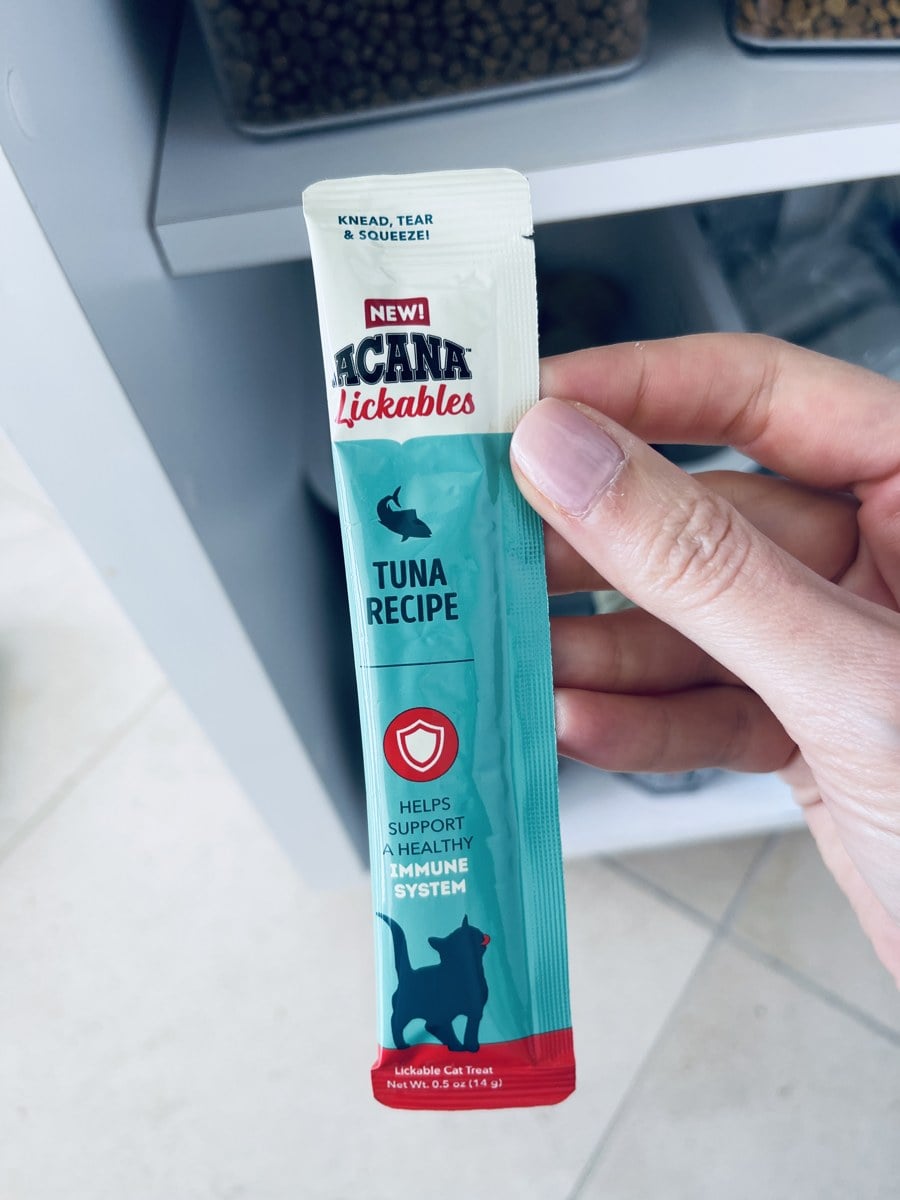
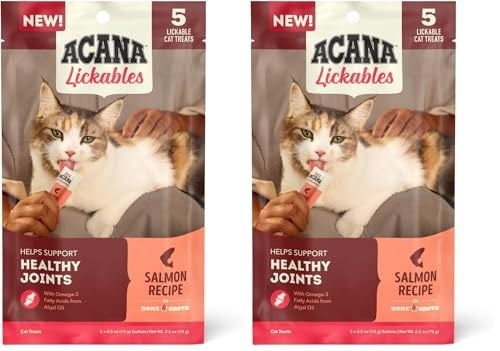
ACANA Salmon Lickables Cat Treats
Short, meat-first ingredient list with no brown rice or brewer’s yeast, which is why they work for our allergy cat. Both cats go for them.
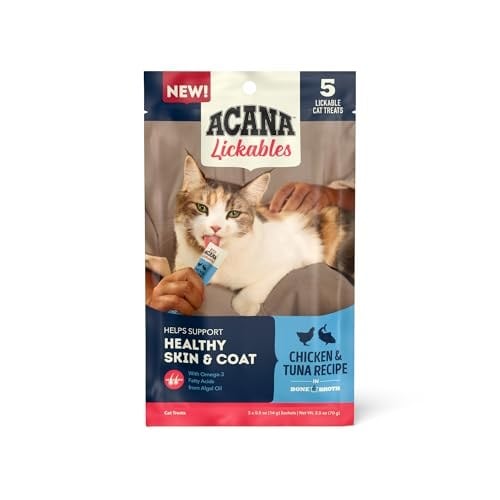
ACANA Chicken & Tuna Lickables Cat Treats
The other lickable in our rotation. Same short ingredient list, a different flavor for cats who burn out on one.
A fair warning that comes up a lot with the lickable category: they can be messy, and a few cats react to them, so introduce a new one slowly. If the mess is the issue, a lickable-treat dispenser (you screw the tube into a little holder your cat licks from) keeps it off your floors.
“I have never found anything except the Churu treats that are as popular. I stay away from Churu and its knock-offs due to the mess, those stinky empty tubes.”
— via Reddit.com
“My cat liked them until she started getting bald patches from them, allergies I guess. The bald patches went away when I stopped giving them to her.”
— via Reddit.com
The freeze-dried ones they actually fight over
Freeze-dried treats are basically crunchy meat. The process pulls the moisture out while keeping the protein intact, and most are single-ingredient, which is exactly what you want.
The WholeHearted turkey liver is the one Thelma and Louis completely lose their minds over. The ingredient list is just turkey liver. I give them one piece and split it, about twice a week, because everything I’ve read says to space liver out, otherwise I’d hand it over daily. People always assume these reek, but I don’t think they smell bad at all. Maybe that’s just me.
The freeze-dried chicken gets the same reaction, they go nuts for it, and they love the WholeHearted minnows too, which I just gave them the other day. The common thread is crunch. If it doesn’t have a crunch to it, they’re mostly not interested.
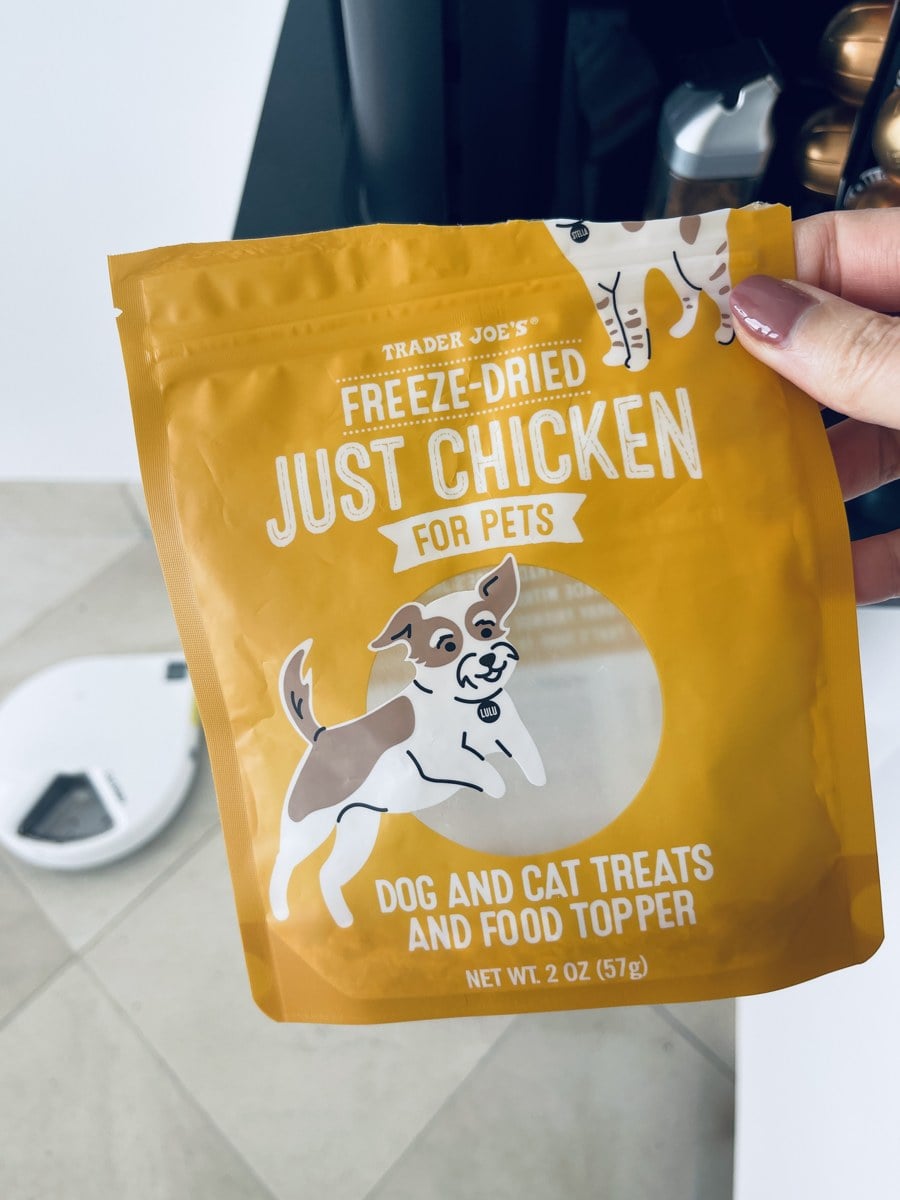
One of the best we found was actually the Trader Joe’s freeze-dried Just Chicken, which is exactly that, just chicken, cheap, and the cats loved it. Sadly our local store doesn’t seem to stock it anymore, which is a real loss, so Trader Joe’s, if you’re listening, please bring it back. If your store still carries it, grab it.
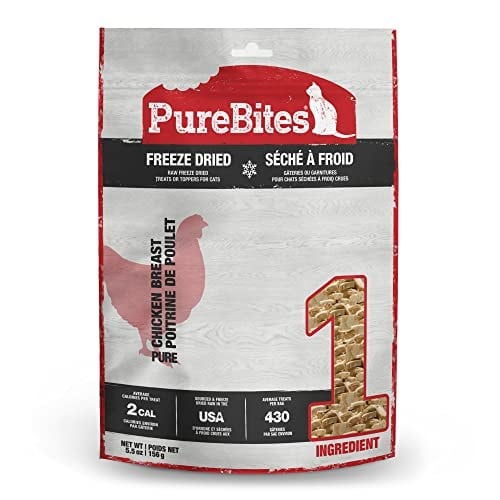
PureBites Chicken Breast Freeze-Dried
Single-ingredient freeze-dried chicken, easy to find, and the value size lasts a two-cat house for months.
If you’ve already worked through the usual brands and want to try something a little different, Arya Sit makes single-ingredient freeze-dried treats (their fish trio is the standout), and they’ve got some really great stuff in their lineup.
“Honestly any single ingredient freeze protein tends to be amazing and well received. Same with any protein you may cook at home. My boys go nuts for shrimp.”
— via Reddit.com
The crunch thing, and what flopped
It really comes down to texture with our two. I wish they liked sardines, because I’d give them those often, but it was a flop. So was plain cooked chicken breast, and plain cooked liver, and the raw cat food we tried for a while. They just don’t seem to like anything mushy, no matter how good it’s supposed to be for them. If your cat is the same, lean into the crunch and the lickables and stop fighting the texture they’ve already decided on.
Human foods they can have, the ones ours actually won’t
Sadly, we haven’t had any luck with homemade cat treats (both of them are VERY picky about any human food, and I have no idea why because we’ve been trying since they were kittens!). Blueberries, sardines, eggs, pumpkin puree, cooked chicken, livers…you name it. No takers!
If your cat is more adventurous than ours, a handful of human foods are safe in small amounts. Keep them plain and the portion tiny:
- Plain cooked egg, no oil or salt
- Plain canned pumpkin, not the pie filling
- A little cantaloupe (a lot of cats like the smell)
- Steamed or dehydrated sweet potato
- Steamed broccoli or other plain cooked veggies
- A tiny bit of cheese, if your cat tolerates dairy (many cats don’t, so you’ll want to try this slowly)
What stays off the list no matter how healthy it looks to a human: onions, garlic, grapes, raisins, chocolate, and anything with caffeine or alcohol. Those are genuinely toxic to cats, so they never belong anywhere near the bowl.
Treats with actual dental benefits
Most “dental treats” are marketing more than science. The few that genuinely do something have been studied by the Veterinary Oral Health Council (VOHC), which keeps a public list of treats and chews proven to reduce plaque or tartar. If a product isn’t on that list, the dental claim is marketing, not evidence. I haven’t really gotten into dental treats yet, it’s on my list, so if you’ve got one that actually works, let me know. For now I lean on what the research and other owners say:
“I’m also skeptical of the Greenies, but they are on the list of products proven to reduce plaque and tartar so I figured it couldn’t hurt to try since they won’t let me brush their teeth.”
— via Reddit.com
Treats aren’t a substitute for real dental care, though. If your cat has visible tartar or red gums, that’s a vet cleaning, not a treat.
The Treat Ingredients to Avoid
According to the American Association of Feline Practitioners (AAFP), the ingredients to skip when reading a cat treat label include:
- Propylene glycol, a moisture-retainer in soft treats that can cause problems in cats specifically (it’s banned from cat food but still shows up in some treats)
- BHA and BHT, chemical preservatives linked to health concerns, usually a sign the brand is cutting corners
- Artificial colors, which exist for the human buying the bag, not the cat
- Meat by-product meal as the first ingredient, you want a whole-food protein like “chicken” or “salmon” leading the list instead
The treats we use all skip these, but any time you try a new brand, the back-label scan takes ten seconds and is worth doing.
How many treats, realistically
I really do try to stay under that 10% of their daily calories, though I’ll admit it’s a constant negotiation. We take a portion of Louis’s dry kibble and put it in the food puzzles so some of his “treats” are really just his own lunch making him work for it. Thelma gets about two lickables a day because we want her to get added moisture, and sometimes Louis talks me into one, too. We should probably cut down, but it’s hard, I’m definitely the mom who likes to hand out treats. If your cat does love treats but you’re worried about the extra calories, be sure to trim their regular food servings down to compensate.
Where to start
If you just want a couple of healthy treats to start with, I’d go with the ACANA or WholeHearted lickables, or any of the WholeHearted liver, chicken, or minnow treats. Arya Sit is a great option too. I’d grab the smallest pack first to make sure your cat actually likes it, and once you find the thing they love, the bigger bags pay for themselves. And if your cat snubs everything, it’s almost always the texture, so try switching between crunchy and lickable before you give up on a flavor!
Founder and editor of Cat Seat and cat mom to Thelma and Louis. She’s been writing online since 2000.
An emergency veterinarian with a special interest in feline medicine — and a self-proclaimed cat lady with six cats of her own.
Hi! I’m Lindsay. I run this site alongside my hubs Cory and our very opinionated cats, Thelma and Louis. We’re so happy you’re here!