How to Take Care of Your Cat’s Teeth (Even If They Won’t Let You Brush)
 By Lindsay Jones
 ✓Medically reviewed by Dr. Lindsey Mortlock
Some links are affiliate, so we may earn a small commission at no cost to you. As an Amazon Associate, we earn from qualifying purchases. Every purr-chase keeps two very demanding cats in treats. Our policy →
I grew up with a Himalayan cat named Crystal, and when I was young we had a weekly grooming routine. Every Sunday I brushed her, gave her a little tube of vitamin, clipped her nails, and brushed her teeth. She was so docile she let me do all of it, and I wasn’t even a pre-teen, which is the part that seems crazy to me now that I am terrified of cutting our cats’ nails!
These days my husband cuts our cats’ nails (while I’m on singing duty to keep them calm) and they’re really pretty great about it. Brushing their teeth, however, is a different story. When I’ve tried to go in with a toothbrush and toothpaste, they want nothing to do with it. And it isn’t for lack of trying.We started trying when they were younger and eventually gave up because they would put up a fight.
So if you’re anything like us and you bought the tools you needed but aren’t doing it consistently yet (but want to), this one is for you, and it’s worth it. Dental disease in cats one of those things that can sneak up on you, so the more you try to prevent it now, the better.
Just how common are dental issues in cats?
Cornell’s Feline Health Center estimates that somewhere between 50 and 90 percent of cats over the age of four have some form of dental disease, with periodontal disease the most common. There’s also tooth resorption, a painful condition where the tooth itself starts to break down, which gets more common as cats age and affects a large share of older cats.
Brushing: the the best way to prevent dental issues before they start
Brushing is the thing vets want you doing, ideally every day. Cornell’s Feline Health Center says “daily toothbrushing can prevent most forms of dental disease.” If this makes you feel really guilty and shocked like I do (we’re supposed to be doing it every day?!), know you’re not alone. Fewer than ten percent of pet owners pull off daily brushing. So while daily brushing might sound unrealistic (we’re right there with you), even a few times a week will go a long way.
One Reddit commenter was also surprised at this advice, and asked their vet the obvious question:
My vet mentioned brushing my cats’ teeth and I asked “do you brush your cat’s teeth?” Answer: “oh god, no, I enjoy having fingers.” So… Even experienced veterinarians have trouble with this.
— via Reddit.com
When you are ready to brush your cat’s teeth (or at least try) you’ll want to get a cat-specific toothpaste (never human toothpaste, since the fluoride and sometimes xylitol in ours is toxic to cats).
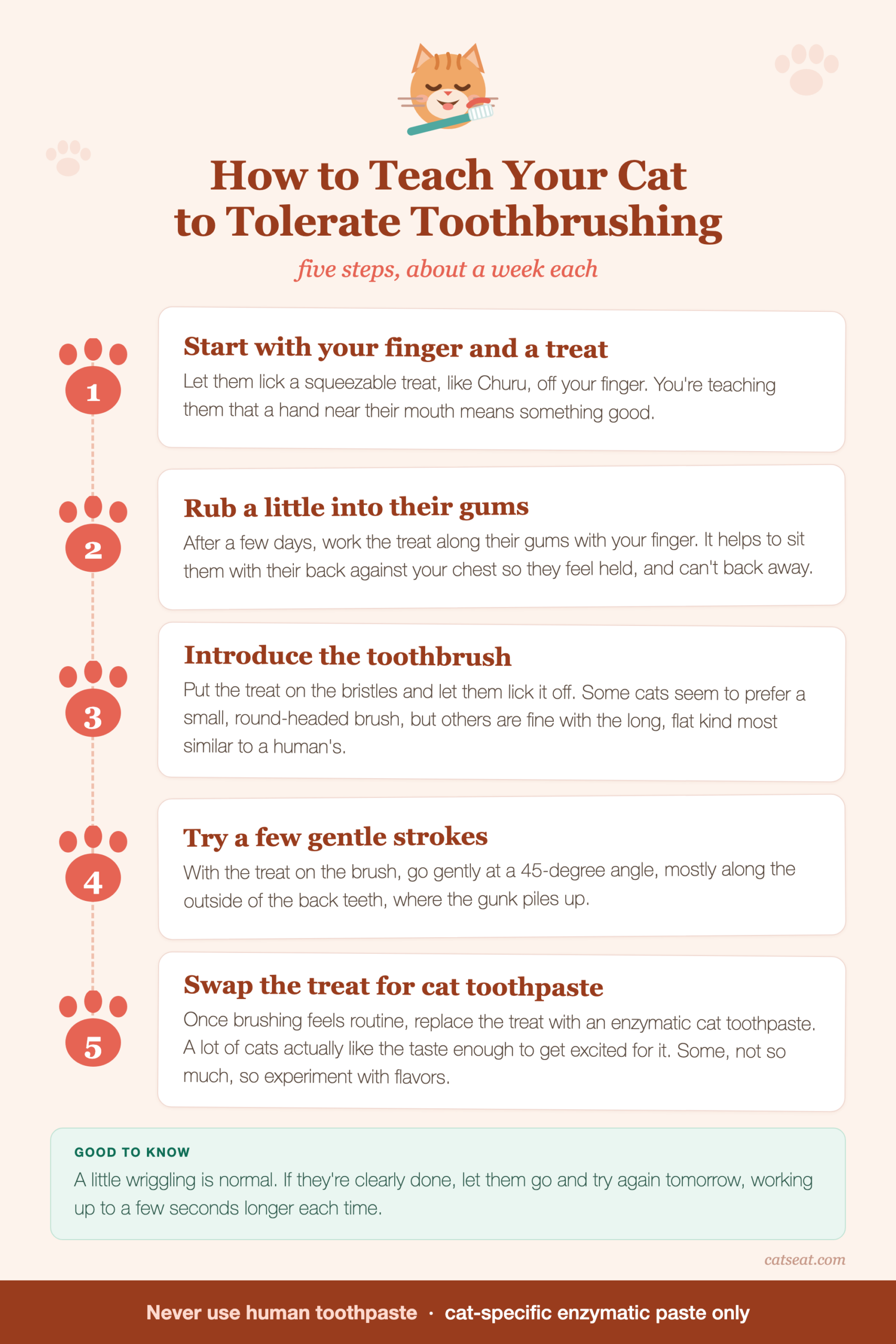
Pair it with a soft cat toothbrush or a little rubber finger brush. Then go slow. Let them lick the paste off your finger first so they (hopefully) think of it as a treat instead of an ambush. (You can also start with pureed treats like Churu if you want to get them used to the process). Next, work up to lifting a lip and touching a couple of teeth, then a few more over the next several days. You aren’t going for a dramatic two-minute scrub. You want to go after the outside surfaces of the back teeth, where the gunk piles up.
Someone on Reddit started late and wishes they hadn’t waited:
My cat loves her toothpaste so much that she requests her toothbrush like a treat! We use Virbac. It’s available on Amazon, but I got it from my vet for 1/3 the price. Note: I started brushing her teeth after she developed gingivitis and had to have six teeth removed. Would’ve been better to start sooner!
— via Reddit.com
If your cat refuses the brush (we all know how real of a possibility this is)
Some cats will just not let you brush their teeth willingly. Our vet (who did Louis’ teeth cleaning, more on that below) suggested we not try to force it if it stresses the cats out. I’m still convinced we can make it work, but if we can’t there are dental treats I’d look into in addition to the chew toys we currently use which are said to help to some degree (like these silvervine sticks). When we do we’ll look for the VOHC seal.
The Veterinary Oral Health Council tests products and only stamps the ones proven to cut down plaque or tartar, so you’re not left guessing if they actually work. Look for that seal on dental treats (Feline Greenies are a common pick), including water additives you mix into the bowl, powders you sprinkle on food, and dental wipes for cats who put up with a wipe better than a brush. None of these replace brushing, but for a household that isn’t brushing daily, they beat doing nothing by a lot. You can browse the full VOHC list of accepted products and choose from there.
That’s the route this commenter took:
I tried to brush my cats teeth a few times & got attacked. So I gave up. I buy greenies treats instead.
— via Reddit.com

Greenies Feline Dental Treats
The easiest win for non-brushers. One of the few dental treats that carries the VOHC seal for tartar control, and one most cats will happily eat without realizing it’s good for them.
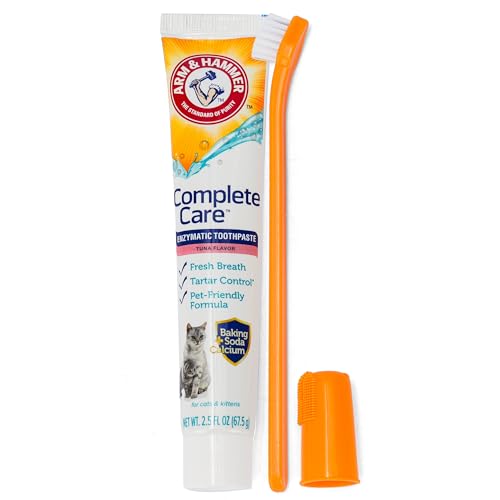
Arm & Hammer Complete Care Cat Dental Kit
A starter kit if you’re ready to try brushing. It comes with a cat-sized toothbrush and enzymatic toothpaste (never use the human stuff). Start slow, let them lick it off your finger first, and build from there.
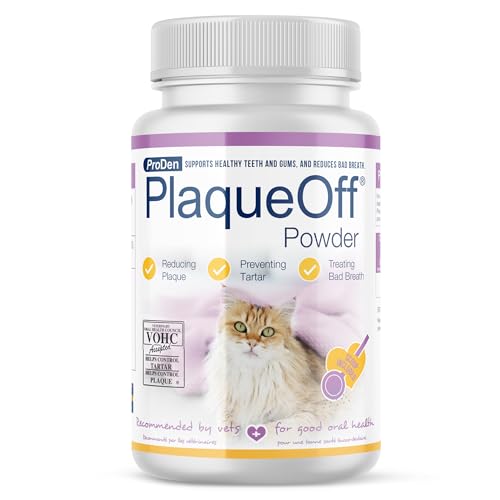
ProDen PlaqueOff Powder for Cats
For cats who’ll allow neither a brush nor a treat routine. A VOHC-accepted powder you sprinkle on food, made from a specific seaweed. It asks almost nothing of you, which, if you’re us, is the entire appeal.
What dental trouble looks like
When your child has a toothache you’ll know it (because of course they’ll tell you or you can see they’re in pain). Cats on the other hand are very good at hiding pain, which means some of the signs indicating they might have a dental issue can be subtle. There is one that you can get a whiff of though, and that’s breath! A little fishy is normal, but breath that makes you pull back is worth paying attention to. Aside from that, also be on the lookout for drooling, pawing at the mouth, chewing on one side or dropping food, red or bleeding gums, or a cat who suddenly seems less interested in eating. Any of those signs, especially several combined, is a good reason to get their mouth checked.
The professional cleaning (a.k.a. how Louis ended up having to get his teeth cleaned 3-years-old)
Thelma’s teeth are in pretty good shape. In fact, they’ve always looked great since she was little, and the vet confirmed it at the last visit. Louis on the other hand has always had slightly brown teeth. They’re not all brown, mind you, just near the gums, and the vet’s verdict was that it’s “not unusual, but it’s not great.” Some cats, he told us, just have worse teeth. Louis doesn’t even have bad breath; you can simply see a little brown at the top of the tooth.
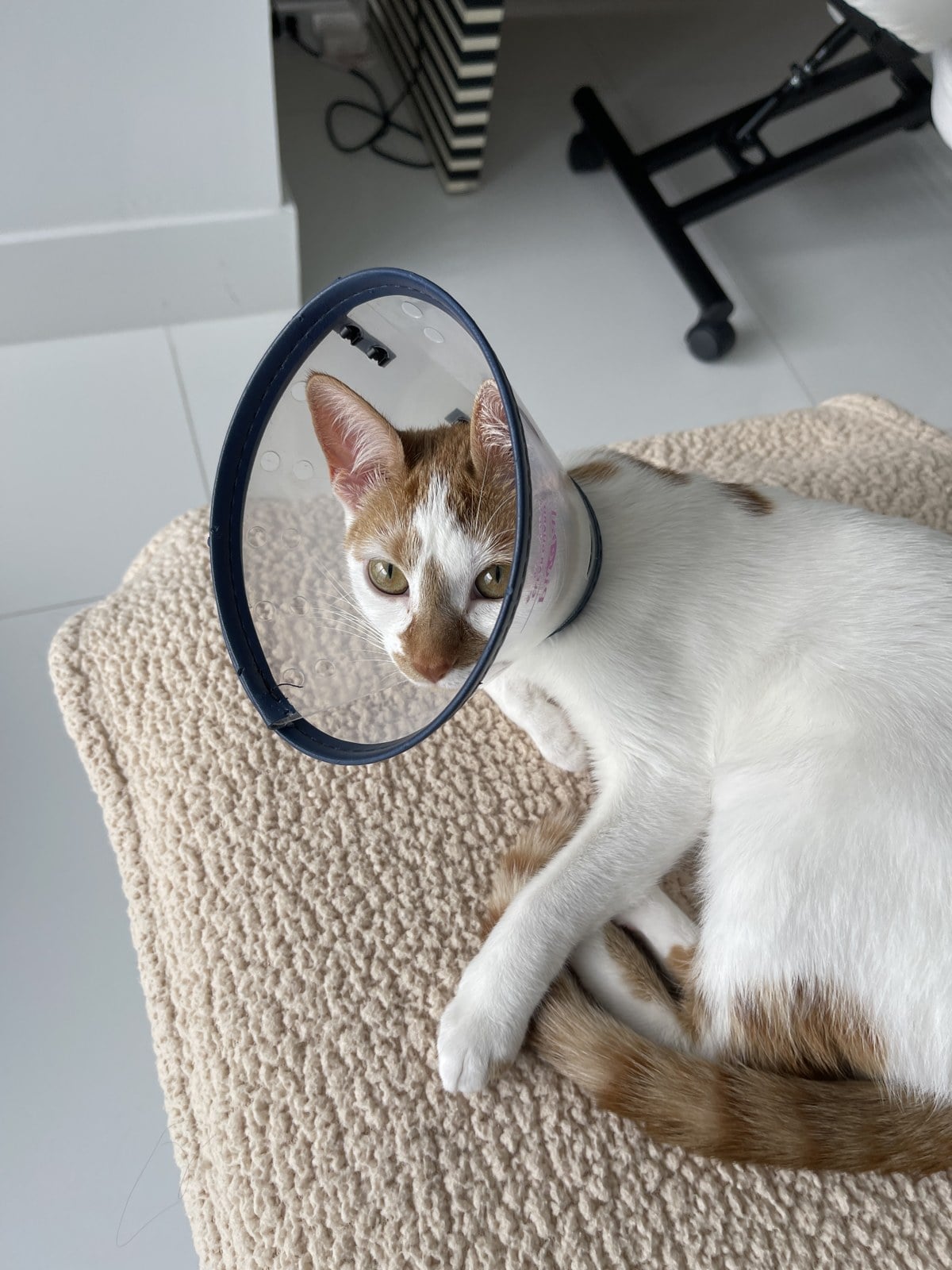
So after a recent visit the vet recommended he give Louis a cleaning and take some X-rays so we have a baseline for him. At the appointment they had to sedate him, which I hate. I get nervous any time a cat has to go under anesthesia, but the vet made us feel more comfortable and told us how safe it is these days. The entire process took about an hour and a half and included pre-anesthesia bloodwork, the scaling/cleaning itself, and X-rays. He didn’t need it, but if there were any extractions that needed to be done they would have done it during the same visit. Overall, Louis’ visit went great and the cleaning went well. As for the next cleaning, our vet said Louis might need it yearly or every two years, but we’ll see. (I really hope he doesn’t.)
Why the cleaning needs anesthesia
The American Animal Hospital Association recommends regular oral exams and professional cleanings under anesthesia for adult cats. Anesthesia sounds like the scary part, but it’s what makes a real cleaning possible. It lets the vet clean below the gumline and take X-rays to find the resorption, root damage, and trouble that causes pain long before you’d ever spot it. A conscious cat won’t sit for that, and the anesthesia-free cleanings you see advertised mostly polish the parts you can already see.
Where we go from here
I’d love to tell you we’re now flawless brushers, but we aren’t. It is the #1 thing on on list and I’d love to tell you I’m going to start this week. I’ll keep you posted. If I could do it over, I’d start when they were much younger and get them used to us touching their teeth and mouths. But the good news is it’s better late than never!
Founder and editor of Cat Seat and cat mom to Thelma and Louis. She’s been writing online since 2000.
An emergency veterinarian with a special interest in feline medicine — and a self-proclaimed cat lady with six cats of her own.
Hi! I’m Lindsay. I run this site alongside my hubs Cory and our very opinionated cats, Thelma and Louis. We’re so happy you’re here!