
What Your Cat’s Sleeping Position Really Means
 By Lindsay Jones
 ✓Medically reviewed by Dr. Lindsey Mortlock
Some links are affiliate, so we may earn a small commission at no cost to you. As an Amazon Associate, we earn from qualifying purchases. Every purr-chase keeps two very demanding cats in treats. Our policy →
Our two cats sleep nothing alike. During the day, Thelma sleeps either curled up or sprawled out on her side in her fluffy cat bed. At night she hesitantly sleeps down by my feet or stretched up against my husband’s legs.
Louis, on the other hand, will spend most of his day in the cat tree or belly up on a chair, and at night make his way between a few different chairs before making his way to the cat bed in our bedroom. The best part though is that by morning he jumps up onto the bed and settles on his favorite blanket that we keep between us, where he suckles and bakes biscuits until he falls asleep again. It’s the best part of the day!
By watching them, you realize that their sleeping positions really do sort of match their personalities. Louis is a much more outgoing cat, coming out to greet strangers and constantly showing you his belly. Thelma is just as sweet but is a little more cautious. When you start to research what each of the positions mean, below, it starts to make sense.
Cats sleep a lot. Most average around 15 hours a day, and plenty of them push closer to 20 depending on age and activity level. So when they keep choosing the same positions over and over, there’s usually a reason behind it. Their sleep “style” can tell you how warm they are, how safe they feel, and how deeply they’re willing to relax in that moment. Here are the most common sleeping positions, below. Which ones are your cats’ favorite?
The Crescent Curl
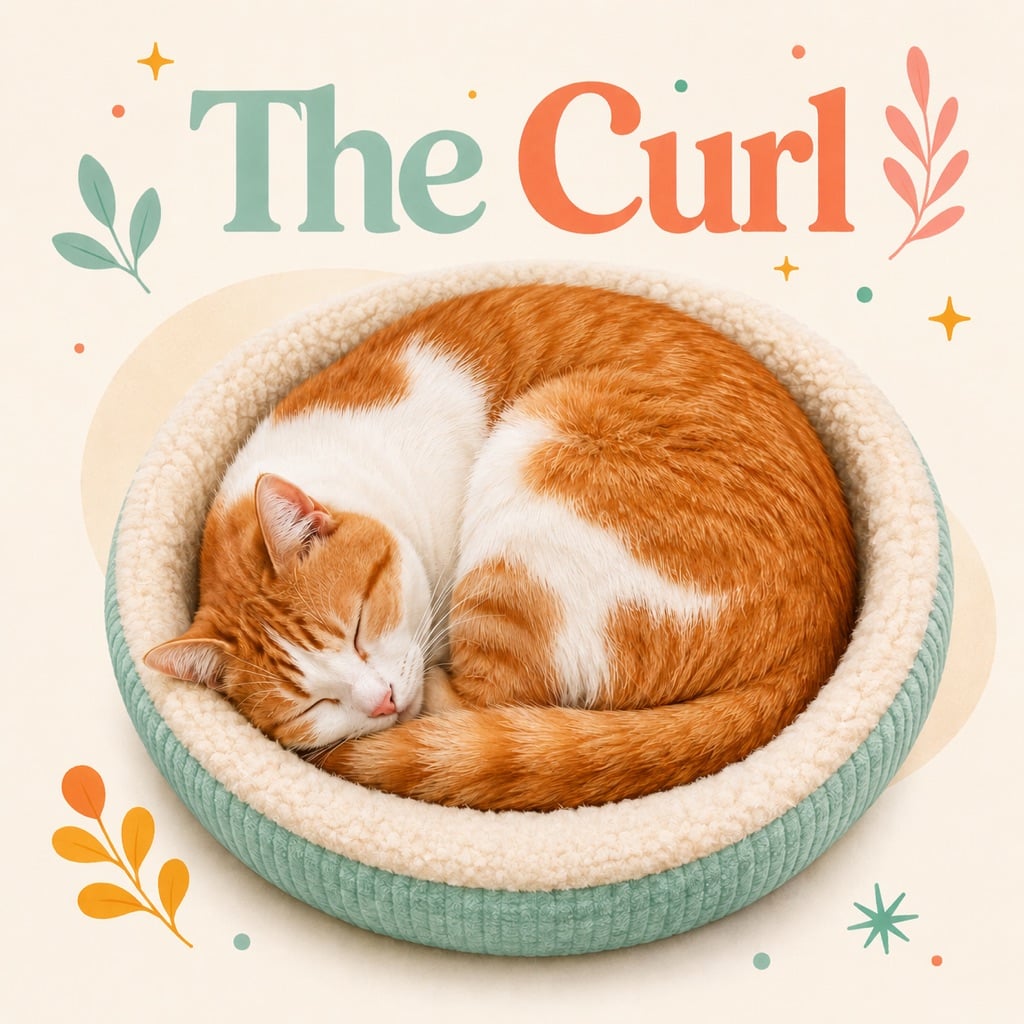
The crescent curl is that classic “cat in a ball” position. Nose tucked in, tail wrapped around, everything pulled in nice and snug like a bug in a rug. It’s one of the most common ways cats sleep.
There are a couple of things going on here. First, a lot of it has to do with warmth. Curling up helps them hold onto body heat, which is handy if the room’s a little cool or they’ve picked a drafty window as their nap spot. It also keeps their belly and other important bits more protected, which is a leftover survival instinct from their wild relatives.
That doesn’t automatically mean a curled cat is scared or stressed. Most of the time it’s just a very cozy way to sleep. Thelma does this in her fluffy bed all the time during the day. She doesn’t look worried. She looks like she’s found her perfect little cave and has zero plans to leave it.
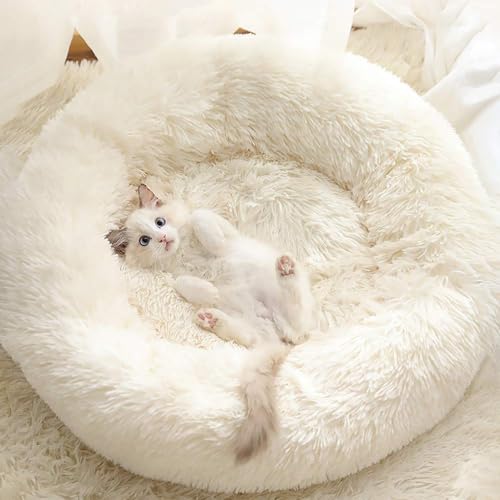
Gavenia 20" Washable Donut Cat Bed
The fluffy bed Thelma curls up in. It’s the one donut that actually stuck around here. We have three of them around the house, and Thelma claims whichever one she lands in while Louis rotates through the others and defers to her. Bonus: the whole thing is washable.
The Loaf
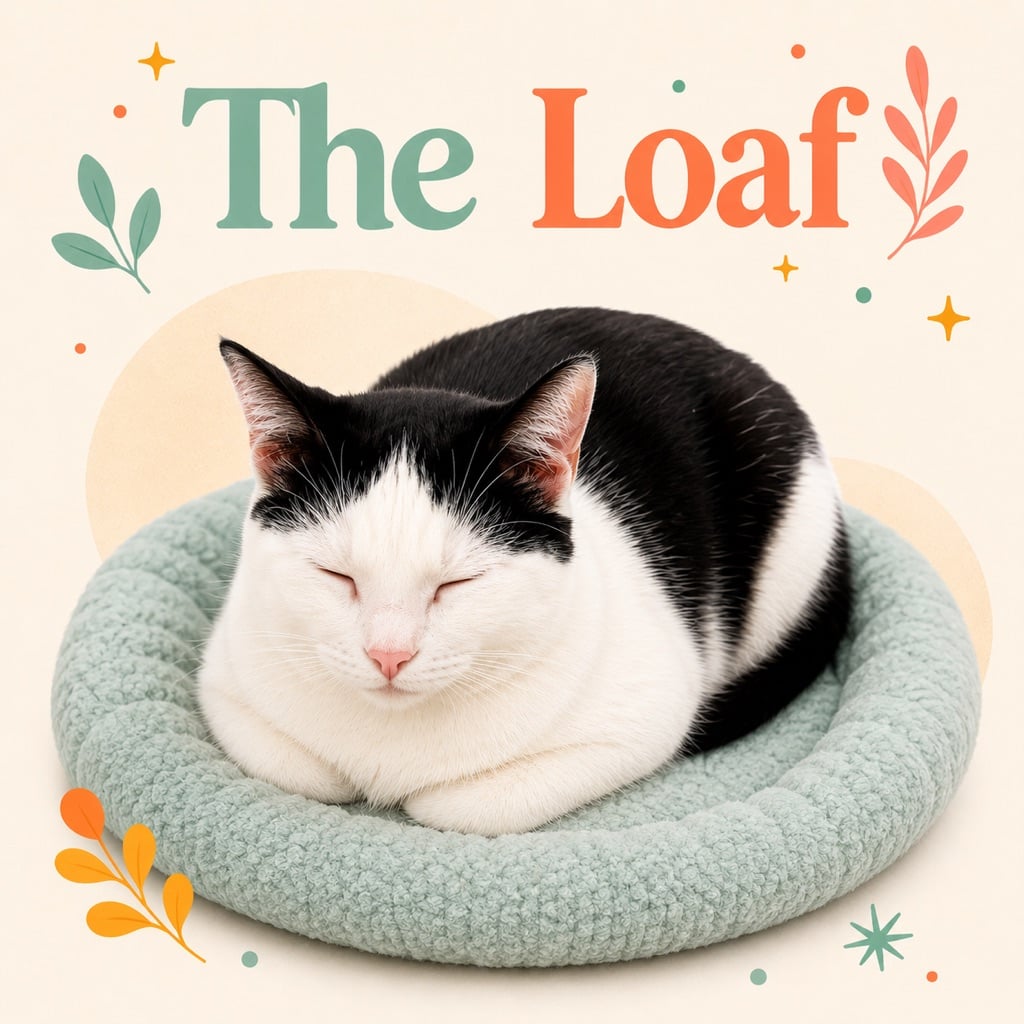
The loaf is the internet favorite. Paws tucked, tail wrapped, body like a little bread loaf on the counter.
Cats usually loaf when they’re relaxed but still aware of what’s going on. They’re resting, but not completely checked out, which is why you’ll often see this during the day when the house is a bit busier. Tucking their paws under keeps them warm and protected, and the upright posture makes it easy to pop up if something interesting happens. Mikel Delgado, a cat-behavior researcher at UC Davis, points out that a loafing cat isn’t braced to defend itself or bolt, which is part of why the pose reads as relaxed rather than tense.
Most of the time a soft loaf is just a content cat hanging out in a comfy spot. If their loaf suddenly looks very tight and hunched, with their head down and their body sort of stiff, that can sometimes be a subtle “I don’t feel great” posture, especially if it shows up with other changes like eating less or hiding more.
Side Sleeping
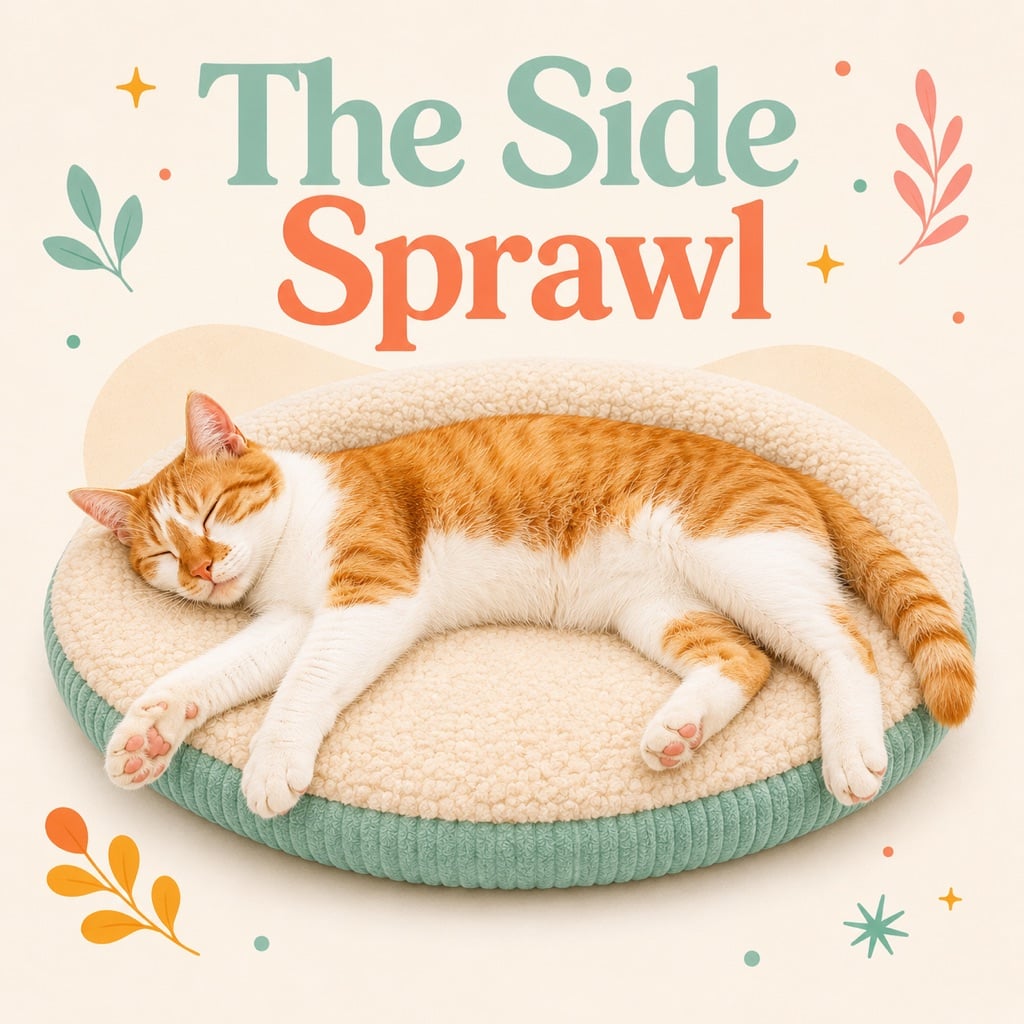
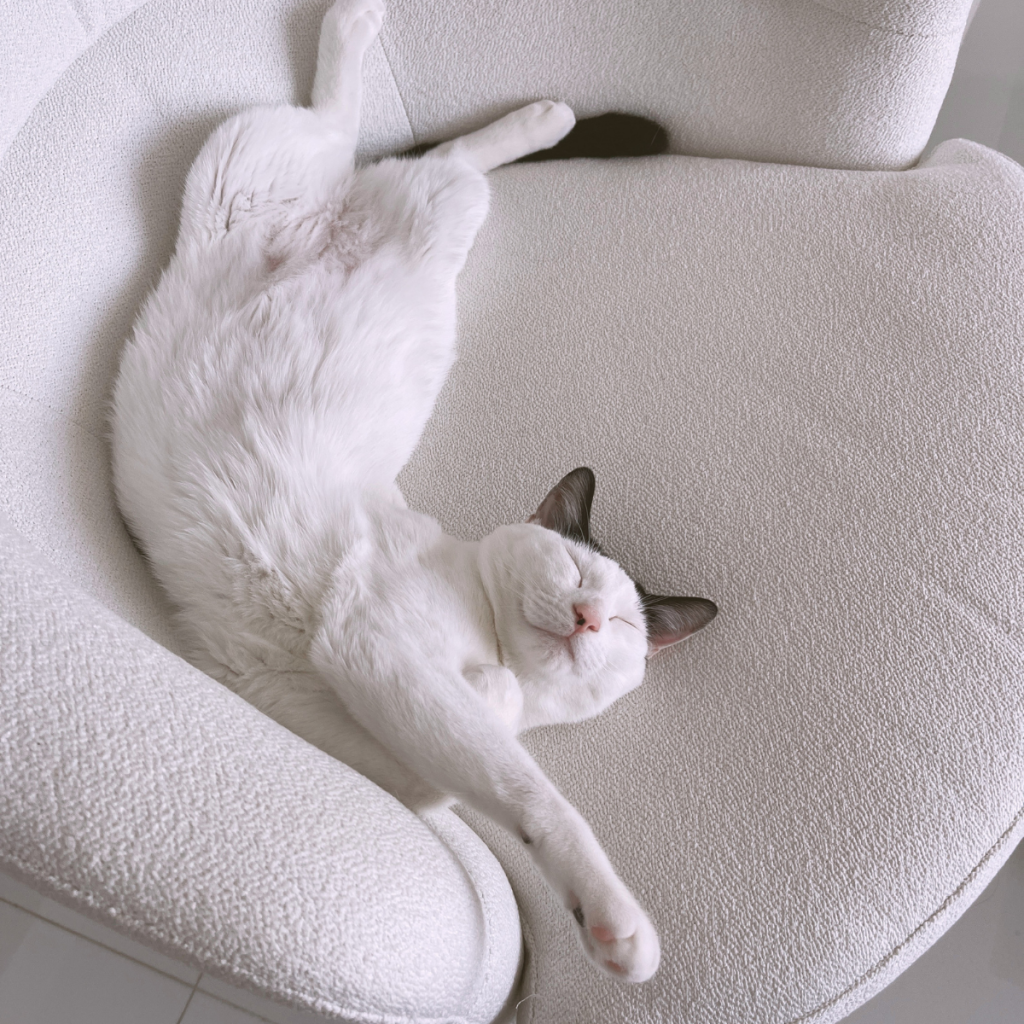
A cat stretched on their side with loose legs and a bit of belly showing is usually pretty happy with life. It’s a more open position, which means they’re not as focused on staying ready to spring up.
Side sleeping often goes with deeper, more restful sleep. This is when you’ll see paws twitch, whiskers move, or eyes flicker like they’re dreaming. Dr. Stuart Hovis, a veterinarian writing for PetMD, explains that because side sleeping leaves a cat’s organs more exposed, cats tend to choose it when they feel safe in the room and trust the people around them.
Cats Really Do Prefer the Left Side
In 2025, a team led by Dr. Sevim Isparta at the University of Bari and Prof. Onur Güntürkün at Ruhr University Bochum published a study in Current Biology that reviewed 408 YouTube videos of cats sleeping on one side. About two-thirds of them were lying on their left. Their theory is that it’s a survival leftover: sleeping on the left keeps a cat’s left visual field open, which feeds the right side of the brain, the half that handles spotting threats and reacting fast. So a cat waking up from a left-side nap is a little better wired to bolt or pounce.
Thelma’s side sprawl in her bed feels very much like this. Once she decides it’s quiet enough, she tips over and is basically out for the count. She also put her paws over her eyes which is adorable.
Belly-Up
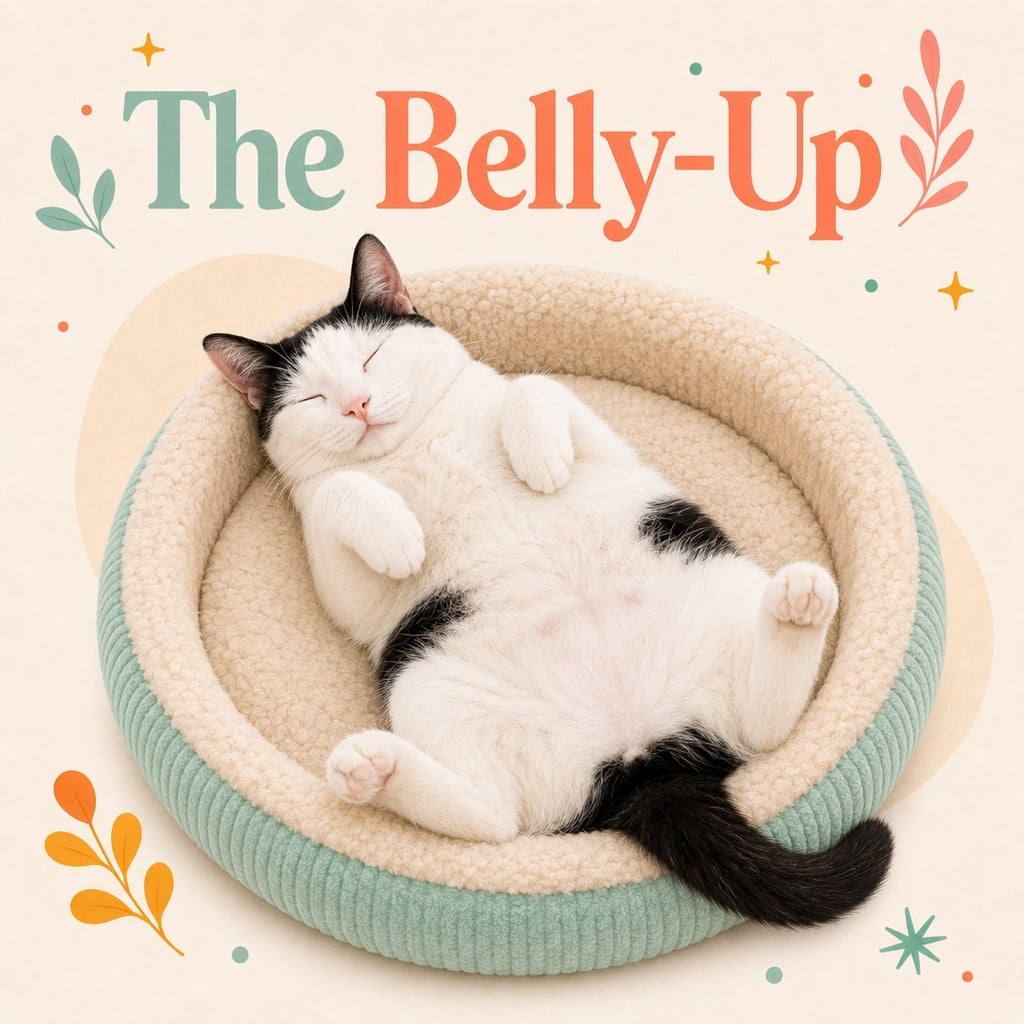
The full belly-up sprawl is the one that makes most cat parents stop and take photos. Cat on their back, paws in the air, belly exposed. It’s ridiculous and charming and usually a very good sign.
Because the belly’s so vulnerable, this position often shows a high level of comfort and trust. Dr. Stuart Hovis at PetMD explains that since cats instinctively protect their vital organs, sleeping with the belly fully exposed is often a sign of real trust and confidence in their home and their people. They’re relaxed enough to stop worrying about protecting their softest spot.
There’s also a practical angle. Some cats flip onto their backs because they’re warm and want to cool down. Exposing the belly lets air hit that area, and stretching out can help them lose a little extra heat. Louis is the king of this on chairs. He’s social, dramatic, and constantly showing his stomach like he’s doing a centerfold. It fits him.
One thing to remember here: a visible belly is not always an open invitation to touch it. (And yes, I almost always do because it’s hard not to!). Even Dr. Hovis notes that a relaxed sleeping position doesn’t mean a cat wants a belly rub, and plenty of them will swat or bite if you try. Sometimes it’s fine. Sometimes it really isn’t. You’ll find out quickly which kind of cat you have. Our cats never do this, which I’m very grateful for!
The Superman Sploot
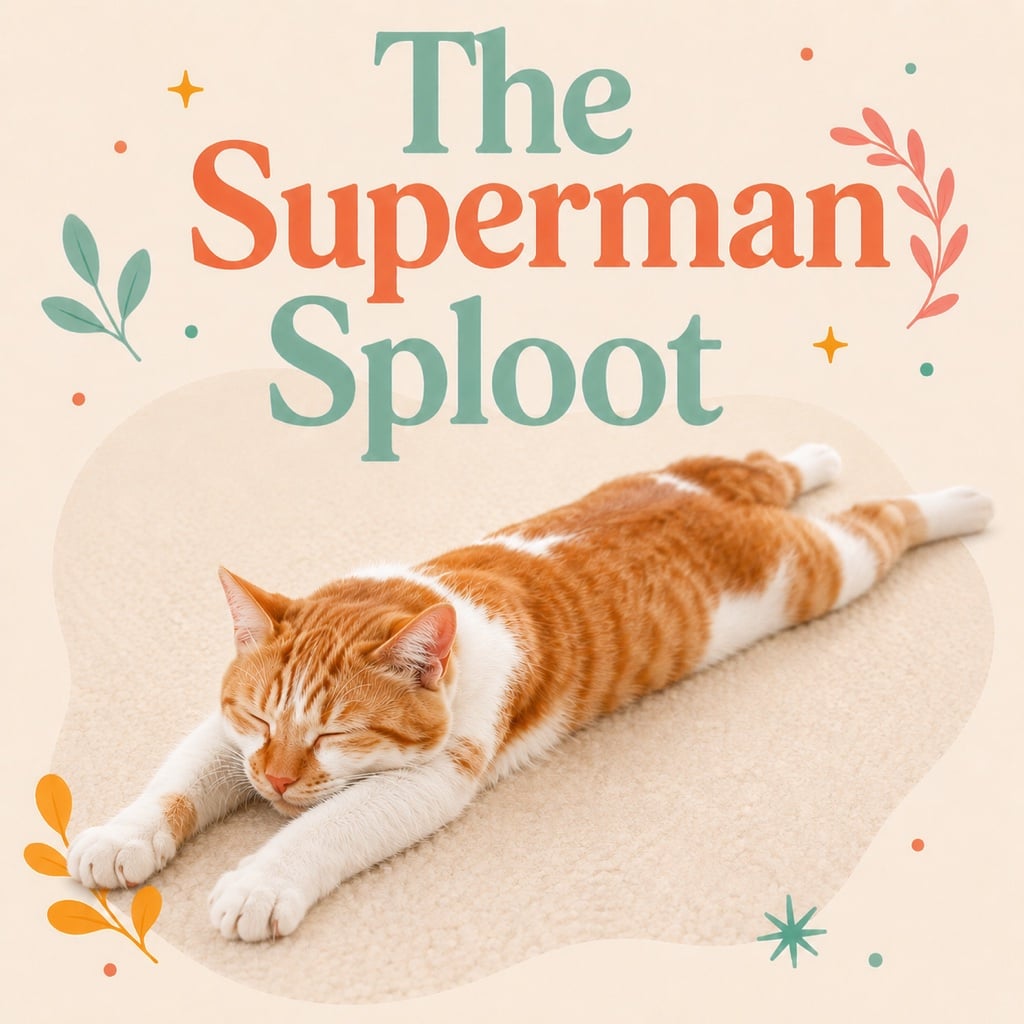
The Superman sploot is the long, stretched pose. Belly on the surface, front paws straight forward, back legs flat behind like they slid in from third base.
Cats who sleep this way usually seem extremely relaxed. Sometimes they’re flattening themselves on a cool floor to chill out after a burst of energy. Sometimes they just like the feeling of that full-body stretch.
Cat owners online are obsessed with this pose and tend to say the same things about it: floppy, cozy, maybe cooling off, and very funny to look at. It’s one of those positions that always seems a little accidental in the best possible way.
Paw Over the Face
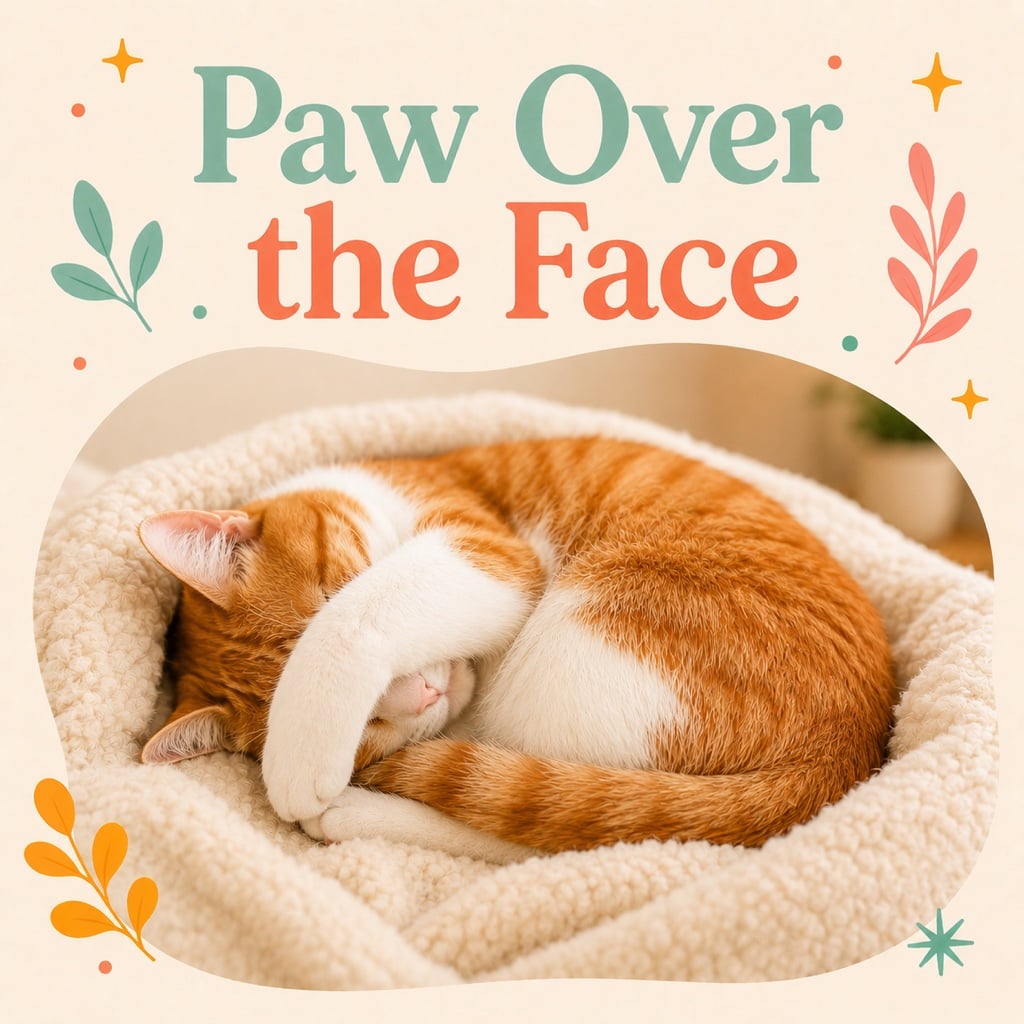
This might be one of the cutest sleeping positions and it’s hard to argue otherwise. A cat curls up and then drops a paw right over their eyes like they’re done with the world for a bit. When Thelma does this I automatically get the camera out, making sure I tip-toe around so I don’t wake her up.
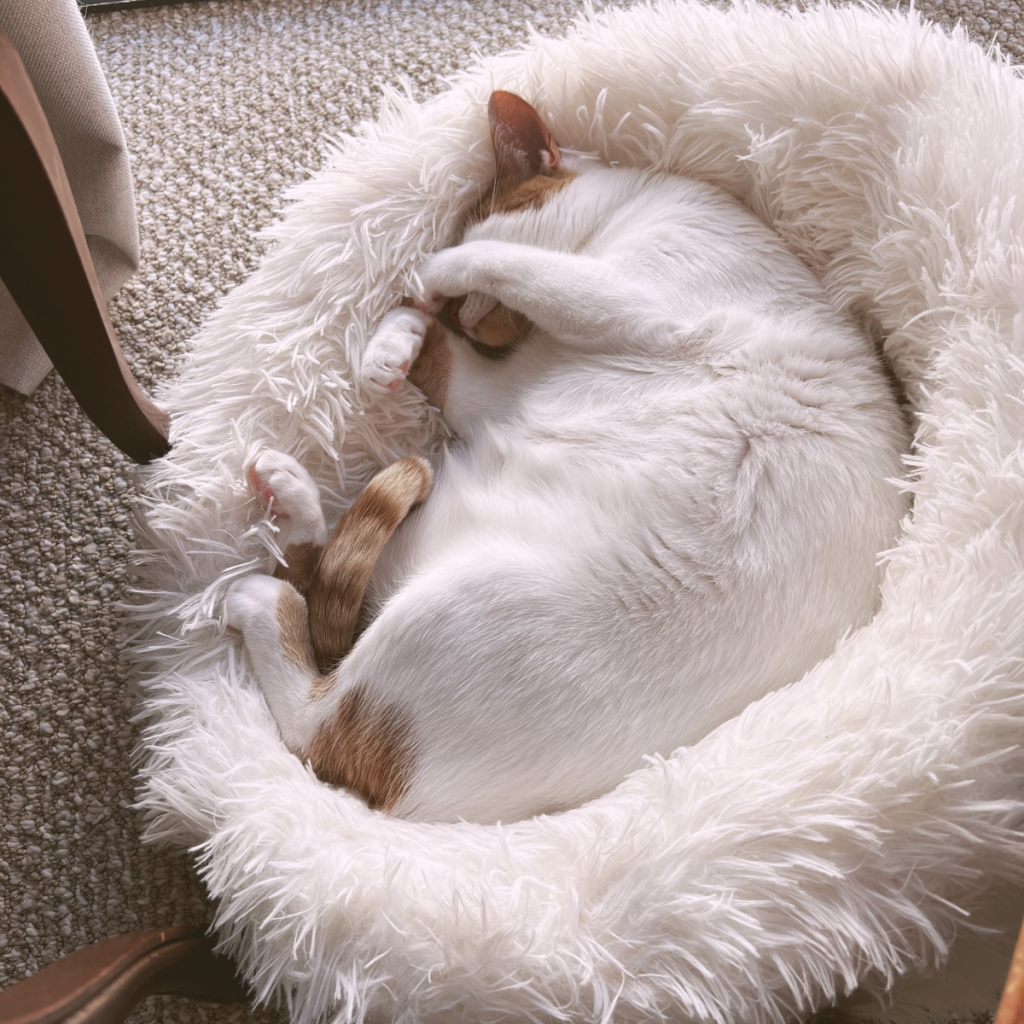
There are a few reasons this happens. The light might be bugging them, especially if they’re in a sunny spot. Dr. Gary Richter, a California veterinarian, describes a covered face as a deep-sleep signal, since blocking the light helps them settle into a more restful, undisturbed sleep. It may also help keep their nose and whisker area warm, since those parts lose heat faster.
Either way, it’s basically the cat version of pulling the blanket over your head. It’s very relatable and very adorable.
What It Means When They Pick Different Spots On You
It’s not just that your cat sleeps on you, it’s where. Thelma likes my feet or my husband’s legs. Louis makes a big entrance for the blanket between us. There are a few spots cats seem to love, and each one has its own little mood.
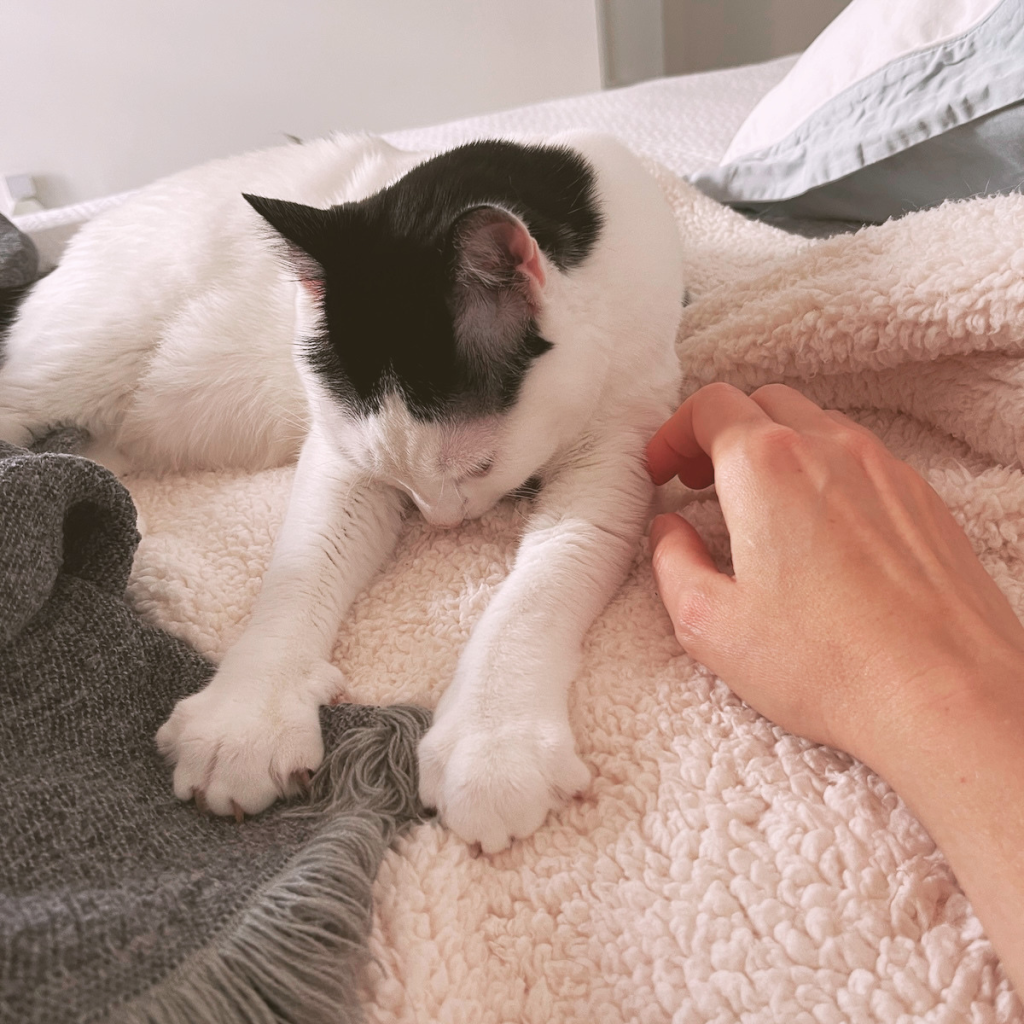
On your chest
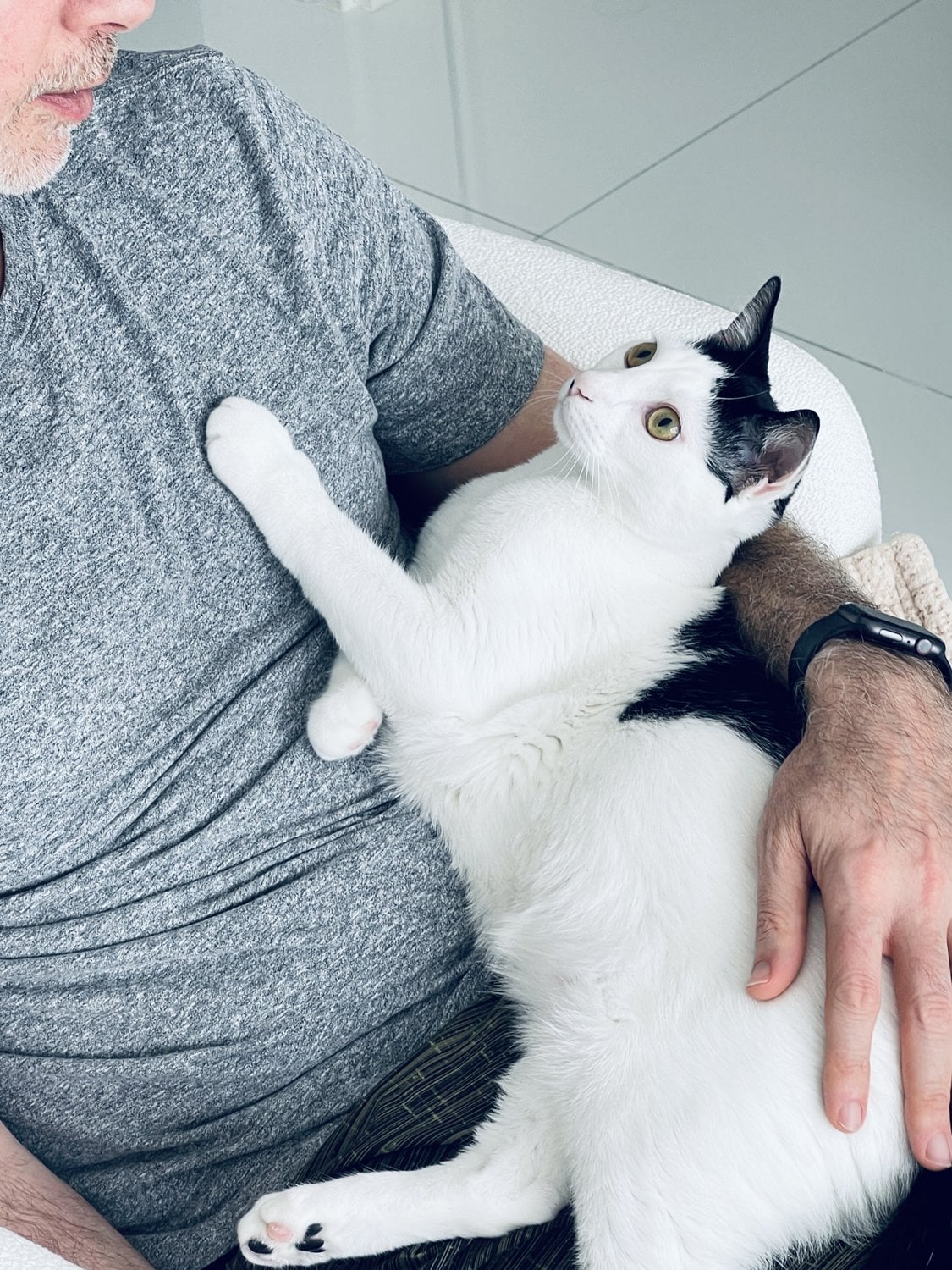
That’s the full “you’re my person” spot. Your chest has the warmth they’re always chasing, plus your scent and your heartbeat and breathing right under them. Dr. Maja Platisa, a vet who reviewed Catster’s guide to why cats sleep on us, explains that a cat associates your smell with safety and security, so settling onto you is as much about feeling reassured as it is about staying warm.
By your head or on your pillow
If your cat parks themselves up by your head, they’re camping out where you smell the most like you. Your hair and pillow hold a ton of your scent. Dr. Wailani Sung, a board-certified veterinary behaviorist writing for PetMD, points out that cats are at their most vulnerable while they sleep, so a cat choosing to settle right by your head is showing real trust, and your scent up there helps them feel safe and like they belong.
At your feet
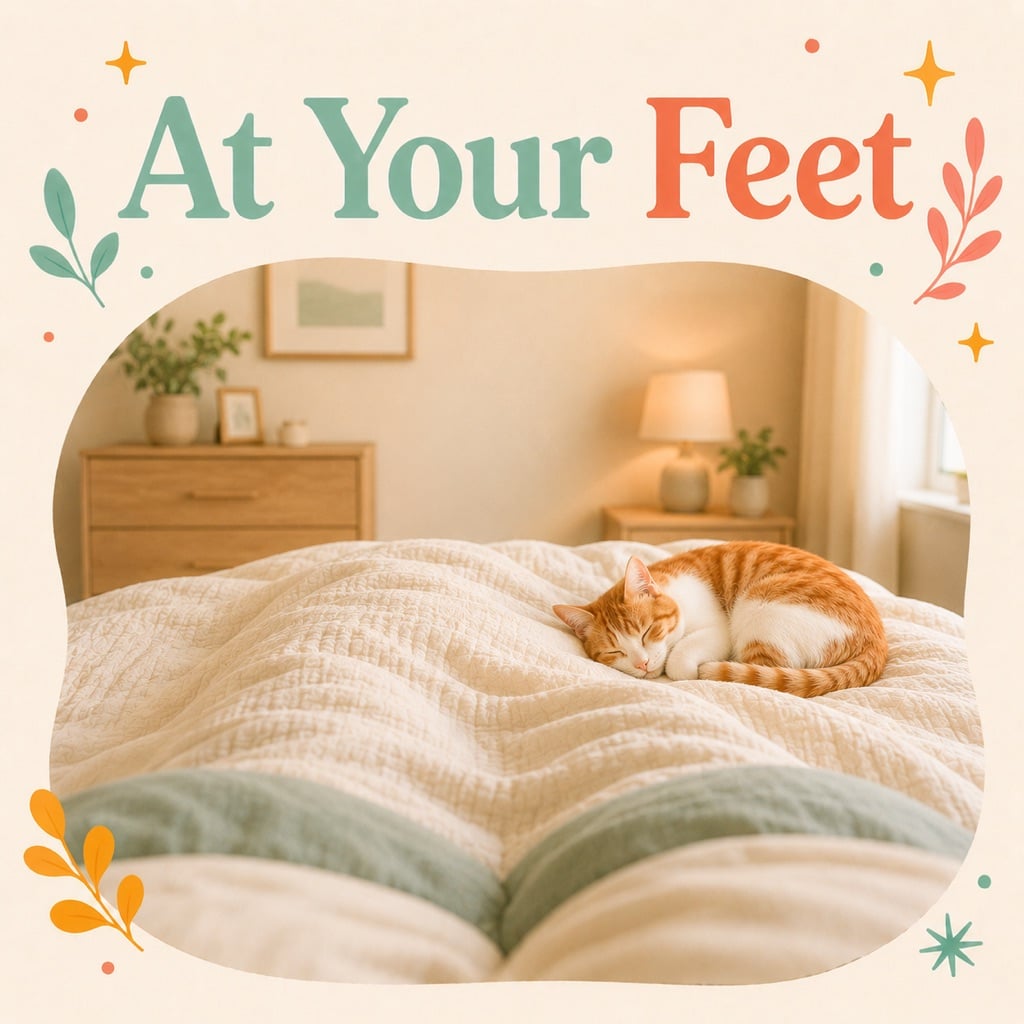
That’s the classic “I trust you, but I’m also on patrol” spot. The foot of the bed is still close and warm, but it gives them a clear view of the room and an easy way to hop off if they feel like it. It’s very Thelma. She wants to be near us, but she likes keeping her options open.
Between your legs
Here they’re basically turning your legs into a little nest. It’s warm, it feels enclosed on both sides, and they can settle in without worrying about what’s going on behind them. You’ll see this a lot with cats who also love cave beds or burrowing under blankets.
Next to you, but not touching
Even when they’re not pressed right against you, choosing to sleep next to you instead of in another room still says a lot. Dr. Marta Vidal-Abarca, a vet writing for Catster, notes that when a cat picks your spot to sleep, they’re showing they trust you for protection and know they don’t have to stay on full alert. So a cat curled up an arm’s length away is still telling you you’re part of their safe zone, even on the nights they’re not in full cuddle mode.
Doing Laps Around the House at Night
Some cats pick a single spot and that’s it. Others, like Louis, make a whole night of it. He’ll cycle through different chairs and then end up in the cat bed in our bedroom before morning.
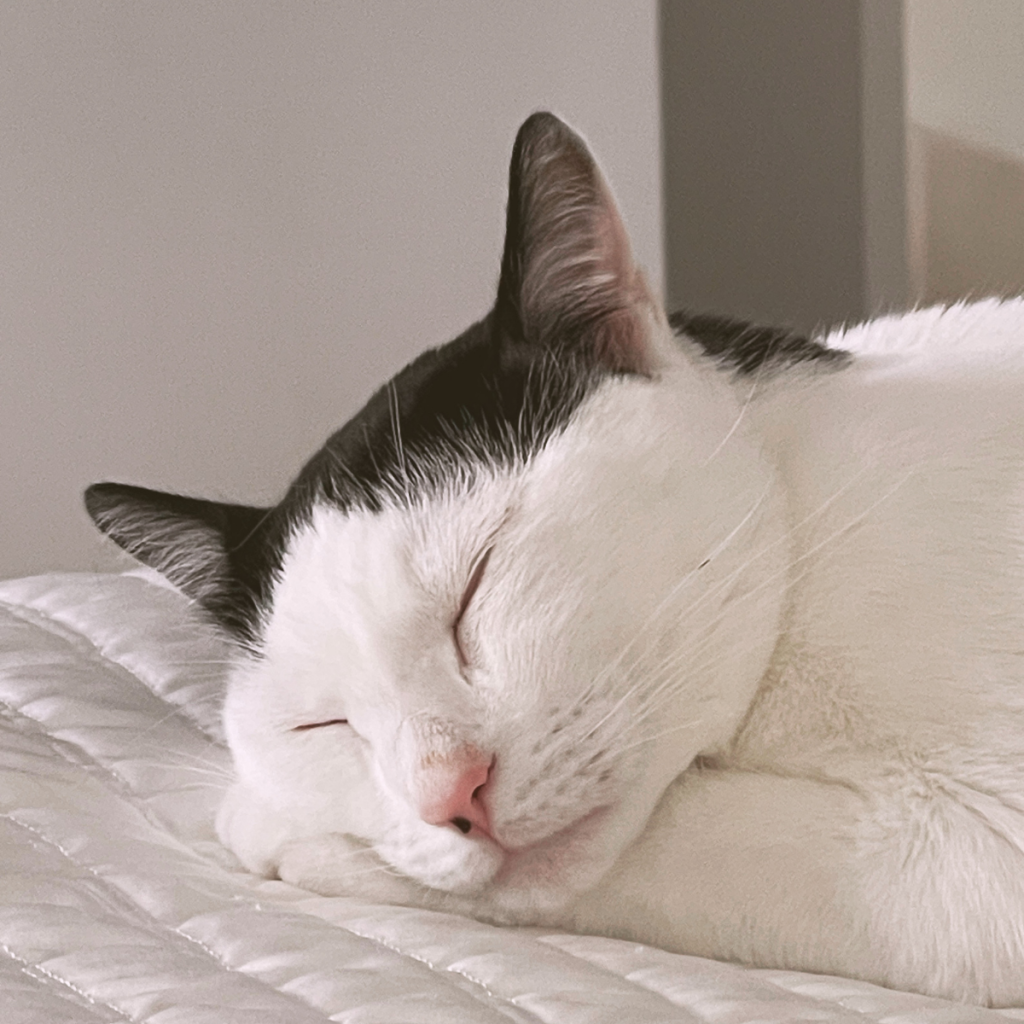
This kind of rotation’s pretty normal. Cats choose sleep spots based on temperature, sound, light, height, and just plain preference. A chair that feels jussstt right at 10 p.m. might feel too bright or noisy by midnight, so they move. A lot of cats also like higher or tucked-in places where they can see what’s going on but still feel hidden.
When a Sleeping Position Might Be a Red Flag
Most of cats’ weird and “how did they get into that?!” position are harmless. Cats are bendy and slightly unhinged and that’s part of their charm. So it’s not just one nap you have to take notice of, but more a clear change in their usual pattern.
VCA Animal Hospitals notes that pain and illness in cats often show up as changes in posture and sleep. Things like a new, tight hunched position with their back up and head down, or sleeping a lot more or a lot less than usual, struggling to get comfortable, or suddenly hiding in strange places can all be early clues that something’s off.
If you notice a new sleep posture plus other changes, like not eating the same, using the litter box differently, or grooming less, it’s worth a call to your vet just to be safe.
Founder and editor of Cat Seat and cat mom to Thelma and Louis. She’s been writing online since 2000.
An emergency veterinarian with a special interest in feline medicine — and a self-proclaimed cat lady with six cats of her own.
Hi! I’m Lindsay. I run this site alongside my hubs Cory and our very opinionated cats, Thelma and Louis. We’re so happy you’re here!
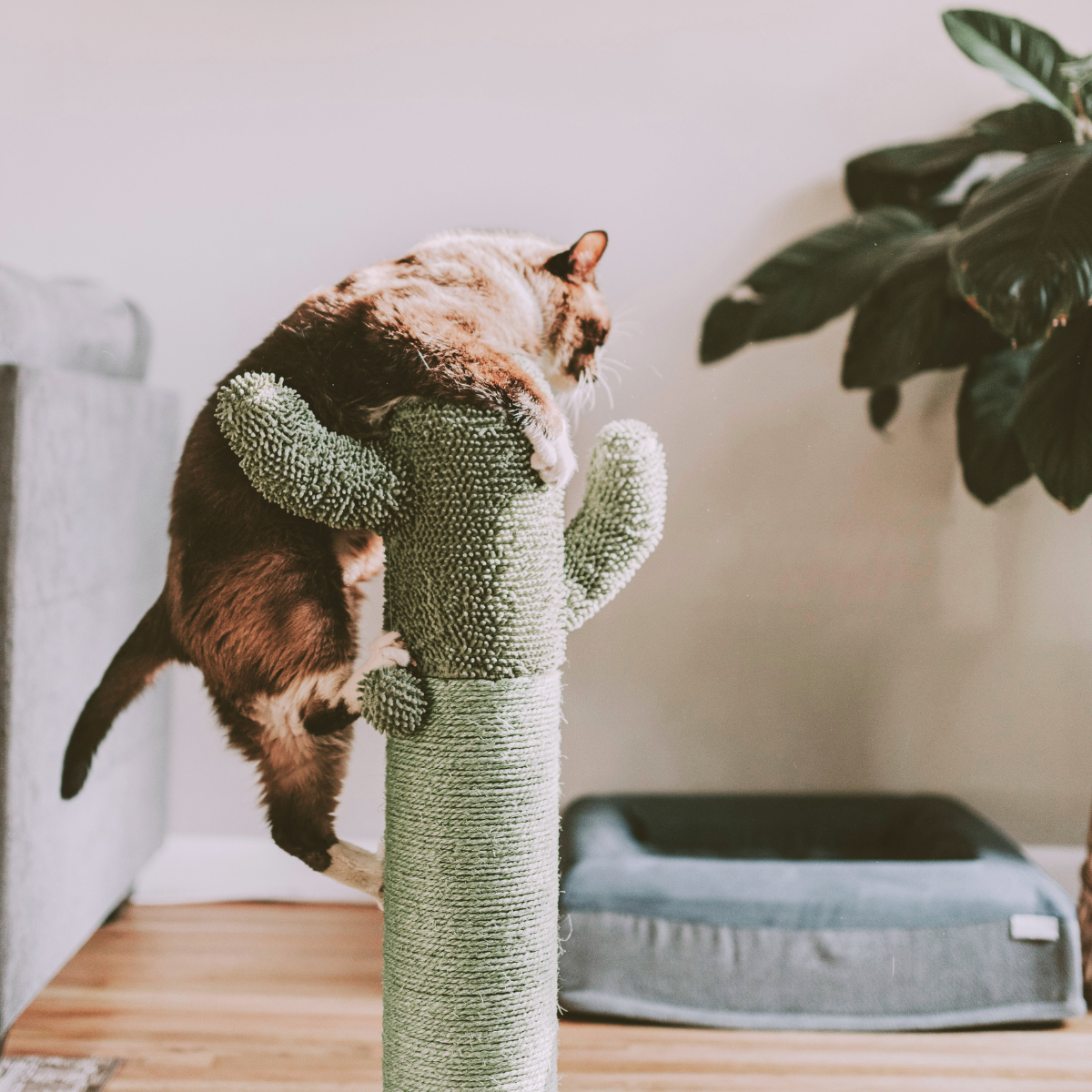
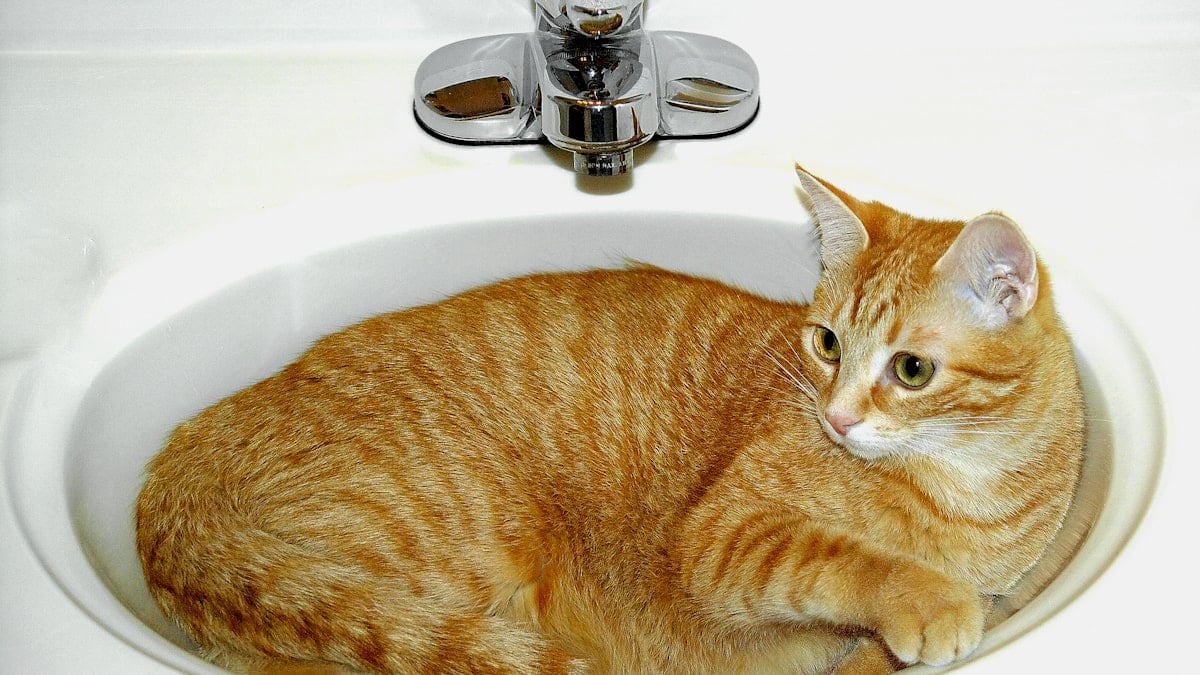
My cat does the Sploot except he does it on the top of his cat tower with his legs (all 4) hanging off. It looks so funny.
Cats are so much fun! Would have loved to see a picture of that.. 😍😸❤️
Thank you, for bringing to us; comfort, a smile, and feeling cared for, by our ” fur baby”!
Hugs and love to yours, 🤗😺❤️
And right back at you!
A child once asked his father, “Dad, why don’t cats and dogs speak?”
He answered wisely and told his son, “God did not give pets the ability to speak so that they could teach us all that you don’t need words to show someone love!”❤️❤️❤️
That is so sweet, thank you for sharing!
Thank you so much for bringing a smile to my face! I love reading the meanings of cats, positions and antics.It’s so interesting. I was so happy to find out that when they squint their eyes at you, they’re saying “I love you!” And my cat does the belly up all the time, and he actually always loves his belly rubbed!😻😻😻
The belly up is the best! Thanks for reading. 🙂
I have 3. My Claire, likes to sleep close or on me. My boys, Clifford & Opie have their likes. Opie likes his own space. Sleeps in all those positions. Clifford, Sleeps close splayed out on his back. I have had them 10 years and they let me live with them😻
Awww I love that!
Our Van Cat Spot likes the loaf position in the middle of the pathway. She is a true Van with the rabbit fur and the six inch wide tail. She’s four now but still very much a kitten. She’s finally learning to hunt, but she hasn’t caught that pesky gopher yet.
LOL! It’s always good to have a goal!! Say hi to Spot for us!
MY “SKILLET” DOES THEM ALL. HE’S ADORABLE AND I LOVE HIM TO PIECE’S. THANK YOU FOR SHARING!
Say hi to Skillet from us!
My black cat spookie lived with us in our car when we were homeless for 7 months. Even though we would sometimes let her out at night to have her me time, she always was back by morning. Now her and I are so close it amazes me sometimes. She is a Daddy’s girl, and I love her for it.
My cat does what I call the Spinx position with her paws crossed over one another and upright head. Peaches does all the other positions listed. I heard a saying a book about animals and it applies to her also. Hundreds of years ago, cats were worshipped as Gods, they have not forgotten. Thank you for this.
My boy Arthur is a delightful little 14-1/2 lb dog in a cat costume. He looks exactly like a Ragdoll but is supposedly a Siamese mix. Arthur sleeps in every position you covered & more. He’s so laid back, & he follows me around like a puppy. He also bogarts the dog bed in the master bedroom that used to belong to our 90 lb German Shepherd. He loves all 3 of our dogs & has an older Abyssinian mix sister. It’s a wonderful life with all these guys.
Arthur!! He sounds adorable!! Haha I love all their little quirks. It sounds like a VERY wonderful life! 🙂
My cat does all of these positions, they’re so cute and I get my phone and take pictures trying not to wake them up.
My Jazzy likes to sleep by the door & my Thor sleeps on the counter in front of the microwave and he sleeps there all day long until it’s time to go to bed. So cute!
I have a question, can someone please tell me why my Jazzy & Thor have cat fights?
Are they boy and girl or two boys? How do they fight? We’re working on some behavioral articles and can definitely include this question in them!
My Tortoiseshell really like to spend part of the night lying on my hip. I have to sleep on my side; she seems to believe this is her right! Lol!
As it is!! LOL