What Makes a Calico a Calico (and Why It’s Almost Always a Girl)
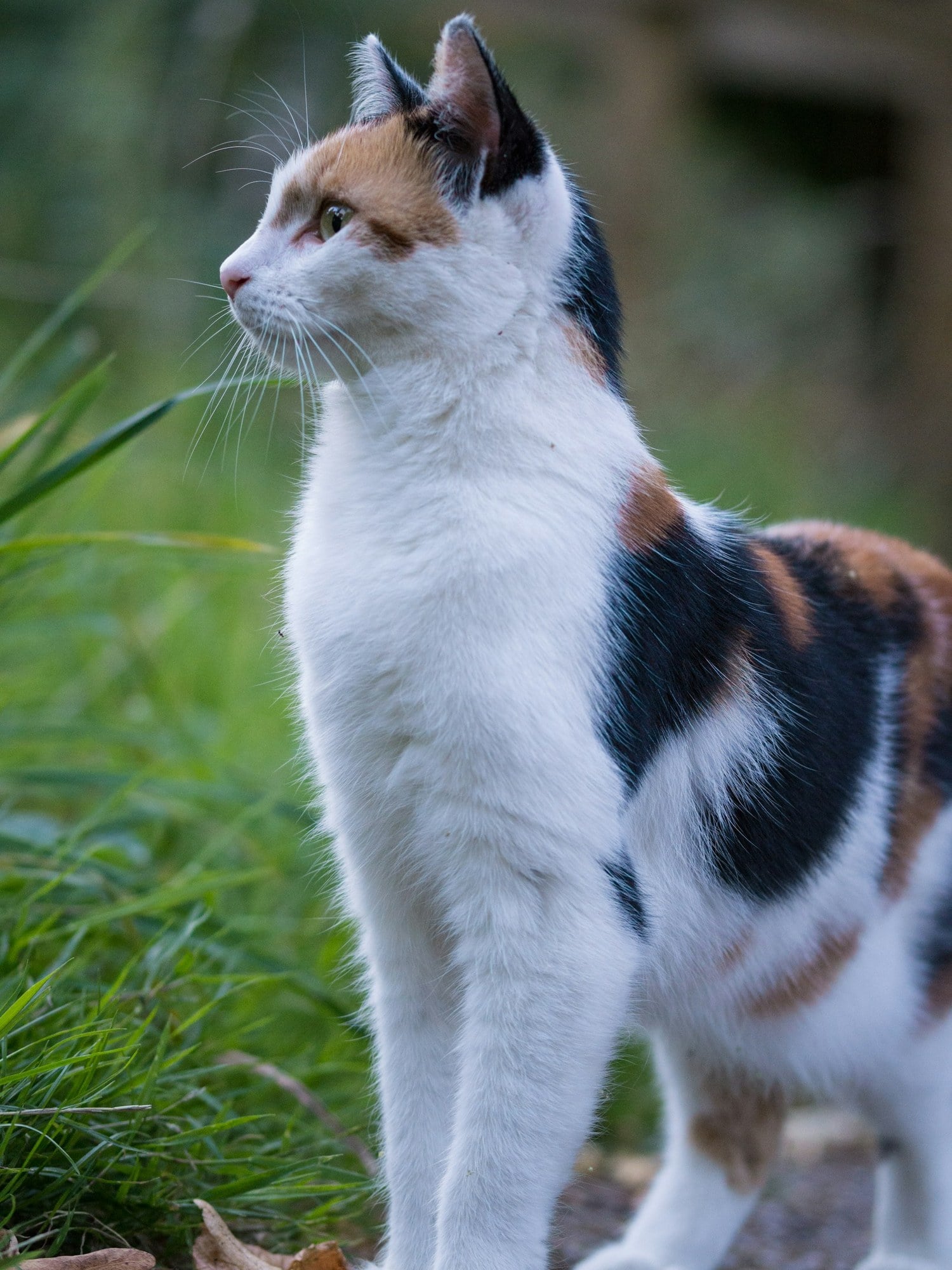
In 2001, Maryland made the calico its official state cat, according to the Maryland State Archives, which is the official record of Maryland’s state symbols. A calico isn’t a breed, but a coloring that can happen to cats of many breeds: a calico cat has a coat of white with patches of black and orange.
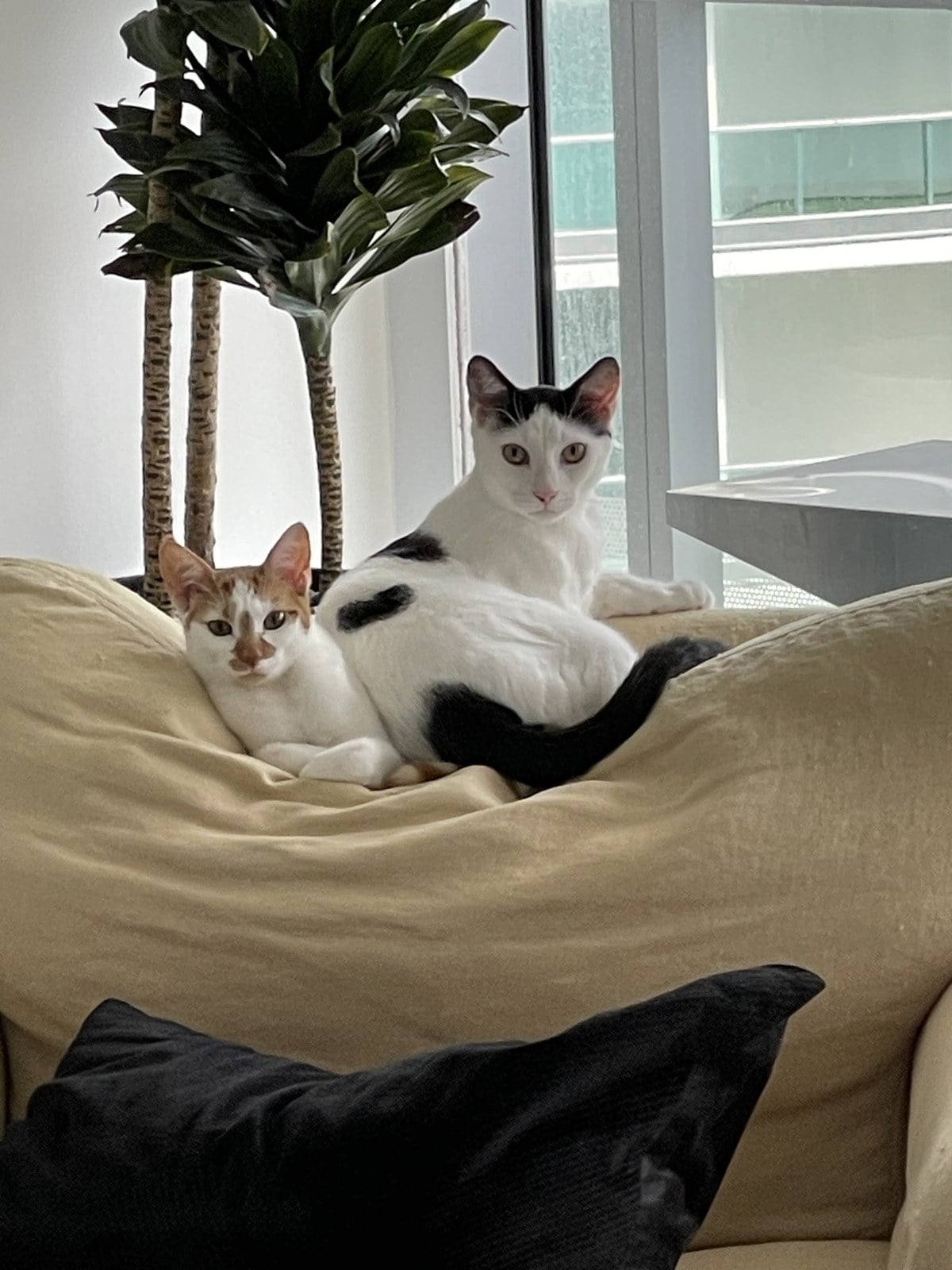
Neither of my cats is a calico. My two are rescue siblings who were found as kittens in a car: Thelma, who is white with orange patches, and Louis, who is white with black patches. Together, the two of them have all three calico colors and zero calicos. But their different fur colorations are a springboard into the genetics of the calico coat, because it’s the same gene that determines why Thelma is orange and Louis is black that also explains why almost every calico is a girl.
So, what is a calico cat? This is your guide to all the things that make the calico coat special: what qualifies as a calico (and what all the different calico patterns are called), how calicos are different from tortoiseshells, why calico cats are almost always female (and what happens when they’re not), the gene for orange fur that scientists finally discovered in 2025, the cloned calico who bore little resemblance to her mother, the famous calico who once worked as a train station manager in Japan, and whether calico cats really do have an attitude.
What makes a cat a calico
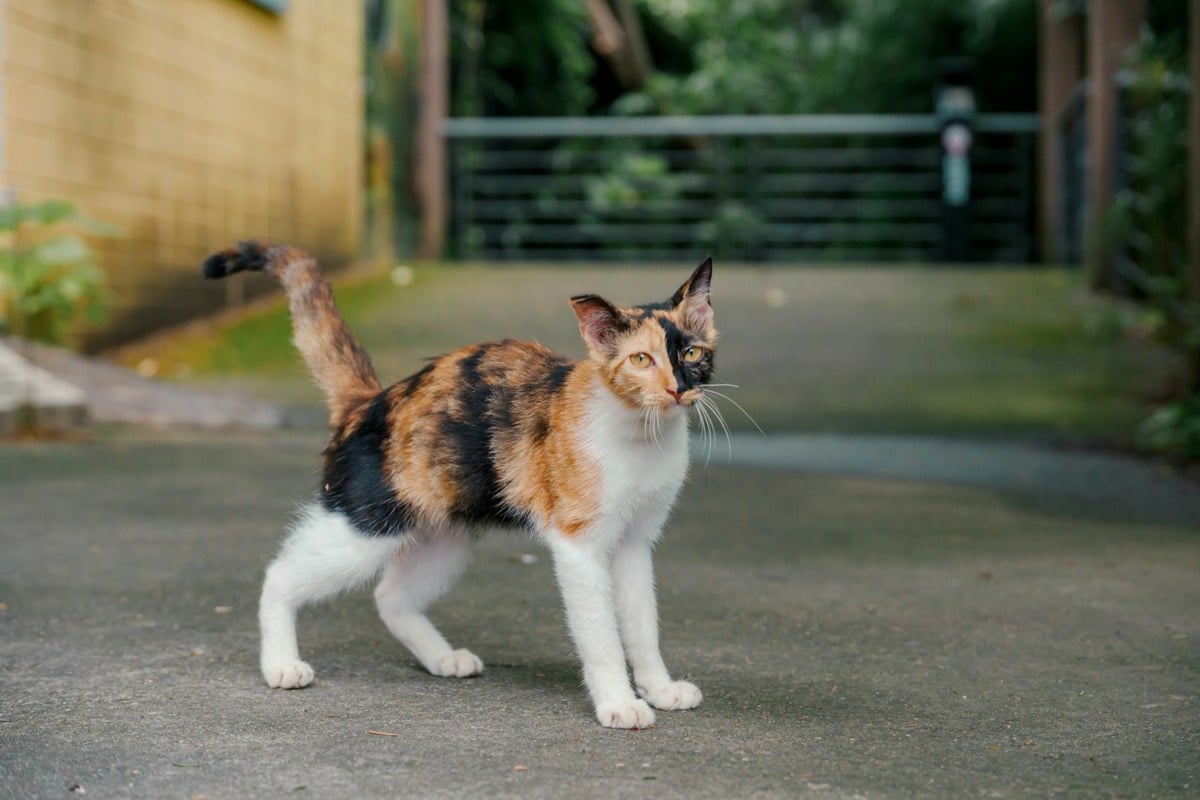
The Cat Fanciers’ Association, the largest pedigreed cat registry, defines calico in its show standards as “white with unbrindled patches of black and red” (red is the cat fancy’s term for orange). Unbrindled means that the colors are not marbled or streaked together, but are solid in separate patches. Some breed standards specify that at a minimum, the feet, legs, chest, undersides and muzzle should be white, while others say the white should be predominant on the underparts.
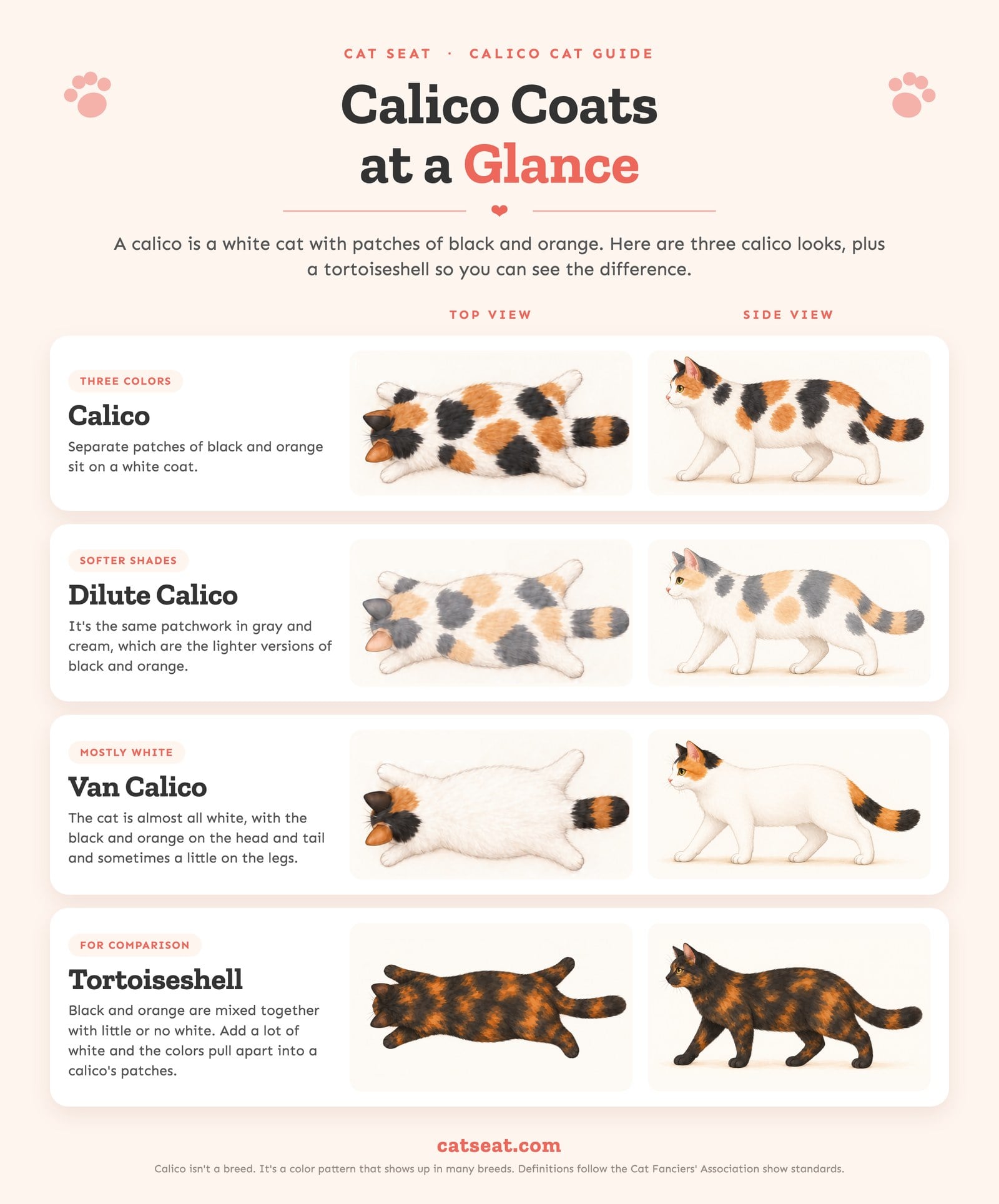
According to the Maryland State Archives, calico cats have three colors in distinct patches, unlike tortoiseshell cats, whose coats have the colors mixed together. Depending on the breed, standards may spell out how much white a calico cat should have. In addition, some standards allow tabby markings within the colored patches.
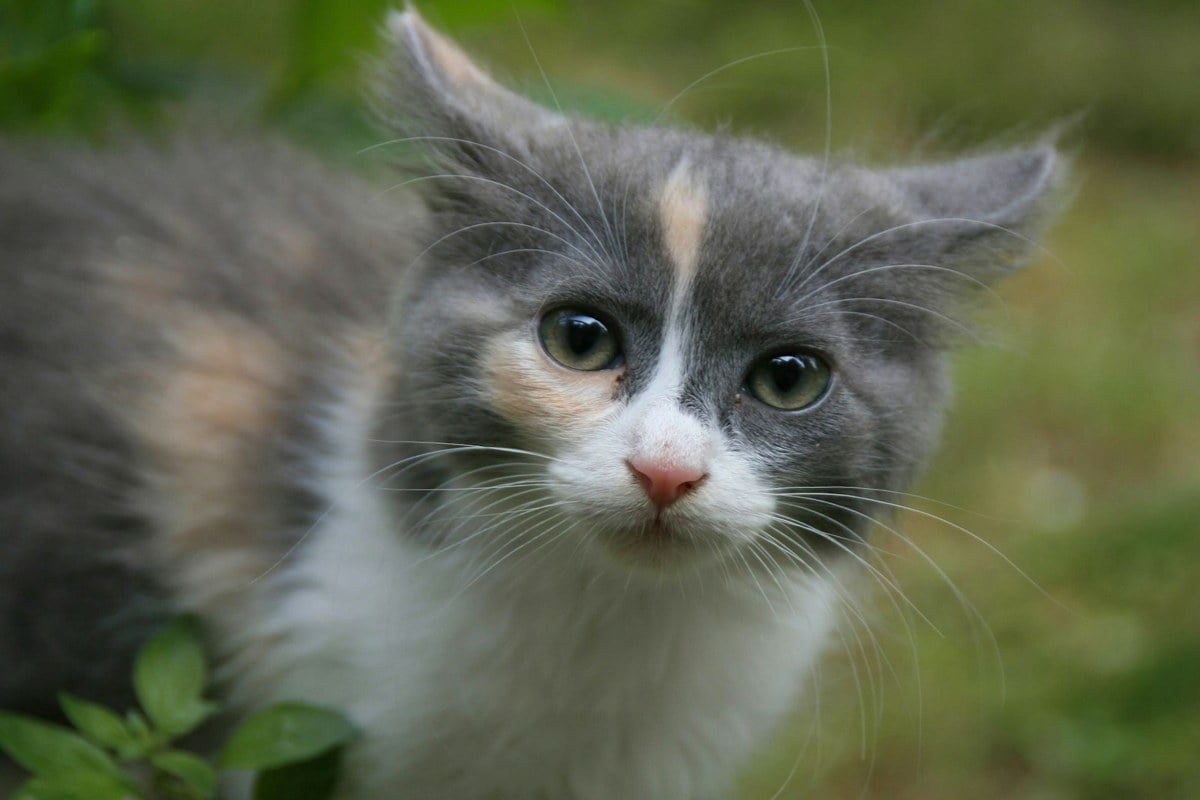
Maryland also notes that the “black” color can also be blue, chocolate, lilac, cinnamon or fawn. Cinnamon and fawn are more rare, since they are recessive to black.
Dilute calicos, van calicos and calico tabbies
A dilute calico is a softer version of the pattern, with gray and cream patches. (In cat-fancy parlance, “blue” means gray, so you’ll sometimes see this pattern called blue-cream and white, as in the American Shorthair standard.) The CFA defines it as white with unbrindled patches of blue and cream.
The van calico is also primarily white, with patches of color confined to the head, tail and legs. The CFA allows one or two small patches of color on the body. Van calico cats can be thought of as wearing a calico hat and calico tail.
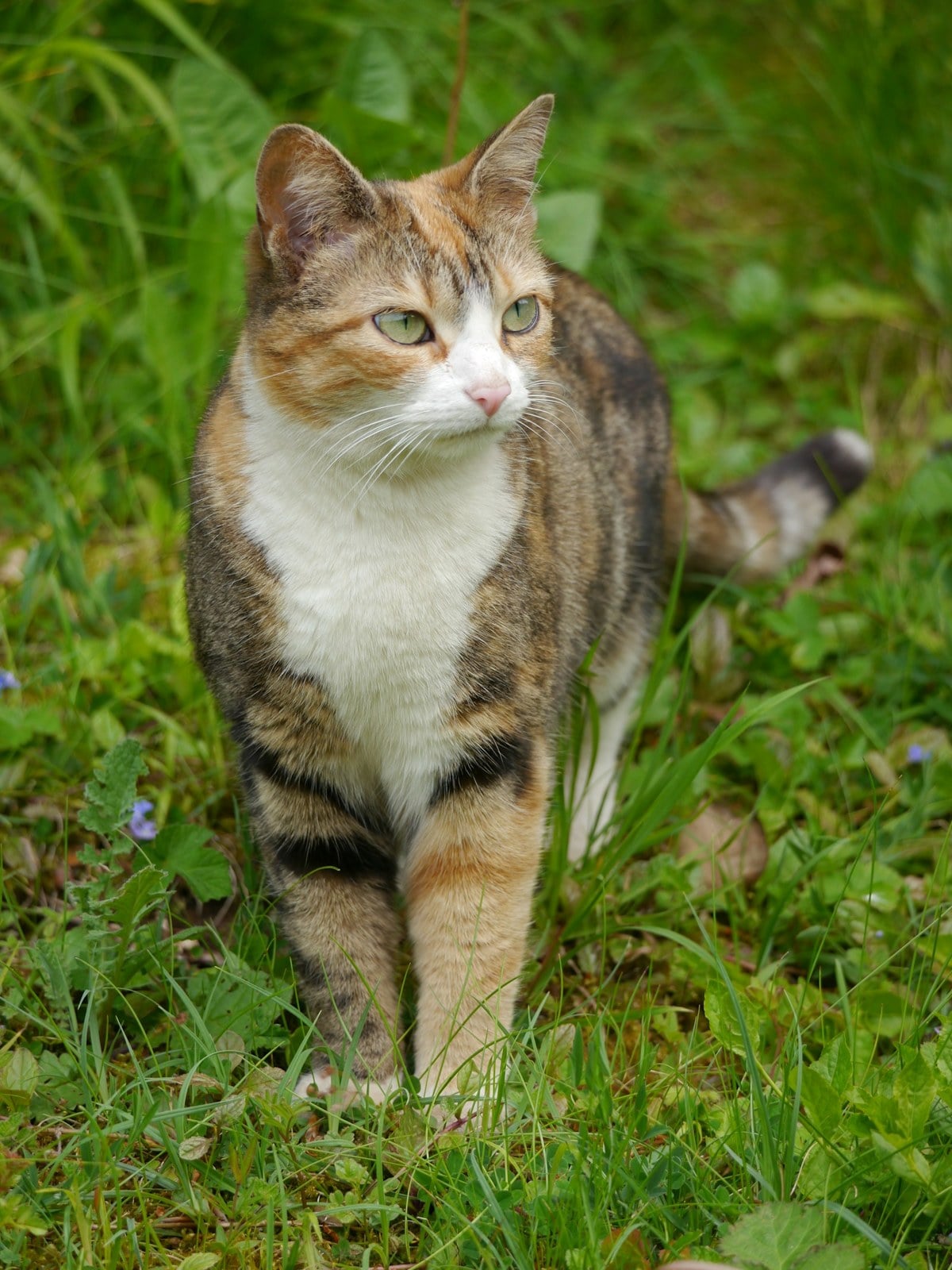
If you see stripes in a calico cat’s patches, you’re looking at what many people on the internet refer to as a caliby. (This term is not in the CFA standard.) The CFA calls these cats patched tabby and white, meaning they’re white cats whose colored areas are patched tabby, which is a tabby cat with patches of red or cream. (There’s more on the stripes themselves in my tabby cat guide.)
Calico vs. tortoiseshell
Calico and tortoiseshell cats can look similar at first glance since they both have a base coat color of black and orange, but tortoiseshells generally have little to no white. According to the Cat Fanciers’ Association, tortoiseshell refers to “black mottled or patched with areas of red.” A genetics lab at the University of Michigan that studies calico cats describes tortoiseshells as very closely related to calicos, but with very little white and a finer, more blended pattern.
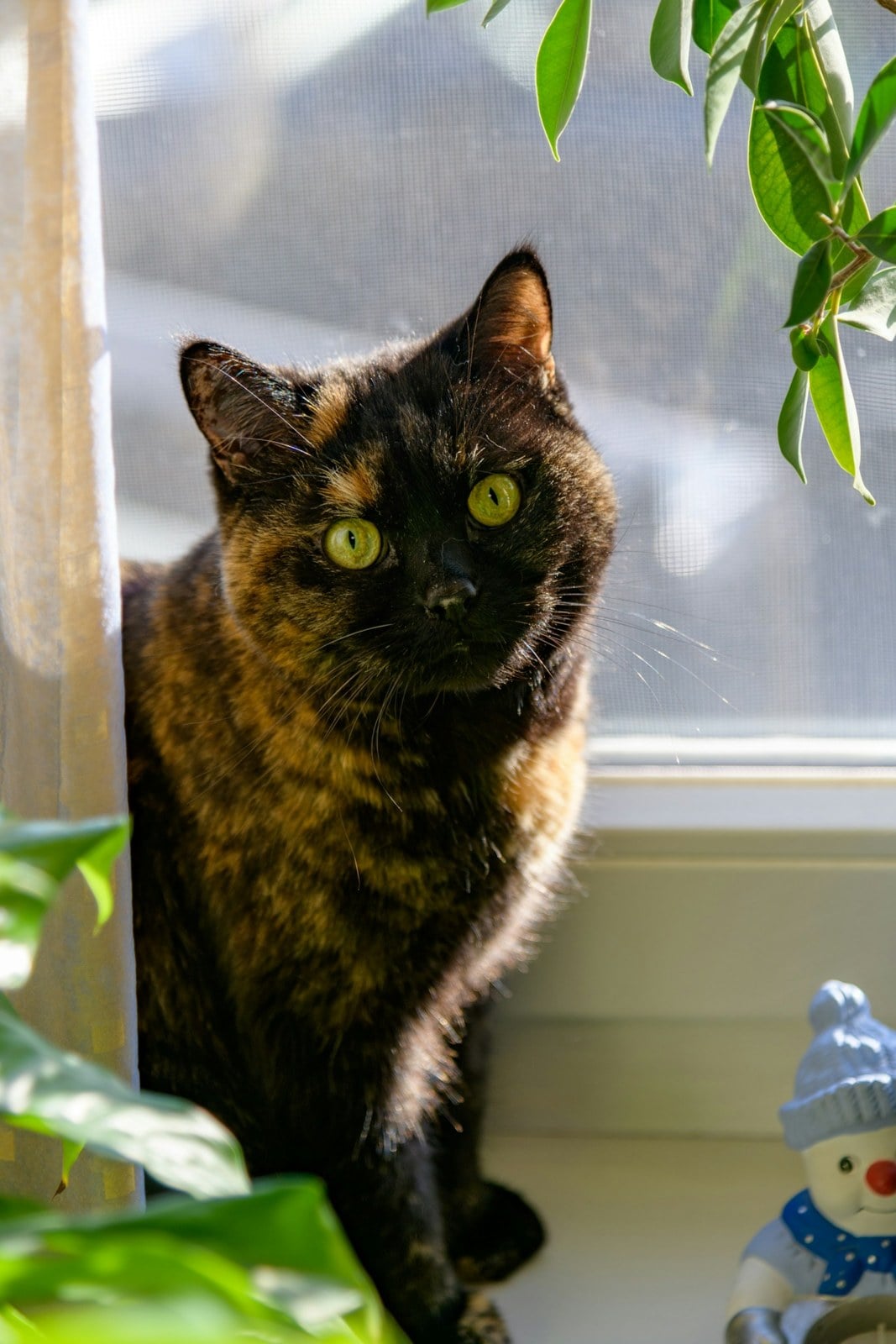
The white in a calico comes from a gene that affects how pigment-producing cells spread through the skin during development, and kittens whose pigment cells spread more slowly end up with more white in their coats. But it’s not just the amount of white that distinguishes calicos from tortoiseshells. Calicos also tend to have larger patches of color than tortoiseshells. Researchers from Stanford reported in the journal Current Biology in 2025 that this is caused by a white spotting mutation at a gene called KIT. It’s the same white spotting gene I wrote about in my guide to tuxedo cats.
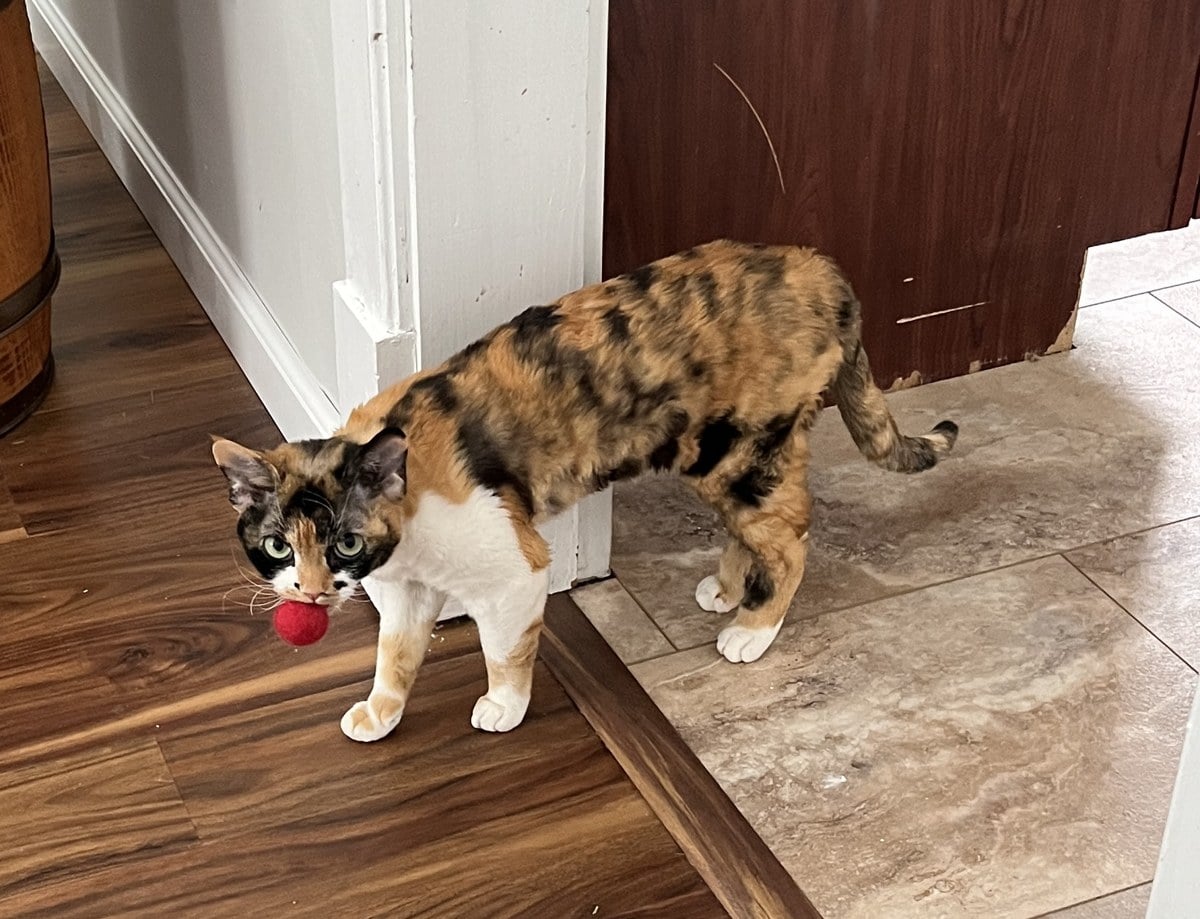
If a tortoiseshell cat also has tabby patterns, it’s known as a torbie. The Cat Fanciers’ Association defines torbies as patched tabby, or a tabby with patches of red or cream. A torbie isn’t a calico, because it has little or no white, but a torbie with white patches is the calico tabby I mentioned above.
Why almost every calico is a girl
Mary Lyon theorized in 1961 about a process called X-inactivation. As it turns out, her theory was formed in part by observations about calico and tortoiseshell cats, according to the 2025 Stanford paper in Current Biology.
The gene that makes a cat orange is on the X chromosome, and females have two X chromosomes while males have one X and one Y. Every cell in a female kitten’s body will randomly inactivate one of the two X chromosomes early in development, as Hiroyuki Sasaki of Kyushu University, who led the Japanese team that found the orange gene, explains it. All cells that grow from that cell will have the same X chromosome inactivated.
That’s why tortoiseshell and calico cats have black and orange patches: those patches are groups of cells in which one X chromosome or the other is inactivated. Because male cats have only one X chromosome (in addition to a Y chromosome), they are either orange or not orange.
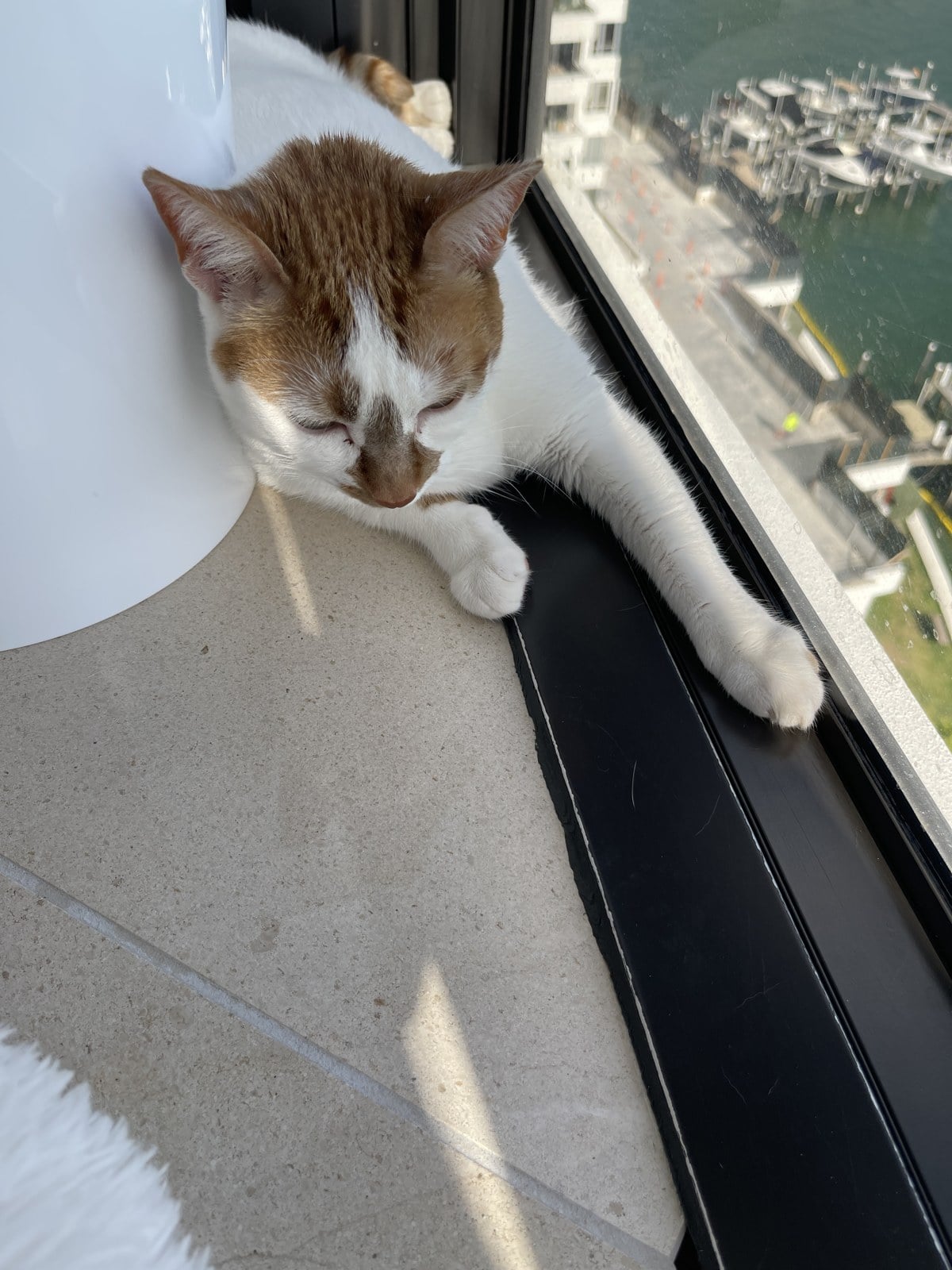
Thelma, however, is orange and white, with no black. According to Stanford Medicine’s magazine, for Thelma to be orange, she must have inherited an orange version of the gene on the X chromosome from both of her parents. Which means Thelma’s mom was likely a calico or tortoiseshell cat (since she also has the non-orange version of the gene), and Thelma’s dad was likely orange. Thelma’s brother Louis got a non-orange version of the gene from their mom.
The gene for orange, found in 2025
Two research teams reported in Current Biology in May 2025, in papers published on the same day, that a missing stretch of DNA about 5,000 letters long near a gene called ARHGAP36 is what makes a cat orange. Hiroyuki Sasaki and colleagues at Kyushu University in Japan examined skin samples from four calico cats and found that the gene is much more active in the pigment-producing cells of orange patches than in the pigment-producing cells of black or white patches. “Identifying the gene has been a longtime dream, so it’s a joy to have finally cracked it,” Sasaki said in the university’s announcement. Research by Sasaki and colleagues was funded by a crowdfunding campaign.
Chris Kaelin and Greg Barsh and their team at Stanford found that all orange cats have the same version of this deletion, suggesting that orange cats originated from one cat more than 900 years ago.
What the 2025 orange-gene papers found
Both papers came out in Current Biology on May 15, 2025: one from Stanford and one from Kyushu University.
- The missing piece of DNA is in a stretch that doesn’t code for the protein, so the ARHGAP36 protein itself is unchanged. What changes is where the gene gets switched on.
- Switched on in pigment cells, the gene turns down the genes for dark pigment, so those cells make red and yellow pigment instead.
- The usual “red” gene in other mammals, Mc1r, is perfectly normal in orange cats, which is why the cat version had no match anywhere else.
- The Stanford team checked 188 more cats: every orange cat had the deletion, and no non-orange cat did.
- Calicos have been painted for centuries. The Stanford paper points to a twelfth-century Chinese painting by Li Tang and Alessandro Vitali’s “Annunciation” from 1604.
The male calico question
A 2022 review in the Journal of Feline Medicine and Surgery out of the Ontario Veterinary College states that any male cat with three colors in his coat must have at least two X chromosomes. Most are XXY, which the review compares to Klinefelter syndrome in humans. Others are chimeras (resulting from the fusion of two embryos) or mosaics (having two distinct sets of cells). The review says that these males are rarely fertile.
Despite their rarity, you’ll often see the number 1 in 3,000 used to describe how many calicos are male. I can’t find a published study to back that up, though. Everywhere I see the statistic, it’s attributed to a study out of the University of Missouri that I can’t seem to find. The best real number I found was a survey of UK veterinary practices published in the journal Veterinary Record in 1999: out of 4,598 male cats, 20 were recorded as tortoiseshell, or 0.43 percent.
Male tortoiseshell and calico cats are almost always sterile, but not always. A tortoiseshell Maine Coon male who was a chimera sired five healthy kittens at the age of 11 months, according to a case report published in the journal Sexual Development in 2026.
CC, the cloned calico who didn’t match
The first cloned cat in the world was born on December 22, 2001, at Texas A&M University after 87 attempts. The donor was a domestic shorthair calico cat named Rainbow, described by the Associated Press as having splotches of brown, tan and gold on a white base. Geneticists at UC Davis verified that CC’s DNA was an exact match.
Though CC’s DNA was an exact match to her donor cat’s, she looked quite different. Instead of a typical calico coat, CC was striped gray and white with no orange coloring. According to UC Davis, the pattern on a cat’s coat is only partly determined by genes, and Texas A&M said developmental factors are why the two cats had different coat patterns. Which X chromosome gets switched off in each cell is decided during development, so an exact genetic copy of a calico cat won’t necessarily have the same patches of color.
CC lived with Texas A&M scientist Duane Kraemer and his wife Shirley. She had three kittens when she was five, and died on March 3, 2020, at the age of 18.
Do calicos really have an attitude?
Calico and tortoiseshell owners joke about tortitude, and there’s one study people point to. A UC Davis team published a paper based on an online survey (with 1,274 completed surveys) in the Journal of Applied Animal Welfare Science in 2016. According to owners, female cats that carried the orange gene, including torbies, torties and calicos, were more often aggressive toward people. Plenty of calico owners will recognize that, like one person on Reddit:
Our calico has had the teenager attitude since we got her when she was 2 months old! I think its that calico sass!
— via Reddit.com
But the study also found little difference between cat coat colors and aggression in certain situations (while being handled or at the vet’s office), and the survey didn’t involve directly observing cats’ behavior; the data came from cats’ owners. Elizabeth Stelow, the study’s lead author, said the cats were different from most other coat colors for aggression toward humans, but not for friendliness. Co-author Melissa Bain told UC Davis’s student paper, The California Aggie, that even though the incidence of this behavior was higher in these cats, that doesn’t make them a problem.
Another study may lend credence to the theory that we project tortitude onto these cats. In 2012, researchers at UC Berkeley surveyed 189 people about their expectations for cats of different colors. Tri-colored cats were grouped in with more antisocial cats, and were rated as more intolerant. Lead study author Mikel Delgado said that there’s little evidence to back up the idea that these differences are real, but if you think a calico is going to be sassy, you might be more likely to think she actually is. Plenty of owners swear by tortitude anyway, like one person on Reddit:
Out of all cats, the tortie is a master of boundary enforcement. That’s tortitude in my book; they choose when and who and how and have no qualms reminding you of those preferences.
— via Reddit.com
Calicos in Japan, and one very famous stationmaster
A calico cat is known in Japan as a mi-ke (three-fur or tricolor) cat. According to the Cat Fanciers’ Association, early Japanese Bobtail cats were most popular in bicolor or mi-ke, and the mi-ke was once the most prized color. A bobtailed mi-ke is also a good luck sign in Japanese folklore, and the beckoning maneki-neko cat you see in shop windows comes from folklore about a cat bringing in good fortune. I covered more of that in my post on cat folklore by coat color.

Japan’s most famous calico was Tama, who became the stationmaster of Kishi Station on the Wakayama Electric Railway on January 5, 2007. Tama, according to the railway, had an economic effect of 1.1 billion yen for 2007 and brought so many visitors to the railway that she was repeatedly promoted (super stationmaster, executive officer, acting company president, ultra stationmaster), and in 2010 the station was rebuilt with a building shaped like a cat’s face. After her death in June 2015, Tama was given a company funeral by the railway and enshrined at a shrine on the station platform.
The job has stayed with calicos. According to the railway’s website, Kishi Station’s current stationmaster is Yontama, and like Tama, she’s a calico cat.
If you want a calico
I’m biased because my two came from a rescue (they were found in a car!), but if you want a calico, check out your local shelter, because calicos turn up there all the time. Calico is a coat color and not a breed, so you don’t need to go through a breeder to get one. Calicos found in shelters are most often domestic longhairs or domestic shorthairs. The Cat Fanciers’ Association recognizes calico in a number of pedigreed breeds, including the Japanese Bobtail, American Shorthair, British Shorthair, Persian, Maine Coon, Manx, Exotic and Norwegian Forest Cat.
I couldn’t find any research or vet sources that linked a calico cat’s coat to any health problems (in female cats, at least), so you don’t need to worry about that. Just choose a cat because you think they’re awesome and want to spend the rest of your life with them, not because of their fur!

Founder and editor of Cat Seat and cat mom to Thelma and Louis. She’s been writing online since 2000.
Hi! I’m Lindsay. I run this site alongside my hubs Cory and our very opinionated cats, Thelma and Louis. We’re so happy you’re here!