
How We Bonded With Our Cats (And Yes it Involves Butt Taps)
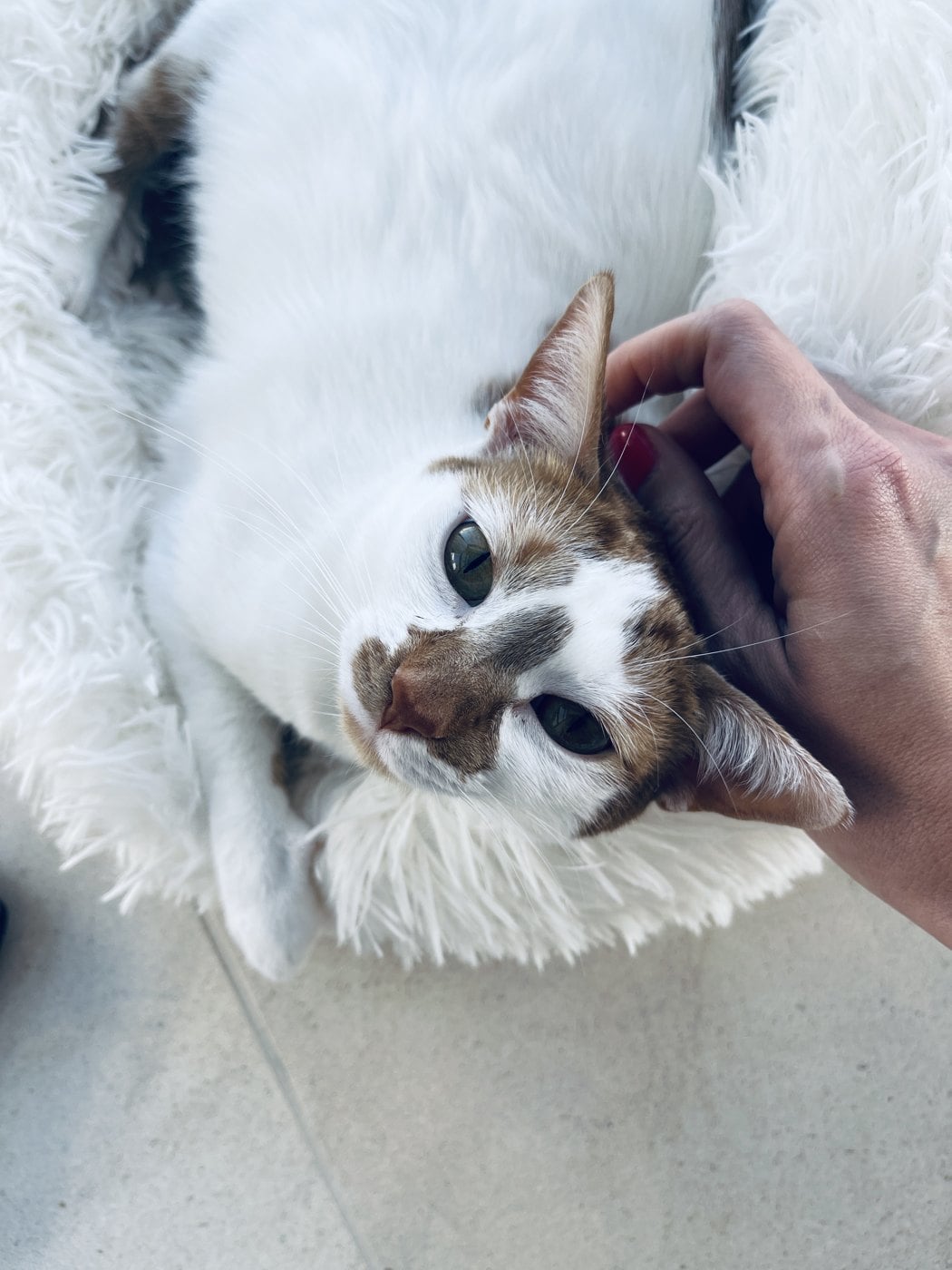
A normal day of togetherness in our house starts the second we wake up. My husband and I snuggle the cats, and then we give them what we call squeamies, which are basically butt taps LOL. If you’ve never given your cat a butt tap, I cannot recommend it enough! (This video helps explain them.) They go absolutely crazy for it. We sing to them when we give them squeamies, and we do them in the morning, afternoon, and night, with different songs for the time of day. So there’s a morning squeamie song, an afternoon squeamie, an evening squeamie, and a late-night squeamie. If we sing the song, both cats come running. It’s the best thing, even if it’s highly embarrassing to admit!
I’m telling you that first because it’s the whole point of this article. Bonding with a cat isn’t really about buying the right toy. It’s a hundred small, slightly ridiculous rituals like the squeamie song, and once you have a few of them, you have a cat who wants to spend every waking minute with you.
The TL;DR list!
- Invent a goofy ritual, ours is “squeamies” (butt taps) with a song they come running to
- Keep a loose daily routine, ours run on a schedule and are calmer for it
- Match the play to your cat, some love to chase and pounce, others would rather watch from a distance
- Rotate the toys (a wand, a laser, a catnip mouse) so they don’t burn out on one
- Do a short play session in the late morning and a bigger one after dinner
- Try hide-and-seek if your cat gets nervous when you leave the room
- Build a quick obstacle course out of tunnels, boxes, and the cat tree
- Hide a few treats around the house and let them hunt them down
- Make a thirty-second puzzle toy from a plastic bottle or a paper-towel roll
- Set up a window perch so they can watch the real birds, not just the screen
- Put on cat TV, bird videos or, honestly, a cartoon
- Add a catio (a screened-in outdoor space) or a secure window box if you’ve got the room
- Teach a simple trick, like a high five, with a clicker and a treat
- Work a brushing session into the routine, a lot of cats lean right into it
- Trade slow blinks, it really does read as “I trust you”
- Find their sweet spot, the chin, the cheeks, the base of the ears, and use it shamelessly
- Keep them company at the food bowl, some cats (hi, Thelma) genuinely want an audience
- Give them a cozy spot that’s just theirs, a heated bed or a sunny perch
- Put out a sturdy scratching post or cat tree so they’ve got somewhere to climb and scratch
- Keep affection on their terms, let a shy cat come to you, and be patient, some take months
Build a rhythm they can count on
Cats love a predictable day, and ours basically run on a schedule. The cats are already fed by the time we’re up (Louis gets his breakfast at 5:20 a.m. via an automatic feeder, and we put Thelma’s food into her microchip feeder groggily at some point around then, before crawling back into bed). My husband and I both work at home (from different rooms) and start work around nine. Somebody usually wanders into the kitchen looking at me (where I usually work), and because I’m a total sucker, they’ll get a liver treat or a little dried chicken treat around that time. Around eleven we do a quick play, maybe ten minutes. Louis eats at noon, and Thelma can go to her microchip feeder whenever she wants where she still has some breakfast (she eats kibble only, I know, I know, it’s not our choice), and then the long afternoon nap begins. It’s currently 2 p.m. as I write this, and Louis is asleep in the cat tree next to me while Thelma is napping somewhere I haven’t found yet.
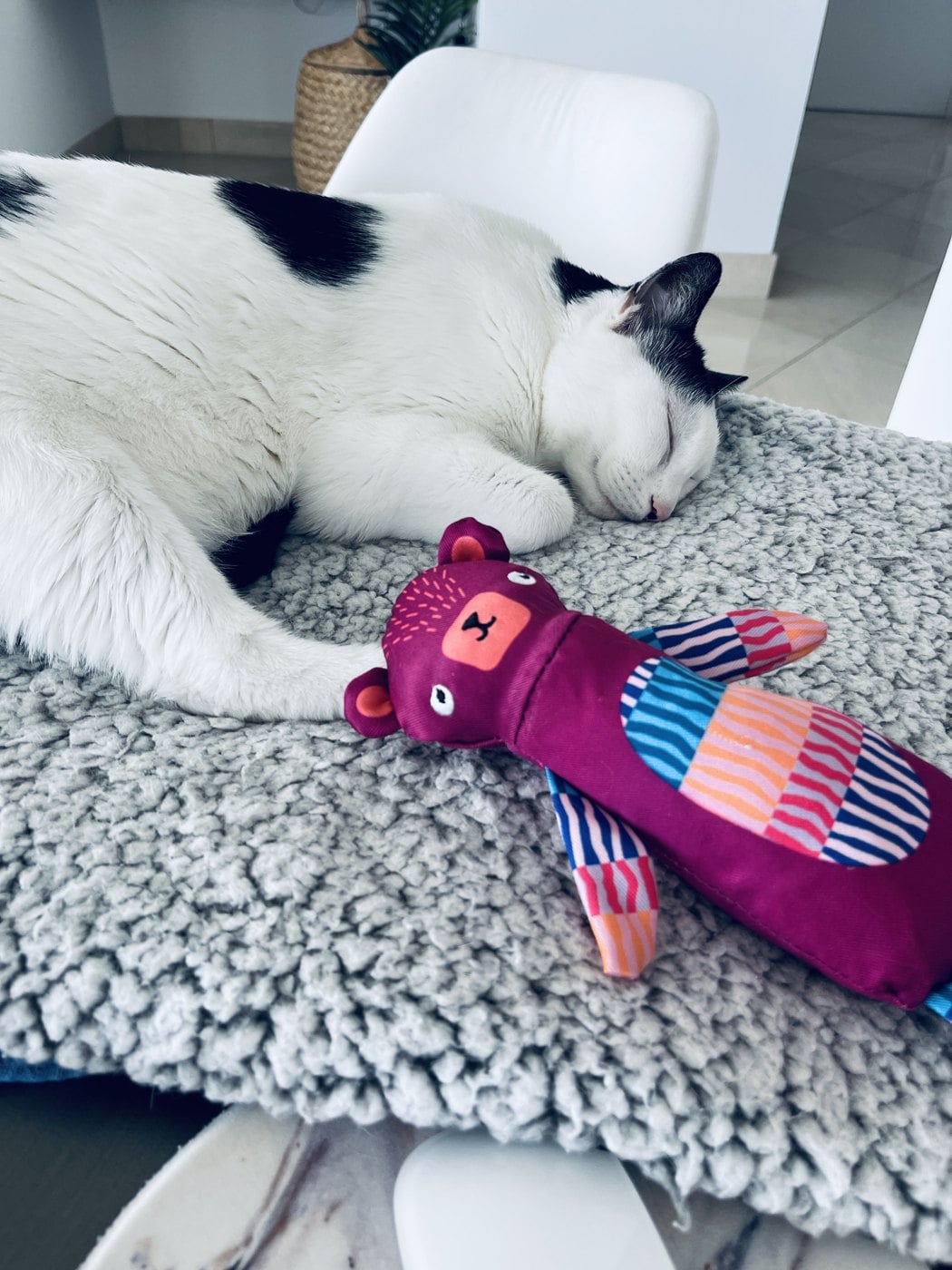
The big one is after dinner. We eat around seven or eight, and then my husband does a real play session with them, close to thirty minutes, and it runs in fits and starts until about nine-thirty before we wind everything down.
Play the way they actually want to play
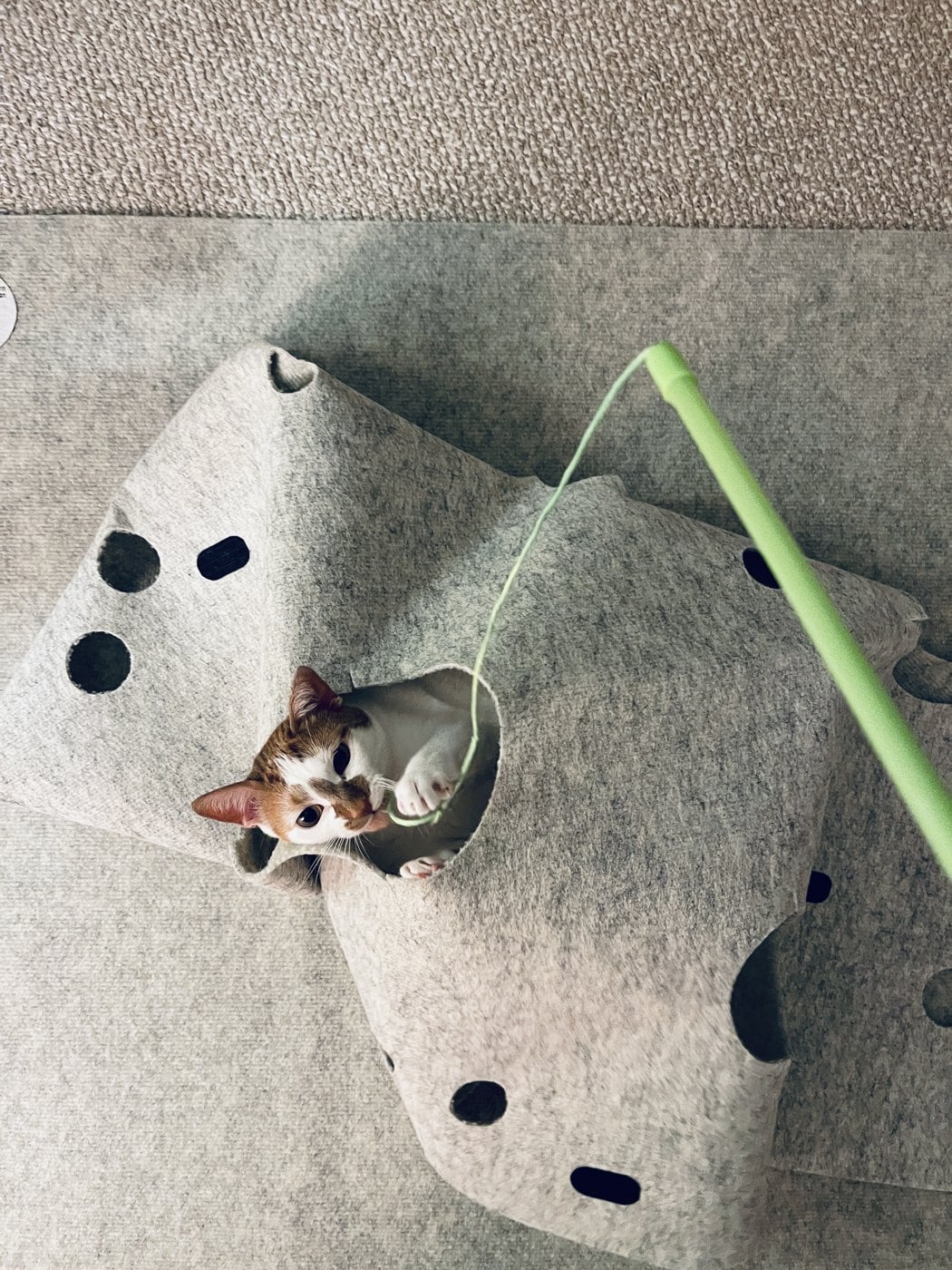
Play is one of the most direct ways to speak a cat’s language, but the key is trying to match the cat’s style. For instance Louis is the runner in the family, and he will chase a wand toy until he’s breathing hard. Thelma, on the other hand, would rather supervise, though with the right toy and mood she’ll take over. She’s also the smaller cat so I think she defers to Louis sometimes which makes me sad!
She LOVES the laser, and that is the one toy that will get her to run around in a few circles until she’s panting. Louis also loves a game of hide-and-seek with my husband, and they’ve played that game since he was little. (Thelma has no idea what’s going on, but she tries. Bless her heart LOL.) Cory starts by tapping his legs, then Louis looks back and him and then runs into another room to find him. It goes back and for like that for a good 10 minutes. I personally never knew some cats loved hide-and-seek, but apparently it’s a thing!
When we want to keep them entertained but we need to get some work done (hey, someone has to make a living around here!) We opt for some Cat TV on YouTube. I put one of the bird channels on, but honestly they don’t really watch them THAT MUCH. If not that we’ll try a cartoon like Bluey or Barbar. I’m probably projecting, but I genuinely think they like it!
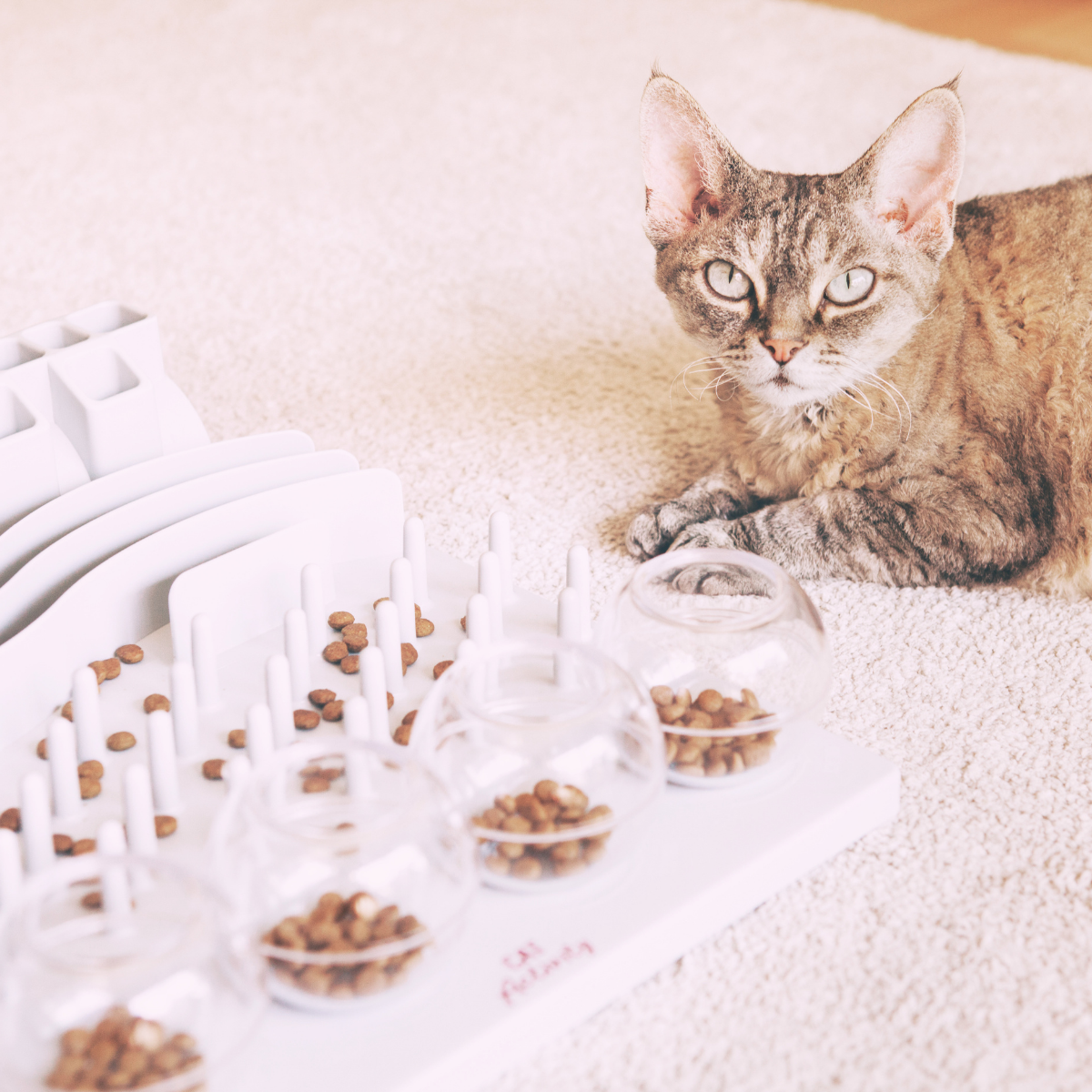
None of that requires fancy gear, though if you want it, we keep running lists of the toys our cats actually use, the puzzle and slow feeders that keep Louis busy, and some easy DIY enrichment. For bonding specifically, though, the cheap stuff wins every time.
Learn their actual love language
Once you start watching for it, a cat is telling you how they feel all day long. Thelma is very good at the slow blink, so we trade them back and forth. Louis does it less, but he’s a relentless headbutter and a world-class snuggler, the kind who climbs up at midnight to knead his blanket between us and bake biscuits until he settles. If I’m at the dining table, he’ll hop up just to headbutt my hand. That’s their version of a hug, and learning to read it changed how close we got.
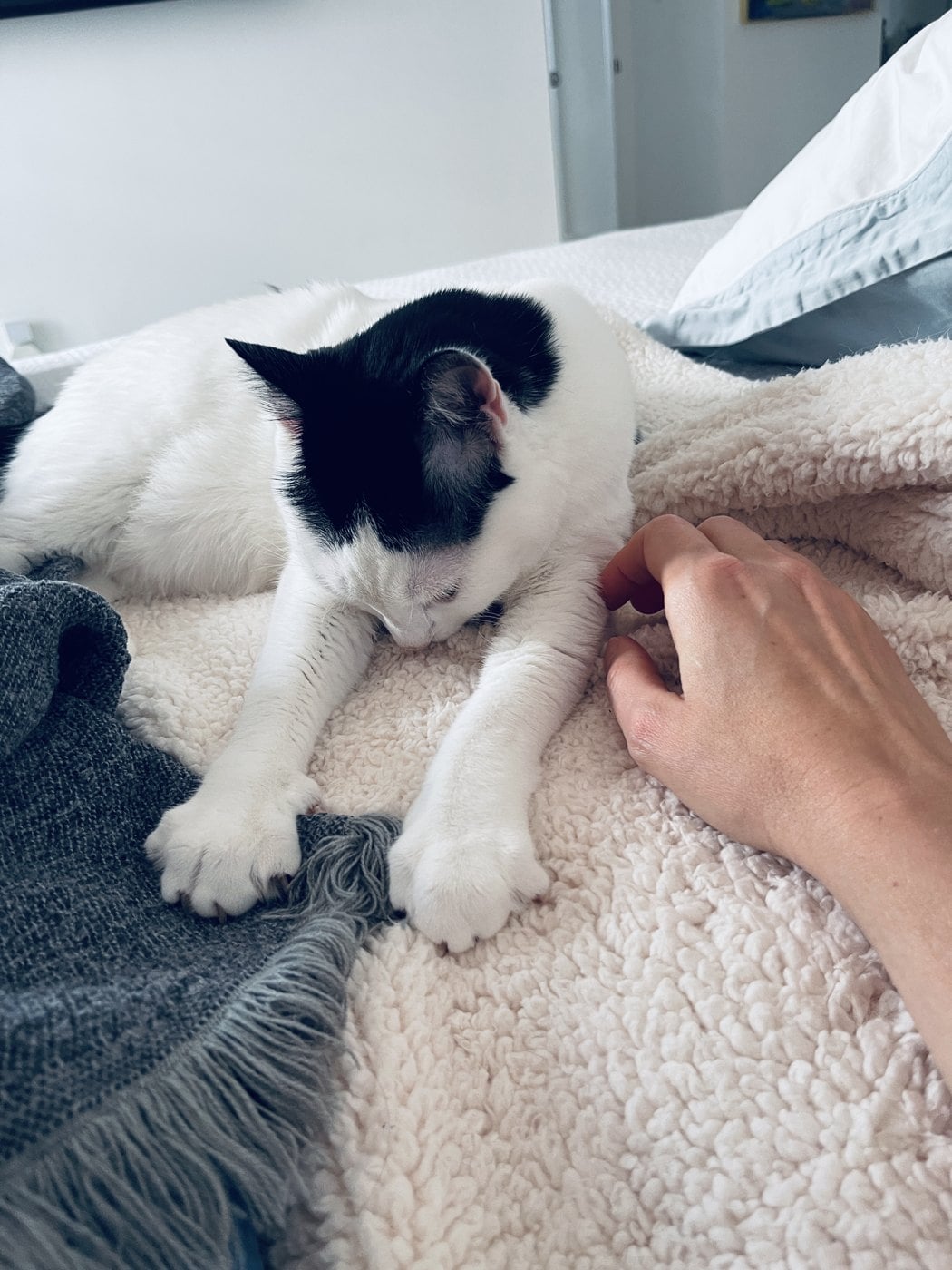
It runs both directions, too. It’s rare that I walk past either of them without a pet, Thelma loves a head rub and chin scritches, Louis flops over for a belly rub, and the squeamies happen a few times a day. (Morning, afternoon, and evening squeamies, if you will!)
What the Slow Blink Actually Means
That slow, drowsy blink isn’t random. A 2020 study from the University of Sussex found that when a person slow-blinks at a cat, the cat is more likely to slow-blink back and more likely to approach them. Researchers describe it as a kind of feline smile, a signal that the cat is comfortable and isn’t on guard. So the next time your cat gives you a long, lazy blink from across the room, you can blink back, you’re basically saying it too.
“While we humans conceptualize the slow blink as ‘I love you,’ I think it means more: ‘I trust you.’ They are basically indicating that they trust you and do not feel the need to keep an eye on you.”
— via Reddit.com
Meet them on their terms
With cats, the affection has to be on their schedule, not yours, and Thelma taught us that one directly. We used to sit with her while she ate, back before she had her own microchip feeder, because we were nervous Louis would muscle in on her food. She decided she liked the company and now she fully expects it. If she wants you to come sit with her, she flops onto her back and shows her belly, because she has learned that gets us up every single time, and then she flips over and walks us straight to her feeder. She trained us, basically. LOL.
The two of them aren’t the same about it, either. Louis is the openly affectionate one. Thelma is affectionate too, but she’s not as outward with it, so you have to meet her on her terms a bit. Other owners know exactly what that’s like:
“I adopted a 3 year old from the Humane Society and it took almost a year for her to be ‘friendly.’ She’s still very ‘pet me, but on MY TERMS,’ but overall now she’s lovey and purrs and sleeps on me.”
— via Reddit.com
“All cats have a different ‘spot’ for petting, you just gotta find it and pay attention. My boy likes his forehead and chin scratched.”
— via Reddit.com
If your cat doesn’t seem that into you
If you feel like your cat doesn’t like you, the first thing I’d do is try to figure out why, because there’s almost always a reason hiding in there. The advice I keep coming back to is to offer a hand, held out and low, and let the cat decide how it wants to be touched. If they’re up for a snuggle, they’ll lean into it, and if they’re not, you’ve lost nothing by waiting.
Mostly it’s patience. We aimed to raise affectionate cats from the time they were tiny, and even then the two of them landed in completely different places, so a cat who needs months to warm up isn’t a failure on your part. It’s just a cat.
“I adopted an older cat, and he took a really long time to come out of his shell. He let me pet him but wouldn’t sit in my lap until he had been with me for more than six months. Now he’s all over me.”
— via Reddit.com
None of this is complicated, and almost none of it costs anything. Sing the dumb song. Learn where they like to be scratched. Blink slow. Sit with them while they eat if that’s their thing. Do enough of the small stuff and one day you realize the cat is following you from room to room, which, from a cat, is just about the highest compliment there is.
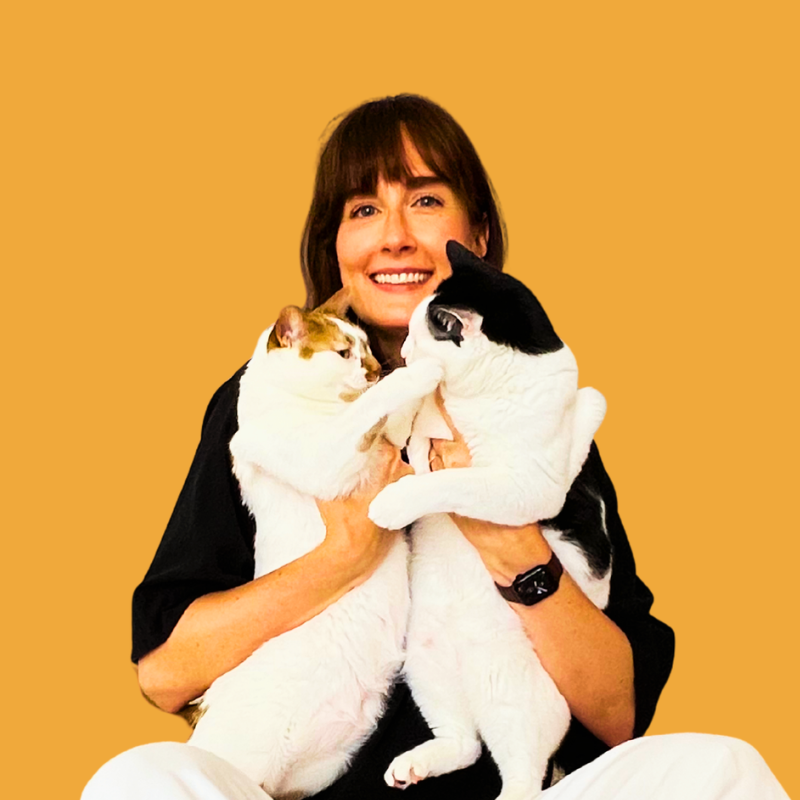
Founder and editor of Cat Seat and cat mom to Thelma and Louis. She’s been writing online since 2000.
Hi! I’m Lindsay. I run this site alongside my hubs Cory and our very opinionated cats, Thelma and Louis. We’re so happy you’re here!

I’m still absolutely totally Blown Away by the butt taps..pats… she absolutely love them I would never in a million years have ever thought any of my kids would have loved it but it’s absolutely true I even seen a couple videos on YouTube about it and the guy I saw is using this cat like a drum it was so funny I mean he wasn’t doing a hard but that was amazing how much to catch stood there and loved it! So thank you🥰 I love you you have been so much help to me I read your post all the time you are definitely a cat whisperer😻
I meant I never would have thought my cats would have loved it I didn’t mean to say my kids
The butt taps are the best!!! You are sweet Patricia, thank you! It is crazy how much they love them!