Is It Safe to Let Your Cat Outside?

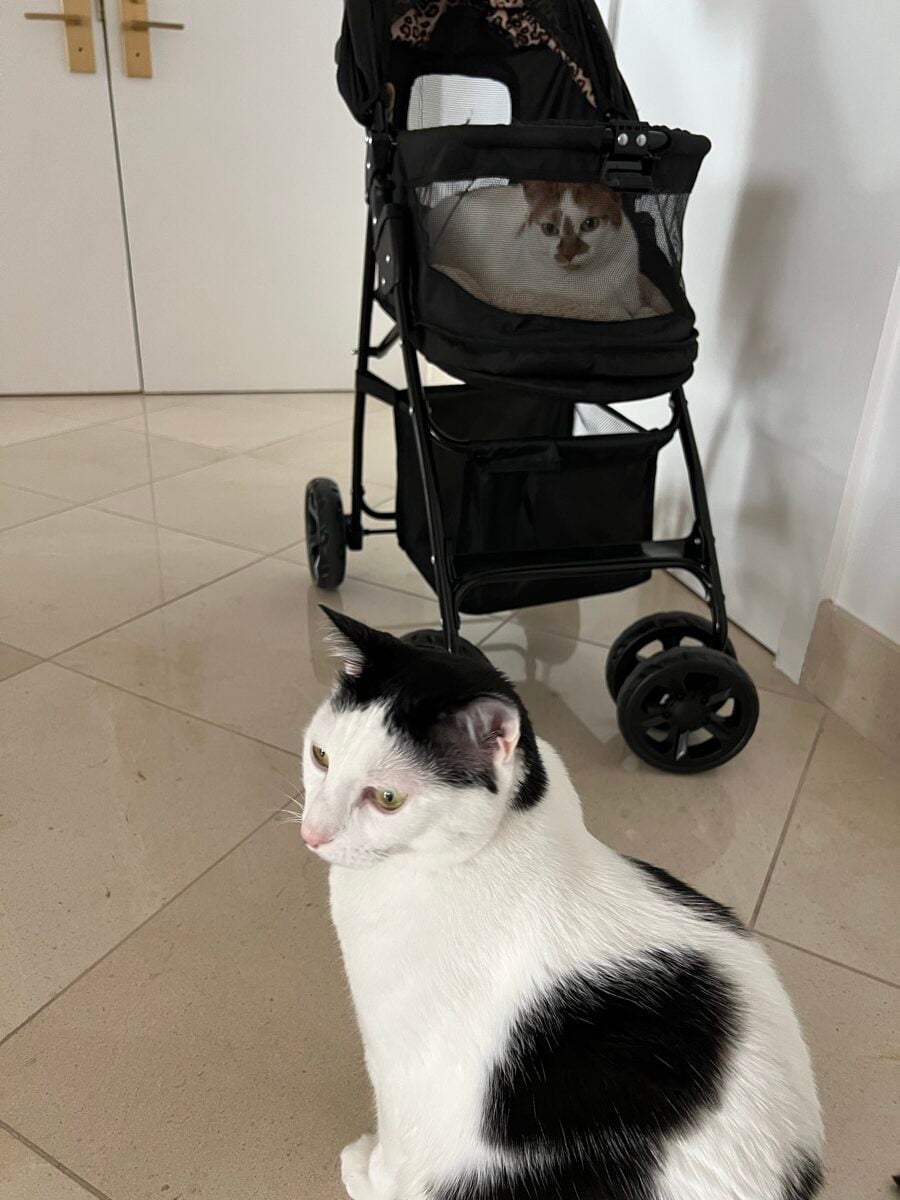
Our cat Thelma is our window watcher, with her tail twitching at birds, dogs downstairs, and bugs on the glass. She also loves when we (sporadically) take her and her brother Louis out in the enclosed stroller around the block. As soon as we get back upstairs she starts meowing like crazy, almost as if she wants to go back out. She’ll jump back in the stroller and sit in it.
I love letting our cats safely experience the outside, and I wish we could give them more. I often feel guilty at the thought that our cats can’t freely enjoy the outdoors like dogs do. Which is why I’m currently attempting to harness train both Thelma and Louis. I’m not sure what exactly we’ll do once they are, but I imagine it might look like taking them to an area with very few dogs and letting them safely explore while on a harness and leash.
I also wish we lived in a house for this very reason. We live in an apartment with great views for the cats which I love (and I think they do, too) but I would be ecstatic if they could have their own catio or safe, enclosed access to our yard with our supervision. A cat mom can dream! You might feel the same way I do…you want your cats to be stimulated and experience all that life has to offer them, but you also want them to be safe.
Personally, I would never let our two cats, who have been inside-only since we got them at 8 weeks old, go outside on their own. I would be terrified of them running away or getting hit by a car or attacked by a dog, and medical professionals agree this is a real issue.
What researchers saw when they followed pet cats
Numerous veterinary studies have looked at the risks cats encounter while roaming outside, and they’re very real. The Georgia study below followed pet cats outdoors, while the Colorado study examined cats treated for injuries from several causes. Neither tells us how many outdoor cats are injured each year compared with indoor cats.
What the cameras caught
A 2013 study using video cameras fitted to 55 owned cats in Athens-Clarke County, Georgia, found that 85% of those cats exhibited behavior that researchers classified as risky at least once in seven days, including crossing a road (45%), interacting with cats from other households (25%), and entering storm drains (20%). These figures describe exposure to hazards, rather than injuries. While these cats had homes and owners, almost half were still filmed crossing roads during that week.
Getting hurt can mean surgery
A 2023 Colorado State University study of 251 cats who presented with traumatic injuries found 89 received surgical procedures in an emergency room or operating room, including to repair broken limbs and jaws. Cats were treated over a period of three years, and their injuries had several causes, so we can’t attribute all these cases to cars or roaming.
But it does give you an idea of how much treatment a cat can need after an injury, including one you may not have seen happen. If you suspect your cat has been hit by a car, take them to a veterinarian immediately, even if they’re still walking.
Infections can come home with them
A fight can leave a cat with an injury that’s surprisingly hard to see under their fur. VCA’s veterinarians explain that a bite can make a small, deep puncture that closes over quickly, trapping bacteria beneath the skin. You might not notice anything until days later, when the area becomes swollen or painful. An abscess can require drainage and medication, sometimes with sedation or anesthesia so the vet can clean it properly. If you know your cat has been in a fight, call your vet promptly, even if you can’t find a wound. Waiting for something obvious to appear can mean a more complicated recovery.
Outdoor access and parasites
Outdoor cats are more likely to be infected with parasites. A 2019 analysis of 21 studies from 16 countries found cats with outdoor access had around 2.8 times the odds of parasitic infection compared to indoor-only cats.
In addition to increased risk of injury and parasitic infection, cats are also more likely to contract infectious diseases when allowed to roam. Consider these two diseases:
- Feline immunodeficiency virus (FIV) spreads primarily through bites. Cats who fight outdoors are at greater risk, although infected cats can live for years.
- Feline leukemia virus (FeLV) spreads through bites and other forms of close contact including mutual grooming.
Talk to your vet about testing and FeLV vaccination, which reduces the risk of infection but doesn’t offer complete protection. There’s currently no FIV vaccine available in North America. Regular veterinary exams can help you and your veterinarian monitor your cat, but preventing contact with infected cats reduces their exposure.
And no matter whether your cat is indoor or also goes outside, ask which flea and parasite prevention your cat needs, including one with heartworm protection.
You can’t check every yard they visit
Other risks your cat faces outside include collisions with cars, contact with dogs, coyotes and other animals, and getting trapped in holes or other structures. Which animals they’re likely to encounter depends on where you live, but it’s hard to know whether a cat has slipped into a shed or garage before someone closes the door.
If you are unaware of where your cat roams, you also don’t have control over the plants and flowers they’re exposed to, and many are toxic, especially lilies.
Suspected lily exposure? Call a vet immediately
Toxic plants are another concern, including daylilies and true lilies, which are so toxic for cats that even pollen that gets on their fur and is swallowed while grooming can cause kidney failure and death. If you suspect your cat has swallowed lily pollen or any part of a true lily or daylily, contact a veterinarian or animal poison service immediately, even if they seem fine. Check bouquets and plants brought indoors, too, including gifts from someone who may not know what to avoid around cats.
ASPCA Poison Control: (888) 426-4435 (available 24/7).
Hot and cold weather bring their own problems
On a hot day, a cat needs access to fresh water and somewhere shaded, and you can’t be sure they have either when they’re away from home. Cornell’s heat-safety guidance recommends keeping cats inside, ideally with air conditioning, during extreme heat. Excessive panting, drooling, or weakness can be signs of heatstroke, which can become life-threatening quickly. Move a cat with suspected heatstroke somewhere cool and contact a veterinarian immediately.
Winter has hazards beyond the cold itself. Cats seeking warmth can climb into a car’s wheel wells or engine compartment and be injured when the driver starts it. Cornell recommends checking wheel wells and banging on the hood or honking before starting to prompt a sheltering cat to leave. That’s worth remembering even if your own cats stay indoors, particularly when you know there are cats roaming nearby.
How to give your cat outdoor time more safely
It’s possible to allow your cat to safely enjoy the outdoors and reduce their risk of getting into trouble. Keeping them from roaming doesn’t have to mean they never go outside.
Spending time with your cat outside may mean taking them out on a leash and harness, setting up a catio, or sitting together inside a secure enclosure. Spending quality time with your cat in the garden, for example, gives them some of the mental stimulation they get outdoors while a secure enclosure helps prevent wandering and fighting.
And if you’re lucky enough to have the outdoor space to do it, a catio (cat plus patio) is an enclosure you can build that allows your cat to enjoy the outdoors without being able to wander off or run into a road.

Before choosing where to put one, spend some time looking at how the sun moves across that part of your yard or porch. The spot that’s shaded over breakfast might be in full sun by lunch. Your cat will need shade and water while they’re out there (and possibly a litter box), and a way for you to bring them inside when the weather changes. I’d also check the enclosure’s door, latches, and any gaps before each outing, especially after yard work or repairs nearby. It’s easy to concentrate on the fun part, like where to put the perch, and overlook any potential way for your cats to get out or predators to get in.
And the pros agree. For outdoor access, Cornell recommends supervision or a secure enclosure to prevent wandering and fighting. If you’re planning a catio, think about where your cat could sit comfortably and whether you’d like room to sit out there with them. You can both spend time outside without having to go looking for them when it’s time to come in.
However you arrange their outdoor time, ask your vet to check their microchip and confirm that the registry has your current contact details. The Feline Veterinary Medical Association recommends microchipping all cats, including those who live indoors. If you adopted your cat already chipped, make sure it’s updated with all your information.
Should you bring a cat indoors if they already go outside?
For a pet cat who’s comfortable living with people, yes: moving away from unsupervised roaming is generally the safer choice, even if they’ve been going outside for years. Cornell recommends keeping pet cats indoors or providing an outdoor enclosure instead of letting them go unsupervised. Just because they’re used to the neighborhood doesn’t mean there are no traffic, fighting, or infection risks. You can still give them outdoor time with the precautions above, while helping them get used to spending more of their day inside.
If your cat has been allowed to roam freely up till now, speak with your veterinarian about strategies for making the transition to living indoors. Generally it’s a matter of making sure they have everything they need indoors including food, water, a litter tray, and scratching posts, and providing areas to hide and quiet areas to relax. Give them time to get used to their indoor space.
And for those of us with indoor-only cats with no real time spent outside, there’s also a lot we can try to do to make our homes a place they feel enriched and safe in. Give them places to climb and scratch, a perch where they can watch through a window, and somewhere they can hide and relax. Toys designed for stalking, chasing, batting, swatting and pouncing give you something to do together. Ohio State’s indoor-cat guide has practical suggestions for setting up your home for a cat, including starting with the areas they like to spend time in already.
Make time to actually use those toys together, too. Set aside part of each day for play (aim for 30 minutes a day, which can be spread out in chunks, for example, 10 minutes in the morning, 20 in the evening), and pay attention to what your cat goes after: a toy moving along the floor, for example, or one they can chase through the air. You can rotate the toys you offer every few days instead of leaving everything out at once. There’s no need to buy a roomful of things before you know what they enjoy. A comfortable window perch, a cardboard box to hide in, and time with you are usually a great formula.
What about a stray or feral cat who “adopts” you?
A cat who starts turning up at your door might be lost, someone else’s outdoor pet, a stray who once lived with people, or a feral cat who’s getting used to you. Living outside doesn’t automatically make a cat feral. The term describes a cat who hasn’t become comfortable with close human contact, and that comfort can vary from one person or situation to another. Accepting dinner on your porch doesn’t necessarily mean they’re ready to share your living room.
Before deciding the cat is yours, ask neighbors, check local lost-pet notices, and arrange a microchip scan with a vet or rescue if the cat can be handled safely. They may already have an owner or someone who feeds and looks after them. A local rescue can help you work out what to do next, particularly if the cat is frightened and you’re unsure how to approach them.
If there’s no owner and the cat welcomes contact with people, an indoor home may be a good fit. Arrange a veterinary exam before introducing them to your cats, dogs, or children, and discuss testing, vaccinations, parasite treatment, and spaying or neutering.
Once you have them inside, Ohio State recommends starting with a quiet room where they have food, water, a litter box, places to hide, and somewhere to rest. Let them get comfortable there before expecting them to settle into the whole household.
For a feral cat who remains fearful of close contact, bringing them inside and waiting for them to become affectionate can cause distress. FelineVMA cautions that cats who haven’t been socialized to people may struggle with indoor living. Some cats gradually become comfortable enough with a caregiver to adjust, but that isn’t something you can promise or force. Ask a veterinarian or experienced community-cat rescue to assess the individual cat, including any illness, injury, or danger where they’re living.
For cats who aren’t suited to adoption, a local trap-neuter-return-monitor program can help arrange humane trapping, spaying or neutering, rabies vaccination, and return to an appropriate managed location. Ongoing care includes food, water, shelter, and watching for illness or injury. You can be the person who looks after that cat without making indoor living a condition of helping them.
But for the rest of our beloved (mostly indoor) cats, it’s important to remember that the safest place for them is inside, entertained, safe, and cozy curled up next to you!

Hi! I’m Lindsay. I run this site alongside my hubs Cory and our very opinionated cats, Thelma and Louis. We’re so happy you’re here!