Think You Know Your Cat? 10 Habits You Might Be Misreading
After years of living with multiple cats, they still have the ability to make me wonder what on earth they’re doing. Some of their behaviors look ridiculous, puzzling, and downright inconvenient to us, but many are rooted in normal feline instincts, communication, environmental needs, or learned behavior.
Understanding why cats do some of these things can help you interpret your furry friend’s behavior more accurately. Sometimes, it will even let you respond to it better. Let’s break down ten common habits cats often share.
1. Staring at you: What makes you so interesting?
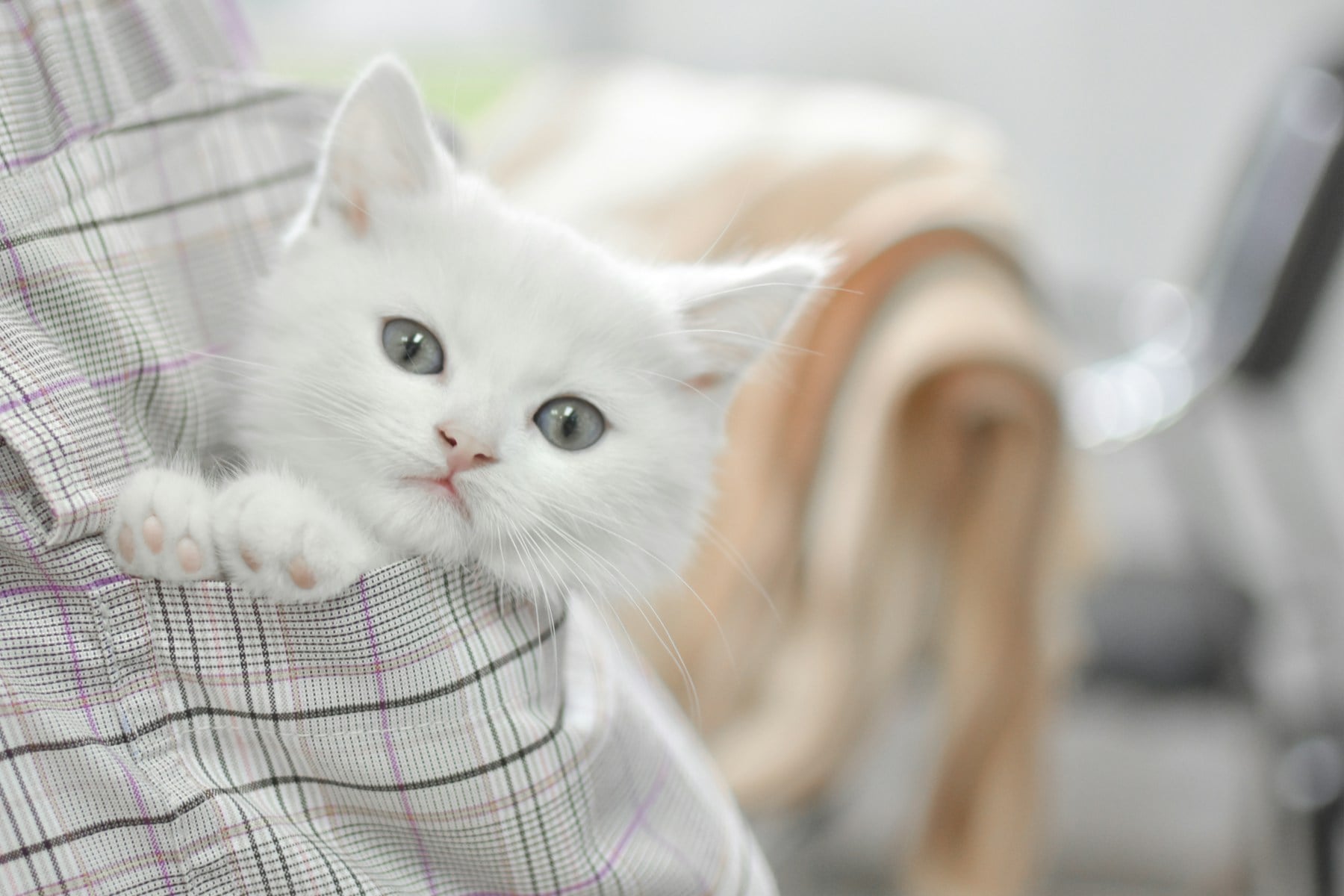
There’s something almost eerie about looking up from what you’re doing to find a pair of eyes staring intensely at you. It happens to me at least a dozen times a day. That’s just one of the perks of a multi-cat household, I guess. It certainly brings up the question: What makes me so interesting?
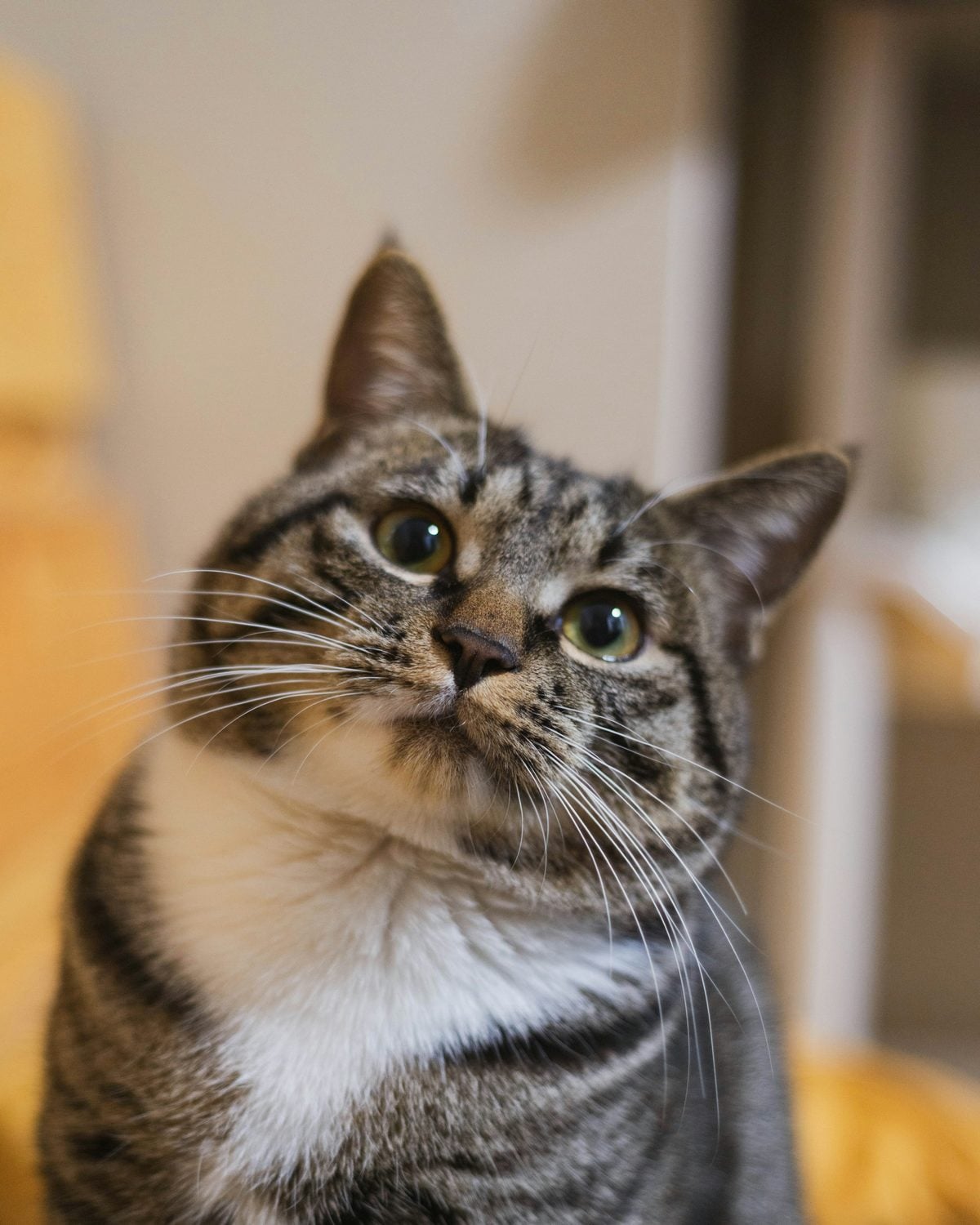
Staring doesn’t have a single meaning. A cat can stare at one spot because she’s watching something interesting, anticipating an interaction, highly alert, hunting or play-focused, or uncomfortable with something that’s happening. Looking at the eyes alone will not reveal the whole story. Feline eyes should be interpreted along with the overall posture, ears, and tail.
Sometimes, a relaxed cat will look at a human with soft eyes and normal pupils while offering a slow blink. Cats are more likely to respond with a slow blink if a human interacts with one first.
A direct stare can be something more threatening in feline communication, depending on the situation. If the stare is prolonged and combined with other tense body language, it’s best to avoid direct eye contact.
Read the whole cat
Next time your cat stares at you, look at the ears, tail, and posture, too. Those clues work together. Wide pupils don’t automatically mean fear; they also change with the light. There’s no need for a staring contest. Just notice what the rest of your cat is doing.
2. Head-butting: Is it just a greeting?
There’s nothing quite like having your 14-pound cat ram his face into yours first thing in the morning by way of greeting. Whether you call it head-butting or bunting, your cat uses it as part of his own feline language.
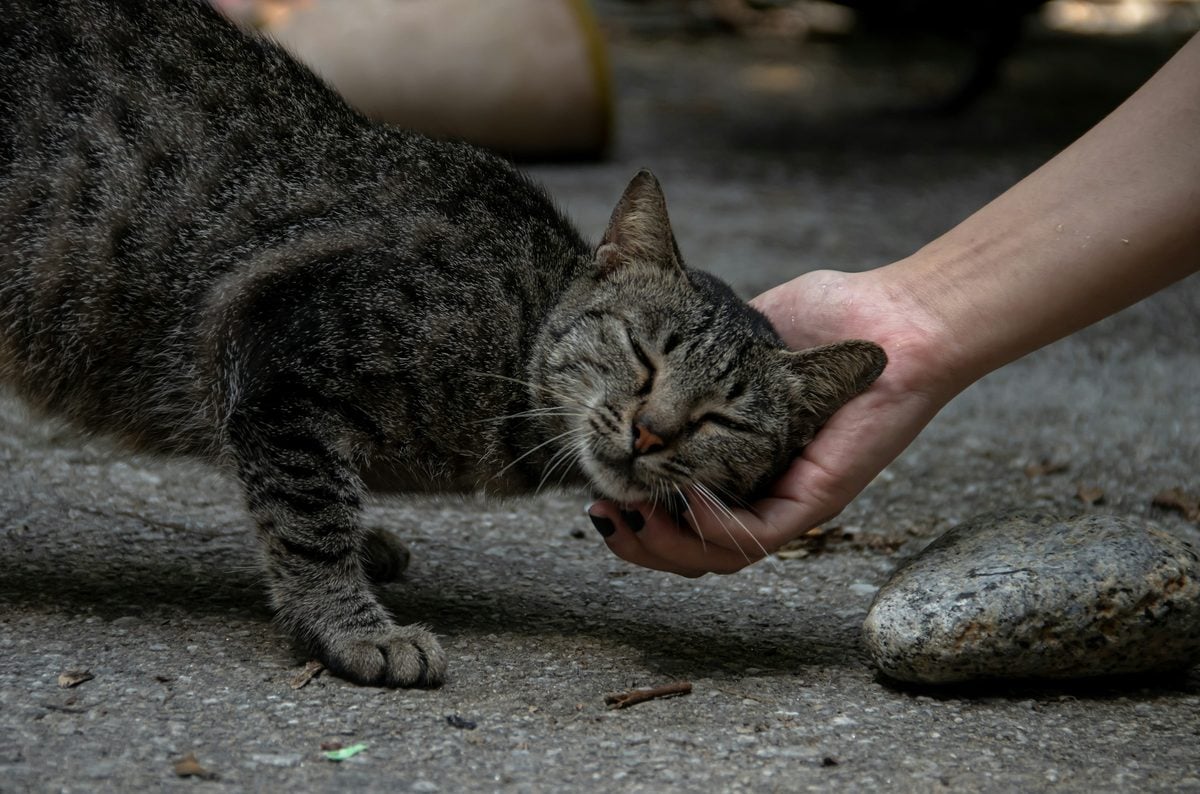
Cats have scent glands located throughout several areas of their faces, including the cheeks, chin, forehead, lips, and temple. Each time a cat rubs one of those areas on an object, he’s depositing some of his scent.
That deposited scent contains pheromones, which cats use for chemical communication. As they rub their faces on objects and people, they actively help create a familiar scent profile in their environment. This behavior can extend to other cats, provided they have developed a friendly social relationship.
Wondering if your cat is just happy to see you? Look at more than just the head-butting. Your cat may be happy and relaxed if her posture is relaxed, her tail is upright, and she sometimes purrs or slow-blinks.
Owner beware: all that face rubbing isn’t just for you. You’ll often find your cat rubbing on furniture and other objects in her environment. Depositing familiar scent signals helps your cat communicate and maintain familiarity with her surroundings.
3. Licking you: Does every lick mean “I love you”?
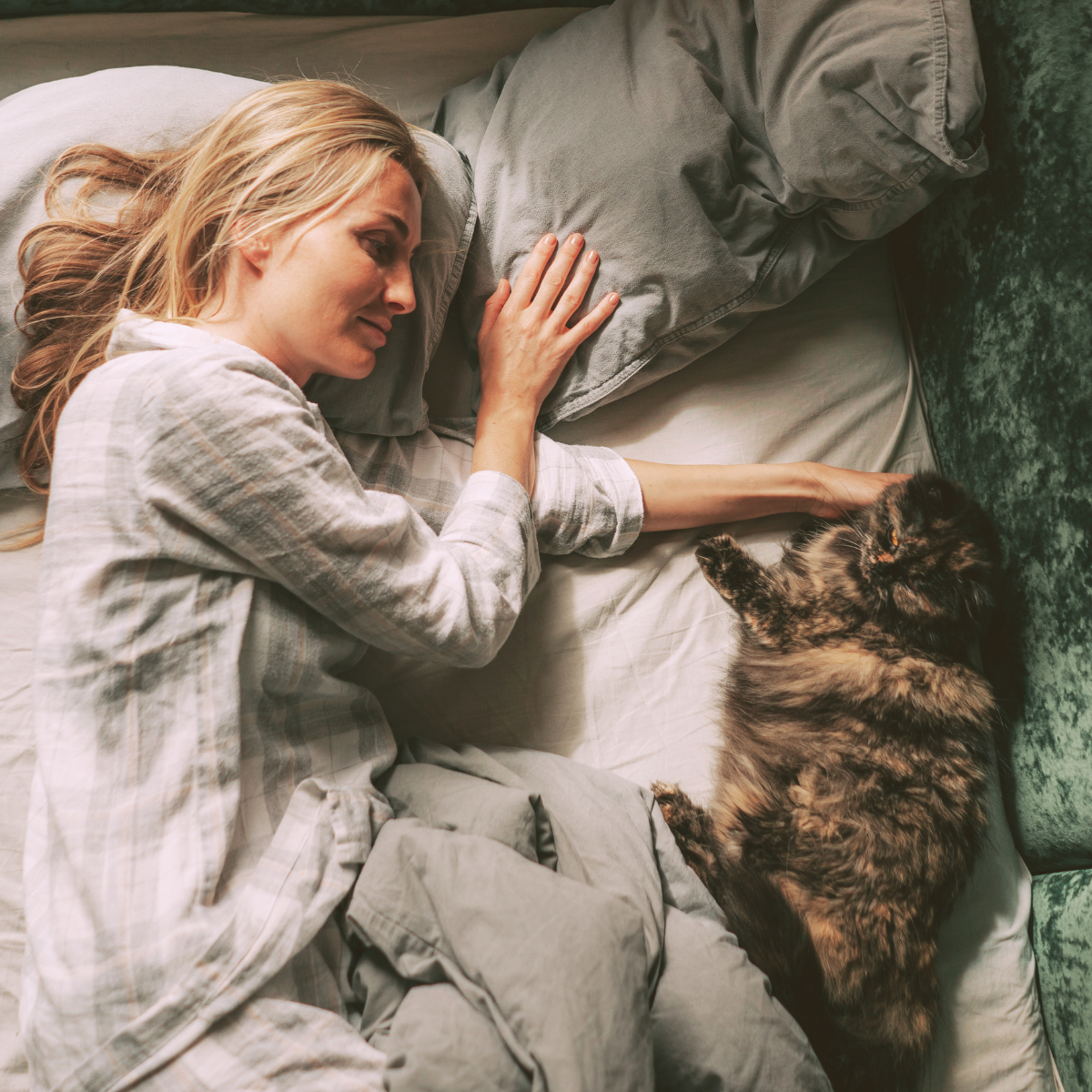
After a few swipes of a cat’s tongue, there’s no doubt that your skin can get pretty sensitive. Besides the moderate discomfort, it can feel somewhat undignified, as your pet seems to be telling you your shower wasn’t good enough.
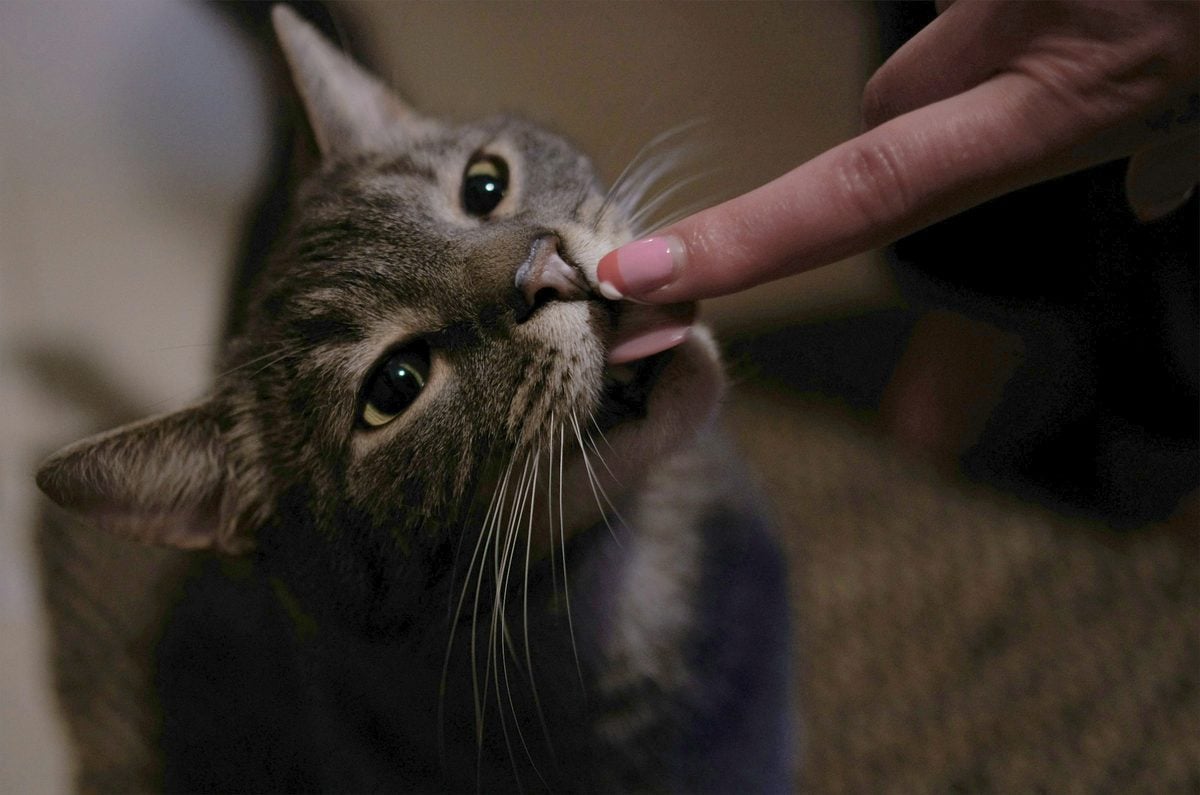
Cats don’t groom strictly to clean themselves. They also rely on it for social and tactile communication. As mother cats groom their kittens, some adult cats may carry this behavior into their relationships with humans. Because of this, bonding and affection may reasonably explain their actions.
However, every lick doesn’t naturally translate into “I love you.” Cats can be clever animals, learning that licking is a way to get your attention. Alternatively, something on your skin may just be tasty at that moment. Sometimes, a cat will lick you when experiencing stress or anxiety.
As with head-butting, it’s important to observe the whole cat to see whether licking becomes problematic. If your cat suddenly starts licking you obsessively while showing other behavioral changes, there may be something else going on. Excessive self-grooming can also lead to hair loss or skin damage.
Remember, if your cat’s licking becomes annoying, you don’t have to punish her. Focusing on the activity can reinforce the behavior. Instead, try redirecting your cat’s attention elsewhere.
Notice what happens next
What do you do when your cat licks you? If you respond with petting or a little conversation, your cat may learn that licking gets attention. That isn’t the reason for every lick. If you’d rather they stopped, calmly offer another activity instead of punishing them.
4. Kneading: Do biscuits always mean a happy cat?
Every cat parent has been there. One minute, you’re sitting comfortably on the couch, and the next, you’re being repeatedly stabbed in the legs by a cherubic ball of fluff as your cat begins making the biscuits.
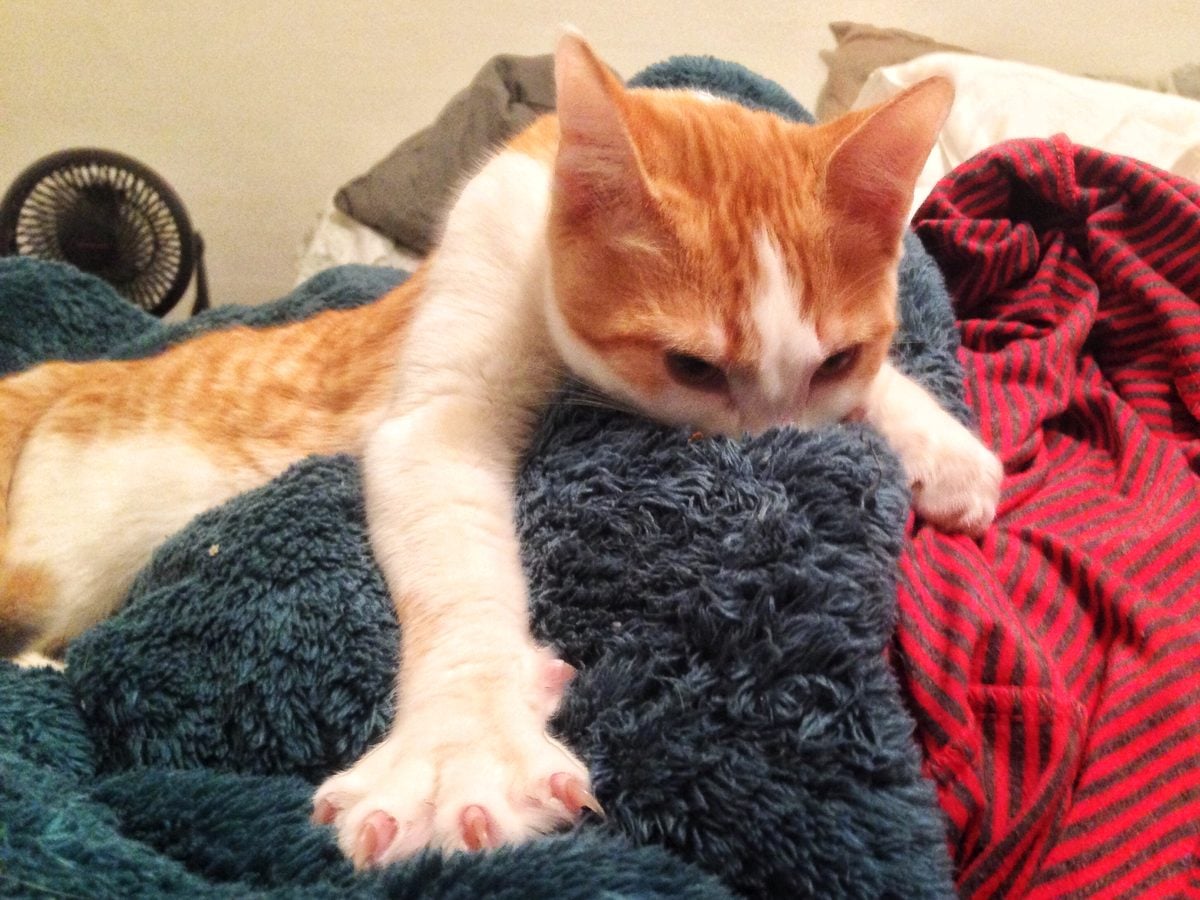
It can be easy to chalk kneading up to your cat being happy, but there’s a little bit more to it than that. Kittens begin kneading during their nursing days, and their paw movements help stimulate milk flow. For many cats, this behavior can continue into their adult years.
Biscuit making can often indicate comfort and relaxation. For instance, cats may knead their surroundings when settling in for a cozy cuddle session or nap. Cats also have scent glands around their paws, which help them mark objects as part of their environment as they knead.
But a kneading cat is not always a happy cat. It’s important to look at the rest of your pet, not just her paws. If you notice hiding while kneading, changes in appetite, or other behavioral changes, it’s best not to assume the biscuits mean your baby is happy.
The next time your cat decides to get comfortable in your lap, don’t forget to shield yourself from the ferocity of the bean blades with your favorite blanket.
5. Bringing gifts: Are they really presents for you?
My girl, Stella, was a fierce hunter who seemed to take pride in bringing me all sorts of gifts. If it was smaller than her, it was fair game. I liked to think she was bringing me gifts for being her mom, but really, how can we know what our cats are thinking when they do this?
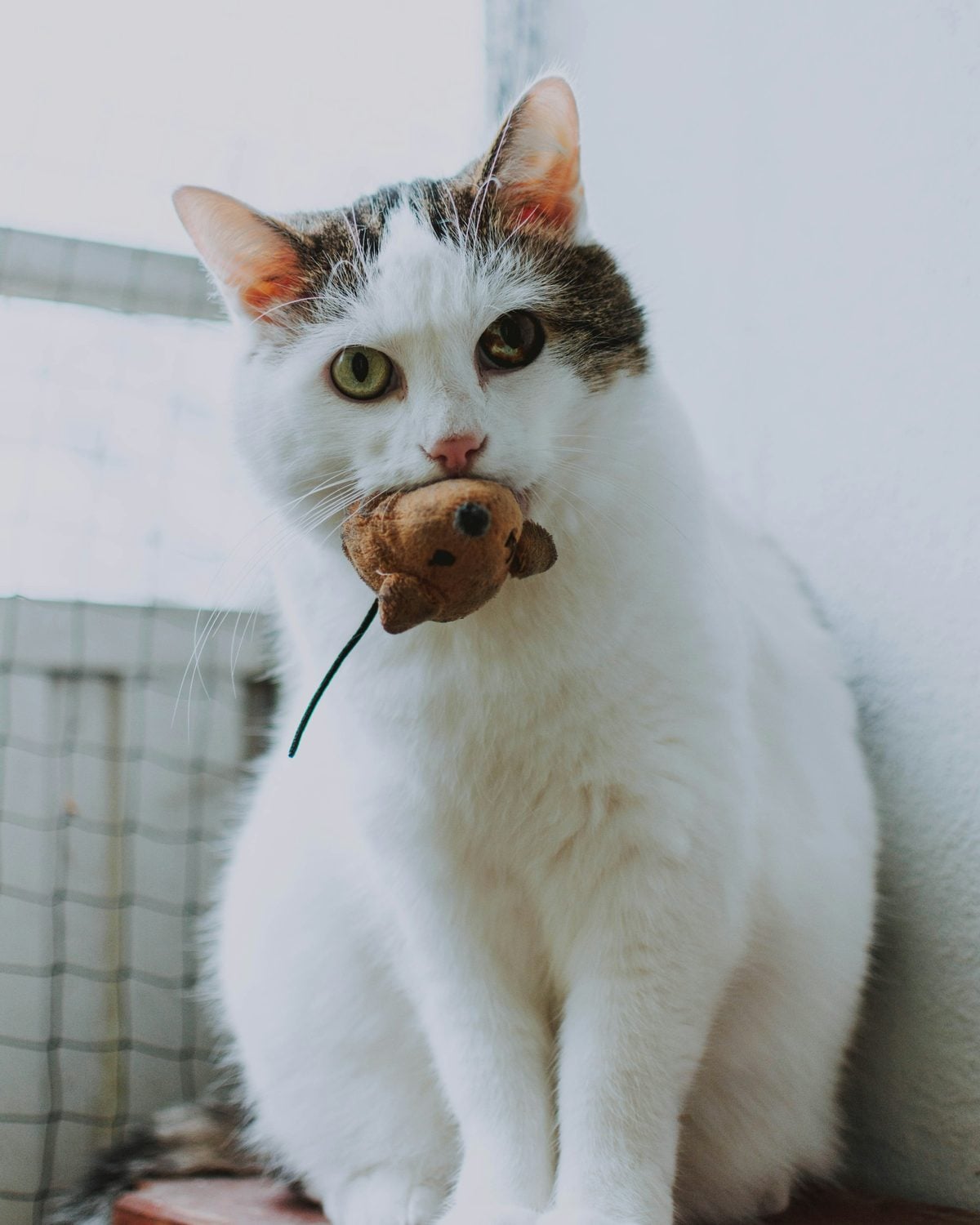
As natural hunters, cats often carry their hunting behaviors into play, especially with toys they can chase, capture, and carry. Kittens often grab small prey-like objects in their mouths during playtime. So, when your cat picks up a toy to carry it through the house, the action is pretty normal considering feline play and hunting behavior. Indoor cats still hold onto the motivation to hunt even when well-fed.
If your cat has outdoor access, you may notice “gifts” that were once living. It’s highly impractical to attempt to teach her that murder is socially unacceptable. Reducing unsupervised outdoor access will protect your cat and local wildlife. You can also offer your pet prey-like toys and interactive play as appropriate outlets for hunting behavior.
6. Stalking and pouncing: Is your cat hungry?
I can’t tell you the number of times I’ve moved my feet under the covers only to be attacked by a little gremlin in the dark. But my feet aren’t the only off-the-wall things my cats decide are hunt-worthy. I’ve seen them chase everything from a speck of dust to a ray of sunshine on the wall.
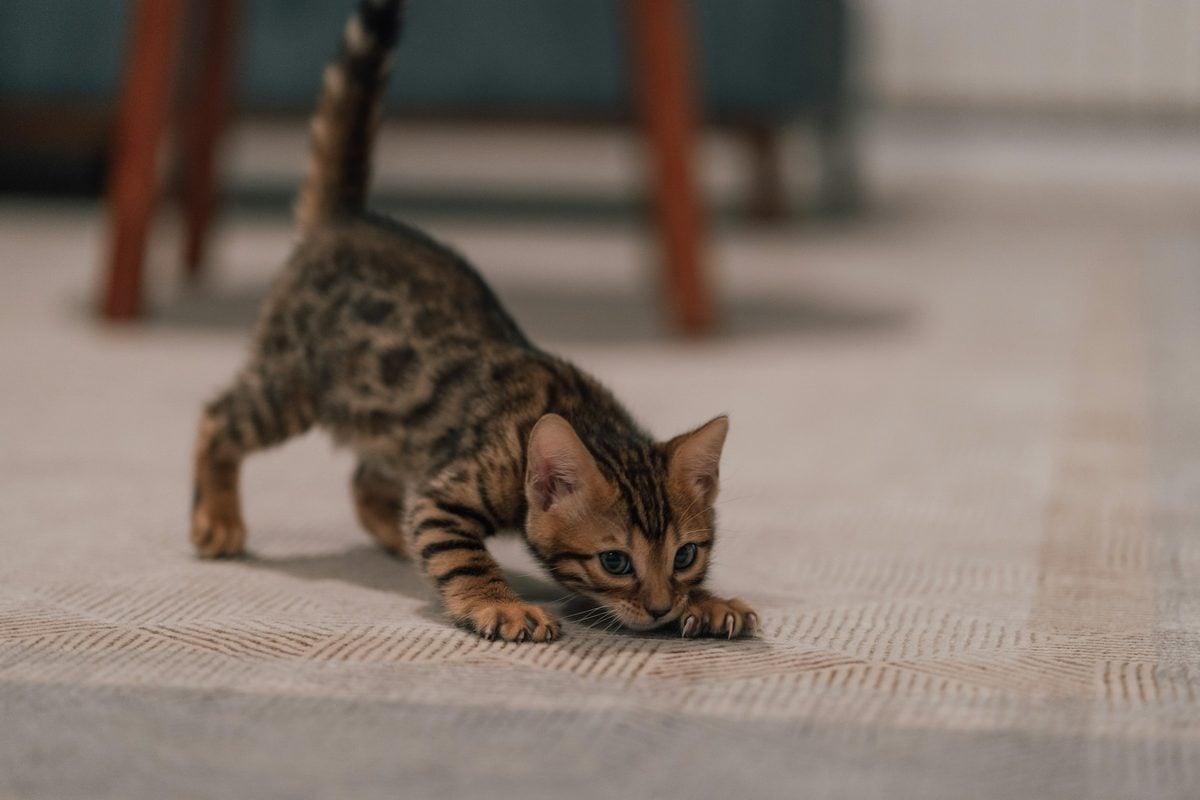
What’s perhaps most interesting about this behavior is that it isn’t driven solely by hunger. Even the most well-fed cats can jump to attention and begin stalking when they see or hear something they suspect is prey. At the end of the day, no matter how much gourmet pâté Fluffy eats, her instinctive response to hunt isn’t so easily satisfied.
Your cat’s natural urges to stalk, chase, pounce on, and capture things that resemble prey will show up in how they play. Kittens begin practicing these behaviors early as part of predatory play.
Moving toys give your cat an outlet to perform those predatory behaviors appropriately, but your hands and feet should never be substituted. Wand-like toys with strings should never be left unattended to prevent your cat from ingesting the string or becoming tangled.
7. Zoomies: Where does all that energy come from?
You know that moment when your cat’s pupils go wide just before she launches herself down the hallway. It’s quickly followed by a 180-degree turn at speed, as she ricochets back through the house. Science calls them frenetic random activity periods, or FRAPs. Cat people? We call them the zoomies.
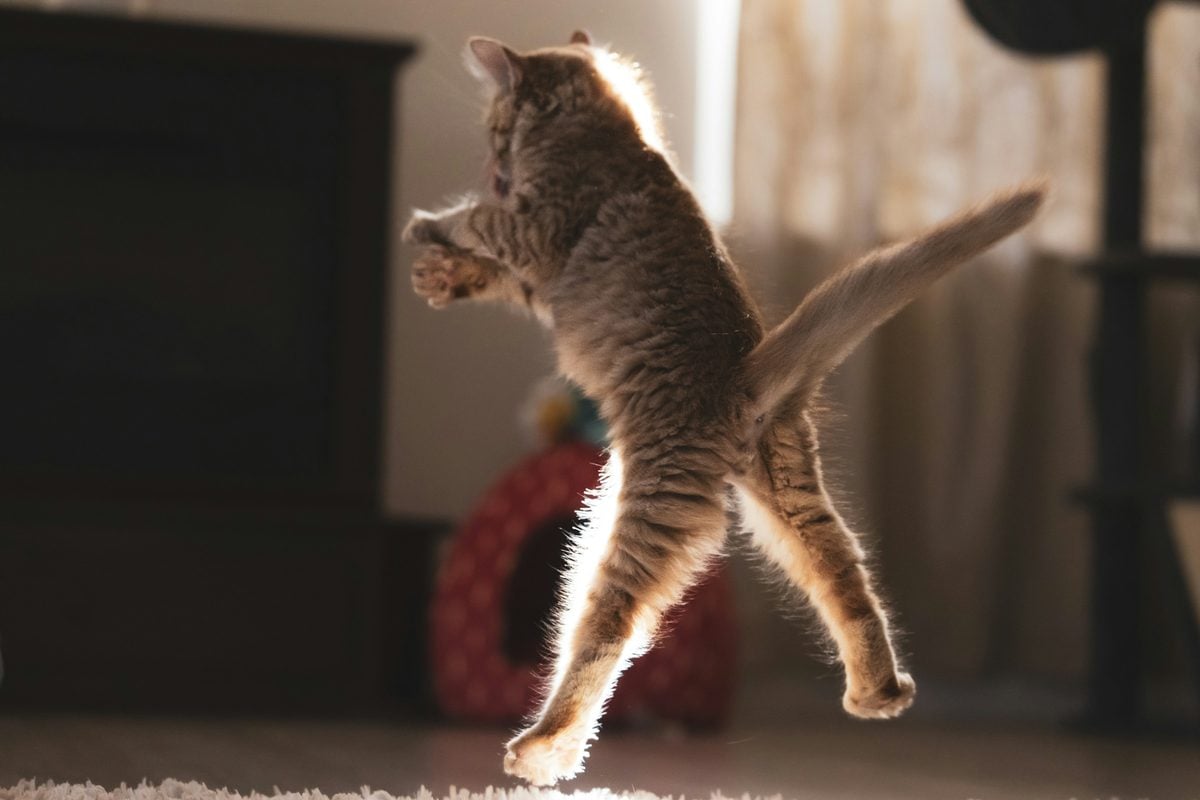
There’s no clear, definitive cause for the zoomies, but several suggestions have been offered. These wild antics may stem from pent-up energy, playfulness, insufficient stimulation, or predatory-play instincts.
Kittens may be more prone to bouts of zoomies, but cats can do them throughout their lives. You may have noticed that your furry friend naturally tends toward short bursts of energetic activity followed by longer periods of rest.
While putting a stop to the zoomies is pretty much off the table, you can help your pet by offering alternative outlets for all that energy. Consider options for interactive play, puzzle feeders, climbing opportunities, and scratching posts. If Fifi experiences a sudden uptick in activity along with other behavioral changes, it may be worth calling the vet for a checkup.
Keep a quick note
Jot down when the zoomies happen and what came just before them. Is this your cat’s usual routine, or something new? Regular play gives that energy somewhere to go, though it won’t necessarily stop the running. If the behavior changes suddenly or your cat seems distressed, call your vet.
8. Scratching furniture: Is your cat acting out?
Yes, they all know where the scratching posts and cat trees are. That doesn’t seem to matter when they want to sharpen their bean blades on the couch or door frame. While it may seem like scratching is your cat’s way of acting out, it’s instinctual behavior.
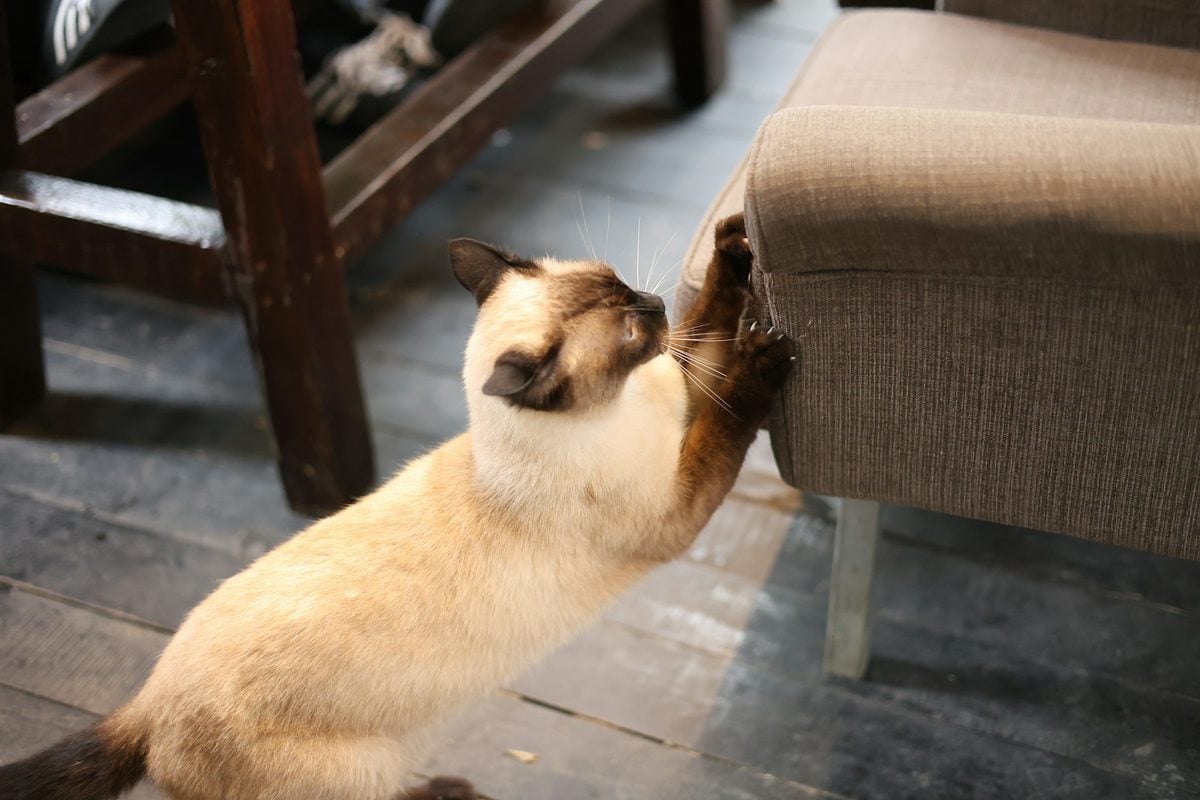
Scratching does several jobs at once. Cats scratch to condition their claws, get an effective whole-body stretch, leave visible claw marks, and deposit scent from the glands in their paw pads. In other words, he’s not just sharpening his claws; he’s leaving a calling card with them.
Because scratching creates both visual and scent markers, the location it’s done matters. Cats tend to scratch in areas where they spend time, which is why that scratching post is gathering dust in that unused corner.
On top of where they like to scratch, cats have preferences as to how they like to scratch. Some prefer vertical scratching, while others like horizontal options. The texture matters, too, as different materials appeal to different cats. Any approved scratching surface should be sturdy enough not to tip or wobble while your cat uses it.
If your cat chooses your couch instead of the scratching post, don’t discipline him. Instead, meet his need, redirect his behavior, and use positive reinforcement with the appropriate scratching surface.
Follow the scratch marks
Put a sturdy scratching post or pad beside the furniture your cat already scratches. Match the direction they like to scratch (upright or flat) and try different textures. Already have a scratcher they ignore? Try changing its location before buying another. Where it sits can make a difference.
9. Squeezing into boxes: Why choose the packaging over the bed?
Cats seem to have a natural attraction for small spaces. The second an empty cardboard box hits the floor, it becomes fair game for whoever steps the first paw in. It’s not just boxes, either. Cats turn up in just about anything, from cabinets to sinks to things they shouldn’t even be able to fit inside.
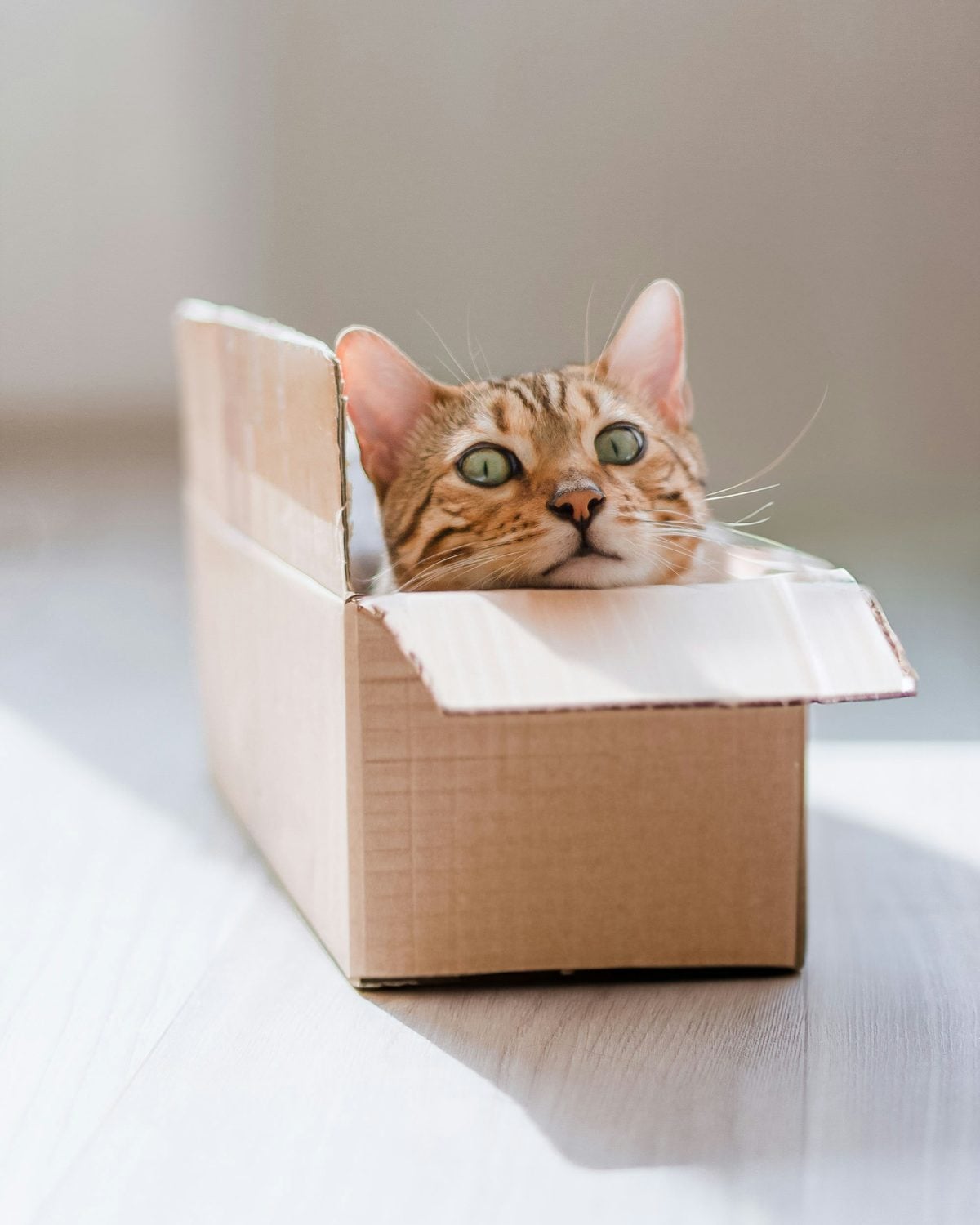
One reason your cat might do this is that small enclosed spaces can make him feel safe. While cats are predatory animals, they still need protection when they are most vulnerable. Snug spaces make it harder for others to approach unnoticed while a cat rests. They also retain warmth better, which can provide a cozy resting spot for an afternoon cat nap. So, when your cat opts for the box his fancy new bed came in, it doesn’t mean he hates your taste in fabric.
Cats use hiding as a natural coping strategy, particularly when dealing with stressful or unfamiliar environments. Try sprinkling hiding spots throughout your home so your cat can get away from it all.
While hiding is typical cat behavior, it’s important to watch for changes in your cat’s activities. If she’s normally a social butterfly, suddenly hiding under the bed for hours on end may be something that deserves closer attention.
Leave a way out
In a home with several cats, give each one a safe place to retreat. Hiding spots with more than one exit help prevent another cat from blocking the way. Check whether each cat can reach a retreat without passing a housemate. Let them come out on their own.
10. Sleeping: Is your cat really asleep all day?
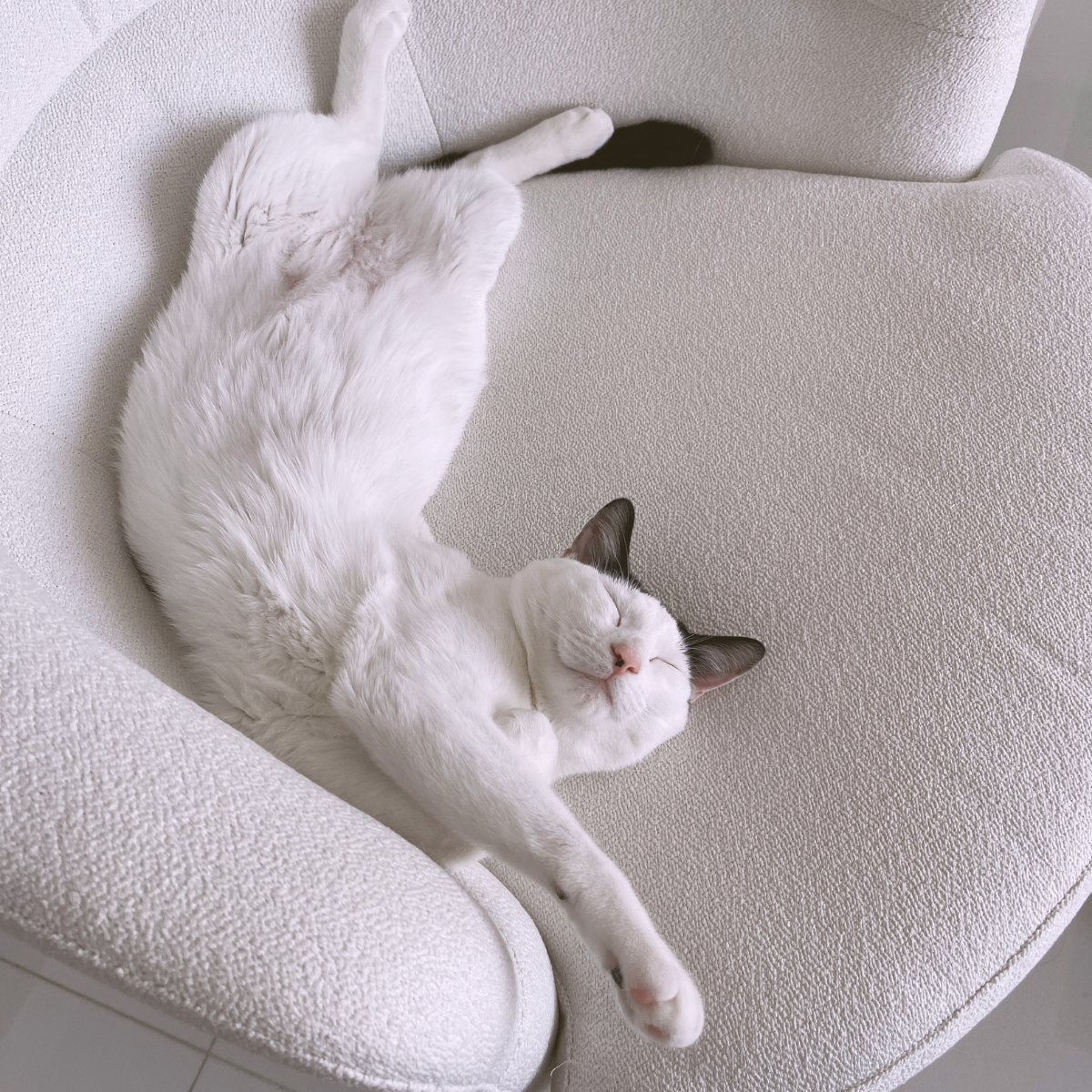
It may seem like cats sleep all day, but with multiple rescues of my own, I can tell you that’s not quite true. In a 24-hour period, cats typically sleep 12–16 hours.
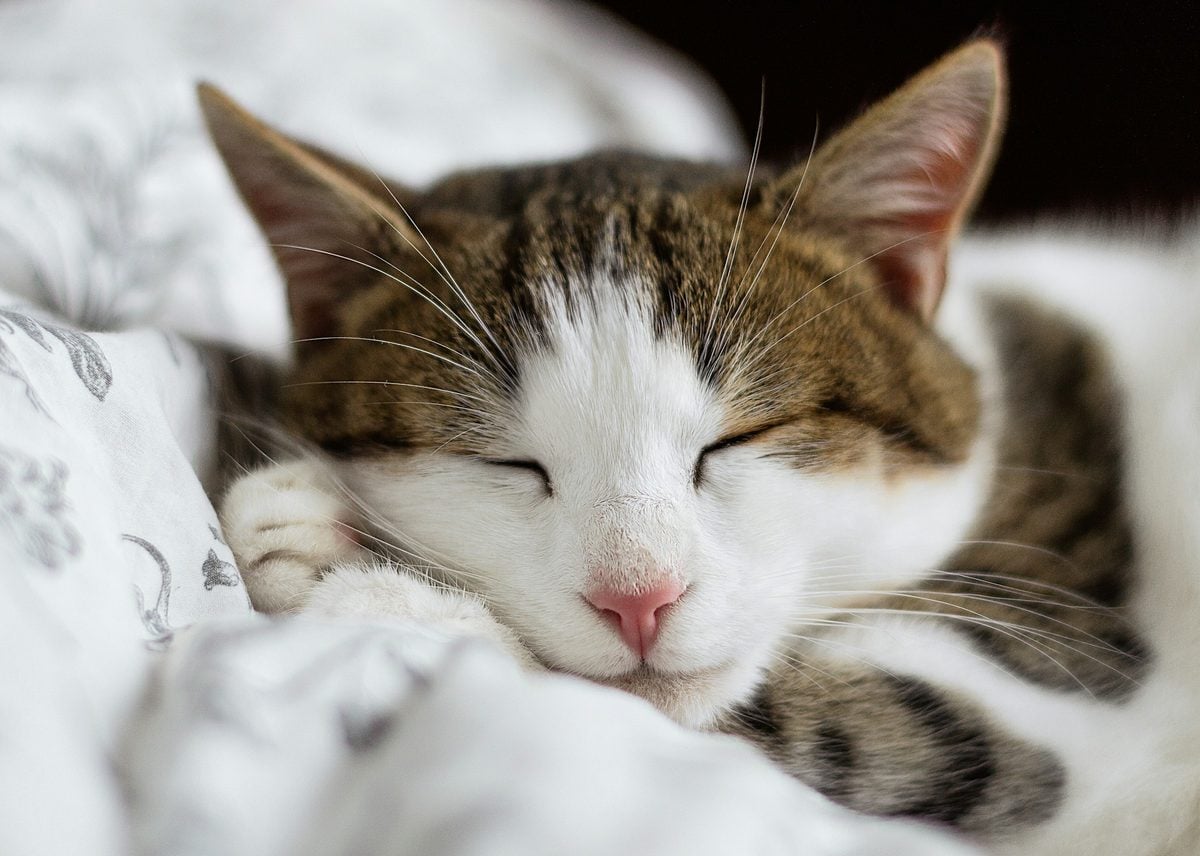
That may seem over the top compared to your own sleep habits, but you’ve likely noticed that your furry friend doesn’t snag all those hours at once. Instead, they accumulate them through periods of rest and sleep.
Cats are commonly noted as being crepuscular, which is just a fancy word for being more active around dawn and dusk. Domesticated cats can also adjust their own activity around household patterns and routines.
Your cat’s love of marathon napping may partially stem from his evolution from a predator. Hunting demands short bursts of energy that are then recovered during periods of rest. While our fur kids don’t have those same dietary demands, those underlying behavioral patterns are still deeply ingrained.
Not every cat will follow the same schedule. Additional factors that impact how much sleep a cat gets include its age, health, personal activity level, and household schedule or environment.
A lot of napping isn’t normally a matter of concern, but if Whiskers starts acting out of character and showing a visible drop in energy, it could be time to visit the vet.
Getting to know your own cat
There’s no doubt about it: Cats do strange things. Understanding normal feline behavior can provide the context you need to interpret your cat’s actions, but it’s important to remember that every cat is unique. What matters most is learning what is normal for your cat.
Our cats’ odd habits are part of what makes living with them so entertaining and rewarding. Understanding those habits can make the relationship even more rewarding.

Writer and lifelong cat lover who shares her home with her fiancé and 14 rescue cats.