How to Cat-Proof Your Yard So Your Cat Actually Stays In It

Cats recognize a lot of things, but property lines aren’t one of them. We might see a fenced-in yard and assume an animal would stay inside. A cat sees potential climbing surfaces, gaps, trees, gates, and approximately seventeen opportunities to make terrible decisions.
Ordinary residential fencing generally isn’t enough to contain a cat. These four-legged climbers can make their way over conventional fencing. Outdoor access also introduces risks from traffic, other animals, disease, and toxic substances.
With her constant curiosity, it can be hard to keep your cat inside. Let’s unpack some practical ways to make her outdoor time safer and more rewarding for both of you.
Some links are affiliate, so we may earn a small commission at no cost to you. Every purr-chase keeps two very demanding cats in treats. Our policy →
1. Start With a Walk Around the Yard
Just because you have a fence doesn’t mean your cat respects it. What looks perfectly secure to you can be laughably inadequate to your cat. While we’re content to stay behind a fence, cats are another story entirely. They can readily climb ordinary fences, and even a cat who normally stays in the yard can be scared or excited into climbing or jumping out.
So, if you want to keep your cat inside, you need to think like her. Start by walking the entire boundary. Look for ways your curious gremlin can make her daring escape, including:
Since you’re already checking the perimeter, it’s a good idea to do an overall safety check of the space. Specifically, look for access to sheds and garages, chemicals and pesticides, sharp landscaping materials, toxic plants, and anything else that poses a danger.
Remember, inspecting your yard isn’t enough to make it cat-proof. Controlled outdoor access is key to keeping your baby safe.
2. Consider a Catio or Enclosed Run
If I could design the ultimate outdoor setup for my cats, a catio would be the centerpiece. The catio, or cat patio, is a secure outdoor enclosure that allows cats to explore the great outdoors without actually free-roaming, making the experience significantly safer. Catios can attach to windows or doors or be built right onto your patio for easy cat access.
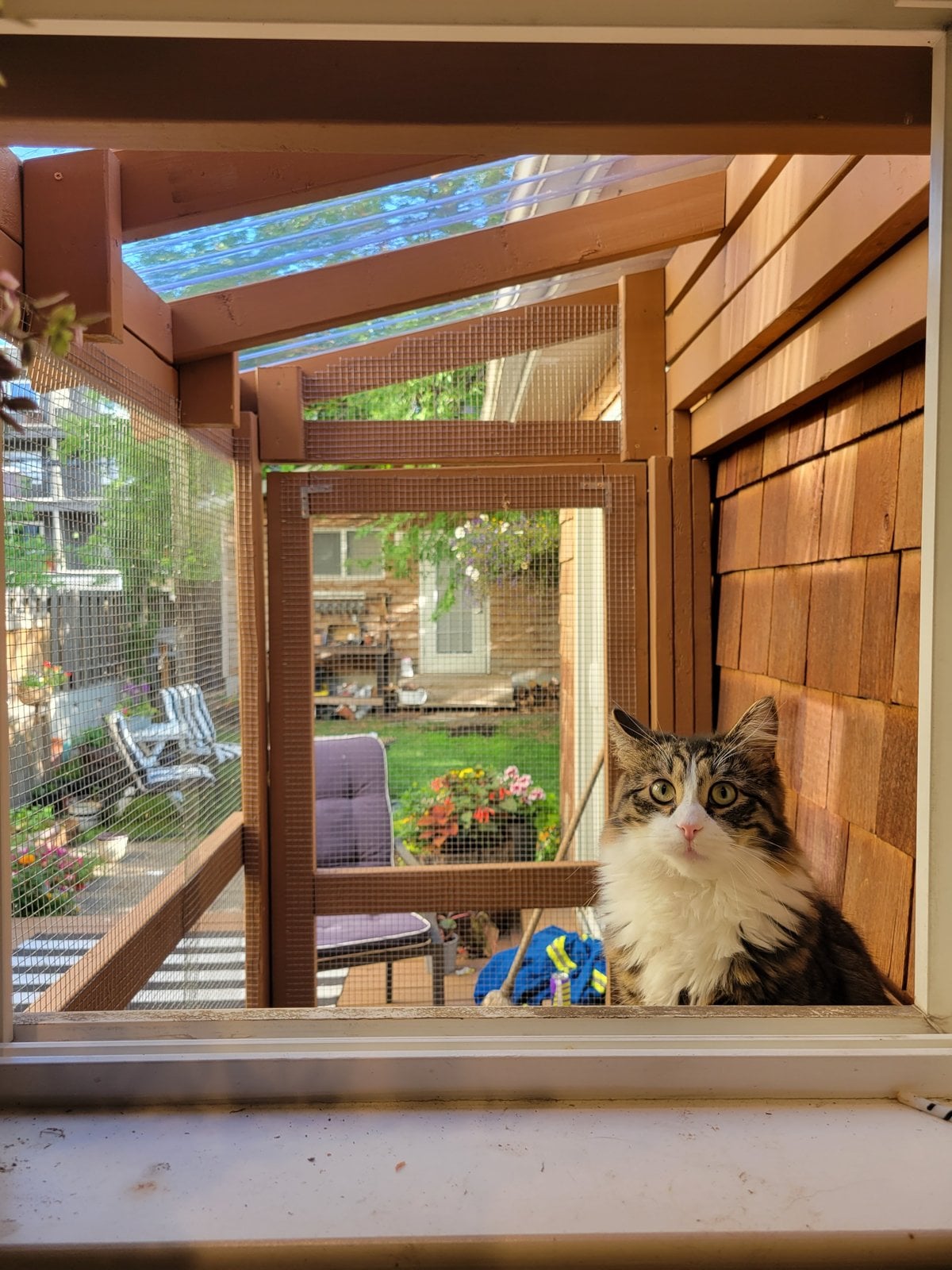
While catios can give your cat more opportunity to sniff, explore, climb, perch, watch what’s going on outside, scent mark, and play, they don’t have to cost tens of thousands of dollars or be the equivalent of an outdoor mansion for Fifi.
Don’t forget to make the catio interior entertaining. The last thing anyone wants is for a cat to be bored, since we all know that’s when the shenanigans start. Incorporate features like shelves, cat towers, toys, safe plants, and stimulating views.
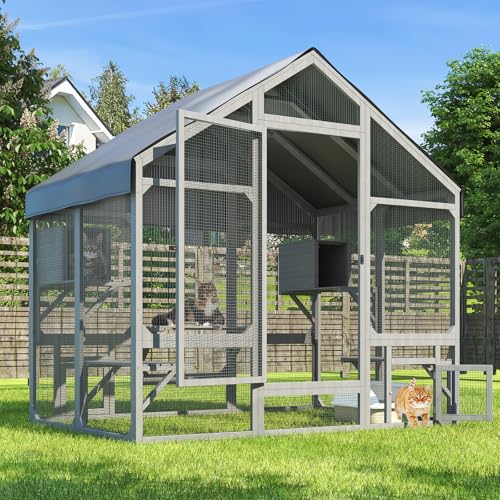
TIMHAKA 71-Inch Wooden Catio
A freestanding fir-wood and galvanized-steel-mesh enclosure with seven platforms, two resting houses, and a weather cover. It measures 71 x 49 x 71 inches.
The catio or enclosed run must be secure. Think: secure walls, enclosed top, secure access points, no gaps, and weather-appropriate shelter and shade. Be sure to discuss veterinarian-approved flea, tick, and heartworm prevention and appropriate vaccinations before giving your cat access to the outside world.
3. Look Into Fencing Designed for Cats
If your yard already has a fence, you may be able to modify it. You can modify an existing solid fence at the top to make it harder for your cat to climb over. Modifications include rolling cylinders, smooth sheeting, and inward-angled extensions or wire. The basic idea is to make it harder for Gizmo to gain purchase at the top of the fence, not to make the fence taller.
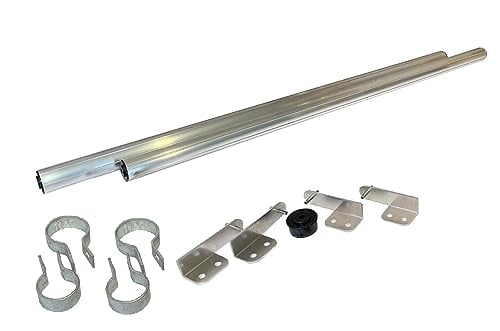
Coyote Roller 8-Foot Fence Topper Kit
Rolling cylinders that mount along the top of a fence, so a climbing cat can’t get a grip on the top edge. The same rollers help keep coyotes out.
Most importantly, the entire boundary needs to work together. Installing a state-of-the-art fence topper doesn’t do much good if your little princess can just walk under the gate. Nearby trees can defeat an otherwise secure system.
When installing modifications to keep your cat in, consider adding features designed to keep other animals out.
4. Try a Harness if Your Cat Is Comfortable With It
There’s pretty much a 50-50 chance when you harness a cat that he will immediately fall over where he stands, refusing to move. At least, that’s been my experience.
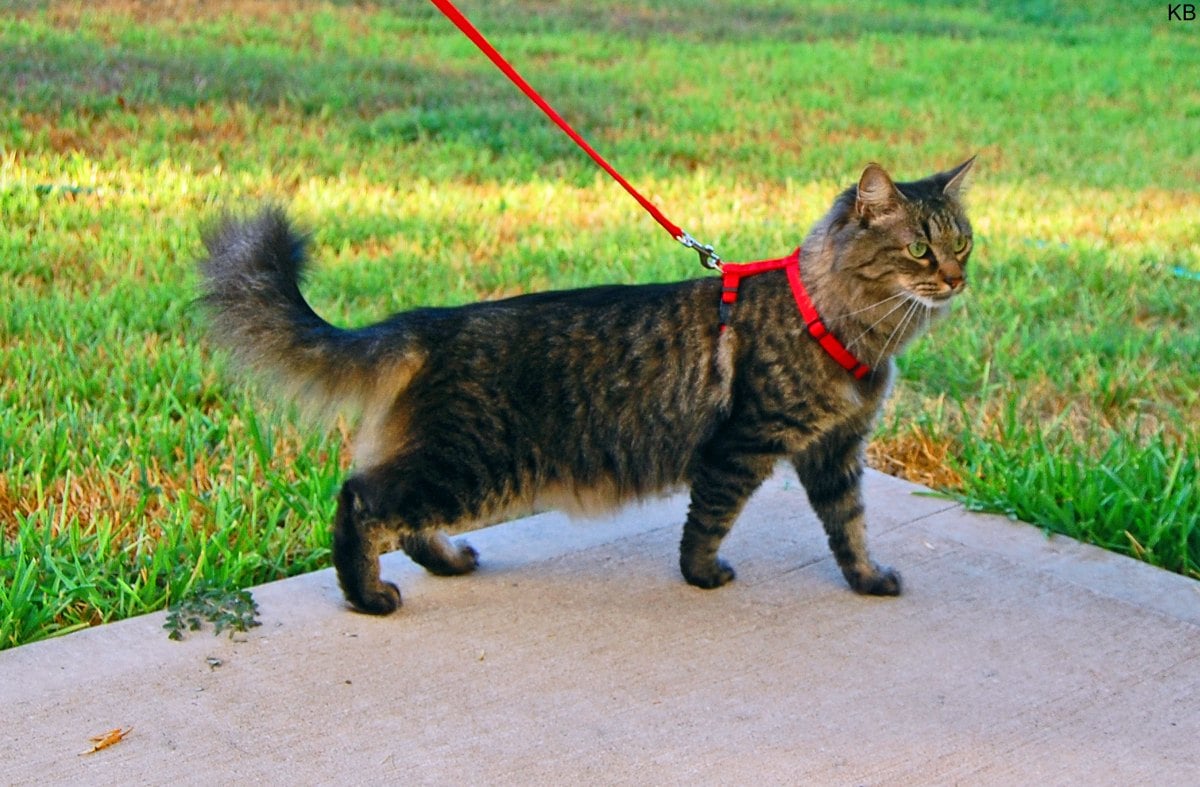
If you choose the harness route, you’ll need a cat-specific harness. This is super important. Cats can wriggle themselves out of collars, and dog harnesses may not be designed for the snuggest fit. Avoid extra-long or retractable leashes for those times when your cat gets the urge to run.

RC Pets Adventure Kitty Harness and Leash
A cat-specific airmesh vest harness with two adjustment points for a snug fit, sold with a 6-foot leash.
Give her time to adjust to wearing the harness. You can use treats as positive reinforcement as she becomes more comfortable interacting with and wearing the harness. When your cat can walk easily through the house with the harness on, it’s time to test walking on the leash inside. Only then start with short trips outside.
Outside, let your cat set the pace. After all, she’s not like Fido down the street. A cat may decide to sniff a blade of grass for the entire walk and do nothing else. To us, it might look a little silly, but to her, it was a successful outing. Don’t be upset if your cat just doesn’t like the harness, as some simply won’t enjoy the experience no matter what you do.
5. Make the Space Worth Spending Time In
Keeping your cat inside your yard is really only half the battle. No matter where your cat is, he needs opportunities for normal behaviors and key environmental resources, including vertical spaces, scratching, and hunting behaviors. In other words, if you send your cat outside to an empty yard, he’s going to find something much more interesting on the other side of the fence.
Cats are big fans of elevated spaces. They use them to survey their surroundings and gain a sense of safety and control. For your yard, consider sturdy shelves, elevated resting spots, and platforms placed at different heights. Just make sure you don’t accidentally place an elevated spot next to the fence and create an escape route.
Also provide spaces where your cat can hide and feel protected. Outside, this also means providing shade and shelter from the weather.
This is the perfect opportunity to create a scratching free-for-all. Since scratching is natural cat behavior, offering your cat approved items to tear up gives him another way to interact with his outdoor space.
Outside playtime is another great opportunity to encourage hunting-style play and exploration. This can include interactive toys, prey-like toys, food puzzles and foraging opportunities, rotating toys, and supervised play.
6. Check the Plants and Garden Products
Safe containment does not always mean a safe yard. The plants you spend time lovingly cultivating may pose the biggest risk to your cat. Before you allow your baby to have outdoor access, take stock of everything that’s growing in your yard to identify toxic plants. What seems completely safe to us can be deadly to our furry friends. For instance, true lilies and daylilies can cause potentially fatal kidney injury in cats.
Once you’ve finished exploring the plant species, look at the other products you use around the yard. Fertilizers, insecticides, herbicides, rodenticides, pest control products, mulch, soil amendments, and stored lawn and garden chemicals can pose a health risk to cats.
For each product, follow the label exactly, especially when animals can re-enter an area after application. If you think your cat has ingested something potentially toxic, don’t wait for symptoms to appear. Contact your veterinarian or an animal poison-control service immediately.
Don’t wait for symptoms to appear. Call your veterinarian or an animal poison-control service right away.
7. Build a Familiar Outdoor Routine
Just because you agree to give your cat outdoor access doesn’t mean your backyard needs to be available on demand because your cat says so. Instead, associate outdoor access with a specific cue, such as picking up the harness or saying the same phrase. This approach works because cats can learn through positive reinforcement and associations between cues and outcomes.
It’s super important that you don’t accidentally teach your fur child to dash out the door. Remember, if your cat gets to go outside every time she cries, paws, or dashes through the door, you risk reinforcing the exact behavior you don’t want. The goal is to make outdoor access occur when you initiate it, not when your cat strong-arms the doorman.
To streamline the process, make re-entering the house predictable, too. Use regular cues to signal when it’s time to go back in. Pair those cues with positive reinforcement so your cat doesn’t interpret heading inside as an end to his fun.
Establishing a routine for your cat doesn’t mean you should assume he’s contained. Even if your cat waits for the cue to head out and always comes back when called, he shouldn’t be offered unsupervised access to an unsecured yard.
8. Keep an Eye on Gates and Wear and Tear
A yard that was secure yesterday may not be so escape-proof today. Weather, normal use, landscaping, animals, and plain old wear can change the perimeter of your yard after you complete your initial inspection.
Gates are moving parts, which means they experience wear a little bit differently than other parts of your perimeter. You’ll want to check that the latches still close and engage properly, hinges haven’t loosened or shifted, the gate isn’t sagging, gaps underneath or alongside it haven’t widened, and that everyone in the house properly secures the gate when using it.
During perimeter inspections, check your fence for loose boards or panels, damaged mesh, holes, widening gaps, corrosion, or shifted sections. If you use a cat-specific fence topper, be sure to check that out as well.
While it may seem solid, the ground isn’t a permanent fixture. Rain and erosion can create or widen gaps beneath fencing. Trees and shrubs can grow to provide climbing access that didn’t previously exist.
Establishing a routine to check your perimeter is a great way to help minimize your cat’s chances of escape. Complete your inspections after severe weather, landscaping work, fence repairs, construction, or anything else that could alter the boundary.
9. Have a Plan if They Slip Out
Shaking a treat bag at 3 a.m. in the middle of a dark backyard is not the ideal way to wrangle an escaped cat. Trust me, I know. It’s important never to assume that your cat will simply come back to you just because you call her. After all, how many times a day does she ignore you throughout the day while you’re talking to her in the living room?
Cats respond differently, depending on a number of factors. For example, an indoor-only cat who gets out may be scared and hide nearby instead of responding to her owner.
Before something can go wrong, you should have a backup plan. First, make sure your cat has proper identification. A registered microchip is only as good as the information attached to it. You’ll also want to have a few clear, recent photos showing what your baby looks like today.
If the unthinkable happens and your cat escapes, search around your home first. Displaced indoor-only cats may remain hidden close by while staying completely silent. If the immediate search turns up nothing, expand outward and call neighbors, the local shelters, and animal control organizations.
Most importantly, never chase a frightened cat. Even if you cuddle every day for hours on end, an escaped cat can experience fear or stress that makes her act out of character. Chasing after her could make recovery even harder.
10. Know Which Shortcuts to Skip
Today’s technological advancements offer many options to help us feel better about letting our cats go outside. From GPS trackers to recall training to deterrents, there are enough tools to make your head spin.
But being helpful isn’t the same as providing true containment. A tracker can help you find your cat, but it won’t help you keep him where he belongs. It’s a great backup measure, but it doesn’t solve the problem of keeping him inside the fence.
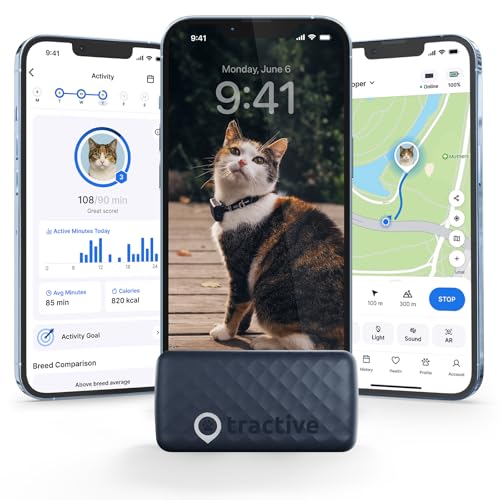
Tractive Smart Cat GPS Tracker
A 0.9-ounce GPS tracker on a breakaway collar for cats 6.5 pounds and up, with live location and virtual-fence alerts. It needs a subscription.
A cat may also take to recall training, but in a stressful situation, he may not respond to your voice. And let’s face it, some cats just like to ignore their owners when it suits them.
Deterrent devices like repellents, motion-activated alarms and sprinklers, and similar products may help discourage cats from entering certain areas, but preventive confinement with fencing, an outdoor run, or owner supervision is the preferred approach.
Supervision also helps, but in a race, we don’t hold a candle to our four-legged friends. If your cat decides he’s going on an adventure, there’s a really good chance you won’t be able to stop him with just your supervision in place. These tools work best when used as additional layers of protection, not as replacements for containment.
Let Your Cat Explore Without Losing Your Mind
Outdoor time for your cat doesn’t have to mean free-roaming. He can enjoy the sights, sun, smells, and movement without enjoying unrestricted access to the entire neighborhood.
The right solution to keeping your cat in your yard depends on your cat, your home, and your circumstances. While a catio works for one cat owner, a harness may work best for you and your cat. Physical containment, supervision and routine, and escape preparation all work together to keep your cat in your yard.
Planning for a safe outdoor adventure can give you the confidence you never knew you needed. Today will not be the day you find yourself under your neighbor’s porch with an open can of tuna as you try to lure Fifi back home.

Writer and lifelong cat lover who shares her home with her fiancé and 14 rescue cats.