Can My Cat Eat That? A Guide to Human Foods Cats Can and Can’t Have
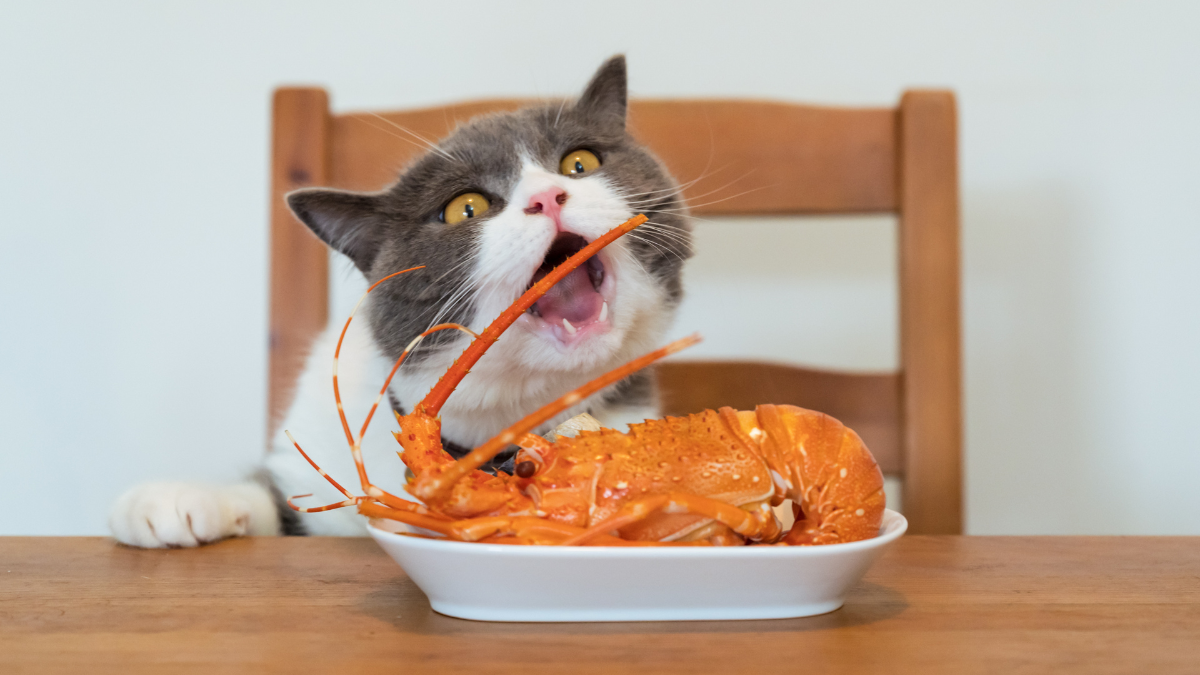
Cats can often pull on your heartstrings when they sit beside you at the table, staring at you with their wide, sad eyes as you take a bite of a sandwich. It’s hard to resist their adorable face, leading many cat parents to wonder if they can share a piece of their meal with their begging feline friend.
Before you give in to your cat’s pleas, it’s crucial to double check the safety of the food. Cats have unique biological needs that don’t match what a human stomach can handle. So, foods that we eat regularly could hurt a cat’s stomach if we aren’t careful.
Keep treats to about 10%
Most of your cat’s diet should come from complete and balanced cat food, but an occasional human food snack is okay if you research the food’s safety for cats first.
A good rule of thumb is to keep treats to no more than about 10% of your cat’s daily calories.
Whether you can give human food to a cat depends on what the food is, how it’s prepared, and how much you give. We’re going to walk you through each category, below!
What Your Cat Can Eat
The following human foods are suitable for snacks if they’re served plain and in small portions. Just remember that not every cat is the same, so if your cat has a sensitive stomach, you may want to consult your vet before offering a new food to your furry friend.
Cooked Meat, Fish, and Eggs
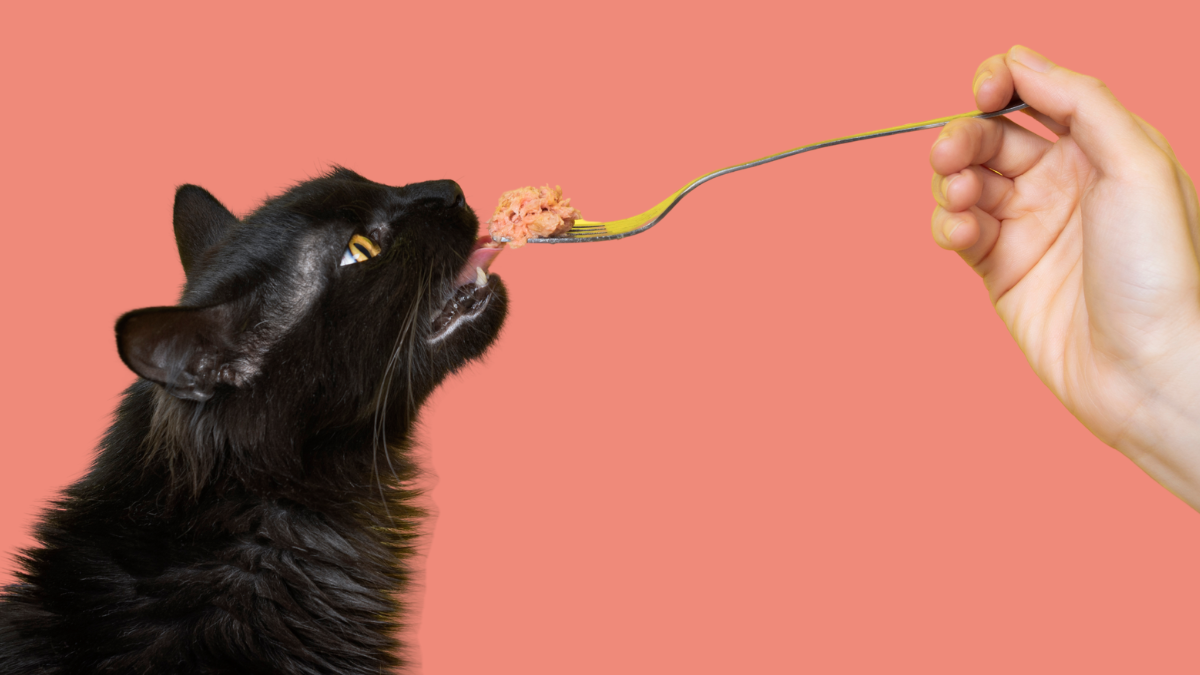
As obligate carnivores, cats eat a lot of meat. Therefore, you’re likely to see your cat licking their lips if they see you eating chicken, fish, or any other meat. Cats can enjoy small amounts of lean, cooked turkey, chicken, beef, and pork. These meats should have no seasoning and be free from bones. Avoid highly processed meats like bacon or sliced deli meat as those are often high in salt. To prepare a small serving for your cat, cut the meat up into small, bite-sized pieces, avoiding skin and fat when possible.
Like other meats, fish is safe for cats to eat in small amounts when cooked thoroughly. Remove all bones and avoid canned fish since that often contains added salt and oil. Too much fish could cause vitamin deficiencies and digestive issues over time, so it’s best to only give your cat a small taste here and there.
While not technically meat, eggs are a high-protein food that comes from animals, so cats are often interested in them. Cooked eggs can be safe for cats in small portions. Egg whites are best because they’re high in protein with virtually no fat while egg yolks have more fat than protein. Eggshells have calcium and other minerals, but they’re best avoided due to their sharp edges and lack of flavor.
Pumpkin, Carrots, and Rice
Pumpkin, carrots, and rice are all safe snacks for cats when plain. Carrots are low in fat and calories, making them a healthy snack. They’re safest served cooked until soft, and make sure you cut them up into bite-sized pieces to avoid choking hazards. Other vegetables like celery, broccoli, green beans, and cauliflower are also safe to eat. If you cook these vegetables, just make sure you don’t include your usual seasonings.
Plain pumpkin, canned or cooked, is safe for cats and can even offer gastrointestinal benefits. Pumpkin is full of healthy ingredients like fiber, potassium, phosphorus, calcium, and vitamins A, C, and K.
Plain pumpkin only
Try mixing small amounts into their regular food. Just make sure you’re giving plain pumpkin and not pumpkin pie filling, as the latter contains spices and sugars that could harm cats.
Plain, cooked rice is safe for cats to eat, but it doesn’t provide much nutritional value since cats are carnivores. The best way to serve rice is to mix it with some of your cat’s regular food (but don’t add any butter or spices). They may enjoy nibbling on it from time to time, but don’t make it part of their regular diet.
Apples, Bananas, and Other Fruit
Certain fruits can be a refreshing little snack for cats. Small amounts of apples, bananas, strawberries, blueberries, cucumbers, pineapple, cantaloupe, and kiwi are all safe to give your cat. Some cats enjoy the flavor of cucumber added to their water as a fun cat-safe beverage. When serving fruit to cats, make sure the food is cut up into small, bite-sized pieces. Remove anything that could be a choking hazard, such as seeds, apple skin, or banana peels. Apple seeds, stems, and leaves also contain a compound that releases cyanide, so always core the apple first.
Cats don’t need fruit as part of their diets, but it can be a tasty snack. Some fruits offer benefits, such as how apples have fiber and vitamin C and bananas have vitamins B6 and C with potassium. However, since cats primarily eat meat, stick to only a few bites of fruit at a time.
What Your Cat Can’t Eat
While the foods listed above are all safe in moderation, most human foods do more harm than good for our four-legged family members. The following foods are either upsetting to a cat’s stomach or toxic. Toxic foods pose a much higher risk, but all are best avoided.
Milk, Cheese, and Leftovers
Cartoons always show cats drinking bowls of milk. As a result, people often assume milk is a great treat for cats. The reality is that you should avoid giving your cat milk and other dairy products. While it might not do much harm in small amounts, it’s better to be safe than sorry.
Many cats are lactose intolerant. Even though kittens drink milk from their mothers just like other mammals, they don’t handle cow’s milk well. Adult cats may not produce enough lactase, the enzyme that breaks down lactose, which can cause digestive problems.
Dairy is included in a lot of human foods, whether it’s through milk, cheese, yogurt, or other products. On top of that, many human meals include spices, seasonings, and sauces that cats can’t digest well. So, it’s best to avoid giving your cat seasoned leftovers altogether. Dairy and seasoned leftovers aren’t necessarily toxic, but they’re not suitable for cats.
Dangerous Foods for Cats
While dairy typically only causes an upset tummy, there are some foods that could be life-threatening if given to cats. The following foods are toxic to felines:
If your cat ingests any of these toxic foods, even in small amounts, contact ASPCA’s poison control immediately. They can walk you through the necessary next steps to keep your four-legged family member as safe as possible.
Raw Foods and Bones
Your cat’s pet food is made primarily of meat, so meat is the most common human food to feed cats. However, that food must be plain and cooked to keep your cat safe. Raw and undercooked meat contains bacteria like Salmonella and E. coli, which are harmful to both humans and pets. Raw eggs are also unsafe because they can carry bacteria like Salmonella, and repeated consumption of raw egg whites can interfere with biotin absorption.
Bones, raw or cooked, are another part of meat to avoid completely. Most cats will happily chew on a bone if given the option, but bones can cause injuries and blockages if broken into slivers and chunks. These injuries could require surgery, so offer your pet cat-safe chews instead.
To keep your cat as safe as possible, keep all food and garbage secured. If your cat accidentally gets into food cabinets and bins, they might chew on utensils, wrappers, and cooking supplies in addition to food. These objects could be sharp or cause choking risks. Cats are curious, so it’s best if they have no opportunity to even investigate human foods.
What to Do if Your Cat Eats Something They Shouldn’t
Contact a vet or poison control if your cat eats something that’s known for being toxic or unsafe. While some cats can handle human foods better than others, it’s best not to risk your cat’s safety. It’s better to go to the vet for a false alarm than regret not seeking emergency care.
If you suspect your cat has eaten something poisonous, reach out to your vet or poison control line immediately. Do not try a home remedy as it could potentially make matters worse.
When talking to a pet health professional, have the details of the incident ready. Share as much information as you can:
Be Cautious with Your Cat’s Snacks
The idea of feeding your cat something that could harm them is scary. No cat parent wants to be the reason their cat falls ill. Luckily, this fear can be eased with proper precautions. Simply check the safety of any human food before giving it to your cat. Even if you’re 99% sure it’s safe, it’s always a good idea to double check.
What human food is your cat always trying to steal? Let us know in the comments!

Freelance writer with a BFA in Creative Writing who’s been covering pets since 2018. Animal-rescue volunteer, dog mom to Mabel, and future cat mom (maybe one day!).