Why Do Cats Lick Each Other? (And Why It Sometimes Ends in a Wrestling Match)
Researchers have been debating why cats lick one another since the 1990s. Cats groom each other for a variety of different reasons. And now, new research suggests that when they start to swat at one another afterwards, it’s not necessarily playful.
This new research, out this year, involved taking videos of domesticated cats at home. If you have two or more cats like we do, I’m sure you’ve seen this behavior first-hand as well!
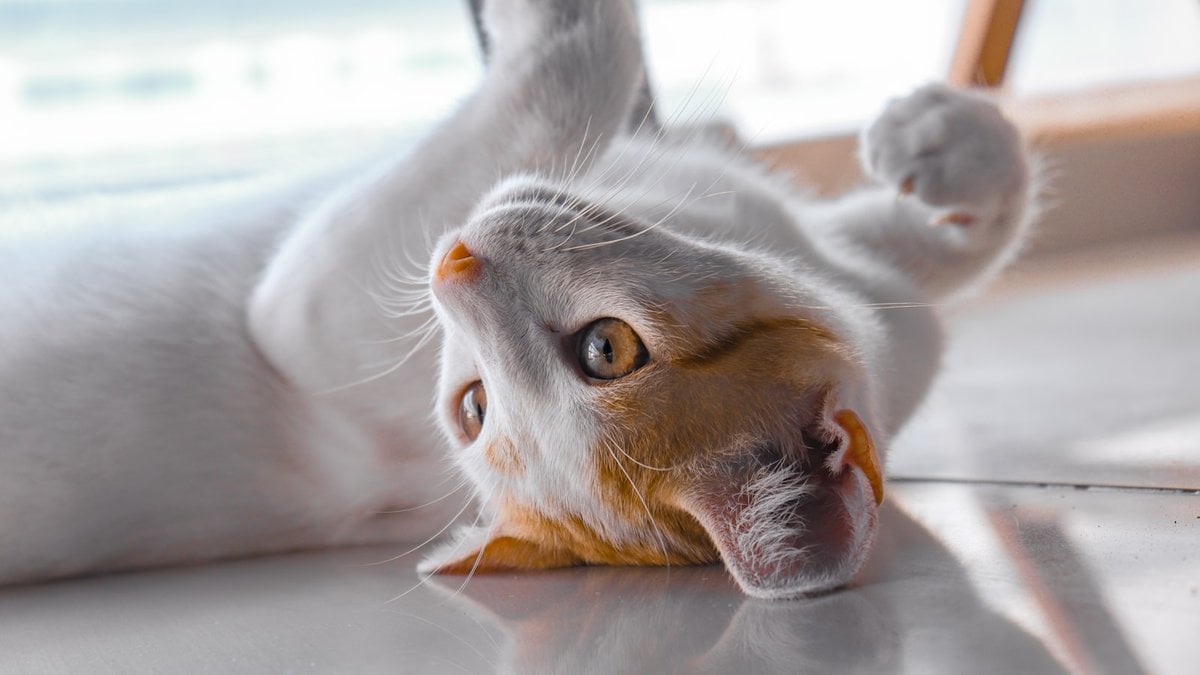
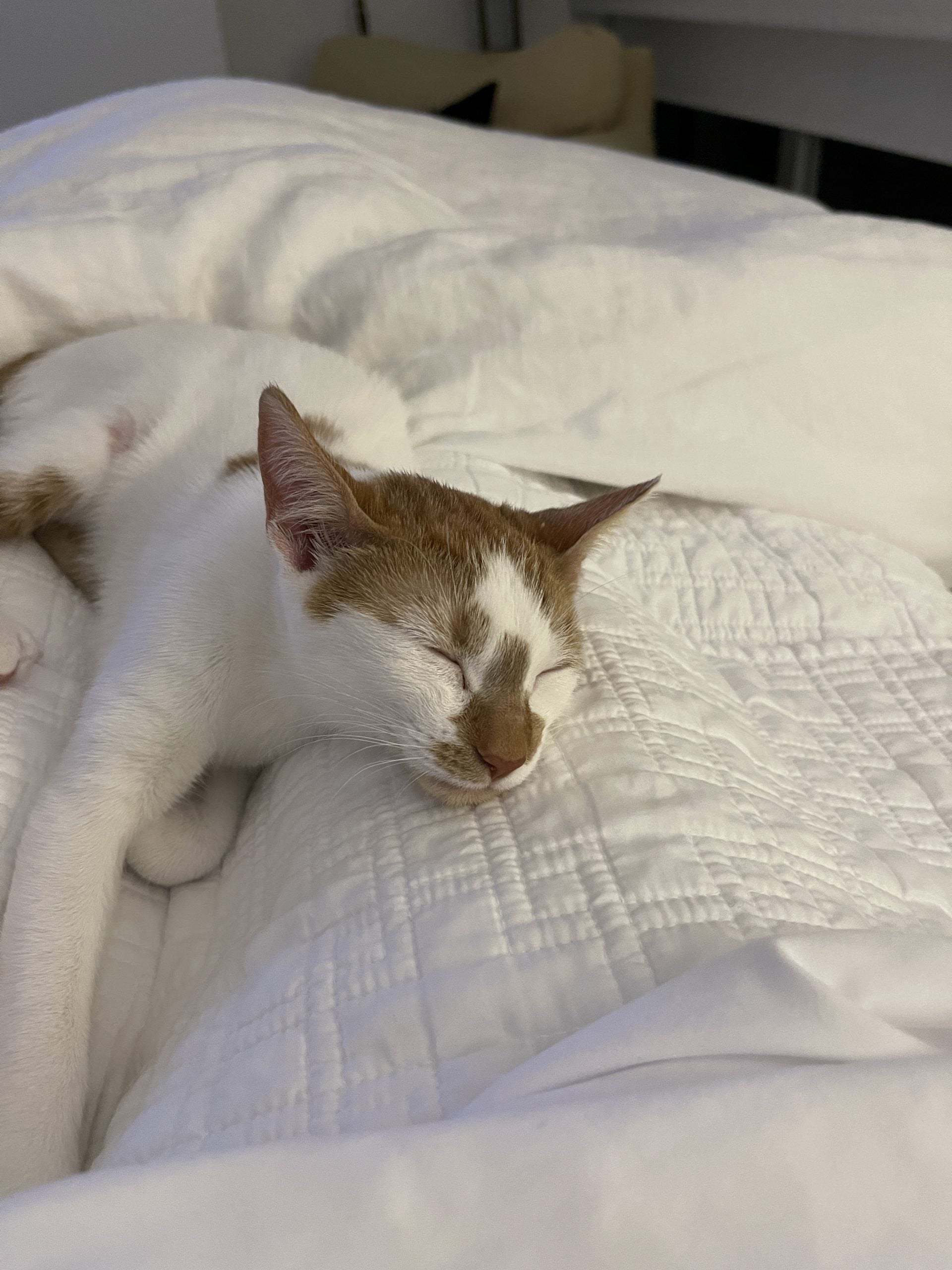
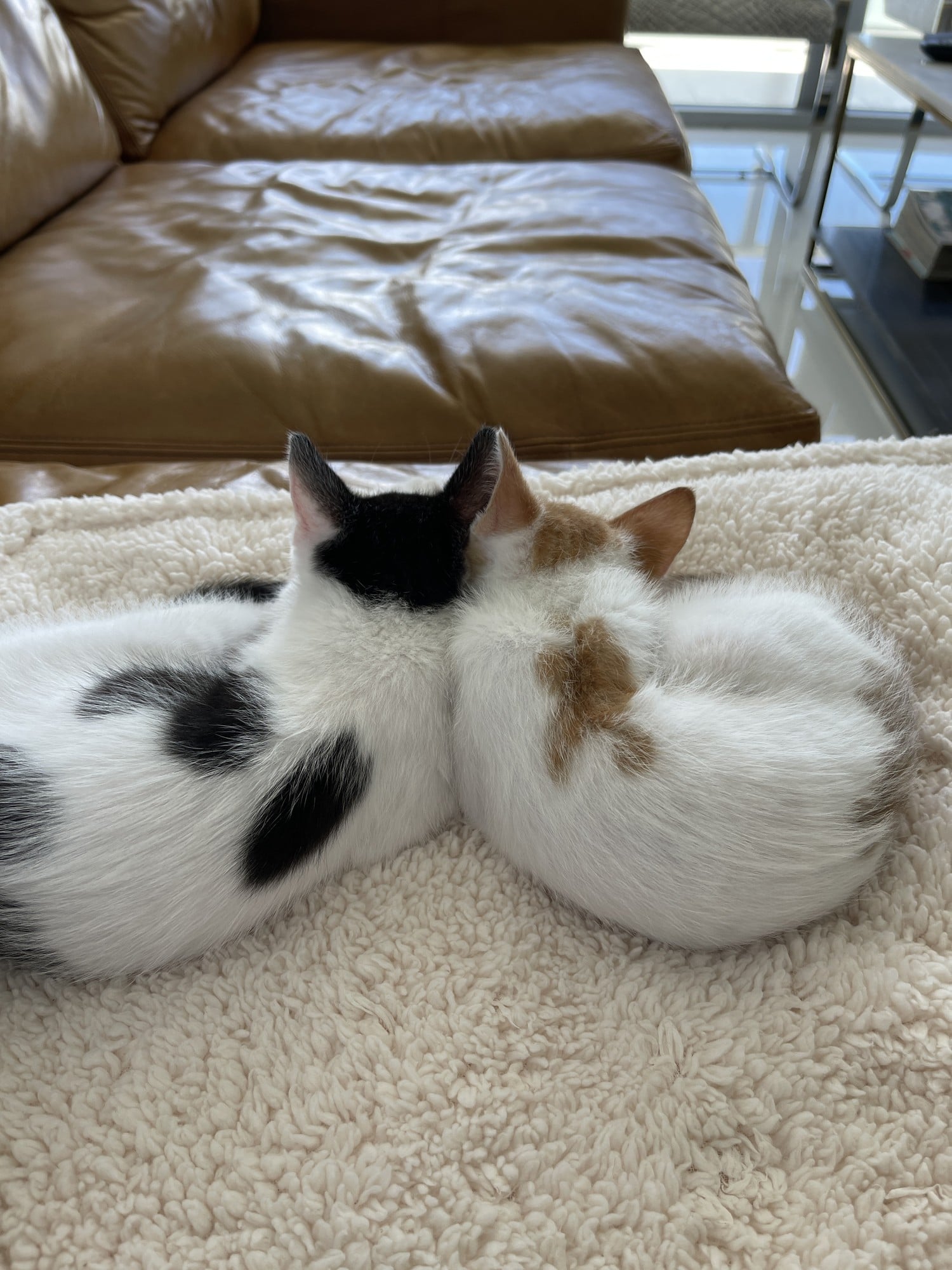
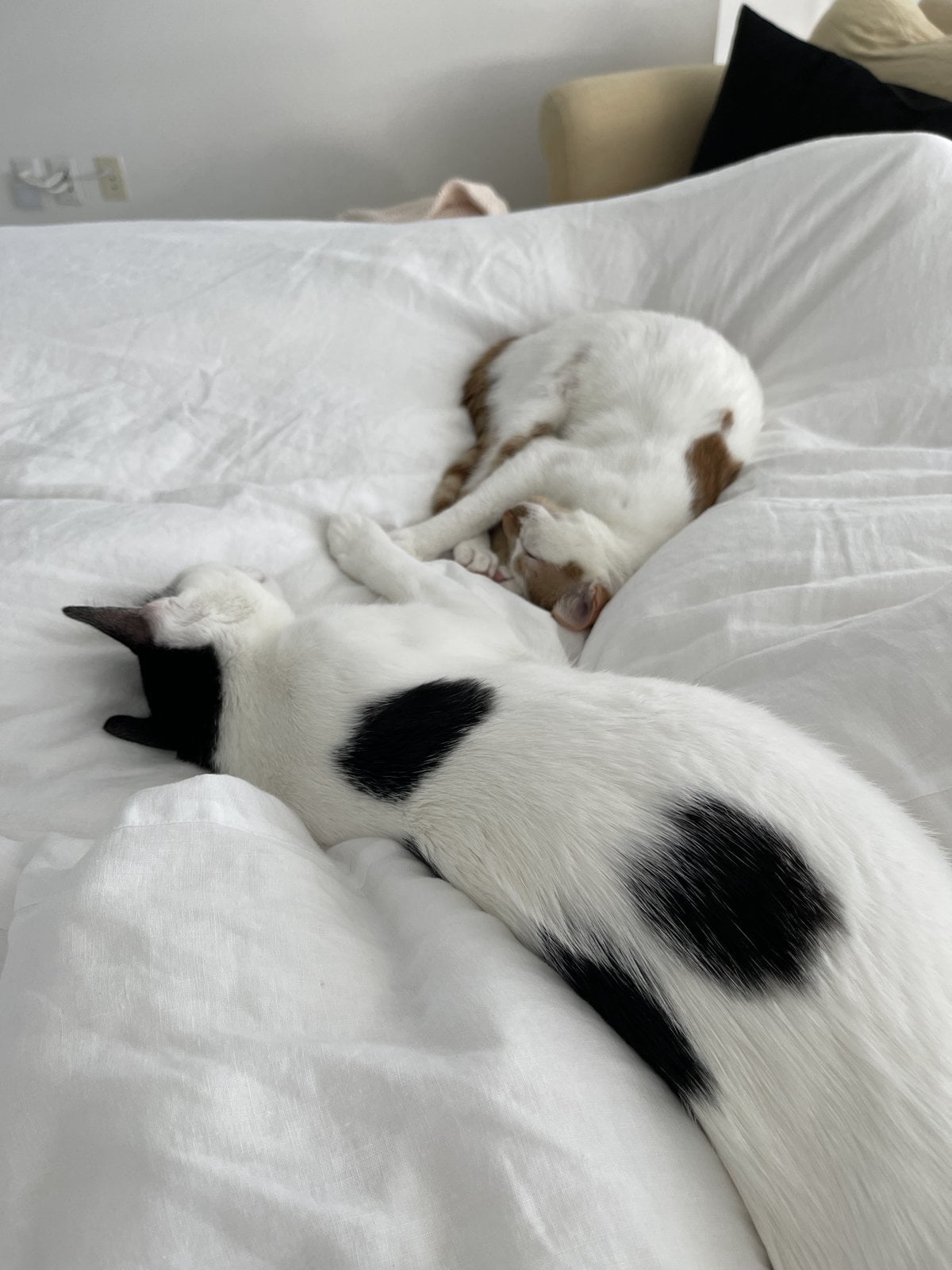
Our two cats, Thelma and Louis, are siblings (they were found together in a car as kittens), so I’ve seen plenty of sibling behavior. One cat will lick the other’s head, with the other’s eyes shut in blissful relaxation. Within seconds though their ears will be back, they’ll be swatting each others faces and rolling around on the rug. I’m never really sure what’s going on…is it sweet? Playful? Are they fighting? It’s just so crazy to me that what starts off as something seemingly nice turns into paws in the air!
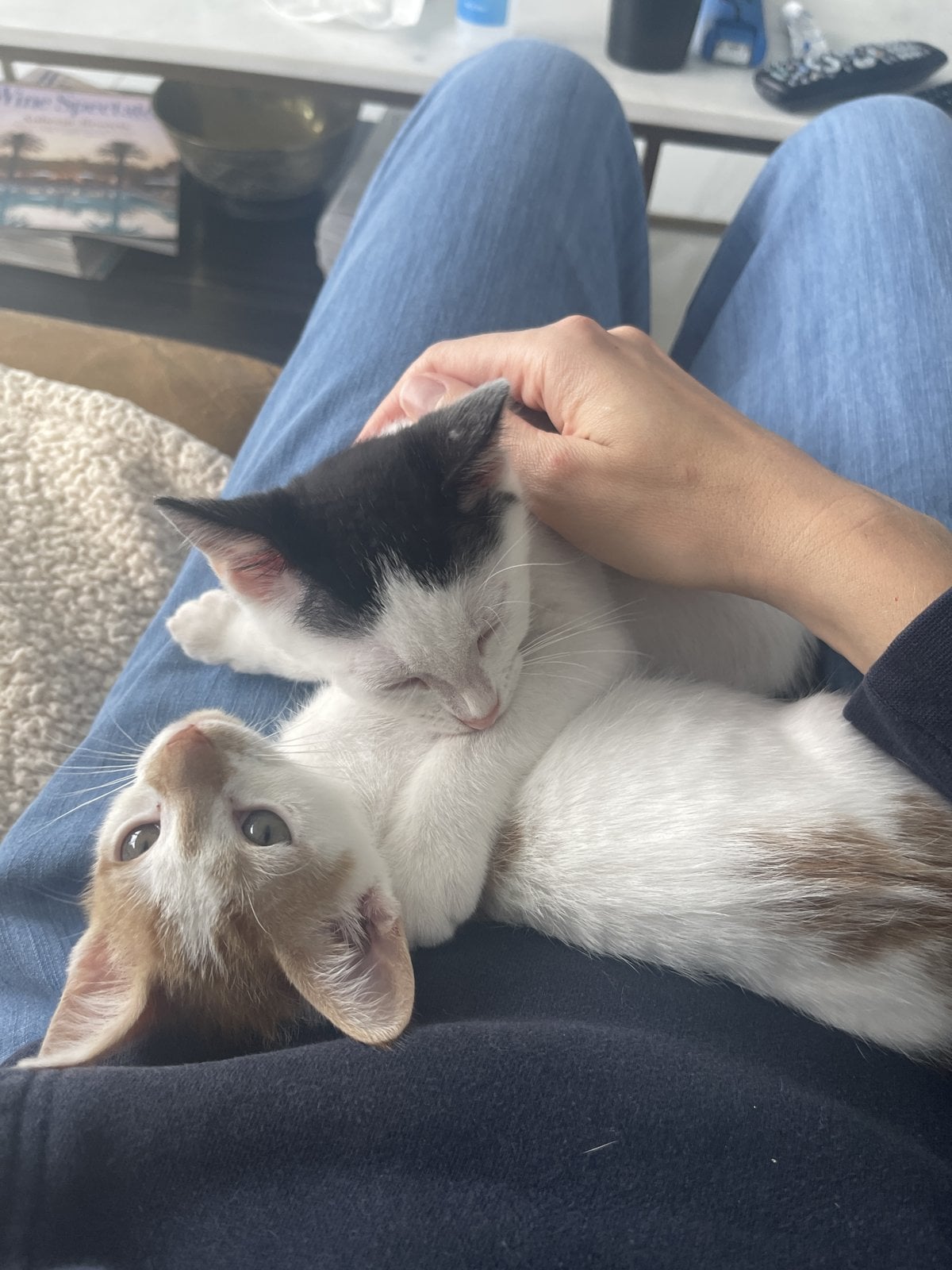
The friendly version, which is real
There’s a specific word for grooming another cat: allogrooming. The prefix ‘allo’ means ‘another individual’. The conventional wisdom, built on studies of free-roaming cat colonies, is that cats that groom each other are showing affection. Cats that allogroomed also tended to sleep together and act as family.
John Bradshaw, the British behavior researcher who wrote Cat Sense, describes mutual grooming as an affectionate behavior in his review of cat social behavior. Two major feline-medicine groups, the AAFP and the ISFM, also list mutual grooming as one way to tell whether two cats in a home consider themselves part of the same social ‘us’. When cats groom each other, they may share scent and saliva and acquire a group odor that identifies them as buddies. In 2003, veterinary behaviorist Terry Curtis and her colleagues studied a colony of 28 cats and found stronger bonding between cats that were related or had been raised together: they were more likely to be found near each other and were also more likely to allogroom each other.
This is actually why shelters encourage the adoption of cats in pairs if they’ve been found together or are littermates. (Just like our Thelma and Louis!) But just because your cats wash each other’s faces on a regular basis (ideally taking turns, preferably while snuggled up together), apparently new research shows it might not be all our cat-bonding dreams coming true.
The study that poked a hole in the friendly version
Research going back to the 1990s shows that more than a third of observed cat grooming involves some level of aggression. This idea comes from researcher Ruud van den Bos based in the Netherlands. In 1998 he studied the interactions of 25 adult cats that lived together in an indoor-outdoor enclosure. During his observation, van den Bos recorded 83 instances of grooming between cats, of which 35 percent also involved some level of aggressive behavior. Such behaviors cast doubt on the idea that all cat grooming is an act of affection. However, grooming may be used as a way of preventing fights. Is this a cat’s version of buttering another one up? LOL.
The 1998 cat-colony study, in plain English
A researcher watched 25 adult cats who all lived together in one enclosure and wrote down what happened during 83 grooming sessions. What he found:
- Almost all of the licking was aimed at the head and neck.
- About 1 in 3 grooming sessions (35 percent) included some hissing, swatting, or other aggressive behavior.
- The cat doing the licking was usually standing or sitting up. The cat being licked was usually sitting or lying down.
- The higher-ranking cats did more of the licking, and the licker was the one more likely to get aggressive, usually right after grooming.
- Whether the cats were related made no difference.
His takeaway: when cats have to share a space, licking may be a way to redirect aggression instead of starting a fight that could hurt somebody.
What the new study found (filmed in 53 real homes)
That’s the part I found most interesting.
To find out what cat grooming really signified, cat behavior scientist Morgane Van Belle of Ghent University in Belgium and colleagues recruited 53 two-cat households and asked owners to video their cats when they groomed each other. The researchers then combed through the clips in detail.
The bonding version. One reason cats groom one another is to strengthen their bond, the team reported in Applied Animal Behaviour Science. Much of the licking took place while the cats were snuggled up to each other. They were also more likely to copy each other’s poses, for instance, both cats lying the same way. Cats also groomed each other after getting into snuggly positions: About 41 percent of the time, if one nuzzled into the other to get cozy, that was followed by some licks. Most of the licking overall was aimed at the head and ears.
Grooming can be the start of a play session, too. Sometimes the licks were followed by the cats grabbing each other with their front legs and tumbling around. Though it may seem aggressive, that’s not always the case: It’s possible that in many of these situations, the tumbling was actually a game. Grooming might be how cats invite each other to play, and rolling around indicates they’re up for it.
Overall, the study indicates that there is not just one reason cats groom each other, it depends on the situation.
The tension version. But in other clips, the grooming led to other behaviors: ears swiveling backward, pawing, biting. In those clips, one cat tended to be standing or leaning over the other, as opposed to lying down, which agrees with the 1998 study. The team also noticed that in those clips both cats were giving cues of tension, such as scratching themselves, shaking their heads, or licking their lips.
It may seem weird that cats would groom each other in order to avoid fighting. The researchers think licking can also work as an appeasement signal in cats. So, for example, if two cats were about to fight over who gets to sleep on a particular bed, one of them might lick the other to avoid a scuffle.
In the wild, lower-ranking meerkats disproportionately groom the dominant female, and the researchers who watched them concluded it keeps her from getting annoyed enough to attack.
So maybe licking is just cats’ way of saying, Let’s be friends. But the Ghent team noticed something else: cats tended to groom each other’s necks a lot, and that’s the first place cats sink their teeth into each other when they’re fighting for real.
That leads the team to suggest that grooming might be a veiled threat (IE: Lick all you want, I’m going to chomp your neck). It’s a friendly gesture in some instances and a reminder of what could happen in others. Either way, it’s another example of cats’ body language being much more layered than we give them credit for. Those wrestling matches may be fun, but they’re not random, and it’s wild how much we miss when we read a negotiation as cute and sweet.
Why the ears, specifically
Ever wondered why cats lick each other’s ears? One theory from Van Belle is that cats’ nerve endings are especially concentrated in the skin around their ears. Like in horses, cats may be relaxed by allogrooming in certain areas. Cats whose ears are being groomed may appear relaxed, sometimes closing their eyes and going limp. Cats also can’t easily groom certain areas, as the backs of their heads and necks are particularly hard to reach, or as Van Belle told Live Science, “least accessible for the cat itself during grooming.” So they may depend on each other for a thorough bath.
Scientists can’t necessarily extrapolate from other animals’ behaviors, but allogrooming does seem to offer practical and relaxing benefits in other species as well. In horses, for example, grooming measurably lowers their heart rate, but only on the lower part of the neck, their favorite place to be groomed. Similarly, some species of ants live in large colonies and evidence suggests that when a fungus is detected, ants groom their more severely infected nestmates more often. Whatever reason cats have for allogrooming, they seem to enjoy it.
How to tell which version you’re watching
I should say up front that even the researchers hedge on this. Dr. Curtis, after 25 years as a veterinary behaviorist, said she’s skeptical that anyone will ever say with real confidence why one cat grooms another. That being said, there are certain indicators that might help us figure out which type you’re seeing, below:
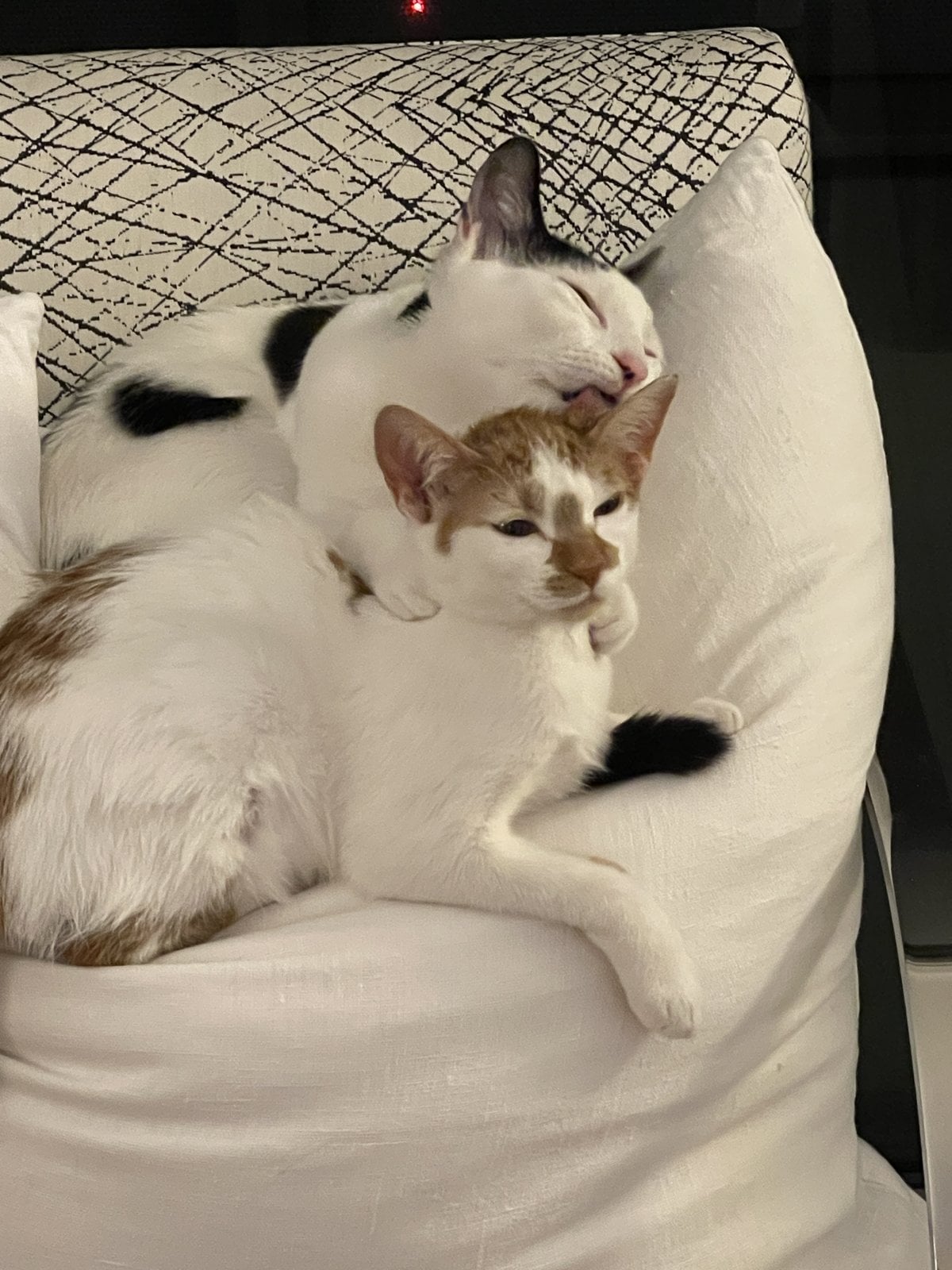
- The bonding type: Both cats lying down in similar/mirrored positions, touching, eyes half-closed. Grooming leading to play-fighting that’s loose and tumble-y, not aggressive, no vocalizations.
- The tension type: One cat grooming another cat that has ears drawn back/sideways. Groomer cat standing over recipient cat. Either cat suddenly scratching own ears, shaking their head, or licking their lips during grooming. Grooming leading to play-fighting that’s more stiff, biting that’s aggressive and doesn’t go away.
- The fighting type: Fur flying, growling, hissing, yowling, preventing escape. Separate the cats calmly, and talk to a vet if it’s a common occurrence.
For more on interpreting your cat’s body language, including ears, tails, and overall body, we have a whole guide to reading cat body language.
Whenever this comes up on Reddit (and it comes up constantly, because everyone with two cats has filmed this exact thing), the answers from other multi-cat homes line up pretty well with the study. One person described the bonding-to-wrestling handoff almost word for word:
My cats do the same thing! One second, they’re cutely licking and grooming, and then the next, they’re biting each other. From my experience, this just seems like some play, and neither cat seems to really get upset/ hurt by it, so I allow it to happen.
— via Reddit.com
And another person had the order reversed, which seems to sort of make sense to us as well:
Those 2 have been together since they were kittens. They actually love each other 😅 they smack each other on a daily basis and then groom each other afterwards. I think they’ll be fine, but I wonder why they do it
— via Reddit.com
What about when it’s only ever one cat doing the licking?
So what does it mean if only one of the cats does most of the grooming. Is the cat doing the grooming the ‘dominant’ cat? Well, the 1998 study of a cat colony found that while it is true that the higher-ranked cats do more of the licking and are more likely to become aggressive afterwards, cats don’t really have the sort of dominance hierarchies we like to imagine they do. The Ghent videos also show plenty of relaxed, affectionate pairs licking each other. Your cat could be doing most of the grooming because they just like to, has more energy, or was excessively groomed as a kitten.
In our house, Thelma actually does most of the licking. But she’s the cat that gets the most picked on by her brother Louis. So I don’t personally think dominance comes into play here. What do you notice with your cats?

Founder and editor of Cat Seat and cat mom to Thelma and Louis. She’s been writing online since 2000.
Hi! I’m Lindsay. I run this site alongside my hubs Cory and our very opinionated cats, Thelma and Louis. We’re so happy you’re here!