
What Attracts Cats to Humans? Why Some People Get Chosen
If you’re a cat (or really, any animal) person, it’s hard not to be a little offended when they ignore you. How rude! But while dogs might be a little easier to win over, cats can be a bit more discerning. We wanted to find out why! Why that one person at a party who claims to not be a cat person has them crawling onto their lap by the end of the night, while the self-professed cat lover is in the corner feeling like the girl who never gets asked to dance. I was that person once, but once I started figuring out why, I became more of a cat lady myself!
So, what attracts cats to humans? Usually, it’s not some mysterious gift or magic ability (though I do think cats can definitely pick up on our auras, if you believe in that!). The truth is cats tend to approach people who feel safe, predictable, familiar, and worth approaching.
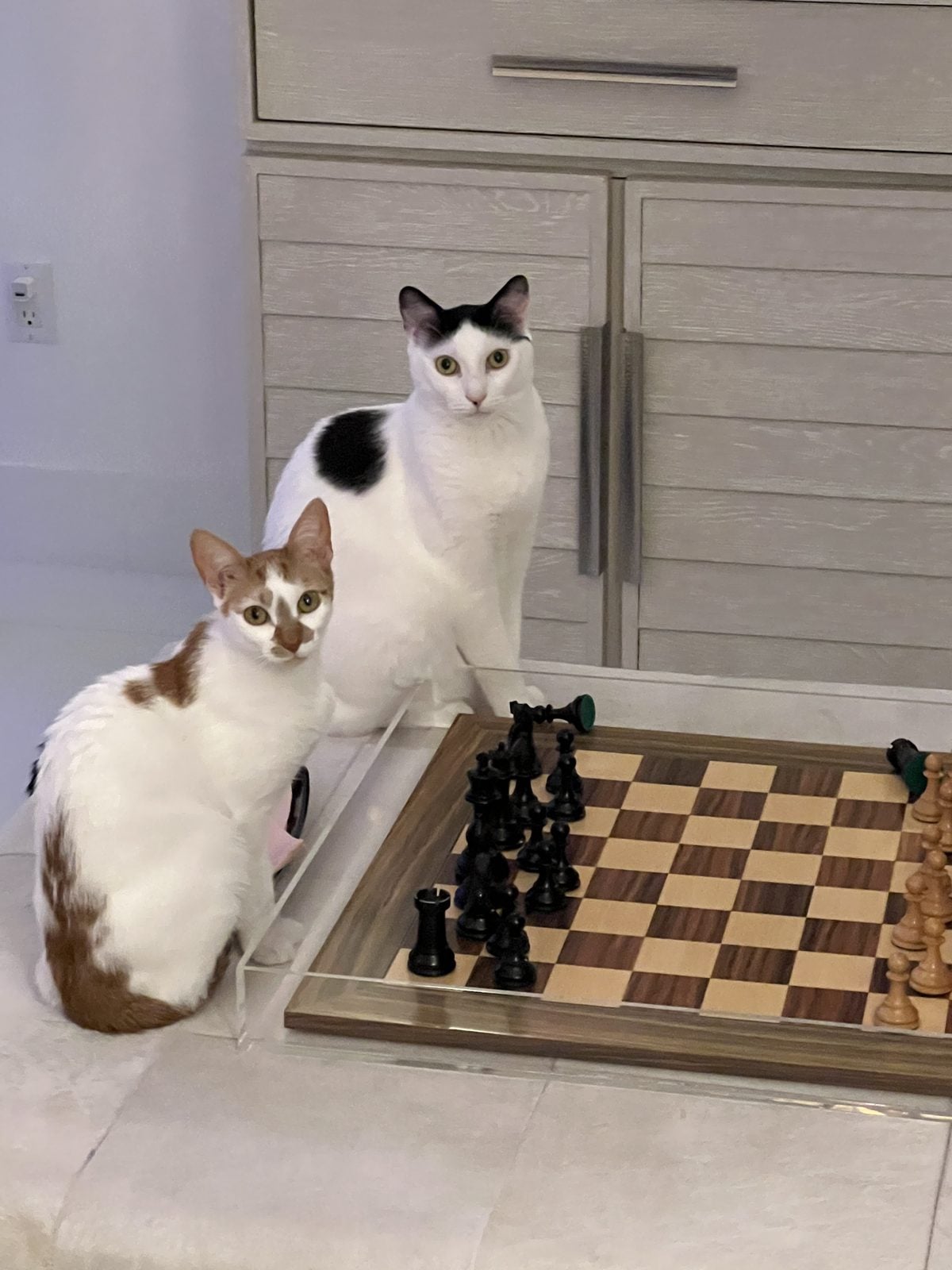
The reality is that every cat has a history, just like us humans! A cat that was socialized early on may go up to a stranger with zero hesitation. That’s just like our Louis. Another cat may be a bit more cautious and need several interactions with you until you slowly see them emerge from behind the chair. That’s actually just like our Thelma. Both of our cats were raised the same way, but their personalities have been a bit like this ever since they were born. Louis will go up to strangers almost immediately, while Thelma will sometimes make an appearance but is often hiding until she thinks it’s safe. As one cat owner put it:
Sometimes you wind up with the love of your life. Sometimes you get a roommate. Every now and then you get a nemesis and don’t understand the origin story.
— via Reddit
The short answer: cats are attracted to people who give them a choice
I think cats need to be able to decide on their own what they feel like doing. Whether or not they want to come up and sniff, snuggle or take a bit more time to decide who you are, they tend to gravitate to someone who lets them do that. Which is exactly what the two big feline-medicine groups (the AAFP and ISFM) recommend in their guidelines: let the cat start, choose, and end the contact. Many cats would rather have lots of small hellos than one big cuddle-grab. (I know, I know, it’s hard not to!)
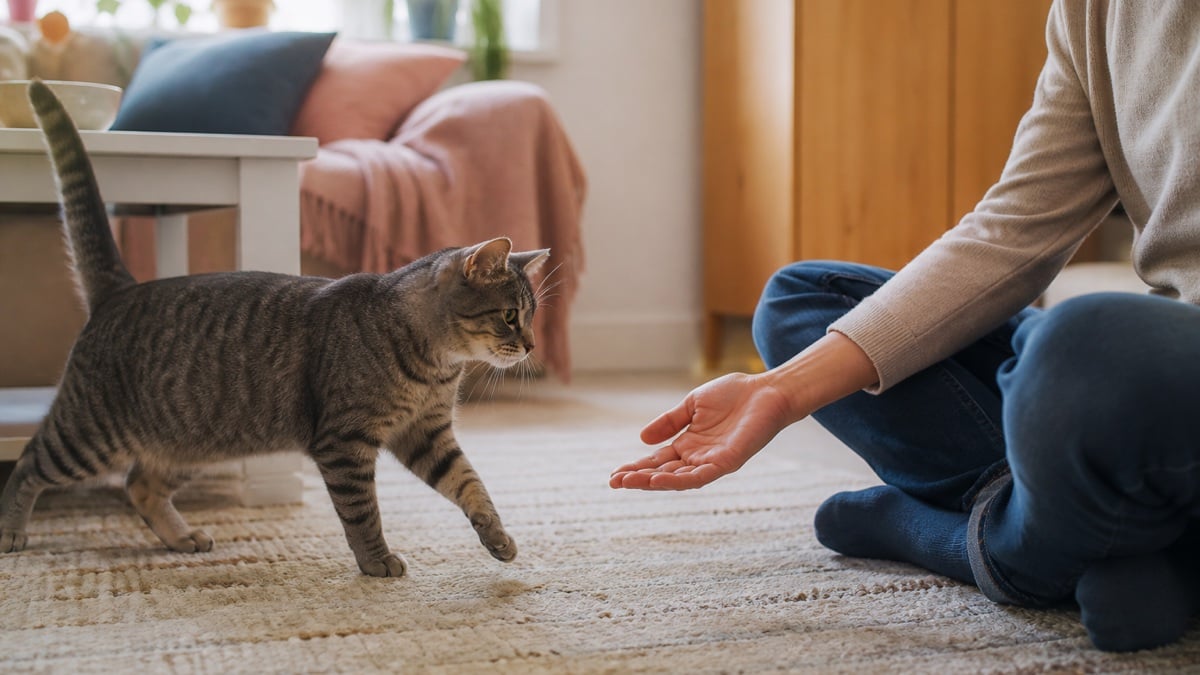
The person sitting slightly off to the side and letting the cat be the one to choose to investigate them is a much easier situation to get in and out of. It’s on their terms, and we all know cats just like it that way. (Really, who doesn’t?!)
Here’s a few reasons why cats bond with certain people, as well as ways to slowly win over a cat’s affection, whether you’re first meeting them or want to reconnect with a particularly cranky cat already at home.
1. Use calm, slow movements
Cats are naturally skittish. I know ours are. These cats have (thankfully) had nothing bad happen to them…ever! Yet when they hear a trash bag open or my husband sneeze, they will freak out and run down the hall and under the bed like insane creatures! So it makes sense that the cat-interaction guidelines say to move slowly and skip sudden, unpredictable movements, especially with a cat that’s already unsure.
That doesn’t mean you need to move like you’re in a scene from The Matrix. Just try to avoid the quick lunge and grab. Instead, sit or crouch at a comfortable distance, turn your body a little to the side, and keep your hand low if you offer it. Let the cat decide to approach you or not.
2. Don’t make eye contact a challenge
My husband Cory was actually the one that taught me about slow-blinking, I never knew that was a thing! Apparently, like whistling, I had no idea how to do it properly until about a dozen tries, but then I finally got it. Louis is not much of a slow blinker, he really just sits and stares, but Thelma is the best slow blinker I’ve ever seen. It melts my heart and I do it right back to her while I tell her I love her!
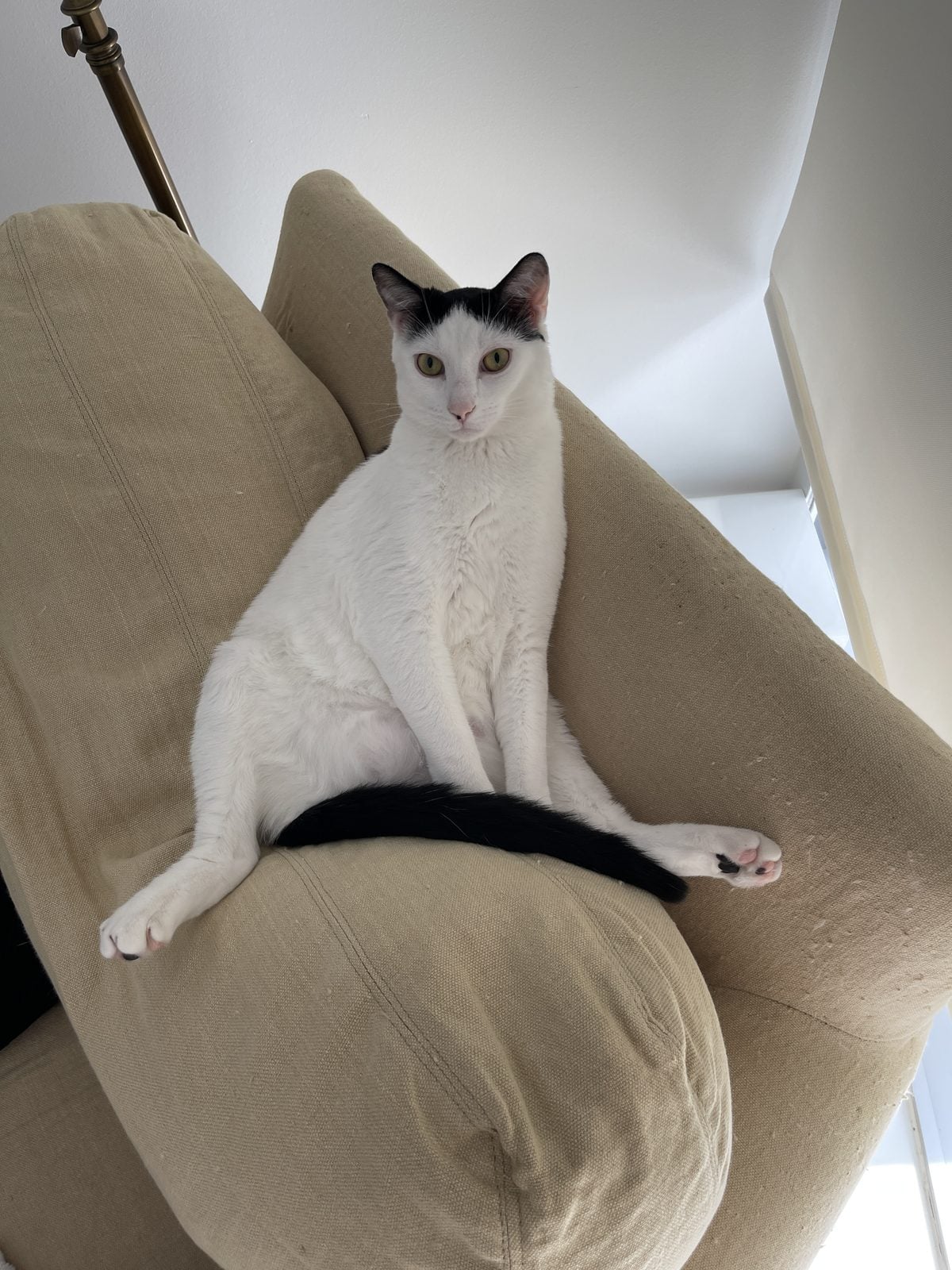
There’s real science behind it, too. In a 2020 slow-blink study, cats narrowed their eyes back after their owners slow-blinked at them, and in a second experiment, cats were more likely to approach a stranger after the stranger slow-blinked first.
The slow blink is not a spell. You can’t squint at a frightened cat and expect them to roll over or hop up on your lap. Think of it as a nice, gentle way to say, “I see you and like you. Do you want to be friends?”
3. Cats love a familiar voice (or tone)
A gentle voice is everyone’s favorite. Nobody likes loud, yelling ones, including cats! But it’s not necessarily the only type of voice they like. In fact, they tend to like those they’re familiar with. In a small study of 16 house cats, cats could distinguish speech their owners directed at them from speech those owners directed at adult humans. They did not show the same distinction when a stranger spoke.
So it’s not just that cats like any high, sweet voice. Cats learn the particular way a familiar person talks to them, and the history attached to that voice. A calm tone can keep a new interaction from becoming overwhelming, but your established “cat voice” only becomes meaningful through repetition. Yes, even the ridiculous song with your cat’s name forced into the lyrics is doing its job.
4. Sometimes it can come down to scent
Our cats love to sniff, like most. And we love to entertain this instinct! For instance, if we come home after petting a neighborhood dog or the cat who lives in our local wine store, we will immediately let them smell our hands. Actually, it doesn’t even matter if we’ve pet another animal, we let them smell us after we get home.
I also let them smell random things in the apartment. LOL. For instance if I’m putting a new Kleenex box into the bathroom I’ll bend down and let Thelma, who is sitting there, smell it. Or if I’m holding a hairbrush and Louis is right there, I’ll let him sniff that. I like to let them smell things as a way of introducing them to something new or to perhaps entertain them. Most cats, or at least our cats, don’t get to go outside so I try to make life at home as interesting in their little world as possible!
Science backs up just how much smell matters to cats. In a 2025 study, cats sniffed an unfamiliar person’s scent longer than their owner’s, and the researchers concluded that smell is one of the ways cats tell known people from unknown. A strong perfume, smoke, or another animal’s scent can also give a cat a reason to hang back.
5. Food and treats are definitely a great start
I’d be lying if I said food does not matter. Cats learn who fills the bowl, who opens the treat cabinet, and whose arrival tends to predict something enjoyable. Food can create a positive association with a person, especially when it is offered without pressure.
A study compared cats’ reactions to human attention, food, toys, and scent, and what was interesting to me is that half the cats picked human attention as the most worthwhile of the group, followed (not surprisingly) by food. Not every cat was the same though, so take that with a grain of churus. LOL. So it’s not like food is the end all be all.
If you want to get to know a cat, a treat works best as an introduction, not a bribe that buys petting rights. Set it down inside their comfort zone and let them decide whether to stick around once it’s gone.
With all that said, in our household I’m not sad that I end up being the main treat giver. I think it definitely makes the cats love mom that much more. (Don’t tell my husband I said that.)
6. Choose the right type of play
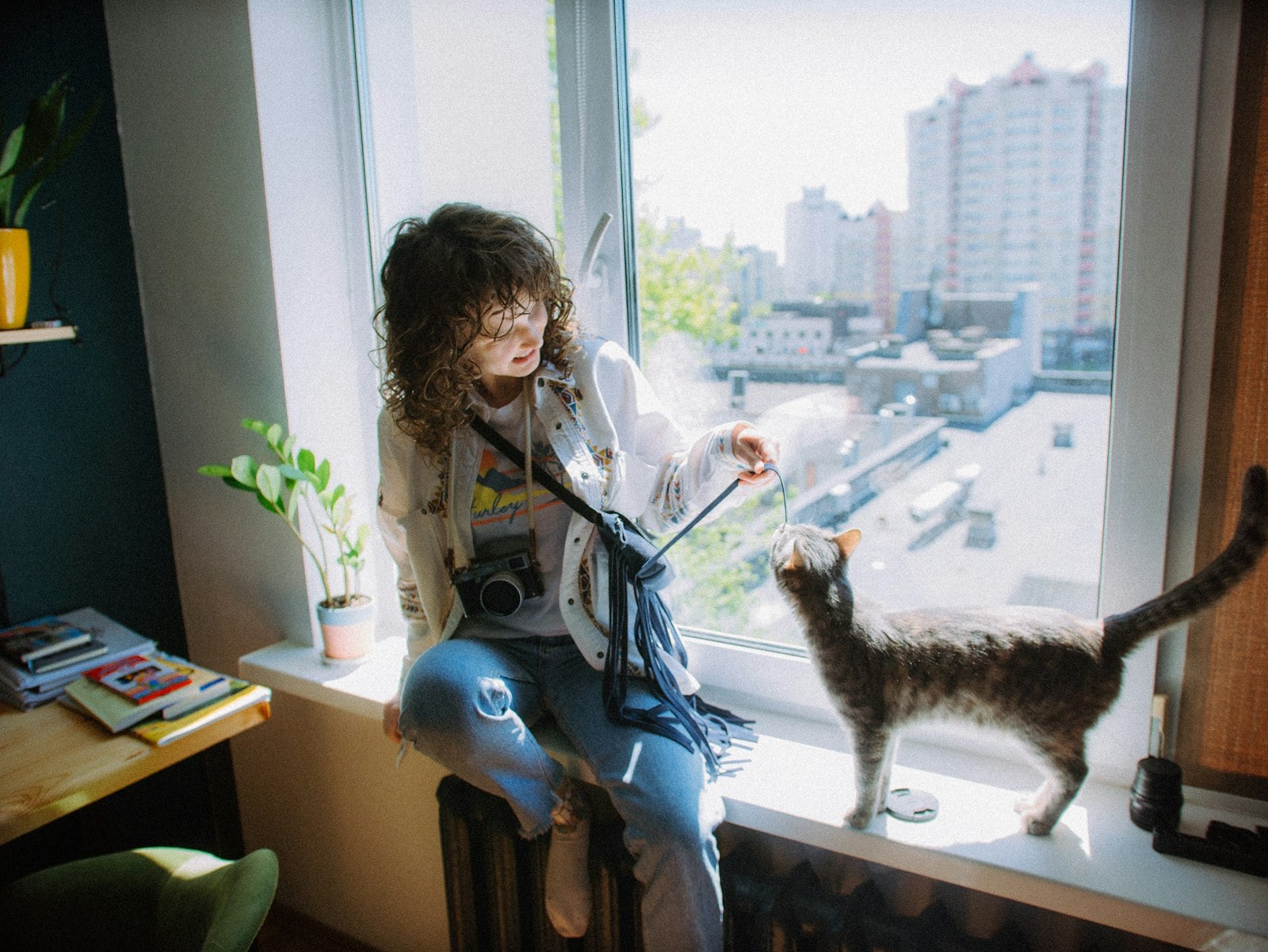
I once read when we got our cats that playing with them, especially with interactive toys like wand toys, is a great way to get them to trust you. You’re showing them you can introduce them to something, let them catch it, then you can let them chase it again and catch it. It builds a great cycle of not only interaction but helping them figure out that you’re trustworthy.
When playing, keep the toy moving away from the cat like prey, not repeatedly into their face. The biggest thing is to let the cat catch it sometimes. You’ll also want to wind the play down and let them safely catch the prey once and for all.
A big play session will not, of course, make every cat an instant bestie, but it can help a cat associate your presence with an activity they enjoy. If you’re around a house cat you’ve never met before, ask the owner before giving them a toy or treat. Some cats have allergies or special medical diets, and some households have very reasonable rules about what toys get launched across the living room.
7. Only pet a cat who wants to be pet
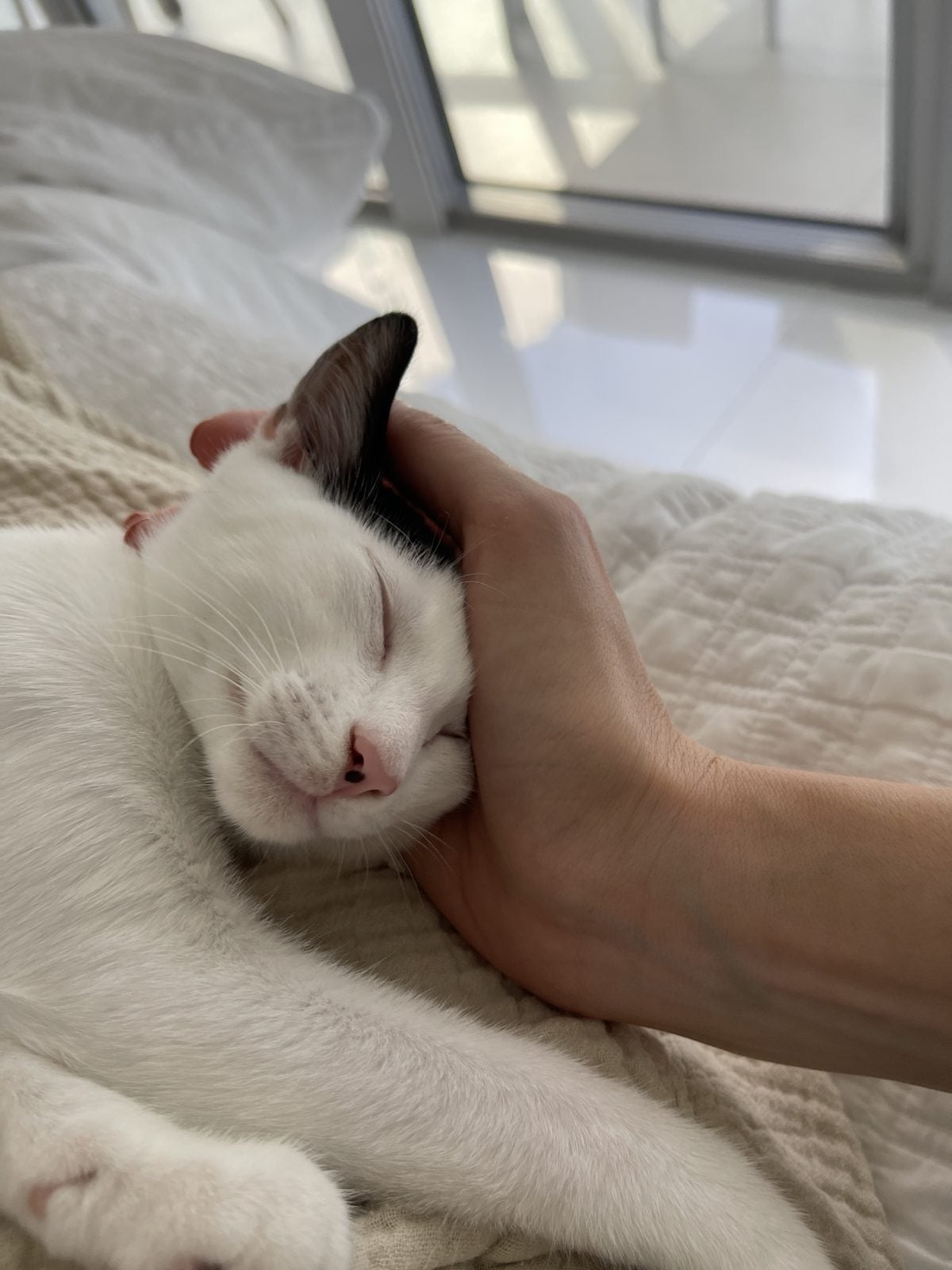
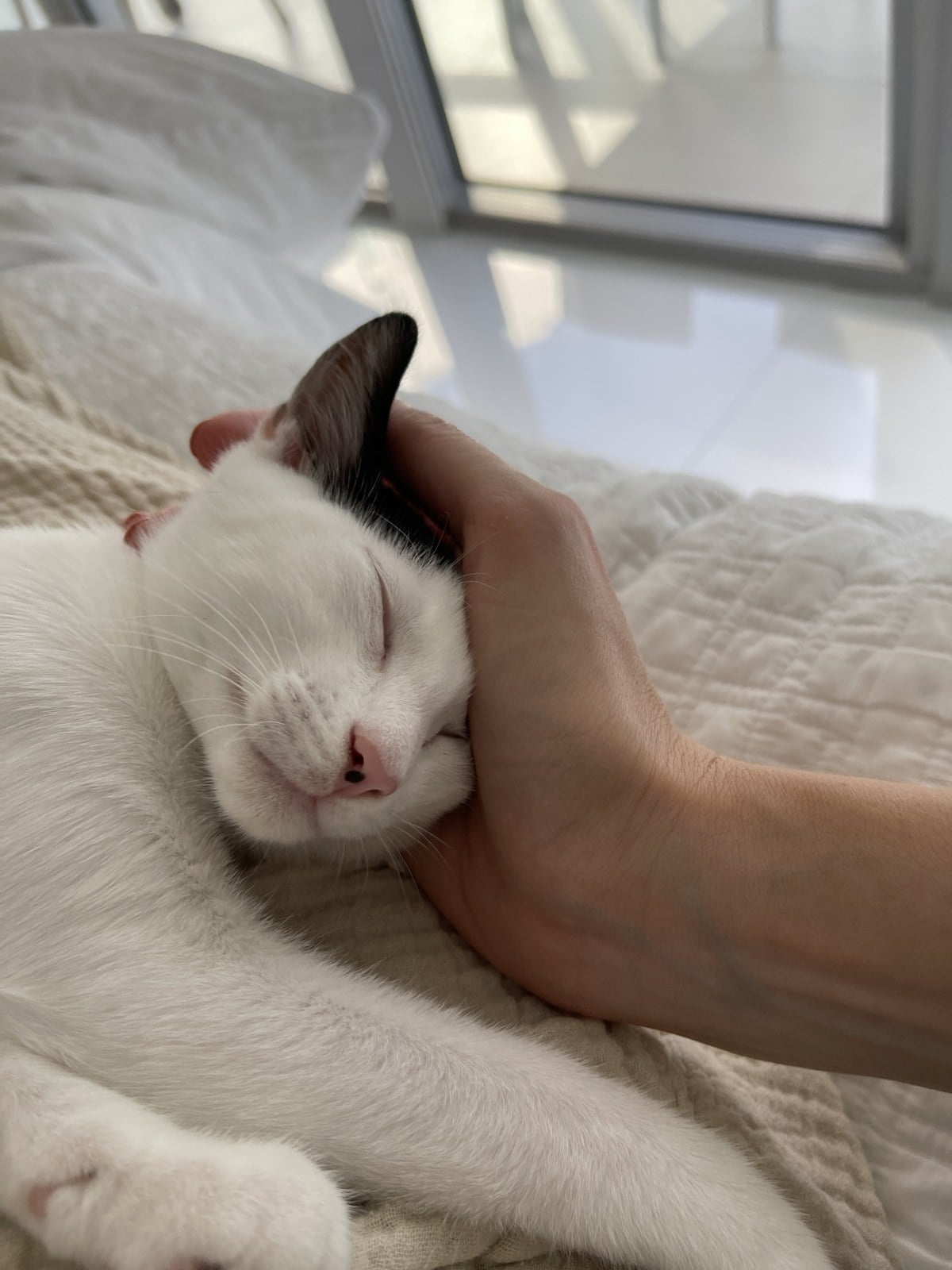
Petting a cat is not the same as being good at petting that cat. Research-backed CAT interaction guidelines advise giving the cat a choice and control in the matter. Personally, I like to approach them with a finger out so they can smell me and decide if they want to lean in for more. If you try that and they lean in, focus first on the areas most cats prefer to be pet on, which are the cheeks, base of the ears, and under the chin. The stomach and the area near the base of the tail are a little sketchier, and should be treated as invitation-only. (This is where the squeamies are, so I know at some point they love it! Maybe the question isn’t if it’s when.)
Jackson Galaxy is big on getting a cat’s permission to pet. In his video “4 Ways to Tell Your Cat ‘I Love You!’”, he says, “People are always wondering why they can’t pet a cat. Because you didn’t ask permission. That’s why.”
When our cats want more pets, they lean in with their cheeks if our hand is outstretched to them. Other times Louis will literally come up on my chest and head-butt me until I pet him, so that’s a pretty clear signal! A cat who turns away, moves out of reach, flattens their ears, or starts swishing their tail is asking for a break instead. Our guide to cat body language has more of the small signs to watch for.
8. A cat’s own history definitely comes into play
A kitten who was raised in a store meeting lots of new customers each and every day may grow into an adult who is more socialized and comfortable meeting new people. A cat who missed that experience or was rescued from a not great environment (or who had to fend for themselves as a stray) may be the opposite. Genetics definitely play a part, but how they were raised and their life experience will be a big factor. Because of that you have to meet a cat where they are, so to say.
This is not a character flaw, and it is not something to fix by forcing more contact. A fearful cat may need distance, a steady routine, hiding options, and gradual positive experiences. It’s about earning their trust, and you do that with consistency.
Why cats often choose the person who is ignoring them
Like we talked about in the intro, do you ever wonder why cats tend to pick the person who is paying the least attention to them? That’s often because a person who is oblivious to the cat (or maybe ignoring them on purpose) is doing several cat-friendly things by accident: sitting still, avoiding eye contact, keeping their hands to themselves, and not following after a cat when it walks away. This is a sort of unwritten cat rule that some owners recognize. It almost sounds like a riddle!
Cat etiquette says that the cat should be the one introducing themselves to the human, not the human to the cat. So when the human avoids the cat, the cat thinks the human is being polite, so it goes and introduces itself.
— via Reddit
Meanwhile, the person who desperately wants to make friends may be more in the cat’s face, calling for it repeatedly, trying to pick it up, etc. Think of this as a surprise party the cat did not RSVP to.
That doesn’t mean you should act completely indifferent to a cat you want to get in the good graces of. Of course cats want human attention and love, and many actively seek social contact. The key is to be available without being pushy. Say hello and give them room to answer.
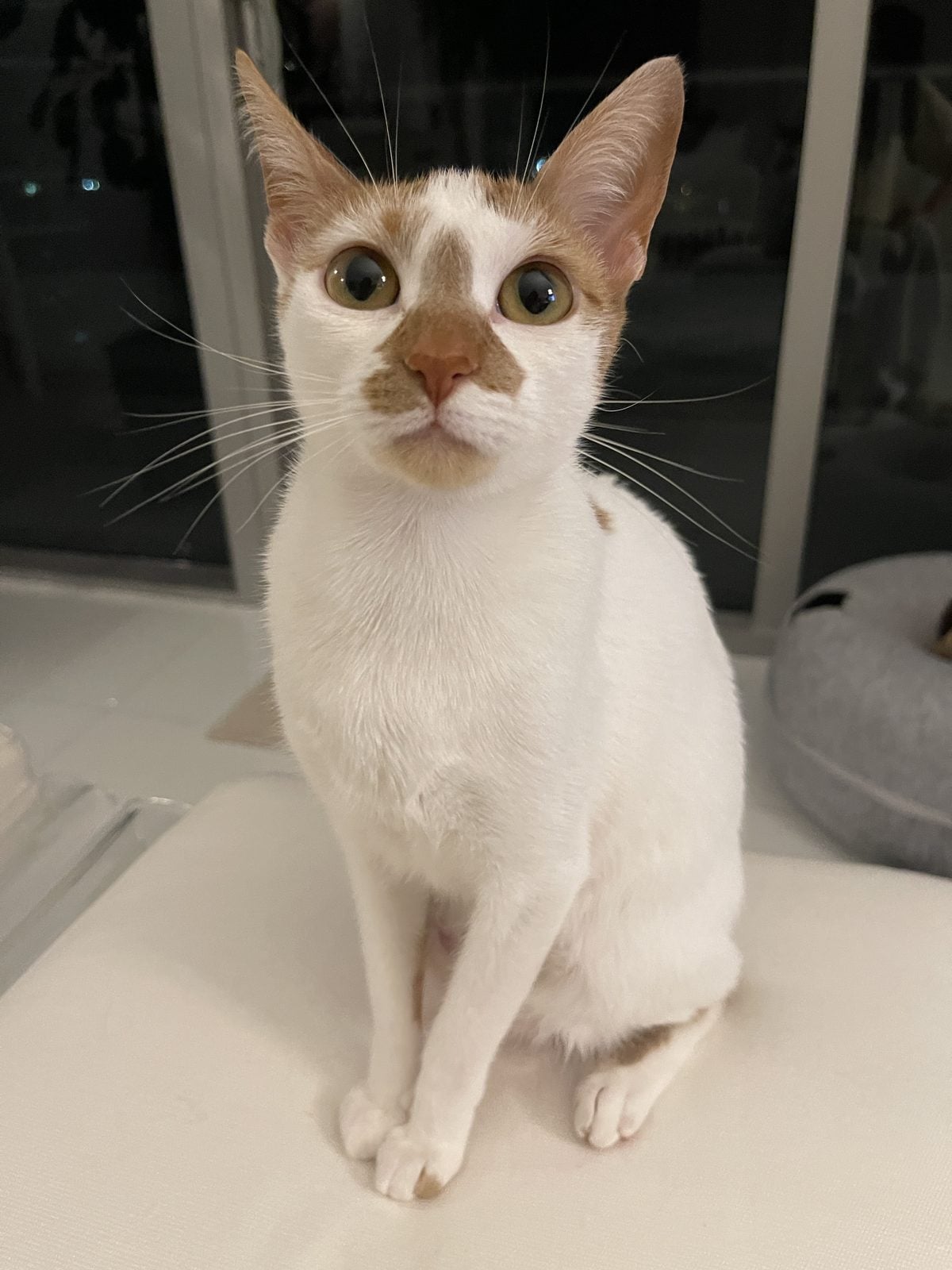
How to make a cat more likely to approach you
Try this with a friendly or curious cat who has the space to decide what’s next:
- Get down low rather than approaching them at full height.
- Turn slightly sideways and soften your gaze.
- Slow-blink once or twice, then look away.
- Speak in a quiet and nice voice… like a baby voice.
- Greet them with your hand or a finger stretched out and let them smell you.
- Let the cat sniff, rub, or leave
- If they lean in, start with a cheek rub or a head or neck scritch.
A tail held upright, ears in a neutral or forward position, sniffing, rubbing, or staying near you can all be encouraging signs. A cat that approaches you is not always a request for more pets, though. Let them give you the once over and go from there.
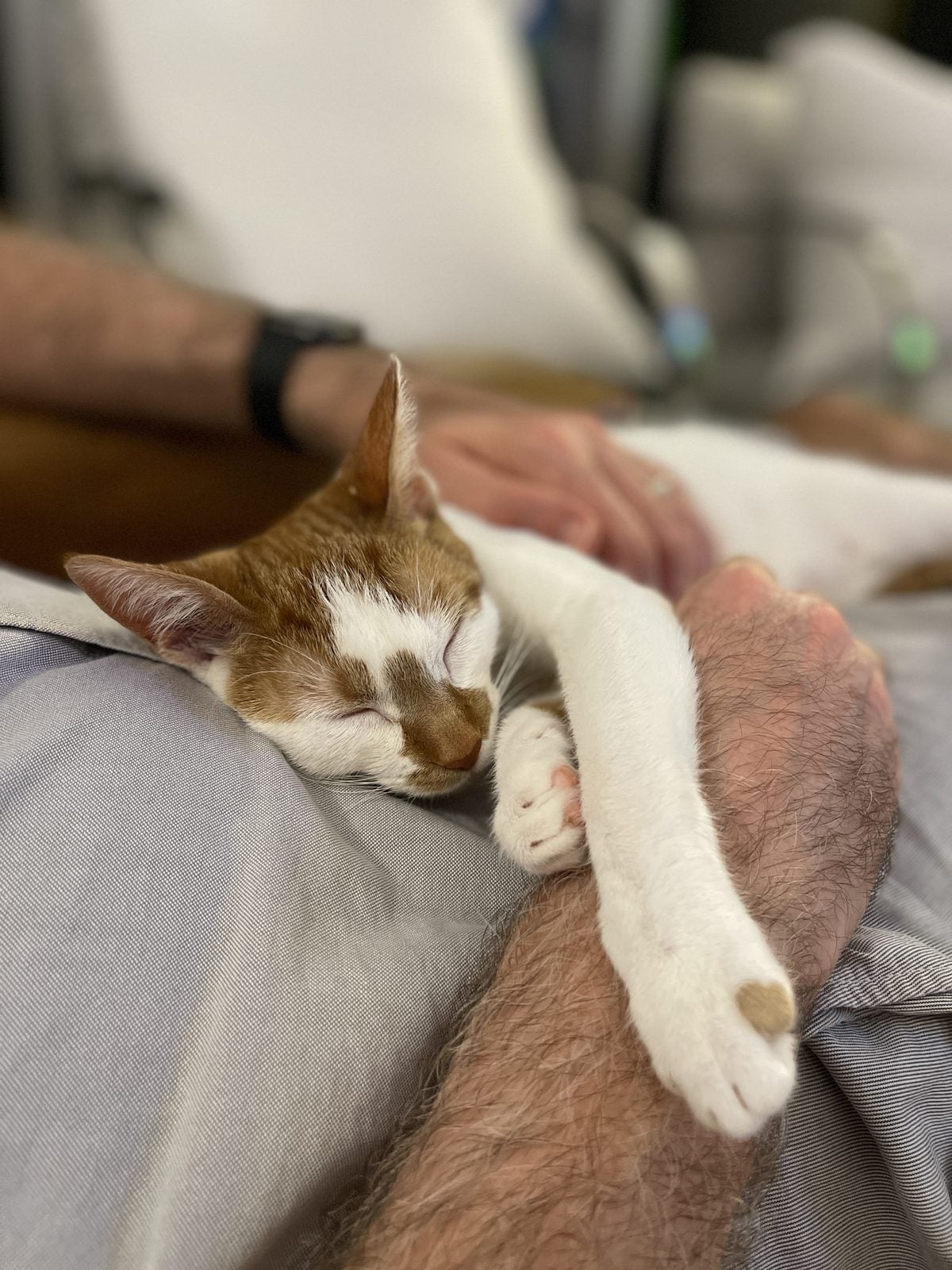
The good news?
The person a cat approaches today may be the quietest person in the room. The person they form a lasting bond with is usually the one who keeps them safe, well fed, healthy and entertained, and above all is there for cuddles when they want them.
If the cat already lives with you and you want to build on that relationship, these 12 ways to become your cat’s favorite person can help turn these tips into everyday habits!
Tell us, how do you first greet a new cat? Let us know in the comments section below!

Founder and editor of Cat Seat and cat mom to Thelma and Louis. She’s been writing online since 2000.
Hi! I’m Lindsay. I run this site alongside my hubs Cory and our very opinionated cats, Thelma and Louis. We’re so happy you’re here!
[email protected]
Am looking to get an 11 year old surrendered cat that the owner says was not good with cats.
I have a 3 year old male.. is there any chance that cat will adapt.
My Cat Nyx was in a cage at Petco, she is all Black which is why I named her Nyx! I asked the worker there if I could could get a closer look at her, the worker took her out of the cage and I let Nyx sniff my hand, I asked the worker if I could hold her and when she settled in my arms she leaned into me and that stole my heart Instantly, we purchased her and brought home that day and she still doesn’t mind when I pick her up. She is by far THE Sweetest cat I have ever known!
That is the best!!
Sure but it might take time and patience and the proper way to introduce the cat to your home and other cat!
Absolutely!
I have been adopted by a stray black male cat. We recently moved into this house and he came to visit. I feed him and he is pretty friendly, lets me pet him and will sleep on our deck with his foot touching my shoe. He would come into the house if I would let him. We’ve made him a cat shelter for winter so I’m hoping he will use it. We go to Florida over the winters and I’m worried about him. There are a lot of barn cats in our area and sometimes he stays away for a day or so. I’m just feeling bad about leaving him.
Awww have you thought about letting him in? But then he is 100% yours if you’re ready! And would need a cat sitter while you’re gone…we have the hardest time leaving our babies… I know we should more often but I miss them! LOL