Why Talking to Your Cat Actually Matters
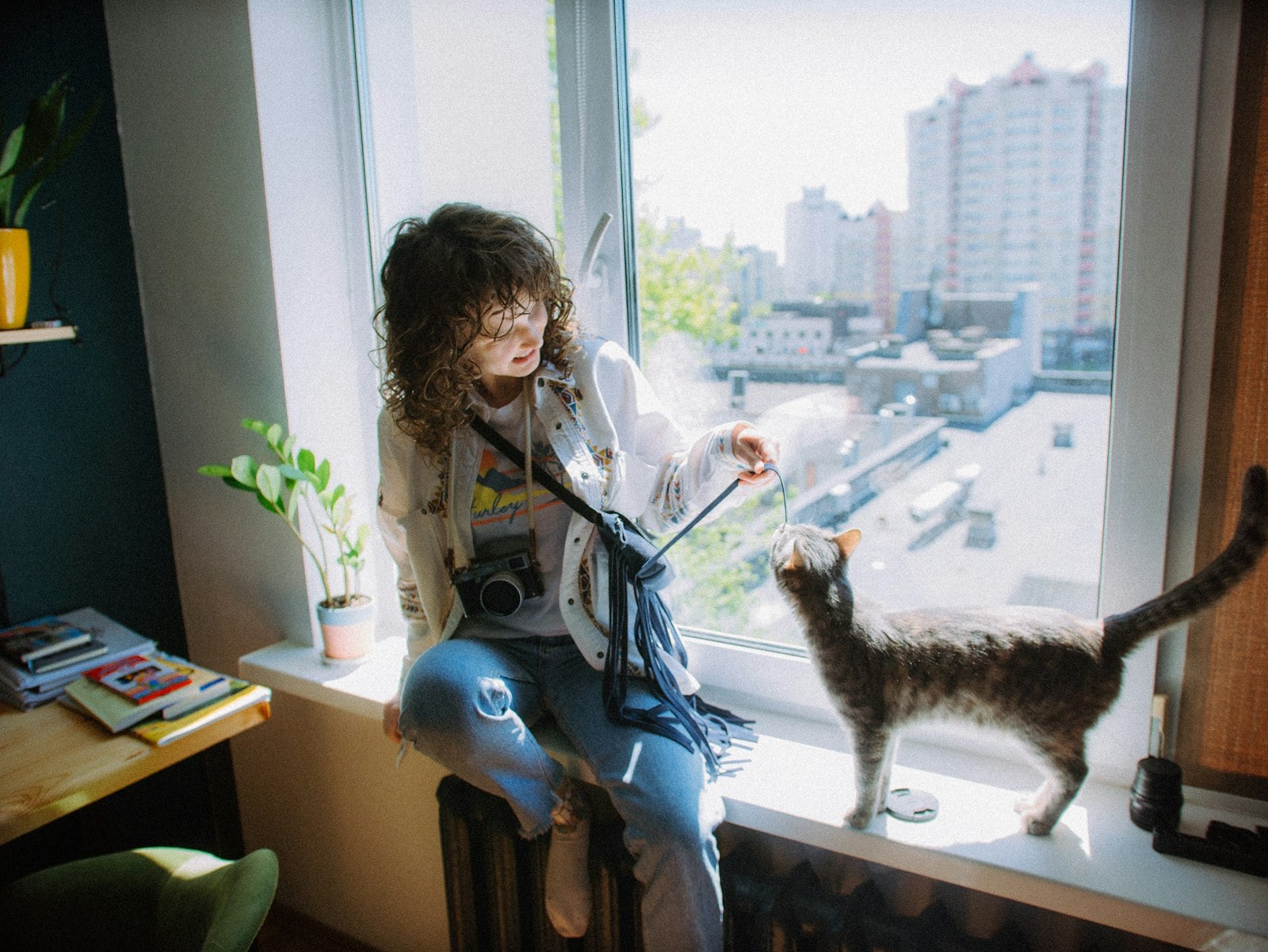
I talk to my cats constantly. I narrate what I’m doing in the kitchen, I say good morning to them like they’ve asked how I slept, and when Cory’s trimming their nails and one of them starts to get anxious, I come in and sing to them, which somehow settles them down. For years I assumed this was just a slightly embarrassing thing cat people do. But it turns out the research for doing it is actually there, and your cat might actually be getting more out of these one-sided conversations than they let on.
I mean we’ll never actually know, since our cats can’t speak to us and we can’t understand them …yet. (Have you heard about these cat translator apps that are getting better and better because of technology? It’s kind of crazy.)
What the studies actually show is narrower and, I think, more interesting: your cat knows your specific voice, recognizes the sound of their own name, responds differently when you use your cat voice vs. “talking to other humans” voice, and pays attention even when their only visible reaction is one ear swiveling in your direction.
Here’s what the studies actually found…
Your cat knows your voice, and chooses how to answer
The foundational study here is from 2013, when researchers Atsuko Saito and Kazutaka Shinozuka played twenty house cats a series of recordings: three strangers calling the cat’s name, then the cat’s own owner. The cats reacted more to the owner’s voice. Most of them showed the pattern you’d hope for, tuning out the strangers and then perking back up for their person.
But here’s the part that makes it a cat study and not a dog study. The cats recognized their owners by turning their heads and swiveling their ears, and that was it. No running over, no meowing back, no tail going. They clocked exactly who was calling and made a deliberate choice not to make a thing of it. If you’ve ever called your cat and watched a single ear rotate toward you while the rest of the cat pointedly did nothing, you’ve replicated this experiment in your living room. That ear is the whole conversation.
Even if they don’t wanna respond, their ears always do!
— via Reddit.com
They actually recognize their own name
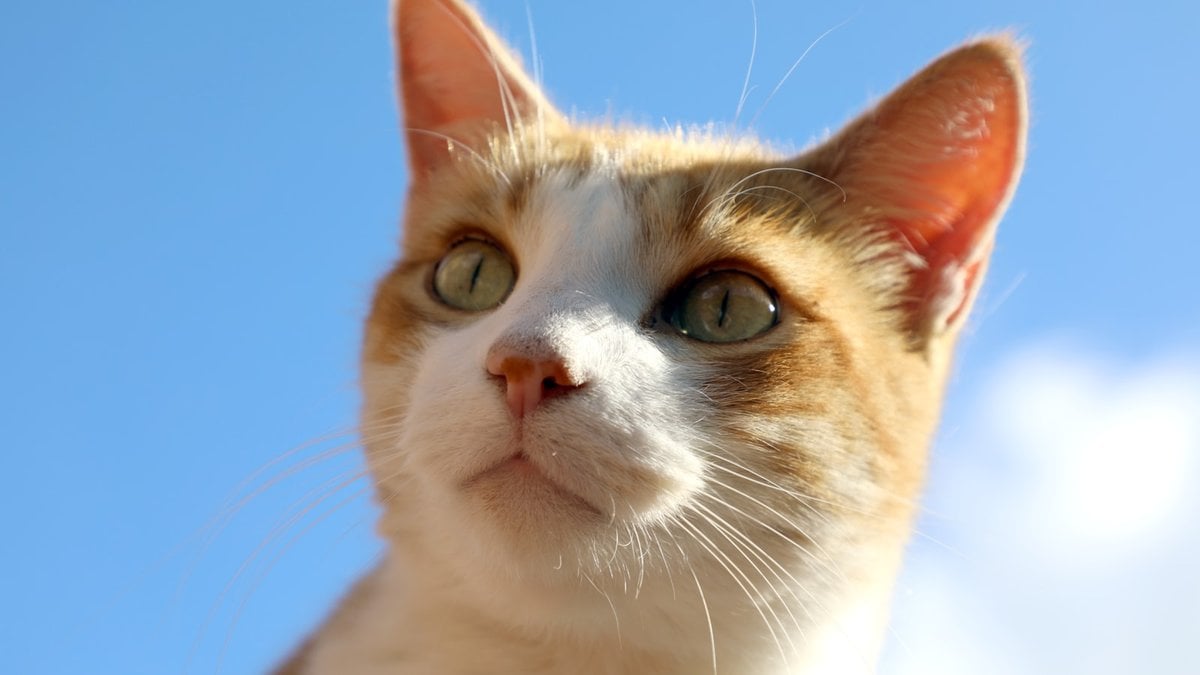
The bigger follow-up came in 2019, when Saito’s team tested 78 cats and found that house cats really do distinguish their own name from other random words, even when a total stranger says it instead of their owner. That last detail matters, because it rules out the cat simply reacting to a familiar voice. They’ve learned the specific sound of their name.
I want to be careful about what “recognize” means, because it’s easy to oversell. The cats weren’t demonstrating that they understand it’s a name, or that it refers to them the way it refers to you. What they showed was a measurably different response, more ear and head movement, to their name than to similar-sounding words. Somewhere along the way, from you saying it at every meal and every greeting, the sound became meaningful. A cat café in the same study, where cats hear many names all day, produced cats that couldn’t tell their own name from their roommates’, which fits: the name means something because you made it mean something, one repetition at a time.
The same study also looked at cats in a cat café, where they hear many names all day, and those cats couldn’t tell their own name from their roommates’.
Bottom line? Studies shoe that cats know their names if they’re repeated enough consistently, but how they respond to them is up to their mood. Classic cat!
your “cat voice” is what they respond to
You know the higher, softer, sing-songy voice you slip into with your cat without deciding to? Scientists call it cat-directed speech, and it’s the feline cousin of baby talk. A 2022 study by Charlotte de Mouzon and colleagues at Université Paris Nanterre found that cats reacted to their owner’s cat-directed speech, growing more alert when it played, but did not react the same way to (a) the owner’s normal adult speaking voice or (b) a stranger using the exact same cat voice. In other words, it’s the combination that lands: your voice, in that register, aimed at them. A stranger’s baby talk did nothing. So the goofy voice isn’t just you being soft. To your cat, it’s a signal with your name on it.
Why cats talk to us at all
One fact reframes every meow you’ve ever gotten: adult cats rarely meow at each other. The meow is, more than anything, a human-directed behavior. Kittens meow to their mothers, then mostly grow out of it with other cats, and house cats keep the call alive specifically for us, an entire vocabulary of chirps and trills and demands developed and aimed at the one species that talks back. This comes from the work of cat-behavior expert John Bradshaw, and I’d only flag that “rarely” is the right word, not “never,” since feral cats do still vocalize in some situations. But the everyday meowing your cat does at you? That’s a conversation they’re holding open on purpose.
That claim comes from John Bradshaw, an anthrozoologist at the University of Bristol who spent decades studying how cats behave and wrote the book Cat Sense. It isn’t one, big, dramatic experiment; it’s what he and other researchers kept seeing when they watched groups of cats living together, including feral colonies: the adult cats almost never meowed at each other. Well, “rarely” is the right word here, not “never,” since feral cats do still vocalize in some situations. But the everyday meowing you get at home is your cat deliberately talking to YOU.
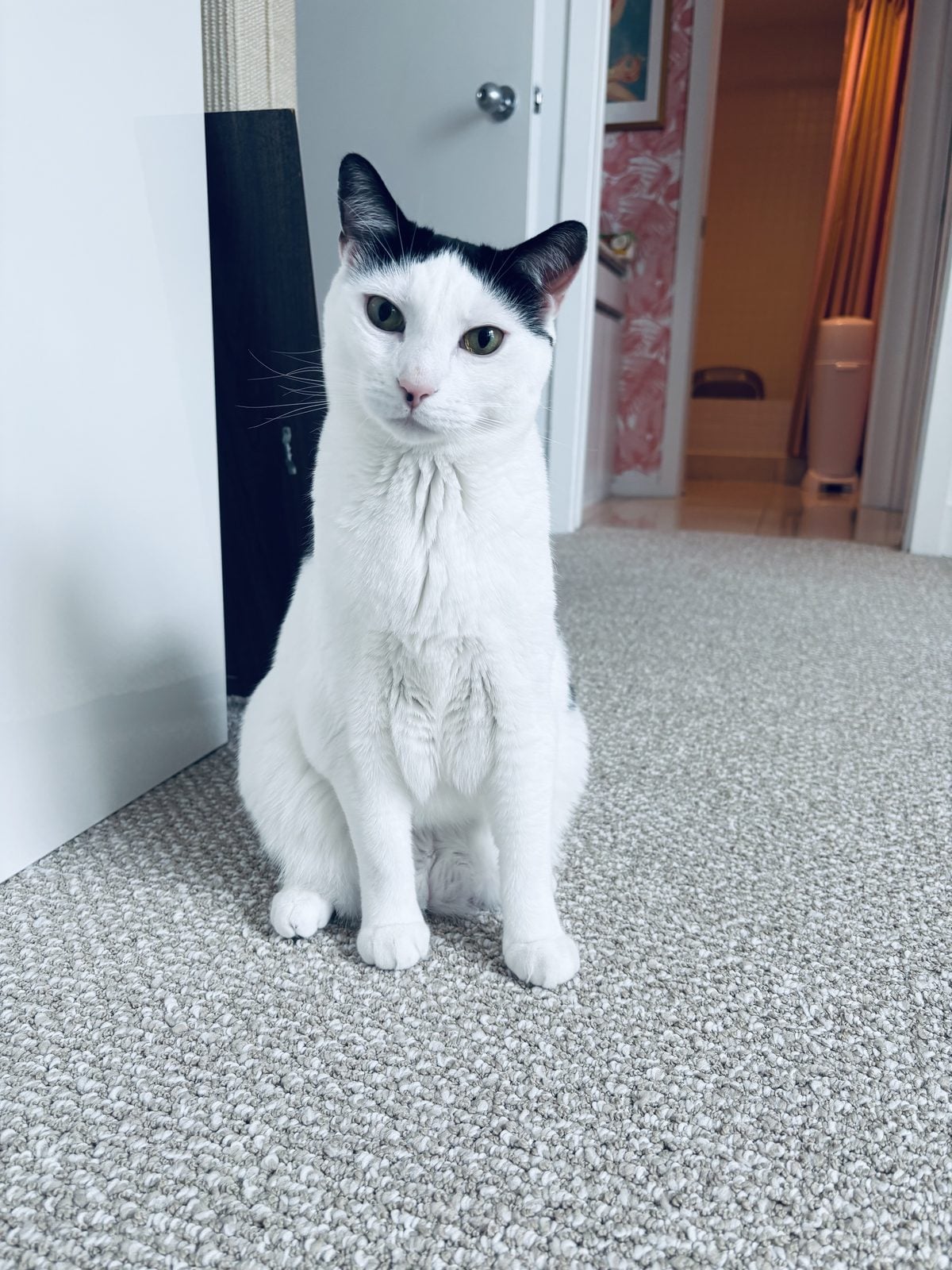
And some of that meowing is actually designed to pull at our heart strings (or get us to give them some food most likely LOL). Back in 2009, Karen McComb’s team at the University of Sussex identified the “solicitation purr.” It’s a low rumble with a high-pitched, insistent edge to it. They played it for people, and even those who didn’t own cats found it far more pressing than a normal purr (which means they would likely take action if they heard it to make sure their cat was ok of if they needed anything). It seems cats have zeroed in on the very frequency we link to a crying baby. So if the purr you hear in the morning feels a little weaponized, there’s a reason for that. (We knew it!)
The bond behind how you talk to your cat is measurable
If you’ve ever felt slightly foolish for how attached you are to a cat that acts aloof, one more study is worth knowing. In 2019, Kristyn Vitale‘s team at Oregon State ran cats through the same “secure base test” used on human babies and dogs: time with their person, a stretch alone, then a reunion. About 65 percent of the cats showed secure attachment, greeting their person and then settling, a proportion strikingly close to the figure for human infants. The bond you feel isn’t you projecting. It’s a documented attachment style, and your voice is one of the main threads running through it.
None of these studies is huge, and I’d frame all of this as “the science suggests” rather than “the science proves.” But the picture they paint together is consistent and kind of lovely: the talking matters because it’s one of the ways your cat keeps track of where you are, who you are, and whether things are normal.
The studies are small, so I’d call all of this what the science suggests rather than proves. But taken together, the results line up, and the picture is a nice one: you talk to your cat because it’s one of the ways they make sense of you and the world around them.
Our vet actually told us to do this
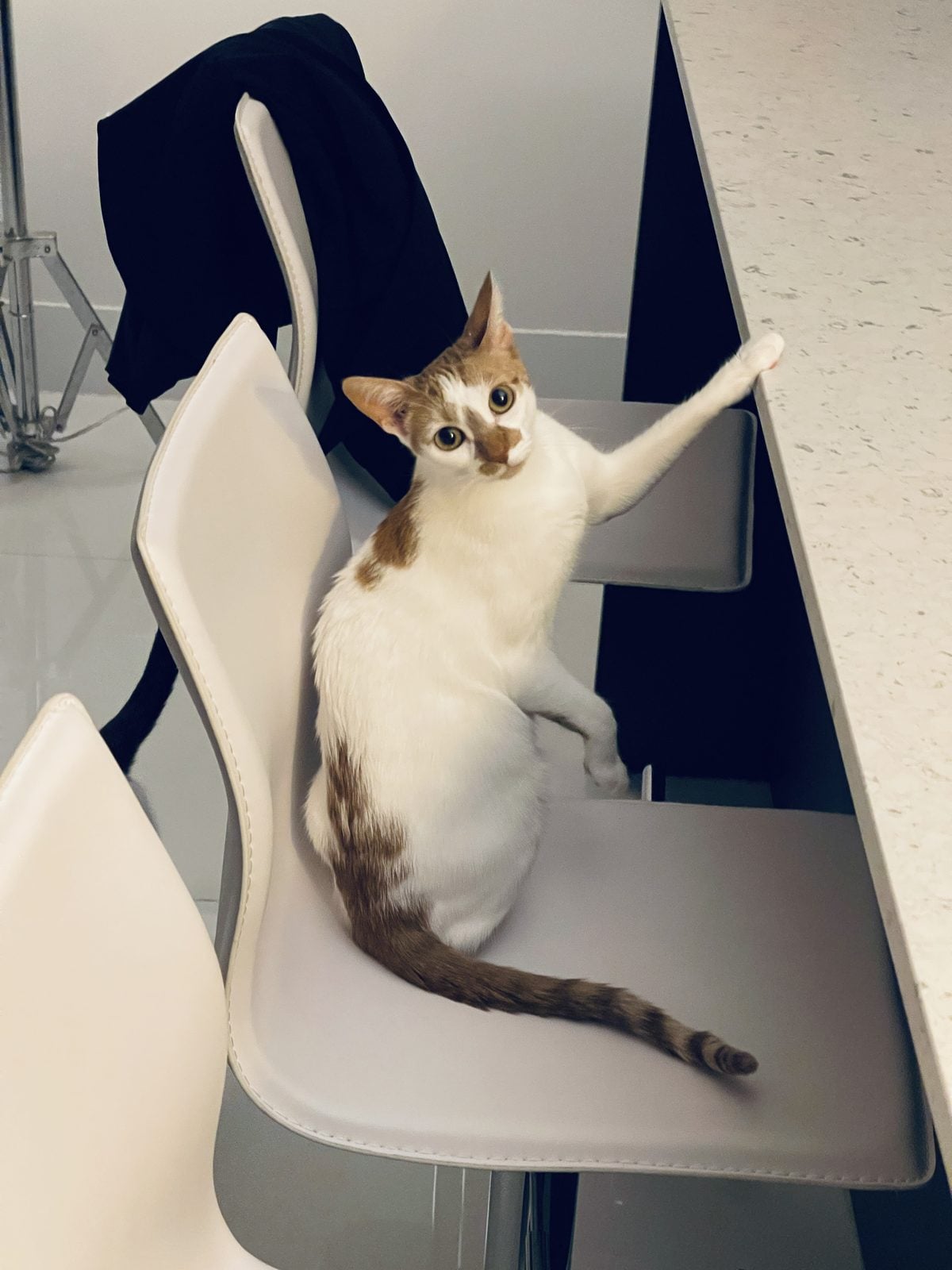
I got the strongest push toward talking to my cats from an unexpected place: the vet. When we had to put Louis on a diet and feed him fewer calories, our vet told us we should have a talk with him, and explain to him that we were going to be putting him on a diet, how much we were going to be feeding him, and why. Ever since then, I try to explain things to Thelma and Louis like another human (which admittedly does make me feel crazy from time to time, LOL).
If we’re going out to dinner, I’ll say, “We’re going out for a drink and dinner with friends. We’ll be back in a couple of hours. Be good, and Louis, please take care of your sister.” Or, “I have to go out of town for work for a few days, but Daddy will be here taking care of you. I’ll be back in three sleeps, and I’ll see you when the sun is shining on Saturday.”
Do they understand the words? Based on everything above, probably not. But the register, the tone, the ritual of it, the fact that it’s my voice doing the explaining, all of that does SOMETHING (IMO). And it actually makes me feel closer to them, which is something I suspect the vet knew.
So what do you actually do with this?
You mostly keep doing what you’re already doing, with a little bit more confidence and understanding that it counts. If you want the cheat sheet:
- Use their name for the good stuff. Meals, treats, attention — not the vet carrier, so the sound keeps a good reputation.
- Narrate the routine. The feeding, the leaving, the coming home. A familiar voice on a predictable schedule is the kind of stability cats lean on.
- Keep the ridiculous cat voice. That higher, sing-songy register is the one the research says they actually respond to.
- Talk through the scary stuff too. The carrier, the car, the nail trim. A calm familiar voice is one of the few comforts you can actually offer in the moment.
- Keep it consistent. Same name, same phrases for the same routines. Cats learn which sounds mean something by how reliably they land.
This might sound obvious, but the one thing I’d let go of is the expectation of a reply. Your cat can recognize your voice, know their name, and feel truly attached to you, and still stare at you and do absolutely nothing when you call. In other words, responding is not the point.
my cat will turn his ears when i call his name a lot, but keep doing what he’s doing and just ignore me. i know that little menace hears me.
— via Reddit.com
He hears you, and that’s the whole thing, so keep talking to them.

Founder and editor of Cat Seat and cat mom to Thelma and Louis. She’s been writing online since 2000.
I’ve been reading your post for a few weeks now and I must say I’m very impressed you are very in tune with your cats as I thought I was too and I’m so glad to have come across your site you have taught me so much I was feeding my cats the worst possible thing which was Meow Mix and Temptation Snacky but after reading your post I have completely switched I no longer give them me I’ll make our Temptations I have Splurge for the good stuff because she is so worth it I just wish I had known this long ago with my other two cats I could not why the cat I have now Luna keeps vomiting and it was driving me crazy but after reading your posts you’ve educated me so much and I can’t thank you enough for that and another thing I’ve been reading about the little but taps the butt Pat’s and I never would have thought my cat would have liked this thought you would have looked at it as scolding her but it was completely opposite she absolutely loves it and I’ve seen a couple other videos on this and they give their cats the butt pats and their cats love it too I mean this one guy look like he was using his cat’s butt is a drum he had quite a rhythm going on there and that cat just stood there and loved it so I just wanted you to know I’m still reading your post and still learning so much from you you are definitely a cat whisperer thank you🥰. Patricia m
Thank you so much for reading Patricia and for such a sweet comment! And the butt taps are hilarious aren’t they? They just love them so much!!
Weve been adopted by a formerly feral cat. We call her Mama. She knows my voice, responds to hearing it by coming to me, for scratching and brushing. She cuddles up on my lap to catnap while I’m watching TV every evening and reaches up to touch my face if I stop talking to her. She licks my other hand while I’m scratching and rubbing her with my other hand.
Awwww Mama sounds adorable!! It sounds like she found the perfect spot. 🙂
I have found that cats come to make sure I am alright (show actual concern) if I am whistling. So, of course, I whistle a whole lot less than I used to, for the cats’ sakes. I don’t want them to worry over me. They tend to be care-givers, as much as cats can be — in other words, come check on me regularly, and cuddle with me if I act like I need it. If I make other odd noises, they come to check on me, as well. Since I am 77, getting around via electric wheelchair, their care for me is especially precious!
That is so sweet Nancy! And what a fun fact about the whistling. It sounds like you have some amazing cats by your side!
My husband who was in puddle of tears at the bedroom door was holding a tiny little terrified grey ball of fluff, words were unnecessary. I already said yes because Bits had been ferociously attacking the window. We assumed it was her hormones after The strapping young strutter showed up and we knew he was an indoor/outdoor boy and not fixed either. We assumed the kitten also belonged to an owner however after about a month of zero replies to kitten found Slugger’s new home was now here with us. He is by far the noisiest cat we have ever had. He’s talking back to us and tries to make the sounds and words we do. I swear I actually heard him call me “Jackie” the other day. Or he called me “treat lady” however it was a demand for everything and anything that comes from being the proud parents of a pouncing pudge fart.
Haha I love thinking that he said your name!
We talk to our cats as if they’re regular members of our family; we even have a special chirrup we do for wet food breakfast! When I make that noise every morning, they come a-runnin’! I also like to sing to the kitties when they take car rides. It really makes a big difference in how anxious they are!
Talking to them is the best and even though I feel crazy I love it!
My husband swears our cat is deaf bc she doesnt respond when he talks to her. He isn’t buying that it is typical cat behavior lol. We have had her since March. She is very vocal at night but not evry night. Her night behavior is crazy! But she also likes to snggle at my side at night. I talk to her all the time, as well as to our 2 dogs. Another funny thing – when I talk to our animals, my husband always assumes Im talking to him and says what did you say? Lots of fun talks in our household with the animals.
Love your posts!
Gloria
Haha we do that too!
I have always my entire life talked to my cats and dog ( actually all my animals) in everyday conversations. I thought that was the norm. Animals make it very clear what they’re trying to say , you just have to be willing to listen
I agree!