9 Subtle Signs Your Cat Actually Views You as Their Parent
 By Cory Jones
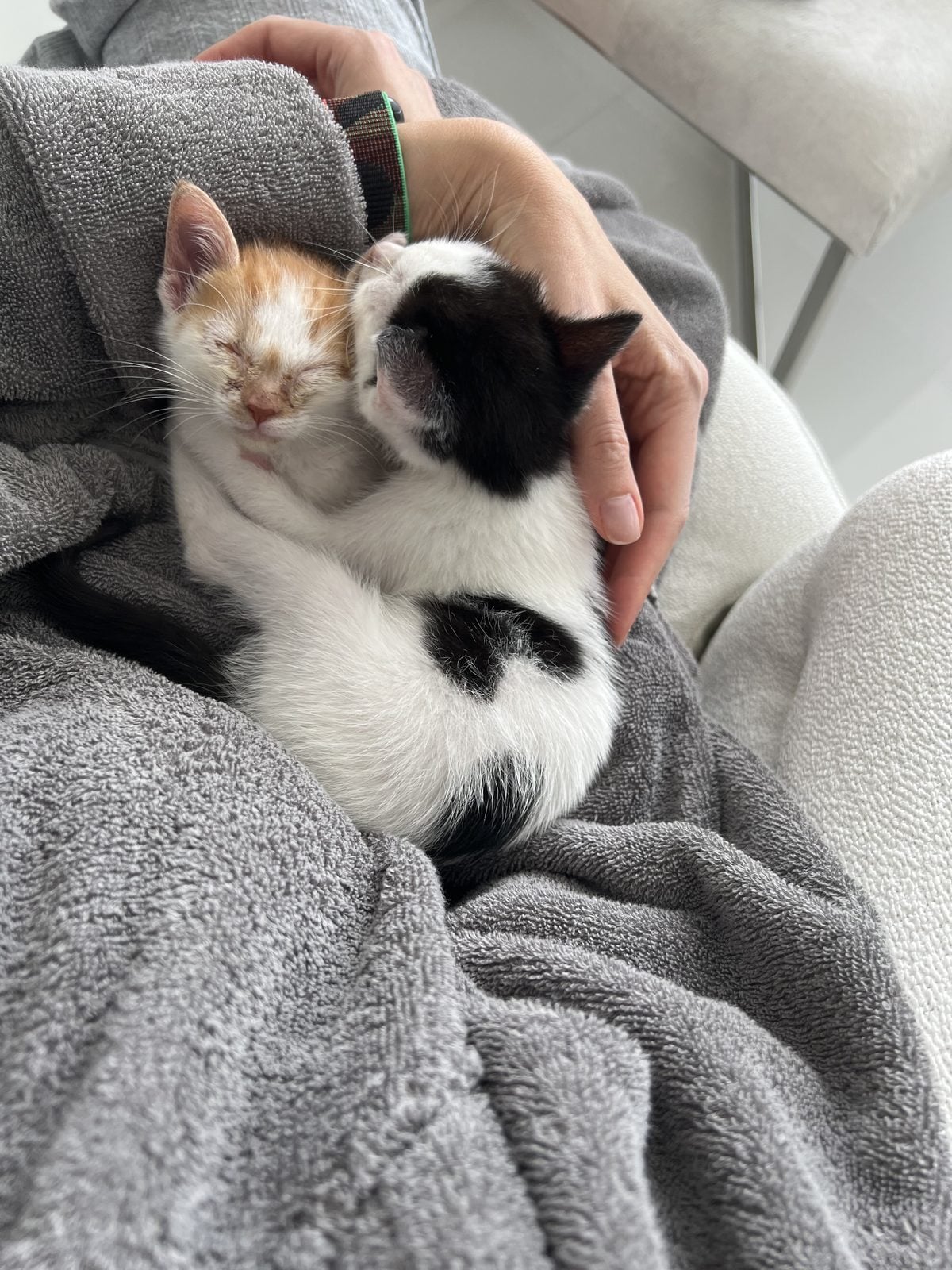
The words “Catmom” and “Catdad” have become well-known terms for those of us who care for our little feline friends. But there may actually be something to those names. John Bradshaw has spent thirty years studying cat behaviors at the University of Bristol and he’s learned a lot about the relationships between cat parents and their cats.
One of his most interesting findings is that cats never develop a separate set of behaviors for their human parents that they had with their own cat parents. How kittens treat their mothers is how they treat us. Which is pretty cute!
“They are using behavior that they would use toward their mother,” Bradshaw told National Geographic. “All the behavior they show toward us is derived in some way from the mother-kitten relationship.”
In short, all the things most cats do (kneading, chirping, following you to the bathroom, leaving “presents” at the welcome mat) are the same things they do for their parents.
Here are nine ways you can tell that your cat has adopted you as their Cat Parent.
1. They knead you no matter how old they get
The biological reason newborn kittens “make biscuits” is to start the milk flowing from their mom’s belly. And as most cat parents know, they keep doing this for the rest of their lives.
“It is a leftover weaning behavior,” says cat behaviorist Jackson Galaxy. “Little kittens will do this to their mom’s belly while they’re trying to actually stimulate milk to come out of the nipples, and we often see it in cats that have been weaned a little too early from their mom.”
Then he gets to the part that matters here. “It is a sign of a cat loving you so much because they are treating you like a parental figure.”
Veterinarian Dr. Liv makes the same point from the clinical side. Kneading starts in kittenhood, she says, and “when your cat kneads your lap or their bed, it’s actually a sign that they feel safe, relaxed, and content, just like they did with their mom.”
But there’s a lesser known reason they knead: their paw pads have scent glands that let them add their scent to you.
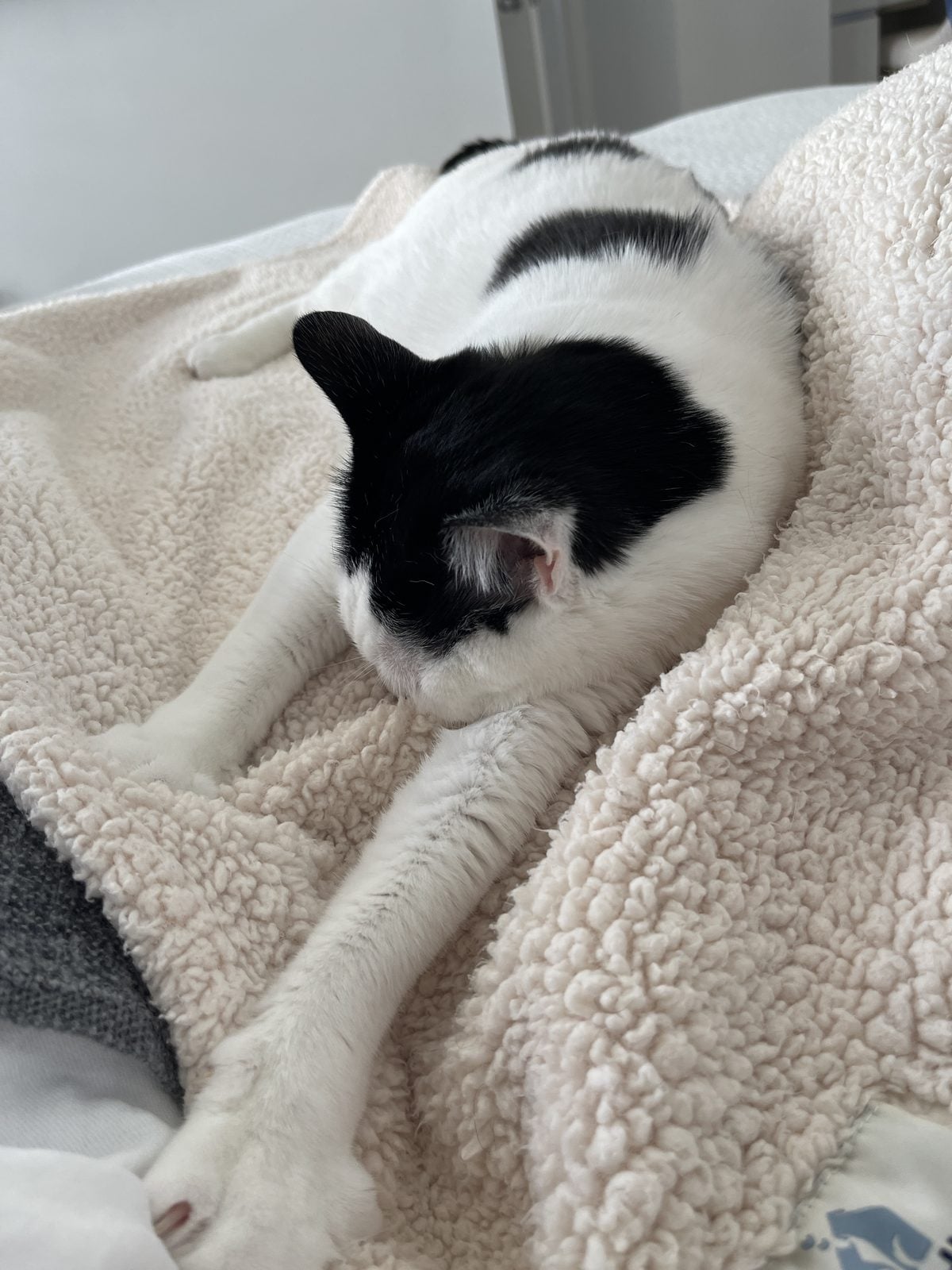
Of our two cats, Louis is the one who does the most kneading on us. He loves a good knead session and is an expert biscuit maker. We may need to get him a little chef hat at some point. Thelma, on the other hand, doesn’t knead us very much, but she does knead one of her cat beds quite a bit. It’s one of those fluffy circular ones and she lays in it, on her side, and kneads away for 5-10 minutes before curling up and falling asleep.
2. They have a suckle blanket or sweater (or even earlobe)
Some cats go beyond the kneading and continue suckling as they get older and beyond weaning, too. They usually suckle something soft like a blanket, but also sometimes the soft part of a person. Galaxy has seen the whole range. “Sometimes you’ll notice that your cat also nibbles on your ear or other parts of your body,” he says. “It’s just a side effect of being taken away from mom a little bit too early.”
Owners describe it the same way. On r/cats, one poster wrote about a three-year-old who still suckles a blanket at bedtime: “He does this every night before bed since we brought him home! He was a stray so I’m not sure if he was separated from his mother too soon, or if he just loves the soft fuzzy fabric.” The top reply came from someone whose cat is seven and still doing it. “I rescued her when she was so young (approximately 1.5 weeks), mom wasn’t around. I think she misses mama or this feeling.”
The usual explanation is they got weaned too early. Although plenty of cats that were weaned normally suckle for life.
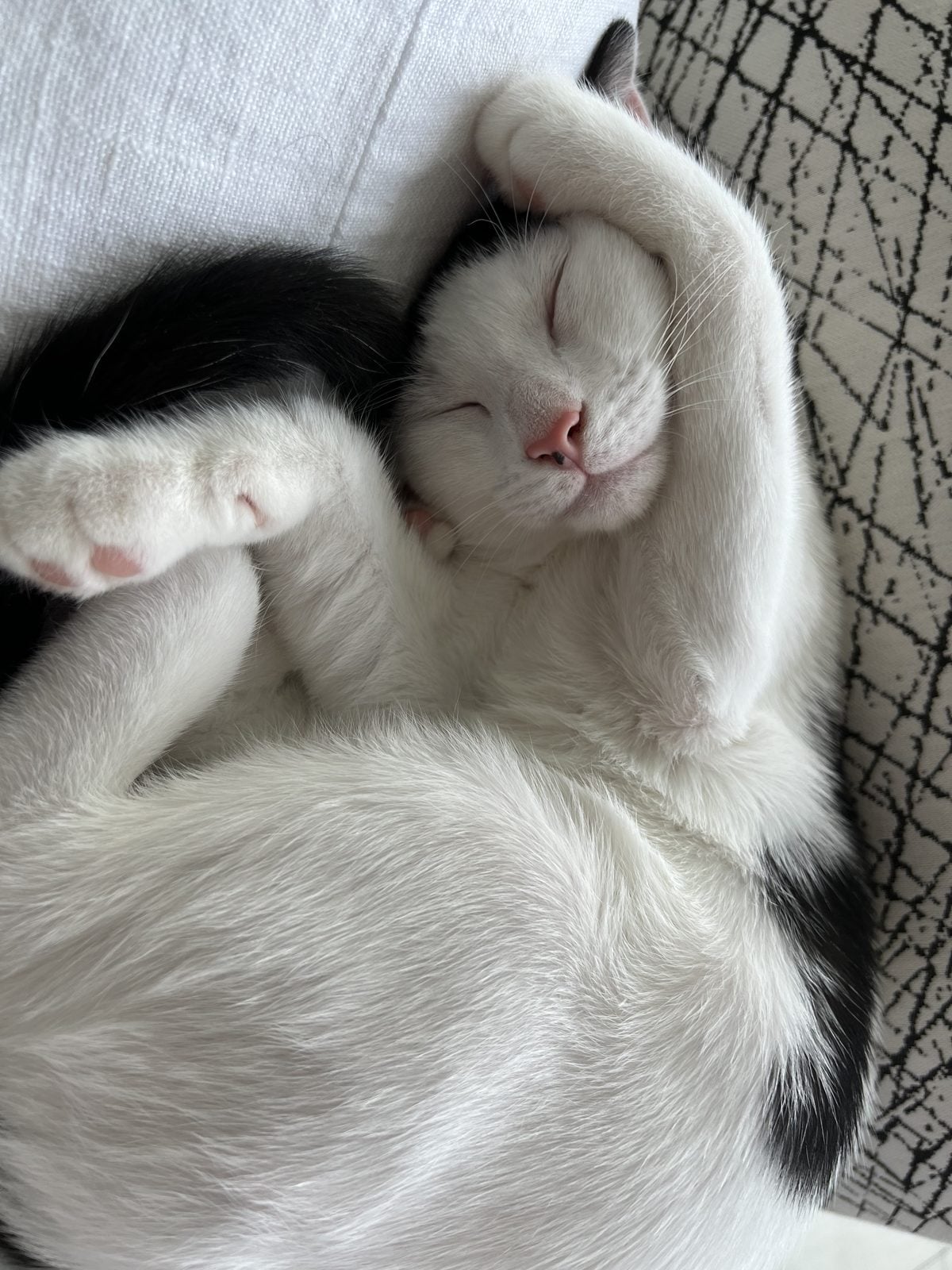
This is once again a Louis trait. He has had a suckle blanket since he was a little kitten and we lay it between us while we’re asleep. At some point in the middle of the night he comes up and starts kneading and suckling. It seems to be his favorite thing to do. Sometimes I’ll wake up in the middle of the night and I swear he’s smiling. Other times he’ll wear himself out and I’ll find him literally asleep between us on his back with his legs in the air. It’s the best.
3. They chirp or “trill” at you when you walk into a room or get home
You’ve probably seen cats chirp when they are watching birds or squirrels outside. The trill is somewhere between a purr and a meow. It’s a short but high rising sound they make with their mouths mostly closed. It’s also close to their mother’s sound.
“Mostly the prime chirpers, trillers, are female, because they use that sound with their young,” Galaxy explains. “That little trill would be to the kids: hey, follow me, or come here. It could be just saying it’s feeding time, or I’m trying to lead you to a place.”
Kittens learn it by copying her, and adults keep it as a greeting and a summons. Behaviorists call this a contact call. Aimed at you, it is the follow-me sound, which is why so many cats trill and then walk a few steps and look back.
The good news is that it almost never means anything bad. “By and large, if your cat is trilling or chirping, that means that it’s a positive thing,” Galaxy says. “It’s kind of a little more excitable version of a purr.”
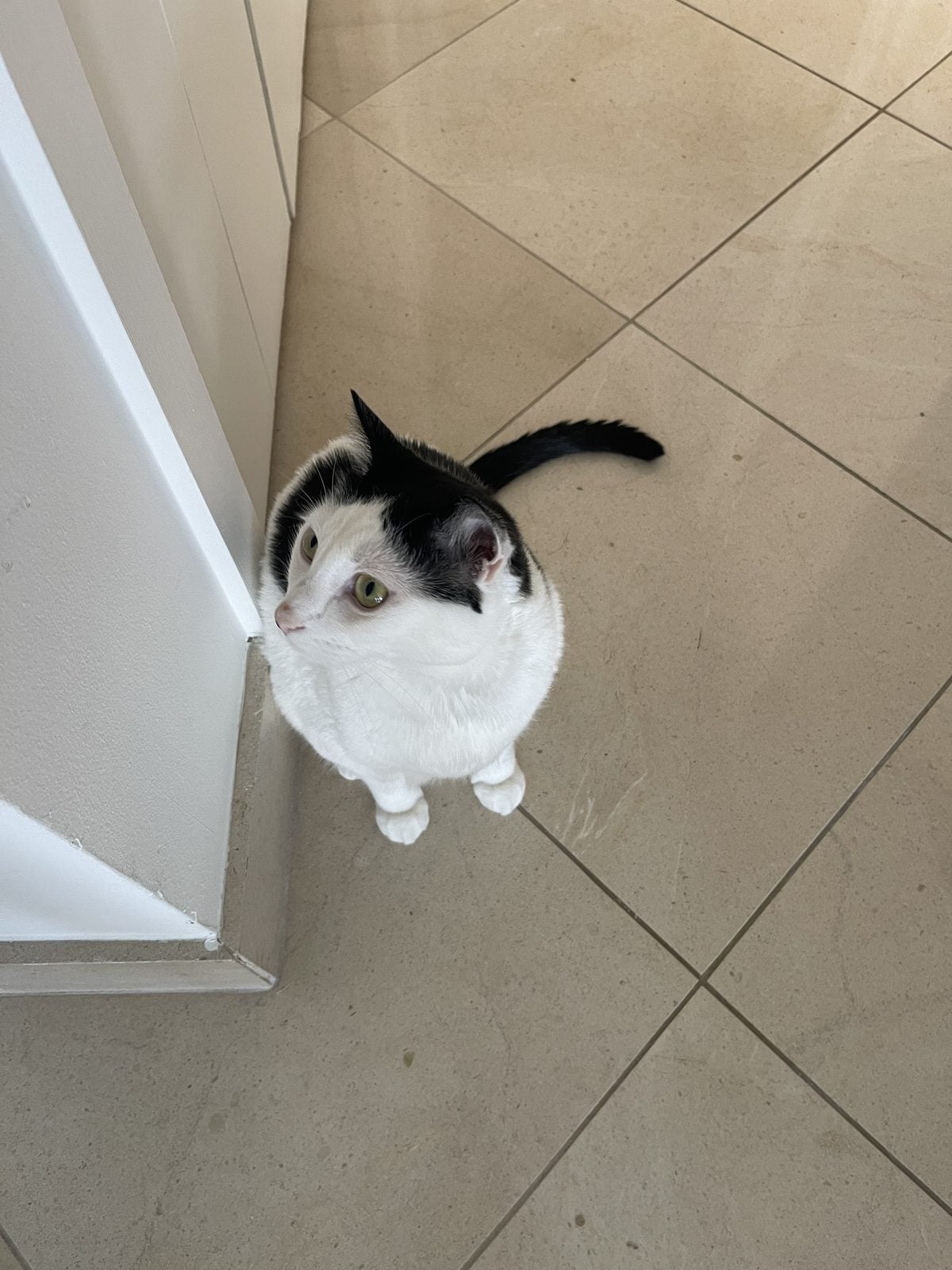
Both Louis and Thelma trill for us. But it’s usually in different scenarios. Louis chirps whenever Lindsay walks into a room. It’s pretty hilarious. It doesn’t matter if he’s sound asleep on top of a chair or inside his little teepee. If she walks in a room, he bolts up and chirps 2-3 times as he runs over to her, and then does a little “hello” front stretch in front of her. Thelma, on the other hand, chirps at us typically when she wants something.
4. They meow at you and almost never at each other
Many cats don’t really meow at other cats the way they meow at us. And the reason why is because they’ve learned to manipulate us!
By the 1990s, Bradshaw and his doctoral student Charlotte Cameron-Beaumont had established something counterintuitive about the most familiar cat sound in the world. In feral colonies, adult cats barely meow at one another. The meow is largely a tool for managing humans.
Galaxy puts the mechanism plainly. “Cats do not make that sound to other cats. They make it to us. They make it to serve a purpose for us.”
And then he connects it directly to the parent question. “A lot of times that has to do with how long they were with their mom, and how much we then sort of took over that position. They are forever infantilized in our world, and so that meow becomes a ‘hey mom, I need something’ type of sound. That is a special delivery from your cat to you, the human, not to other cats.”
It starts even earlier than most people realize. Newborn kittens mew before their eyes open, which happens around day ten, and the mother finds them by sound and gathers them in. The meow begins life as a homing signal.
Bradshaw’s other observation is the one most owners recognize instantly. “They’re much smarter than we give them credit for: they learn what works with what person.”
Louis and Thelma don’t meow at each other at all. But they are very vocal cats with us. Thelma has a very specific and very loud meow when her favorite toy (a little brown bird) gets stuck under the couch and she needs me to come and retrieve it for her. The problem is, she typically bats it back under the couch three minutes later and begins yelling for me to come get it again. It’s a fun game we have.
5. They follow you into the bathroom and wait
There is a thread on r/cats with nearly 26,000 upvotes titled “He follows me to the bathroom and waits patiently by my foot until I’m done. Every. Single. Time.” The top comment offers the kindest available reading: “He is guarding you during a vulnerable moment. He values you that much.”
There is also a less sentimental explanation, and it is better documented. Researchers at Kyoto University tested whether cats track their owner’s location by sound. They played a recording of an owner calling the cat’s name from a speaker outside the room, then made the same voice appear to jump instantly to a second speaker inside it. The cats reacted with visible surprise at the impossible teleport, and reacted far less to unfamiliar voices doing the same thing. The team published the finding in PLOS ONE in 2021.
So cats hold a running mental map of where you are. The escort to the bathroom is not clinginess so much as a refusal to let the map go stale.
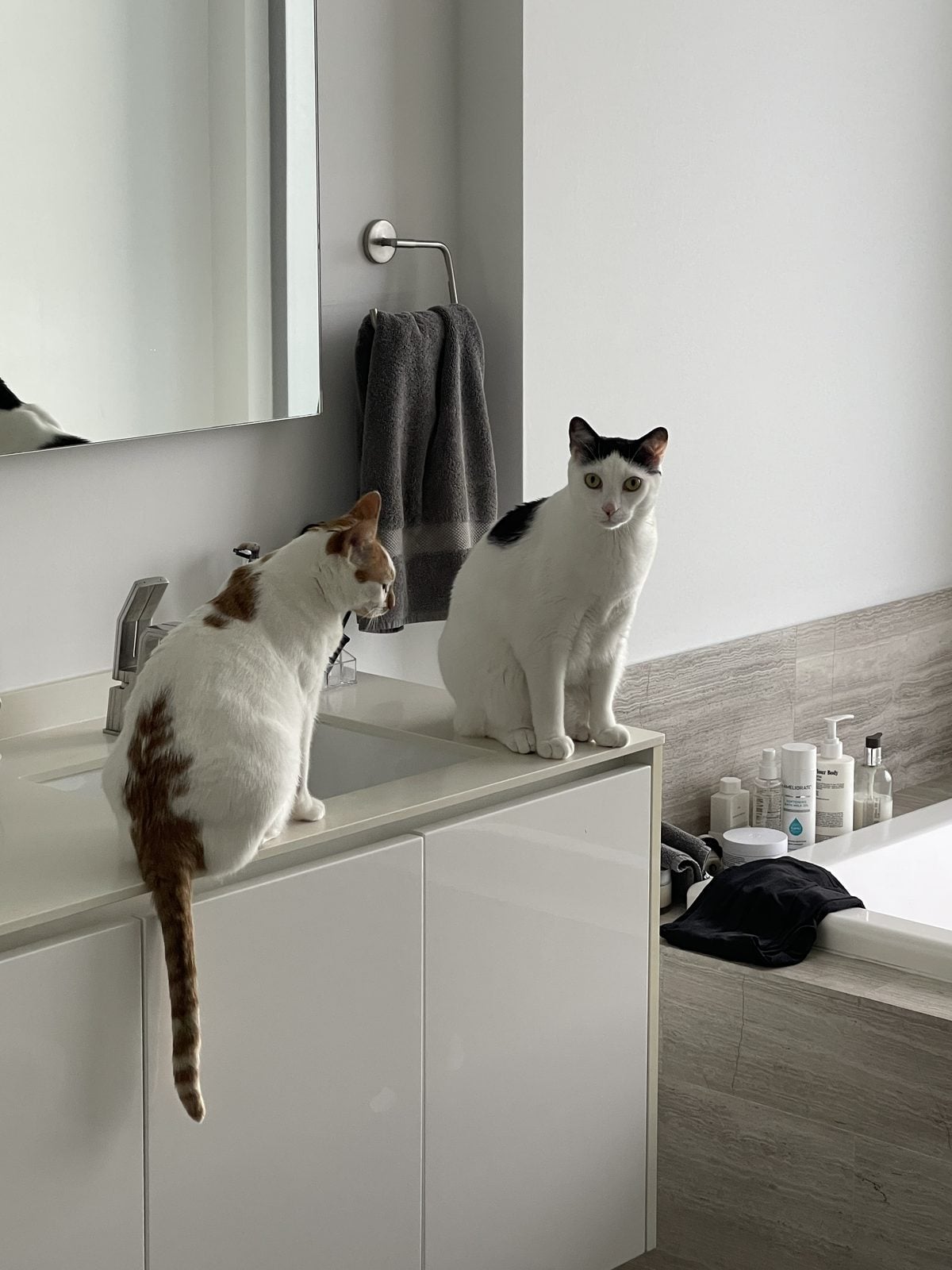
Thelma follows us to the bathroom. But it’s usually for a very specific reason. She loves having someone escort her to her food bowl and then pet her while she eats. And the bathroom just happens to be right next to where her food bowl is. So when you’re done doing your bathroom business, she is typically standing right outside the door and then motions us to walk her to her food bowl. She can do this any time of day or night (literally, she will do it at 3am.)
Louis, on the other hand, sometimes likes to join you for a little relief. Their litter boxes are in one of our other bathrooms and if you’re using that one, he has been known to pop in with you and use the litter box right alongside you. It sounds weird but it’s actually kind of sweet.
6. They give you gifts
There’s a theory out there that mother cats carry prey back to their kittens so they can practice, so therefore, your cat sees you as an unusually large, helpless kitten and is trying to teach you to hunt.
And while that is a sweet story, it’s not really backed by science. It’s more of a hypothesis than a finding. And the vets who constantly get asked about it would like to set the record straight. Marc Smith, DVM, ran through his own list on camera and rejected that one out loud. “The things that I’ve come up with are that my kitty cat’s giving me a gift is one. Number two is my kitty cat’s trying to teach me how to hunt. I don’t really believe that one.”
Veterinarian Dr. Lindsay Butzer offers a third and much less flattering explanation, built on how cats actually eat. Cats are obligate carnivores that hunt small prey, so an unfed cat may kill ten to twenty small mammals in a day, and a feral cat can hunt for twelve hours. The drive does not switch off when the bowl is full. “Cats will eat the prey that they’ve killed if they’re hungry, but if more prey presents themselves, a cat will immediately go back to hunting,” she says. “That is because cats cannot lose that opportunity to make a kill to prepare for famine, and this might just explain why your cats bring you so many presents.”
Indoor cats run the same program with hair ties, bottle caps and one specific toy.
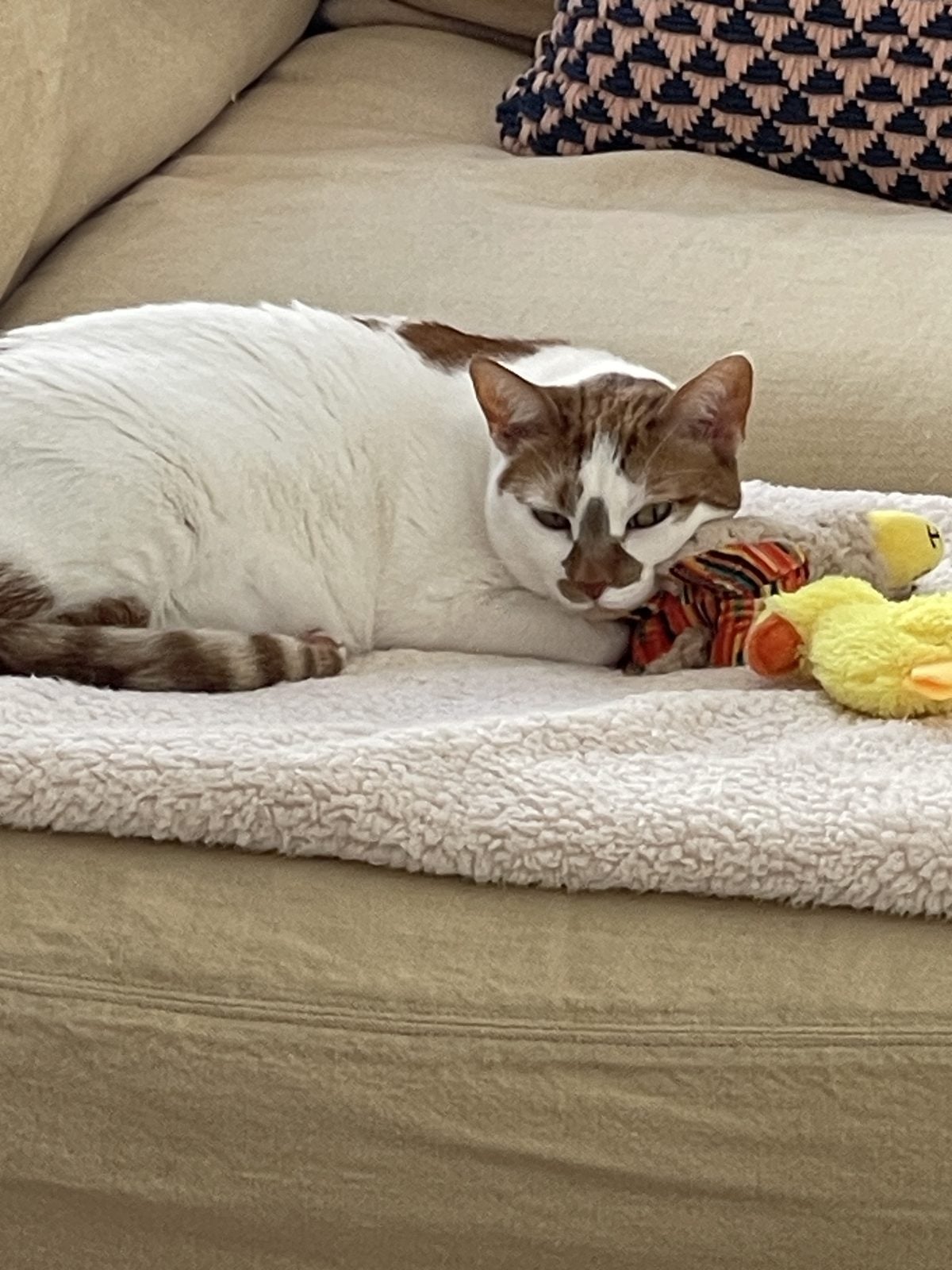
Louis doesn’t bring us much (except himself). Thelma on the other hand loves to drop toys off. That little brown bird I mentioned earlier is the most common delivery. She will grab it in her mouth and drop it in my office. She will do the same for other toys from time to time as well. The best is the meows they typically do when they’ve got something in their mouth. They are a bit more guttural than normal. Maybe it’s just because they can’t open their mouths as much as normal, but you can really tell when they’re on their way to give you something just by the sound of their meow.
7. They sleep on you, or with one paw touching you
Like all animals, sleep has a real instinctual impact. It is when they are most vulnerable, so where and how they choose to sleep is a big decision for them. Kittens typically sleep in a little kitten pile against their mother for both warmth and safety. They sleep next to you for the same reasons.
And if a paw is touching you, that’s even more of a connection. One r/cats post described it exactly: “If he’s fixing to nap, it’s like he won’t settle down til he’s got a paw on me, even if he’s already resting his head on me.” The most-upvoted answer, at 5,400 votes, kept it simple. “Skin to skin is the most intimate touch, which is mostly what he wants.”
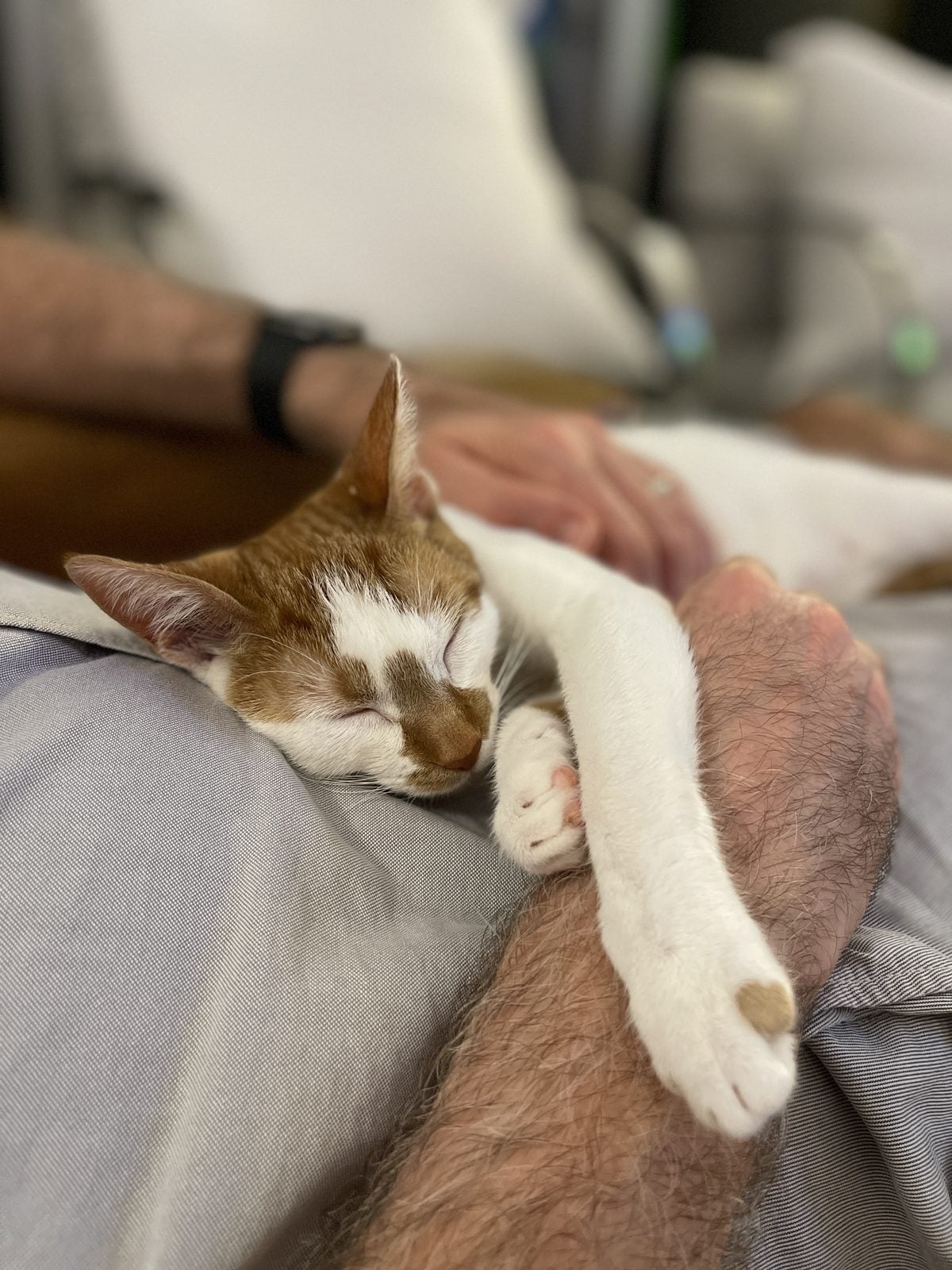
Both Louis and Thelma sleep on us, but in different ways. I mentioned earlier that Louis tends to fall asleep on his suckle blanket between us. But he’s also started to sit on my chest at 4 in the morning. He also likes to chirp at Lindsay when she’s asleep. We think he’s just checking to make sure she’s OK. He’ll even tap her chin sometimes. It’s pretty hilarious.
Thelma likes to sleep on us, but mostly at our feet. She locks in on one of us for a couple months (right now she sleeps on Lindsay’s feet each night) and then switches to the other person.
8. They head-butt you and groom your hair
The little head butt they give you is called “bunting.” Which is a pretty great name. But the reason they bunt you is not what you’d think. It’s not to get your attention or give you a love tap. It’s scent related. Cats have glands on the temporal region of their heads, as well as under their chins and near their lips. When they head butt you they’re actually putting their scent on you and making sure you’re still part of their family.
Researchers studying colony cats found that the constant mutual rubbing produces a shared colony odor, a group scent maintained by the exchange, and that allorubbing between feral cats can run several minutes and is often accompanied by purring. Sharon Crowell-Davis and colleagues laid this out in the Journal of Feline Medicine and Surgery in 2004.
Grooming works the same way. As Bradshaw put it, “putting their tails up in the air, rubbing around our legs, and sitting beside us and grooming us are exactly what cats do to each other.”
So a head-butt is not a hello. It is a cat adding you to the family scent and then topping it up.
One r/cats commenter got there without the journals: “It is a kitty hug. It’s about the most obvious they ever get aside from rolling onto their back and looking up at you.”
They also flagged the slow blink, and the research backs them up. Animal behavior scientists at the University of Sussex ran two experiments and found cats returned significantly more eye-narrowing to owners who slow-blinked at them than to owners sitting neutrally, and were more willing to approach even a stranger who slow-blinked first. Professor Karen McComb’s instructions: “Try narrowing your eyes at them as you would in a relaxed smile, followed by closing your eyes for a couple of seconds.”
Neither of them grooms our hair, but Louis is a head-butter. I will be typing away on the computer, not realize he’s come into the office until I feel his head bonk against my leg. It usually means he’s ready for some pets, too. (But then again, when is he not?)
9. They come apart a little when you leave, and reset when you come back
According to research, your cats are acting the same way human babies react when separated from their parents (now this really makes you feel bad for going on vacation, lol.)
A team at Oregon State University ran cats through a secure base test: two minutes in an unfamiliar room with their owner, two minutes alone, two minutes reunited. It is the same structure used for decades to classify attachment in babies. The results, published in Current Biology in 2019, were close to identical to the human numbers. Of 70 classifiable kittens, 64.3% were securely attached. Among 38 adult cats, it was 65.8%. In human infants, the figure is about 65%.
A six-week socialization and training course did not meaningfully change any of it.
“In both dogs and cats, attachment to humans may represent an adaptation of the offspring-caretaker bond,” said lead author Kristyn Vitale. She was direct about what that means for the aloof-cat cliché: “Cats that are insecure can be likely to run and hide or seem to act aloof. There’s long been a biased way of thinking that all cats behave this way. But the majority of cats use their owner as a source of security. Your cat is depending on you to feel secure when they are stressed out.”
The reunion is where you can read it yourself. A securely attached cat relaxes and goes back to exploring, splitting attention between you and the room. An insecure one twitches its tail, licks its lips, and then either avoids you or freezes in your lap and will not move.
The absence side has been measured too. In a 2020 PLOS ONE survey of 223 cats, 13.45% met at least one criterion for a separation-related problem. Destructive behavior was the most common, followed by excessive vocalization, urinating outside the box, and apathy.
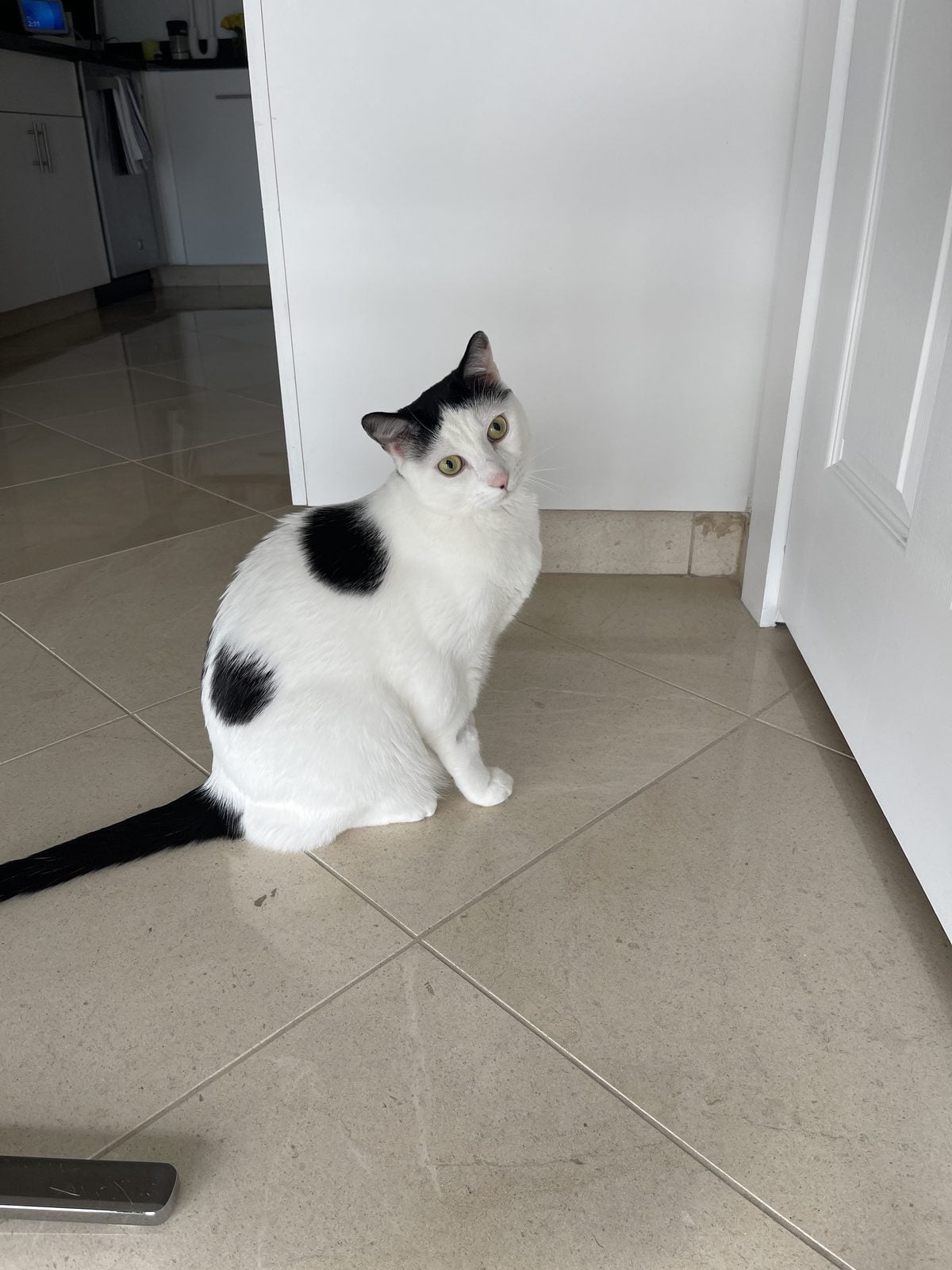
Leaving your cats is always hard. Luckily my mother-in-law is our neighborhood cat sitter. So they have someone they know staying with them. But they both react differently to our travel. Louis is the one at the door when we are gone for anytime longer than half an hour. He’s always there waiting. So he’s always excited when we come back from being gone for a few days. And while she doesn’t sit at the door, Thelma seems to really be overjoyed when we get back. She doesn’t meow or do any of the classic things, but I remember the look on her face when she saw us after a 5-day trip. She emerged from under the bed and seemed so happy it makes it hard to go on vacation again!
What does this mean for your relationship with your cat?
All these little signs we get from them really tell us how comfortable they are with us. Whether it’s Louis laying on his back in the middle of the hall or bonking us with his head to say hello, we know he feels like we’re part of his family unit. And Thelma is the same but with different signals (sleeping at our feet, being our bathroom guardian etc). She may even look at herself as the head of the household. But that’s for another article.
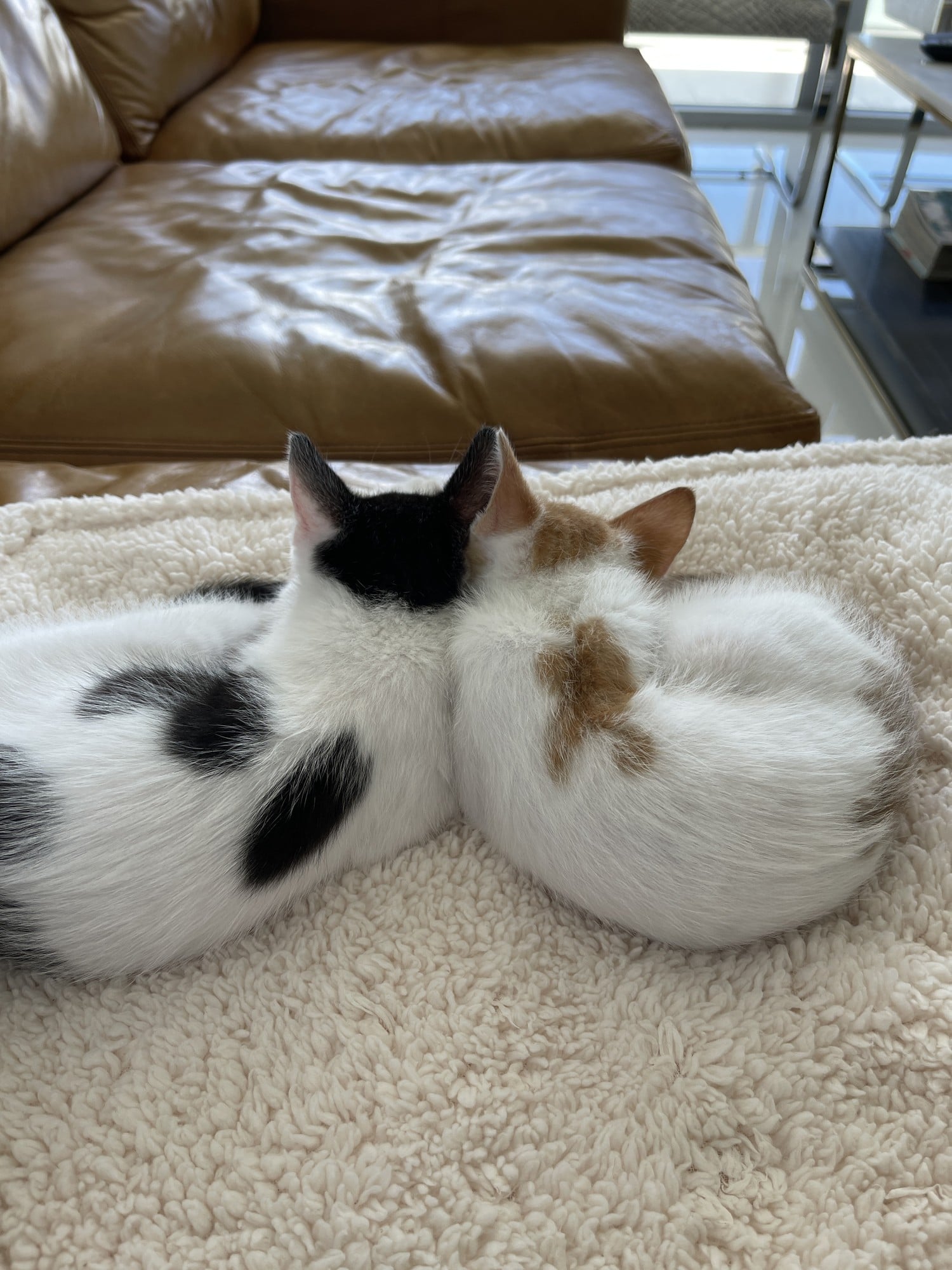
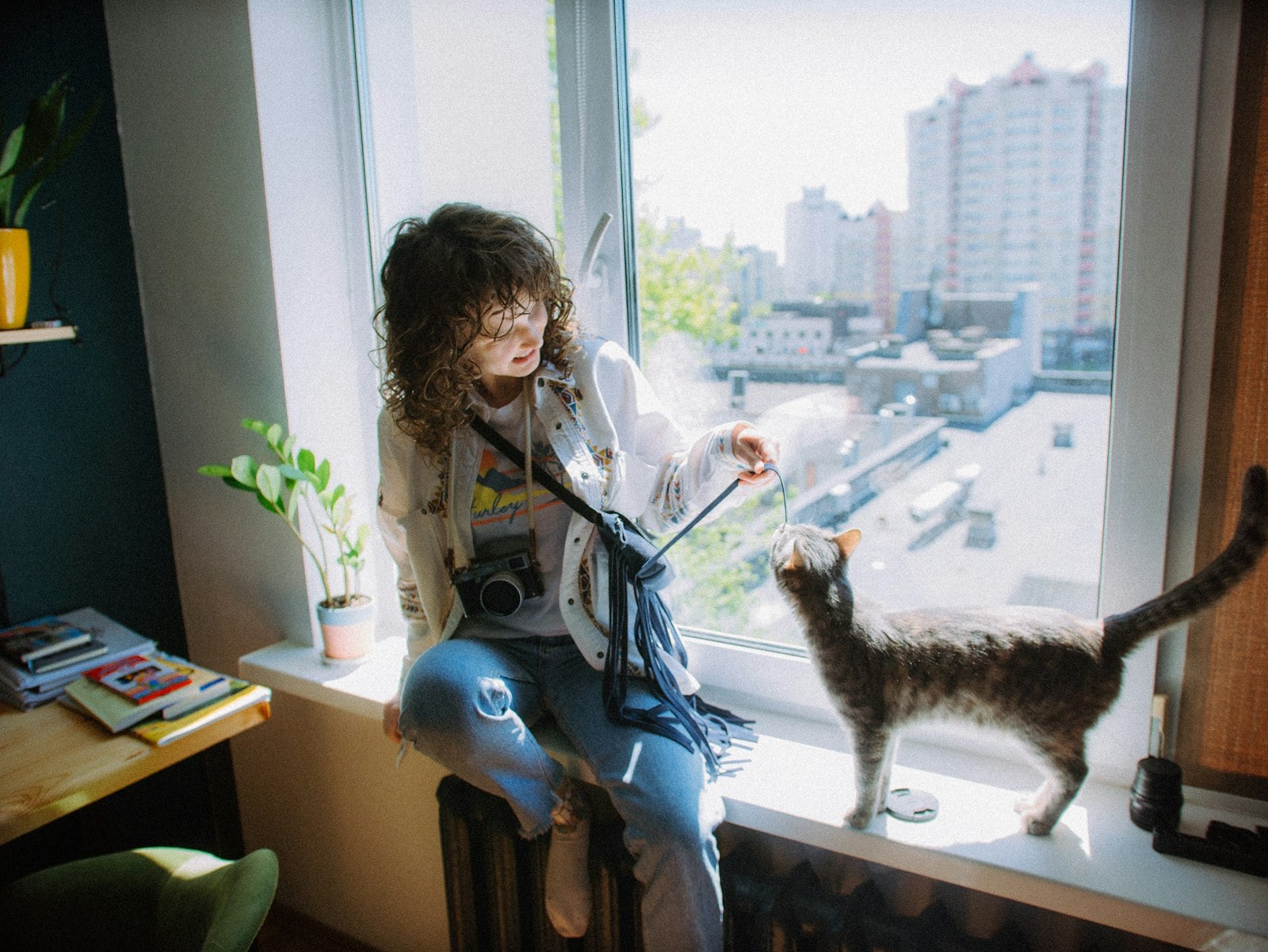
You know that your cat loves you when he follows you from bathroom to kitchen.
It’s true!
Thanks for the information.