
Here’s What Science Says Your Cat Really Knows About You
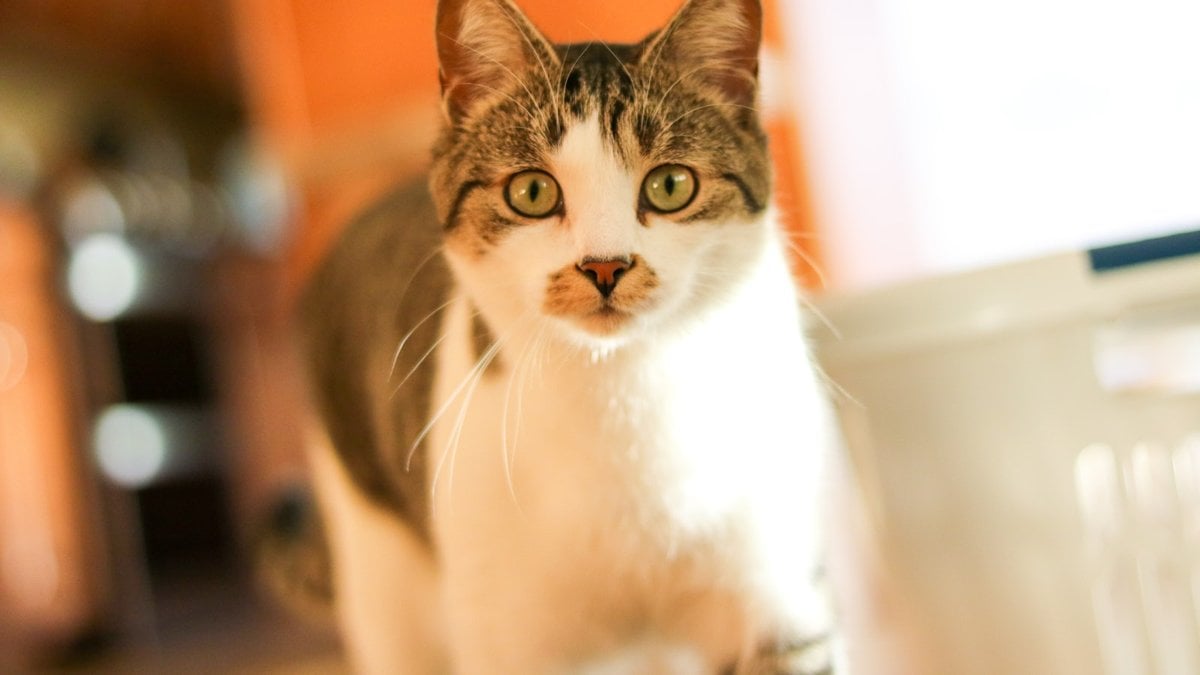
Your cat pays closer attention to you than just about anyone else in your life. They have nothing else on the calendar! They don’t have Netflix or HBO Max…you’re the most interesting channel that’s on (well, except for the wand toy of the moment). After several years of living together, your cat ends up knowing things about you that even your mother might not know! And yes, researchers have confirmed this. Here is what the science says your cat knows about you:
1. Your cats know your schedule, down to the minute
Cats keep time with an accuracy that borders on weird. They know when you wake up, when you feed them, when you leave, and when you normally come back. And they will hold you accountable for all of it. If you miss a feeding time by ten minutes they will let you know about it!
My husband and I both work from home, so our two cats Thelma and Louis know our schedules better than we do at this point. And if we deviate in any way, I can honestly sense their uneasiness.
My cats do this as well. Alarm for 5:30 and at 4:00 it’s mandatory disco nights for all the cats. I hate this so much some days
— via Reddit.com
2. Your cats know your voice
Some people (mostly dog owners) think that cats don’t bond with their owners the way other pets do. But this has been proven false. They know our voice! Researchers in Tokyo played cats recordings of strangers speaking, then mixed in their owner’s voice. The cats could tell the difference every time, with their ears and heads swiveling for their person in a way that didn’t happen when strangers said it. While they recognized their owners’ voice, they didn’t do anything about it. LOL. Which means that cats hear you and then decide to not listen to you. I can’t say we’re even surprised.
3. Their own name
A follow-up study in Tokyo showed cats can pick their own name out from similar-sounding words, even when a stranger says it. So they DO understand their name, they just (again) choose not to do anything about it most of the time. Which I have to say just makes me love them more.
4. When you’re sad
Cats definitely notice your moods, and there’s research behind it. A study at Oakland University found cats spend more time near their owners, purring and rubbing, when the owner is smiling rather than frowning. You would think it would be the opposite (IE: you’re in a bad mood let me come up and comfort you) but no, cats strike again on their own terms. Sigh. Other Redditors have found this to be true (sometimes).
They’re not like labradoodles, but I think they can sense a change in behavior. I have two cats, one was always by my side when I was sick, and would come over and flop next to me when I’m feeling down or emotional. The other one just comes over to investigate why I’m acting differently, sniffs, and walks away.
— via Reddit.com
So both cats technically NOTICED the moods, they just chose to handle the information differently.
5. When something’s off with your body
Nobody has proven cats can diagnose you, so take this one with a grain of salt. What we do know: your scent changes when you’re sick, feverish, or stressed, and a cat’s world runs on scent. When an animal that knows you by smell suddenly finds you smelling different, it investigates.
Many years ago when I was 10 years old, I developed a severe kidney infection that put me in the hospital. When I came home, my very first kitty would gently jump on the bed and go lay right next to where my kidneys were. She would stay there 24/7 only to leave to eat or go potty. How did she know that was where my excruciating pain was?
— via Reddit.com
6. Exactly who does what around here
Your cat has your entire household org chart memorized. Who fills the bowl, who’s generous with treats, who allows counter access when the other one isn’t home, whose lap is perfect for daytime snuggles and who is best for nighttime ones. They route every request or glance to the correct department (aka person). So if it’s close to dinner time and your partner is the one that feeds them, except them to appear magically in front of them.
In our house I am mostly the treat giver, which I have to say gives me an unfair advantage. But I’m not switching! You snooze you lose! My husband Cory also gets some perks I don’t, such as having the lap they all want to be in. But then my feet are the ones Thelma mostly sleeps on. It’s a trade-off at the end of the day.
7. Your cats know your body language
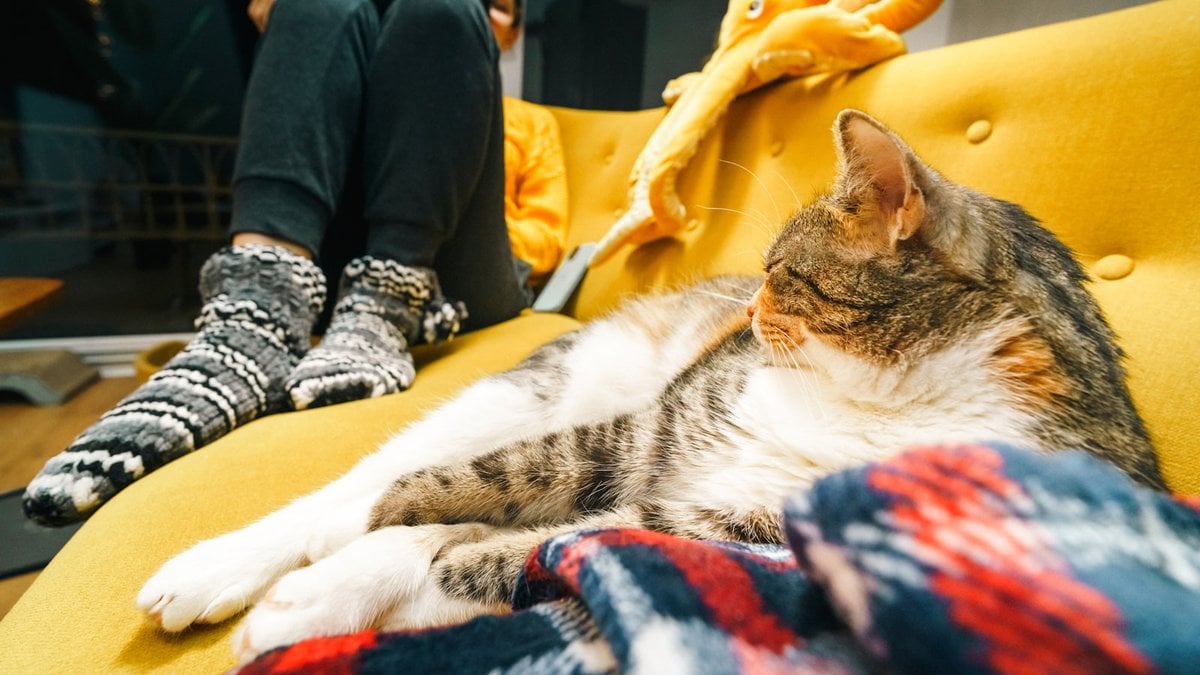
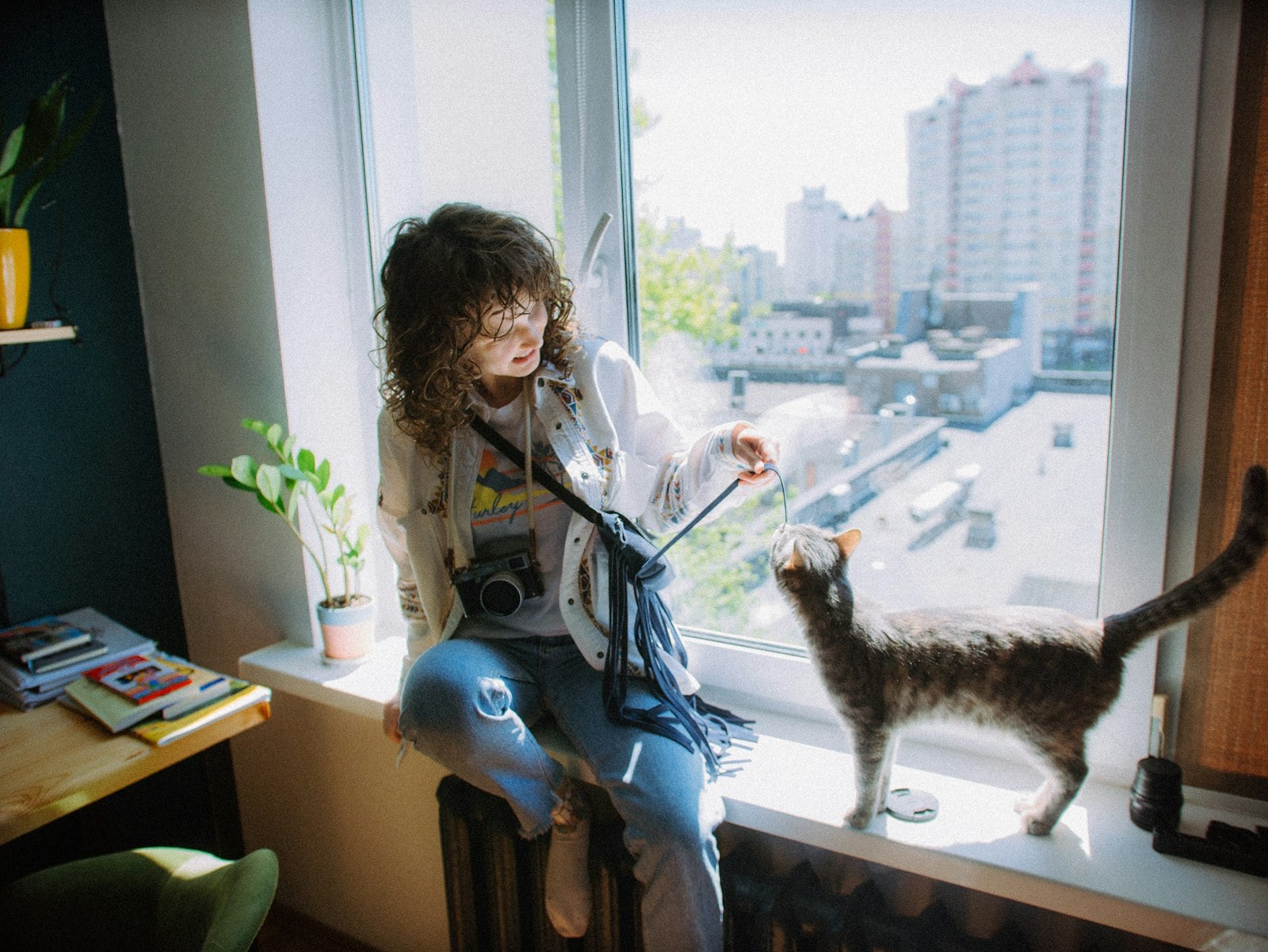
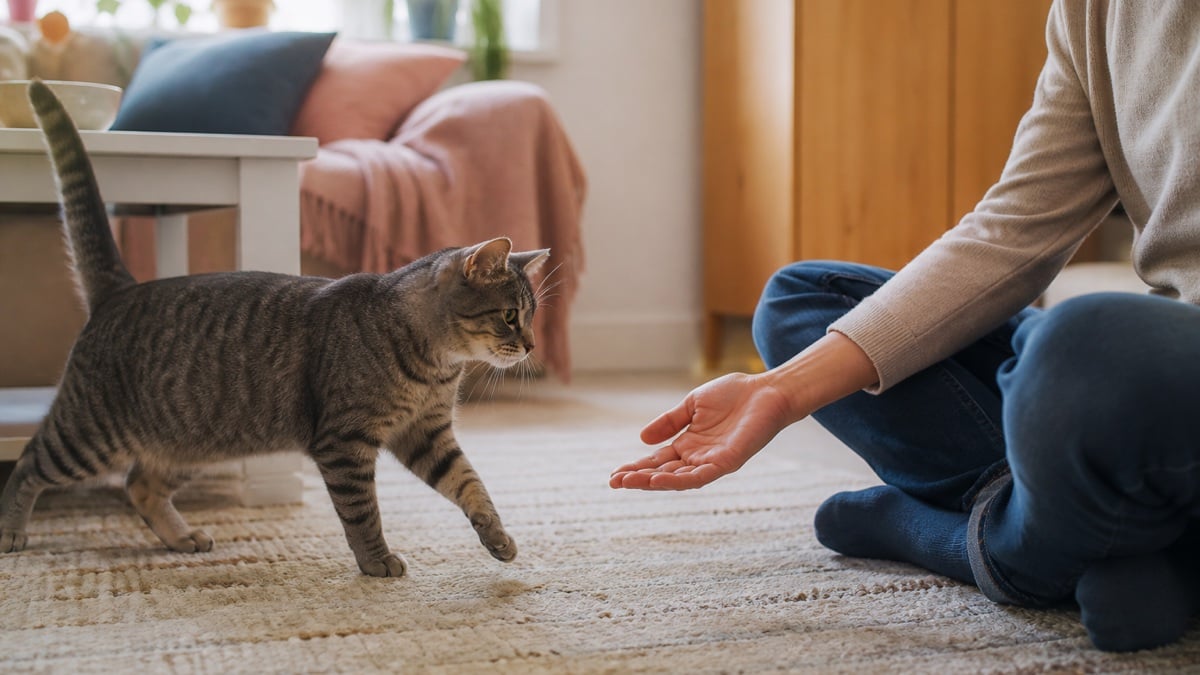
This one is kind of shocking to me! Apparently cats can decipher what a human is pointing to, something researchers once assumed was a dogs-only skill. And they’ve studied your tells long past pointing. They can understand the difference between picking up your keys casually, and picking them up with your shoes on. And don’t get them started on a “suitcase on the bed.” This is their five-alarm fire event. But they learned all of these movements and body language quirks from watching you.
8. Cats study your reaction
When something unfamiliar shows up (IE: a new appliance, a stranger at the door, a weird noise), cats will do something researchers call social referencing: they look at the thing, then look at your face, then calibrate. If you’re relaxed, they determine the “thing” is probably fine. If you’re tense, it’s a threat until proven otherwise. Babies actually do the same thing, so it’s interesting to know the reaction is not unique to humans.
9. They know the sound of you arriving
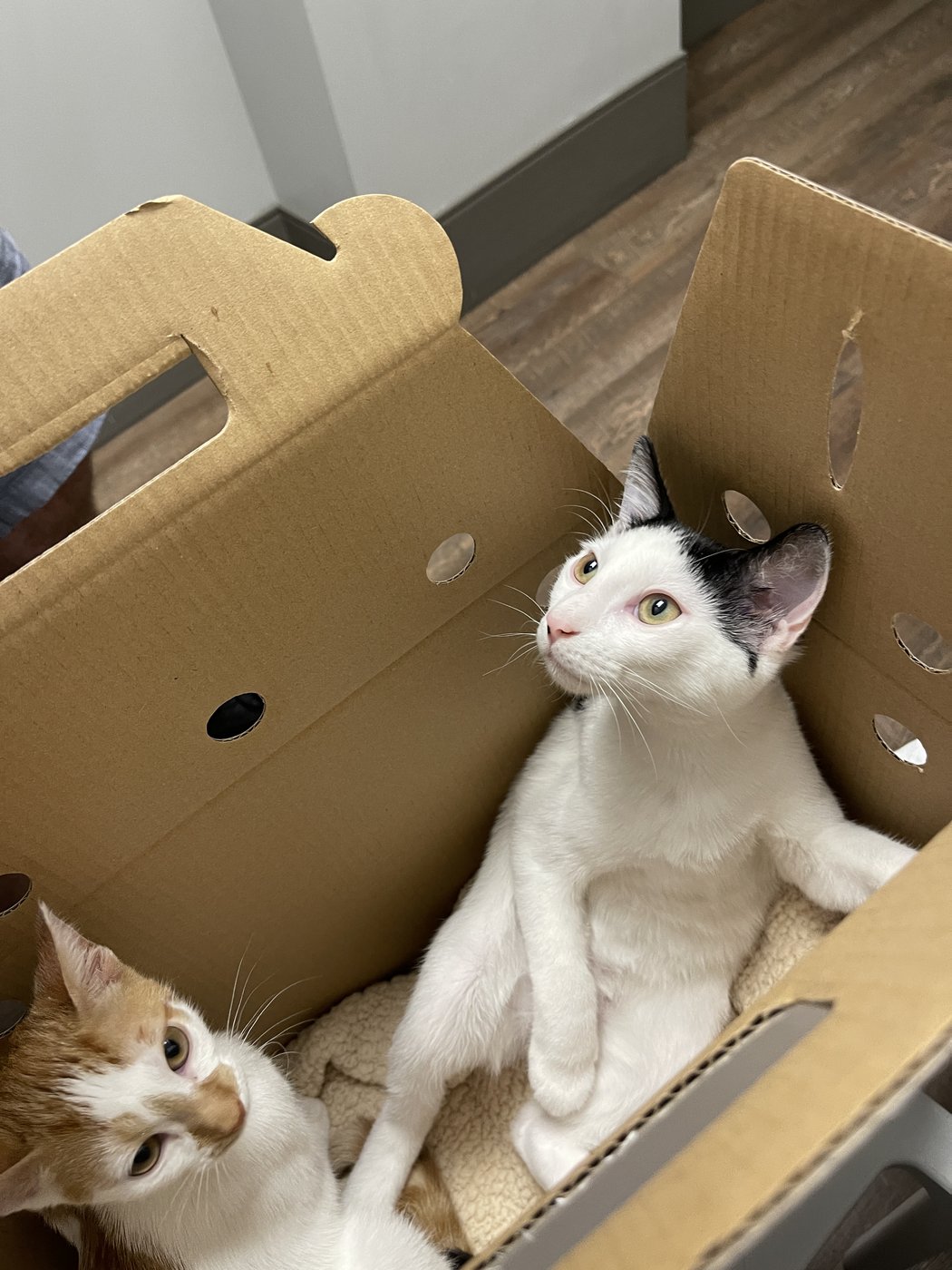
Ask anyone whose cat waits at the door: cats learn what your car engine sounds like, your footsteps in the hallway, the specific jingle of your keys, and they don’t confuse them with anyone else’s. The delivery driver might get a reaction at the door, but it’s those other noises that prompt cats to sit at the window or the door, waiting on you like a tiny lighthouse keeper.
Do cats have superhuman hearing?
According to researchers at Cornell’s Feline Health Center among others, cats hear roughly three octaves higher than we can, well into ultrasonic range, and their sense of smell has around forty times more scent receptors than a human nose. This sounds pretty super human to us!
10. That you’re their person
This is the big one that makes our hearts melt. In 2019, researchers at Oregon State ran cats through the same attachment test used on human infants. The study showed that two-thirds of the cats are securely attached to their owner, which is almost the exact same rate as babies. That means it’s not just the can of Fancy Feast they love, it’s actually you (and, er, the Fancy Feast).
So, yes, while the aloof reputation remains for cats, WE know the difference. They actually like us. They really, really like us.

Founder and editor of Cat Seat and cat mom to Thelma and Louis. She’s been writing online since 2000.
Hi! I’m Lindsay. I run this site alongside my hubs Cory and our very opinionated cats, Thelma and Louis. We’re so happy you’re here!
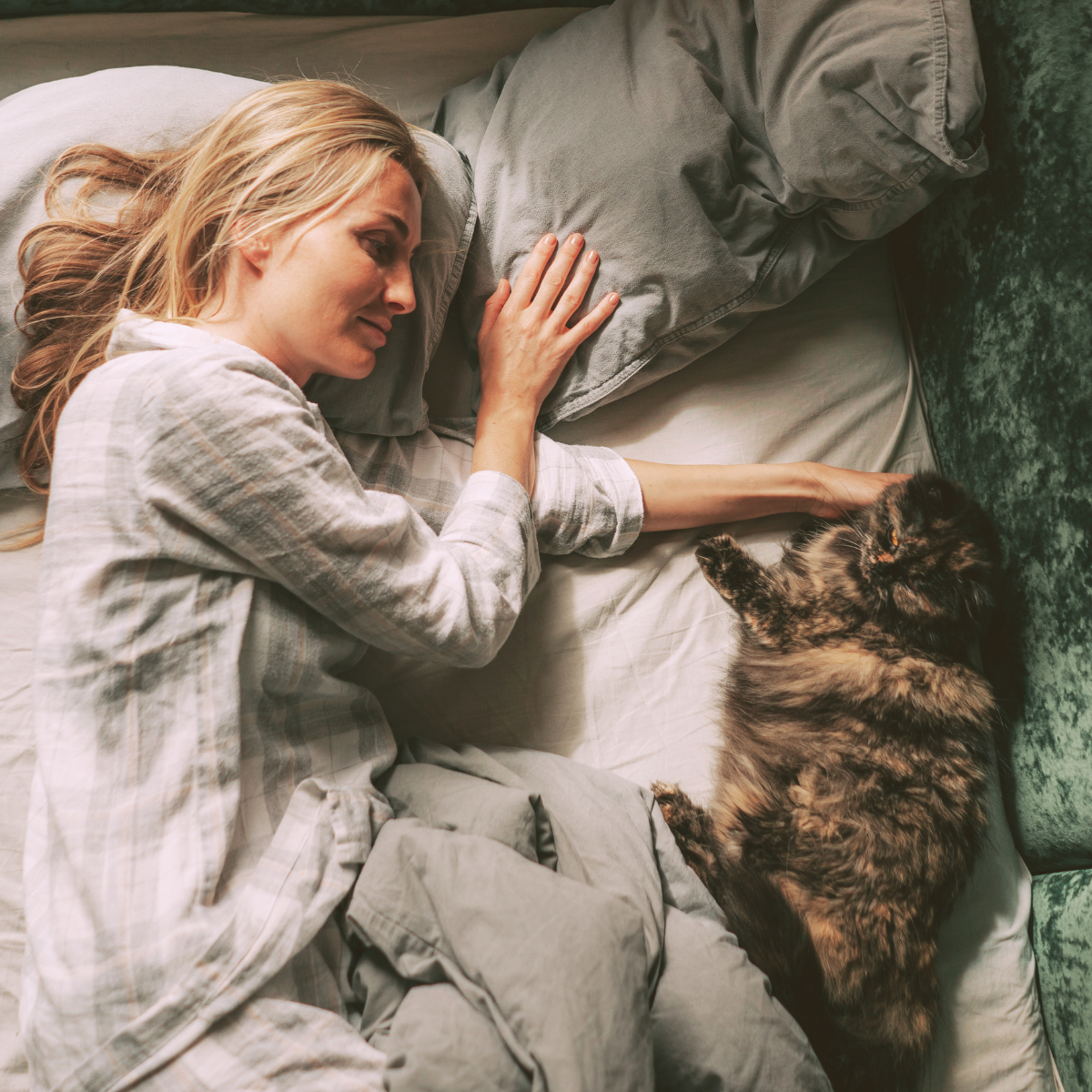
My cat stayed in labor until I came home. My roommate said she had been walking through my room and the closet meowing. As soon as I came home , she gave birth about 15 minutes later.
Awww how sweet…it’s like she knew!
If I had a black (or mostly black) cat, his/her name would be Felix, after the old cartoon, “Felix the Cat.” It was my favorite cartoon when I was little, many many years ago. I was a little surprised the name didn’t make any of the lists.
That’s a great addition!
What about ferral kittens? I have been taking care of them (4 of them) for the last couple of months. Who knows where moma cat is????
They too do know my schedule.
I would love for them to know I am very much here for them even knowing when I tried to domesticated them they would run from me.
I know cats know when a person is sick, and I for one pay close attention when one of my cats gets extra snuggly with someone else. My sister had cancer and she came to stay with us for her last months, and my cat took to her and slept with her constantly. She never did that with anyone else.
Oh that is so sweet and comforting to know. Thank you for sharing and I’m so sorry about your sister.
When I came home from a hysterectomy I could not sleep in bed so husband arranged big pillows to take pressure off my belly. My cat came running over for a couch snuggle but I put my hand out and said my belly hurt. She climbed up the other end of the couch and walked down the back until she was near my head. Then reached out one paw and put it on my
Shoulder. She stayed there for the two weeks it took me to heal.
That is amazing, Martha!! I believe they are so smart and know exactly what’s going on, especially when we talk to them and explain like you did!