The Healthiest and Unhealthiest Cat Gear, From Food Bowls to Litter Boxes
 By Cory Jones
Walking down the cat aisle at your local pet store is fraught with choices. So many choices! Which food bowls, which toys, which treats, which collars…the list of decisions to make is endless.
But which choice is the best choice? Like anything there are usually nuances to every question. So we wanted to take a look at the best and worst ends of each spectrum when it comes to most things you buy your cat.
Some of these differences matter more than others. For example, declawing is an elective amputation, and there’s no scenario in which it’s the better option. Other differences, such as a soft-sided carrier or a covered litter box, will come down to what else your cat has, how they use it, and how you use it. I reviewed each recommendation below on October 6, 2026. If your veterinarian advises you differently, follow your vet’s advice.
Litter
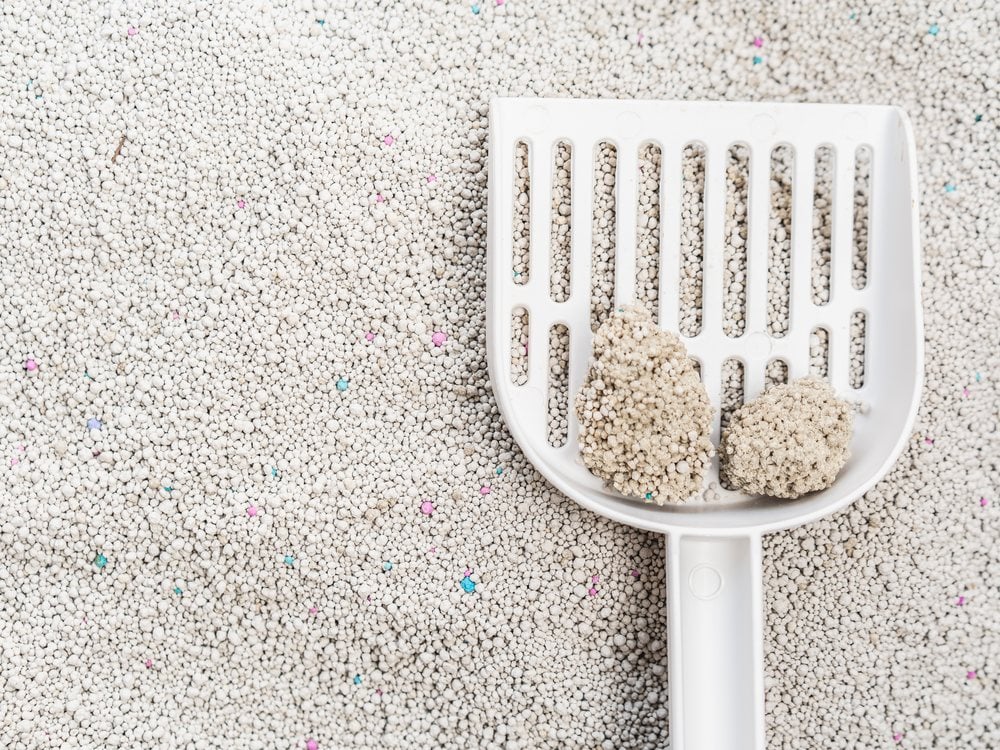
Unscented litter is best. Many cats dislike the smell of scented litter and may avoid the box. Cats also prefer fine-textured cat litter. Many cats like clumping cat litters as this makes it easier for them to dig out only the wet clumps when covering their business and makes clean-up simpler for you.
Make sure the box is comfortable and suits your cat’s needs, not yours. Some cats like boxes with plastic liners at the bottom, but most hate these as the liners can slip about and feel unpleasant. Don’t change the box and/or litter if your cat is happy with what they have, because they may not want the change.
“Most cats prefer fine-textured, unscented, clumping litter, and a box that is large, but with low sides.”
— Cornell University College of Veterinary Medicine, Baker Pet Talks
Litter Box
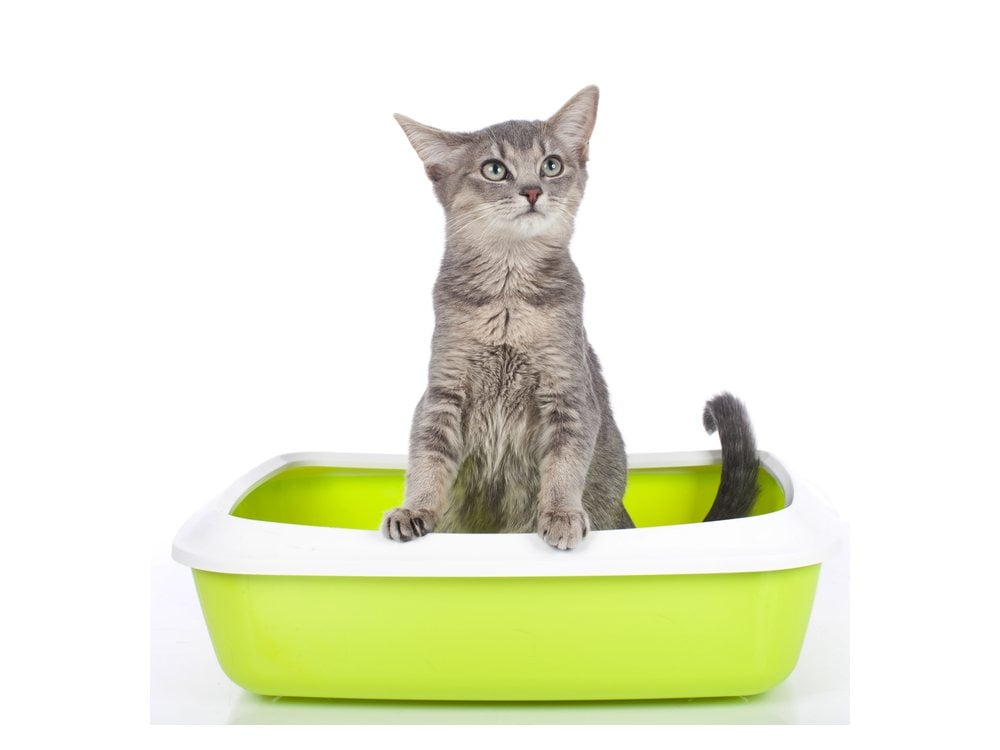
Ohio State points out that cats prefer large, open litter boxes since they’re easier to use. Make sure the box is large enough to accommodate your cat’s body when they’re in the position of using it, which is all fours, as well as turning around.
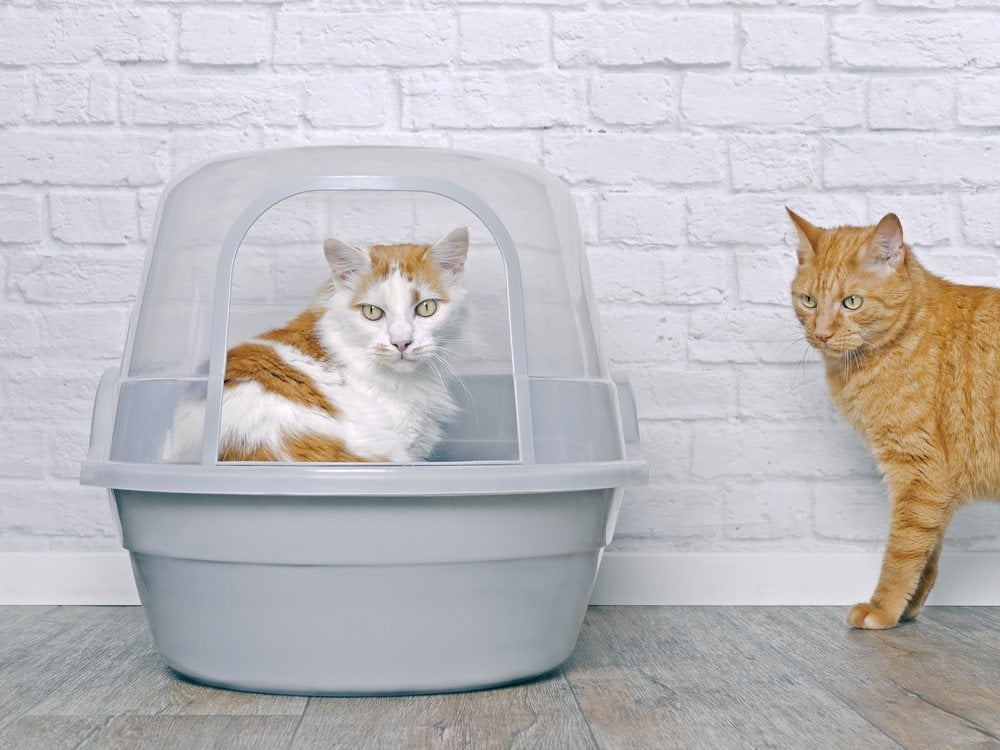
Never use a litter box that’s too small, particularly if they’re sharing the box and it’s covered. A nervous cat may feel safer with a hooded litter box, but Humane World for Animals points out that a cover can make some cats feel vulnerable or trapped, so if your cat avoids a hooded box, remove the flap or switch to an open one.
Some cats do prefer covered boxes that provide them with some privacy, but they’re harder to keep smelling good. Covered boxes retain odors much more than uncovered boxes.
Avoid clustering litter boxes together in one area, for example, three boxes in a row in the corner. Place them in various locations. Also, cats need the litter to be in an accessible location, which is one that’s removed from heavy traffic or loud noises. Make sure they feel safe when they’re using it.
Every cat should have their own food dish, water dish, scratcher, litter box. You should always provide one more litter box than the number of cats in your home.
“Cats generally prefer large, uncovered litter boxes.”
— Ohio State University Indoor Pet Initiative, Litter Boxes
Scratching
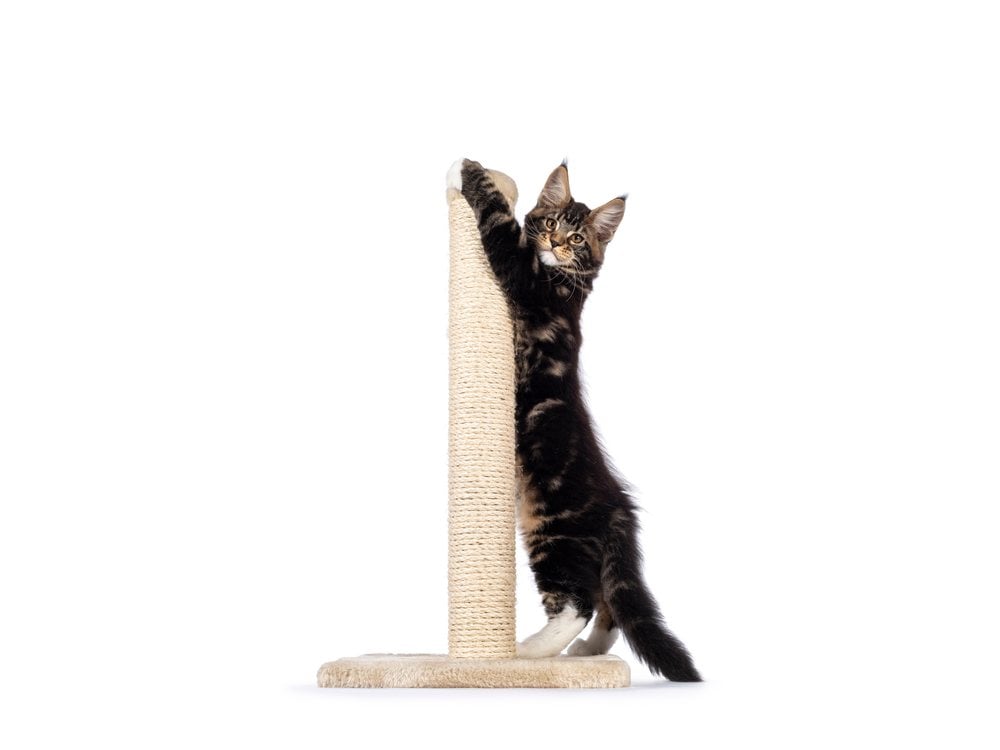
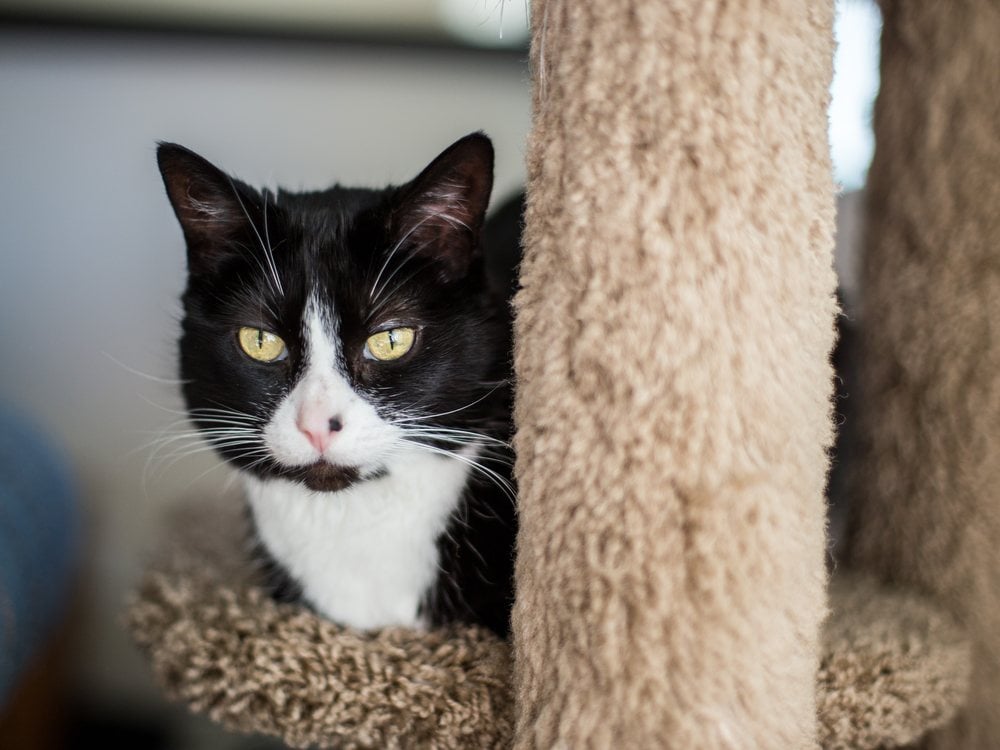
To minimize unwanted scratching of household items, provide a scratching post. There should be one per cat. Cats may fight over one post.
Put one in a different location for each cat. It should be sturdy with a stable base that does not rock or tip, and tall enough, as suggested by Humane World for Animals, for your cat to stretch out fully as they scratch. Some cats prefer a weave which enables them to run their claws down it. Some cats prefer a horizontal pad.
Place scratching posts close to areas that have been scratched. Consider a scratching post by their favorite napping spot as cats like to stretch and scratch on waking. Providing a scratching post does not necessarily mean that your cat will not scratch other items.
“Provide your cat with a sturdy scratching post, at least three feet high.”
— ASPCA, General Cat Care
Bowls
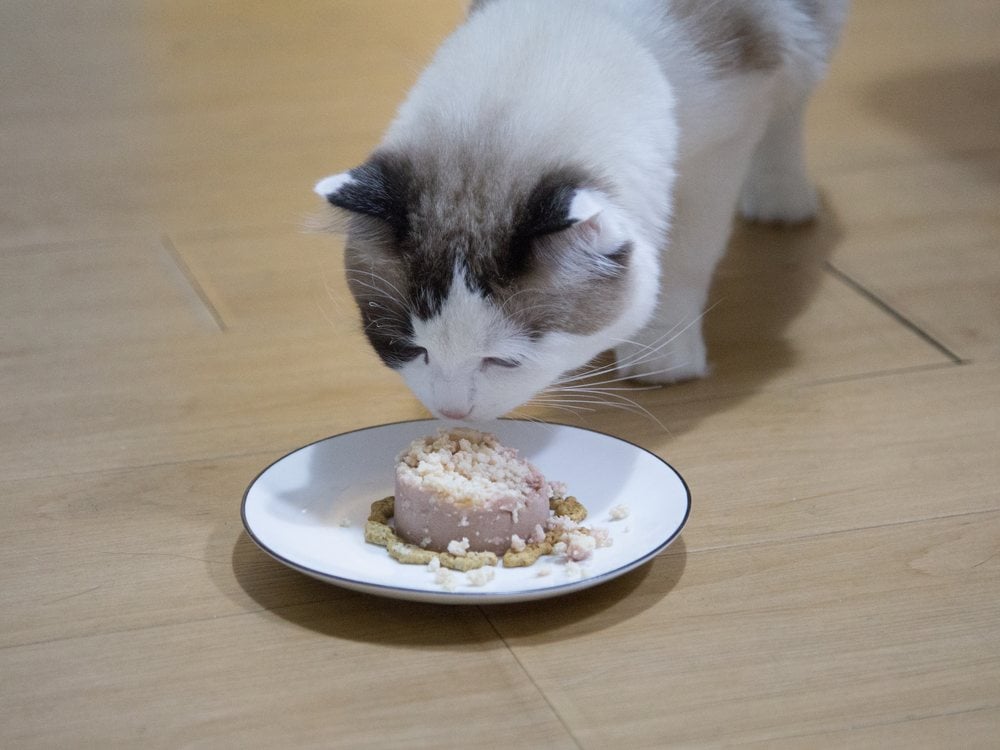
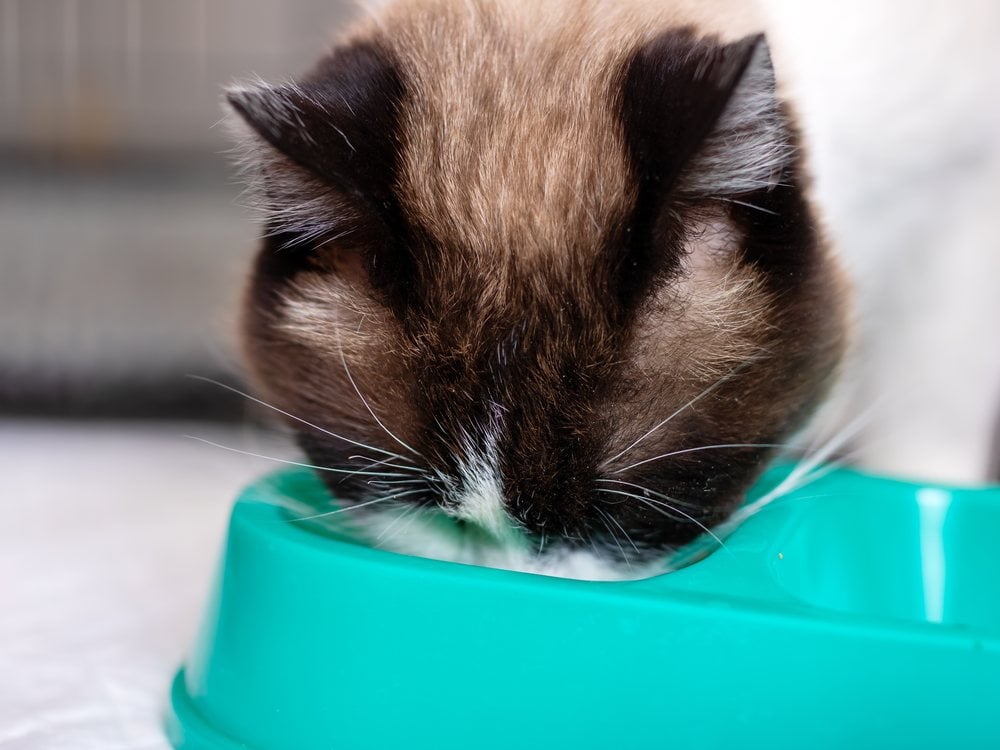
According to International Cat Care, many cats prefer wide, shallow bowls that keep whiskers from getting wet and away from the sides of the bowl. Cats also dislike plunging their heads deeply into a bowl as it can make them feel vulnerable.
Is whisker stress real?
Maybe. A study in the Journal of Feline Medicine and Surgery, “Evaluation of whisker stress in cats,” set out to find out whether whisker stress caused by bowls changes a cat’s eating habits. It didn’t: “Overall, food dish-associated whisker stress did not affect the eating habits of the study cats.” The study doesn’t define whisker stress as a disorder or condition either. But the owners of 24 of the 38 cats said their cat preferred a whisker-friendly bowl to a normal one. So there’s no proven disorder, but there is a common preference.
Plastic is another bowl material to avoid. Plastic picks up nicks and scratches and can promote bacterial growth. Some cats may not like stainless steel bowls either, as they can be reflective, cold, and can make noise. It’s best to try out several bowls and materials to figure out what your cat likes.
Regardless, keep in mind that cats’ water bowls should be cleaned and filled with fresh water daily. Bacteria and mold can develop in both food and water bowls though the best practices for water bowls may not necessarily apply to food bowls, so keep them clean.
Water
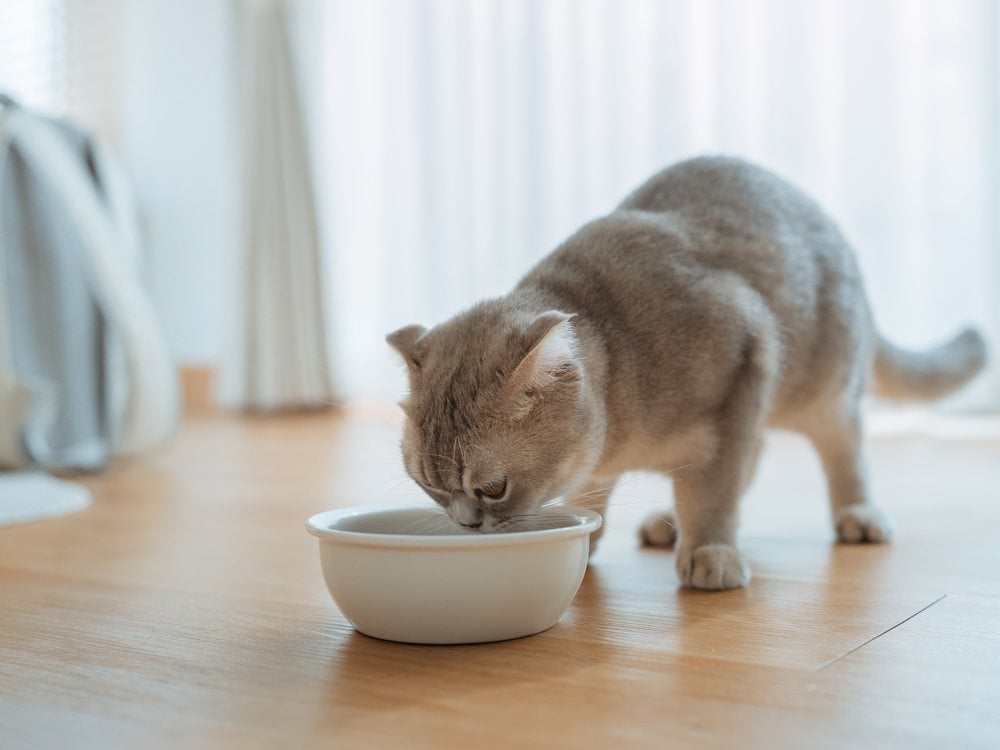
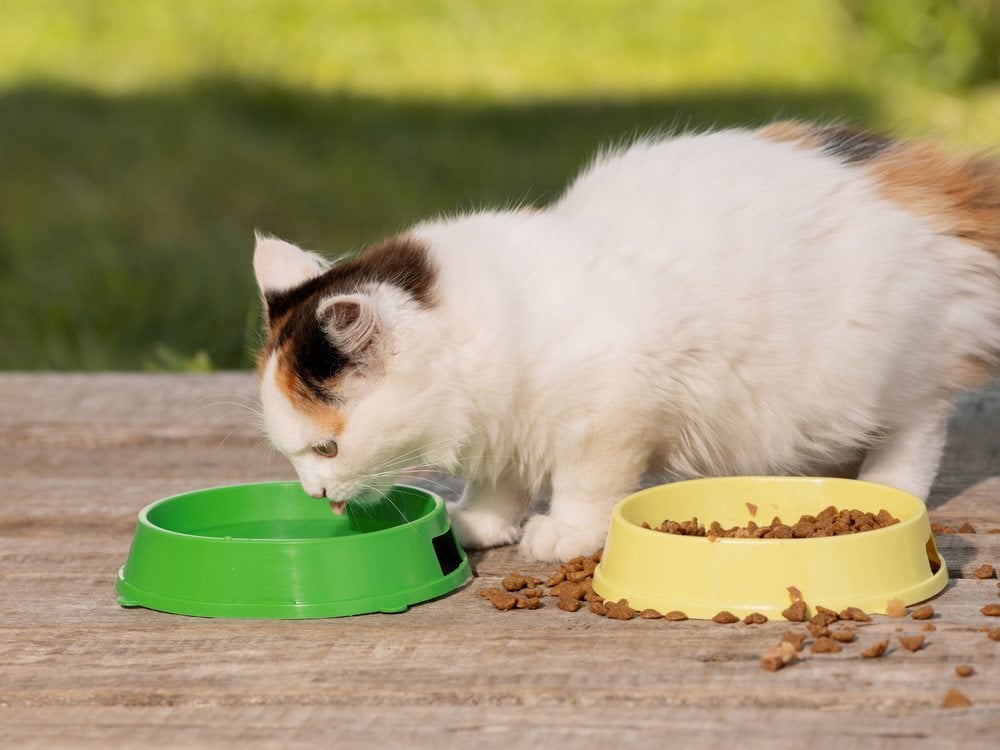
Water bowls should be kept away from your cat’s food and litter box, as cats prefer to drink from a clean environment. International Cat Care recommends one bowl for every cat, plus an additional bowl, and suggests at least 1 per floor in the home. Cats also like their water in quiet places away from doors, noisy appliances and busy thoroughfares.
Try and put it somewhere they can approach from all directions and not near a wall because cats hate having their backs to the room. Choose a wide bowl so their whiskers don’t touch the sides because cats hate this too. Plastic bowls can also affect the taste of water, so opt for a ceramic or glass one. Some cats prefer the sound and feel of flowing water, so try a flowing water bowl, although there’s no guarantee they’ll lap up the fountain any more than their current bowl.
“Scatter bowls throughout your house, especially in quiet areas away from litter boxes, food bowls, and busy walkways.”
— AAFP Cat Friendly Homes, How to Increase Your Cat’s Water Intake
Collar
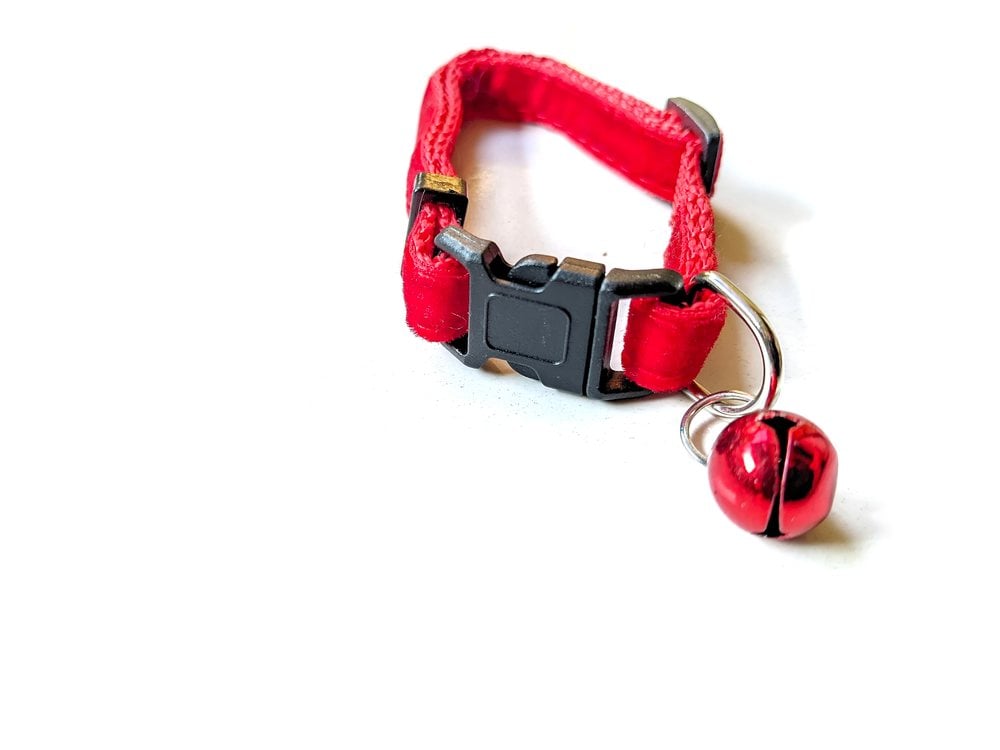
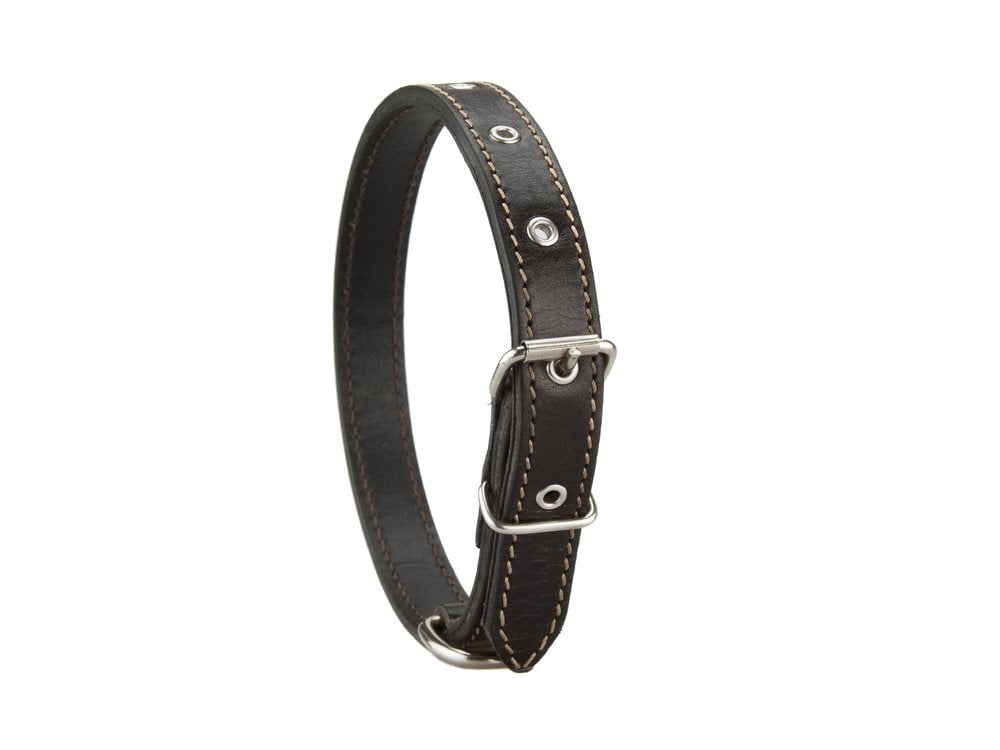
If you’re going to use a collar, make sure it’s safe. Collars can be dangerous for cats unless they have a break-away fitting. The Animal Medical Center in New York says that the safest collars to use are breakaway collars, which pop off with only a little bit of pressure and release a trapped cat.
Always make sure that any quick-release fitting works properly before you put the collar on your cat. Some collars look like they have a quick-release fitting, as some are very similar to regular buckles, but don’t have one. And cats do get injured when their collars don’t undo after getting caught on things like fences and tree branches.
Check your cat’s collar regularly. Cracked plastic and rusty metal may mean it’s time for a new one. The Animal Medical Center suggests a collar with room for 2 fingers to fit between the collar and your cat’s neck. Collars that are too tight can chafe, while ones that are too loose can slip off.
Microchipping is the best backup in case you get separated. As the AVMA puts it, microchips provide “permanent identification that can’t be lost or removed like a collar or tag.” Microchips also help with microchip-activated cat flaps and food dispensers which are selective to individual cats. The decision to microchip your cat and the decision to put a collar on them are entirely separate.
“Cats are extraordinary athletes, and their collar can easily catch on fences, sticks or other protruding objects, trapping the cat or worse.”
— Dr. Ann Hohenhaus, Animal Medical Center, Breakaway Collars for Cats
Toys
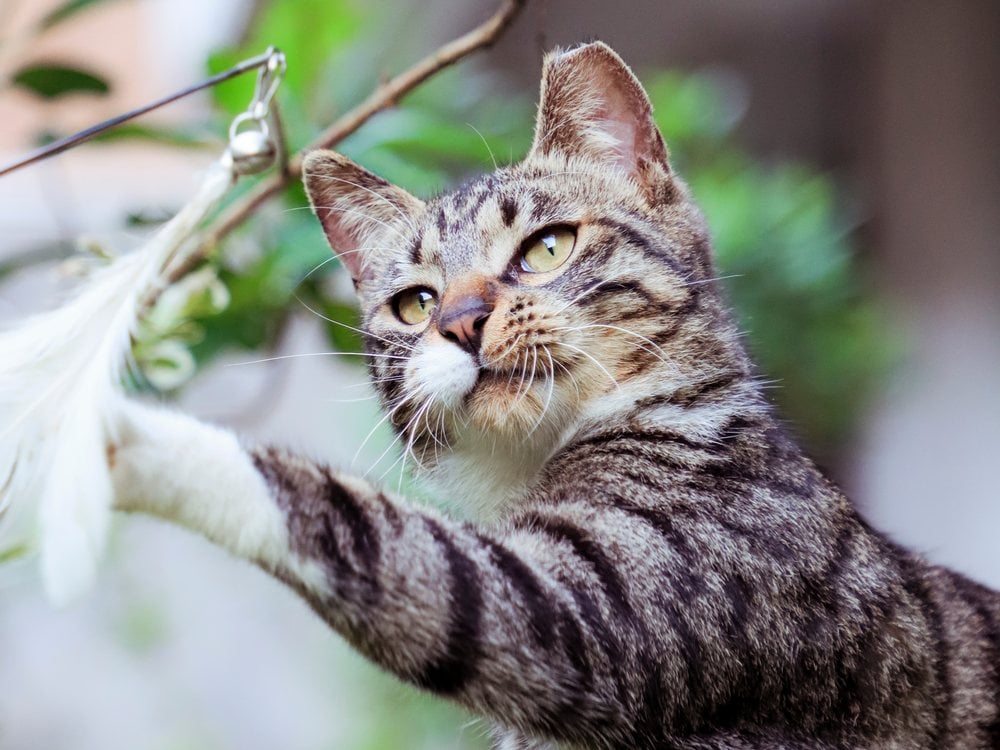
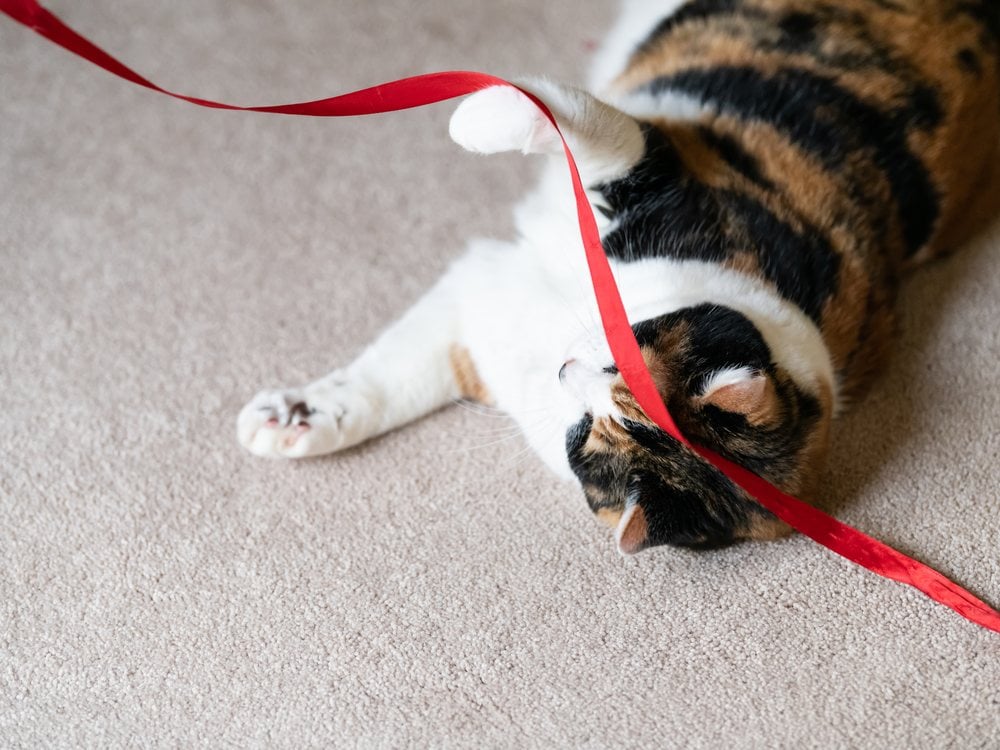
Toys also give cats the opportunity to exhibit normal hunting behavior in a safe manner. According to the ASPCA, encouraging your cat to chase and attack your hands and feet in play can lead to play aggression, so avoid it. Instead, encourage predatory behavior directed at items on strings, such as fishing rod type toys with feathers, or items that can be tossed such as balls.
Cornell warns against using toys with small parts that can be removed, or those with strings. Cats may chew off parts of feathers or the string and swallow them. Wand type toys are fun but can be dangerous because of the string/feathers.
Supervise your cat during playtime with these types of toys, and store them out of reach when done playing. Cats should never have unsupervised access to ribbons, yarn, string, etc. Check your cat’s toys often and replace them when worn out.
“Avoid toys with small pieces or linear strand-like parts such as feathers and string that may separate (especially when chewed) from the toy and be ingested.”
— Cornell Feline Health Center, Safe Toys and Gifts
Bed
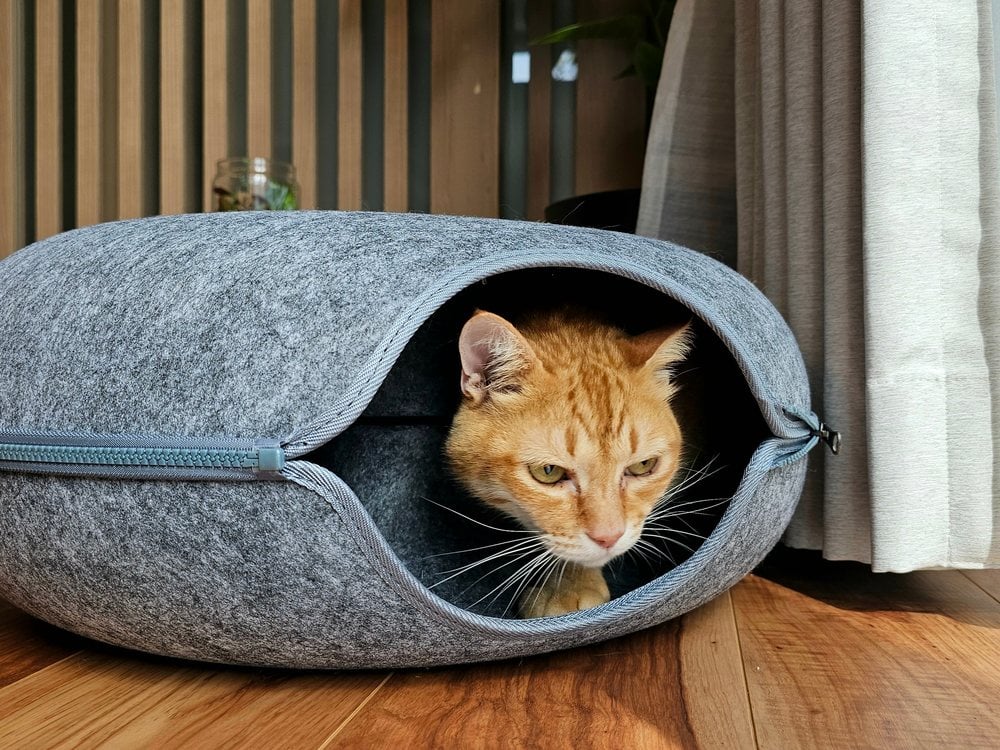
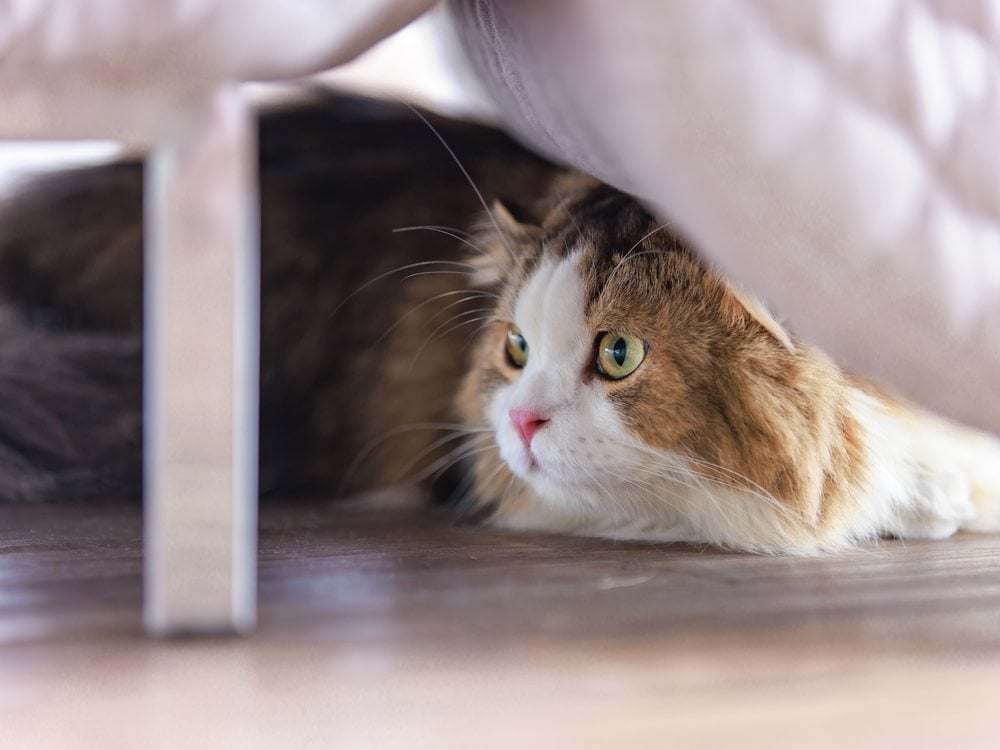
The main difference between a regular cat bed and a safe place is security. AAFP and ISFM recommend providing each cat with an individual place to hide. A safe place is a retreat that feels enclosed and private. This might be somewhere out of sight and/or on high so that your cat can observe the world from concealment.
Remember that cats may hide when they’re feeling threatened or frightened, but hiding is completely normal behavior and hiding spots are an important part of a cat’s environment. You may not need to invest in any new items as your cat will probably already have their favorite safe places, such as a quiet bookcase or a cardboard box.
Wherever you choose to position a safe place, it should be somewhere your cat feels secure. If you have more than one cat make sure any enclosed space has more than one way in/out so one cat can’t corner another. Also, as cats get older they may not always be able to access their favorite spots, so think about providing some sort of ramp/step up to help your senior cat make the trip. The FDA lists ramps and steps for getting to high places among the ways to help cats with arthritis.
“Provide individual hiding places for the cat.”
— AAFP and ISFM Feline Environmental Needs Guidelines, 2013
Carrier
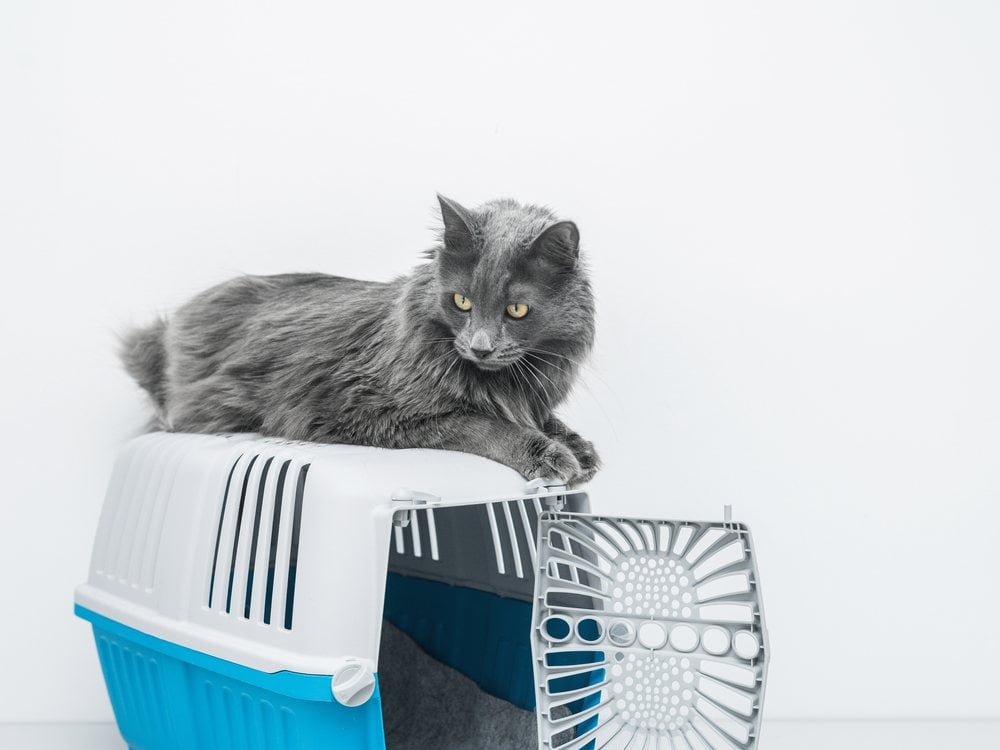
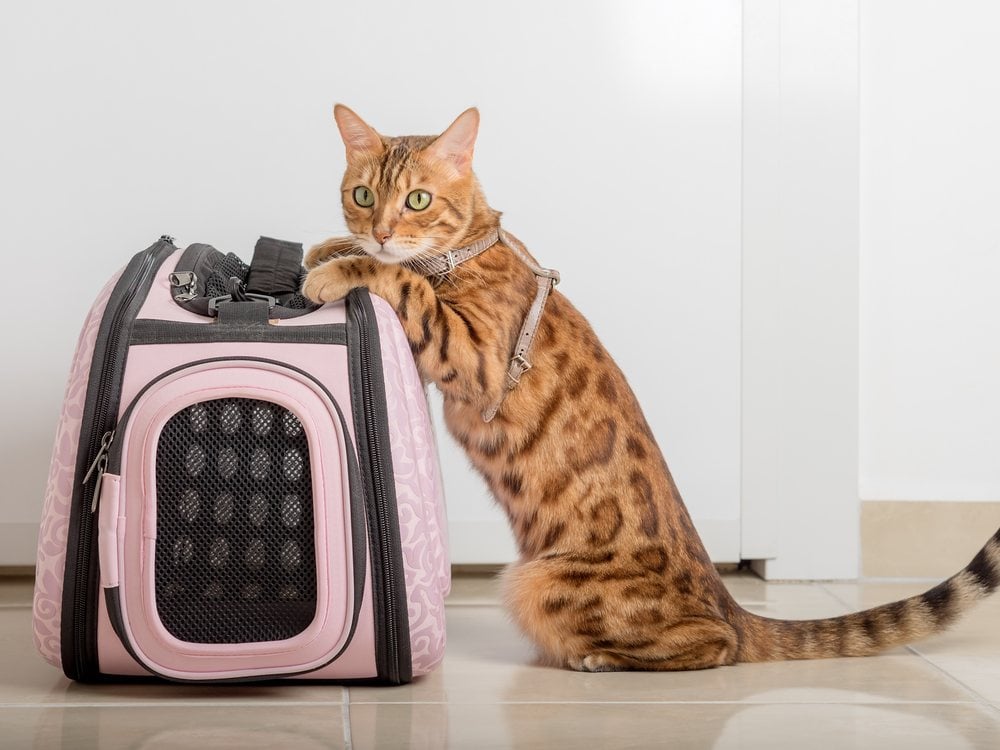
VCA Animal Hospitals suggests a carrier that can be opened from the top or the front, so if your cat resists the door, you can remove the top, lower them in, and replace it. However, most cats should be fine to habituate to a front-loading carrier, particularly if the top half can be removed, which is separate from the carrier having a top-opening option.
Whatever carrier you choose, the AAFP and ISFM emphasize that this should be a place that your cat recognizes as a secure space, something that should smell of home, not somewhere scary that only appears when they need transporting. So, make sure that you leave the carrier out, maybe with the door off, in an area that your cat likes to spend time, so they get used to it. Woodgreen suggests introducing the carrier gradually, providing treats and putting in their favorite bedding. This may take a few weeks for an anxious cat.
The problem is unfamiliarity, not softness. You might like a soft carrier better. That is not a problem as long as your cat is happy with it. Avoid cardboard carriers and choose one that has openings on at least two sides so your cat doesn’t feel as trapped.
“Ideally, you should be able to remove the top half of the carrier to allow easy access to your cat while maintaining his sense of safety in the bottom half.”
— VCA Animal Hospitals, Preparing Your Cat for a Trip to the Veterinarian
Perch
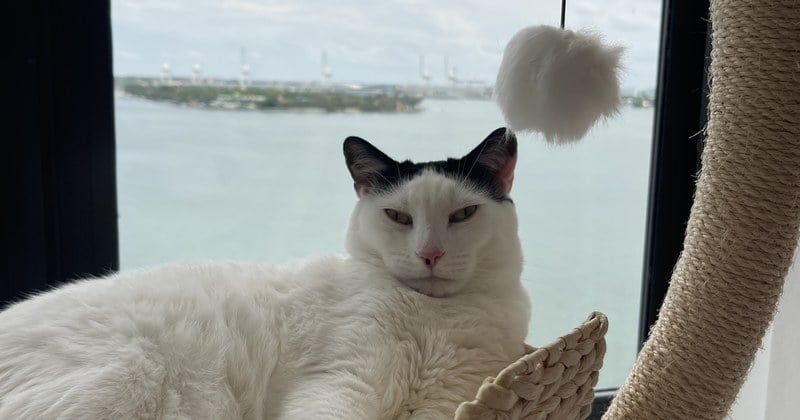
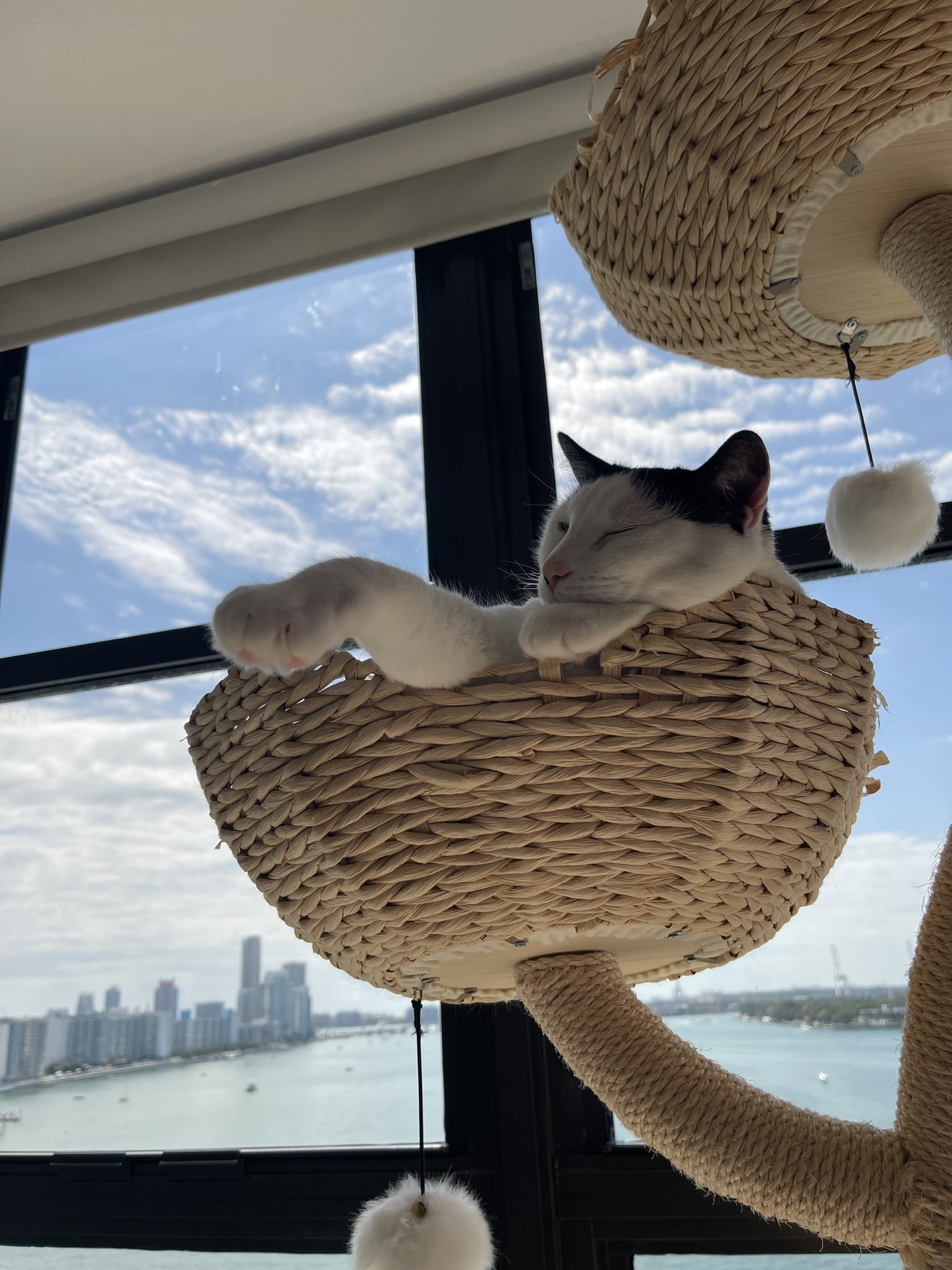
You don’t need a fancy cat tree. A perch is anything that allows your cat to be in a raised location to sit, lay, sleep, and/or gaze outside. Ohio State calls vertical spaces a necessity because cats are climbers. It gives them a safe and secure area where they can be alone and have a vantage point to look down at everything going on.
More than 1 perch is preferable so your cat has access to look outside from different locations. Perch options include windowsills, shelves, bookcases, etc. The AAFP and ISFM recommend perches that are long and wide enough to accommodate stretching out.
Commercial cat trees are not necessary, a nice sturdy piece of furniture next to a window is an excellent choice. It doesn’t need to be labeled cat furniture, it just needs to be something that is usable by your cat. Perches can be bought or you can make your own. The AAFP’s Cat Friendly Homes site adds that older cats may need ramps or small steps to help them get to favorite spots like windowsills.
“Perches should be wide enough and long enough to allow the cat to fully stretch.”
— AAFP and ISFM Feline Environmental Needs Guidelines, 2013
Nail Care
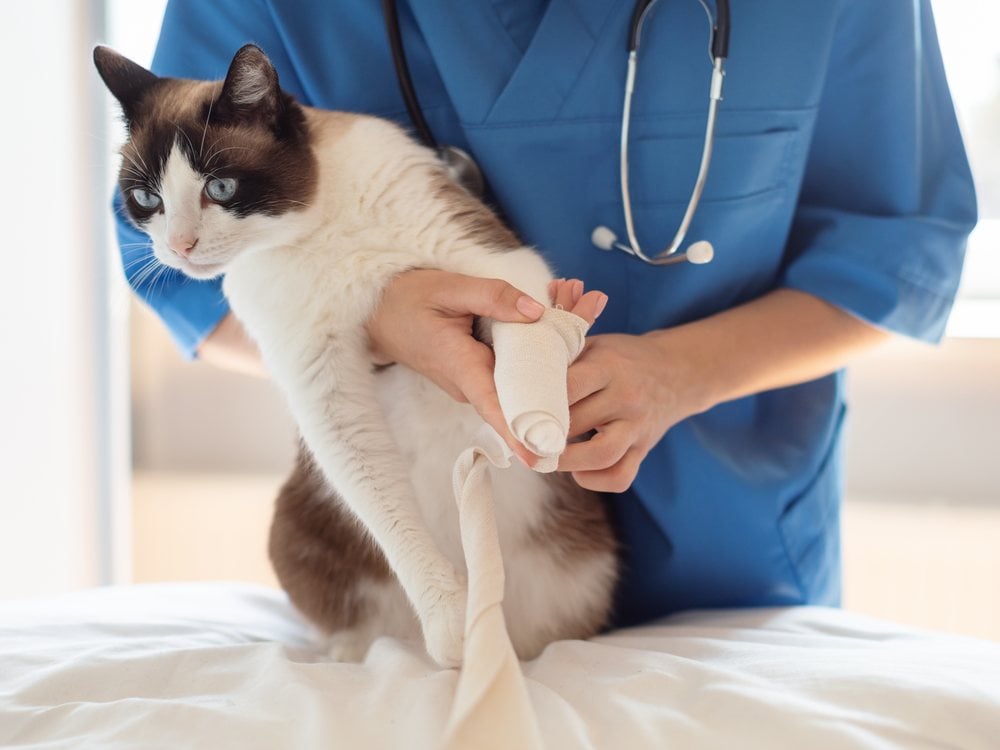
Declawing involves removing the last bone in each of your cat’s toes. This painful process of removing the third phalanx is considered an amputation.
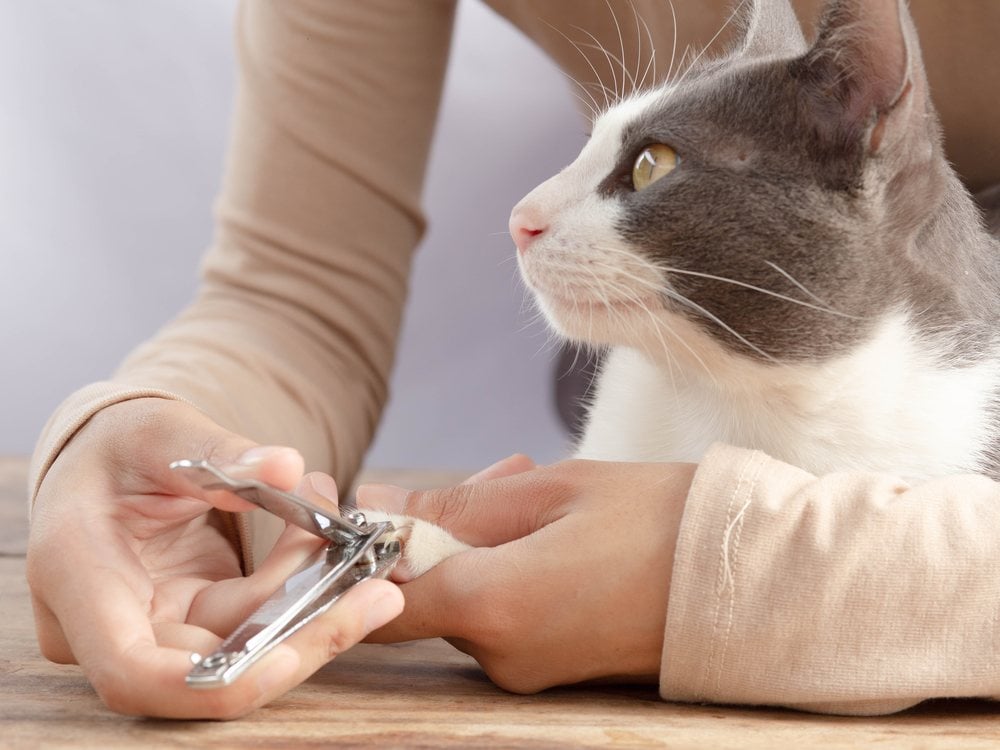
Scratching is an innate and learned behavior. Scratching helps your cat maintain the motions they would use for climbing or hunting, provides a full-body stretch, and helps cats remove the husk of the old claw. Although trimming may decrease the amount of damage done by scratching, it will not prevent your cat’s desire to scratch. Providing areas to scratch may help your cat continue a natural behavior.
Where the AAFP stands on declawing
The American Association of Feline Practitioners “strongly opposes declawing (onychectomy) as an elective procedure.” When the procedure is performed, the AAFP recommends multimodal pain medication appropriate for it, lasting as long as needed. Declawing can interfere with how a cat walks and removes one of their primary means of defense, and declawed cats should be housed indoors and supervised when outside. As of 2021, elective declawing isn’t allowed in any Cat Friendly Practice.
Outdoor Access
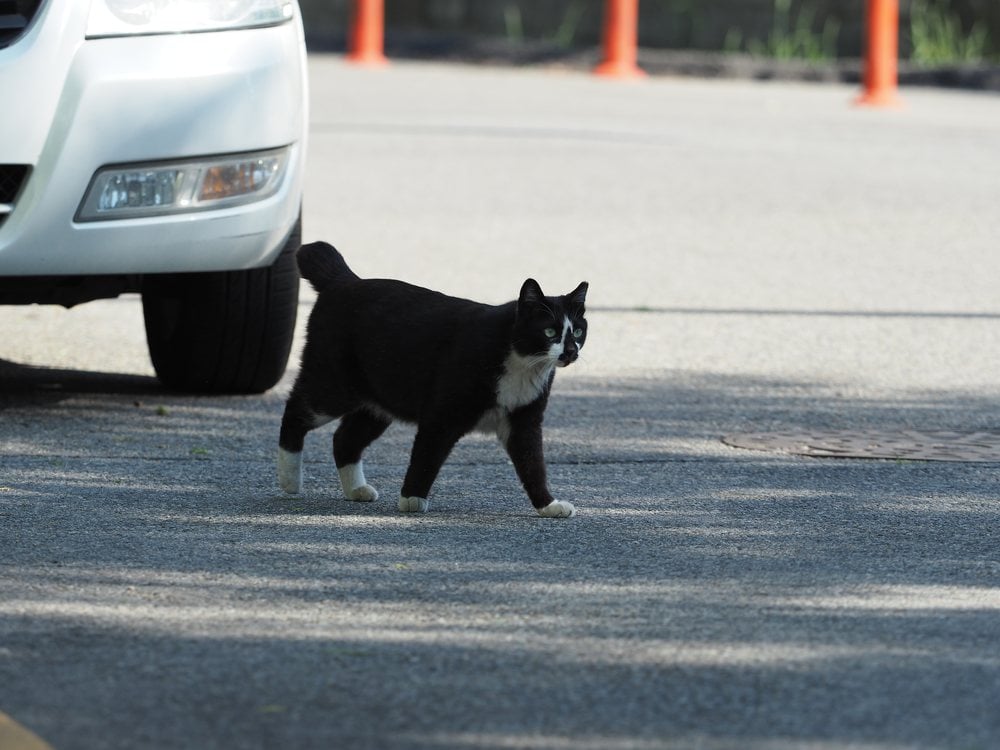
Views differ on the appropriateness of walking cats on leashes. Cornell recommends keeping your cat indoors or providing a safe outdoor area. Cats roaming unsupervised outside are more at risk of accidents, fights, parasites, and infectious diseases.
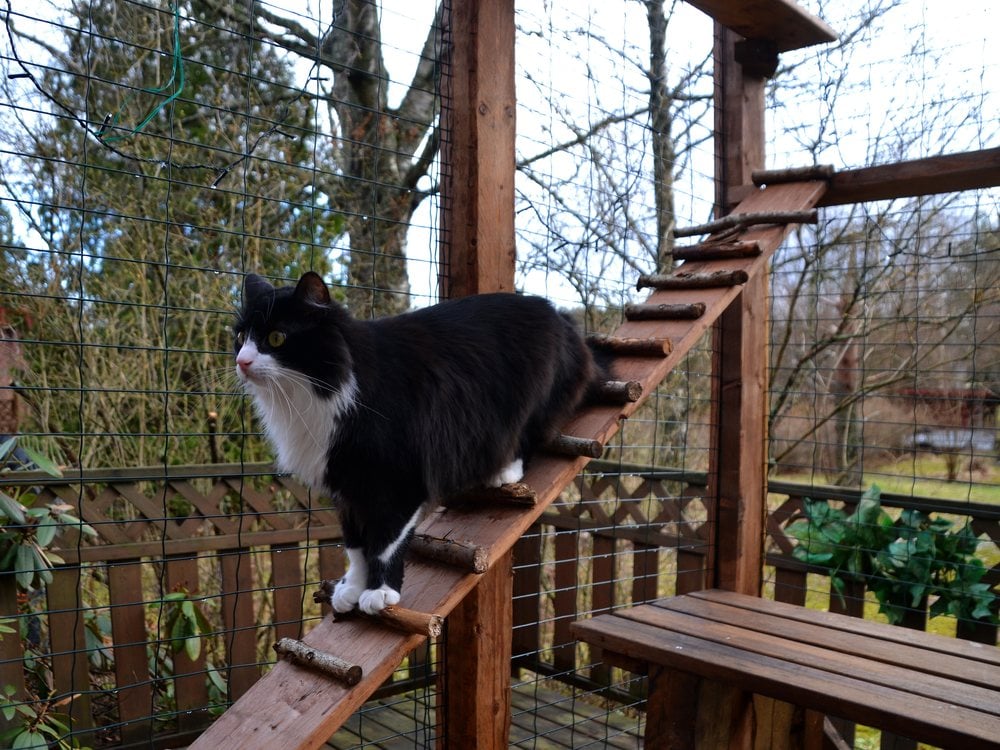
Providing your cat with a safe outdoor space offers many of the advantages of letting your cat out including fresh air while avoiding many of the problems of letting your cat roam unsupervised as well as the debate around walking cats on leashes.
The AAFP and ISFM say it is okay to walk your cat on a leash after harness training the cat with positive reinforcement and using a loose enough lead to give your cat control of their own movement. Cat behaviorist Pam Johnson-Bennett is more cautious about walks outdoors, where cats can easily be startled by dogs, loud noises, cars, and even people walking by. Cats can also panic in unfamiliar places and dash away, where they could easily get lost.
The Cat Protection Society of NSW advises harness training indoors and observing their behavior to ensure they’re not exhibiting any sign of distress, and stopping at once if they are. They say many cats are not suited to being leash-walked but some cats enjoy it. They also recommend never attaching a leash to a cat’s collar.
“Not every cat is a candidate for leash training.”
— Pam Johnson-Bennett, cat behaviorist, Should You Walk Your Cat Outdoors on a Leash?