
The Longevity Foods That Could Actually Help Your Cat Live Longer
 By Lindsay Jones
 ✓Medically reviewed by Dr. Lindsey Mortlock
I come across a lot of lists that, just like humans have, encourage you to do X, Y, Z to live the longest life. I’m about as skeptical of these for myself as I am with our cats, so I always want to make sure that what we’re introducing to our cats’ diets is actually backed by science and studies and not a “fad.”
A lot of my thoughts around longevity and how to make sure our cats live a long and healthy life definitely mirror my own ideas for myself. I make sure I’m eating the healthiest food options I can, such as foods that are minimally processed, staying away from unhealthy treats (for me, sodas, desserts, and candies with bad ingredients), drinking lots of water, and also making lifestyle choices like staying active and exercising. The same logic goes for our cats, and it starts with the food they eat every day.
So we’ve had quite a food routine with Thelma and Louis. When they were little, we had them on Purina Pro Plan kitten food, then as adults we cycled through Tiki Cat, Weruva, and Fancy Feast. We discovered Thelma had a very bad food allergy that caused a nasty skin reaction to brown rice and yeast, so we immediately had to switch her food, and somewhere along the way she developed a distaste for wet food. Today, Thelma is on Nulo FreeStyle Salmon & Lentils Recipe with L-Carnitine & Probiotics High Protein & Grain-Free Adult Trim dry cat food, and drinks a good amount of water and also gets hydrating treats like Acana or WholeHearted lickables.
Louis is on Royal Canin Adult Instinctive and Purina Pro Plan Veterinary Diets EN Gastroenteric Feline Formula dry cat food because, TMI, but sometimes after he poops we have to wipe him to make sure he’s clean, because sometimes he’ll be carrying around some leftover on his butt as a gift lol, and this seems to help along with the Calming Care probiotic.
When it comes to food and treats to help our cats live a ridiculously long life (that’s the dream right?!) these are the foods recommended the most, in an easy-to-follow list:
| Food | Why it actually helps a cat age well | Keep in mind |
|---|---|---|
| A complete wet food | Meat protein plus the moisture that’s easier on aging kidneys | Choose one labeled AAFCO “complete and balanced”; it’s the base, not a topper |
| Oily fish (sardines) | Omega-3s for coat, joints, and aging kidneys | Water-packed, no salt, a small mashed piece now and then |
| Fish oil made for cats | The dose-controlled version of those omega-3s | Cat formula only, and check the dose with your vet |
| Plain cooked egg | Cheap, highly digestible protein most cats love | Fully cooked, no oil, butter, or salt |
| Plain cooked chicken or turkey | Lean protein that helps older cats hold onto muscle | Unseasoned and boneless, never with onion or garlic |
| Plain canned pumpkin | Fiber for hairballs and the occasional tummy trouble | 100% pumpkin, not pie filling, about half a teaspoon |
| Cat-safe bone broth | Extra moisture for cats who won’t drink, especially older ones | Pet broth or plain homemade only, never onion or garlic |
| Green beans or cooked carrot | Filling fiber with few calories, handy for weight control | Plain and cooked, a little chopped into a meal |
| A little organ meat (liver) | Nutrient-dense, with vitamin A, B12, and iron | Tiny amounts only, since too much vitamin A is harmful |
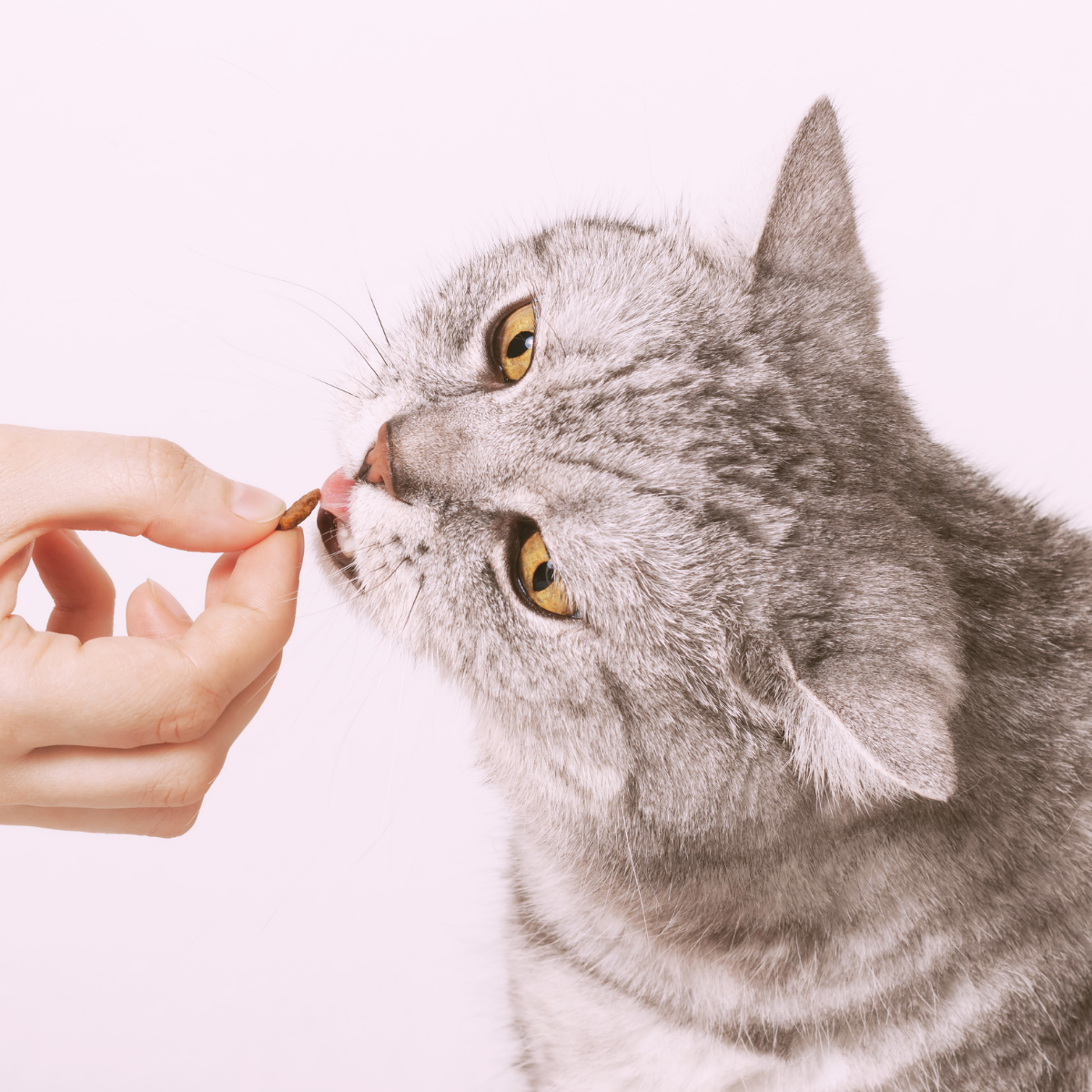
Since our cats are only 3 years old and get a pretty good diet, we haven’t bought a lot of supplements yet or anything that promises longevity, because I think we know how confusing that can be for us humans as it is. I do try to give them healthy treats like liver, chicken, salmon, and minnows, which they love. Other foods, like broth and fresh sardines, they don’t love. That’s why it helps to know all your options. We went through each of these in more detail, and the ones that are just marketing, in our guide to cat “superfoods”.
Even the best food on that list can’t outrun the basics, though. It’s those everyday, good habits that actually make a cat live a long and healthy life, like these below.
A chubby cat is not always a healthy cat. You have to be careful how much they are eating
We started off free-feeding our cats, and boy did we see the weight gain! Now they get carefully portioned meals along with some treats. I am definitely guilty of being the “treat mom,” and I’ll often sneak them one or two extra. While I love to see them happy, I definitely don’t want to ever see them overweight. Ours are probably just at that normal-to-borderline range, to be honest, so I’m very aware of this.
It turns out that awareness is the most useful thing I do for them. Keeping a cat at a healthy weight does more for their odds than any food I could add to the bowl.
What the Research Says About Weight and Lifespan
A 2024 study in the Journal of Feline Medicine and Surgery built life tables for cats in the UK and found an average life expectancy of about 11.7 years at birth. Two findings stand out for anyone thinking about longevity:
- Body weight matters, but the picture is more complicated than thinner-is-better. Cats whose weight drifted far from the healthy median for their breed and sex tended to live shorter lives. Interestingly, the researchers noted that mild overweight on its own didn’t appear to slash lifespan, which fits other work showing that obesity’s real damage is the chronic disease it brings (diabetes, arthritis, urinary trouble), not necessarily a shorter clock.
- Neutering was linked to a longer life. In the same study, neutered cats lived roughly a year longer on average than unneutered ones.
The practical read: aim for a steady, healthy weight and let your vet score your cat’s body condition at checkups, rather than chasing either extreme.
Water matters more than any single food
Wet food is hands down the best food you can give your cat. But it doesn’t always work out the way we want as cat parents! Unfortunately Thelma hates wet food so there’s not much we can do about that (trust me, we’ve tried every single brand out there just about), so we make sure to supplement with healthy, hydrating treats like lickables and make sure she’s drinking enough water.
Thankfully I think both our cats are pretty good with water, but we don’t have an exact measurement of course. The fountains we have now (the Petlibro) have been a big hit, even though Thelma has switched over to her plastic fish bowl with her “turty” in it (a plastic turtle), which we bought as a toy but realized she loved drinking water out of. Hey, whatever works! Louis is our wet-food guy, so his water is the part I worry about least.
I’m mostly worried about the hydration, so I always want to make sure that we see them drinking water. If for some reason we don’t, I like to give them the lickable treats so they get some extra hydration, and sometimes we’ll squeeze those packets out into a cat bowl and add a little bit of water. But Thelma is very picky about water. If I try to even put a few drops onto her dry food, she won’t eat it, so that’s something I’ve definitely had to work on. I think that’s honestly the biggest longevity lever you can pull as a cat parent.
If your cat is a reluctant drinker like Thelma, that’s a whole project of its own, and we get into it in our piece on getting a cat to drink more water.
Older cats need more protein, not less
It’s not surprising to me that older cats need more protein, since it’s the same research currently out there for humans.
Older Cats Need More Protein, Not Less
The 2021 AAHA/AAFP Feline Life Stage Guidelines, written by the American Animal Hospital Association and the American Association of Feline Practitioners, push back on the old habit of restricting protein in healthy senior cats. Their guidance:
- Healthy mature and senior cats do better on higher-protein diets that help preserve lean muscle as they age (a loss vets call sarcopenia).
- A cat should not be switched to a low-protein food simply because of their age. Protein restriction is for specific medical conditions, decided with a vet, not a default for getting older.
As Tufts veterinary nutritionist Dr. Lisa Freeman puts it, the right diet for an older cat depends on that individual cat’s health, which is the unglamorous answer that no food list can give you.
Source: 2021 AAHA/AAFP Feline Life Stage Guidelines, Nutrition and Weight
So, what about fruit?
I wish our cats would try fruit! They are just not into anything meant for humans.
What most fruit lists skip is that cats can’t taste sweetness at all. They’re missing the working gene for the sweet-taste receptor, which is part of being a true carnivore, so a strawberry or a piece of banana does almost nothing for them. A little cat-safe fruit now and then won’t hurt, and we sorted the safe berries from the ones to avoid in our cat-safe berries piece, but it isn’t adding any years. Most of the antioxidant claims you see come from human and dog research, not cats.
Pumpkin is the one plant food that earns its spot, and the reason is fiber, not longevity magic. That fiber is what helps with hairballs and the occasional bout of constipation or loose stool. The evidence behind fiber for those problems is solid, though you may need more pumpkin than you’d expect to match a proper high-fiber diet, and there are no formal guidelines for doing it yourself, so it’s worth running past your vet.
The Science on Fruit and Pumpkin
Why fruit does so little for cats: Researchers at the Monell Chemical Senses Center found that cats carry a broken copy of the gene for the sweet-taste receptor, a so-called pseudogene, so unlike us they physically can’t taste sweetness. It’s a side effect of being strict carnivores, and it’s why a cat shrugs at a strawberry. Most of the “fruit antioxidant” benefits you see quoted come from human or dog studies, not cats.
Why pumpkin is different: Pumpkin’s value isn’t sugar or vitamins, it’s fiber. A 2022 review in the Journal of the American Veterinary Medical Association describes dietary fiber as a real way to manage feline constipation, diarrhea, and hairballs. The catch is that you may need a fair amount of pumpkin to match a proper high-fiber diet, and there are no formal guidelines for adding it yourself, so check with your vet if your cat needs ongoing help.
Sources: Li et al., “Pseudogenization of a Sweet-Receptor Gene Accounts for Cats’ Indifference toward Sugar,” PLoS Genetics, 2005; “Dietary fiber aids in the management of canine and feline gastrointestinal disease,” JAVMA, 2022
A few foods are downright dangerous, though, so before you add anything from your kitchen, it’s worth keeping the hard no-list handy.
Human Foods That Are Never Safe for Cats
Before you try anything new from your kitchen, know the hard “no.” The ASPCA’s Animal Poison Control Center warns that these should never go near a cat:
- Onions, garlic, chives, and leeks
- Grapes and raisins
- Chocolate, coffee, and caffeine
- Alcohol and raw yeast dough
- Xylitol (the sweetener in sugar-free gum, candy, and some peanut butters, and sometimes labeled as “birch sugar”)
- Apple seeds and cores (the flesh is fine in a tiny amount, but the seeds release cyanide)
If your cat eats any of these, call your vet or the ASPCA Animal Poison Control Center at (888) 426-4435 right away. Save that number in your phone now, before you ever need it.
None of this is as exciting as a quick hack, but the stuff that actually stretches a cat’s life is the boring stuff: the right food in the right portion, fresh water they’ll actually drink, more protein as they get older, and a vet who weighs them. I stay skeptical of the shortcut lists for our cats for the same reason I stay skeptical of them for myself.
Founder and editor of Cat Seat and cat mom to Thelma and Louis. She’s been writing online since 2000.
An emergency veterinarian with a special interest in feline medicine — and a self-proclaimed cat lady with six cats of her own.
Hi! I’m Lindsay. I run this site alongside my hubs Cory and our very opinionated cats, Thelma and Louis. We’re so happy you’re here!
Thank you for a great article. My cat was recently diagnosed with diabetes and I have been wondering what is healthy to cook for him. This gave me lots of info. I appreciate it.