Japanese Cat Names (and What They Actually Mean)
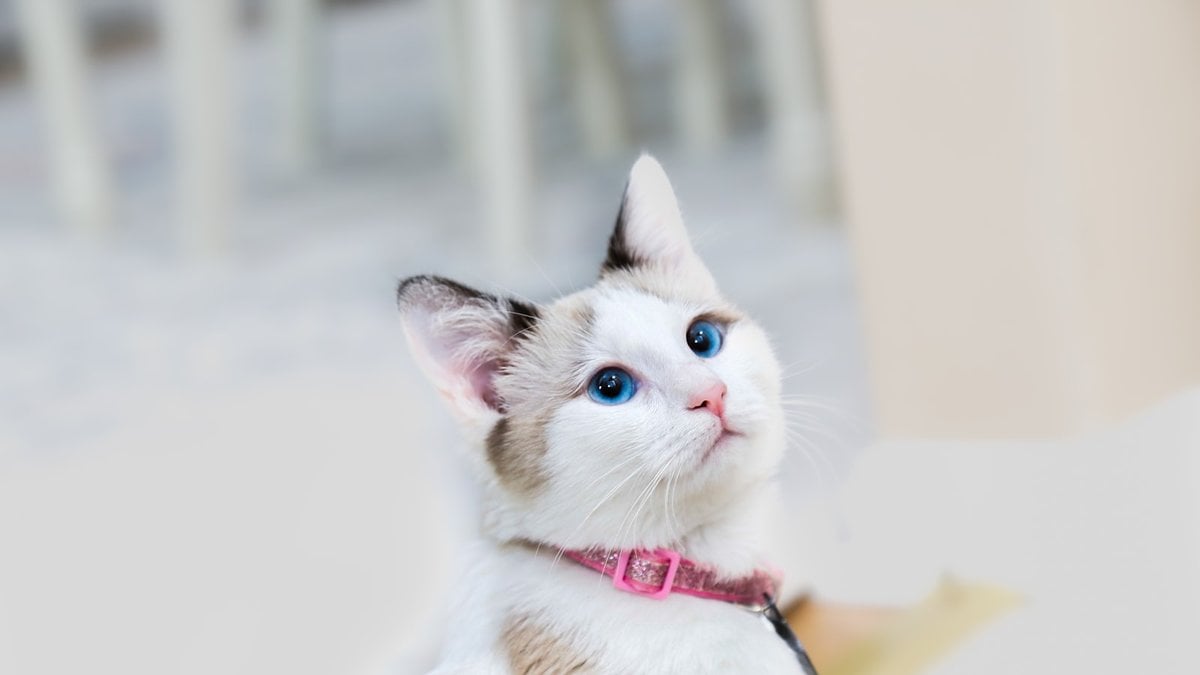
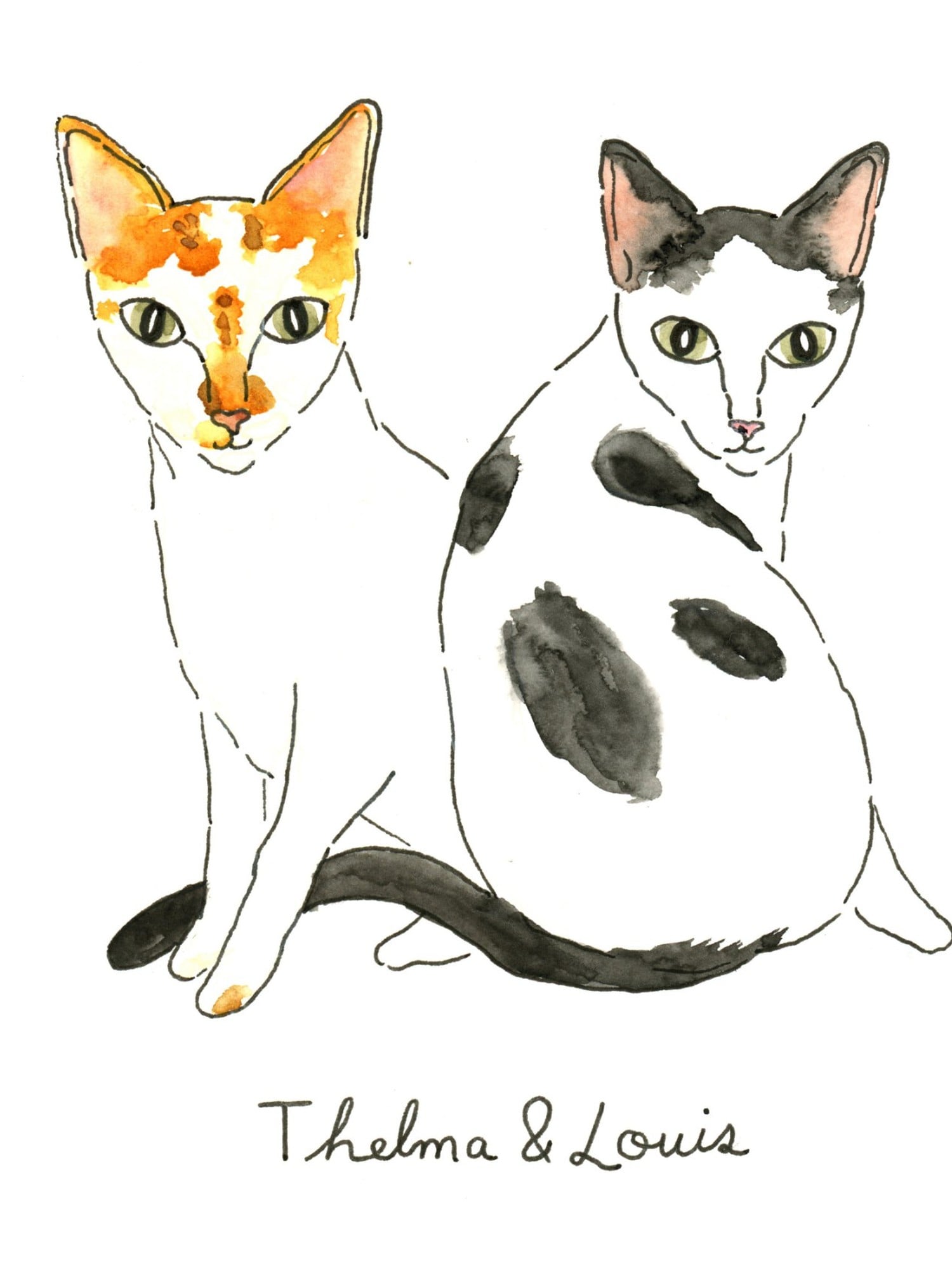
We had the hardest time naming Thelma and Louis. As music buffs we started thinking about music or music-adjacent duos, like Louis and Ella, Sid and Nancy, Sonny and Cher. I think we also had Louis (for Louis Armstrong) and Nina (for Nina Simone) for a while, but nothing really stuck. Every time we went to the vet’s it was a bit embarrassing because their names kept changing LOL.
Finally we were sitting down one night and Thelma & Louise was on TV, and it hit us. Thelma really seemed like a Thelma, and we had already been drawn to Louis for Louis Armstrong. Plus the cats were found in a car when they were rescued, so it all just fit together for us!
We had recently come back from a trip to Japan and fell in love with Tokyo and Kyoto while we were there. We also love sushi and sake! Because of that we thought about doing Japanese names for Thelma and Louis, something like Uni or Ginger (probably for Thelma because she’s orange) and Sake (the drink or salmon) or Unagi (eel) for Louis with his long black tail. I think the names we ended up with are perfect for them, but these were high on our list! If you’re also contemplating Japanese cat names (or just like scrolling through ideas), read on for more!
What cats in Japan are named right now
Japanese pet insurer Anicom publishes an annual ranking of the most popular cat names in Japan (how fun is that?). Its 2026 top ten were a bit of an assortment, with Mugi, Latte, Luna, Lulu, Sora, Bell, Mocha, Leo (is that for the sign or DiCaprio?), Kinako, and Coco leading the way.
Here is the list, along with the meaning for each.
Japan’s 2026 top ten
- Mugi wheat or barley
- Latte coffee with milk
- Luna moon (Latin)
- Lulu
- Sora sky
- Bell the English word
- Mocha coffee or chocolate
- Leo lion (Latin)
- Kinako roasted soybean flour
- Coco
Anicom’s 2026 ranking covers 54,764 kittens enrolled in its pet insurance between February 2025 and January 2026, and Mugi (wheat or barley) was the most common name for the seventh year running. The same ten names made the overall top ten as the year before, just in a slightly different order (Latte, for example, moved from fifth place to second, while Leo dropped from second to eighth, who would’ve guessed?!).
Leo was the most popular boys’ name and Luna the most popular girls’ name, and Mugi was second for both. Uni (sea urchin, and my favorite sushi) was new to the boys’ top ten this year, which made me laugh because we had Uni on our shortlist for Thelma! A couple of meanings from the boys’ list: Kohaku is amber, and Maron is the French word for chestnut, adopted into Japanese.
Top ten for boys (2026)
- Leo lion (Latin)
- Mugi wheat or barley
- Sora sky
- Latte coffee with milk
- Kohaku amber
- Ten
- Noa
- Maron chestnut (from French)
- Uni sea urchin
- Chachamaru
Top ten for girls (2026)
- Luna moon (Latin)
- Mugi wheat or barley
- Lulu
- Mocha coffee or chocolate
- Coco
- Momo peach
- Bell the English word
- Kinako roasted soybean flour
- Latte coffee with milk
- Mel
While that is the list of the most popular cat names in Japan right now, there are so many other possibilities if none of those strike your fancy! Here are a few fun categories to consider.
Japanese food and drink names
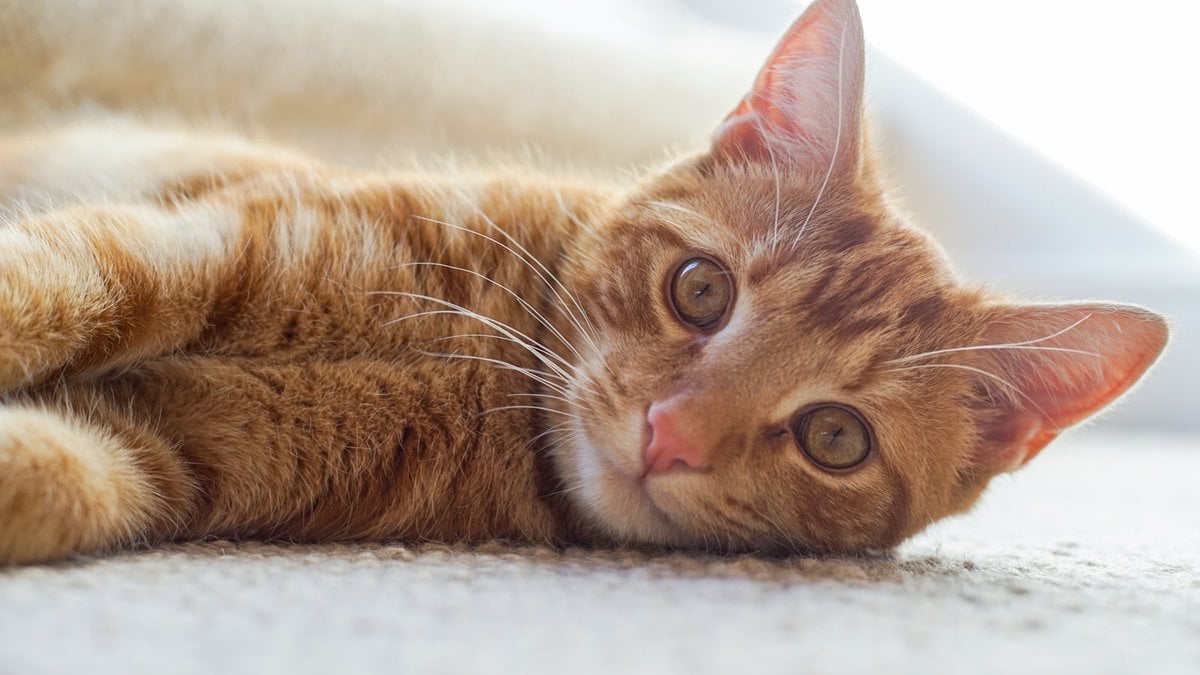
I think food names are adorable. I also think the biggest thing that matters is that YOU love a name. When we were cycling through names and we had different ones for Thelma and Louis on each vet visit, someone would inevitably give their opinion. “Oh, we liked Ella so much better!” Um excuse me. She’s our cat and we like Thelma better, thank you! LOL.
Some of the best Japanese food names that could work for cats are below. Uni is sea urchin (and my favorite type of sushi!). Sake can mean the drink or salmon (the salmon word is pronounced closer to SHA-keh). Ginger isn’t Japanese, but it still works for an orange cat. You also get it on the side of your sushi platter!
Sushi names
- Uni sea urchin
- Sake salmon or rice wine
- Nori seaweed
- Saba mackerel
- Ebi shrimp
- Wasabi
- Unagi eel
- Tako octopus
- Maguro tuna
- Ikura salmon roe
Sweet and snacky
- Mochi rice cake
- Momo peach
- Mikan mandarin orange
- Tofu
- Miso
- Kinako soybean flour
- Yuzu Japanese citrus
- Matcha
- Azuki red bean
- Goma sesame
- Dango rice dumpling
- Anko sweet red-bean paste
Mikan is a really cute choice for an orange cat (like Thelma) that I haven’t heard often. And Tofu is always a popular choice for a reason. Same with Miso!
Names for black, white, tabby, and calico cats
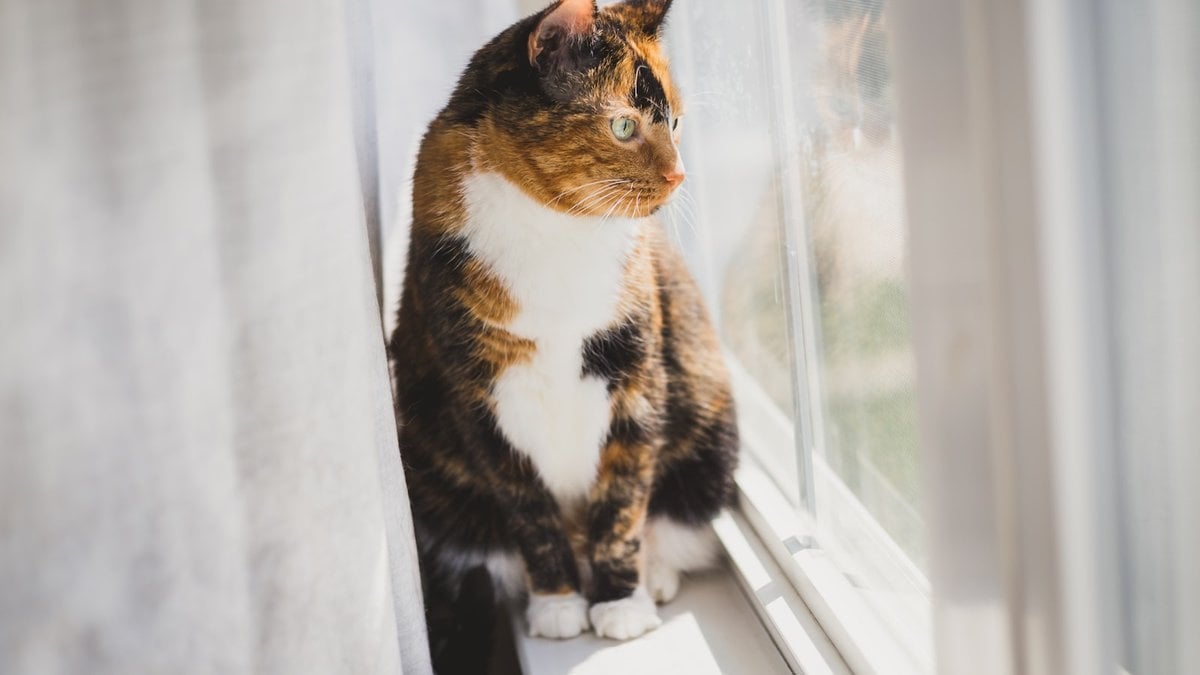
If you have a black, white, or calico cat, there are some really great Japanese-inspired names you can choose from. Unlike in the United States, black cats are considered symbols of good luck in Japan, so you could also consider the name Fuku, which means good luck or good fortune.
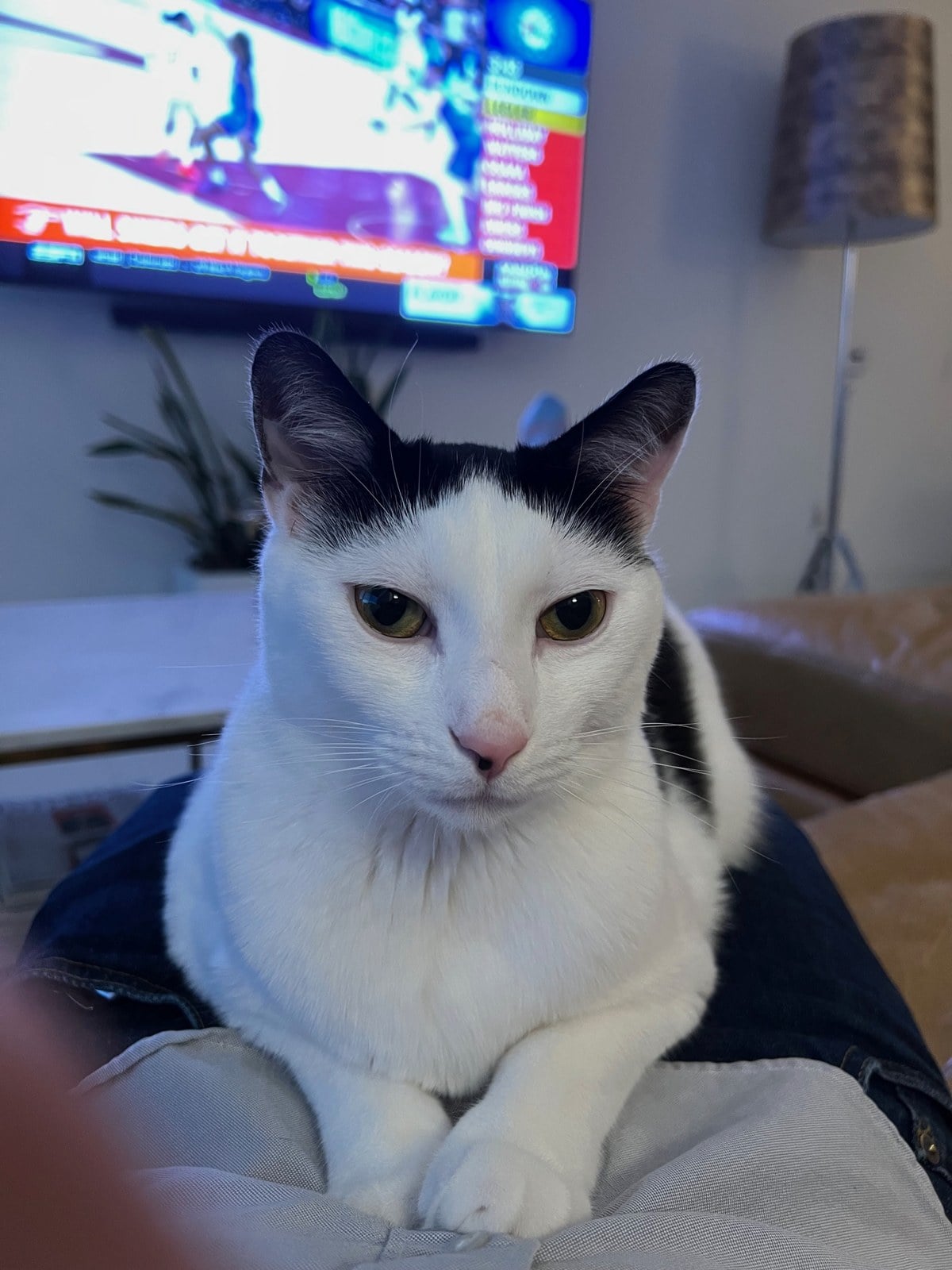
If you have a calico (also good luck in Japan) and like the name Mike, one pronunciation note: Mike looks like the English name Mike, but the Japanese word for a calico is pronounced MEE-keh.
For a black cat
- Kuro black
- Sumi ink
- Yoru night
- Kage shadow
For other coats
- Shiro white
- Yuki snow
- Tora tiger
- Mike calico
- Buchi patches
- Chatora orange tabby
- Kijitora brown tabby
- Sabatora silver tabby
- Hachiware split-face bicolor pattern
The lucky cats of Japan
The beckoning cat (maneki-neko) is the one you see with a raised paw in restaurant windows, and the most famous origin story belongs to Gotokuji, a Buddhist temple in Tokyo’s Setagaya ward. In the temple’s own telling, a lord (Naotaka Ii, lord of the Hikone domain) was on his way home from falconry when a cat at the temple gate beckoned him in, and while he rested there a thunderstorm broke out. The temple later enshrined the cat as Manekineko, and now there are tons of little cat statues all over the grounds.
It’s said that a raised left paw attracts customers and a raised right paw attracts money, but the meaning changes depending on the region and the generation (Gotokuji’s own cat raises its right paw and doesn’t hold a coin at all), so I wouldn’t think too much about it. The traditional lucky cat is a calico, and in the Japanese Bobtail breed the tricolor mi-ke coat is considered the luckiest.
In Japan, black cats are also considered lucky (the opposite of the old European superstition, a black cat crossing your path there is a good sign), and Japanese sailors used to keep calicos as ship’s cats for protection, with the very rare male calico considered especially lucky. So Fuku (good fortune), Maneki (beckoning), Mike (calico), and Kuro (black) are all lucky names, and they’re all on this page!
Japanese nature names
Sky and water
- Umi sea
- Nami wave
- Tsuki moon
- Hoshi star
Flowers and trees
- Hana flower
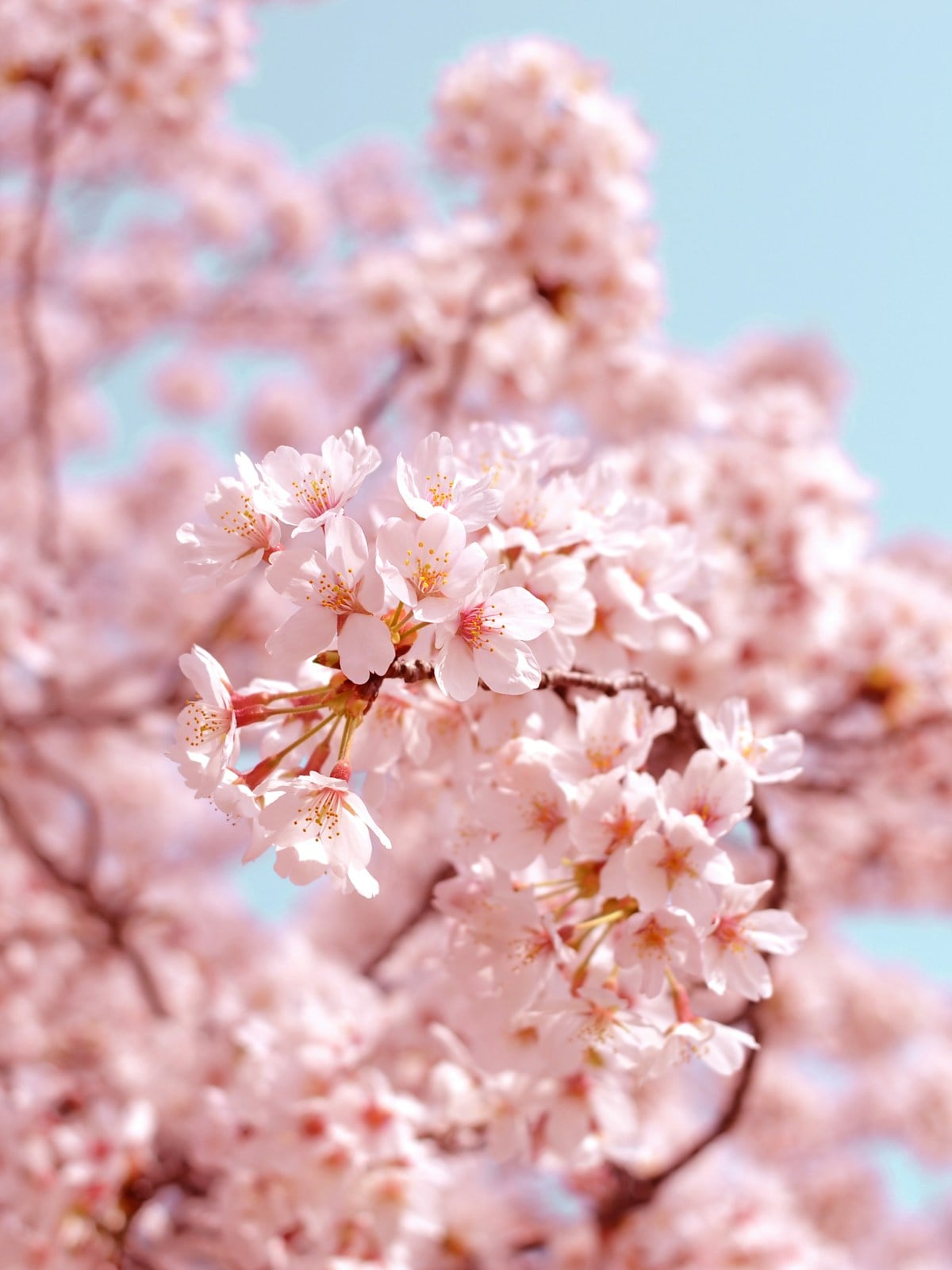
- Sakura cherry blossom
- Kaede maple
Classic cat names and Japanese pop culture
When choosing your cat’s name there are so many different directions you can go in, of course the classic route, or you can get inspired by pop culture. Here are some name options for both of those lists.
Classic cat names
- Tama ball or jewel
- Maru circle or round
- Tora tiger
- Chibi little one
- Hime princess
- Mimi ears
- Fuku good luck or good fortune
Movies and anime
- Jiji the cat in Kiki’s Delivery Service
- Kiki the young witch
- Totoro My Neighbor Totoro
- Ponyo Ponyo
- Luna the black cat in Sailor Moon
- Artemis the white cat in Sailor Moon
- Doraemon the robotic cat
- Chi the kitten in Chi’s Sweet Home
- Baron the cat in The Cat Returns
- Muta the cat in The Cat Returns
Tama, the cat who ran a train station
Another one of my favorite famous Japanese cats is Tama, a calico who served as stationmaster of Kishi Station on the Wakayama Electric Railway! She was appointed on January 5, 2007. Her salary was a year’s supply of cat food, and her duties involved wearing a little stationmaster’s cap and greeting passengers. Tama received several promotions during her career, to super stationmaster, then operating officer, and in January 2013 to acting president of the railway. It seems like a lot of responsibility for one small cat, but she did an amazing job: ridership on the line went from 1.92 million passengers in fiscal 2005 to 2.27 million in fiscal 2014, and the railway’s president estimated that Tama brought about 1.1 billion yen (roughly $8.9 million at the time) into the region.
Tama passed away at 16 on June 22, 2015. Her funeral was held at the station, Shinto-style, she was enshrined at a nearby cat shrine, and she was succeeded by Nitama, another calico. It made me smile to read how much the people of Wakayama loved her. And in case you were wondering, Tama means ball or jewel and is a very traditional cat name in Japan. We didn’t name ours Tama (LOL), but I can see why someone would. It’s cute, simple and easy to say in your cat voice.
Maru, and the cat who technically isn’t one
Maru was the Japanese cat who starred on YouTube for his ability to fit himself into boxes significantly smaller than he was. In September 2016, Guinness World Records certified him as the most-viewed animal on YouTube, with 325,704,506 views as of September 22, 2016. He was eventually passed by a beagle named Maymo in 2018, and Maru died on September 6, 2025, at the age of 18. If you’ve seen the videos, you know his name, which means circle or round, is extremely appropriate. At times Maru looks like a liquid, defying physics to squeeze into places that are too small for a normal cat.
And then there’s Hello Kitty, which is a perfectly fine name for a cat. Well. Almost. In 2014, the anthropologist Christine Yano was writing text for a museum exhibit about Hello Kitty when she was corrected by Sanrio, the company that makes her. As Yano told the Los Angeles Times, “Hello Kitty is not a cat. She’s a cartoon character. She is a little girl. She is a friend.” The internet understandably freaked out, and Sanrio quickly walked it back a bit, explaining, “Hello Kitty was done in the motif of a cat. It’s going too far to say that Hello Kitty is not a cat.” So you can still name your cat Kitty. It just comes with a minor caveat now.
More lists: seasons, colors, numbers, and a few words to double-check
Food names are clearly popular in Japan (Mugi, Kinako, Mocha, Latte and Momo are all at the top of the list), so I added a second helping of food names below, plus seasons and weather, colors, more flowers and plants, classic names and animals, numbers, and places. I kept the meanings short, and every one of them was checked against a Japanese dictionary before it went on the page, so you can feel confident saying it out loud.
A few things to know before you commit: Kaze is the word for wind, but said the same way it also means a cold (you know, the sniffles). Kumo is cloud, but also spider. Ame means rain, but with a different inflection it means candy. Katsu is a cutlet, but it also means ‘to win,’ which is why students eat it before tests. And there’s no four on the number list, because one Japanese word for four (shi) sounds exactly like the word for death. It’s often skipped in Japan, so we skipped it here too. It’s just best to be aware!
Seasons and weather
- Haru spring
- Natsu summer
- Aki autumn
- Fuyu winter
- Kaze wind
- Kumo cloud
- Ame rain
- Kiri mist
- Arashi storm
- Hikari light
- Akari lamplight
- Niji rainbow
- Kasumi haze
- Hinata sunny spot
- Asahi morning sun
- Hotaru firefly
- Momiji autumn leaves
- Tsuyu rainy season
More flowers and plants
- Ume plum blossom
- Botan peony
- Kiku chrysanthemum
- Ran orchid
- Sumire violet
- Ayame iris
- Fuji wisteria
- Tsubaki camellia
- Yuri lily
- Ren from the kanji for lotus
- Take bamboo
- Matsu pine
- Kuri chestnut
- Ichigo strawberry
- Ringo apple
- Mame bean
- Komugi wheat
- Kabocha pumpkin
- Nasu eggplant
- Shiso perilla leaf
Hinata (sunny spot) is the one I keep coming back to for a cat who spends all day in the window, and Komugi is the long form of Mugi, if you want the number one name with a twist.
Colors
- Aka red
- Ao blue
- Midori green
- Kiiro yellow
- Murasaki purple
- Chairo brown
- Haiiro gray
- Gin silver
- Kin gold
- Momoiro peach pink
- Sakurairo cherry-blossom pink
Sweet, strong, and a little silly
- Ai love
- Yume dream
- Kibō hope
- Kokoro heart
- Megumi blessing
- Genki lively
- Tenshi angel
- Oni little demon
- Ōji prince
- Tono lord
- Samurai
- Ninja
- Shōgun
- Tarō classic boy’s name, “first son”
- Jirō “second son”
- Hanako classic girl’s name
The animal names are fun in a meta way (a cat named Cat, basically), and the numbers work best as a nod to the order your cats arrived in, or to a birthday.
Animals
- Neko cat
- Koneko kitten
- Nyanko kitty (baby talk)
- Nyan meow
- Kitsune fox
- Tanuki raccoon dog
- Usagi rabbit
- Kuma bear
Numbers
- Ichi one
- Ni two
- San three
- Go five
- Roku six
- Nana seven
- Hachi eight
- Kyū nine
- Jū ten
A second helping of food
- Ramen
- Udon
- Soba buckwheat noodles
- Gyōza dumplings
- Tempura
- Sashimi
- Bentō lunch box
- Onigiri rice ball
- Yakitori grilled chicken skewers
- Katsu cutlet
- Karē curry
- Nattō fermented soybeans
- Umeboshi pickled plum
- Tamago egg
- Edamame
- Ponzu citrus soy sauce
- Nikuman steamed pork bun
- Taiyaki fish-shaped cake
- Dorayaki red-bean pancake, Doraemon’s favorite
- Senbei rice cracker
- Kakigōri shaved ice
Drinks
- Sencha green tea
- Hōjicha roasted green tea
- Genmaicha brown-rice tea
- Amazake sweet rice drink
- Shōchū distilled spirit
- Ramune the marble-bottle soda
- Pocky
- Kirin the beer (and a mythical creature)
- Asahi the beer
- Sapporo the beer, and the city
- Suntory
Names from our trip, and pairs for two cats
The Japanese names on our own shortlist came from our trip. We fell in love with Tokyo and Kyoto, and we love sushi and sake, so the options we bounced around at dinner one night were Uni or Ginger for Thelma and Sake or Unagi for Louis. We ultimately went with Thelma and Louis because of the pairing (and because we just liked them), but the place names and the food names below are the ones we actually kicked around.
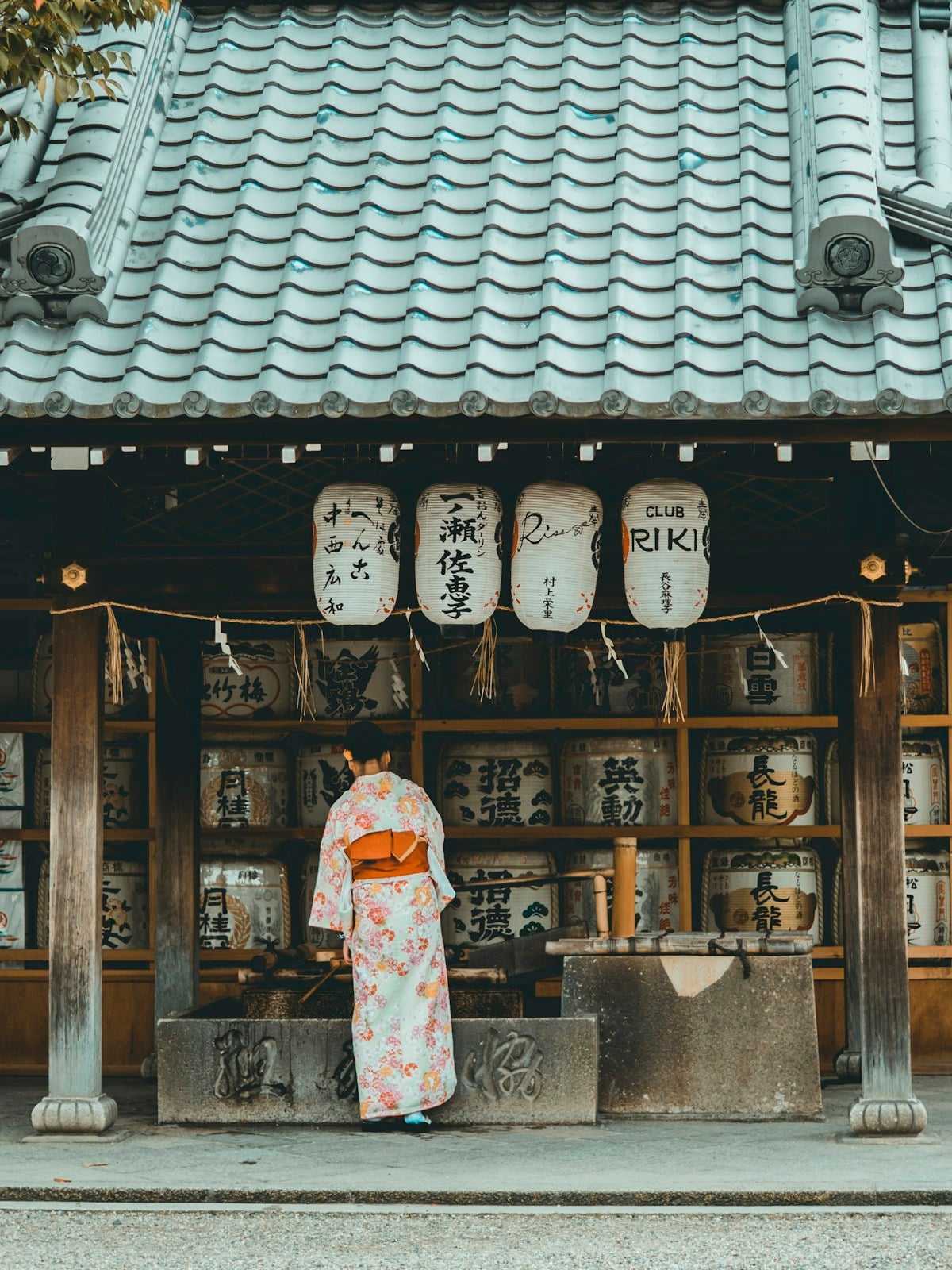
Naming two cats at once (we adopted two, and I highly recommend it, especially littermates!) has a lot in common with picking names for twins, because you want to find a pair, something with a nice connection. Maybe two foods you always eat together, or sun and moon, or summer and winter, or two characters from a favorite movie. Ours took FOREVER, about two to three months, so don’t freak out if you’re not immediately feeling it either.
Places
- Kyoto
- Tokyo
- Osaka
- Nara
- Hakone
- Kobe
- Nikko also means sunlight
- Ginza
- Shibuya
- Harajuku
- Okinawa
- Fuji
- Biwa Lake Biwa
- Yokohama
Pairs for two cats
- Mochi & Dango
- Uni & Ikura
- Sake & Nori
- Miso & Tofu
- Kinako & Azuki
- Matcha & Hōjicha
- Ramen & Gyōza
- Momo & Mikan
- Haru & Aki spring and autumn
- Natsu & Fuyu summer and winter
- Tsuki & Hoshi moon and star
- Umi & Sora sea and sky
- Kuro & Shiro black and white
- Yuki & Sumi snow and ink
- Jiji & Kiki
- Luna & Artemis
- Tora & Hime tiger and princess
- Tarō & Hanako
- Maru & Tama
- Kyoto & Nara
How to actually say these out loud
The vowels are always the same sounds: a is ‘ah’, i is ‘ee’, u is ‘oo’, e is ‘eh’, o is ‘oh’. Japanese doesn’t have strong and weak syllables like English does, as each beat gets roughly the same amount of time, which means that if you flatten out your pronunciation you’ll do better than you think you will. Long vowels (the ones with the line over them, like Kibō) and double consonants just take about twice as long to pronounce.
The r is more like a tap of the tongue, falling between an English r and l, but more like the d in ‘ladder’ than a strong American r, so Ringo is more like ree-n-go, with even beats. So the calico word (Mike) is MEE-keh (not the guy from accounting) and Sake the fish is closer to SHA-keh. I checked Tofugu’s pronunciation guide on all of this because I wanted to be sure before putting it on the page.
What does “-chan” mean?
When you’re in Japan you’ll often hear the world “-chan” at the end of a name. This is not to be confused with “-san,” which is a gender neutral suffix you attach to a first or last name, very much like a Mr. or Mrs./Ms.
The -chan in Momo-chan or Tora-chan on the other hand is an affectionate honorific often used for children and pets. It isn’t part of the name or its meaning; it just makes it sound more affectionate.
Before you pick a name, try the true test first
You are likely going to be saying ANY cat name you pick out loud A LOT. So it has to sound good to you and be easy to say. Also, my personal test is how it sounds when I a) sing it in a song or b) say it in a high-pitched baby/cat voice. I think Japanese cat names are made for your cat voice. I can personally totally hear myself saying most of the names on this list, so much so that maybe the next pet we get might be named Momo-chan!

Founder and editor of Cat Seat and cat mom to Thelma and Louis. She’s been writing online since 2000.
Hi! I’m Lindsay. I run this site alongside my hubs Cory and our very opinionated cats, Thelma and Louis. We’re so happy you’re here!
I did have a cat, all white, that I named Shiro. A Japanese man told me what white was in the Japanese language and so that became her name. Fond memories.
I love that name!
CoCo Chanel. Meaning is….
Oooh yes! That’s a fun pick.
CoCo Chanel
I named my calico/tabby mix Miwa. It means “beautiful harmony” just like her coat colors.
Oh that’s a beautiful name!
I foster kittens and I name them alphabetically. My U kitten’s name is Umami- I adopted him 🙂
I love Umami. 🙂
I love the names!❤️
I adopted a kitty from the animal shelter in Santa Fe, NM
She is a black and white, domestic short hair
The name on her collar was Shashimi when they found her!
It’s fits her well! She eats only fish products!!!!!
Enjoyed your article very much!❤️
Hope to see more!😊
Shashimi is so cute!!
I saved my cat as a kitten from almost falling into bard wire fence. I went outlaw and gunfighter of the American Old West, Billy the Cat.
Haha love it!
That’s a good one
My daughter has lots of ferrets and they’re all named in Japanese and I have a real hard time, remembering them.
Haha!