What to Pack in a Cat Emergency Kit (Before You Need It)
 By Jessica Radcliffe
 ✓Medically reviewed by Dr. Lindsey Mortlock

An emergency is really not the best time to learn that your cat carrier is in the back of the attic, your vet’s emergency number is missing, and the gauze grew legs and walked out of the medicine cabinet.
Creating an emergency kit for your cat serves two purposes. It prepares you for situations when your cat needs urgent veterinary care. It’s also ready in case of an evacuation or a disruption at home. The supplies can help with basic immediate support while getting professional veterinary care, but they are not intended to replace a vet.
You probably already own some of what you need. Now, all you need to do is gather it, fill the gaps, and put it somewhere you can actually find it.
1. Start With a Bag You Can Find and Carry
If you’ve ever packed for a vacation that you’ve had time to prepare for, you know how hectic it can be. You think you know where everything is, but when you go to grab the bags, they’re missing. Now, imagine it’s the emergency kit for your cat. That’s why planning is essential.
Start with a practical container. It should be:
- Easy to carry
- Clearly labeled
- Large enough to carry the essentials without becoming too heavy to manage
- Stored somewhere accessible
- Protected from pets, children, moisture, and temperature shifts
When packing your kit, it’s a good idea to keep first aid supplies separate from food and other items so you’re not digging through cans for gauze when an accident happens.
Of course, you can’t store everything you’ll need in an emergency kit long-term. Decide what you’ll need packed ahead of time and what you’ll need to grab on the way out the door. It’s super helpful to create a grab-as-you-go checklist to store with your emergency kit.
If you have more than one cat, don’t forget your kit needs to account for each of them. You’ll need enough supplies for everyone, along with a sturdy carrier for each minion.
2. A Secure Carrier for Each Cat
Sure, we’ve all seen those cute videos of cats riding calmly in cars, but really, what planet does that actually happen on? That’s why each cat in your home needs her own carrier that can transport her securely. Don’t force cats to travel together, even if they’re the best of friends on a normal day. Travel stress can change how they behave toward one another.
Check your carriers periodically to ensure they are still in good condition and secure. An emergency is not the best time to find out the door won’t latch, and you have no backup plan.
When selecting your carrier, consider hard plastic, which is typically easier to clean, and a removable top for easier access to a frightened kitty. The carrier also needs to be the right size for the cat.
Before placing your cat in the carrier, you should make the interior more inviting. Lining the bottom of the carrier with a blanket or towel and an absorbent liner can make your cat more comfortable and absorb any liquid if she has an accident while traveling.
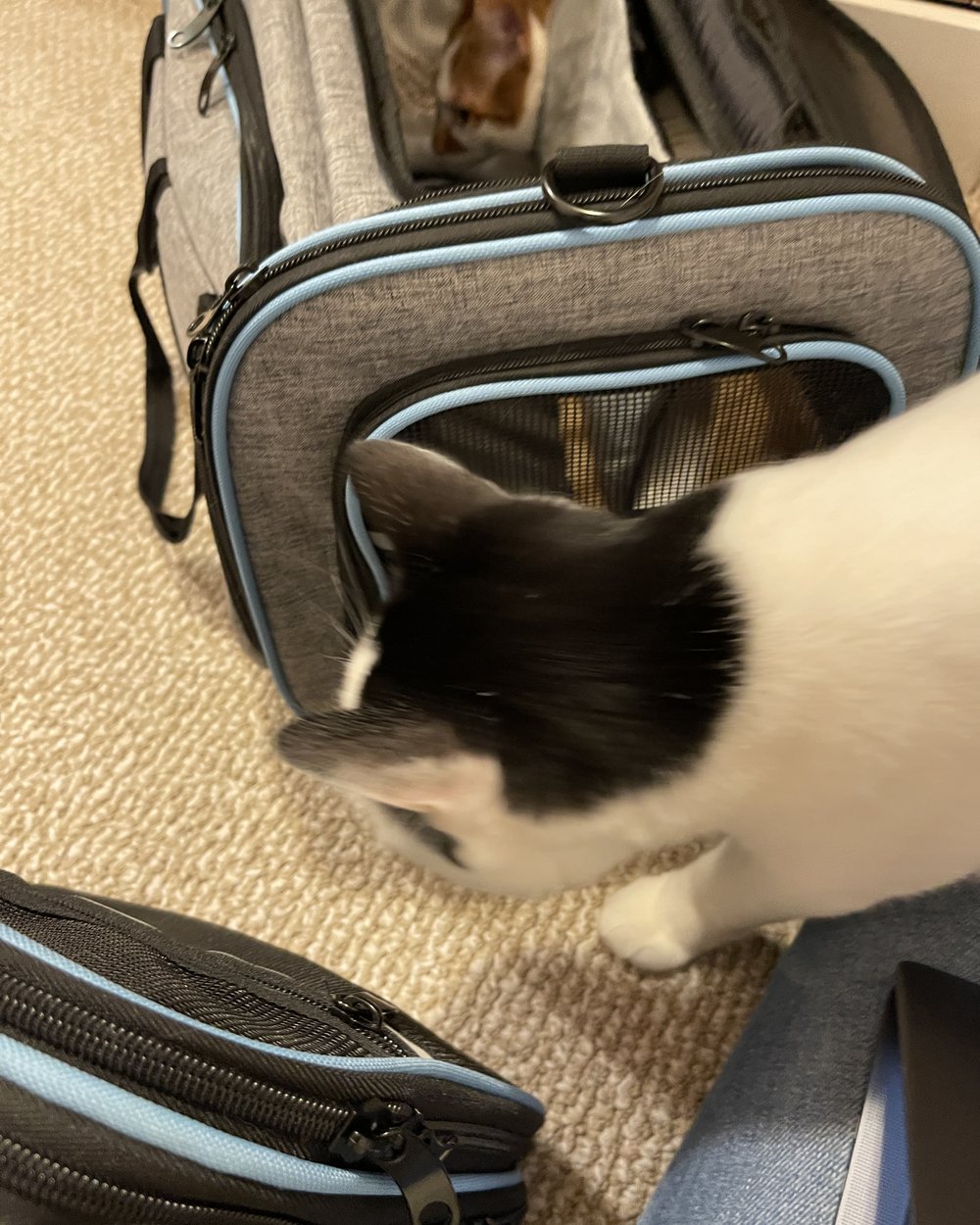
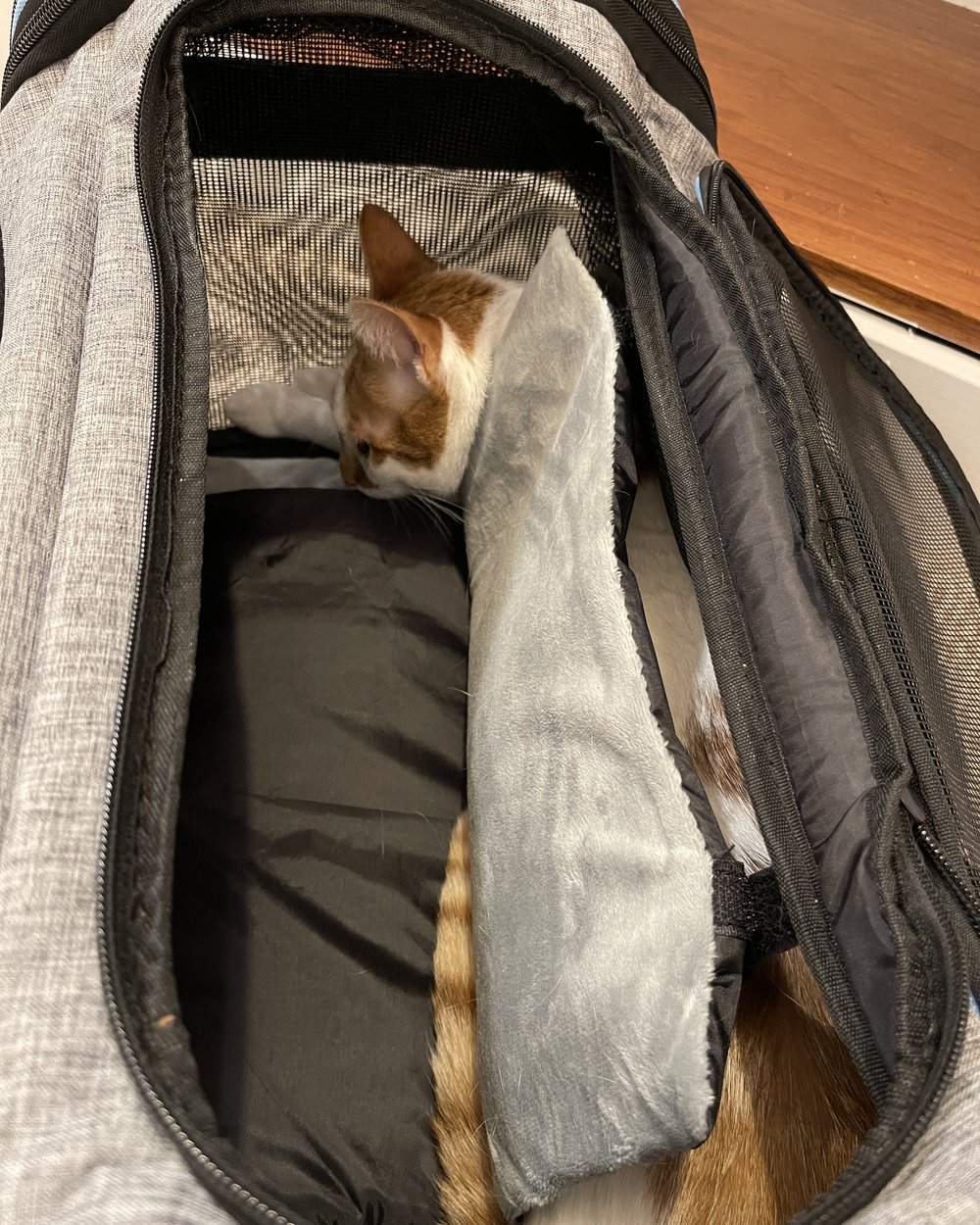
Don’t wait until the last possible minute to introduce your cat to her carrier. One second you’ll have her in your arms, and the next, she’ll Harry Houdini her way down the hall and under the bed. Instead, keep the carrier somewhere she can interact with it regularly. You can also use treats to develop a positive association with it.
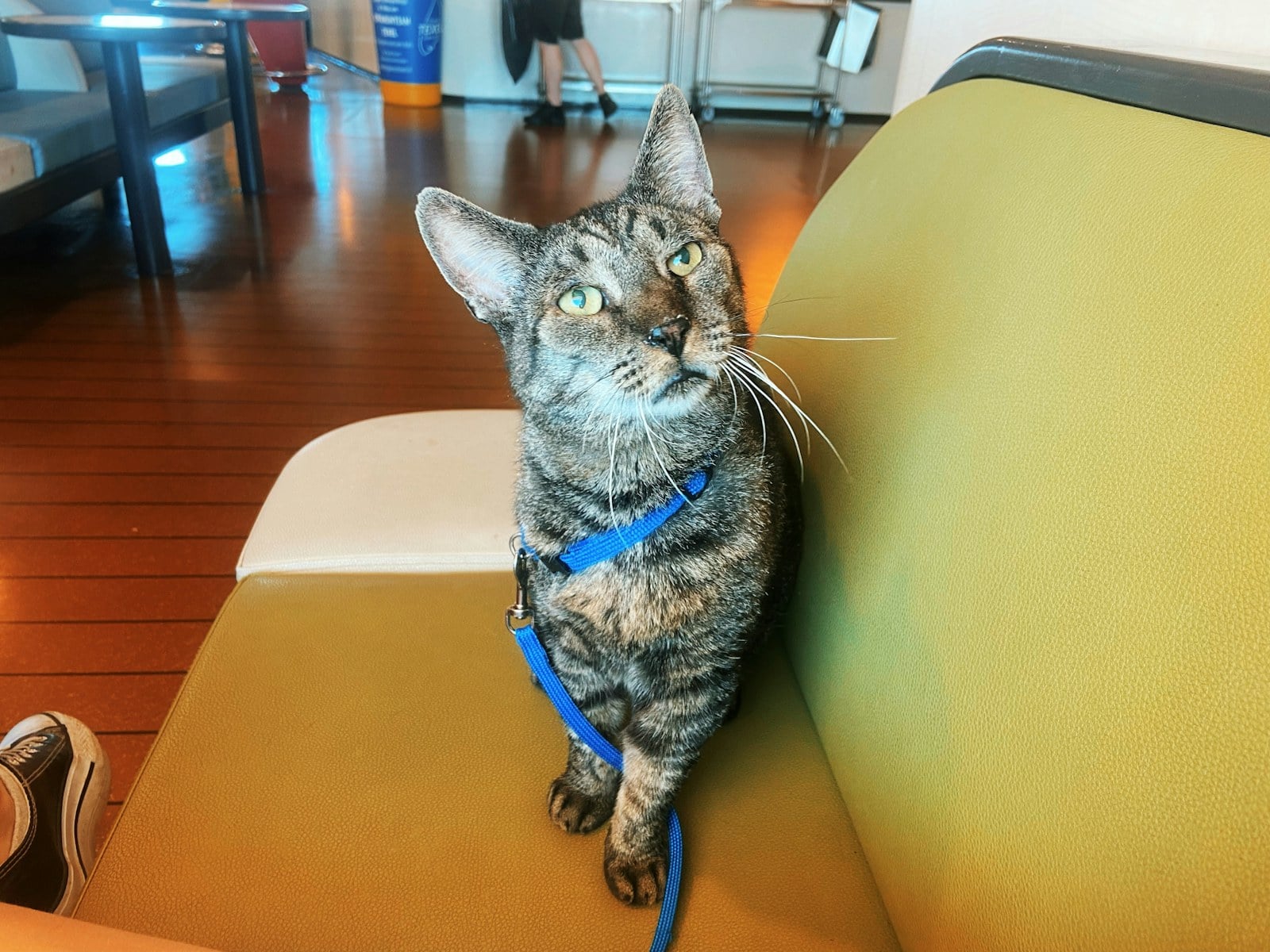
If your cat is already accustomed to a harness and leash, bring them along with the carrier. They shouldn’t replace the carrier, but they may come in handy while you’re traveling.
3. Food, Water, and Feeding Supplies

When you’re stocking your cat’s emergency kit, it’s not the time to get experimental with his food preferences. You don’t want to get on the road only to find out that Reuben refuses to eat what you’ve packed.
Pack enough food for each cat in your home. A good rule of thumb is to plan for about a two-week supply of food for everyone. Don’t forget about special dietary needs for anyone on a prescription diet. Since circumstances can change, include feeding instructions for each cat with the food in case someone else has to take over their care. If you’re packing canned cat food, include a manual can opener just in case.
Also pack a few days’ worth of water for each cat, and keep extra at home if you have the space. Base how much you actually need on your cats’ daily water needs. You’ll also need non-spill food and water bowls.
Food and water can get really heavy really fast. Because of this, you’ll need a portable evacuation bag and a larger home emergency reserve. Think of the evacuation bag as your grab-and-go resource. It needs to be manageable and not weigh a metric ton. It still needs enough of everything to get you started, but it doesn’t have to hold all the food you’ve stored. Your home emergency reserve should be ready to go in an evacuation-type situation.
Preparing your emergency kit is not a once-and-done task. Periodically check the kit to ensure all the food is still dry and nothing is expired.
4. Medication and the Information That Goes With It
If your cat regularly takes prescription medication, don’t wait until an emergency to try to get refills. Instead, make a habit of refilling prescriptions when you have about two weeks left, so you always have a cushion if you need to leave in a hurry. Pack what you have on hand, along with directions on how to give it to your cat.
Keep the medication in a waterproof container with its original labels and check the dates when you regularly inspect your kit. You’ll also want to keep relevant information with the medication, including diagnoses, allergies, a medication list, and equipment needed to administer it.
Another important consideration is how the medication needs to be stored. Some require refrigeration, which rules out storing them in a kit at room temperature. If you have refrigerated medications, ask your veterinarian for the best way to transport them during an emergency. Since these items aren’t stored with the emergency kit, leave yourself a reminder to grab them before you leave.
5. Litter and Cleanup Supplies
Emergencies don’t make bathroom needs disappear. The reality is that at some point, your cat is going to need to go. When packing your emergency kit, you’ll want to include a portable litter box, a small litter scoop, and litter your little guy is used to. Since most types of litter require an iron will and muscles of steel to move, don’t pack so much that you can’t carry your kit.
Accidents are bound to happen, and waste will build up. To manage both of these, you’ll want to pack paper towels, liquid soap, spare absorbent pads, and waste bags. Consider whether disposable or reusable options will suit your situation better based on your cat and the type of travel. Disposable options reduce how much cleaning you have to do, but washable options reduce how much you actually have to carry.
Traveling can increase your cat’s stress under any circumstances. You can make his surroundings feel a little more normal by including a comfort item in his emergency kit, such as a favorite toy or a familiar blanket.
6. Identification, Records, and Emergency Contacts
While your cat won’t be driving the car, she’ll still need proper identification while you travel. Your emergency kit should contain:
- Veterinary records
- Vaccination records
- Microchip details
- Recent photo
- Owner contact information
Keep a paper copy of everything in a waterproof pouch, plus a digital backup on hand. Remember, your cat’s microchip is only as good as the information attached to it. If the phone number associated with it is no longer valid, the microchip won’t be much help reuniting you if you become separated.
Build your contact list ahead of time, and plan where your cat will stay, since not every emergency shelter welcomes pets. You’ll want to ensure you have contact information for your regular vet, the nearest emergency clinic, an animal poison service, your backup caregiver, insurance information, and places that will accommodate your cat during an evacuation. It’s also a good idea to choose a designated caregiver who can access your home if you can’t get there.
7. Basic First-Aid Supplies Worth Including
Your cat’s emergency kit also needs some basic first-aid supplies. Now, that doesn’t mean you need to gear up to do surgery. The goal of having these supplies is to help with immediate basic care while you arrange for veterinary treatment.
Include disposable gloves to protect your hands and help reduce the risk of contamination of open wounds. You may also need sterile gauze or a clean towel to put direct pressure on a wound. Sterile saline is ideal for flushing debris from an open wound, while a nonstick dressing is designed not to stick directly to the wound. A flashlight could also come in handy if you find yourself inspecting your cat’s condition in poor lighting.
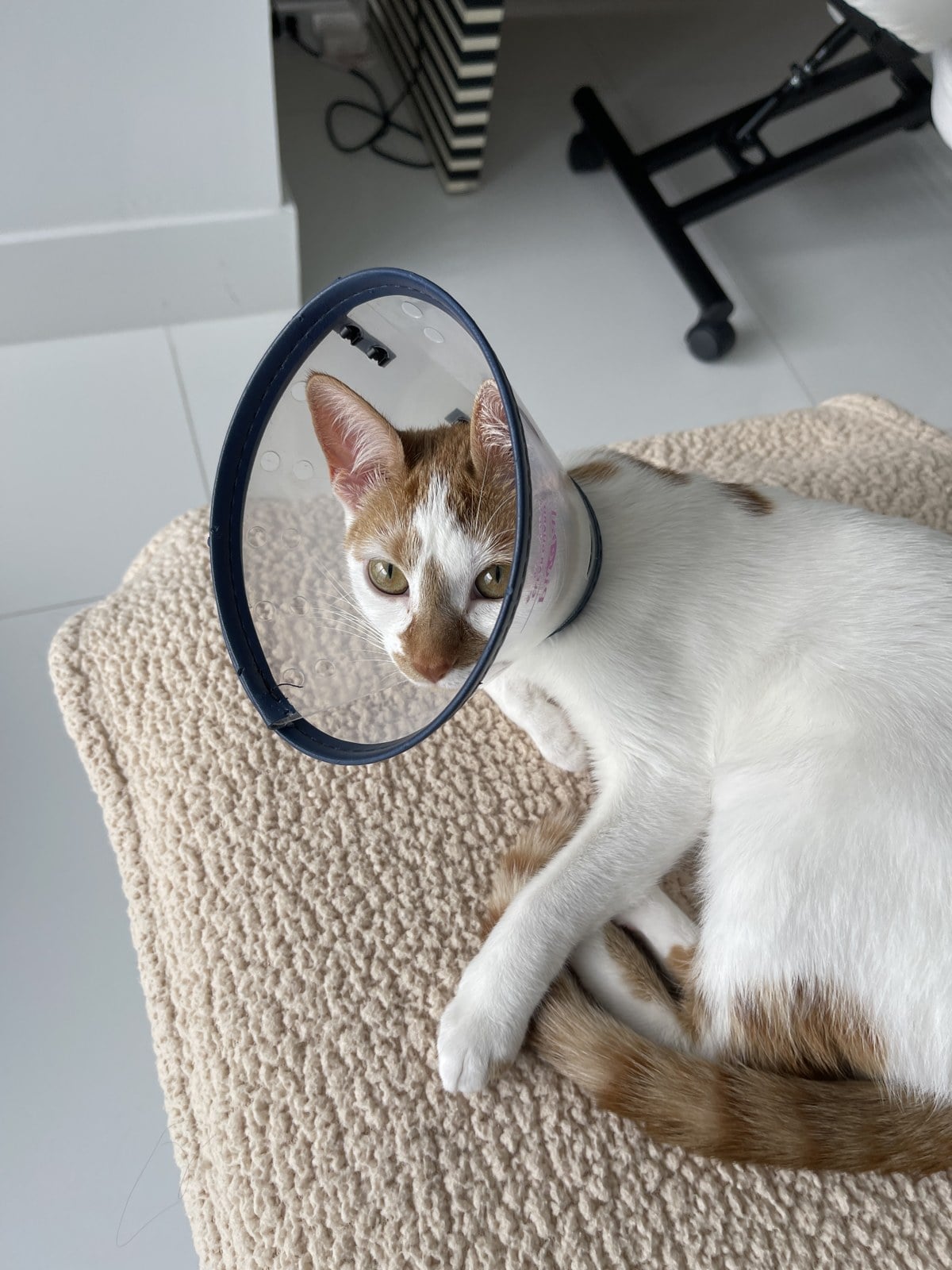
Our veterinary reviewer, Dr. Mortlock, also recommends adding an e-collar (a cone). It keeps your cat from licking or chewing at a wound, and it can help keep you from getting bitten while you’re handling an injured cat.
When preparing your list of first-aid supplies, have your vet give it a once-over. They can advise on what to remove and what you may have overlooked, including whether you need items like bandage materials, tools, or a thermometer.
Remember that first-aid items aren’t a permanent solution. Never delay transport to a vet just to take measurements. You should also avoid tightly wrapping injuries or performing invasive procedures. Leave the challenging jobs to the professionals.
8. What to Leave Out of a Cat First-Aid Kit
While there are a lot of great things to include in your fur baby’s first-aid kit, some items should never be considered for cats. Hydrogen peroxide is a big no-no. It can irritate and injure the feline gastrointestinal tract, causing inflammation, ulceration, and bleeding. While it seems like a slight change in the airflow of the room can make your cat vomit, there’s actually no way to safely induce vomiting at home. If you suspect your cat has ingested something poisonous, contact a veterinarian or animal poison service immediately.
There’s another problem with hydrogen peroxide: you can’t use it on a cat’s wounds unless specifically directed by a veterinarian. It can damage the tissue and slow healing. Similarly, don’t use rubbing alcohol, herbal preparations, soaps, shampoos, or other products on open wounds without a vet’s instruction.
You can’t assume that something is safe for your cat just because it’s safe for you. We’re completely different creatures. Because of this, don’t include:
- Human painkillers
- Unprescribed allergy medication
- Essential oils
- General-purpose creams
- General-purpose disinfectants
Don’t forget that something marketed as “pet-safe” doesn’t automatically make the list of needed first-aid supplies. When in doubt, check your list with your vet.
9. Know When the Kit Comes Second
Ditch the kit and seek immediate veterinary assistance if you notice any of the following:
- Difficulty breathing
- Collapse
- Uncontrolled bleeding
- Suspected poisoning
- Straining to urinate with little or no urine
Call ahead to the emergency hospital and give them the details of what happened. This gives the clinic time to prepare for your arrival. Clinic staff may also be able to provide medical advice for safe transport and immediate first aid while you’re traveling. Handle an injured cat as little and as gently as possible.
Remember, just because you have an emergency kit doesn’t mean you’re required to use it, especially when your cat’s life is on the line.
10. Check the Kit Before You Need It
Set up reminders to check your kit on a regular schedule. You’ll need to keep up with expiration dates, medication supply, batteries, carrier condition, emergency contact information, anything that needs restocking, and your cat’s changing needs.
As part of emergency preparedness, periodically run down the plan with the entire family. Everyone needs to know where the kit is, who’s responsible for grabbing it, and who collects which cat in multi-cat homes. This last one can be especially important if you end up with three people chasing Reuben and no one looking for Gizmo.
Once you have your plan and kit established, take the time to test it out. You need to know before an emergency that something needs to be tweaked. Check to make sure you can get each cat in their carrier, that the kit is accessible, and that you can actually carry everything you’ve packed. You don’t have to rehearse every disaster that comes to mind, but you want to make sure that kit is going to work when you need it to.
A Little Preparation Goes a Long Way

Building your cat’s emergency kit doesn’t have to be expensive or complicated. You can start with the things you have on hand and add on from there. Once you have it assembled, make sure it has a home that’s accessible and known to everyone in the house. Take charge of your emergency kit today by doing something as simple as checking your cat carrier.
Writer and lifelong cat lover who shares her home with her fiancé and 14 rescue cats.

An emergency veterinarian with a special interest in feline medicine — and a self-proclaimed cat lady with six cats of her own.