10 Ways to Help Your Cat Feel Less Stressed at Home
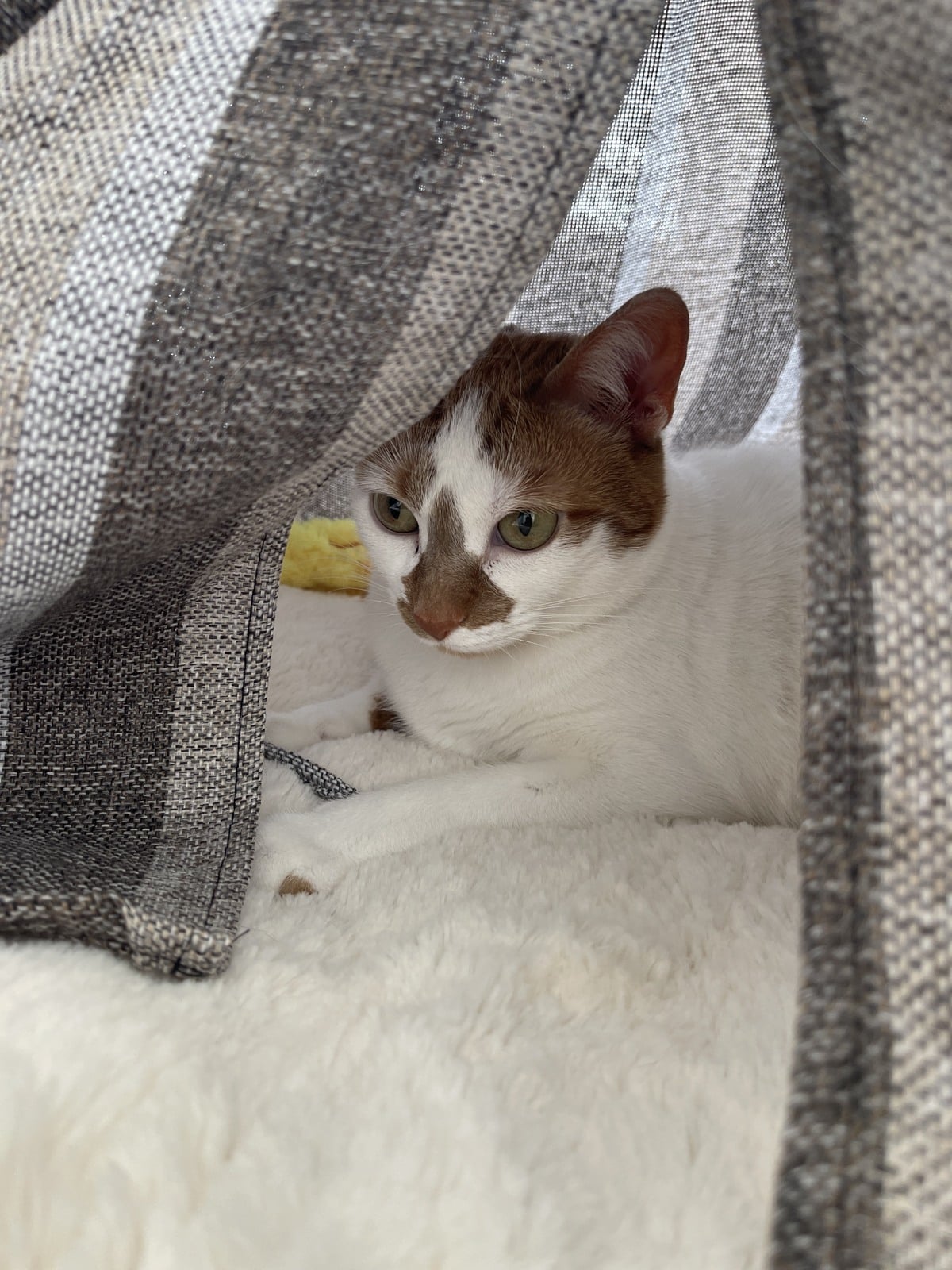
When cats feel anxious, they can’t directly tell us what’s bothering them. It’s up to us to read their body language and examine the environment to determine the cause. From there, cat parents can make adjustments to help their cats feel more comfortable in the home.
Look at your home from your cat’s perspective to help you understand what’s stressing them out. Consider some of the following tips for reducing cat stress to effectively calm your companion’s nerves.
It’s important to note that unexpected stress could be related to underlying health problems. If your cat is suddenly stressed in an environment they’re comfortable in, visit a vet before trying the following to ensure there isn’t a medical reason.
1. Give Them Somewhere to Hide
Of course, cat lovers want to see their furry friends as much as possible. Yet, no matter how much a cat loves their human, they need the option to escape if needed.
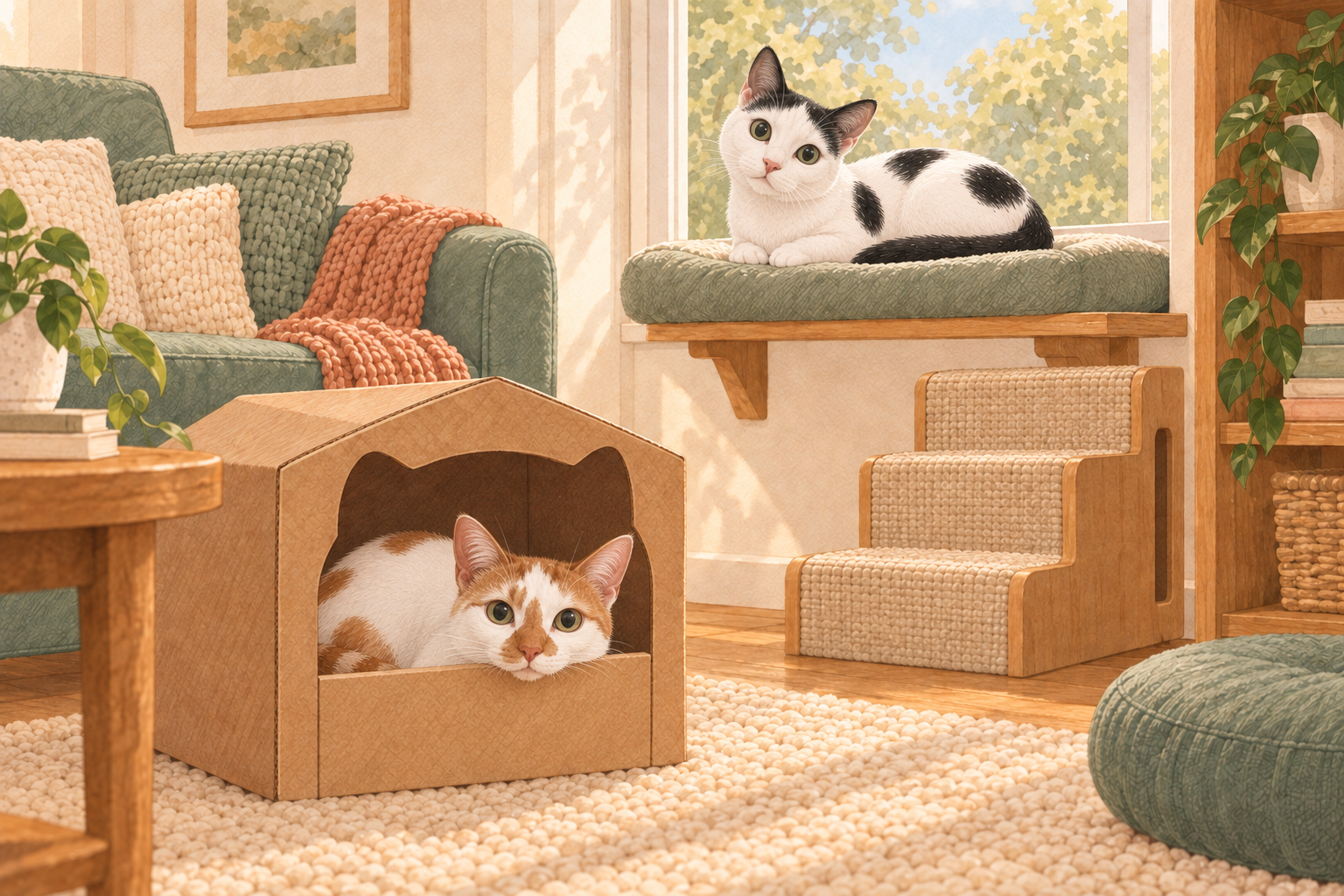
Hiding spots are a great way to reduce cat stress because they offer a safe, dark space for a cat to retreat to and decompress when needed. A 2019 study looked at shelter cats, who frequently experience stress due to the unfamiliar environment, and found that providing hiding spaces greatly reduced the behavioral stress of cats.
Cats love to hide in all types of spaces, whether it’s inside a box, under a bed, or behind a couch. Many cat parents buy tunnels, platforms, and covered beds specifically for cats to hide. Provide several different types of hiding spots throughout your home, especially in quiet, low-traffic areas. See which locations and hiding places your cat chooses the most.
You might learn that your cat prefers an old cardboard box more than the fancy hiding areas you purchased. If that’s where they feel most comfortable, then just embrace it and offer them plenty of similar hiding places.
2. Spread Out the Essentials
Research focusing on the Feline Environmental Needs Guidelines found that how comfortable a cat is with their environment affects their physical health. One of the most important pillars of feline environment needs is keeping key environmental resources separate to mimic a cat’s natural instincts.
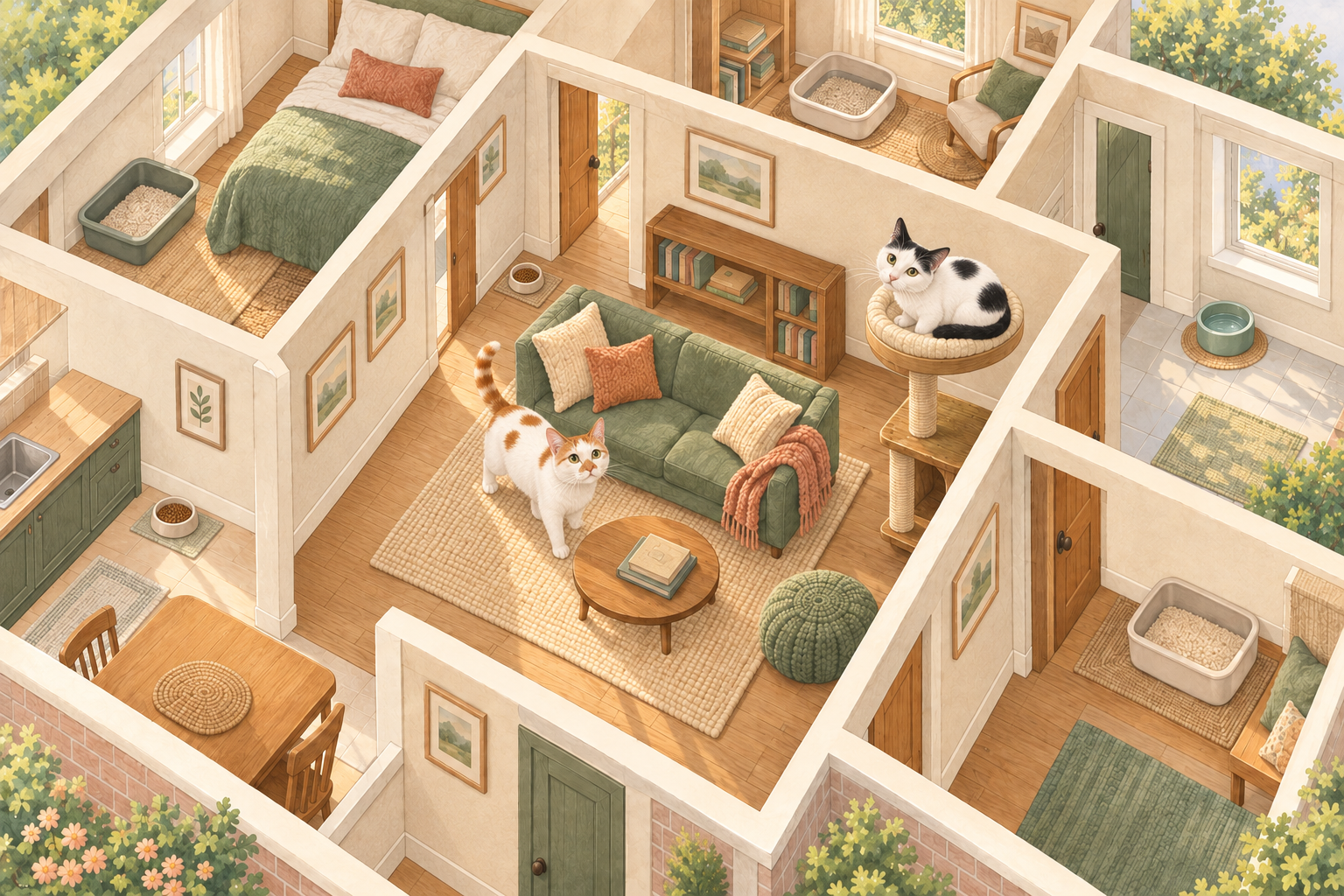
If possible, a cat’s food, water, litter box, scratching posts, play areas, and sleeping areas should all be in different areas of the house. Giving them more than one option for these areas, such as more than one water bowl and litter box, can reduce stress by letting them make their own choices throughout the day.
In multi-cat households, it’s especially important for each cat to have their own area for these needs. Even if two cats adore each other, they can feel more relaxed if they don’t always have to eat, play, and do their business right next to each other. Keep the items in low-traffic areas of the home to prevent territorial conflicts.
3. Offer a Place Up High
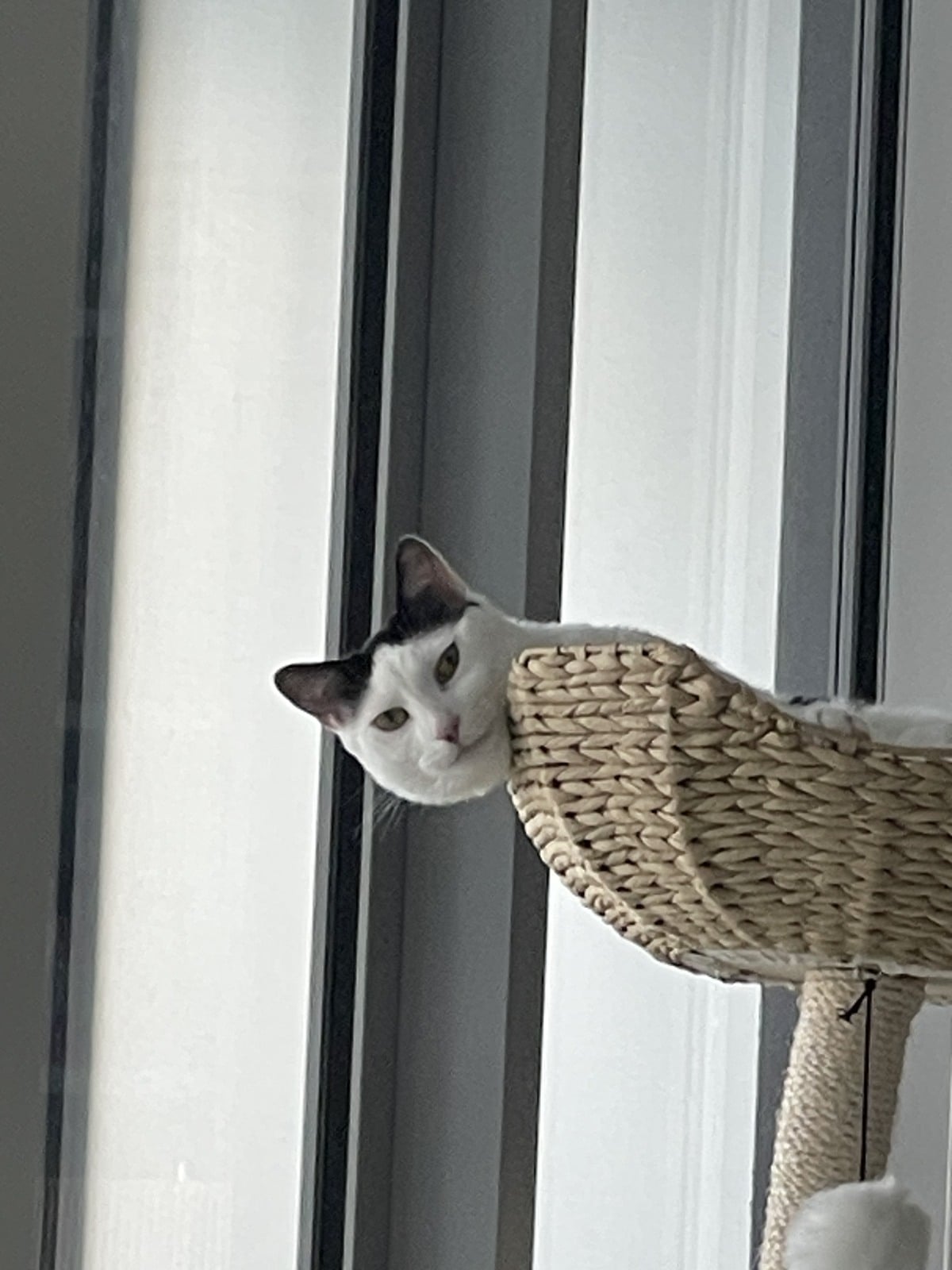
Dark corners aren’t the only places cats like to retreat to when they feel stressed. They also like to leap onto higher platforms to feel safer and get a better view. Having a variety of cat trees and stable perches throughout your home can give cats a sense of control over their space.
Humans have multiple spots where we can sit or rest throughout our homes, so cats should have a variety of choices too. One platform might be their favorite place one day, but another might capture their interest the next day. Cats are less likely to feel stressed when they can seamlessly travel from one platform to another until they find the perfect spot.
Senior cats and cats with mobility issues may still want to seek out high places, but it can be harder for them to get up there. Ramps, small steps, and low-height perches are great ways to give cats platform options that are easily accessible.
4. Keep a Familiar Routine
For most people, a familiar routine is much more comfortable than something they’ve never done before. Most cats feel the same. We can’t explain what’s going on to them when something changes, so they typically feel the best when they know what to expect.
Researchers looking at stress in pet cats explained that a predictable routine is a great way to lower a cat’s stress. Whenever possible, their feeding times, playtimes, quiet times, and owner’s schedule should remain consistent. Of course, not all days can be 100% predictable, but there should be a pattern rather than having a different schedule every day.
If you know a big change is coming, such as visitors staying with you or your work schedule changing, it’s best to help your cat adjust sooner rather than later. You can gradually start changing meals and playtime by 10-15 minutes each day leading up to the shift so the change doesn’t feel as sudden when it happens. Keep departures calm so your cat doesn’t pick up on anxious energy.
5. Make Time for Play and Food Games
The feline environment study also looks at a cat’s predatory instincts. Cats love to locate prey and then stalk, chase, and pounce to capture it. Even well-fed cats have an urge to hunt, so without opportunities to do so, they may become bored and anxious.
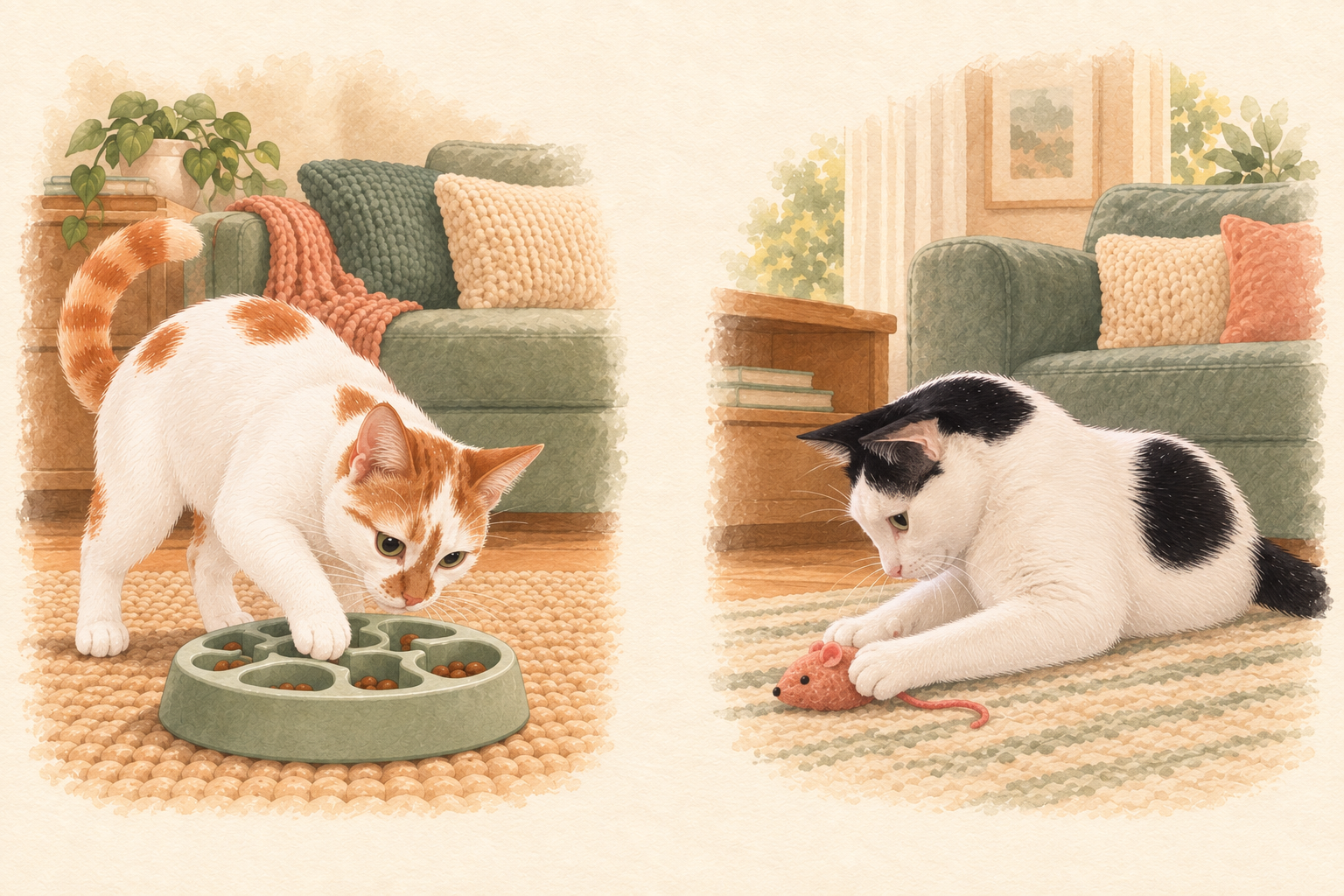
Playing with your cat can help satisfy their predatory instincts in a home setting. Toys they can chase are a classic way to entertain them. However, food games should also be considered since they pair hunting with eating. Try hiding food for them to find, tossing treats or kibble for them to chase, scatter-feeding dry food, or providing puzzle toys and feeders.
As you try different games, pay attention to your cat’s reactions. If your cat instantly becomes engaged in a toy or activity, that’s the perfect game to reduce stress. If your cat seems uninterested, try different options until you find one that entices them.
6. Respect Their Personal Space
No matter how much your cat loves you, they won’t want attention every second of every day. Since cats like to be in control as much as possible, they typically feel the most at ease when they get to decide when human interactions start and end.
To improve your feline’s comfort, wait for them to come to you before showering them with love. If they get up to leave, don’t grab them or follow them. Let them have some time to themselves and wait for them to return for more affection.
It can be difficult to resist snuggling your furry friend, but it’s important to consider their comfort in every interaction. A cat handling study reminds cat owners to follow three key tips to keep their cats comfortable during interactions: give the cat control during interactions, pay attention to body language and behaviors, and think about where you’re touching the cat. Only pet your cat in places they respond positively to.
7. Turn Down the Household Commotion
Sounds and smells that might blend into the background for us could be upsetting for cats. Noisy appliances, busy rooms, cleaning product smells, and unfamiliar pet smells could all stress a cat out.
Make sure your cat has a safe space away from busy areas where various noises and scents are likely to occur. Add blankets and bedding that smells familiar to bring them comfort. Then, whenever something small bothers them, they’ll have a stress-free area to retreat to.
Whenever possible, wait until your cat is in their quiet zone before running appliances like the vacuum cleaner, washing machine, or blender. If you need to light a candle or use a strong cleaning product, do it when your cat isn’t in the same room.
8. Try Cat-Specific Music
Cats can find comfort in music just like humans can. Yet, they might not have the same music taste. A 2020 study looked at which music reduced cat stress in a veterinary clinic. While silence and classical music seemed to have the same effects on felines, “cat music” had positive results.
Cat-specific music is music composed in a way that’s similar to how cats communicate. The frequency range and tempo mimic feline communication, helping calm cats even in stressful settings. Cat music seems to be especially beneficial for senior cats.
Research around cat music is focused on veterinary settings, but it’s worth a try at home too. Searching “cat music” on music streaming platforms can give you some options to try. Just make sure the music is at a low volume to prevent it from overwhelming your cat. Try different tracks until you find one that your cat reacts positively to.
9. Take a Closer Look at Calming Products
Certain products can improve your cat’s calmness. Research about stress in owned cats suggests pheromones like Feliway to make a cat’s environment relaxing. Feliway releases synthetic versions of natural feline pheromones as a spray or diffuser to help cats feel calm and safe.
Nutritional supplements and aromatherapy may also help reduce stress in cats. However, it’s a good idea to talk to your vet before introducing these to your cat’s routine, especially if your cat has any allergies or sensitivities.
Sometimes, everyday products can be calming too. A lick mat is a popular way to help cats relax because cats get to enjoy a tasty treat with a calming, repetitive licking motion. Just remember that no calming product is an instant fix. Every cat reacts differently to products, so keep trying different options until you find one that caters to your furry friend’s unique needs.
10. Know When to Ask for Help
Occasional stress and anxiety is normal for cats. Yet, if your cat’s stress is extreme enough to affect their daily habits like eating, drinking, and doing their business, it’s best to talk to a vet or behavior professional. They can help you determine if there’s an underlying medical cause, and they can recommend personalized remedies.
If your cat is normally very relaxed and friendly but starts acting overly stressed out of nowhere, that’s also a sign to visit your vet. Sudden behavior changes can be caused by pain or illness, so it’s best to catch those concerns right away.
The above tactics can help with occasional stress, but they can’t fix medical-related stress. If you’re ever worried that your cat’s anxiety is tied to a health condition, it’s always better to be safe than sorry by seeking professional guidance.
Find the Best Approach for Your Cat’s Stress
If you’re worried about your cat’s stress, start by trying one or two of the methods above to help your furry friend feel more at ease. If those don’t work, keep trying different approaches until you find one that helps your cat relax.
Improvements in cat stress levels might not be immediate, so don’t panic if you don’t notice results right away. Be patient, offer a relaxing environment for your cat, and keep an eye out for positive changes over time. Eventually, you’ll find the perfect ways to help your cat stay calm and content.

A freelance pet writer with a BFA in Creative Writing. She’s been writing about animals since 2018 and volunteers with animal-rescue organizations.