How to Be a Responsible Cat Owner: 10 Things to Have Covered

Adopting a cat brings no end of joy into your home. And no shortage of entertainment. Whether you’re watching your fur baby hang upside down off the cat tree or hearing her get the 3 a.m. zoomies, the antics never cease.
But owning a cat isn’t all fun and games. You still have to scoop the litter, clean up the hairballs, and budget for the vet bills. The more cats you have, the more time you spend cleaning up after them with a broom and dustpan.
Responsible cat ownership isn’t buying the fanciest high-tech gadgets (guilty!). The goal is to understand the individual needs of your cat, meet them consistently, and plan ahead for her care. Let’s break down what it means to be a responsible cat owner.
Some links are affiliate, so we may earn a small commission at no cost to you. Every purr-chase keeps two very demanding cats in treats. Our policy →
1. Be Honest About the Commitment
Cats are a bit different from dogs. They don’t require walks and often come across as a bit more independent. But that doesn’t mean they’re automatically a “low-maintenance pet.” In other words, the fact that Gizmo doesn’t need a potty run at 4 a.m. doesn’t make him self-sufficient.
Before you adopt a cat, realistically consider certain aspects of your life, including:
Don’t forget that behavioral and health needs change during the different stages of a cat’s life. Kittens require adequate socialization and play, while senior cats may need environmental adjustments and closer monitoring for any changes in behavior or health. Ideally, you should adopt a cat whose life stage realistically fits what you can provide.
You also want to choose the actual cat, not the cat you envision. Ask the shelter or rescue about the cat’s temperament, activity level, comfort with people, health, known experience with children and other pets, and any particular needs. Breed information provides some insight into who you’re bringing home, but it can’t tell you everything. Take the time to learn about the cat actually standing in front of you without assuming every member of one breed is the same.
2. Make Your Home Safe
Cats may not have opposable thumbs, but that doesn’t stop them from getting into everything. So, when you’re evaluating your home for safety and security, you can’t look at it from a purely human perspective. Your cat can climb, squeeze into small spaces, chew things, knock things over, and generally investigate places we didn’t realize were accessible.
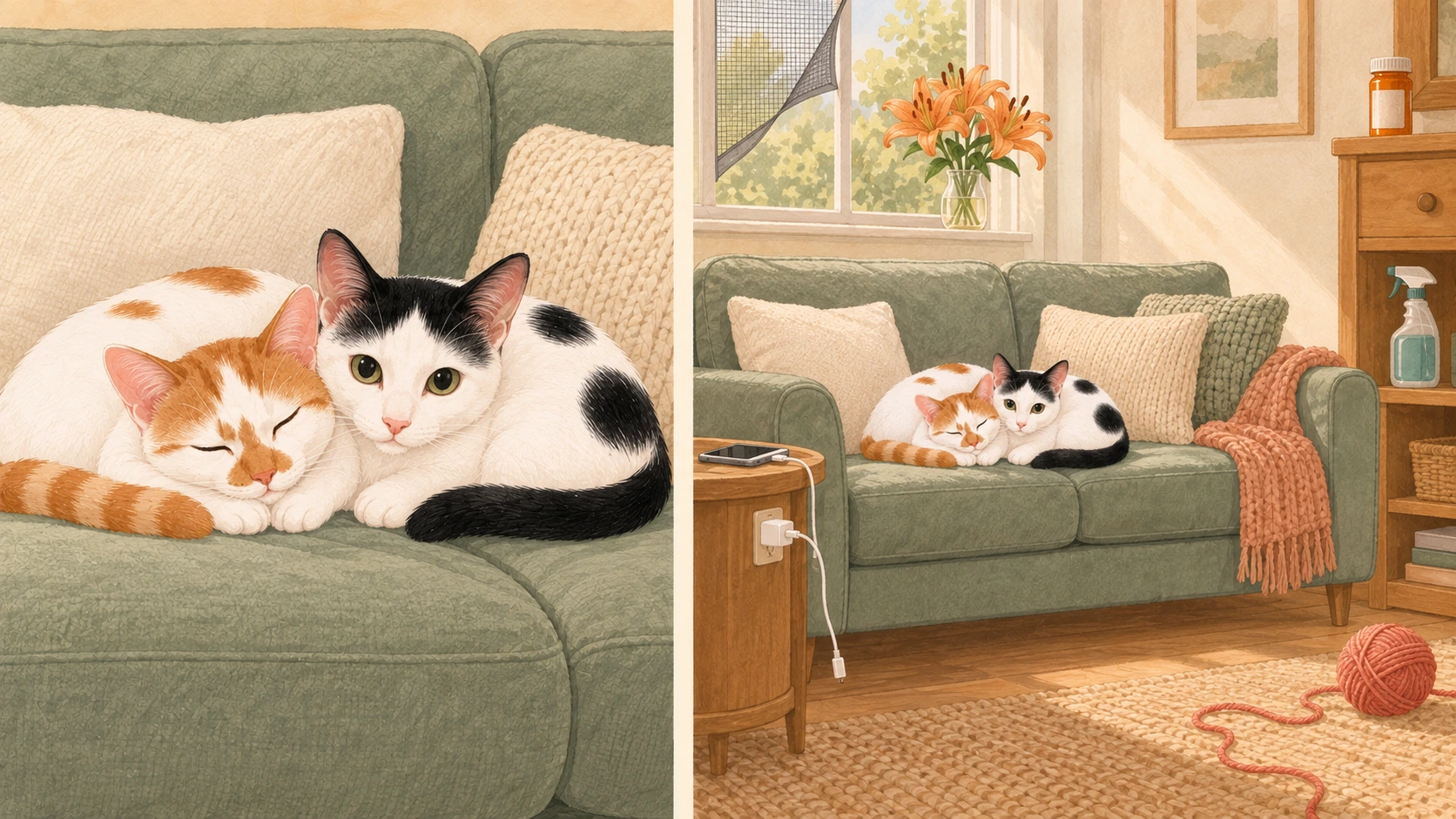
Just because your screen looks like it’s fastened to the window doesn’t mean a curious kitty won’t find a way around it if she’s determined enough.
Plants are an especially important consideration. Some are extremely toxic to cats, including true lilies and daylilies, which can cause potentially fatal kidney injury or failure. For instance, these plants are so dangerous that your cat can be poisoned from just cleaning the pollen from his fur.
And since your cat isn't restricted to the floor, you may need to get creative with how you store medications and cleaners to prevent access.
And since your cat isn't restricted to the floor, you may need to get creative with how you store medications and cleaners to prevent access.
Your cat can climb, squeeze into small spaces, chew things, knock things over, and generally investigate places we didn’t realize were accessible.
Your cat can climb, squeeze into small spaces, chew things, knock things over, and generally investigate places we didn’t realize were accessible.
Top concerns include windows and screens, strings, cords, medications, and cleaners. Just because your screen looks like it’s fastened to the window doesn’t mean a curious kitty won’t find a way around it if she’s determined enough. And since your cat isn’t restricted to the floor, you may need to get creative with how you store medications and cleaners to prevent access.
Plants are an especially important consideration. Some are extremely toxic to cats, including true lilies and daylilies, which can cause potentially fatal kidney injury or failure. For instance, these plants are so dangerous that your cat can be poisoned from just cleaning the pollen from his fur.
A plan to keep your kitty inside is best, as safe indoor living or controlled outdoor access is preferred over unrestricted roaming.
3. Find a Vet and Keep Up With Preventive Care
Taking your cat to the vet isn’t something you do only when she’s sick. It’s actually central to keeping her healthy. Preventive veterinary care should happen throughout your cat’s life, with recommendations changing based on her life stage and individual circumstances. And believe me, it’s a lot easier to get care for Bird when he’s actively throwing up at 10 p.m. if you already have a vet relationship established.
Proper veterinary care can include:
Healthcare plans should be individualized to your unique little friend, not based on a one-size-fits-all process. For example, parasite exposure depends on factors like location, travel, and lifestyle, while vaccination choices are based on age, exposure risk, vaccine type, health, and local requirements.
Your cat’s age can change her healthcare plan. Current guidelines recommend regular checkups throughout her life, with the rate potentially increasing as she ages and certain risks increase.

MASKEYON Soft-Sided Airline-Approved Carrier
A soft-sided carrier that opens from the front and the top, so a cat can be lifted out instead of pulled. Leaving it out with the door open is the easy way to make it boring.
Of course, all visits to the vet include a trip in the dreaded plastic box known as the carrier. Don’t just shove your kitty in the carrier and hope for the best. Instead, give her time to get used to it and make it as boring as possible to reduce her fear.
4. Get the Everyday Basics Right
A lot of a cat parent’s responsibilities don’t actually revolve around vet appointments. Most of the time, you’ll find yourself handling the day-to-day needs of your fur baby. And let’s face it, sometimes that means heading off an all-out mutiny because the bottom of the food bowl is visible.
Choosing the right food for your little friend can be challenging with all the marketing gimmicks around. The key is choosing complete and balanced nutrition based on your cat’s individual needs and current life stage, not what looks good or trendy in an ad. Calorie needs vary by cat, which means you can’t always base Reuben’s dietary needs on the bag’s instructions alone. You also need to monitor his body condition. Don’t forget: access to fresh, clean water is essential.

PETLIBRO Stainless Steel Cat Water Fountain
A stainless steel fountain that keeps water moving and filtered. Cats tend to drink more when the water moves, and steel is easier to keep clean than plastic.
While your cat doesn’t exactly need his own bathroom, he does need a litter box. The common starting point is one box per cat plus one additional box. Place them throughout the house, ensure they are accessible, and keep them clean.
If you have more than one cat, space food, water, and litter pans. Tension can easily develop when cats must compete for the same resources. Multiple resources in separate locations can help reduce situations where one cat rules over the food bowl.
5. Give Them Things to Do and Places to Retreat
Part of providing a fulfilling environment for your cat is making sure she has somewhere to retreat, separated key resources, opportunities for play and predatory behavior, and positive and predictable human interaction.
Your cat needs things that meet specific requirements, including:
The key is that you don’t have to spend a fortune upgrading your home so Muffin doesn’t get bored. Most of the time, she’ll prefer the box the gift you bought came in anyway.
Your cat should also get a vote in her surroundings. Just because the cat on TV likes a five-tiered cat tree doesn’t mean your princess will, too. Watch what she likes to interact with and what she mainly avoids, then create an individual setup that suits her needs.
Any interaction should include choice and never be forced on your cat. All human-cat social interaction should be positive, consistent, and predictable. In other words, don’t force her into a living room full of people just because they’re curious about what she looks like. Let her retreat and decide when she’s ready to do her own meet-and-greet with new people. Predictable routines are a great way to help your cat know what to expect from her day.
If you’re ready to make a one-pet household a little bigger, slowly introduce your pets. Never place them together and simply hope for the best.
6. Notice When Something Changes
Whether your cat stirs the water bowl before drinking or carries his favorite toy through the house meowing, you’ve probably seen a quirk or two. While this behavior might seem strange to the casual observer, it’s pretty routine for you. That’s why you’re the first line of defense when something changes.
Potential signs of illness in cats include:
If your cat suddenly stops going to the bathroom in the litter box, he may not be showing signs of rebellion. Sometimes, behavioral changes can point to an underlying medical or environmental cause.
Not every change gets the wait-and-see treatment. If your cat is having difficulty breathing, don’t wait to consult your veterinarian or go to an emergency clinic. Straining to urinate or producing little to no urine should also be treated as a serious concern that requires immediate medical attention.
7. Keep Identification Up to Date
No matter how secure your home is, there’s always the chance that your cat can skedaddle out the door when you least expect it. That’s why you want your cat’s identification in place before something happens.
Microchipping is a great tool. The microchip itself contains a unique identification number that can be used to connect the found animal with the owner’s registered contact information. But it only works if you register the chip and keep your information updated.
The downside to microchipping is that it doesn’t function like a GPS tracker. You can’t just open an app on your phone and expect to see exactly where Blue is. It’s an identification device that needs to be scanned to be useful.
When appropriate, breakaway collars with ID tags add an extra layer of identification. This gives anyone who can approach your cat a way to contact you immediately, without waiting for the chip to be scanned.
Keep an updated photo of your cat on hand. The last thing you want is to find out you have a picture of your little one when he was six months old, a whole year ago.
8. Plan for the Bills and the Days You’re Away
Owning a cat is a lot like having a child. You have to budget. Sure, there are everyday expenses. But then you have those moments where you wonder why on earth she decided to eat that random thing on the floor as you rush to the vet’s office.
Believe me, you don’t want the sticker shock of that bill if you haven’t planned for it. A dedicated pet savings account or pet insurance plan can help you prepare for unexpected expenses. Pet insurance can vary dramatically between policies. If you want to consider this, be aware that policies can have waiting periods, deductibles, reimbursement rates and processes, payout limits, and exclusions. Preexisting conditions are also often excluded.
Everything your sitter or boarder needs from you, on one page. Nothing you type here is saved or sent anywhere.
Before you take a trip, consider whether your cat would be better suited to a sitter at home or a boarding situation. Regardless of which option you choose, you’ll need to prepare written feeding instructions, medication instructions if applicable, veterinarian contact information, and a backup person in case of emergencies.
9. Prepare for an Emergency
Mother Nature doesn’t always give us a lot of time in an emergency. Whether you’re facing a fire, tornado, hurricane, or medical emergency, the middle of that crisis is not the ideal time to run around your house looking for the cat carrier.
One of the biggest things you’ll need to know right off the bat is where you are going. If you’re faced with an evacuation order, knowing where your cat will be safe is a top priority. Not every evacuation center will accept pets. Before an emergency happens, identify pet-friendly shelters, hotels, boarding facilities, or friends and family outside the evacuation area.
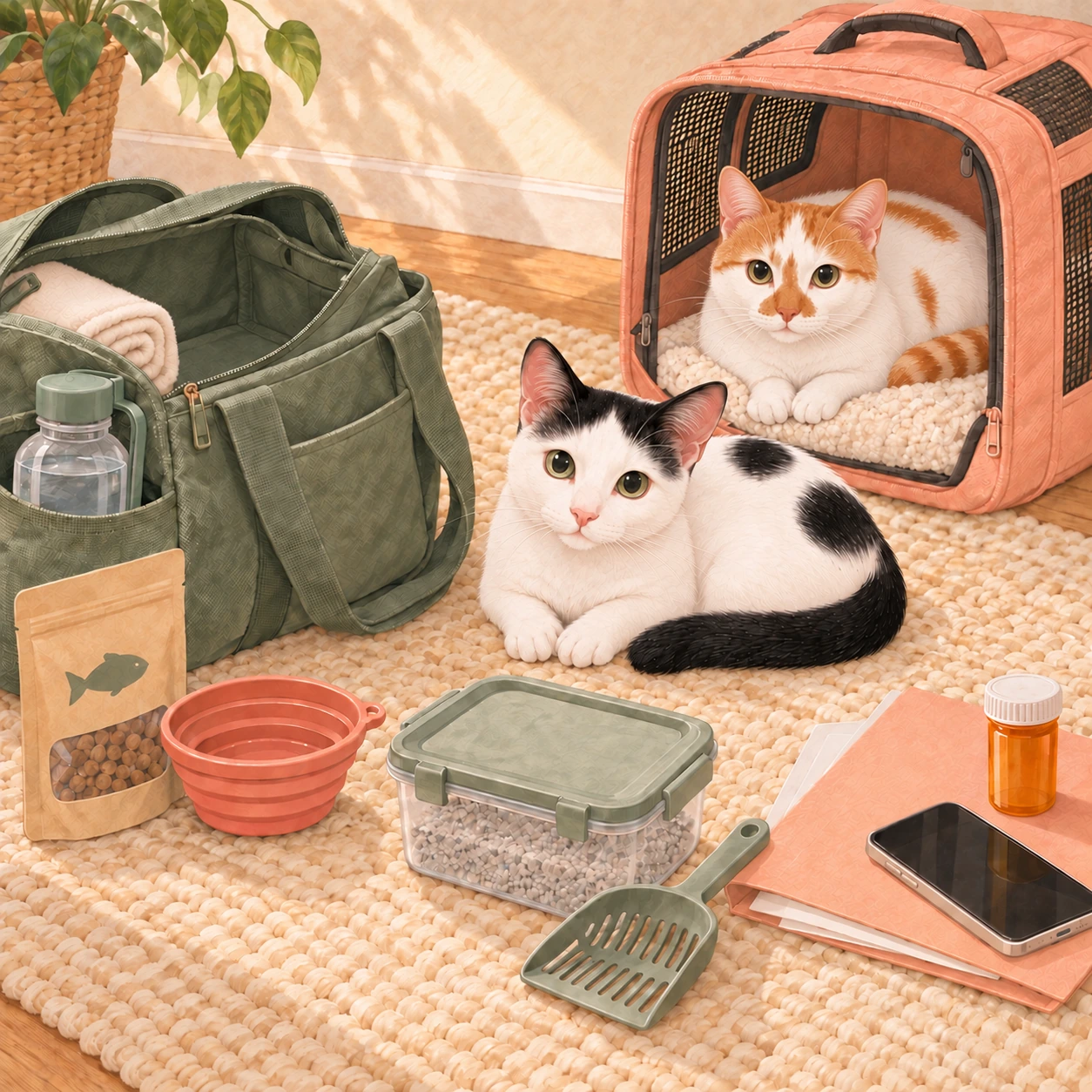
Your cat should have a disaster checklist just like the humans in your home. This includes preparing an emergency kit with food, water, litter, prescribed medications, essential records, and his carrier. You’ll also need contact information for your regular veterinarian and an emergency veterinary clinic.
Any pet first-aid kit should be reviewed by your veterinarian. It’s best not to assume a generic hodgepodge of medications or supplies is appropriate.
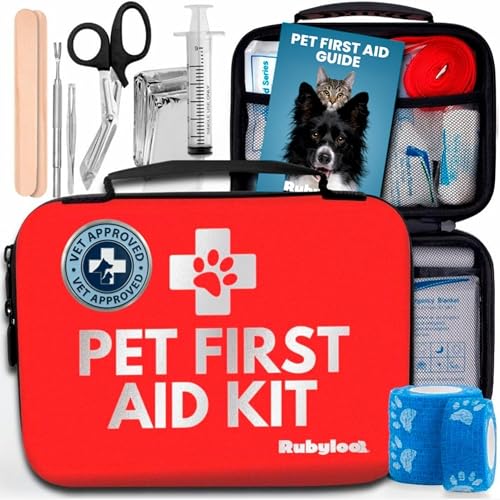
rubyloo Pet First Aid Kit
A starter pet first-aid kit with vet wrap, saline, gauze, a styptic pencil, and a thermal blanket in one bag. Have your vet look it over and add what your cat needs.
10. Think About Their Care as Life Changes
Over the years, one thing remains constant: life changes. The day you adopt your cat, it may just be the two of you. A few years later, it may be time to introduce your spouse, followed by a new baby.
Whether you’ve changed who lives in the house or where you live, your cat may need some help adjusting. If she struggles at first, it doesn’t mean that things can’t work out in the end. Don’t be afraid to ask your veterinarian for help when your cat is struggling with a major transition.
As your cat ages, her needs will also change. Her behavior may change as a result, and you may need to adjust her environment, routine, or care to keep her comfortable and healthy.
Unfortunately, there may come a point in your life when you can no longer care for your cat. Before this happens, establish a backup caregiver who can learn your cat’s needs.
Sometimes, responsible rehoming is the right path. If you genuinely can no longer care for your cat, finding her a safe, appropriate placement becomes the primary goal. Abandonment is never an acceptable solution.
Small Choices Make a Big Difference
Answer the quick check at the end of each section and your score shows up here.
Saved on this device only.
When you own a cat, the little things matter more than you might think. That means noticing changes, maintaining routines, meeting needs, and preparing ahead. Take a few minutes today to review how you care for your cat and decide which of these items you can improve. And remember, your cat doesn’t need an owner who invests in the most expensive toys and litter robots. All she needs is someone who pays attention, prepares for her needs, and keeps showing up for her.

Writer and lifelong cat lover who shares her home with her fiancé and 14 rescue cats.