What Your Cat’s Paw Pads May Say About Their Personality
How can our cats Thelma and Louis have such different personalities when they’re siblings and were raised in the same environment? Louis (our boy cat with black patches) is really sweet and will come right up to people he’s never met, while his sister Thelma (orange patches) will run and hide. I’ve always wondered where that comes from, and it got me thinking about whether their toe beans (aka paw pads) have anything to do with it.
Palmistry (or palm reading) is the practice of looking at the lines in a person’s hand to predict their future, and it turns out people do it to cats, too!
Cat palmistry, a.k.a. Nekoteso (roughly translated as cat palm reading), began as a book written in 2013 by a palm reader in Japan named Akatsuki. The book detailed Akatsuki’s attempts to apply his human fortune telling techniques to cats’ paws, and it became popular enough to get a reprint in 2018 after Akatsuki was featured on a Japanese TV show.
There are also other books that teach cat palm reading, like Pawmistry: Unlocking the Secrets of the Universe with Cats, written by US-based author Megan Lynn Kott and published in 2021. Some Japanese guides also use their own shape names, like Mt. Fuji, rice ball, clover and rocket.
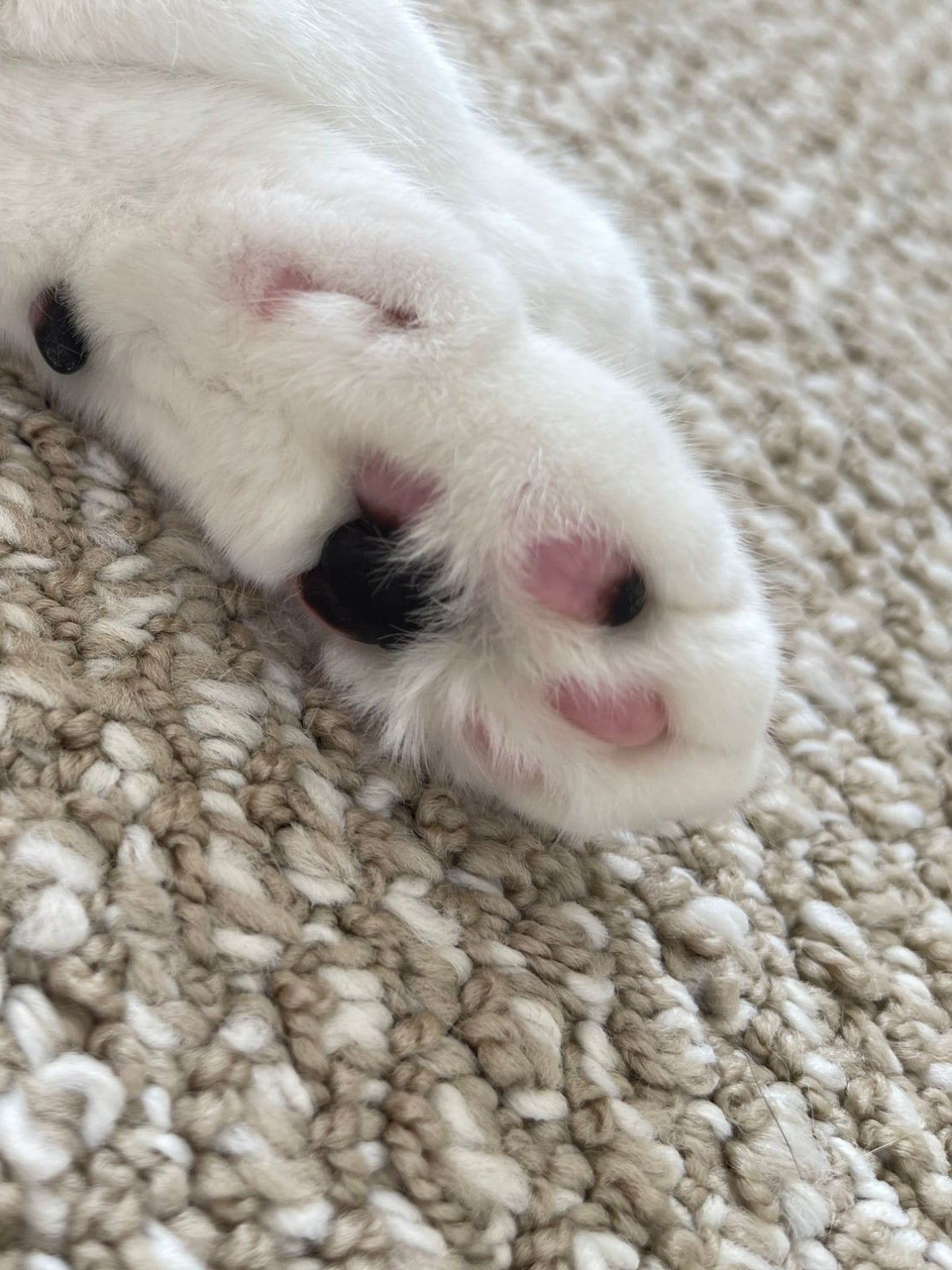
Other cat fortune-telling goes beyond just paw shapes. Some say that cats with pink beans are sweethearts and cats with black beans will be little troublemakers. Louis has pink and black beans and Thelma has pink.
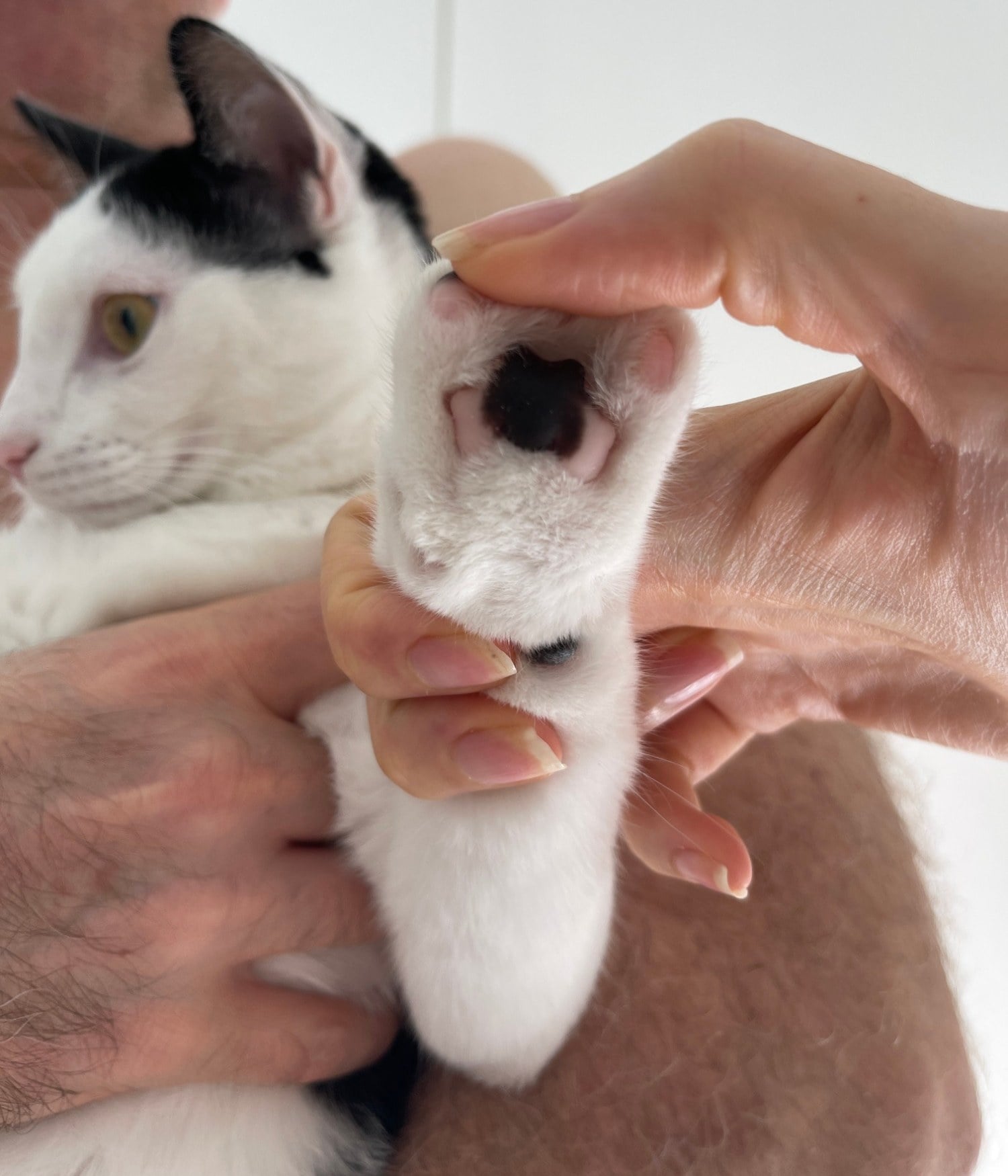
For those who aren’t buying into paw shape mysticism, one enterprising fourth grader in Japan looked into whether paw reading holds up as part of a school research project in 2023. She collected photos of about 1,930 paw pads from people on social media. Her findings? The shapes roughly matched personality, but not for every cat, and the environments cats live in and the ways their owners raise them have a big impact on personality too.
I thought I’d go through Akatsuki’s five types below purely for fun. I have to say, my research didn’t turn up anything scientific linking bean color or shape to personality. But apparently a cat’s paws can tell you more about their behavior (like which paw they favor when reaching out), how they mark their territory, and their stress levels.
Akatsuki’s five paw pad types
To figure out which type your cat is, you’re going to need to turn one of their front paws over (some guides say you should specifically use the left paw). This will take some patience, as cats generally don’t like their paws turned over. Once you have the paw over, look at the edge of the large center pad closest to the toes, and the shape of the top of that pad will place your cat into one of five types.
Akatsuki doesn’t stop at five, either. He breaks those five into 13 subtypes depending on the shape of the smaller side pads, so what you’re seeing here is just the broad classification. His book also gets into how well each type gets along with different kinds of owners, and how to interact with each one.
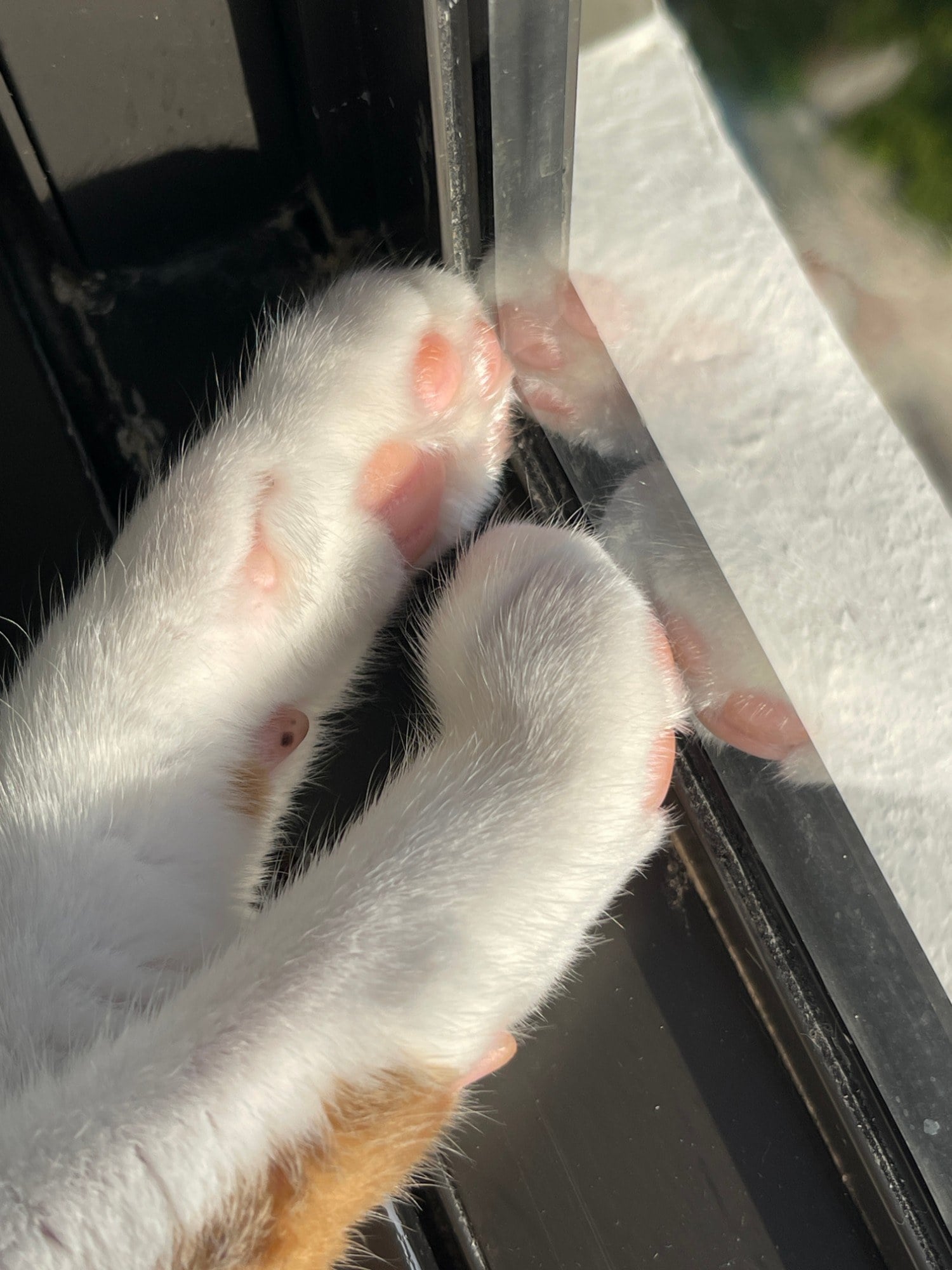
Type A: heart-shaped top
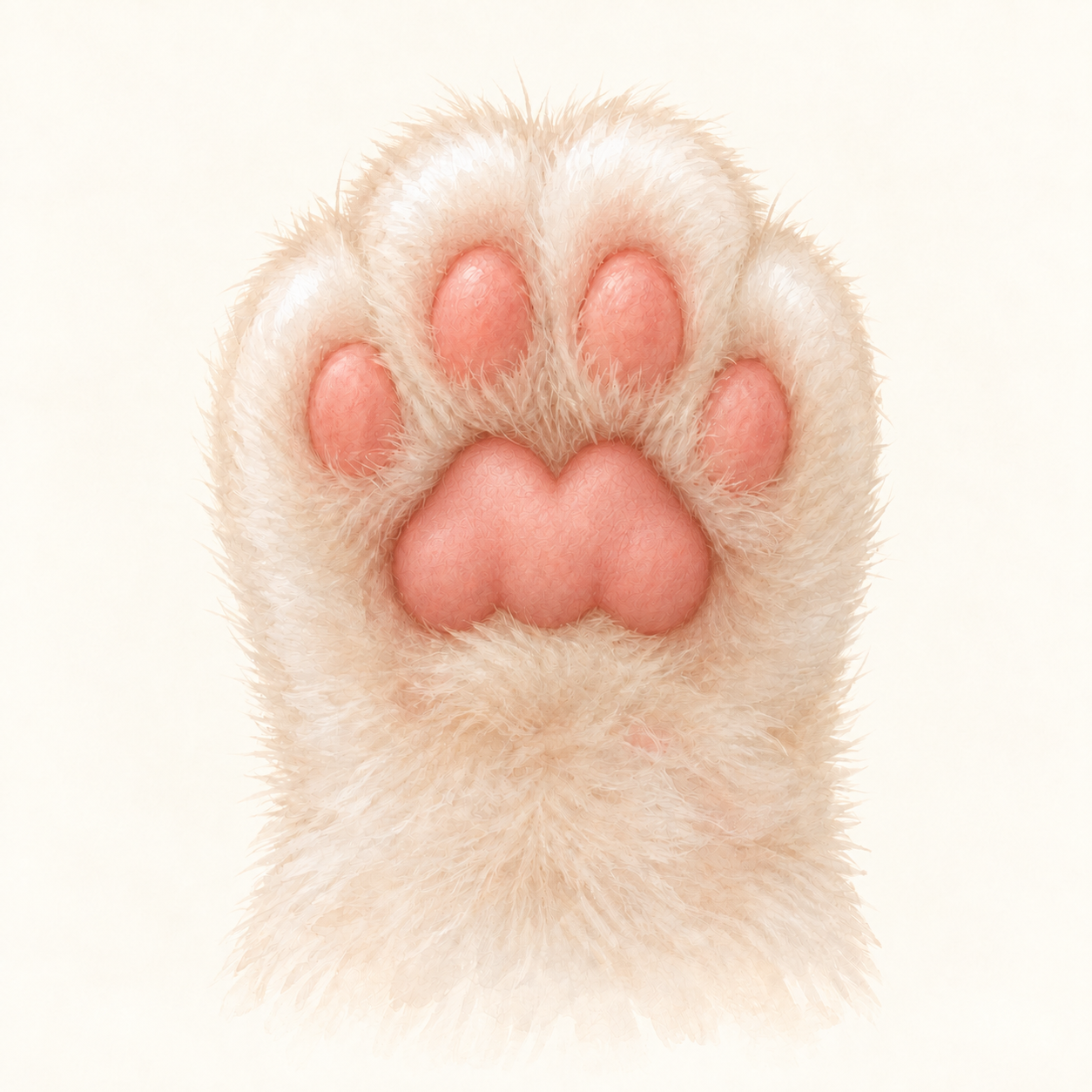
Look for a slight dip in the middle of the top edge of your cat’s large center pad, which makes it look like the top half of a heart.
Type A cats are supposedly friendly, affectionate, a little bit of a baby, and love attention. They’re said to answer when you call their name and to be pretty vocal in general. According to the guide they’re a little needy, so they do best with people who are around a lot and interact with their cats often.
Type B: rounded top
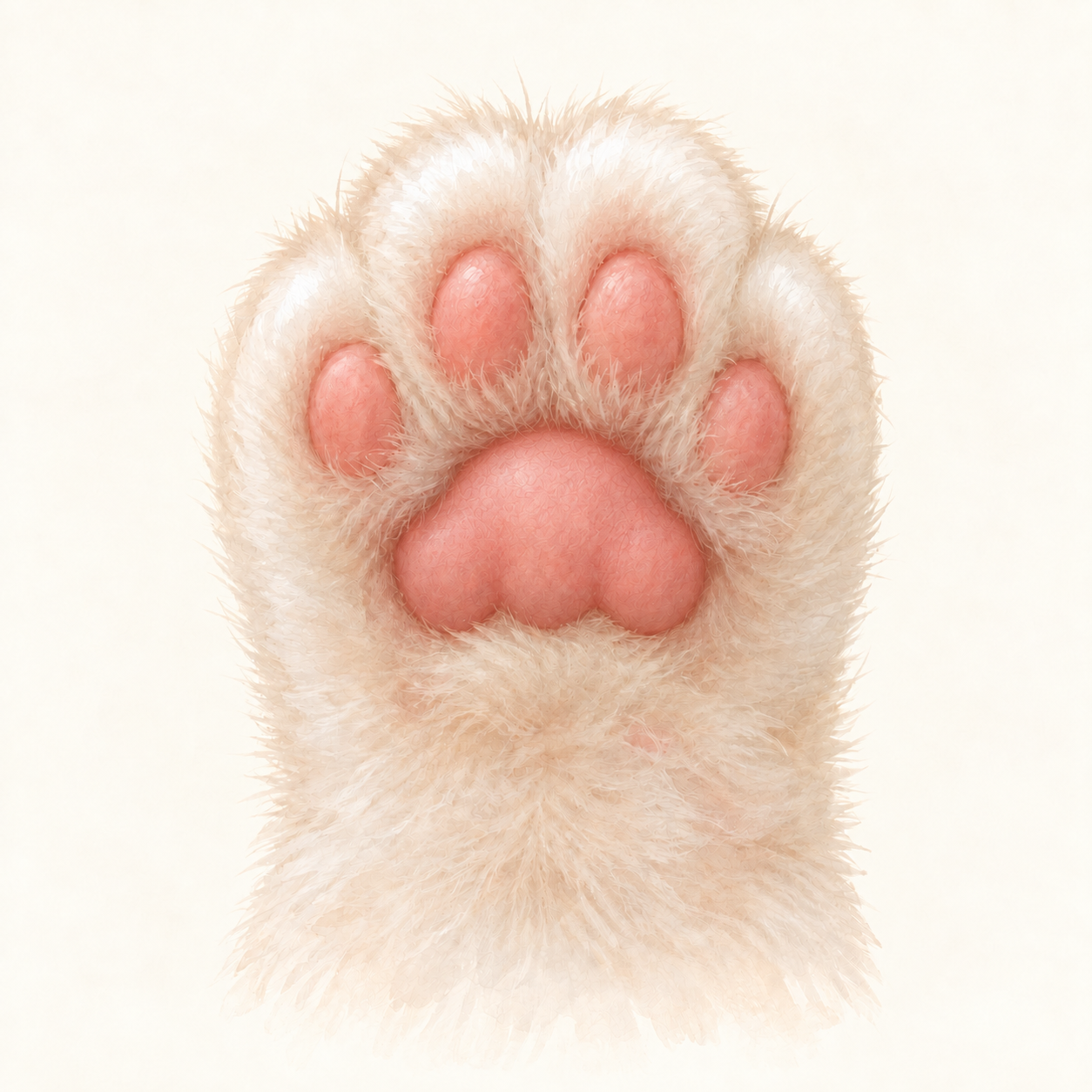
This is reportedly a pretty easy one to identify, since the top curve of the center pad is uninterrupted (there’s no dip in the curve). The guide says it’s more common in black cats. It’s possible to mix this one up with Type D, so make sure you’re looking for that nice, round, uninterrupted curve.
Apparently a Type B cat keeps something of its wild roots and isn’t very dependent on people. Funnily enough, this is supposedly the type that most humans (and other cats) like best, and in multi-cat households the other cats are said to gravitate toward a Type B. Reportedly they don’t like to be fussed over too much, so it’s better to engage a B cat by appealing to its hunting instincts when you play.
Type C: flat top
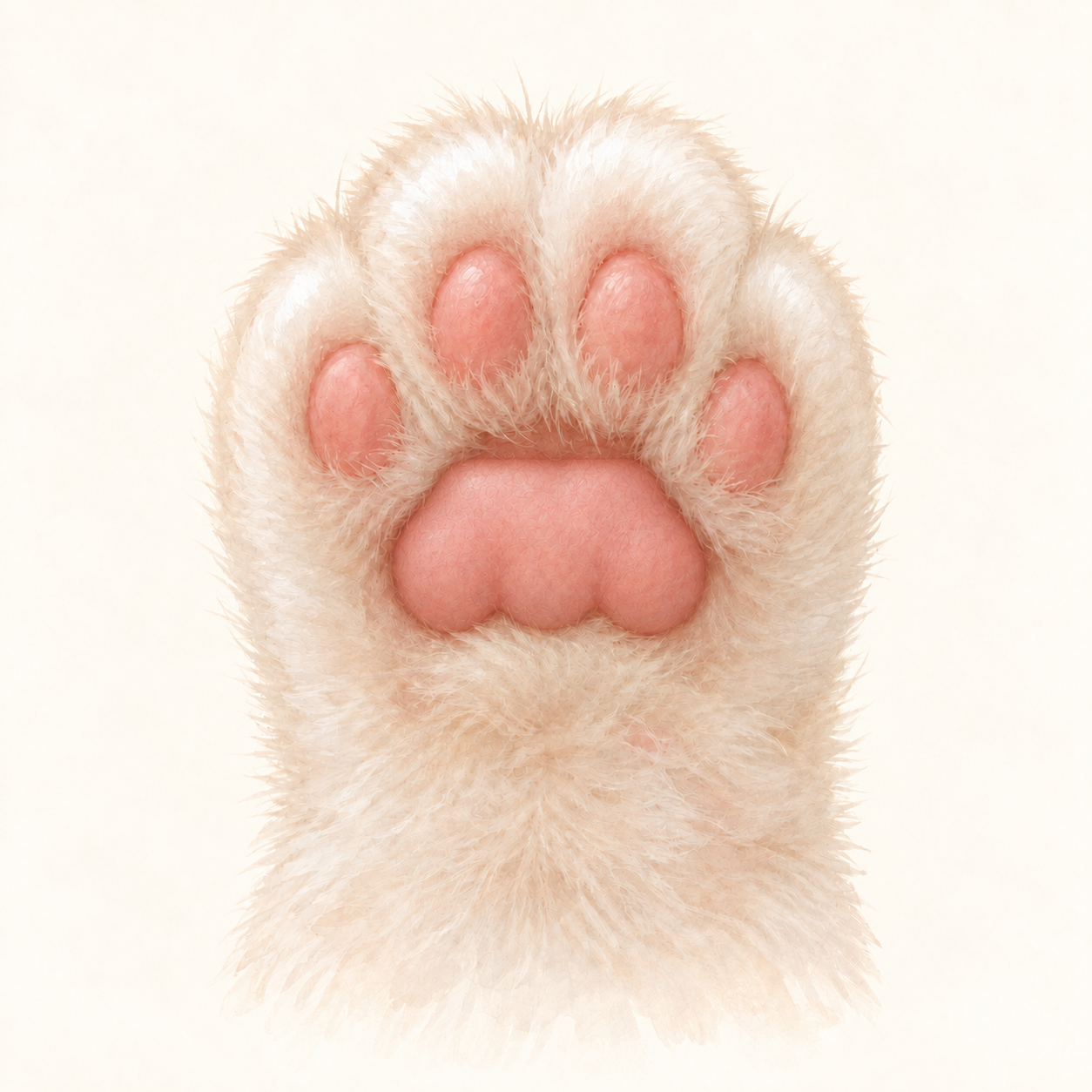
If the top edge of the large center pad is a straight line instead of a curve, your cat falls into this category.
Cats with these paws are said to be chilled out and happy just lazing around the house. They supposedly love naps and a quiet lifestyle, and they’re said to do well in calm homes with owners who like a quieter, more laid-back companion. Although they’re easygoing, they’re supposedly picky about their food!
Type D: no grooves
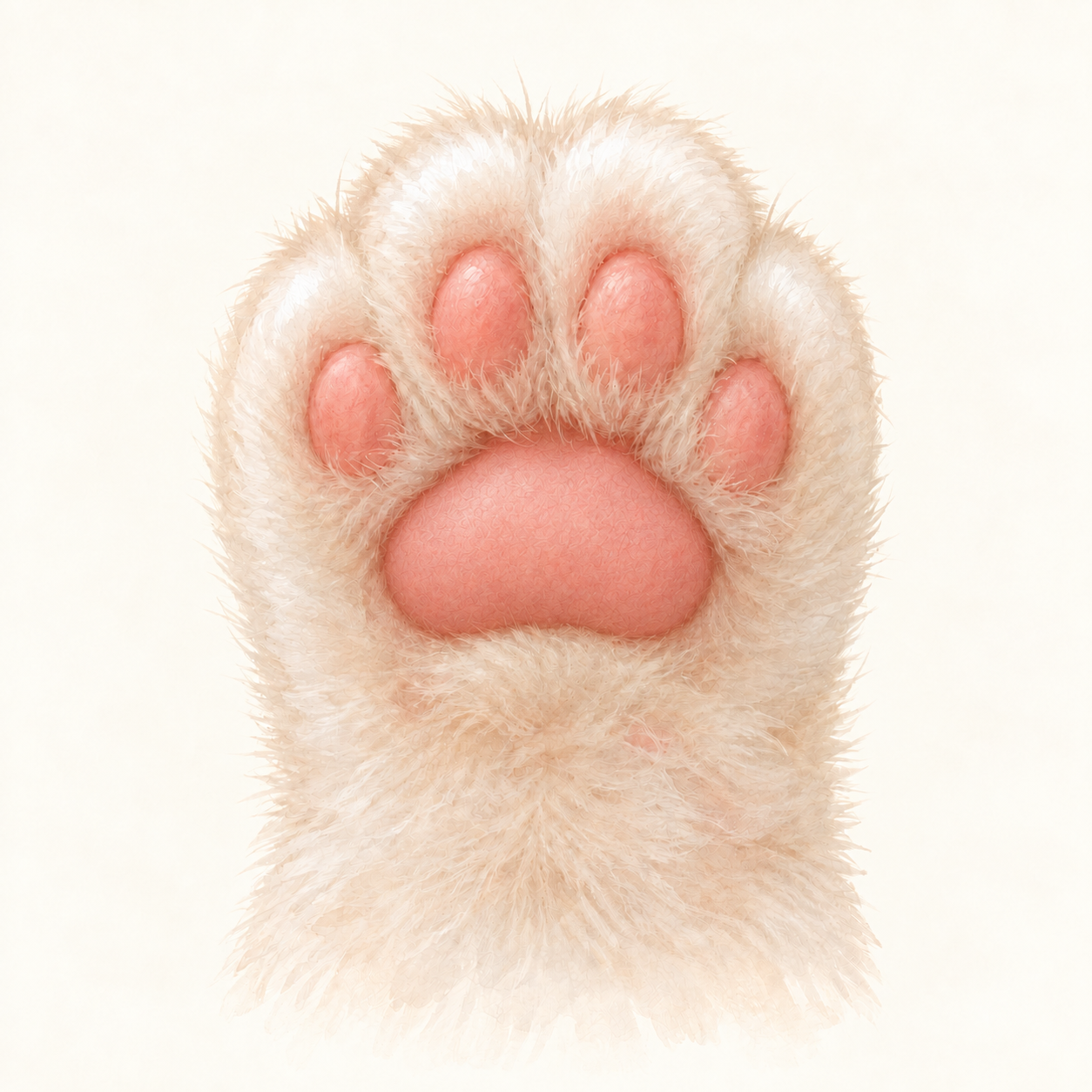
Their paw pads can be mistaken for Type B, because the usual grooves separating the middle part of the big pad from its side parts aren’t there, which gives it a smoother appearance.
Type D cats are supposedly very shy and timid and like things to stay steady. They’re said to be wary of changes in the household or anything new, but once they trust you, they’ll win you over with their charm. They’re said to be very loving to their owner and do best with a calm, steady person.
Type E: triangle top
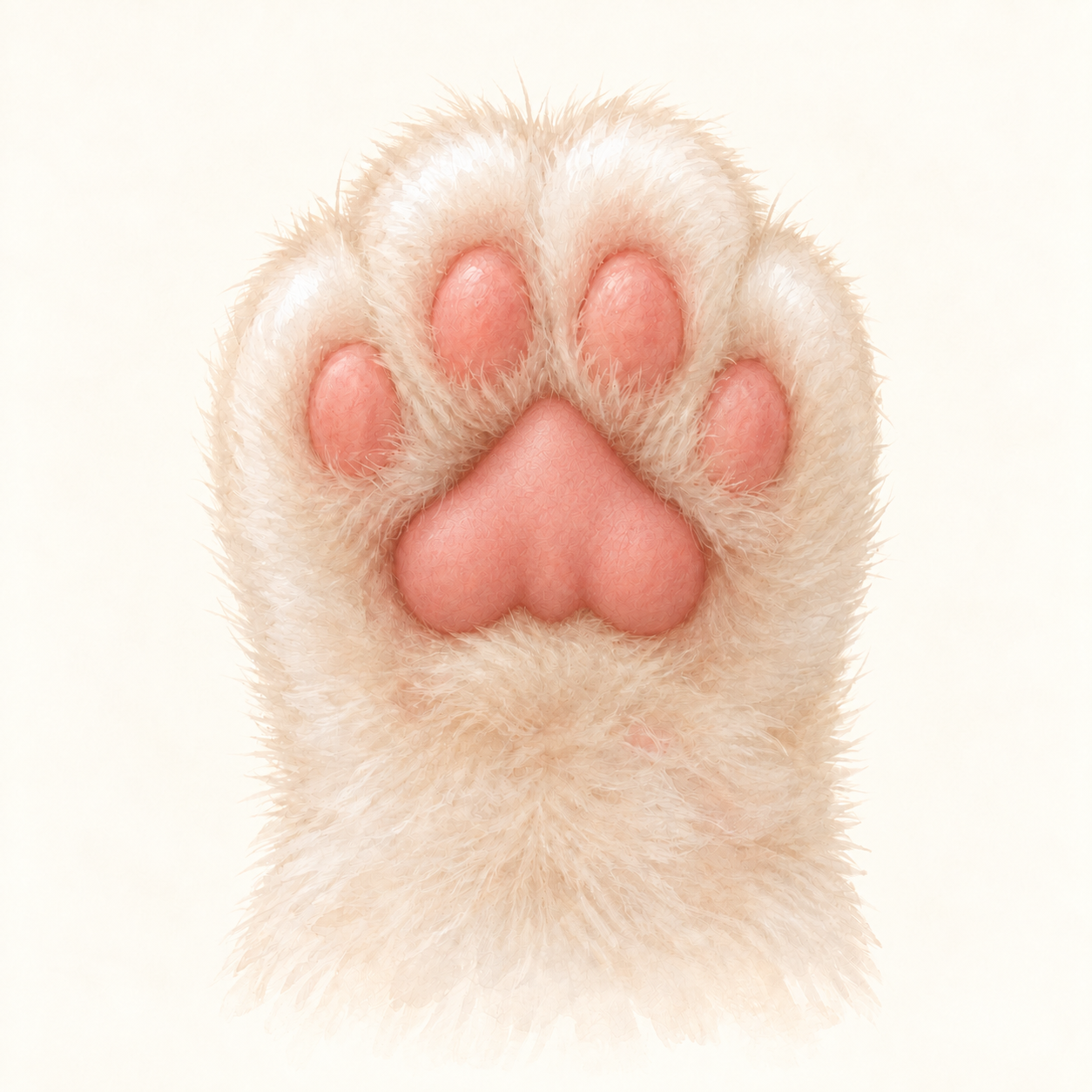
If your cat’s large center pad rises to a point at the top, forming an almost triangular or tiny mountain shape, then they’re a Type E.
Cats in this group may come across as a little pampered or demanding at times, but they’re supposedly very sensitive on the inside. To live happily with a Type E cat, the guide says it’s important to learn what they do and don’t like.
So which ones are Thelma and Louis?
Louis’s middle pad dips in the middle at the top just like a heart, which makes him a Type A, the sweet, affectionate one. He is a confident love bug who will walk into the room like a lumberjack, come right up to you, show you his belly for pets, then jump into your lap and headbutt your hand for rubs.
Thelma has a heart-shaped top too, but she is loving on her own terms. She sleeps at my feet and will jump into my husband Cory’s lap and fall asleep while he watches a football game, but she is more likely to be the one who retreats when guests come over. She’ll come out, but she’s hesitant. Once she scopes out the room, she’ll take a perch higher up to watch all the action with a bit of suspicion in her eyes.
So is any of this real?
Writers in Japan say pretty candidly that cat paw reading shouldn’t be taken too seriously. A Japanese vet clinic that wrote about paw pad reading says it has no medical basis and should only be used for fun, as a reference. Another guide suggests treating your cat’s type as a hint for how to get along with them, since a cat’s personality is also shaped by their environment.
Those are some pretty broad descriptions, and you can probably agree that just about any cat could fit into at least two of them! The truth is cat personalities are complicated, and they come from breed, early socialization as a kitten, their environment and their natural temperament. So reading paws is more for fun, and the rest of this post is about what your cat’s paws can really tell you.
What decides the color of the beans
Paw pads are just like the rest of your cat’s skin, and they’re colored by the same pigment that colors the fur. As the vets writing for PetMD explained, “Paw pad color is often the same as a cat’s fur color. Darker-furred cats tend to have black or gray toes, while lighter ones have pink toes.” So black cats most often have black paw pads, and orange or white cats usually have pink ones.
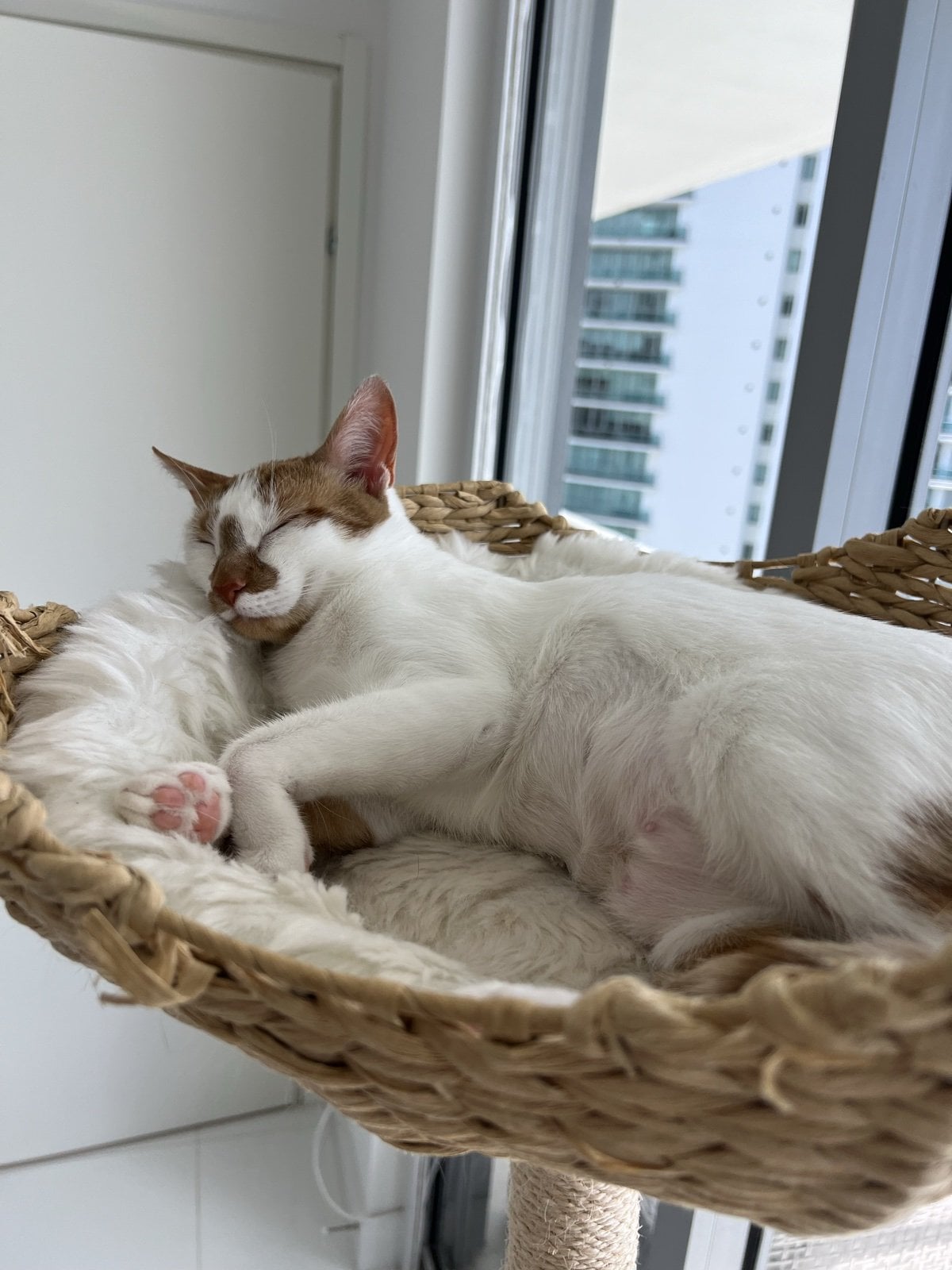
But why are some cats’ paw pads multi-colored? Bicolor or patched cats can have pads that match the coloring closest to that paw. So if a cat has a white foot on one side of the body and a black (or other color) foot on the other side, it’s possible one will have black paw pads and one will have pink paw pads. And of course it’s possible for a multi-colored cat to have a pink and black combination on each paw, which makes those cute little jelly bean paws!
My calico has different colored paw pads that match her coat coloring. The leg with more black has some black toe beans and some pink toe beans
— via Reddit.com
So while paw pad color is no indicator of your cat’s level of mischief (sorry!), the beans are cute regardless of color.
Does coat color say anything about personality?
Since toe bean color goes along with fur color, the real question is whether coat color in cats lines up with personality, and people sure seem to think so. A 2012 UC Berkeley study of 189 survey respondents found people tended to call orange cats friendlier, white cats more aloof, and torties less likely to put up with much. The researcher, Mikel Delgado, said there’s little evidence that different color cats’ personalities really differ, and that the idea can have serious consequences for cats if people pick (or skip) cats at adoption based on coat color. (If you’re curious about the older beliefs, we went through cat folklore by color and coat a while back.)
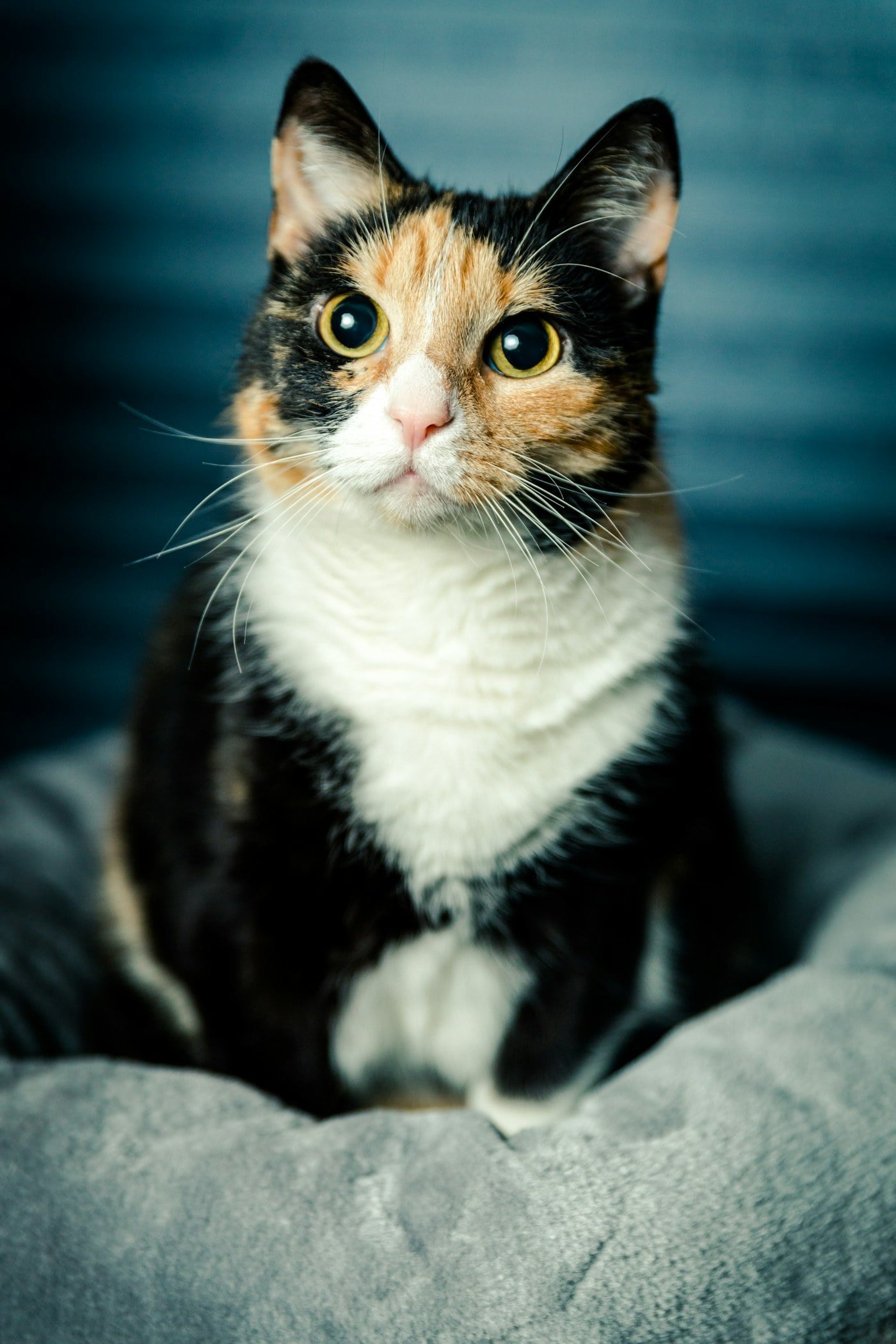
A 2016 study out of UC Davis that analyzed 1,274 cat owner surveys on coat color and behavior found owners reported gray-and-white and black-and-white cats (hello Louis), calicos, torbies and torties as slightly more often aggressive toward people, during handling, or at the vet’s office. The study authors said the differences were relatively small and may have been due to people interpreting the rating scales differently.
My black and white cat has mostly black beans with just a few little pink ones. It’s just a colouration thing, don’t worry.
— via Reddit.com
Louis is the friendliest cat I know, so whatever. I guess coat color and toe bean color can just be fun cat facts to speculate on, and not anything you should use to judge your cat’s personality, since every cat is an individual.
Which paw they reach with may say more
Similar to humans, cats can be left-pawed, right-pawed, or ambilateral (meaning no paw preference). And unlike bean color, paw preference does seem to line up with personality. So next time you’re tempted to see whether your cat’s coat color matches their personality, test their pawedness instead.
Paw preference testing typically involves counting how often a cat uses their left paw compared to their right in a task, like reaching in for a hidden treat. One study published in 2016 by researchers at Queen’s University Belfast found cats with a clear paw preference were more likely to be rated as friendly, active, confident and affectionate by their owners. Cats who used both paws about equally were rated as less affectionate and friendly, and more aggressive. Cats who preferred their right paw were rated as more playful than cats who preferred their left or had no preference.
Which paw, and what it might mean
For the 2016 study in the Journal of Comparative Psychology, researchers at Queen’s University Belfast sorted 90 pet cats into 30 left-pawed, 30 right-pawed and 30 ambilateral cats using a food-reaching test, then scored their temperament two ways: a standard feline temperament test and a questionnaire filled out by their owners.
- Cats with a stronger paw preference were seen as more confident, affectionate, active and friendly.
- Ambilateral cats scored lower on the positive traits and were seen as less affectionate, obedient and friendly, and more aggressive.
- Left- and right-pawed cats differed on only one trait: the right-pawed cats were rated more playful.
The researchers’ takeaway was that whether a cat has a preference at all matters more than which side it is.
In 2018, researchers from the same team at Queen’s University Belfast published a study on paw preference in 44 pet cats and found a link with biological sex: males leaned toward their left paw and females toward their right.
No special setup is necessary to test your own cat’s pawedness. Try offering them a treat and noting which paw comes out, see which paw they use with a puzzle feeder, or take note of which paw they put down first when coming down the stairs. You may be surprised how clear a pattern emerges!
Sweaty paws mean a stressed cat
Cats sweat through their paws, and their sweat glands are in the areas without hair. According to Cats Protection (a major UK charity dedicated to cats), cats may leave sweaty paw prints if it’s hot or if they’re feeling very stressed, like at the vet, and a vet visit can be pretty scary for some cats. That’s why you’ll sometimes see damp little paw prints on the metal exam table.
So if you spot damp prints after a car ride or a vet visit, that’s your cat telling you they were scared, even if they sat there quietly. Louis is not quiet about it (on longer car trips he gets pretty noisy after around 15 minutes, which is one reason we use a mobile vet now!). If your cat seems on edge a lot, we put together 10 ways to help your cat feel less stressed at home.
Scratching is a paw message too
Cats also have scent glands in their paws. Cornell’s Feline Health Center states, “Scratching is largely a marking behavior that deposits scent from special glands on the cat’s paws into his territory.” So pay attention to where your cat scratches, as those spots may be important areas they want to mark with their scent, and try to put a post in those locations, maybe by the couch or the front door. (Cornell says the scratch marks and the claw sheaths they leave behind may also be displays of confidence, like hey, I’m comfortable and happy where I live!)
I’d advise putting the posts in areas where your cat hangs out, rather than in a far corner of a room where no one (fur or otherwise) goes. That way you won’t have to work so hard to get them to use it!
How they feel about you touching their paws
Many cats also hate to have their feet held. There are lots of nerves in those little pads, and it might make them uneasy, so it’s nothing personal. If your cat tries to pull their paw away when you touch it, it’s not necessarily a reaction to you, it’s just that some cats hate that feeling.
Desensitizing them when they’re little goes a long way. Thelma and Louis have been used to having their feet handled (as well as baths, toothbrushing, the vacuum cleaner, being held, etc.) since kittenhood, and Louis loves feet, a little too much. Now Cory clips their nails once a week or every two weeks, sitting on the edge of the tub, and both cats are really good about it. You can still try desensitizing an older cat, just take it slow and use lots of treats. (We wrote up how Cory trims their nails without a fight if you want the whole routine.)
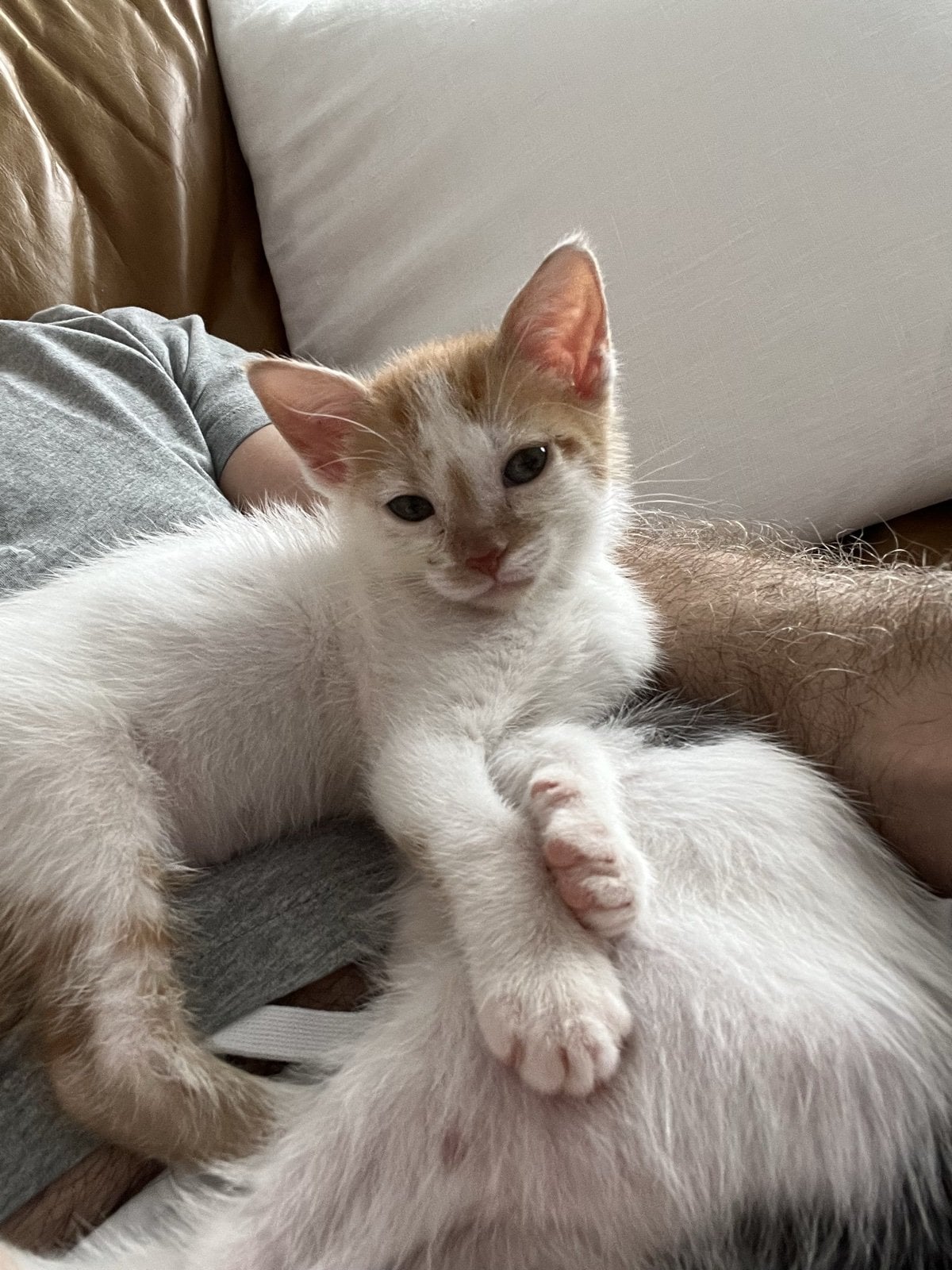
Keep in mind, too, that the pads of their feet shouldn’t change color, crack, bleed or swell all of a sudden. There’s a condition called pillow foot where the pads get puffy and soft and turn deep pink or purple, sometimes with white streaks, and PetMD says a vet confirms it with a biopsy. If your cat all of a sudden starts licking one paw, walks funny, or you notice any change to those little pads, it may be worth a vet trip. Otherwise, just enjoy the beans, whatever color they are, like this person does:
My dude has one pink toe-bean and I love it.
— via Reddit.com
What color are your cat’s toe beans? What shape? And does their personality correspond with the guide above? Let us know in the comments below!

Founder and editor of Cat Seat and cat mom to Thelma and Louis. She’s been writing online since 2000.
Hi! I’m Lindsay. I run this site alongside my hubs Cory and our very opinionated cats, Thelma and Louis. We’re so happy you’re here!