
My Cat Litter Box Cleaning Routine, Perfected
 By Lindsay Jones
 ✓Medically reviewed by Dr. Lindsey Mortlock
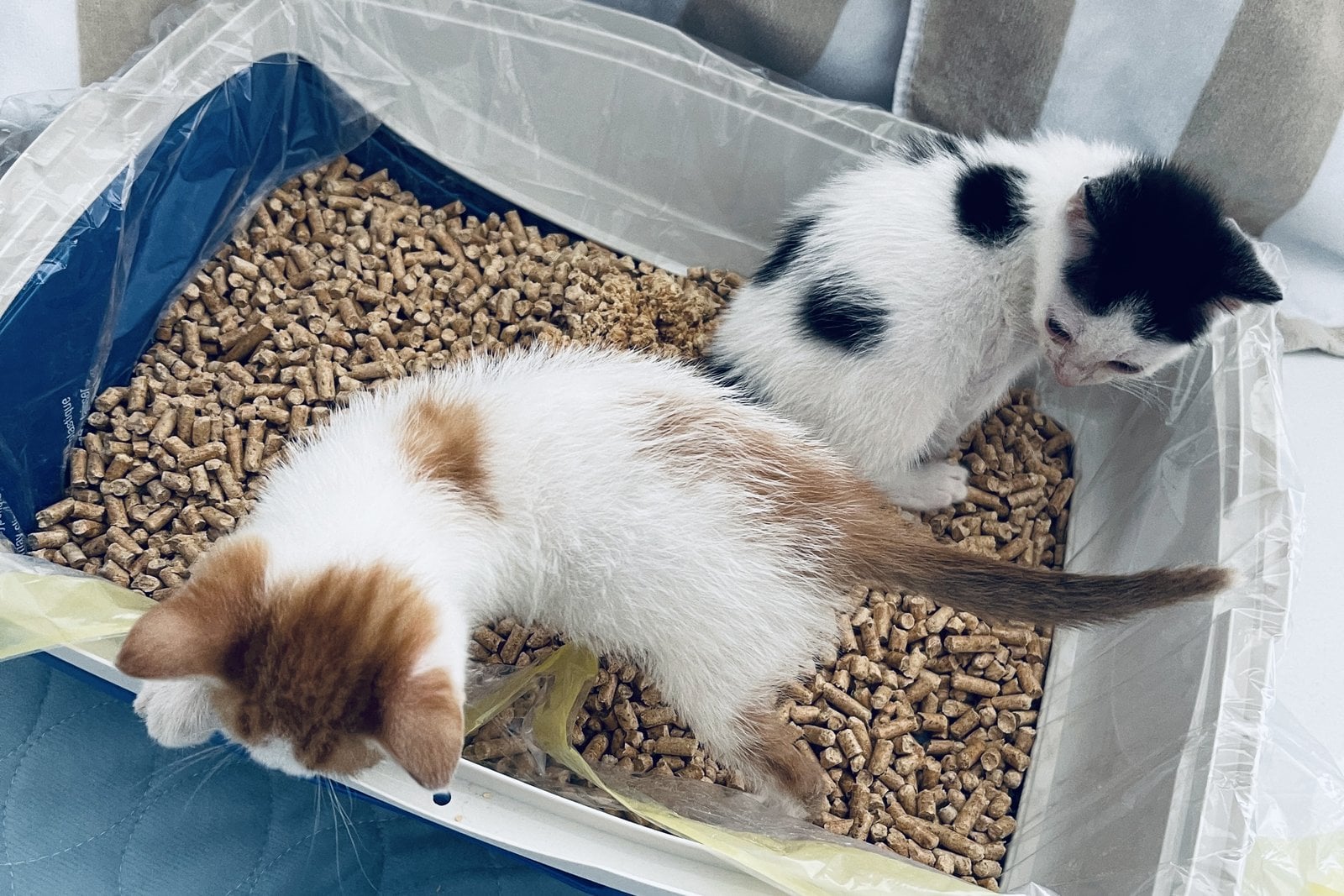
When we first rescued Thelma and Louis, they were staying with a foster who was using Feline Pine pellets with a liner in a regular litter box. Having not grown up with a cat since the early ’90s, the only litter I was used to was the old siftable kind that had a ton of dust, tracked everywhere, and smelled like ammonia. It also lived in my bedroom as a child, which, looking back, was probably not the healthiest location for me. LOL. So that’s just another long way of saying I had never seen an alternative type of litter like Feline Pine pellets before. Nowadays, there are so many litter options, it’s amazing! I’ll start by telling you what we do when it comes to our litter and cleaning routine, and then go into the most common options that might be what you have set up.
Some links are affiliate, so we may earn a small commission at no cost to you. Every purr-chase keeps two very demanding cats in treats. Our policy →
Why we started (and stopped) pine pellets
If you’re not familiar with Feline Pine litter, it’s non-clumping pellets that break down when they get wet (i.e., from urine). They turn into an almost sawdust-like consistency. Ideally with these you’re using a sifting litter box that has the litter on the top with holes and a catch box underneath. Then for the poop, you just scoop it out. You can see the process here.
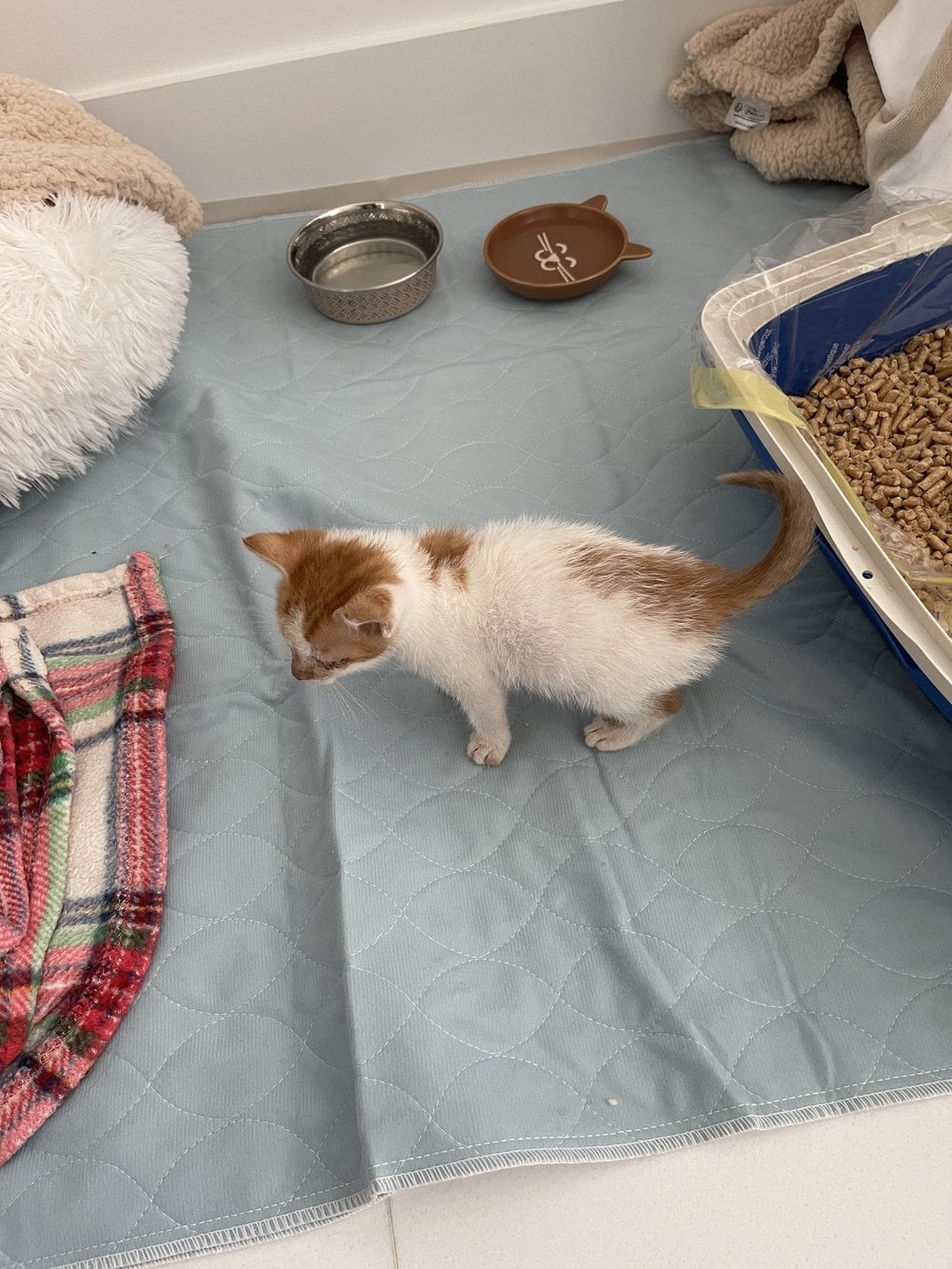
You don’t actually have to use a sifting box, though. Feline Pine’s own instructions describe using a regular box, gently shaking it to bring intact pellets to the top, and replacing the contents when they’re about 90% sawdust. Replace it sooner if it’s wet or soiled.
Personally, we found the process to be a little clunky. I really loved the idea of them, but the sawdust was getting caught in the grates we were using and it was a whole thing. But I still really liked the idea of the pellets (minus the sawdust/sifting part), so we switched to the Breeze litter system by Purina.
Why we switched to Breeze
It’s a similar concept in that it uses pellets, but these pellets don’t break down when they get wet. Instead, you still scoop out the poop, and the urine travels through the grates onto a pee pad instead.
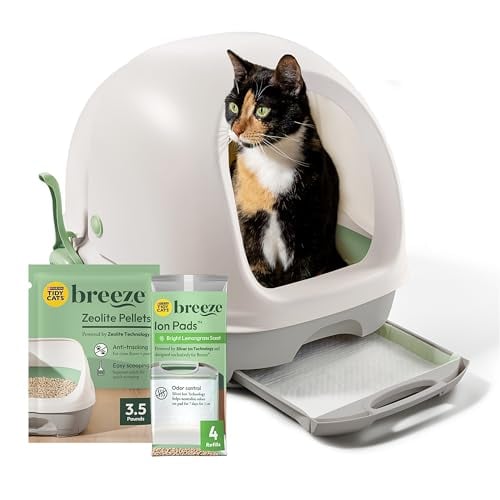
Purina Tidy Cats Breeze Covered Litter Box System
The exact covered version we have two of. Pellets on top, grate in the middle, a pull-out drawer for the pad underneath. Comes with a starter bag of pellets and pads.
One Reddit owner described the appeal this way:
I clean up the poop daily, no sifting required, it takes me less than 30 seconds. The pee pad I change about once a week, and I replace all the pellets about once a month.
— u/YukihiraJoel via Reddit.com
This is basically what we do, but if I’m being honest, we are not that great at replacing all the pellets monthly. Here’s what we do instead…
Our actual litter box routine
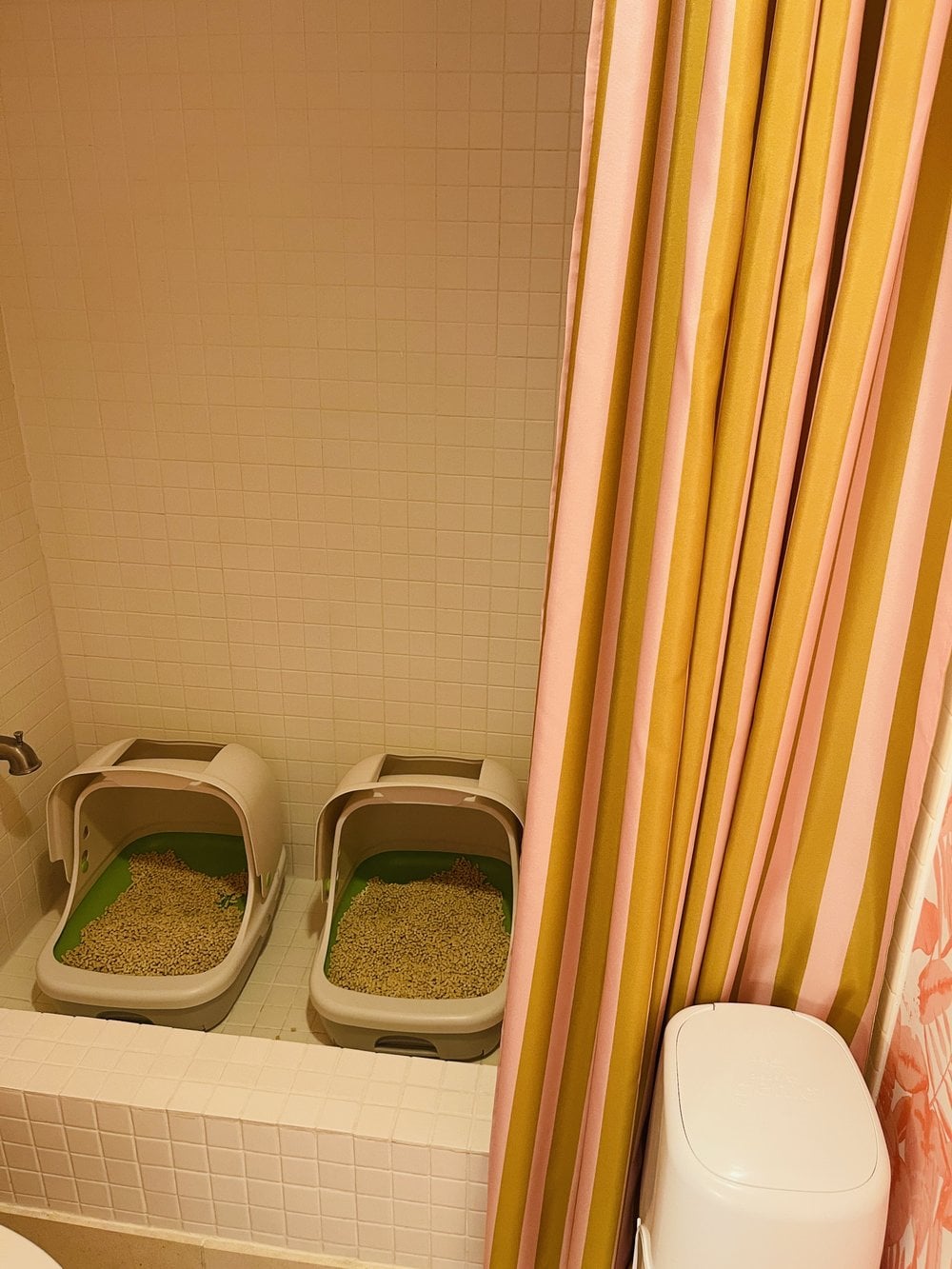
We have two Breeze litter boxes (the covered version) and we keep them both in a spare shower. That way most of the pellets that they might kick out while doing their business stay in one area, and it’s easy to clean.
The poop goes into a pet waste bag, then the Diaper Genie
As soon as we hear or see Thelma and Louis take an, err, poop (we’re all friends here, right?! LOL), we get a poop bag from the countertop nearby and put our hands in it to pick up the poop. We then tie the bag in a knot and drop it into a baby Diaper Genie we bought on Amazon (listed below). We live in an apartment and the trash chute is waaaaay down the end of the hall, so we found this to be a good system. We end up taking out the Diaper Genie collection 1-2 times a week, and there really is no smell (unless you open it and get an initial whiff).

Earth Rated Lavender-Scented Poop Bags
The bags we keep on the counter by the shower. Hand goes in, poop comes out, knot, Diaper Genie. The lavender scent is light, which matters when the pail lid opens.
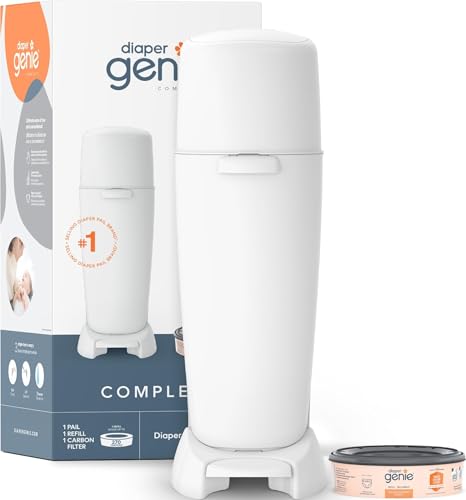
Diaper Genie Complete Pail
Yes, a baby diaper pail. The poop bags go in, the lid closes, and the smell stays in until we walk it down the hall 1-2 times a week.
We change the pads weekly
The Breeze system is great because the urine travels through the pellets and the grate and onto a special peepee pad in a liner drawer underneath. We use the multi-cat version, which they say lasts for seven days for multiple cats, but we use two (one in each box) and the cats switch off pretty consistently, and if I am one day late changing that pad it will often be wet underneath. If that happens, I just use a paper towel to absorb the excess. Normally, we’ll throw the pad out in a weekly cleaning ceremony where I then take a pet-safe disinfectant wipe and wipe the liner drawer down along with the exposed and soiled parts of the litter box and surrounding area. We also top the litter up if it’s running low.
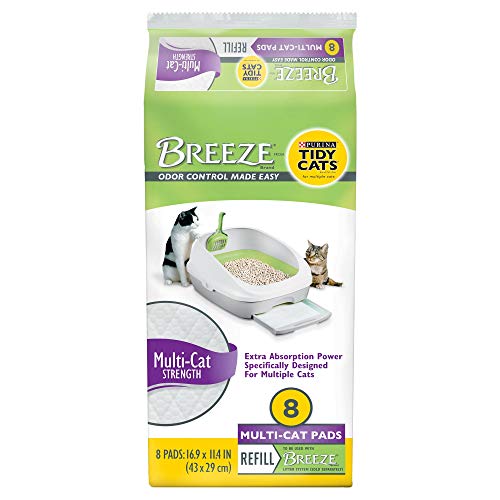
Tidy Cats Breeze Multi-Cat Pads Refill (8 ct)
The multi-cat pads we use, one per box. Rated for seven days with multiple cats. Ours get changed weekly, and a day late is a day too late.
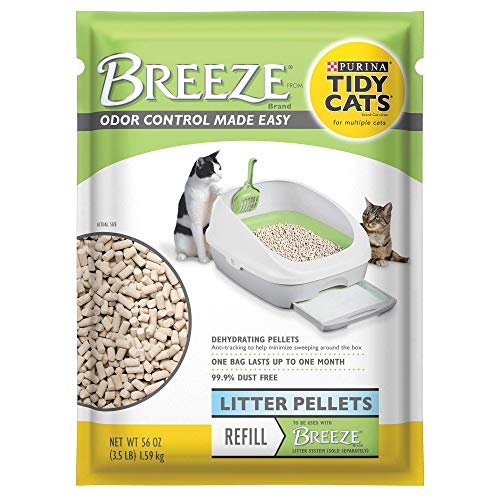
Tidy Cats Breeze Zeolite Pellets (3.5 lb)
The refill pellets. We top up weekly when the level runs low and do the full swap on the monthly clean (in theory).
The monthly clean is the part we could be better about
Purina recommends replacing Breeze pellets completely every month. (For comparison, it’s also recommended to do the same with ordinary litter boxes. Cat Friendly Homes recommends washing every one to four weeks, depending on the setup.) Obviously, if there’s an accident you’ll want to wash it sooner.
We try to clean the entire box out and throw out the pellets every month, but honestly, this can stretch a couple (or few) months past this date. Instead, we refresh the pellets weekly, spot-clean the box, and wipe down the tray the pee pad is on with a pet-safe disinfectant wipe.
By the way, these pet-safe disinfectant wipes are amazing and we use them for so many things. One, we use them when Thelma decides to poop on the shower floor just in front of the litter box, and also if one of them gets sick on the tile floor, we’ll wipe it up with this. It’s also great to clean their areas in general. We follow the ASPCA’s advice on cleaning products and make sure that we only use approved products in their area.
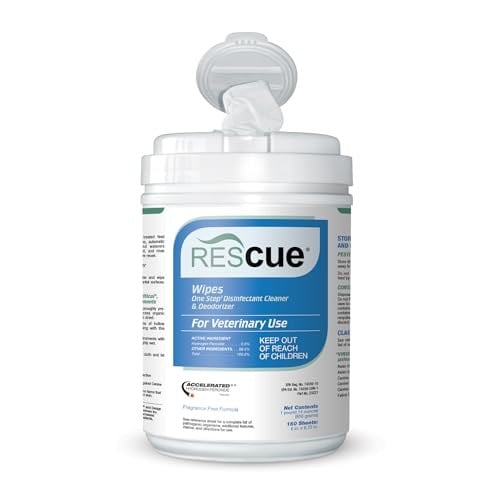
REScue One-Step Disinfectant Wipes
The vet-grade wipes nobody tells you to buy. We use them for messes on the floor and around the litter box, to this day.
When it does come time for us to clean out their boxes completely, we’ll throw out all the pellets, and then I’ll do a quick pre-clean with the pet-safe disinfectant wipe, especially on the grates where poop and pee have been. Then, I’ll use Nature’s Miracle foaming enzyme cleaner, followed by a good ol’ wash with hot water and Dawn dish soap. I dry them, put a fresh pee-pee pad in, and then a new batch of pellets.
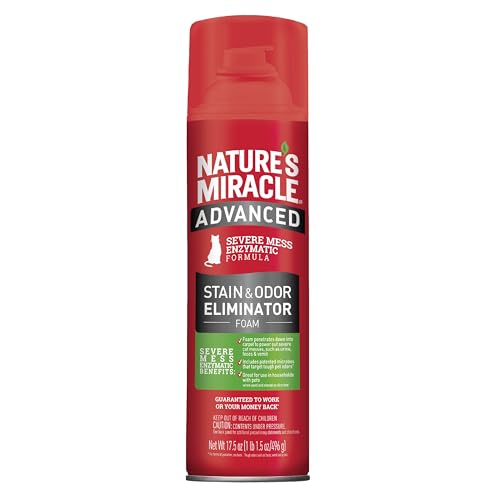
Nature’s Miracle Advanced Cat Stain & Odor Eliminator Foam
The foaming enzyme cleaner I use on the emptied boxes before the hot water and Dawn wash. Enzymes break down what’s left in the grate corners.
I also actually just ordered NEW litter boxes, because we’ve had these two for a couple years now, and it feels like because they’re made of plastic it’s not a bad idea to replace annually if you have the budget. One thing I really wish is that they had a stainless steel grate vs. plastic. I would feel so much better about keeping them!
So, that’s how we clean our litter box, but I know so many of you have different setups. For the rest of you, here are some tips on how to keep your litter box clean.
How many litter boxes should you have?
The usual starting recommendation from Cat Friendly Homes is one litter box per cat, plus an extra, in separate locations. For two cats, that means three boxes. For us living in an apartment, that’s just really not possible, so we have them placed side by side. Hey, you gotta work with what you’ve got!
If you have the space, separate locations give your cats more options. Choose boxes roughly 1½ times your cat’s length from nose to the base of the tail, with enough room to turn comfortably.
The daily, weekly, and monthly jobs
Here’s the whole routine at a glance, then the details below.
| How often | What to do |
|---|---|
| Every day |
|
| Every week |
|
| Every month |
|
| Every year or so |
|
Every day: remove waste and check the whole setup
You’ll want to check the box for activity every morning and evening, and scoop the poop and urine clumps according to your litter type (vets recommend you do this daily). Sweep up scattered litter and clean any accidents when you find them.
If you have clumping litter, instead of our type of baby Diaper Genie, many users love their Litter Genie!
100% recommend the litter genie, it makes regular scooping so much easier and faster.
— u/just-eavesdropping via Reddit.com
Each week: look underneath, behind, and around the box
Lift the box or pull out the tray and check for hidden wetness. Empty the waste pail as needed, clean its interior when soiled, and wash any washable mat according to its care instructions. Dry everything thoroughly before putting it back.
I personally remove any scattered litter around the boxes as soon as I see it. If I wouldn’t want to step in it, I don’t think our babies would either!
When it’s time for a full wash: empty, scrub, rinse, and dry
For a regular, non-electric litter box, this is the basic process. I wear gloves and make sure my hair is tied back and I’m wearing clothes that I can put in the wash easily after:
- Bag the used litter and waste. Gather all pellets, clumps, and loose debris and dump them into a trash bag before washing. Don’t flush them or send them down a drain. Remember that most litters (especially pellets) will clog your toilet or drains if you put them down there!
- Take apart the removable pieces. With a tray system, check the grate, drawer, hood, and seams.
- Wash with mild, unscented soap and water. Use a dedicated brush or sponge to remove any visible debris in the corners and around the grate. A short soak can loosen stuck-on residue. If you want an extra step, a 1:1 solution of white vinegar and water is a common pet-safe option (let it soak for 5 minutes), though vinegar isn’t a true disinfectant. The ASPCA says a properly diluted bleach solution, followed by a thorough rinse and airing out, isn’t expected to cause harm, but I personally don’t use anything bleach-related.
- Rinse thoroughly. Remove soap and loosened grime.
- Dry completely and refill. Use the amount and type of litter recommended for your system, plus a fresh pad if it takes one.
Keep another clean box available while this one is out of action. We wash one at a time.
This is pretty common sense, but be sure to use a designated wash tub, utility sink, or bathtub rather than an area near any sort of food preparation, and clean the washing area afterward. Wash your hands when you finish, even if you wore gloves.
What about baking soda?
Some cat owners incorporate baking soda into their litter routine. Some sprinkle it into the litter nightly and clean with it. I would be very cautious about using it, personally.
While a small sprinkling in a cat’s litter is generally OK, baking soda in large amounts can be harmful to cats if inhaled or ingested. Some older cats might sneeze from the dust, and in rare cases cats are allergic to it. It’s also not advised to use it in a clumping litter, because both have a high pH level, which can actually increase ammonia odors.
If you do use it, sprinkle no more than 1-2 tablespoons for a standard-size box (a bit more for a large one) on the bottom of the box or mixed in with the litter itself. Just be sure to watch for any adverse reactions in your cat. Again, my thought is, why take the chance!
For us, the Breeze boxes, weekly pad changes, and bag-and-Genie routine have worked pretty well so far! (We just have to get better about that monthly clean!)
Tell us, what type of litter setup do you have, and what does your cleaning routine look like?
And for those of you with an electric litter box, we haven’t forgotten about you! We’ll do a separate article for you shortly!
Founder and editor of Cat Seat and cat mom to Thelma and Louis. She’s been writing online since 2000.

An emergency veterinarian with a special interest in feline medicine — and a self-proclaimed cat lady with six cats of her own.
Hi! I’m Lindsay. I run this site alongside my hubs Cory and our very opinionated cats, Thelma and Louis. We’re so happy you’re here!
I switched to Pretty Litter when we had a health issue and it affected the urine. I have three cats two Bombay‘s and a Persian the Bombay‘s were bottle babies. The Persian was also a rescue. I was always told not to put the litter boxes next to each other, preferably to separate them. It also takes them a while to make litter boxes or any boxes for that matter their own, which my second litter box that was the case. I keep the litter box clean, and what I like about Pretty Litter is after you remove the large pieces you stir the urine in if the urine that’s affected as large you can pull that out as well or you can stir it and the Pretty Litter absorbs the urine and gives you a complete clean litter box and the smell is gone as well and that’s what I like. I also keep a filter plugged in next to the litter boxes. I am also going to be plugging in a. I don’t know what they’re called but it’s a pheromone. I’m gonna plug in next to it to make them feel safe that and also near their food in near the dining room. If I undecided in the dining room or in the second bathroom, which is next to the dining room and they still would be able to smell it. But I was surprised to see your litter boxes right next to each other in the spare shower. I might move one of mine into the spare shower since I no longer have a guest, and also they had used the spare shower once or twice when they were upset so I might put one of the litter boxes in there as well. Also, they eat right outside the bathroom and their water is also right outside that bathroom so it’s all very close and the other litter box is across the house and that’s where it’s always been so would all be very familiar to them. What is your opinion on having them right next to each other. Joan Waldner
Hi well I just have regular cats.. 2 m black, 2 m gray tabby, 1 f b/w tuxedo, and her sister a gray tabby tuxedo. My litter boxes, I started with about 5 but we’re in groups, 2-3 here and there, where I could fit them in. We’ve been using one very large designed as a corner box, for about two years now, just fine.!
But now to ask you about what are you actually using. I see one of the boxes seems to have a plastic bag in it. Would this be because you’re using the “feline pine pellets”? The ones that absorb the liquid. And if yes.. is the bag working very well for you.? And if yes I’d like to know what kind..brand etc is the bag. I am exhausted of litter being brought all over my house. It’s been no matter what brand, or kind I’ve used horse pellets even, they absorb the wet but clump. They get it everywhere.! I have purchased this cat box kit… I hope it works well. Thank you
Hi Beverly! The photo with the plastic was their first litter box when they were little, with a liner and yes, the pine pellets! The bag worked ok for us, but we much prefer the entire Breeze litter system now!
The best ever cat litter is Nature’s Miracle Clumping Multi Cat litter. My hubby used it and was so excited he gave samples away to our litter box using neighbors. We are using the Sifting Arm Hammer Litter box.
He was so shocked and beyond excited that the boxes didn’t smell.
We also put food grade diatomaceous earth and mix it in with the litter.
The biggest issue when we switched was that nobody had it in stock online. Not Amazon, not Pet chains, I finally found the 20 lb bags on Chewy.
It is the best litter we have ever used. I have used many Nature’s Miracle Products in the past. The company expanding to Cat Litter is the greatest product out there. Just don’t use the corn product litter. We tried it, but discovered bugs in the litter. Beattle little things. Ugh hate bugs. We switched to the regular litter.
That’s so good to know, thanks for sharing!