Ragdoll Cats: Colors, Patterns, Personality and the Famous Flop
Ragdolls are the cat everyone seems to want right now. This big, blue-eyed (and apparently floppy) breed is one of the most popular cat breeds in the world, second only to the Maine Coon in the Cat Fanciers’ Association’s latest registration rankings. A 2025 study by the UK’s Royal Veterinary College found that Ragdolls went from 0.7 percent of all cats born in 2005 to 3.7 percent in 2019. Taylor Swift’s cat Benjamin Button is a Ragdoll, which probably hasn’t hurt.
Despite not having a Ragdoll myself (our two rescues, Thelma and Louis, are siblings with no specific breed, found as kittens in a car), I couldn’t help but Google everything there is to know about the fluffy flops. Where are Ragdolls descended from? Why do Ragdolls (allegedly) go floppy? Are giant Ragdolls fact or folklore? I wanted to dig deeper and find out which popular beliefs about Ragdolls are myths and which are facts, even the one the Cat Fanciers’ Association has walked back.
Below is everything I found: where Ragdolls are originally from, if they really do go floppy when picked up, if giant Ragdolls really do exist, the six Ragdoll cat colors and four Ragdoll cat patterns, what Ragdoll personalities are really like (spoiler: it’s not necessarily what you’ve been told!), if Ragdoll coats are high maintenance, the Ragdoll heart condition you NEED to know about before getting one, and the questions you need to ask a Ragdoll breeder before paying a deposit.
Where Ragdolls came from
The breed is fairly new! The Cat Fanciers’ Association explains that Ann Baker developed the Ragdoll in the 1960s in Riverside, California. The foundation cat was Josephine, a white domestic longhair that carried the colorpoint gene, and when Josephine’s kittens were born, Baker said they had unusually appealing temperaments, so she started building a breed from her. VCA Animal Hospitals adds that Baker was a Persian breeder and that Josephine herself was a stray.
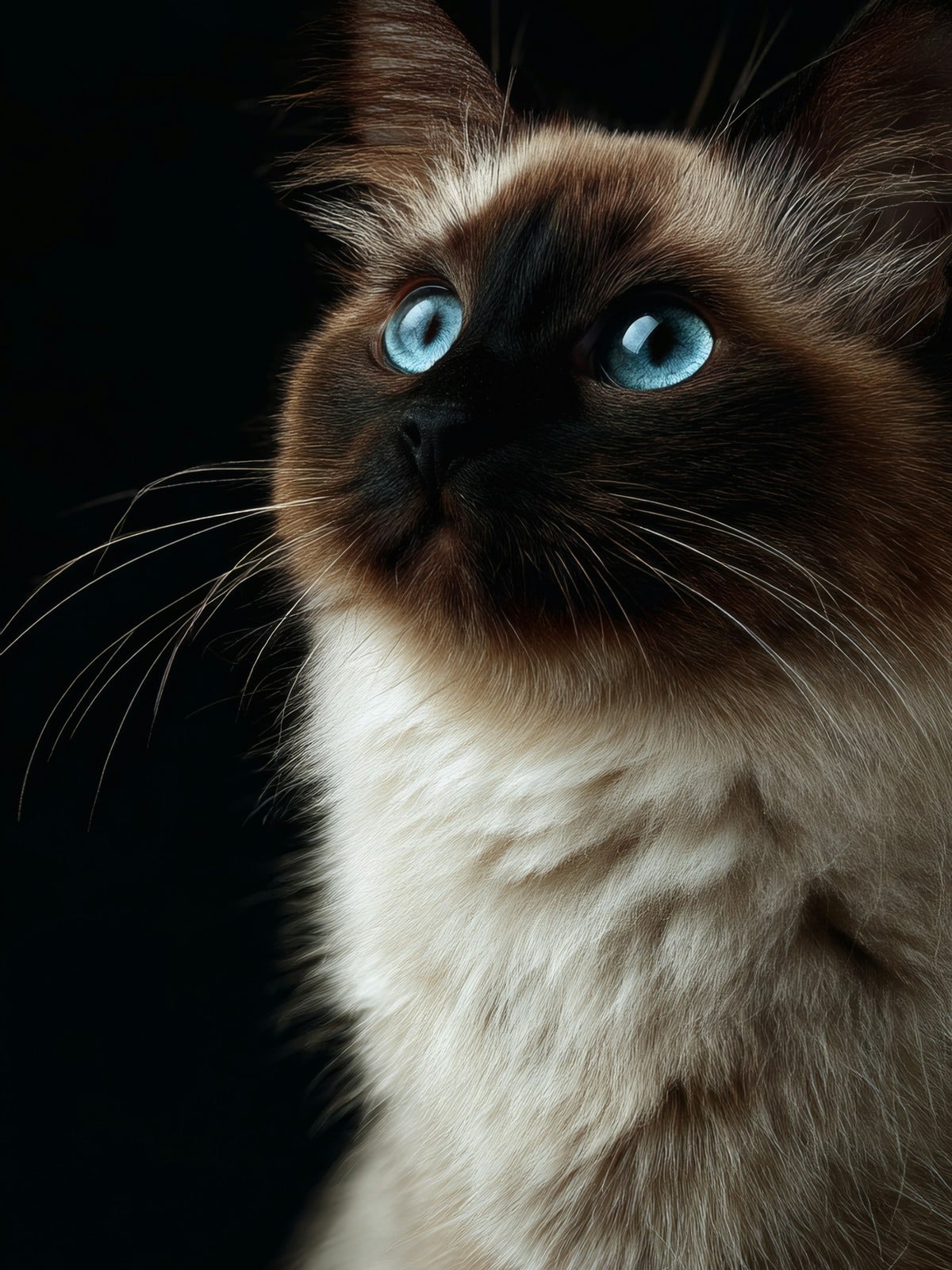
Ragdolls were accepted for registration with the CFA in 1993, and the organization gave the breed championship status in 2000. Female Ragdolls are also sometimes called Daughters of Josephine, according to VCA, which I love.
Speaking of strays turned royalty: New York City’s Algonquin Hotel has had a cat living in its lobby since the 1930s, and from 2010 to 2017 that cat was a rescue Ragdoll named Matilda III. (Today the job belongs to an orange tabby named Hamlet VIII.)
About the going-limp thing
According to the Cat Fanciers’ Association page on Ragdolls, Ann Baker claimed Josephine was so docile that she would go limp when picked up, and the Ragdoll breed got its name from that trait. (The same CFA page adds that Ragdolls going limp is not a behavior typical of most Ragdolls today.) The VCA says the Ragdoll’s name actually comes from a misconception that Ragdolls go limp in people’s arms.
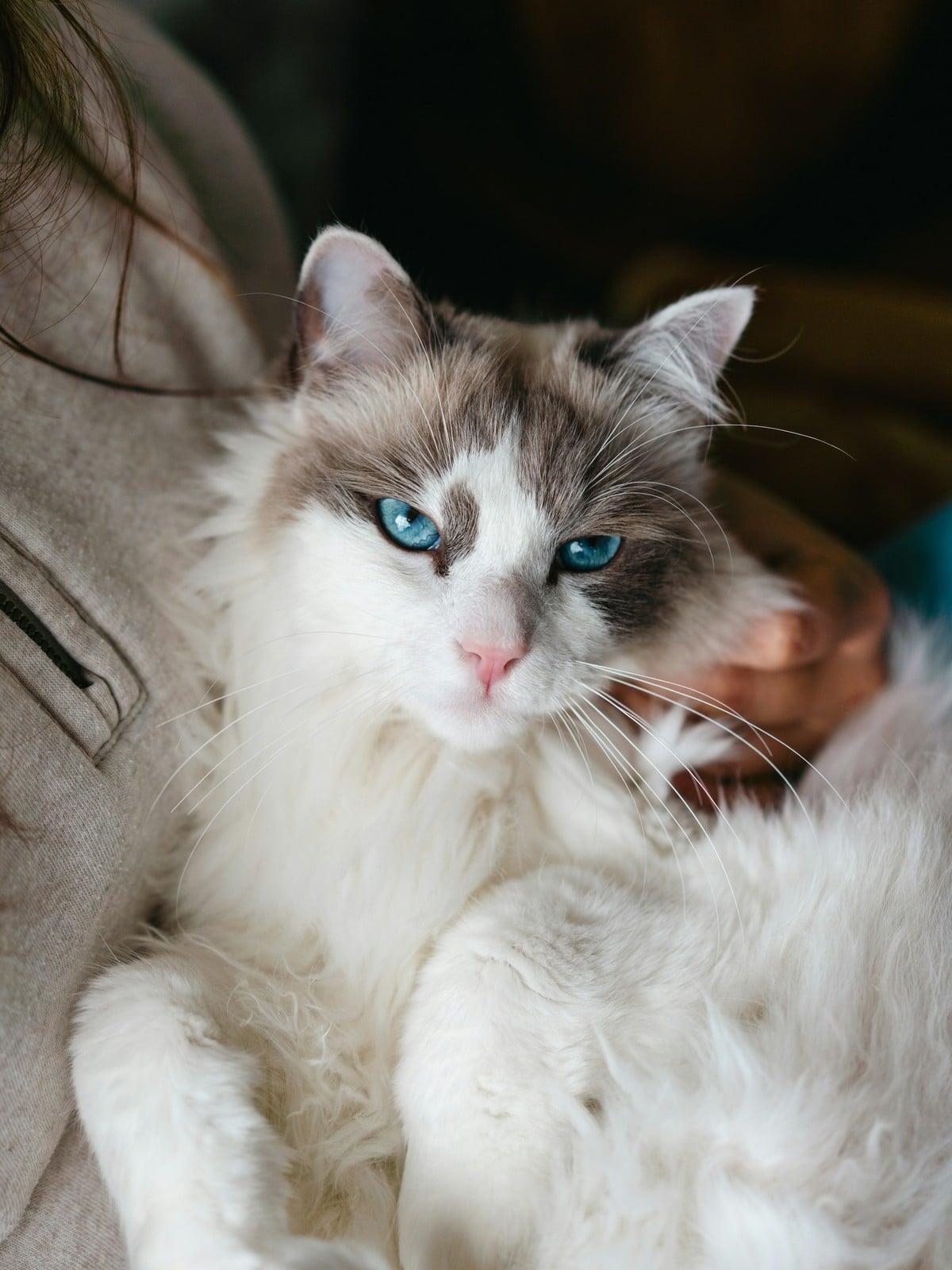
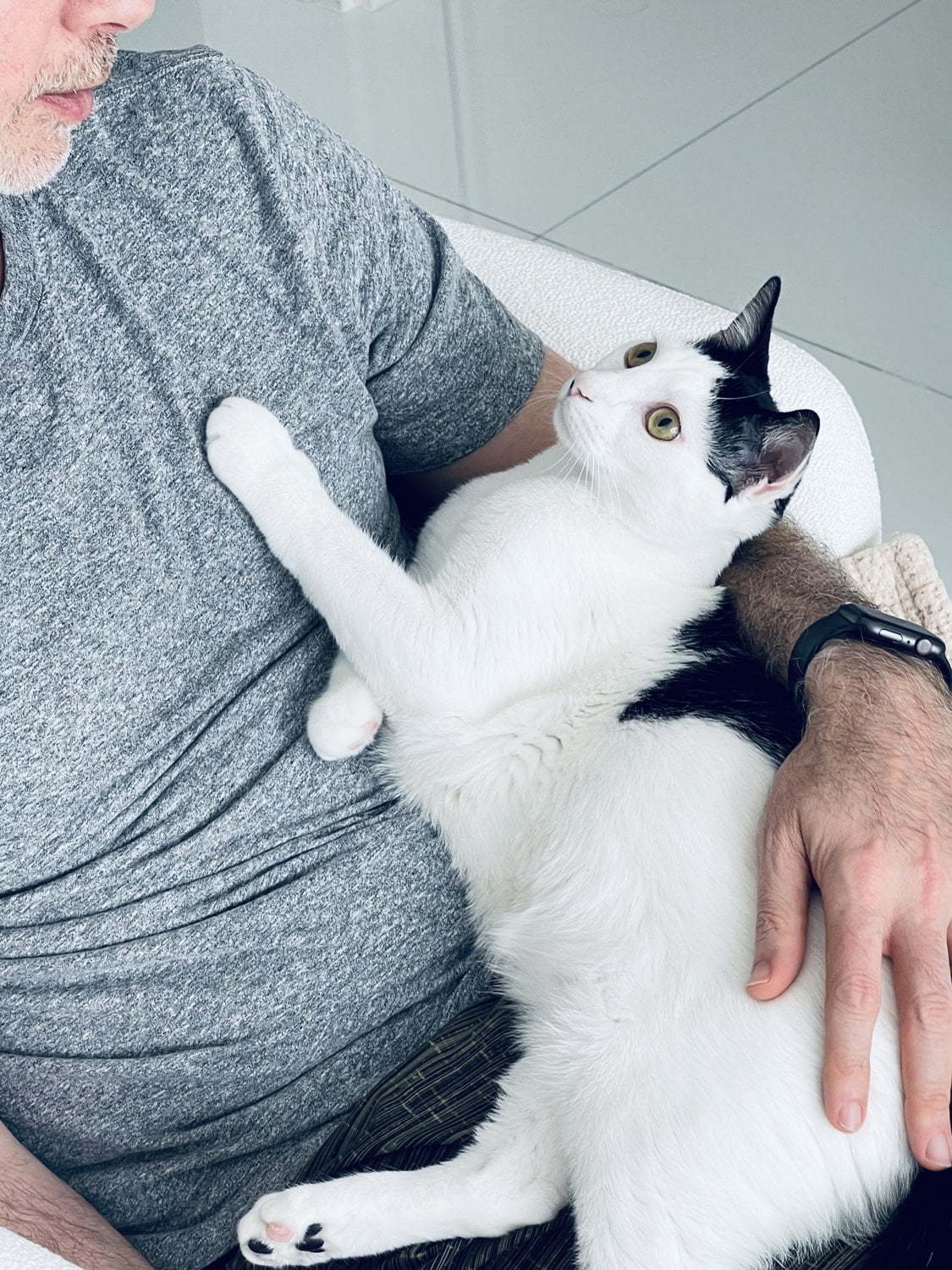
So if you get a Ragdoll kitten, expecting your cat to flop like a rag, you might get lucky … or you might just get a cat that wants to be put back down on the ground as soon as possible. In my house Louis hates being held and Thelma doesn’t mind. (And neither one of them is a Ragdoll.) I’ve never held a Ragdoll, but the idea of both of our cats loving being held so much that they went limp sounds pretty great to me! LOL. Consider the Ragdoll flop a perk instead of a guarantee, although one person on Reddit explains their cat’s take on this Ragdoll trait:
she literally goes floppy as soon as she is picked up and will happily be carried around for as long as you like. This does not mean she is a softie, we have seven other adult cats and it did not take long for her to climb to the top of that pecking order.
— via Reddit.com
How big they get (and how long it takes)
So how big do Ragdolls get? Ragdolls are on the larger side of cat breeds, with a sturdy build that includes a large bone structure and a broad chest. The Cat Fanciers’ Association states that a male Ragdoll can reach, or even exceed, 20 pounds once the cat reaches adulthood, adding that females are usually smaller in size than males. VCA notes that it’s common for Ragdolls to have a pad of fat underneath the belly.
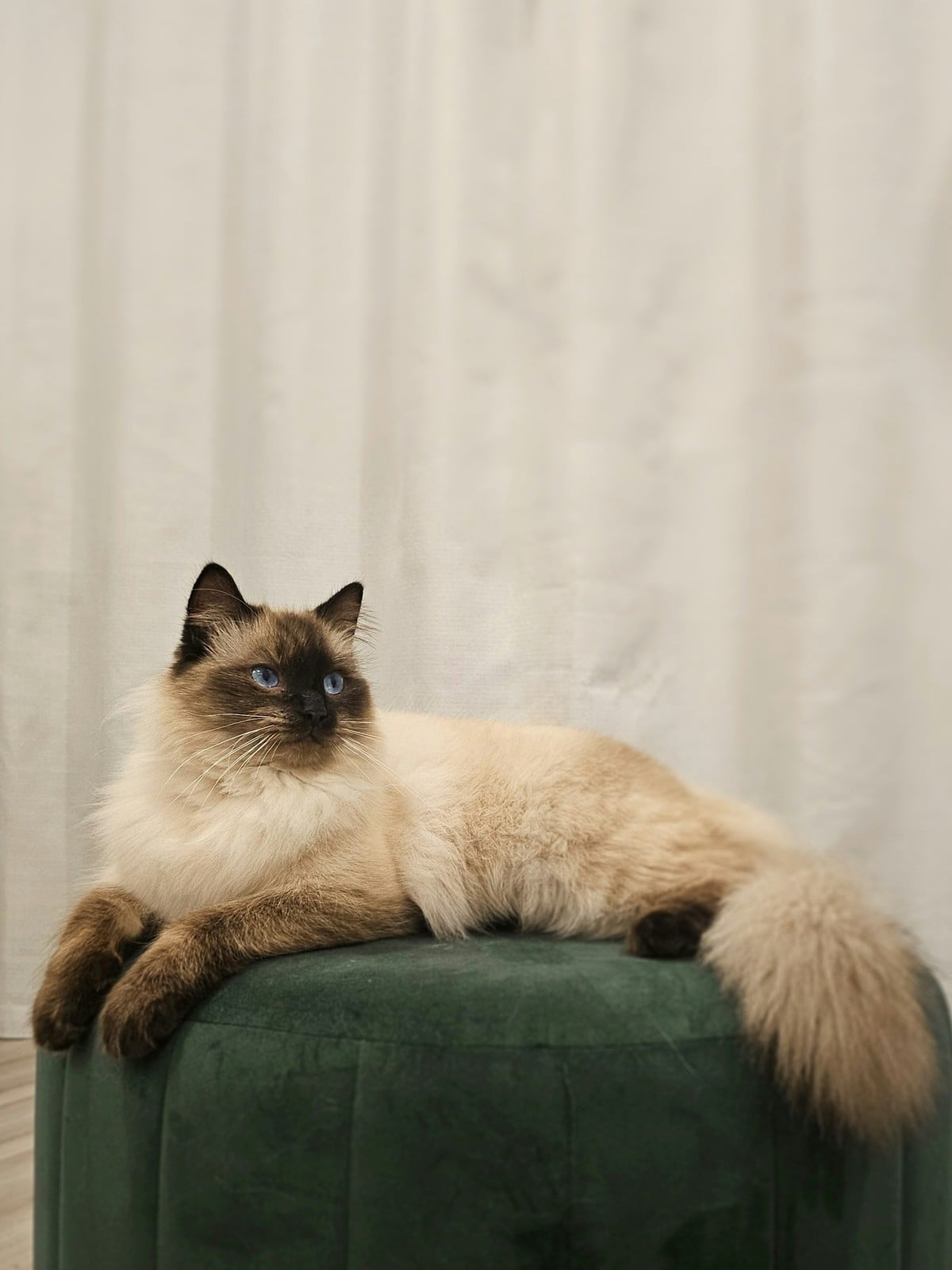
While 20 pounds may be possible, it’s also at the extreme end of the spectrum. That number is the top of the range, not the average pet. The median weight for Ragdolls in a 2025 study by the Royal Veterinary College was 4.46 kilograms (that’s just under 10 pounds). The study looked at more than 21,000 Ragdolls under the care of veterinarians in the UK. According to that same study, the median weight for males was 4.97 kg (about 11 pounds), and the median weight for females was 3.83 kg (about 8.5 pounds). So the typical pet Ragdoll is a big cat, not a bobcat.
The CFA says it takes Ragdolls two to three years to achieve their full coats and color, and Ragdolls typically reach their adult size and weight at age four. Royal Veterinary College data shows that Ragdolls gain weight the quickest during their first year of life and continue to grow in size until they’re about two. So, if you have a lanky-looking Ragdoll who’s a year old, don’t fret over their proportions. The cat’s coat at one year old won’t compare to their coat at three years old, either. The long maturation process Ragdolls undergo takes a special brand of owner who is happy to patiently wait to watch all of the changes. One person on Reddit had the practical version of the size warning:
Make sure you have extra large and stable scratching posts. Do not underestimate how big ragdolls can be. Most standard size scratching posts with cat beds are too small for them and unstable construction can be dangerous.
— via Reddit.com
Born white: the six colors
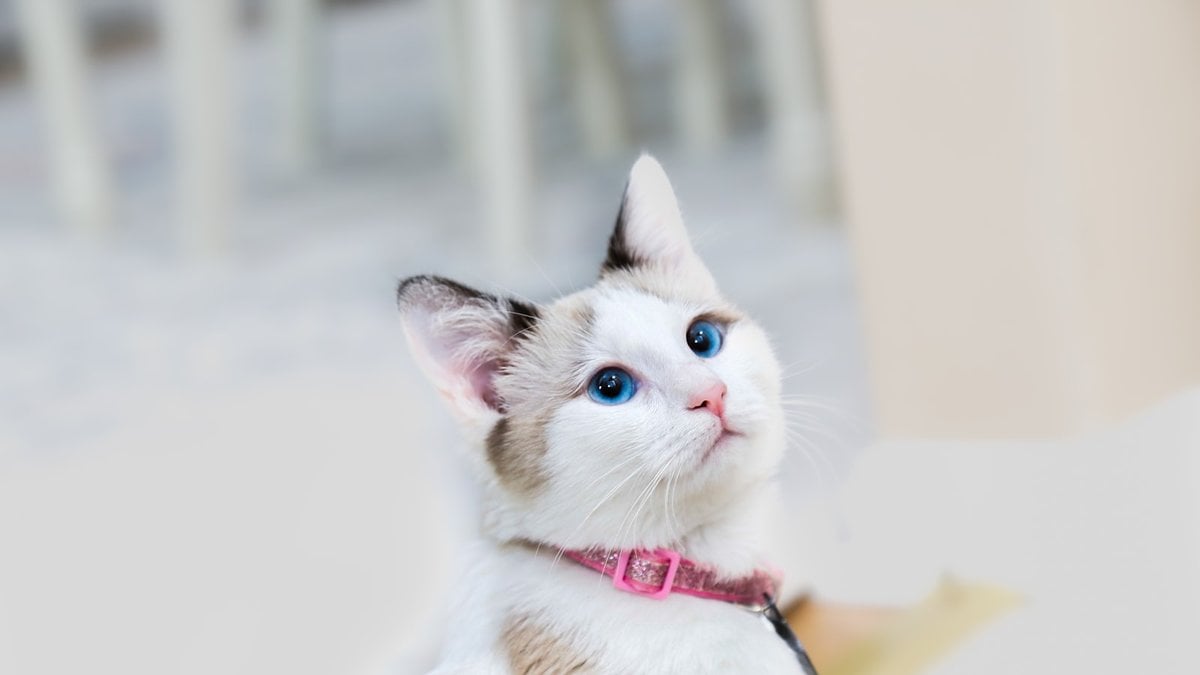
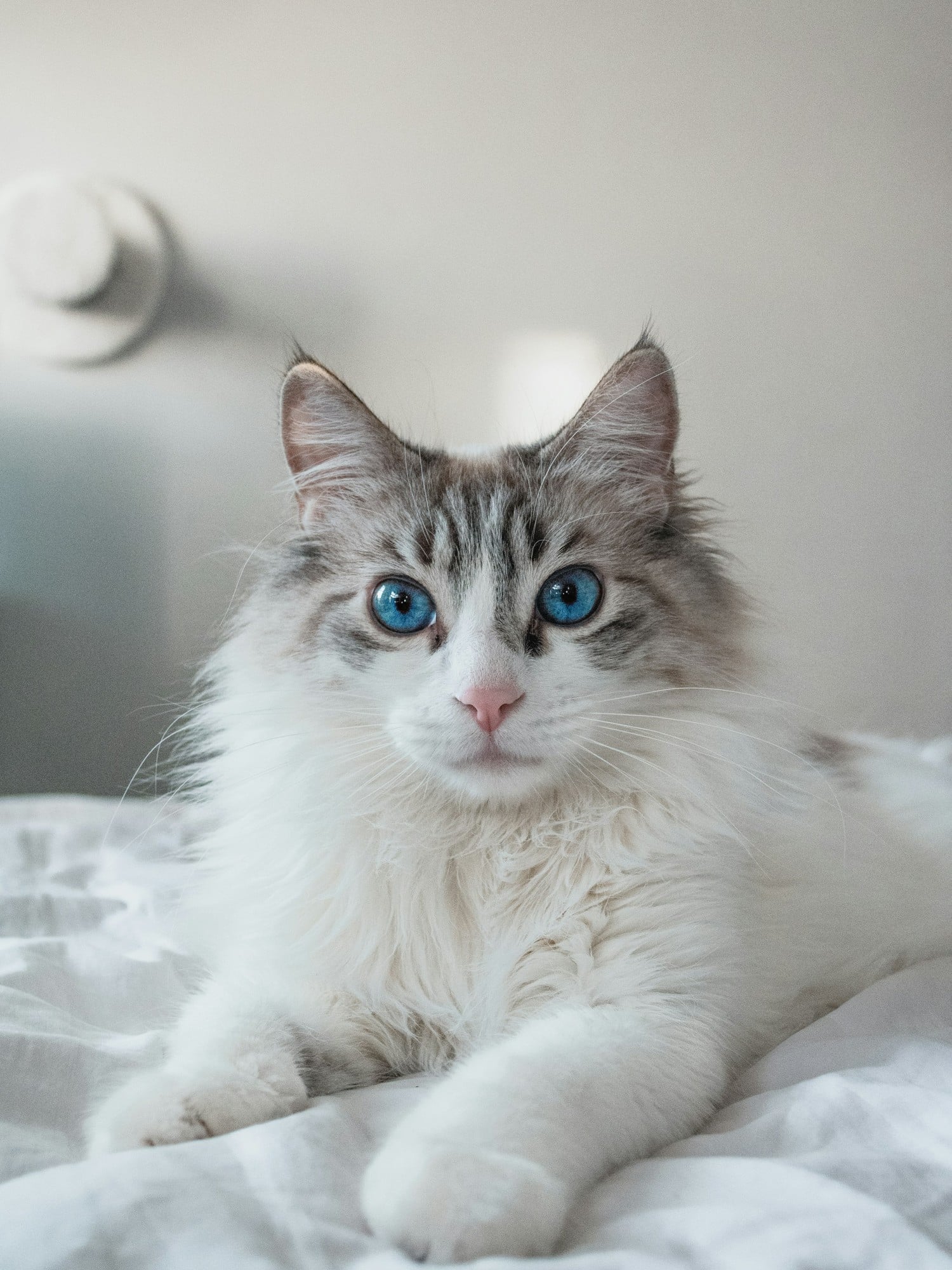
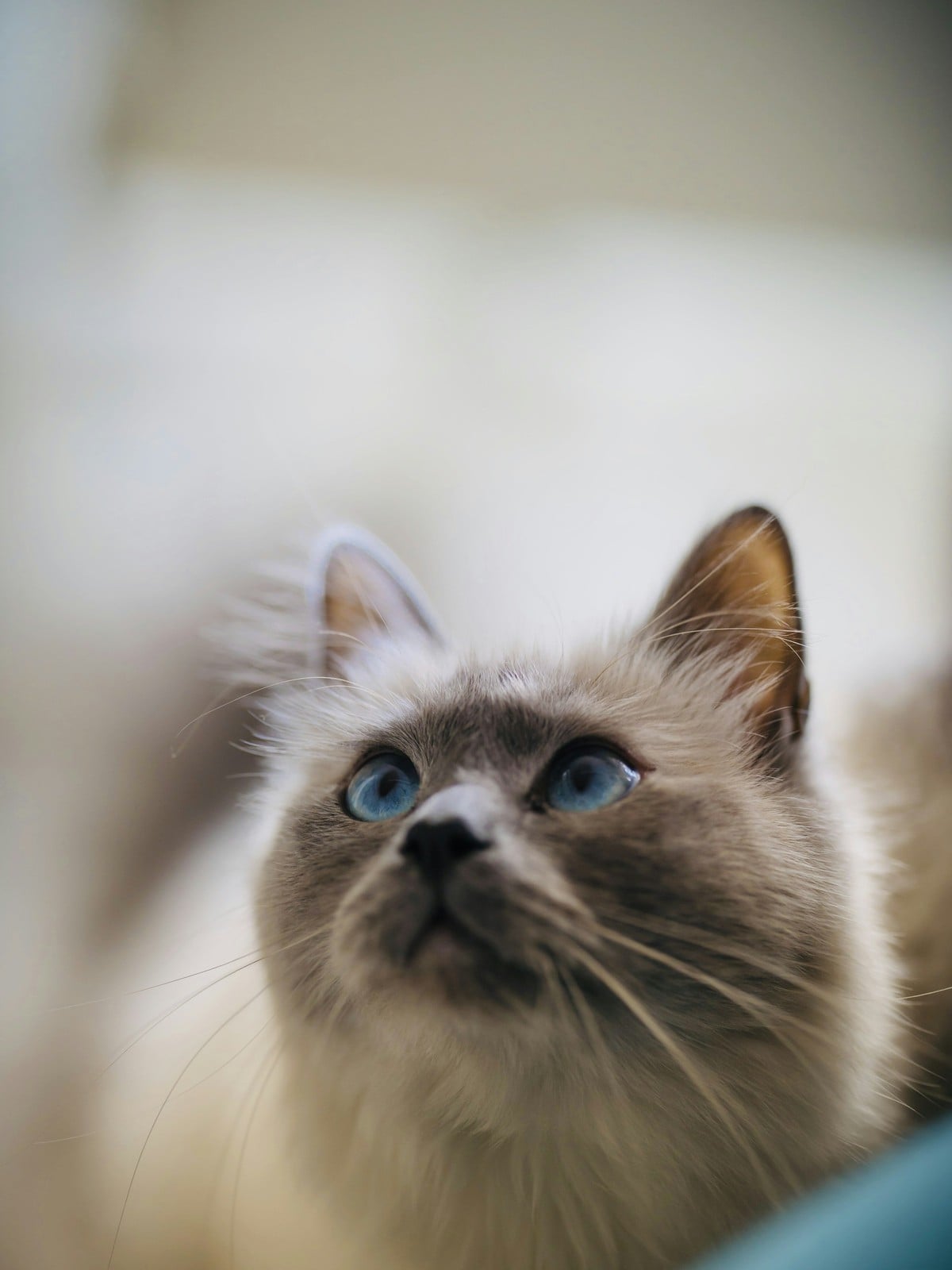
All Ragdolls are pointed (or colorpointed) cats, as noted in their Cat Fanciers’ Association standard. Colorpointed refers to cats that are lighter in color than their points (i.e., ears, legs, tail and facial mask). And all Ragdolls, per that standard, have large oval vivid blue eyes.
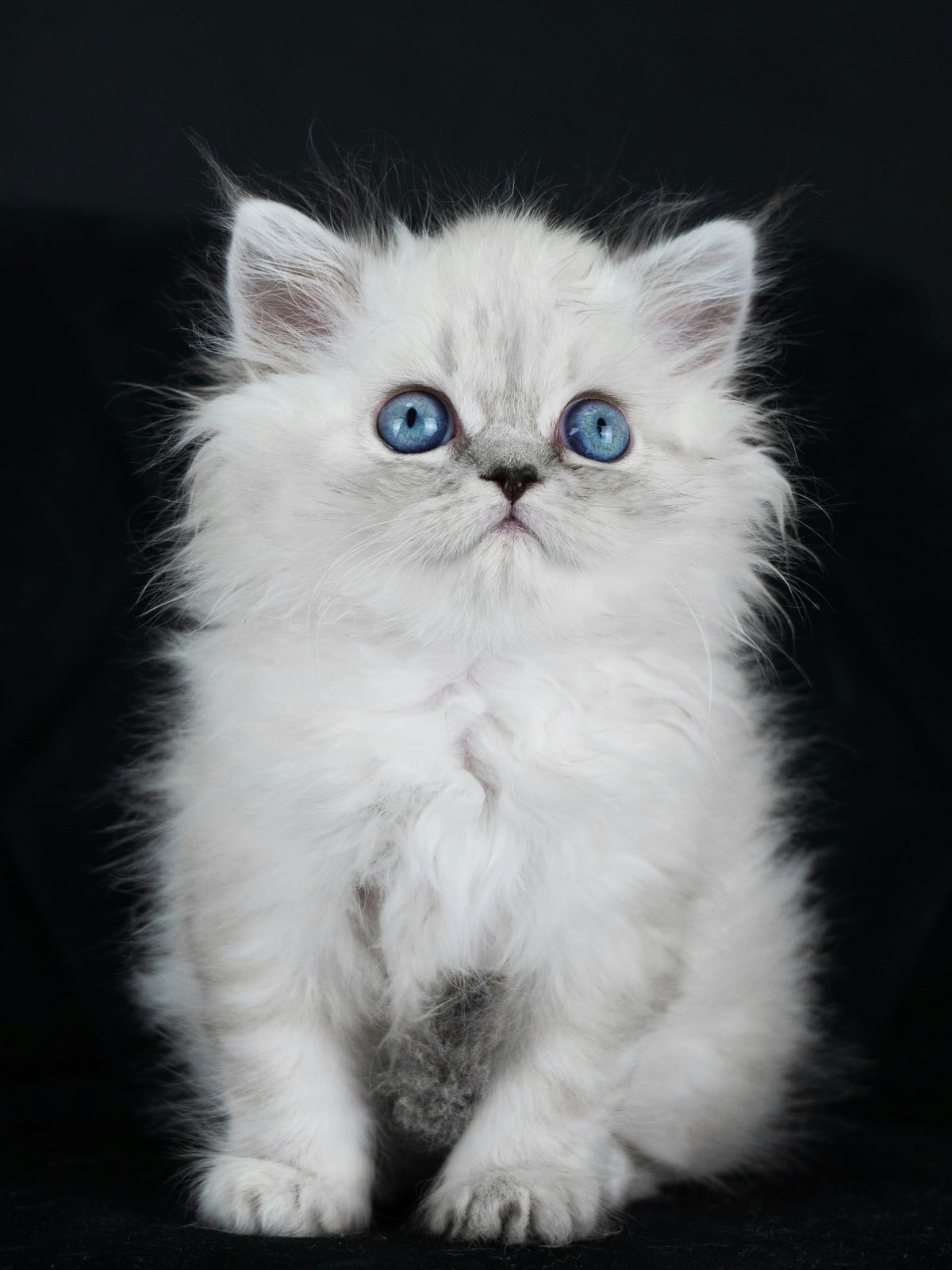
Within those guidelines, however, there’s a ton of variety when it comes to colors. There are six point colors, and the names are breeder jargon, not paint chips: seal (a deep dark brown, the classic look), blue (a slate gray), chocolate (a milk-chocolate brown, lighter and warmer than seal, even though most people would guess seal was the chocolate one), lilac (a pale pinkish gray, and one of the two palest colors along with cream), red (also known as flame among breeders, and on a pointed cat it comes out apricot-orange, never truly red) and cream (a pale, warm buff, where lilac is a cooler, grayer shade). Breeders call blue, lilac and cream the “dilute” colors, which just means each one is a lighter version of another color: blue is a lighter seal, lilac is a lighter chocolate and cream is a lighter red. And those colors may be solid (no markings), lynx (tabby markings within the points) or tortie (tortie being a mottled combination of a color with red or cream). Add to that that a cat’s coat color and its markings are two different traits, so you may, for example, have a seal lynx point or a blue tortie point, and the possible combinations are many, though always following the same guidelines for patterns.
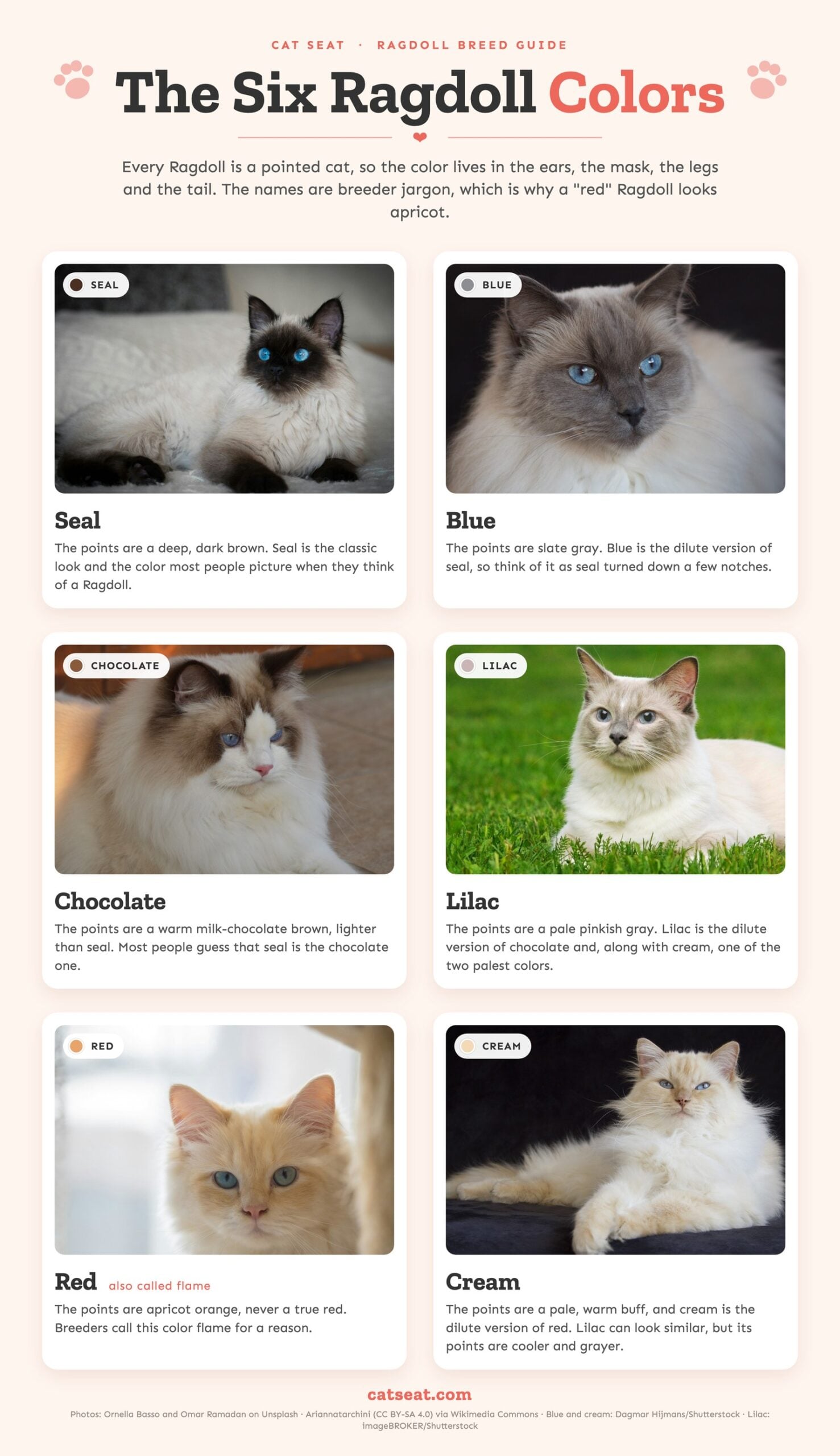
Add another wrinkle and you’ve got yourself an especially interesting cat to own. Per VCA, kittens are born white and color gradually appears as the kittens mature. According to the long-running Ragdoll website Floppycats, blue and seal kittens start to show color within days of birth to a week, while it can take three to four weeks before you can discern the colors lilac and chocolate. Either way, the cat will continue to darken in color for a couple of years. So the pale kitten you bring home is a preview, not the finished cat.
The four patterns
The Cat Fanciers’ Association recognizes four patterns of Ragdolls. The patterns are differentiated by where the white is on the cat.
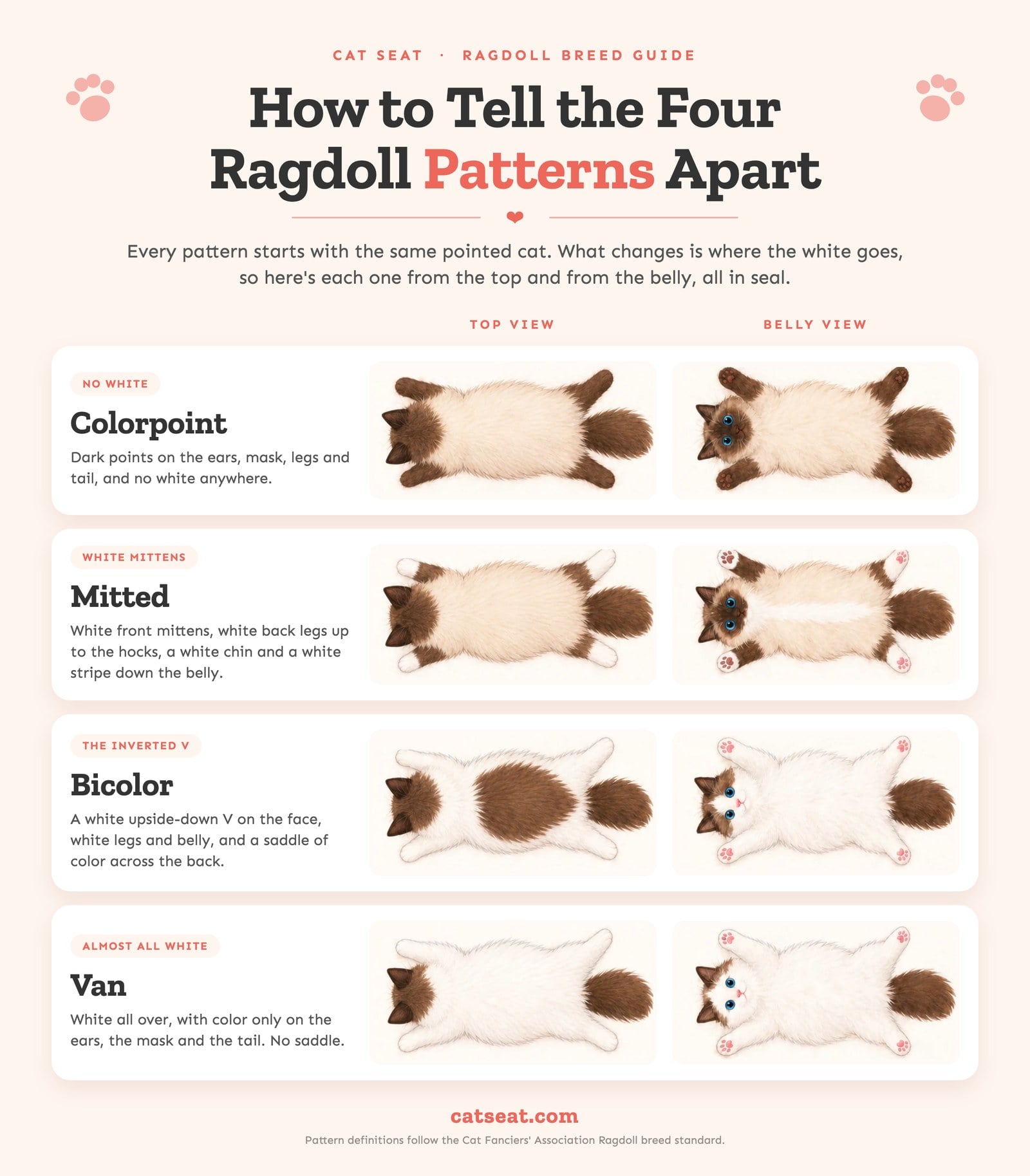
Colorpoint: A colorpoint Ragdoll will be darker on the ears, mask, feet and tail and lighter on the body. A colorpoint should have NO white. In showing, a colorpoint would be disqualified for a locket or any other white spots.
Mitted: This pattern is basically a colorpoint cat with socks. In addition to having mitts on the front feet, mitteds will also have a white chin, a white stripe on the belly and will be white on the back feet up to the hocks (the equivalent of the ankle bone on humans). If in doubt on whether a cat is colorpoint or mitted, look at the chin, white means mitted!
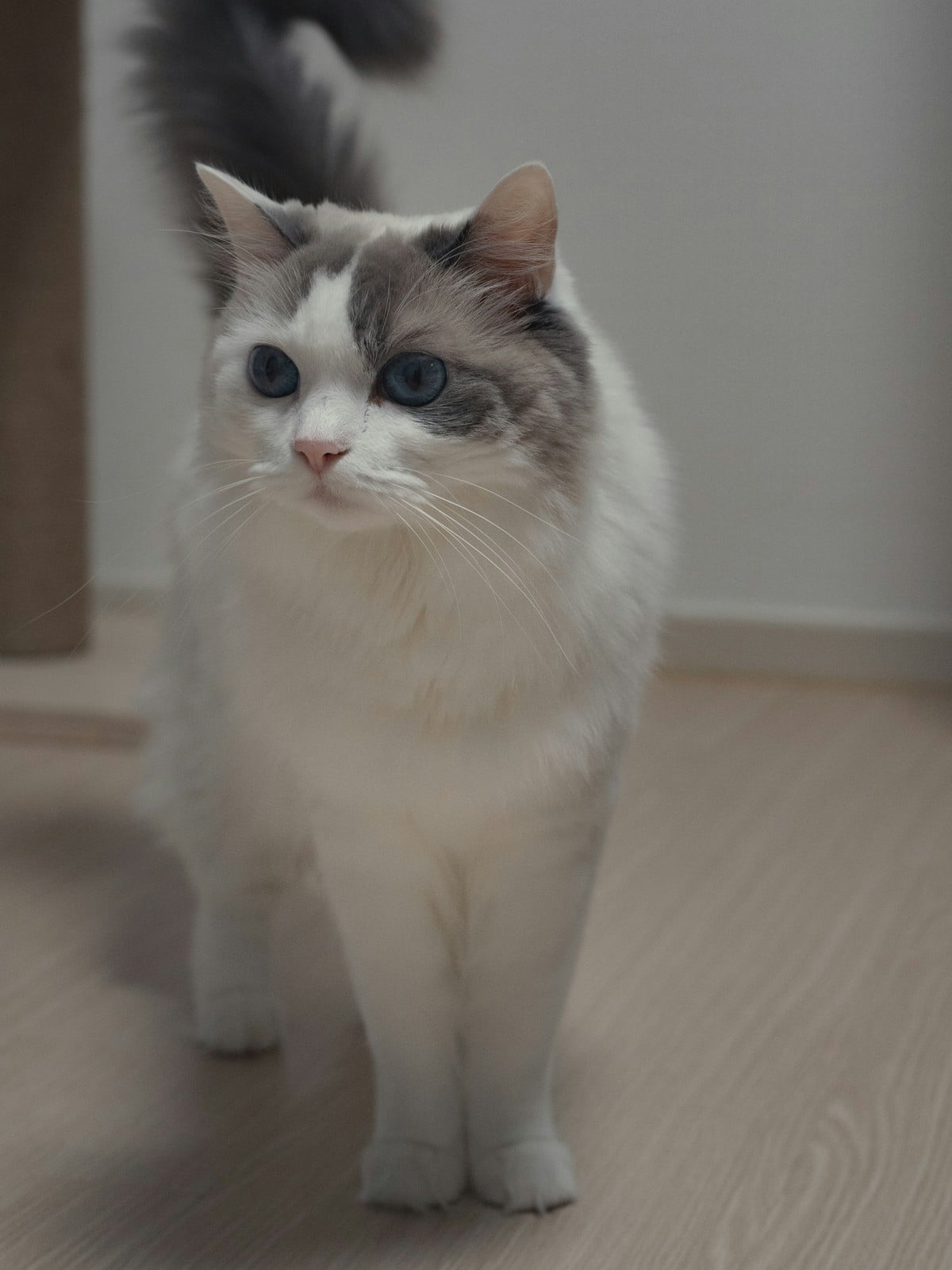
Bicolor: This is usually the pattern that people are picturing when they think of Ragdolls. A bicolor will have a lot of white. They should have an inverted V up the mask between the eyes. Chin, chest and underside will be white, with ideally the legs and feet being all white. The ears, top of mask, tail and saddle (on their backs) would be colored.
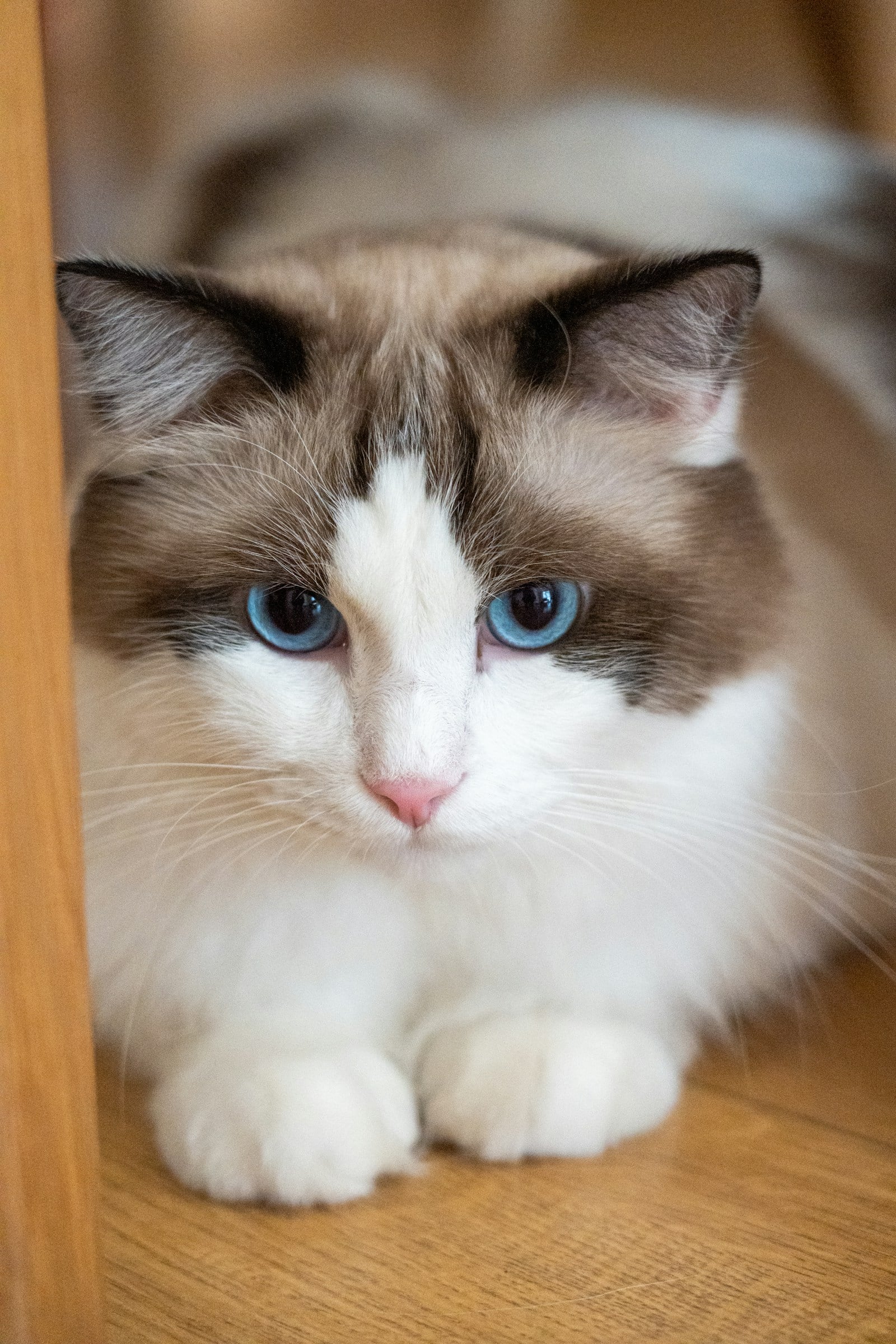
Van: Basically an extreme bicolor, vans are as white as you can make a Ragdoll and still have the pattern! Again white feet, legs and body, inverted V up the mask. Color ONLY on ears, tail and top of mask. In showing, more than 20 percent color on the body is faulted on a van. This is the least commonly seen of the four patterns. The easiest way to tell a van from a bicolor is the back: a bicolor has a saddle of color across its back, and a van’s back is white too. Pale bicolors (blue, lilac and cream) can look like vans in photos because their saddle is so faint it barely shows. If you go meet Ragdolls you’re more likely to see bicolors and mitteds than vans.
Personality: what the breed clubs say, and what a study found
The breed club’s description reads a lot like a dating profile. The Cat Fanciers’ Association describes the Ragdoll as docile and placid, affectionate and loving but not demanding, moderately active, rarely aggressive, and on the quiet side, though they may greet you with a soft mew. They’re also described as playful and trainable, and they can learn to fetch and to come when called. They tend to stay close to their owners, following them around the house (which is why VCA calls them puppy cats), and they often sleep with them.
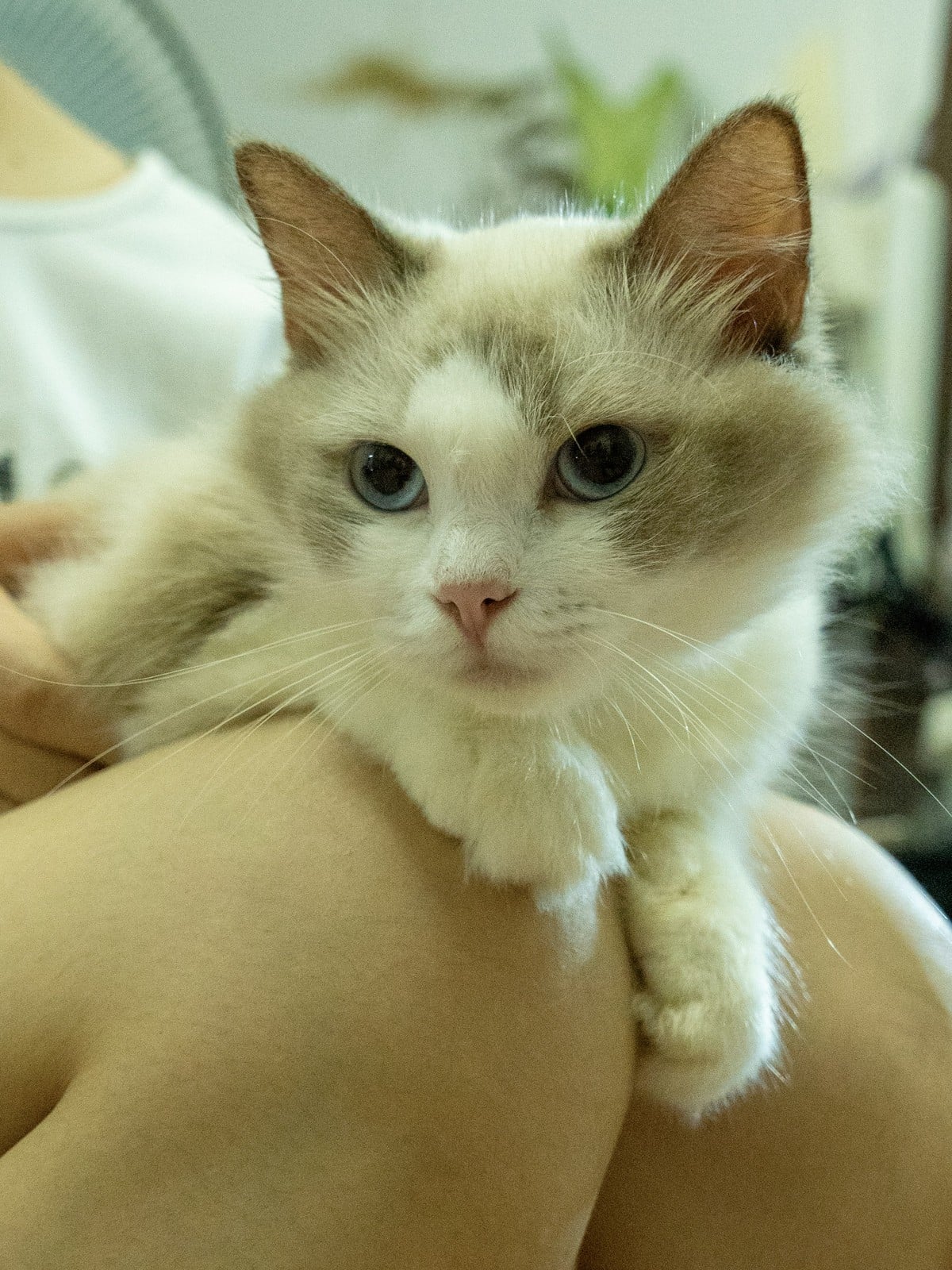
PetMD’s breed guide, reviewed by Dr. Veronica Higgs, says Ragdolls are playful in short bursts, with a crazy 15 minutes once or twice a day, that they’re rarely vocal except when hungry or wanting attention, and that they take well to clicker training. They also enjoy playing, especially with their people, so plan on daily interactive play and not just a basket of toys. VCA notes that they’re overly trusting, which is one reason both VCA and PetMD say Ragdolls should be kept inside.
Then there’s the research, which mostly backs up the reputation and adds one odd wrinkle, and I put the details in a box below. The short version: in a University of Helsinki survey of 5,726 cats, Ragdolls came out as one of the three least active breeds and landed in the least aggressive, least extroverted and least fearful group. Which tallies with everything above, except that one person on Reddit described theirs a little differently:
Cat breeds aren’t as determinative as dog breeds; while those traits can often be seen in ragdolls it’s certainly no guarantee and you gotta love your cat for who they are, not who you thought they’d be when you got them. My girl Basil doesn’t love being held, she’s extremely playful and crazy (1 year old) loves to cuddle only at 8 AM in the morning. Love her to death.
— via Reddit.com
The study’s authors noticed something that might explain a cat like Basil, and it’s the last bullet in the box, below.
What a 5,726-cat study found about Ragdolls
In a 2019 University of Helsinki study published in Scientific Reports, researchers sent a behavior questionnaire to the owners of 5,726 cats across 19 breeds and breed groups, then estimated how heritable the traits were in three breeds with big enough samples: Ragdolls (357 cats), Maine Coons and Turkish Vans.
- Ragdolls, British Shorthairs and Saint Birmans came out as the least active breeds; Cornish Rex, Korat and Bengal were the most active.
- In the cluster analysis, Ragdolls grouped with British Shorthairs, Norwegian Forest Cats, Persians and Saint Birmans as the least aggressive, least extroverted and least fearful cats.
- Heritability estimates for the traits ran from 0.4 to 0.53, meaning roughly half the variation in these behaviors tracks with genetics.
- The wrinkle: in Ragdolls, seeking contact with people and activity level were genetically linked, so the authors suggest that breeders selecting for calm, easy-to-brush cats “may unintentionally favour cats seeking little contact to people.”
The coat and the grooming
The coat is semi-long and, according to the Cat Fanciers’ Association, is mainly guard hairs with little if any undercoat, and as a result it doesn’t mat and shed as much as you might expect. VCA adds that it feels like rabbit fur. Shedding does increase with seasonal changes, and Ragdolls are not hypoallergenic, according to PetMD.
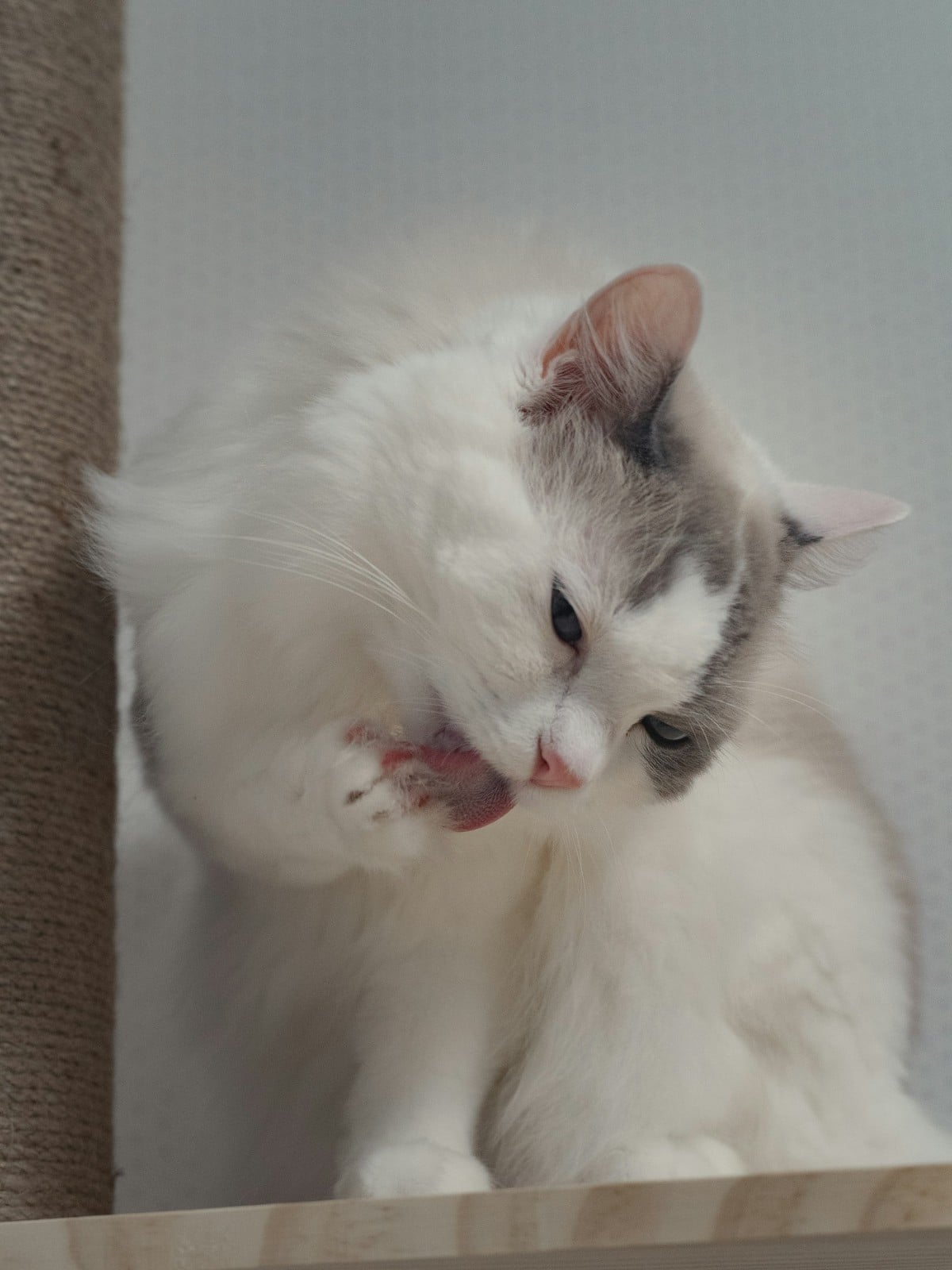
The CFA advises grooming the Ragdoll’s coat with a steel comb once or twice a week to help control shed fur and tangles. PetMD recommends using two metal combs and, during springtime, grooming every couple of days, because this is when the most shedding occurs. It also advises that during kittenhood you get the kitten used to nail trims, bathing and ear cleaning. (I wrote a whole guide to grooming a cat who has opinions, if you need it.)
And of course, on top of that every cat breed requires dental care, flea treatment, nail care and a healthy diet.
Ragdolls have a single coat so just make sure not to use combs like a Furminator or something similar that will strip and damage the hair. I use a simple metal comb and give Churu at the same time and they tolerate it.
— via Reddit.com
The heart condition to ask about
Hypertrophic cardiomyopathy (HCM) is the most common feline heart disease, and some breeds (including Ragdolls) appear to have a higher prevalence of the disease, Cornell’s Feline Health Center says. HCM in Ragdolls appears to be associated with an inherited mutation, R820W, in a gene called MYBPC3.
Langford Vets says the prevalence of this particular mutation (R820W) in Ragdolls appears to be around 13% and advises that cats with two copies should not be bred, as they will pass a copy on to all of their kittens. Cats with two copies are at high risk of developing signs of severe HCM, usually between one and two years of age, while those with a single copy will often show no signs of HCM and may live a normal lifespan, the UC Davis Veterinary Genetics Laboratory says. In a study of 236 Ragdoll cats, over half of Ragdolls with two copies did not live to be five years old, although about 20% lived to about 12, researchers at the Royal Veterinary College and Langford Vets found.
The Cat Fanciers’ Association notes HCM is a genetic condition that Ragdoll breeders test for regularly so they can screen carriers out of their breeding programs. In my opinion, there’s no excuse for a Ragdoll breeder not having HCM test results for the kitten’s two parent cats when the UC Davis Veterinary Genetics Laboratory test is just $47 and uses cotton swabs (rubbed on your cat’s gums) you get at home.
HCM can be difficult to diagnose because many cats with the disease show no obvious signs of illness, Cornell says. However, some cats may show signs such as difficulty or an increased rate of breathing, breathing with an open mouth and/or listlessness. HCM is best diagnosed with an echocardiogram, which Cornell says is the gold standard way to diagnose HCM. Genetic testing results should also be discussed with your vet, Cornell adds, noting the mutations identified to date aren’t the only cause of HCM, and having one doesn’t mean a cat will develop the condition.
The rest of the health picture
A 2025 study by VetCompass at the Royal Veterinary College looked at the health conditions in over 21,000 Ragdoll cats who received treatment at vet practices in the UK in 2019. The median age of death was 12.85 years, and the most common causes of death were kidney disease (21%) and poor quality of life (13%). Around 61% had at least one health condition, and the most common were periodontal (gum/tooth) disease (8.84%), diarrhea (7.11%), obesity (6.91%) and overgrown nails (5.68%). More males than females were overweight. The risk of nearly all conditions rose significantly at age 12, which is the argument for regular vet checkups, especially once a Ragdoll hits double digits.
Professor O’Neill summarized the study results by saying that purebred Ragdoll cats lived just as long as their random-bred (read: regular moggie) cat companions.
From the Cat Fanciers’ Association’s Ragdoll breed page: Ragdolls like to eat and are prone to obesity, so watch portions. PetMD adds that they’re prone to bladder stones (more problematic in males because of the greater risk of a urinary tract blockage), and because they’re such big cats, obesity can lead to arthritis on that large bony framework. Keeping an eye on water consumption and measuring out kibble portions are two of the cheapest ways to help with weight and urinary health.
If you’re thinking about getting one
PetMD puts the price from reputable breeders at $1,800 to $2,500. At that kind of money you should at least ask to see the HCM DNA test results of both parents. Langford Vets also advises ultrasound examinations for cats that test positive, so find out if the breeder ultrasounds their Ragdolls for HCM. It’s good to know this type of information ahead of time so you’ll know what you’re getting for your money before you go see that cute Ragdoll kitten.
Both VCA and PetMD say Ragdolls do best as indoor-only cats (unless they’re allowed outside in a secure, enclosed area, or catio). Also plan to get a comb and a feeding bowl (measured, of course). And keep in mind Ragdolls can take up to four years to fully mature.
I adopted my two from a rescue (they were found in a car!), so I am totally biased toward adopting a rescue. I would suggest, before you shell out good money for a Ragdoll from a breeder, that you contact a Ragdoll rescue group in your area, or even the local animal shelter, to find out if they’ve got any Ragdolls (or mixes) available for adoption. There’s nothing better than adopting a blue-eyed, goes-boneless-on-the-couch adult cat looking for the perfect home!
Founder and editor of Cat Seat and cat mom to Thelma and Louis. She’s been writing online since 2000.
Hi! I’m Lindsay. I run this site alongside my hubs Cory and our very opinionated cats, Thelma and Louis. We’re so happy you’re here!