The Little Ways Cats Show They Love You
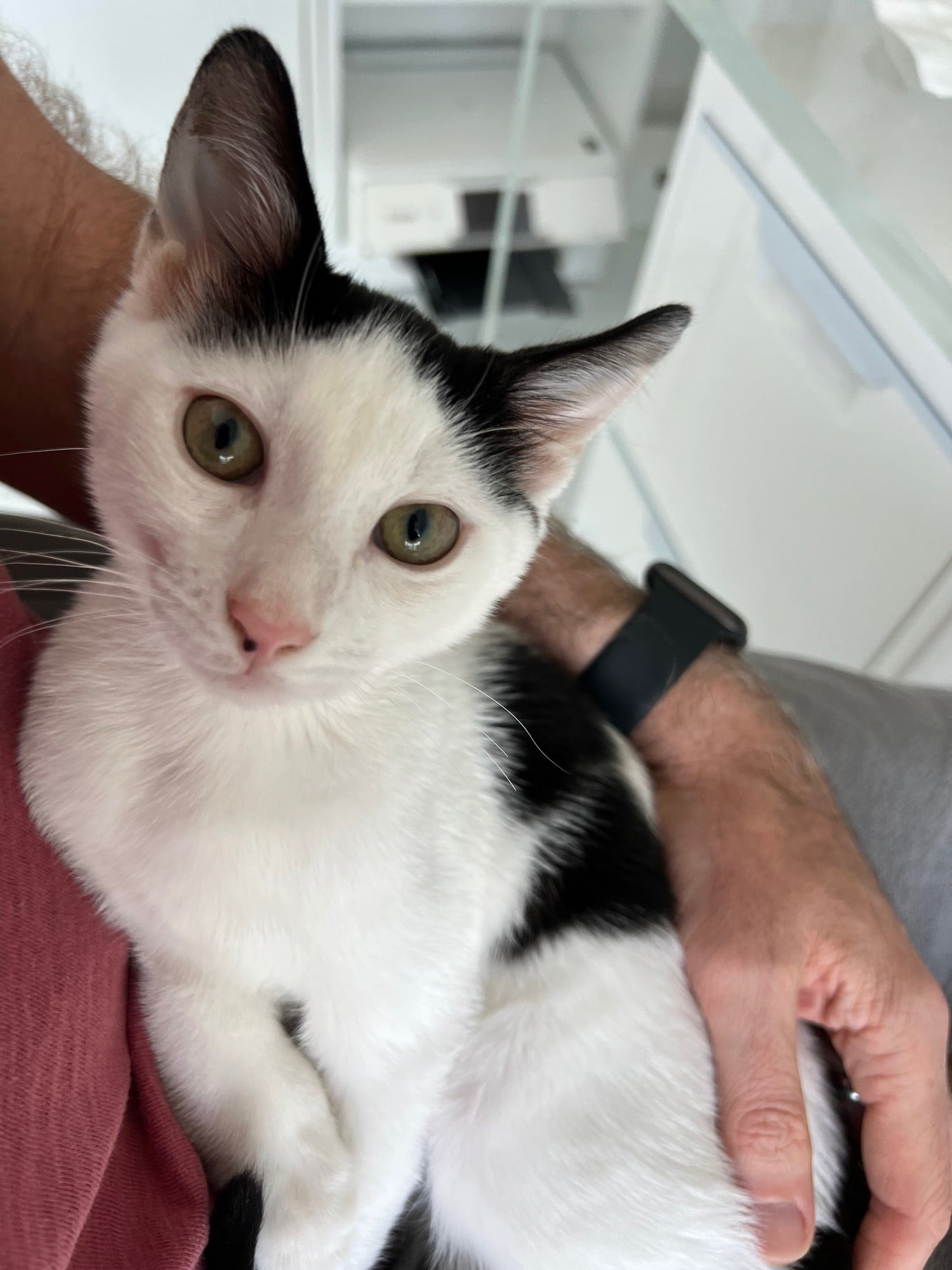
Our two cats Thelma and Louis show affection in completely different ways. Louis is a velcro cat, especially around me, and he naps in the chair next to my desk so he can keep an eye on me while I work (although he keeps an eye on me at all times). Thelma approaches people more cautiously, and on her own terms, but she’s a master of the slow blink. They’re brother and sister, and we adopted them as kittens in 2023.
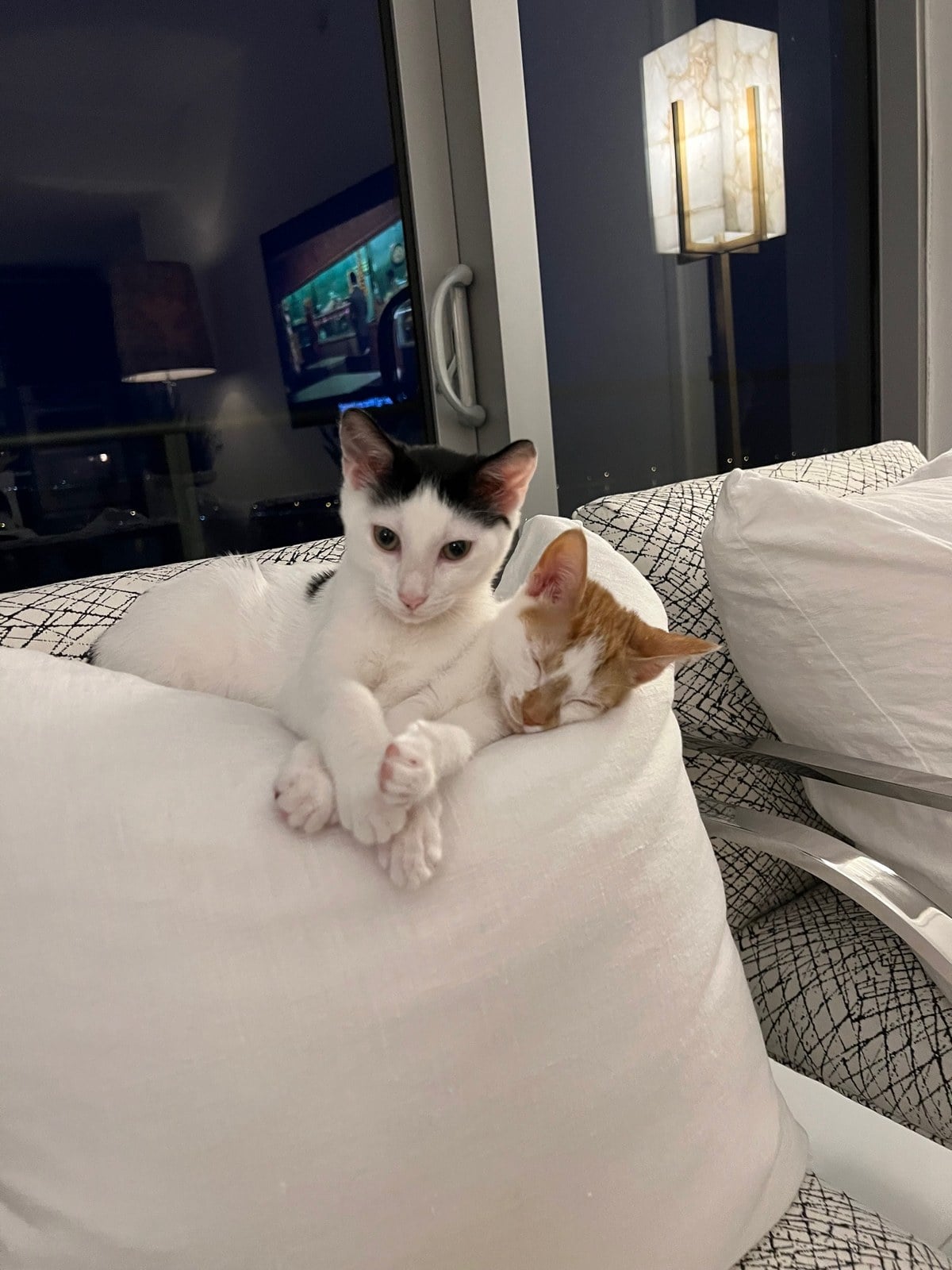
Can you tell if your cat loves you? Researchers can’t measure love, so they tend to talk about cats’ attachment and bonds with humans instead, but cats do have a set of friendly behaviors that they typically save for the cats they’re close to, and they use a lot of the same ones on us. From slow blinking to headbutting to kneading, here are the little ways cats show they love you, grouped by what your cat is doing, with what each one means, plus stories from other cat owners about how their cats show it.
They treat you like another cat
Cats who are friendly with each other will often rub against each other (particularly around the mouth and cheeks), groom each other, touch noses, and rest or curl up together. You may recognize many of those when they’re directed at you.
Head bumps and cheek rubs
Cats have scent glands on their cheeks, their chin, the top of their head and the base of their tail, and when a cat rubs those areas against you, they’re putting their scent on you. Picking up that familiar scent on you helps them know you can be trusted. Rubbing is often a friendly hello, too, so you might notice your cat is extra keen to rub against you when you get home after being away for a while.
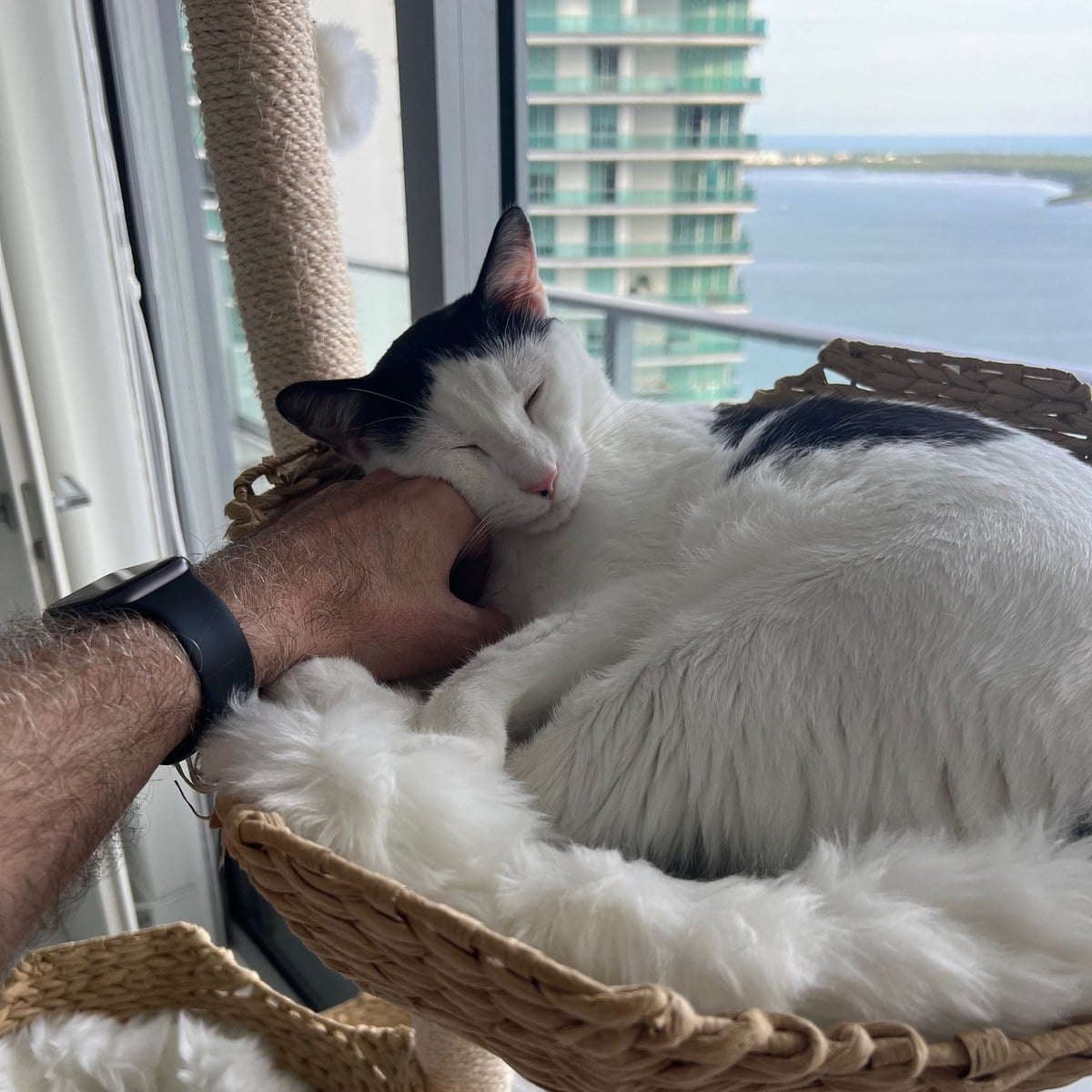
Cats usually only bump heads with members of their own social group, so if your cat is headbutting you, you’re family! When we come in the door, Louis will often rub his whiskers against our hands (that’s a hug in our book, decided by Cory and me), and sometimes he’ll get on my chest and headbutt me until I give him pets.
Licking you
Allogrooming is the term for cats grooming each other, and cats in the same social group do it to form a close bond. It can happen across species too, so if your cat licks your hand or your arm while you’re cuddled up together, it’s likely affection. Grooming also helps give the group a shared smell, so if your cat licks you, it’s probably because they know they’re part of your family (although I can’t say the sandpapery tongue makes it feel like a compliment!).
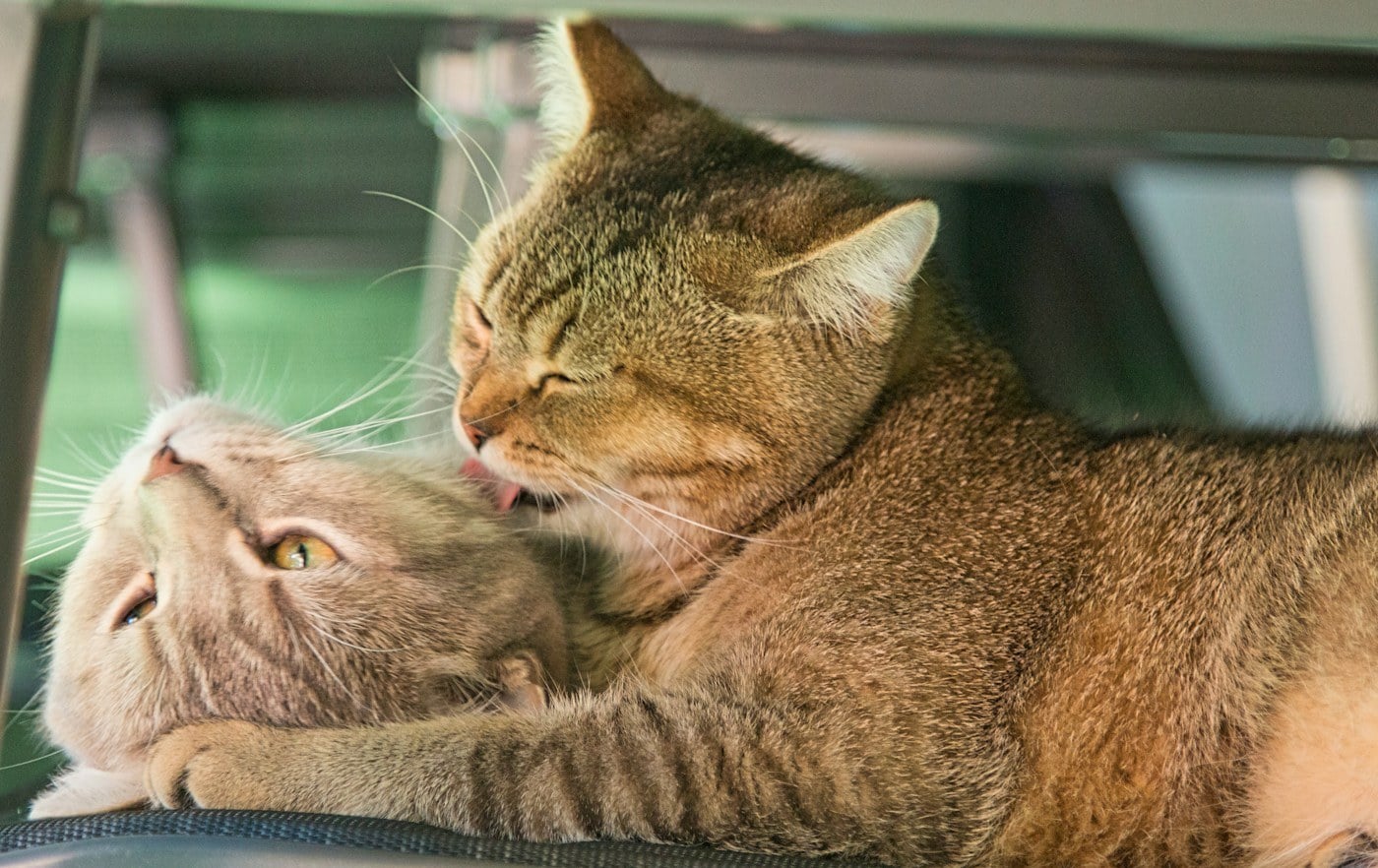
One cat owner on Reddit thinks of it as taking turns:
I’ve always viewed it as how my cat pets me back. Like “okay its my turn now annnd… thats it. Your turn now for the rest of the week.”
— via Reddit.com
Thelma and Louis both lick us. Louis licks my hand sometimes while I’m sleeping, and Thelma likes to lick me after I go up and greet her and say hi. Between the two of them, Thelma does most of the licking, and Louis is the one who gets it. If your cat suddenly starts licking you a lot more than usual, though, it can be a sign they’re stressed or anxious, and that’s worth a trip to the vet.
A tail held straight up
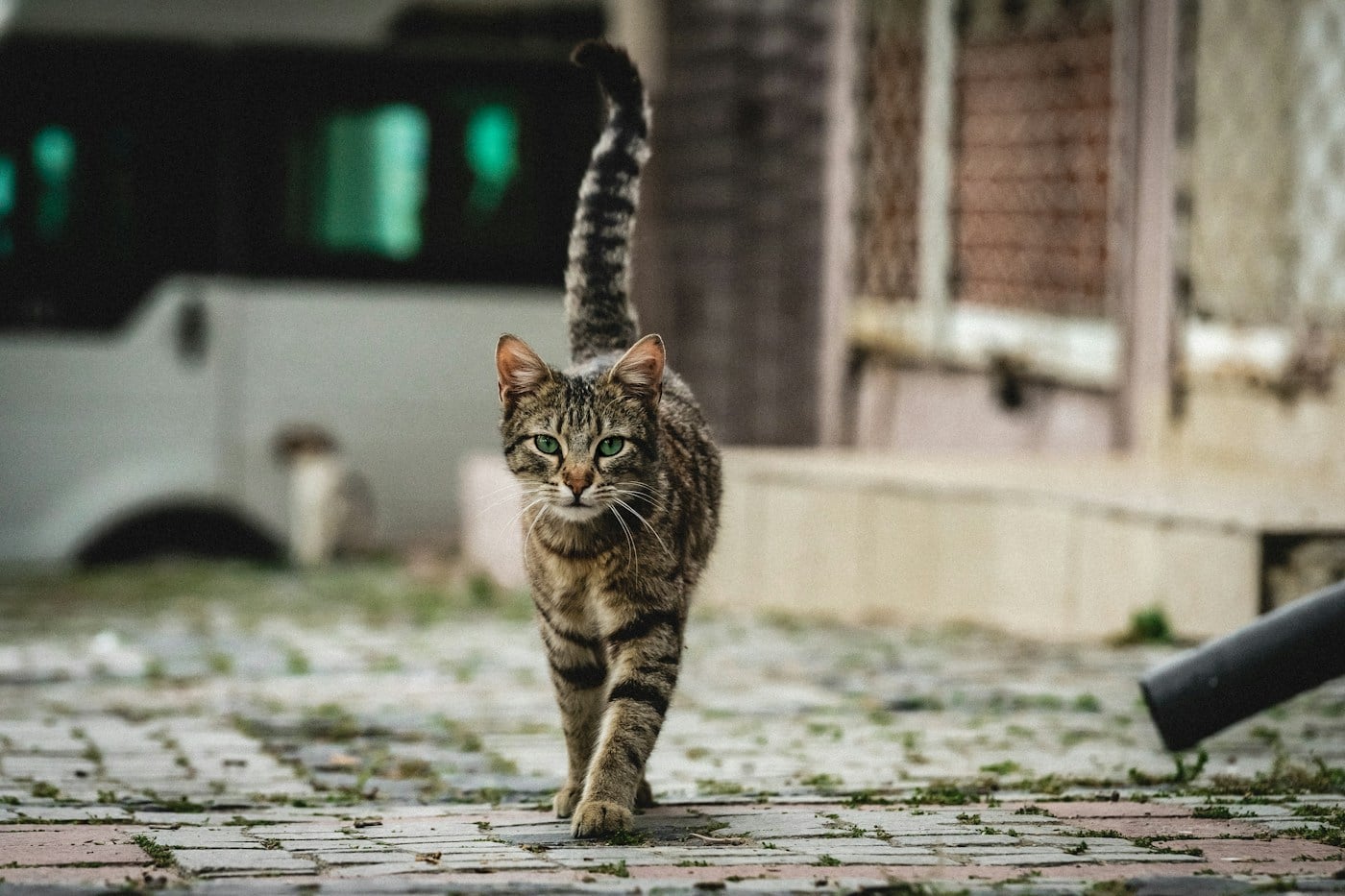
Watch your cat’s tail when they walk toward you. A tail held straight up in the air when a cat approaches another cat, another animal or a person signals friendly intent, so if your cat comes toward you with their tail pointing up, they’re happy to see you. Let them have a sniff of your hand and give them some attention! A tail that’s low to the ground and swishing from side to side means your cat could be feeling worried or undecided, and a puffed-up tail means scared or stressed. Check out my guide to cat tail positions for more.
They let their guard down around you
The slow blink
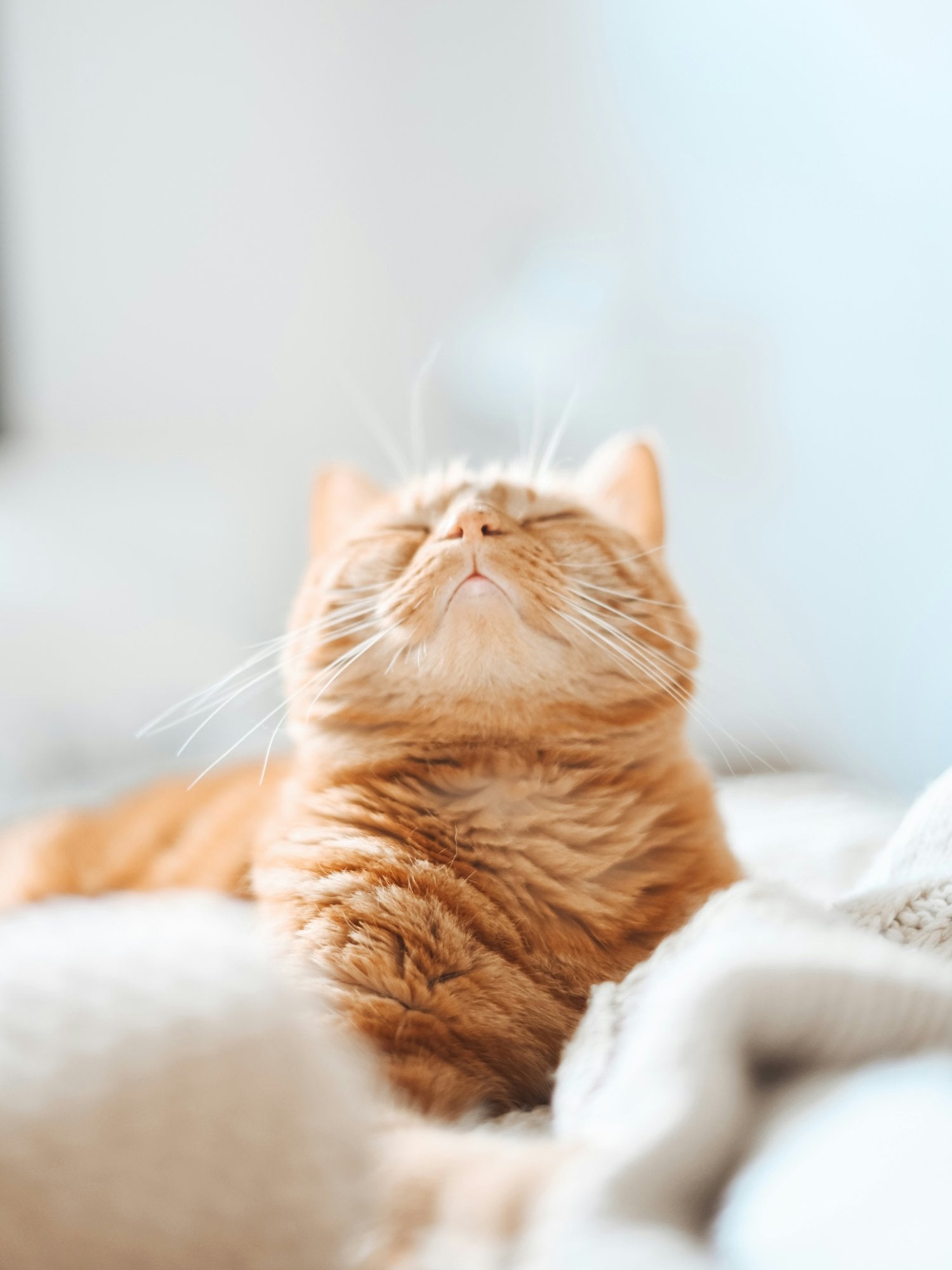
Instead of quickly opening and closing their eyes, a cat will look at you, slowly close their eyes and then open them again. It’s a sign of trust, because your cat feels safe enough around you to stop keeping a watchful eye on you, and you can slow blink right back.

But does slow blinking back work? University of Sussex researchers have tested it twice. In a study published in the journal Scientific Reports in 2020, they found that cats narrowed their eyes more in response to their owners’ slow blinks, and were more likely to approach a stranger’s outstretched hand after the stranger slow blinked at them. In a second study that same year, published in the journal Animals, the researchers went to a cat adoption center in England and slow blinked at the cats there. Out of the 18 cats they analyzed, the ones who closed their eyes more in response were reserved for adoption in fewer days.
Thelma is by far the best slow blinker I’ve ever come across, and we exchange plenty of them. Louis isn’t much of a slow blinker, as he tends to just sit and stare at me!
Showing you their belly
If your cat rolls over and shows you their belly, it’s a good indication that they’re relaxed around you, and cats often do it as a way of saying hello after you’ve been apart. A cat’s belly is a vulnerable, sensitive area, though, and it’s a common misconception that they want it rubbed, because many cats don’t like being touched there, so saying hello back or stroking their head is usually the safer move. There are exceptions, and Louis is one of them. He greets us by plopping down with his tummy out, and he asks for belly rubs.
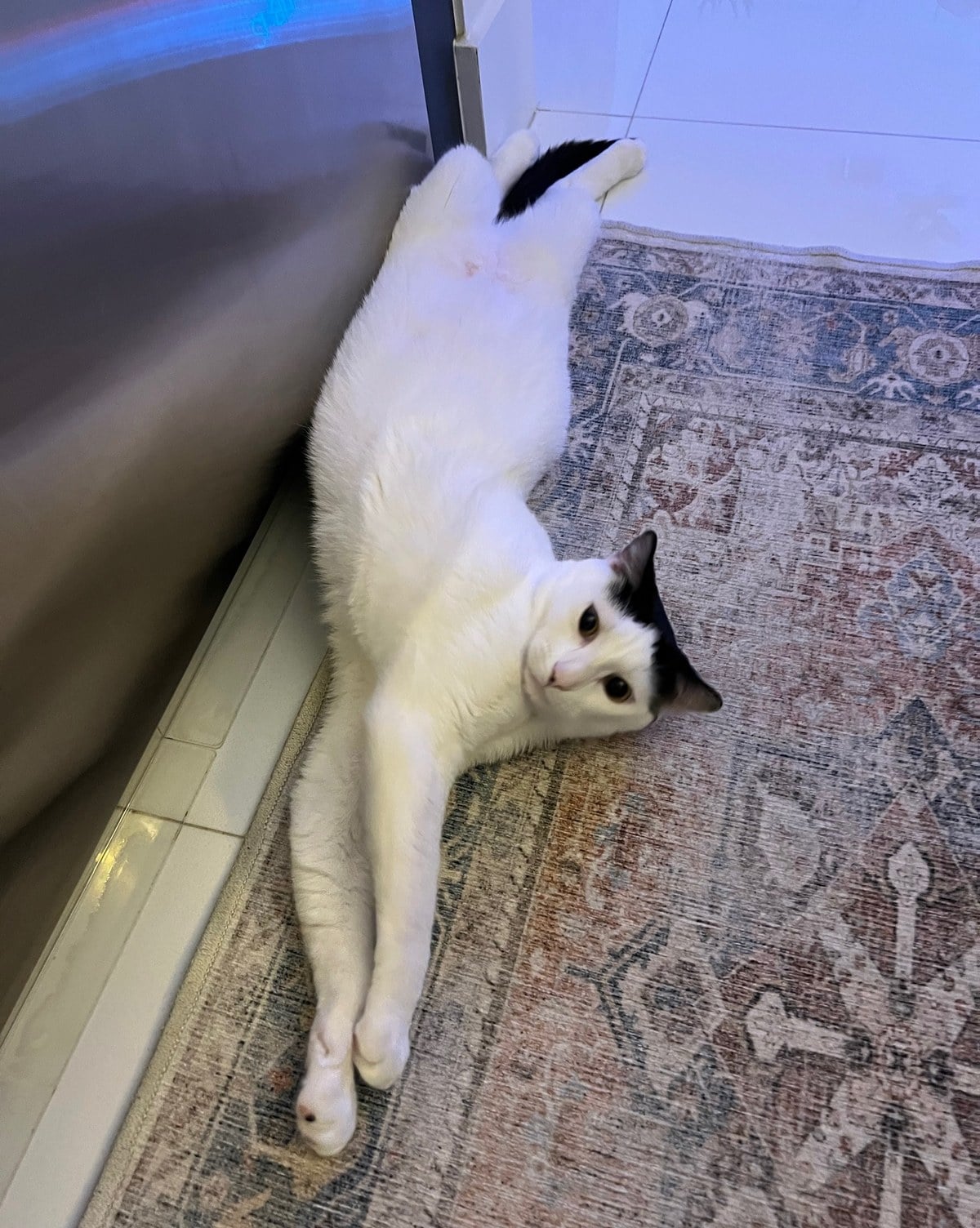
And some cats change their minds about belly rubs, sometimes after a very long time:
For 16 years my cat has HATED belly rubs. Within the past few weeks a switch flipped in him and now he loves them. I am absolutely baffled and so happy.
— via Reddit.com
Sleeping on you or next to you
Cats make themselves vulnerable when they sleep, so when your cat chooses to curl up on your lap or crawl into bed with you, they’re showing that they trust you. Warmth is part of it, too, since a cat sleeping on you gets to share your body heat. But cats who are bonded to each other will often sleep touching or curled up together, and many cats do the same with their people.
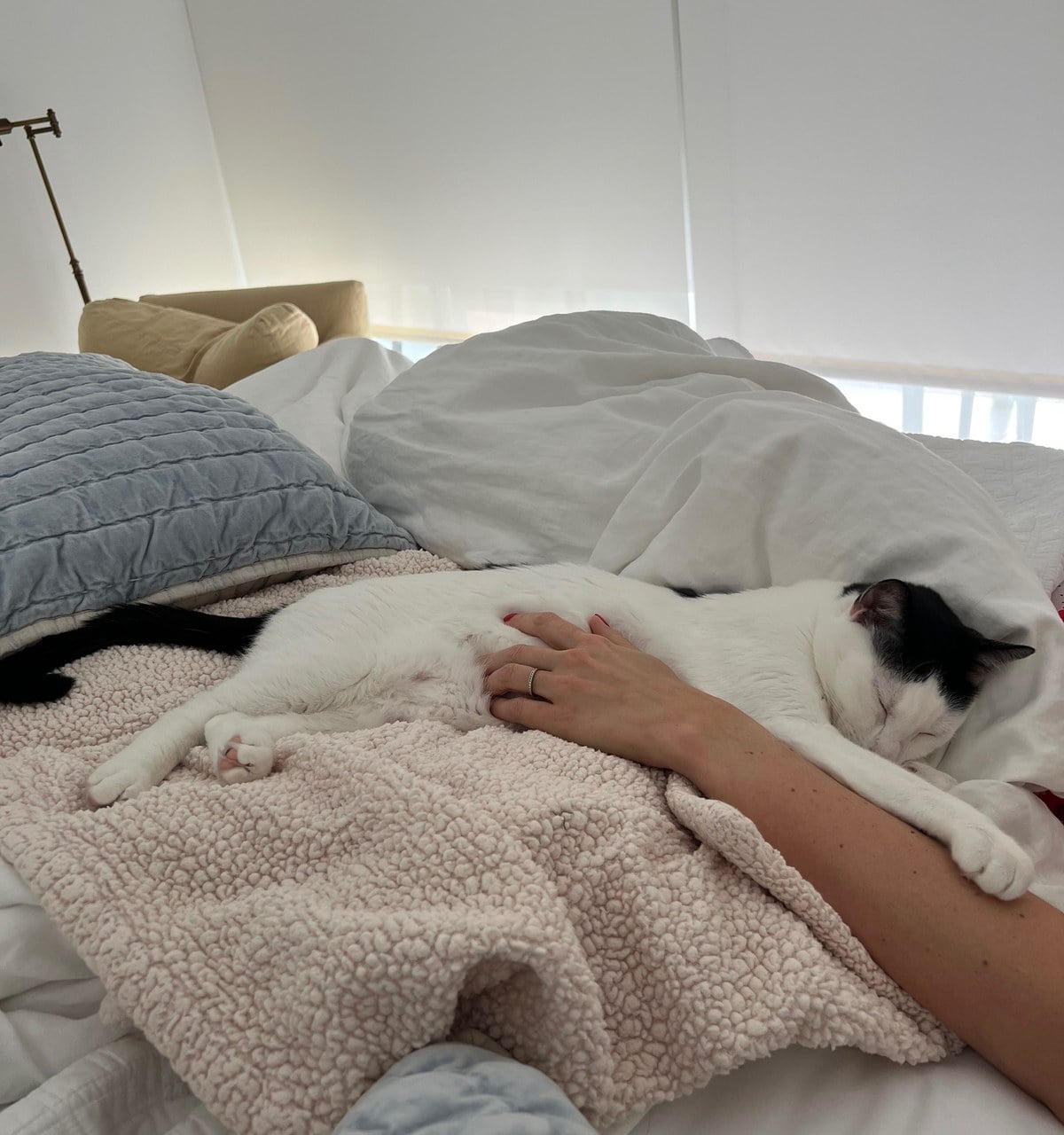
Louis has found his sleeping spot snuggled up between Cory and me on our bed. Thelma slept at my feet for a long time, and then one day, without any explanation, she switched sides to Cory and stayed there for months. (If your cat has moved out of the bed entirely, I wrote about why some cats stop sleeping next to you.)
They want to be where you are
Following you from room to room
If your cat follows you from the sofa to the kitchen to the bathroom, it may simply be that they want to be near you and see what you’re up to. Or they could be hovering in anticipation of you sitting down so they can climb into your lap. Not every reason is so heartfelt. Some cats follow their humans because they’ve learned that a walk to the kitchen means food, and others want attention or are just plain bored.
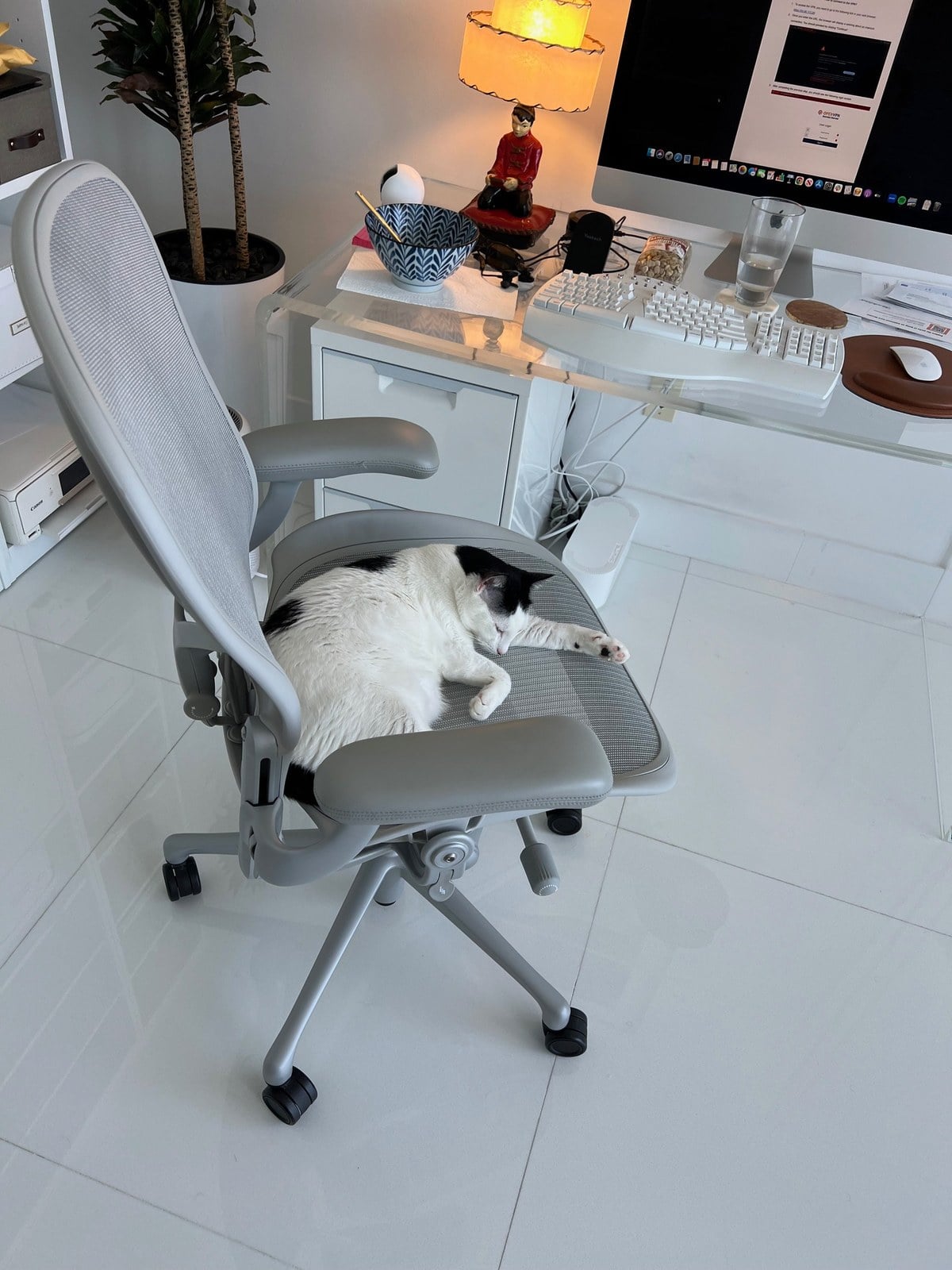
Louis makes the most of our work-from-home setup and follows me around a fair bit! However, if your cat suddenly becomes a lot more clingy than usual, it’s worth a chat with your vet to rule out a medical cause.
Plenty of cat owners have given up on privacy altogether:
I have a total of 6 cats (I foster). Most follow me to the bathroom. We call this “the potty party”. They get upset with me if they get locked out while I’m in the bathroom. I gave up on the idea of privacy a long time ago.
— via Reddit.com
Kneading and purring on you
Kneading is when a cat pushes their front paws in and out on you, one paw at a time, and it starts with nursing kittens, who knead around their mother’s teat to get the milk flowing. Nobody knows for sure why some cats keep doing it as adults, but the usual explanation is that a cat kneading on your lap or chest associates their relationship with you with the one they had with their mother, and is feeling content, secure and happy.
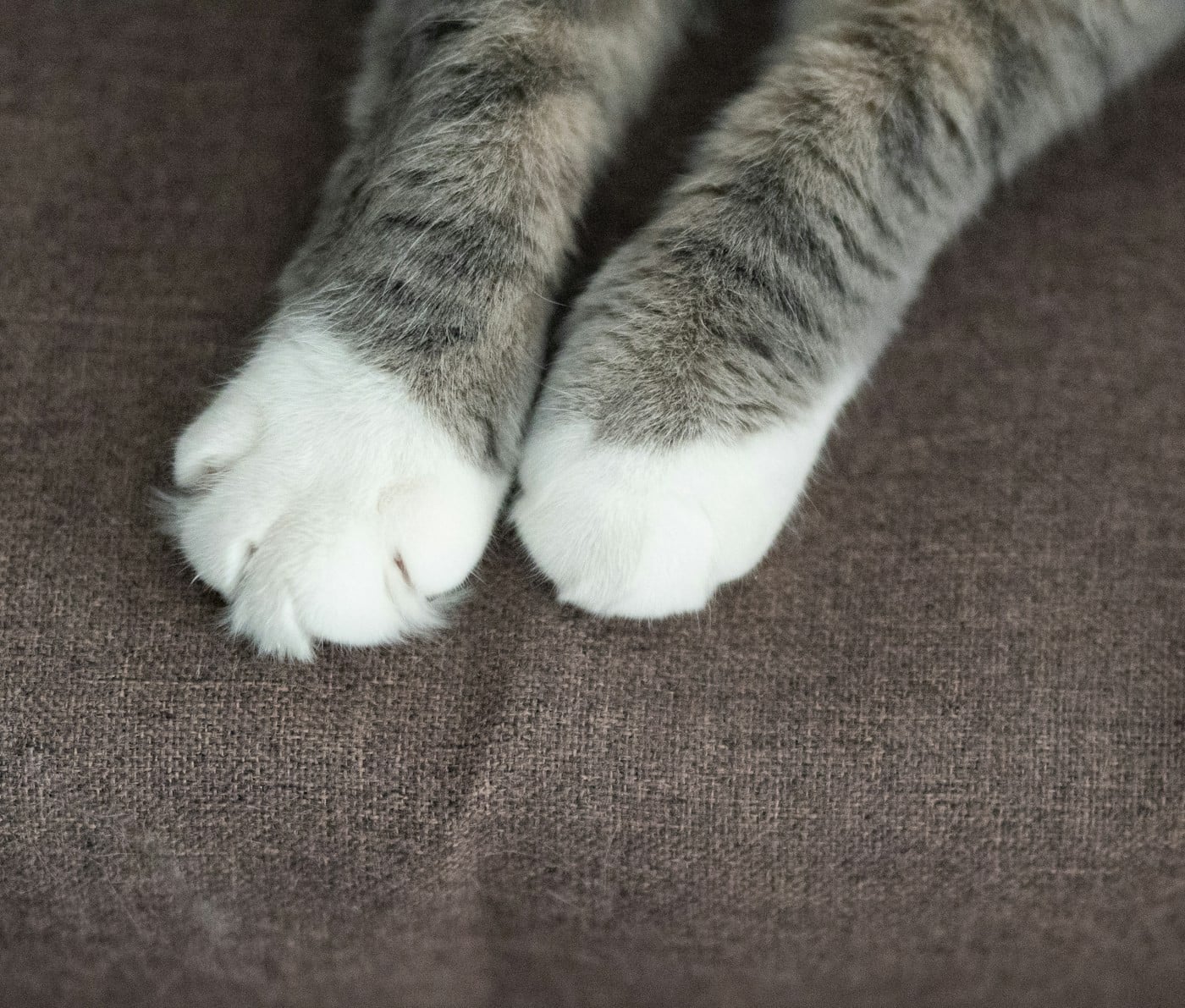
Kittens can purr from just a couple of days old, according to the Library of Congress, and veterinarians suggest the purr tells their mother “I am okay” and “I am here,” and is a way of bonding with her. So if your cat purrs when they’re snuggled up to you on the sofa, they’re using a sound that started out as a way to bond. Purring can also mean a cat is injured and in pain, though (again according to the Library of Congress), and it can be a sign of stress too, so don’t just rely on the purrs. Check the rest of your cat’s body language.
Talking to you
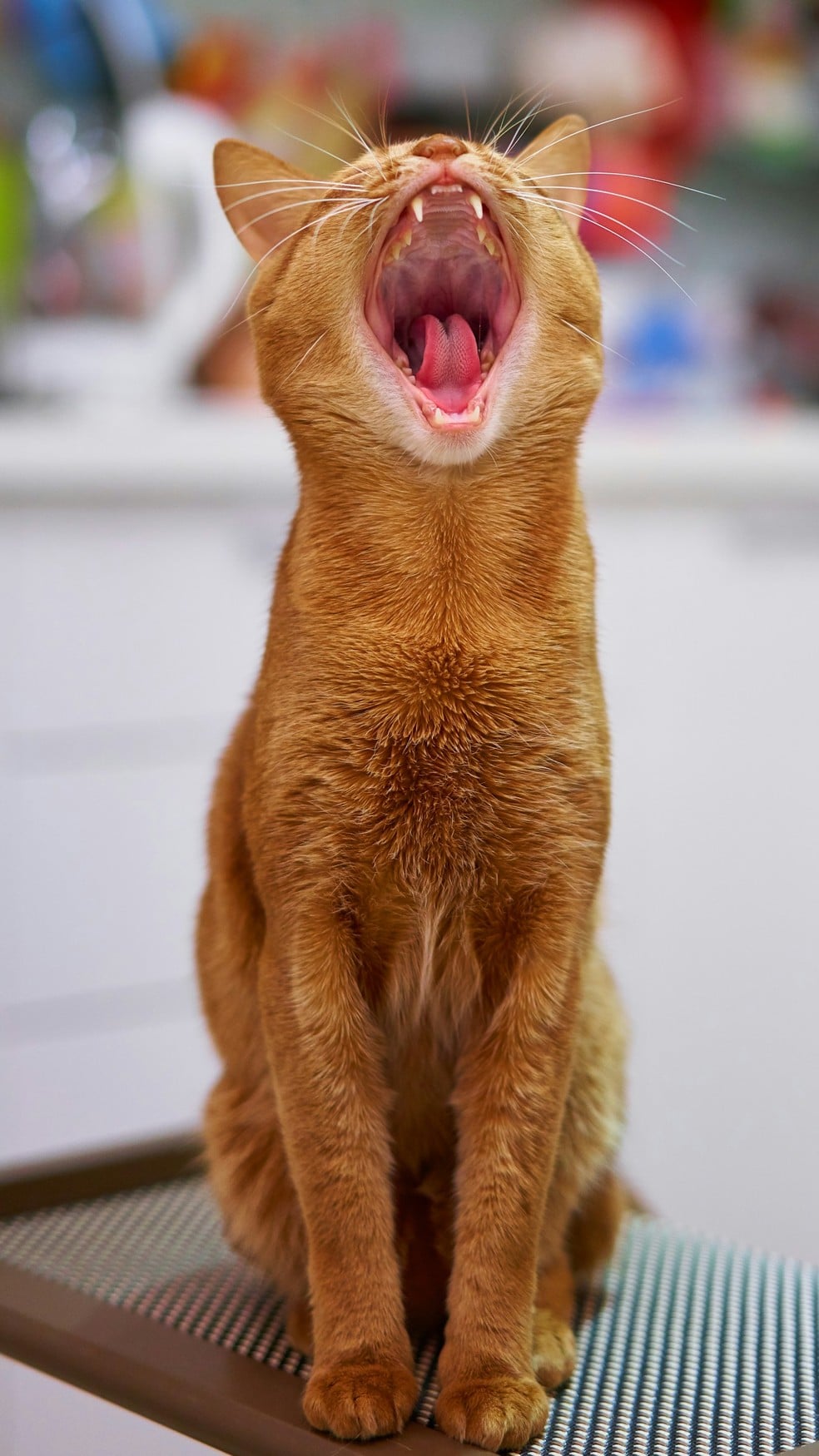
According to the ASPCA, kittens meow to let their mother know when they’re cold or hungry, but adult cats “don’t actually meow at each other, just at people.” It says you can expect a cat to meow in greeting when you come home, when they meet up with you in the house and when you speak to them. And if your cat lets out a short, peep-like sound known as a trill, that’s a friendly greeting too. (I have a guide to cat sounds if you want to tell them apart.)
Bringing you things
Myth-busting time! We often assume that a cat who drops a mouse or a toy at our feet is presenting it as a gift, or trying to teach us how to hunt, but neither is really what’s going on. When a cat brings prey home, they’re taking it to the place where they feel safe and secure, so they can eat it undisturbed or keep it for later. Toys and other objects are the same idea: they find them interesting and want to explore them somewhere safe. So it isn’t a present, exactly, but it does show that your cat feels safe with you, and that still counts as a sign of love.
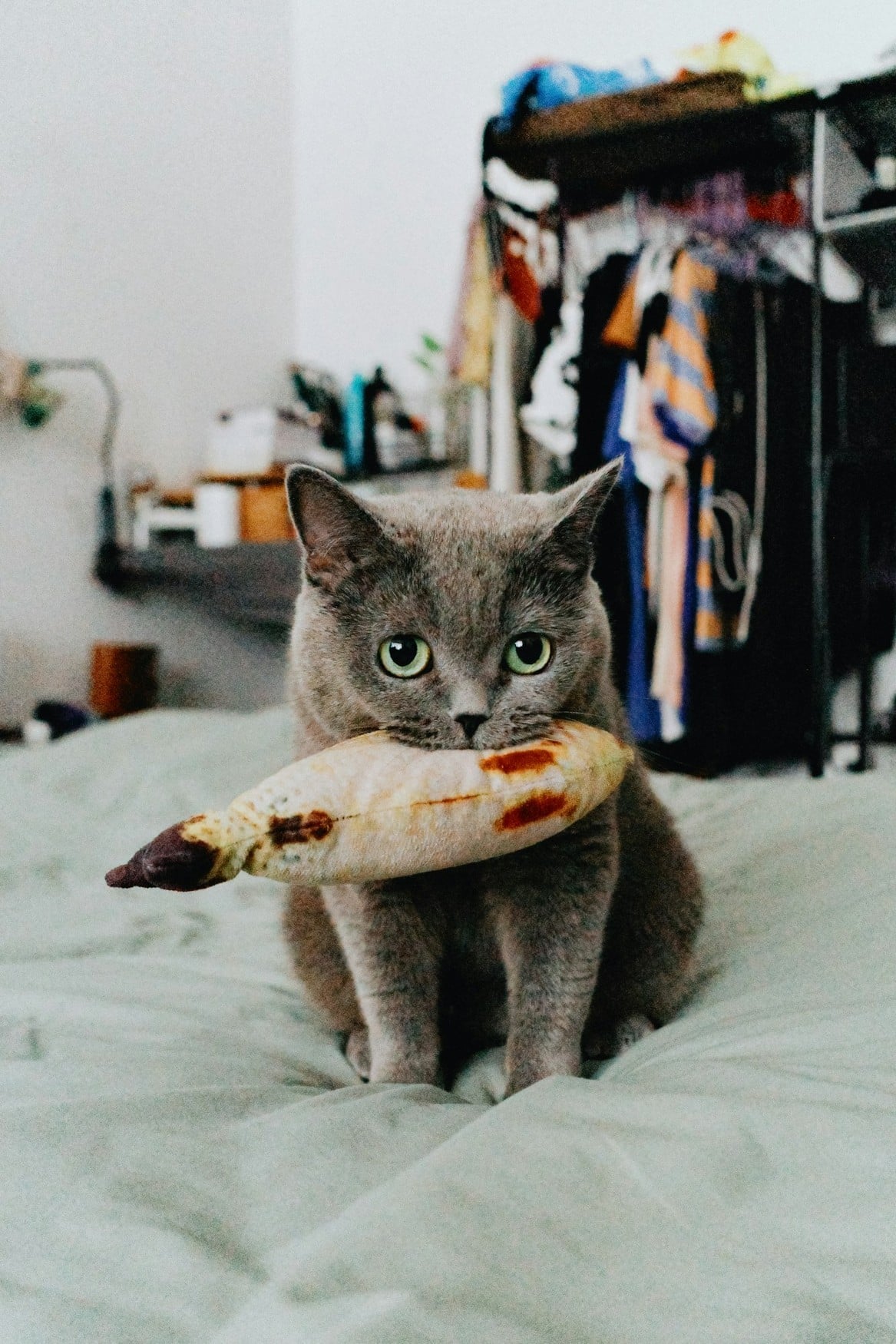
One owner’s cat does this every night at bedtime:
Once I am in bed, my cat brings me her red toy mouse many nights. I thank her for feeding me. Once she is acknowledged, she leaves the bedroom.
— via Reddit.com
What the research says about cats and their people
In a 2019 study, researchers at Oregon State University ran a test on cats that’s typically used with human infants and dogs. For two minutes, the cat is in a new room with their person. For two minutes, the cat is alone. And for two minutes, the person and cat are together again. Securely attached cats were less stressed when their person came back, and they split their attention between the person and the room and kept exploring. Of the 70 kittens who could be classified, 64.3% were securely attached, and so were 65.8% of the 38 adult cats. For reference, about 65% of human infants are securely attached. As the study’s lead author, Kristyn Vitale, said, “the majority of cats use their owner as a source of security.”
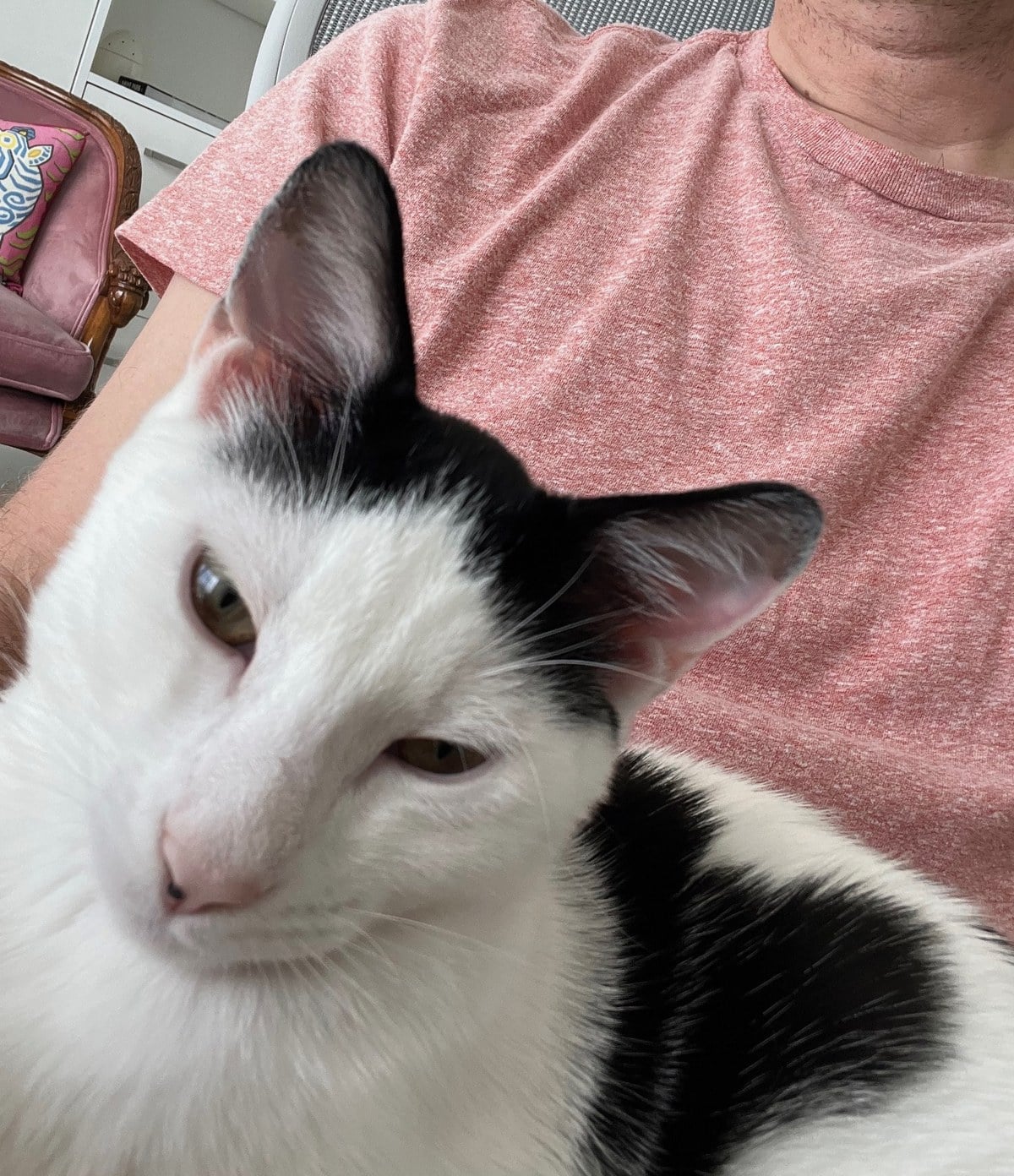
In related research from 2017, some of the same researchers let pet cats and shelter cats choose between time with a person, food, toys and scent. Individual cats’ preferences varied, but time with a person was the top choice for the majority of cats, followed by food. Not everyone agrees that cats form secure attachments, though. In a 2015 study of 20 cats and their owners published in PLOS ONE, cats meowed more when their owner left the room, but the researchers found no other evidence of a secure attachment and concluded that adult cats are typically quite autonomous. So scientists are still working out what to call it.
If your cat doesn’t do most of these
Cats show affection in different ways, and a cat who does two things on this list doesn’t love you less than one who does nine. Cats generally find a hard stare threatening, so if your cat is happy to look at you with a soft, relaxed gaze, it means they’re comfortable with you. Thelma is like that. She’s still wary around people, so when she comes up to me I’ll offer a finger for her to sniff first. She doesn’t get on my chest the way Louis does, but she slow blinks at me and she climbs into our bed with us at night.
Plenty of people live with a cat like that:
my cat panics whenever I hold her, but she always lay down next to me. I’ve learnt to accept the love she’s willing to give me
— via Reddit.com
If your cat is brand new, came from the street, or had a less-than-ideal start in life, give them time and let them come to you. I have tips on how to get a cat to like you and how to become your cat’s favorite person.
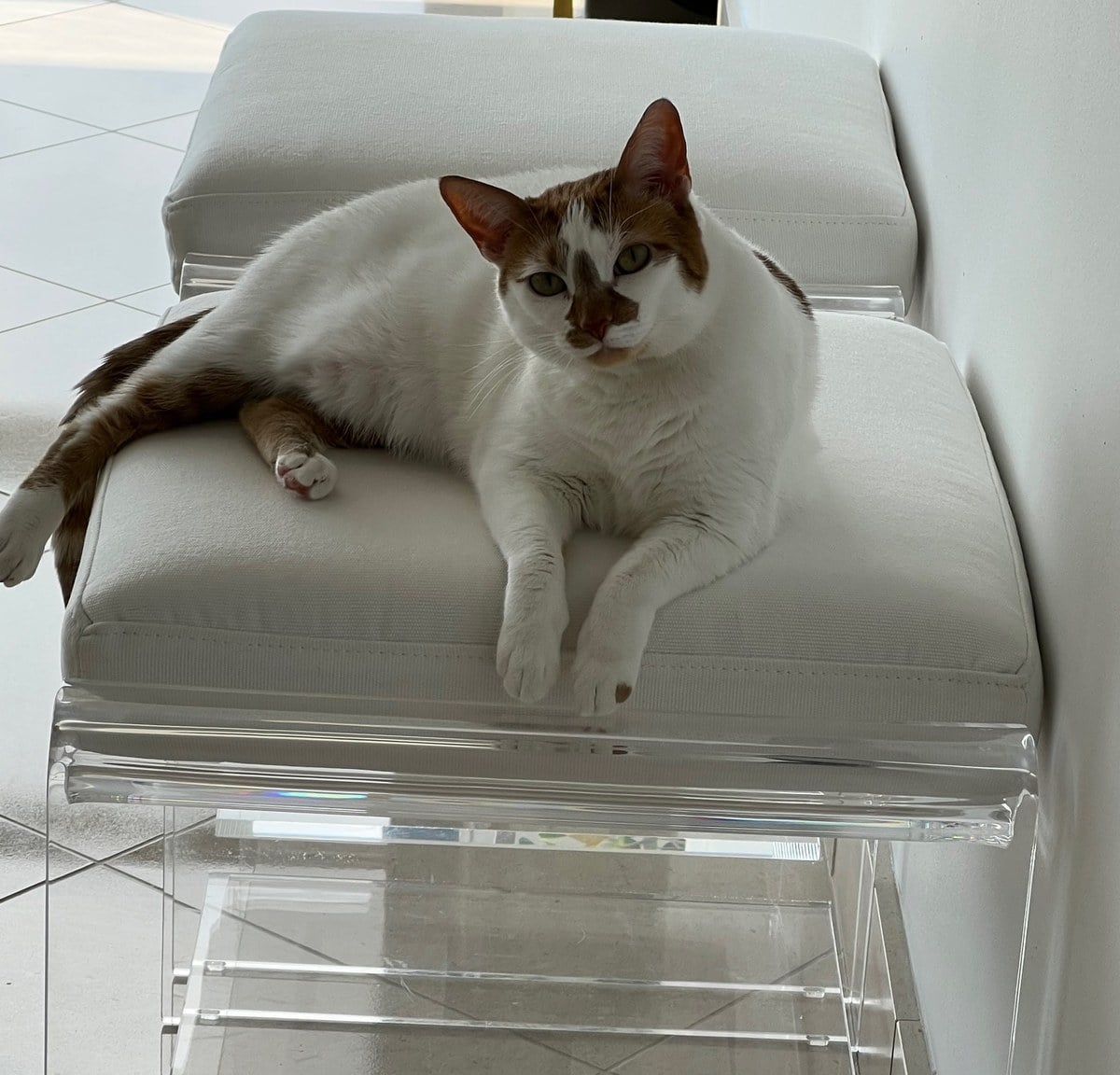
It can take years, as one owner found:
My little Bella who is a rescue hasn’t been very affectionate with me for the last four years together. I just let her have her space and don’t expect anything from her. […] She comes to me and bumps her head on me looking for affection. She does sleep with me most nights but her looking for affection is relatively new and I’m a happy mommy.
— via Reddit.com
If your cat has been with you a long time and all of a sudden starts acting differently (super clingy or super standoffish, for example), let your vet know about the change, and take a look at the signs your cat might be unhappy. How does your cat show you they love you? Tell us in the comments!

Founder and editor of Cat Seat and cat mom to Thelma and Louis. She’s been writing online since 2000.
Hi! I’m Lindsay. I run this site alongside my hubs Cory and our very opinionated cats, Thelma and Louis. We’re so happy you’re here!